
Reviewed · MUSEUMS
Seoul: War Memorial of Korea Private Guided Museum Tour
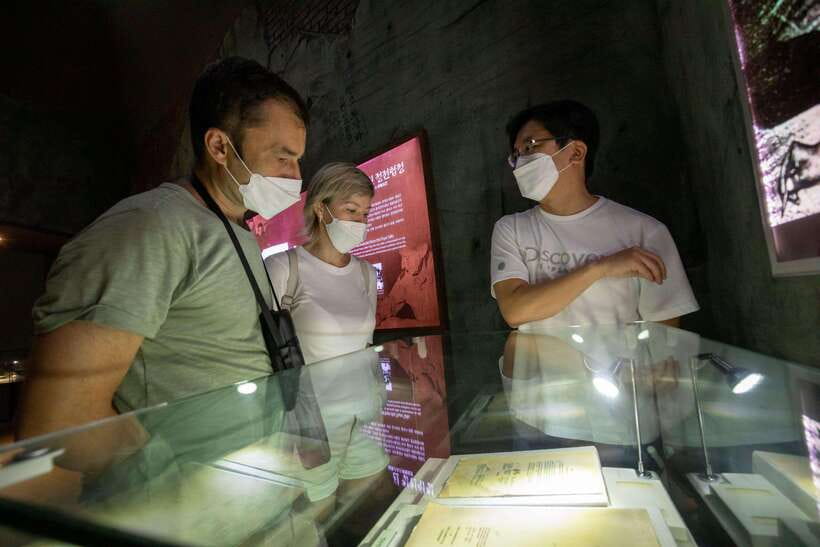
Korean War history clicks faster with a guide. This private, English-led tour turns the War Memorial into a clear story you can actually follow, with balanced context on what shaped today’s two Koreas. I especially liked how the route stays focused on the Korean War Rooms I–III, not random rooms.
I’d book it for the guide quality—people like Kichan Lee stand out for calm, objective explanations and strong English. One possible downside: with only 2 hours on foot, you may feel a bit rushed if you want to linger at every display.
In This Review
- Key Highlights You’ll Feel During the Tour
- Why The Korean War Rooms Matter (Especially If You’re Planning the DMZ)
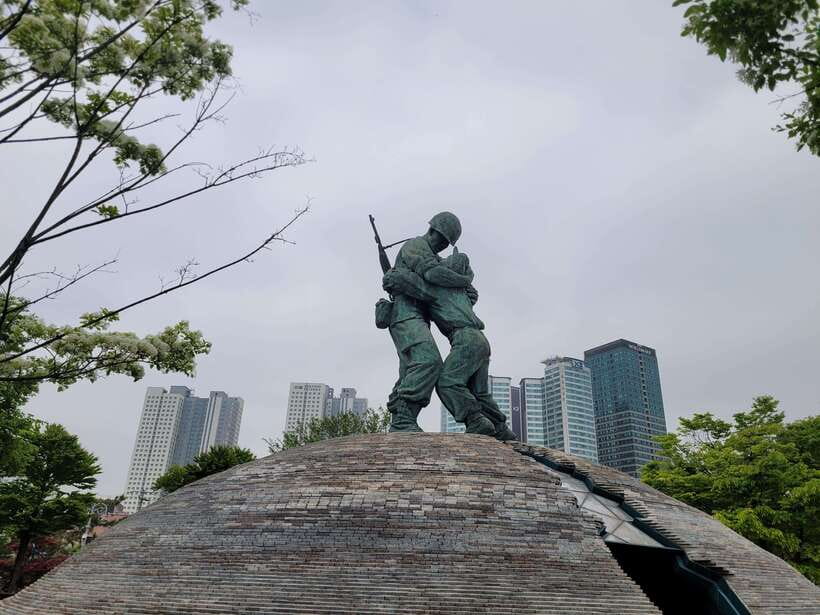
- Meeting Under The Statue of Brothers: Get Oriented in Minutes
- The 2-Hour Walk: What Happens Between Start and Finish
- Stop 1: 형제의 상 (Statue of Brothers area)
- Stop 2: War Memorial of Korea guided portion (Korean War Rooms I–III)
- Stop 3: 전쟁기념관 (War Memorial area exit/finish)
- Hidden Stories and Document Copies: Why The Guide Changes Everything
- The Guide: English, Structure, and Room for Questions
- What You’ll Learn About Modern Korea (Without Leaving You With Just Facts)
- Price and Value: $100 Per Group Up to 5, for 2 Hours
- Practical Stuff That Helps: What to Wear, What to Bring, What to Ask
- Who This Tour Fits Best (And Who Might Want Another Option)
- Should You Book This Korean War Memorial Private Tour?
- FAQ
- How long is the Seoul War Memorial private guided museum tour?
- What is the price for this tour?
- Is the tour private?
- What language is the live guide?
- Where do we meet?
- How do I get to the meeting point from the subway?
- What does the guided tour include?
- Is food or drink included?
- Is the tour wheelchair accessible?
- Is the tour suitable for visually or hearing-impaired visitors?
- What should I know about cancellation and payment?
Key Highlights You’ll Feel During the Tour
- Korean War Rooms I–III focus: you’re guided straight to the heart of the conflict, not wander time.
- DMZ preparation: the tour is set up to help you understand what you’ll see later.
- Neutral, balanced framing: the explanations aim to cover more than one viewpoint.
- Document-style extras: you get complementary materials like pictures and document copies to support what you see.
- Small private group (up to 5): less waiting, more room for your questions.
- Expert backgrounds in history and peace: guides bring history, politics, and peace-studies experience to the walkthrough.
A handful of other Seoul experiences to line up next
- Seoul: Night Market Food Tour with Local Guide★ 4.9 · 943 reviews
- DMZ Guided Tour with Suspension Bridge / Gondola from Seoul★ 5.0 · 876 reviews
- Seoul: Palace, Temple and Market Guided Foodie Tour at Night★ 4.9 · 750 reviews
- Downtown Seoul Guided Food & Market Tour with 8+ Local Tastings★ 5.0 · 580 reviews
Why The Korean War Rooms Matter (Especially If You’re Planning the DMZ)
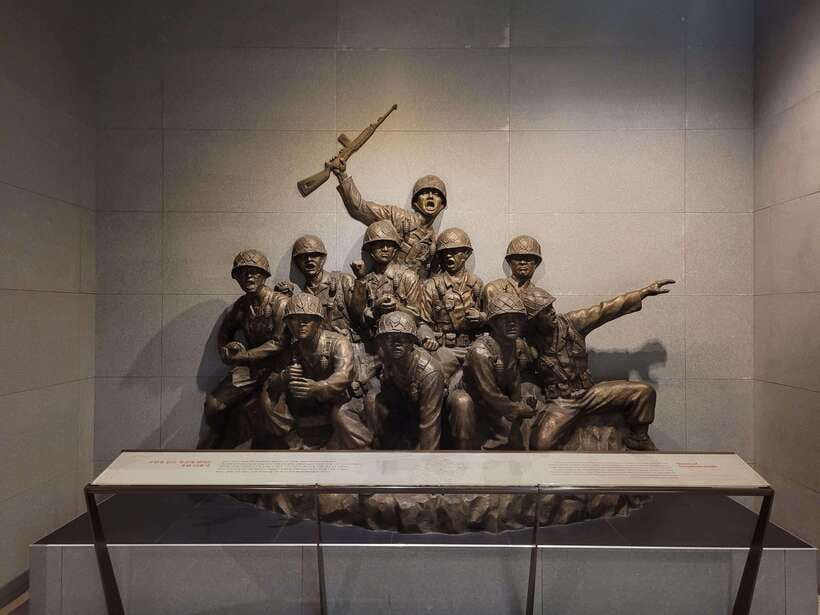
The Korean War is the backbone story for modern Korea. You can see it in everyday life, in the politics, and in why the peninsula still feels unfinished. This tour helps you connect the dots in a way that’s hard to do alone because the War Memorial is big and the details are easy to miss.
The big value here is that you’re guided through Korean War Room I–III with a “civil and international” perspective. That means you’re not only looking at battle images. You’re also encouraged to think about the broader forces at work—how conflict affected civilians and how international involvement shaped the path forward. The goal is understanding, not scoring points.
And if your next stop is the DMZ, this is the smart warm-up. DMZ tours make much more sense when you already understand the war’s sequence and stakes. Otherwise, the border can feel like a stand-alone sight. With this tour, it feels like the next chapter of the same story.
Meeting Under The Statue of Brothers: Get Oriented in Minutes
Your meeting point is under the Statue of Brothers at the War Memorial of Korea, on the south-west corner of the exterior exhibit area. If you’re coming via subway, the tour notes that the statue is easy to spot when you enter the War Memorial from Exit 12 of Samgakji Station (Subway Line 4 & 6).
This is one of those details that saves time. When you arrive, you want the tour to start with you already oriented—no long hunt, no stress. Once you’ve found the statue, you’ve basically found the right corner of the complex, and the walking tour can flow.
Tip: if you’re arriving slightly early, use that time to scan the area around the statue. It’s your visual reference point for the start and helps you track where you are when you move deeper into the museum.
The 2-Hour Walk: What Happens Between Start and Finish
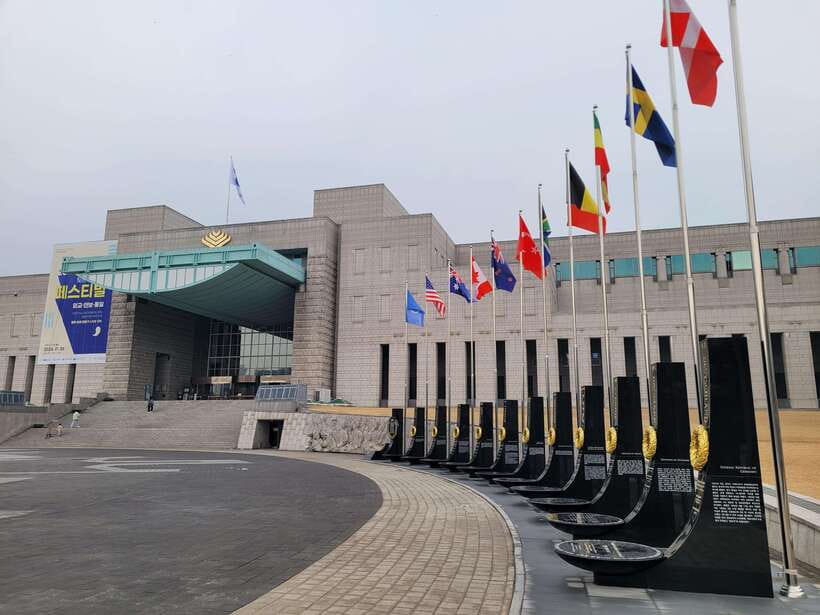
You’ll spend about 2 hours inside the museum during the guided walkthrough. The tour is structured as a walking tour, and the experience is designed to stay on track through the key Korean War Rooms.
More guide-to-yourself private days in Seoul


Stop 1: 형제의 상 (Statue of Brothers area)
This opening area matters more than you might think. It sets the tone. You’re starting at a place that symbolically ties to the idea of division and family separation—an emotional frame that makes the later room explanations land harder.
This is also where you can ask practical questions right away, like what themes you should pay attention to in the Rooms I–III. A good guide will steer you to the right details before you even enter the main exhibition sections.
Stop 2: War Memorial of Korea guided portion (Korean War Rooms I–III)
This is the heart of the tour. The guide focuses your attention on features connected to the Korean War across the Rooms I–III. Instead of telling you to read everything yourself, they guide you to what to notice and what it means.
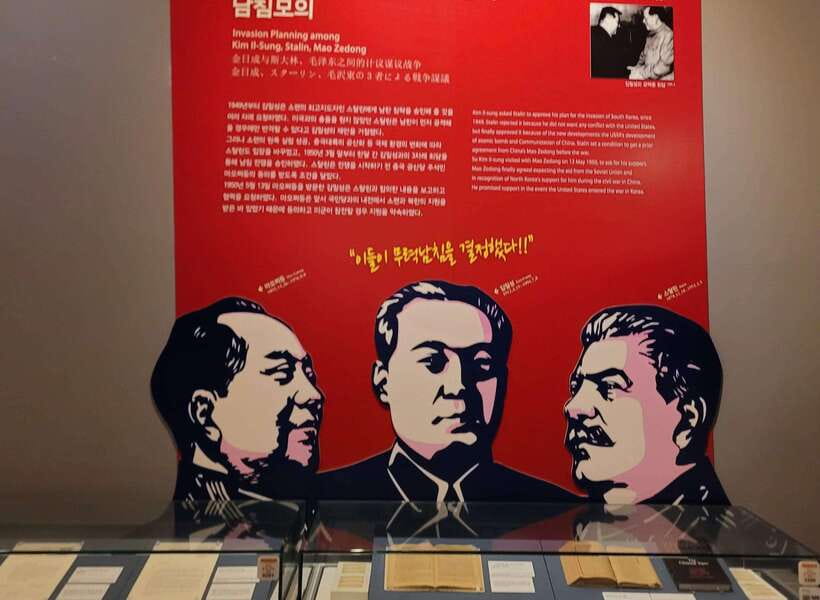
You can expect complementary materials to come into play during the walk—pictures and copies of documents. That’s a practical upgrade. In a museum, it’s easy to feel like you’re seeing “stuff” without structure. Handouts and image copies help you keep the thread and remember what matters.
Stop 3: 전쟁기념관 (War Memorial area exit/finish)
The finish is listed as 전쟁기념관, meaning you end back within the War Memorial grounds rather than being dropped somewhere remote. That’s helpful if you want to keep exploring on your own right after.
A good moment at the end is to ask your last questions. By this point, you’ve built a map in your head. Anything the guide points out now tends to stick because you finally know where it fits.
Hidden Stories and Document Copies: Why The Guide Changes Everything
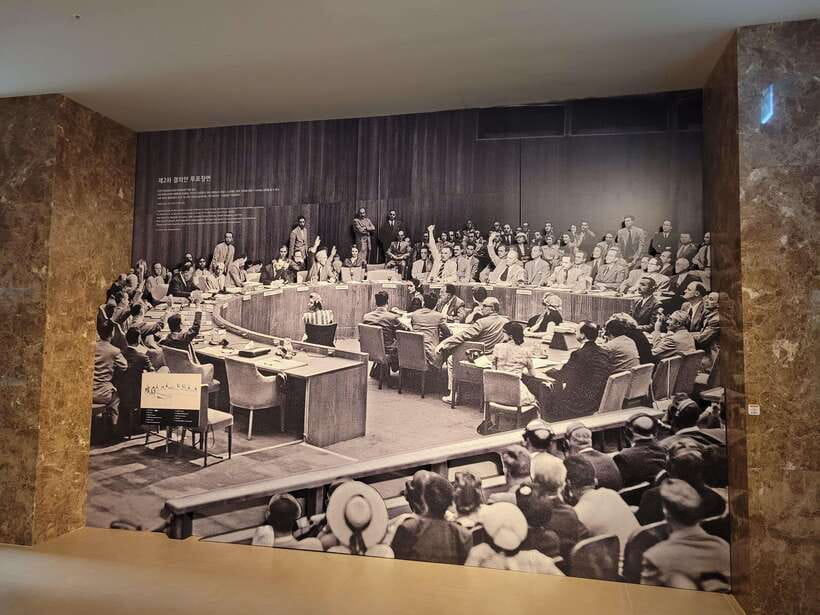
The standout promise of this tour is not just “see the exhibits.” It’s the idea of hidden stories and material that doesn’t naturally jump out when you’re browsing alone.
Here’s what that looks like in practice:
- You’re shown different aspects of the Korean War as something more than a timeline of events.
- You’re encouraged to notice details you might skip—especially the parts that help explain why the conflict plays such a long role in two Koreas.
- You get copies and pictures that support what you see, so you don’t leave with blurry memories.
In plain terms, the guide helps you turn museum viewing into understanding. Without a guide, you can absolutely browse the War Memorial yourself. But the museum is large, and the story can blur without a person guiding your attention.
Also, the tour’s stated approach aims for a neutral and well-balanced perspective. That doesn’t mean the guide pretends everything is the same. It means you’re less likely to walk away with a one-sided interpretation that only matches the most obvious narrative inside a museum room.
I liked that the explanations connected facts to human impact. Some guides can drown you in dates. The better ones keep the timeline grounded in what it meant for real people.
The Guide: English, Structure, and Room for Questions
This is a private tour, so you’re not squeezed into a loud group where questions vanish into the crowd. The tour is designed for one group up to 5 persons, which usually means better conversation and a smoother pace.
The guide is explicitly English live, and several visitors highlight that the guides speak excellent English and answer follow-up questions with confidence. Kichan Lee is named by multiple people as a strong example of that style—clear, objective, and willing to go deeper when you ask.
You’ll also notice the guide’s professional background is part of the point. The tour emphasizes expertise in Korean history and politics, along with peace activism or peace studies, plus DMZ tour experience. That combination matters. It shapes how the guide frames the material: history as cause-and-effect, and peace as the reason you still study this today.
If you like asking questions, you’ll likely get your money’s worth from the conversation alone. When a guide can handle follow-ups, the tour becomes less like a lecture and more like guided learning.
What You’ll Learn About Modern Korea (Without Leaving You With Just Facts)
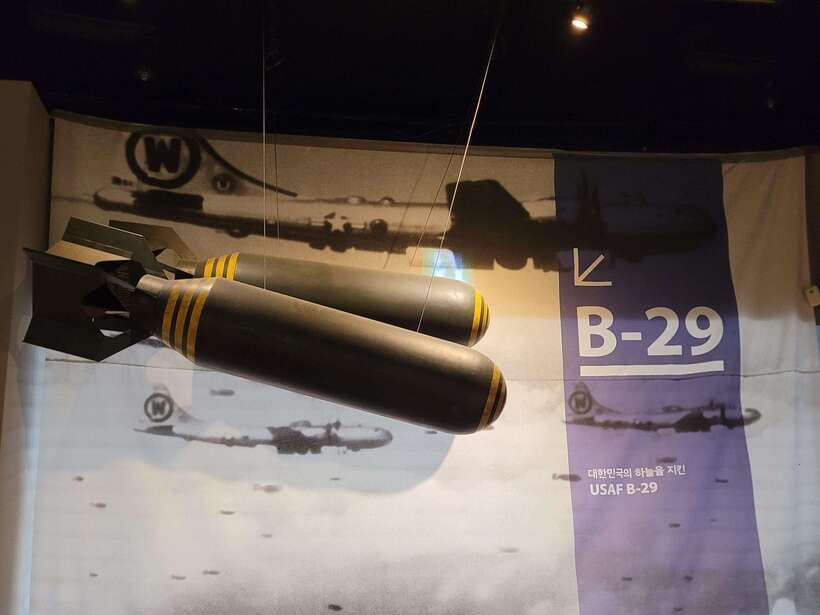
The core learning outcome is understanding why the Korean War is key to modern Korea—and why the two Koreas look the way they do today.
By moving through the Korean War Rooms in a structured way, you should walk away with:
- A clearer sense of how the war escalated and why it mattered beyond the battlefield.
- A better grasp of the role of civilians and society in wartime, not just military moves.
- A more nuanced view of competing perspectives, presented with care and balance.
One theme that shows up in how people describe the experience is the focus on the social side of the war. That’s the part most visitors miss when they only skim exhibits. Society is where war leaves the long fingerprints—families, displacement, political choices, and the long shadow of what happened next.
There’s also a practical reason this works: you leave knowing what to pay attention to afterward. If you visit the DMZ next, you’re not just seeing a border. You’re seeing the aftermath of decisions and conflict that you now understand in context.
Price and Value: $100 Per Group Up to 5, for 2 Hours
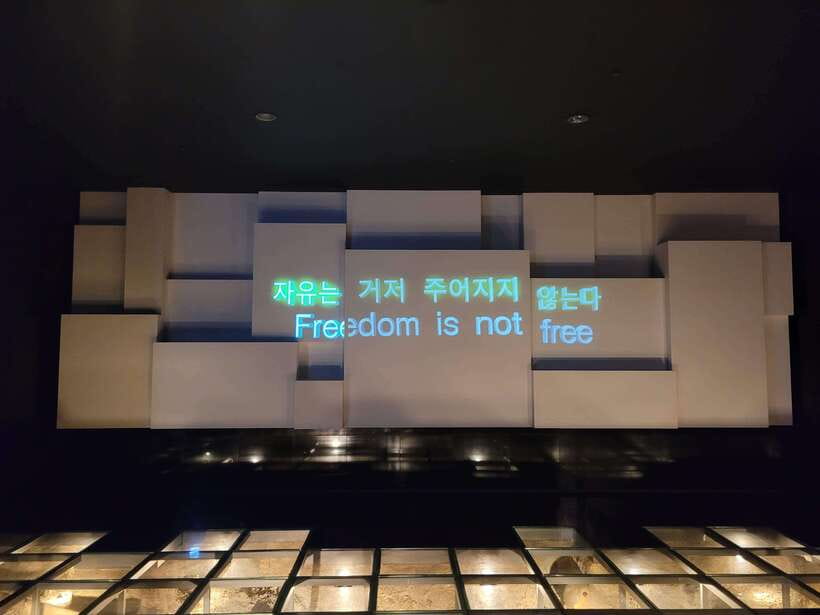
At $100 per group up to 5, this is priced like a small private add-on rather than a per-person ticket. That can make it a good deal if you travel as a pair or a small group.
Here’s the math you can use:
- Up to five people split the cost, so the per-person rate can be low when the group is full.
- If it’s just you or two people, the cost per person rises, but you’re still paying for the private format, the guide attention, and the structured focus on Rooms I–III.
Also, you’re not just paying for someone to point at display labels. You’re getting:
- a guide with history/politics/peace-studies background,
- a planned two-hour route through the key rooms,
- complementary picture and document materials,
- a private setting where questions are welcomed.
So the value isn’t only in access. It’s in how you experience the museum. If you care about interpretation and context, the guide time is the product.
If you just want to casually stroll and read at your own pace, a self-guided visit might be cheaper. But if you want the “I finally get it” feeling, a guided approach is usually the better value.
Practical Stuff That Helps: What to Wear, What to Bring, What to Ask
This is a walking tour inside the museum. You’ll want comfortable shoes. Also, since food and drink are not included, plan to eat before or after, not during the tour window.
Since you’ll get copies and pictures, you might want to bring something to hold them—like a small folder or zip bag—especially if you’re taking them home as references.
Before you start, think about what kind of answers you want. For example:
- Do you want help understanding the timeline?
- Do you want help connecting the war to today’s political situation?
- Are you especially curious about civilian impact?
A good guide can steer you toward what matters in the rooms. And since this is private, you can shape the tour to your interests without derailing it.
Who This Tour Fits Best (And Who Might Want Another Option)
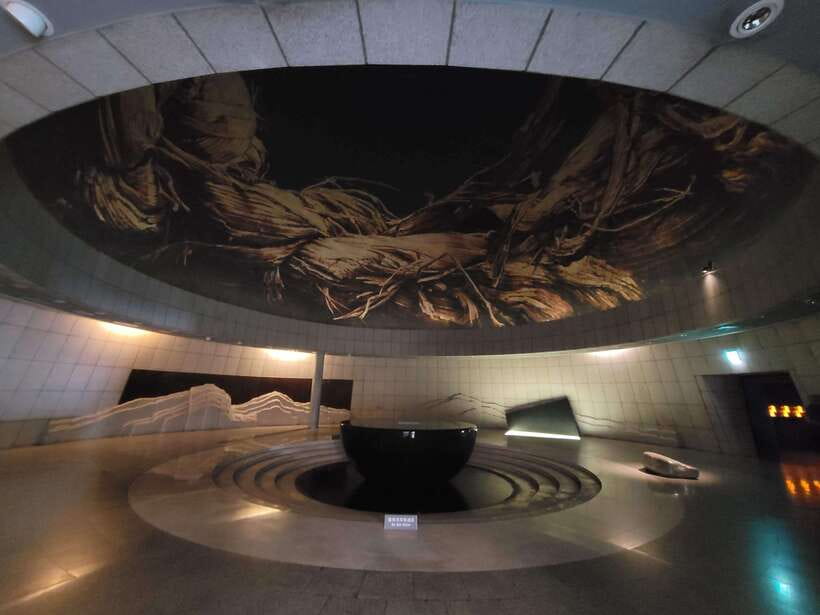
This private guided tour is a good match if you:
- want a clear, structured introduction to the Korean War,
- plan to go on a DMZ tour later,
- prefer balanced context rather than a purely one-sided museum walk,
- travel as a pair or small group (up to 5).
It’s listed as wheelchair accessible, which is a helpful point if mobility is a factor. On the other hand, it’s marked not suitable for visually impaired people and not suitable for hearing-impaired people. If either of those applies, you’ll want to consider another option where accommodations are clearer.
One more reality check: if you’re the type who needs to linger and read every single label, two hours can feel tight. That’s not a dealbreaker, but it’s the kind of consideration that affects your enjoyment.
Should You Book This Korean War Memorial Private Tour?
If you’re even slightly curious about why the Korean peninsula is still divided, I think this is a strong booking. The private group format, the focus on Korean War Room I–III, the English guidance, and the balanced framing add up to a tour that’s more than just a walkthrough.
Book it if:
- you want your DMZ visit to make sense,
- you want context and interpretation, not just photos and captions,
- you like being able to ask follow-up questions.
Skip it or adjust expectations if:
- you only want casual museum browsing,
- you need a longer stay in one section to read slowly,
- accessibility needs don’t match what’s listed for this experience.
If your goal is to leave the War Memorial with a connected understanding of the Korean War, this private guided tour is one of the smartest ways to do it.
FAQ
How long is the Seoul War Memorial private guided museum tour?
The tour lasts 2 hours.
What is the price for this tour?
It’s $100 per group up to 5 people.
Is the tour private?
Yes. It’s a private group tour for up to 5 people.
What language is the live guide?
The live tour guide is English.
Where do we meet?
Meet under the Statue of Brothers in the south-west corner of the exterior exhibit area of War Memorial of Korea.
How do I get to the meeting point from the subway?
When you come to the War Memorial from Exit 12 of Samgakji Station (Line 4 & 6), the Statue of Brothers is very easy to find.
What does the guided tour include?
You get a tour guide and a walking tour of the museum.
Is food or drink included?
No. Food and drink are not included.
Is the tour wheelchair accessible?
Yes, it is listed as wheelchair accessible.
Is the tour suitable for visually or hearing-impaired visitors?
No. It is marked not suitable for visually impaired people and not suitable for hearing-impaired people.
What should I know about cancellation and payment?
Free cancellation is available up to 24 hours in advance for a full refund, and you can reserve now and pay later.
More Guided in Seoul
- Seoul: Night Market Food Tour with Local Guide★ 4.9 · 943 reviews
- DMZ Guided Tour with Suspension Bridge / Gondola from Seoul★ 5.0 · 876 reviews
- Seoul: Palace, Temple and Market Guided Foodie Tour at Night★ 4.9 · 750 reviews
- Downtown Seoul Guided Food & Market Tour with 8+ Local Tastings★ 5.0 · 580 reviews
- Seoul: DMZ Guided Tour with Suspension Bridge and Gondola★ 4.9 · 553 reviews
More Tours in Seoul
- Best DMZ Tour Korea from Seoul (Red Suspension Bridge Optional)★ 5.0 · 41,422 reviews
- DMZ Tour: 3rd Tunnel, Option(Suspension Bridge, Boat) from Seoul★ 5.0 · 21,373 reviews
- DMZ tour south Korea from Seoul (NK experience hall, defector)★ 5.0 · 20,599 reviews
- Seoul: DMZ Tour with Optional Suspension Bridge★ 4.8 · 5,277 reviews
- Seoul: DMZ The 3rd Tunnel and Suspension Bridge Tour★ 5.0 · 4,656 reviews
More Tour Reviews in Seoul
- Best DMZ Tour Korea from Seoul (Red Suspension Bridge Optional)★ 5.0 · 41,422 reviews
- DMZ Tour: 3rd Tunnel, Option(Suspension Bridge, Boat) from Seoul★ 5.0 · 21,373 reviews
- DMZ tour south Korea from Seoul (NK experience hall, defector)★ 5.0 · 20,599 reviews
- Seoul: DMZ Tour with Optional Suspension Bridge★ 4.8 · 5,277 reviews
- Seoul: DMZ The 3rd Tunnel and Suspension Bridge Tour★ 5.0 · 4,656 reviews
Just added to Exploring Seoul




Museums, compared.
 ★ 5.0DMZ Tour + The War Memorial of Korea MuseumFrom $6528 reviews
 ★ 4.0Color Pool MuseumFrom $1322 reviews
 ★ 4.7SEOUL: Gugak – Korean Traditional Music Museum&Concert TourFrom $4917 reviews
 ★ 5.0National Museum of Korea Guided TourFrom $3813 reviews
 ★ 4.5Gyeongju UNESCO Sites Tour by KTX train; The Museum Without wallsFrom $47011 reviews
 ★ 5.0Time Travel in Seoul: Gyeongbokgung, Folk Museum & BukchonFrom $5410 reviews
 ★ 4.8Layover tour to Gyeongbokgung-Folk Museum-Bukchon-InsadongFrom $2546 reviews
 ★ 5.0Time Travel in Seoul: Gyeongbokgung Palace, Folk Museum & BukchonFrom $576 reviews
Browse the lists this tour appears in