
Reviewed · GYEONGBOKGUNG & PALACE TOURS
Layover tour to Gyeongbokgung-Folk Museum-Bukchon-Insadong
Six hours can still feel like Seoul. This private Incheon layover tour is built around the real stuff: palace meaning, traditional neighborhoods, and a smooth return to Seoul Station.
I especially like how Gyeongbokgung Palace is explained through Joseon-era Confucian thinking, not just photo stops. I also love the Bukchon stop for the way hanok streets let you see old and new Seoul in the same frame.
One consideration: the day is tight by design, and your train timing matters. The tour is structured around an AREX ride back from Seoul Station, so if your layover is short or delays are likely, you’ll want extra buffer time.
In This Review
- Key highlights at a glance
- A layover plan that actually works: ICN pickup to Seoul Station
- Tip that can save your day
- Gyeongbokgung Palace with Joseon Confucian meaning (not just big gates)
- What you’ll do in the two hours
- Korea Folk Museum: ordinary life in the Joseon era
- The main trade-off
- Bukchon Hanok Village: hanoks, big views, and real Seoul in the frame
- Practical photo tip
- Insadong and Jogyesa: the religion side of Korean culture
- What you’ll actually have time to do
- The return ride via AREX: comfortable seats, clear timing, no guesswork
- Price and logistics: what $254 covers (and what it doesn’t)
- Is it good value for a layover?
- Food reality check
- Who this layover tour suits best
- Who might want a different option
- Should you book this layover tour?
- FAQ
- How long is the layover tour?
- Where do I meet the guide?
- Is the tour guided in English?
- What stops are included during the day?
- Is admission to Gyeongbokgung included?
- What train do you take, and what if express is difficult?
- Is food included?
- Can I cancel for a refund?
Key highlights at a glance
- Confucian Joseon context at Gyeongbokgung so the architecture clicks fast
- Bukchon Hanok Village photos with old-meets-new Seoul views
- Korea Folk Museum life-cycle exhibits from birth to illness and death
- Jogyesa Buddhist Temple as a major Korean Buddhism headquarters near Insadong
- Private, English live guide (Paul Koo) who also helps with picture spots
Keep walking the palaces of old Seoul
- Seoul: Gyeongbok Palace, Bukchon Village, and Gwangjang Tour★ 4.9 · 2,321 reviews
- Best Seoul City Tour (Gyeongbokgung Palace,Insadong,Namsan Tower)★ 5.0 · 1,647 reviews
- Small-Group Royal Palace and Seoul City Tour (hotel pick-up)★ 5.0 · 1,474 reviews
- Seoul City Sightseeing Tour Including Gyeongbokgung Palace, N Seoul Tower, and Namsangol Hanok Village★ 5.0 · 1,423 reviews
A layover plan that actually works: ICN pickup to Seoul Station
This is the kind of layover tour that makes sense if you want more than a quick walk outside the airport. You meet at Incheon International Airport (ICN) and your guide brings you into Seoul, then walks you back to Seoul Station so you can catch your train to Incheon.
The schedule is simple and practical: a half-day circuit with guided time at the big cultural stops, plus enough transit time to avoid panic. If you meet at 7:00am at ICN, the day ends around 1:00pm at Seoul Station for the return trip. That 6-hour window is the whole point—so you get depth without turning your layover into a second job.
One smart detail is how the guide handles train choice. The plan uses AREX express service when timing works, but if express trains would force a long wait, you’ll switch to the normal option (with about a 20-minute difference noted in the tour information). Express runs often, and it’s on designated seats—great when it lines up with your timing, stressful when it doesn’t.
Tip that can save your day
If you’re booking a layover, don’t treat train timing like a suggestion. Plan for buffer. Trains might be frequent, but your whole day hinges on meeting the guide on time and arriving at Seoul Station with enough margin for platform changes and boarding.
Gyeongbokgung Palace with Joseon Confucian meaning (not just big gates)
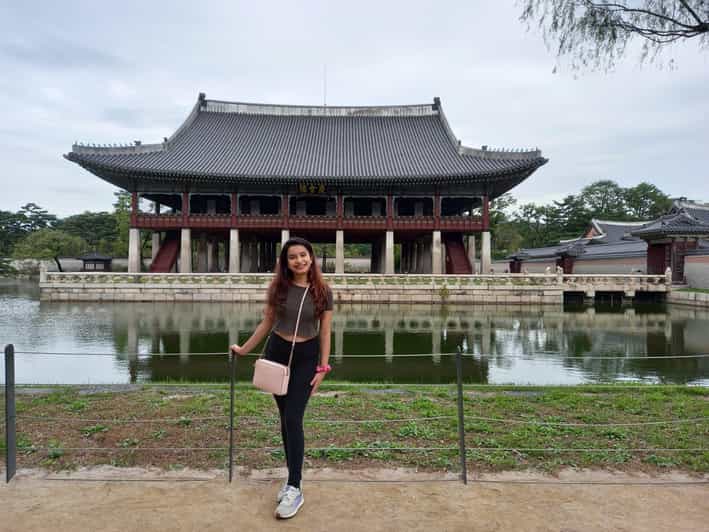
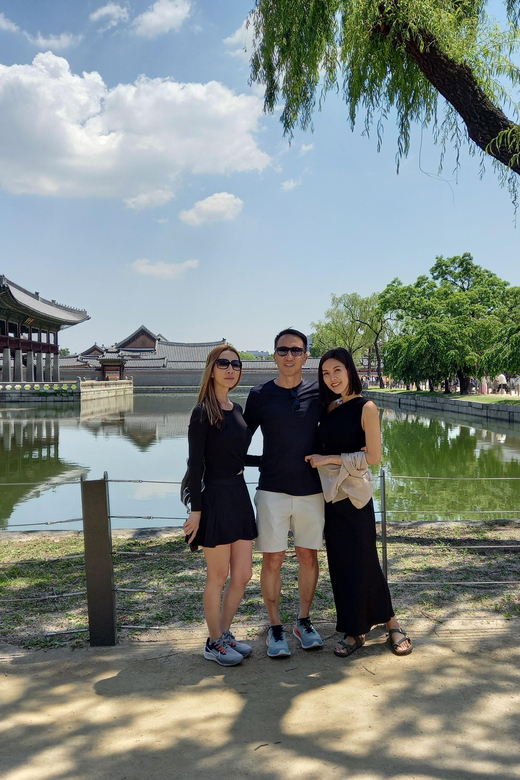
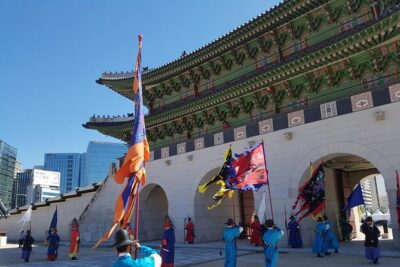
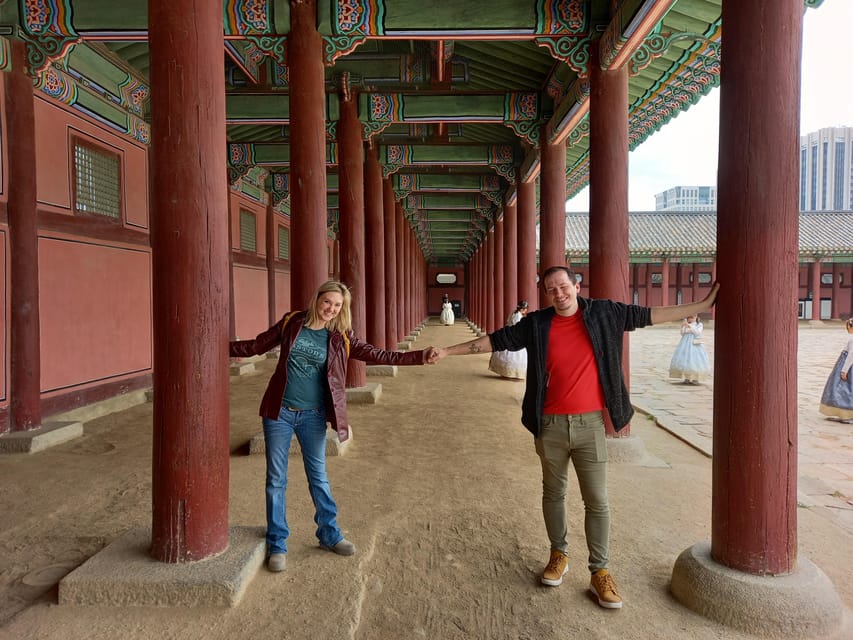
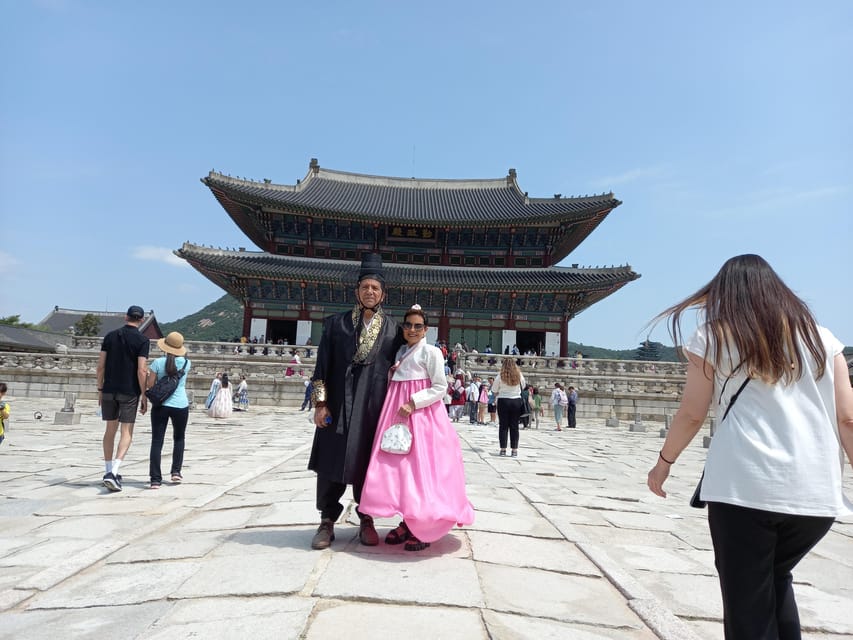
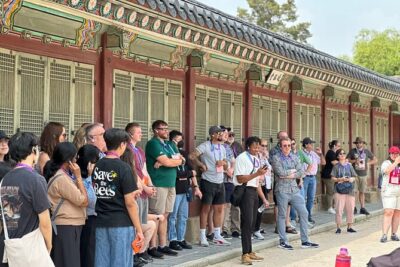
Gyeongbokgung Palace is the headline for a reason. It’s described as the highlight and essence of Korean palace culture, and it’s also tied closely to Korea’s cultural identity. The tour time set aside here is about two hours, which is enough to see the main areas without feeling rushed through everything.
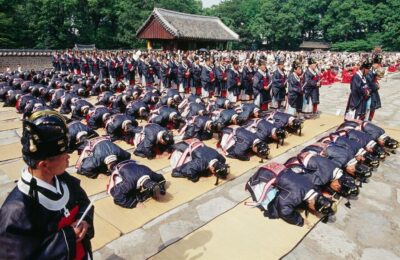
Here’s what makes this stop more than a pretty palace: the guide frames it through Joseon-era Confucianism. The tour information connects architectural choices to the spirit of the times—essentially, how Confucian thinking shaped royal design. In other words, you’re not just admiring roofs and courtyards. You’re being shown how the layout and architectural style relate to the values of the Joseon dynasty.
Some concrete context you’ll hear while you’re there:
- Gyeongbokgung was built as the main palace in 1395
- It’s described as the largest palace of its kind, and notably the only palace built on flat land
- The guide ties architecture to cultural identity, not just aesthetics
I like that this approach changes your experience. Without the framing, a palace can turn into “cool buildings I walked past.” With the framing, you start seeing why the palace is arranged the way it is, and what the symbolism would have meant in daily court life.
More hanok lanes and rooftops around Bukchon
What you’ll do in the two hours
Expect a guided walk focused on reading the palace as a cultural system: architecture, meaning, and the big visual moments you came for. You’ll also be in a position to take better photos because you’re not guessing where to stand—you’re shown key viewpoints for the space.
Korea Folk Museum: ordinary life in the Joseon era
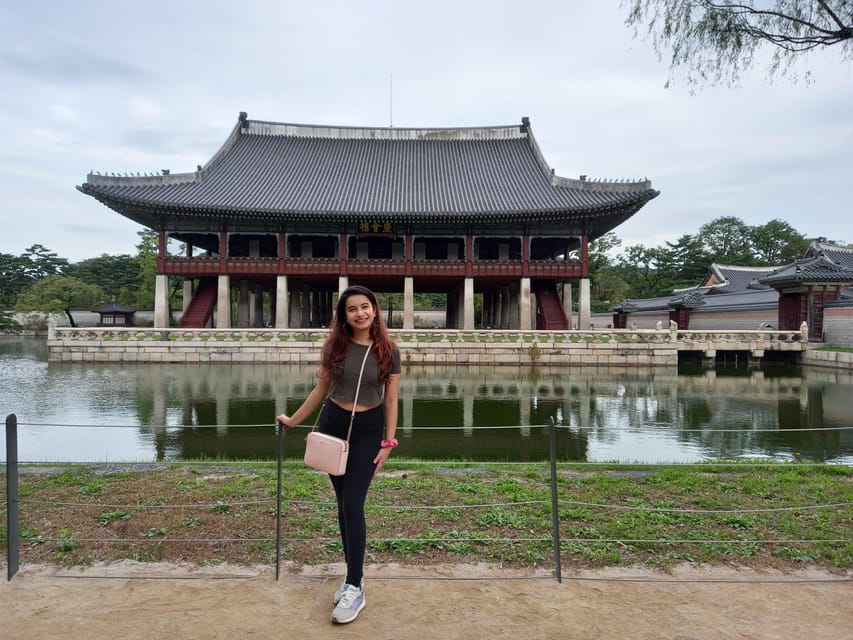
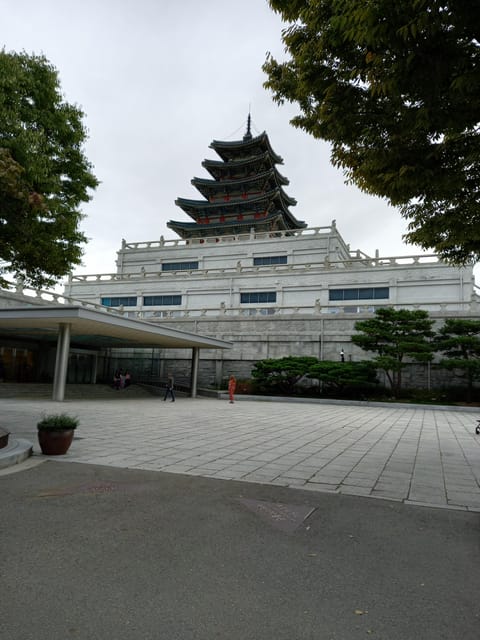
After the palace, you shift from royal ideology to everyday culture. The National Folk Museum of Korea stop is shorter—about 30 minutes—so this isn’t meant to be a full museum marathon. It’s more like a powerful cultural “switch”: you move from palace authority to the lives people actually lived.
The tour description emphasizes exhibits that cover the full life process in Joseon-era society, including:
- birth and growth
- marriage
- aging and everyday illness
- treatment and the journey toward death
What I like about that focus is that it makes tradition feel human. Even in a short visit, you get a clearer sense of how rituals and life events shaped social identity—especially because the tour info highlights ceremonial and commemorational rituals connected to those stages.
The main trade-off
Because time is limited, you’ll probably see highlights rather than every exhibit. If you’re the type who loves museum deep dives, you might want an extra day in Seoul. If you just want a fast, meaningful snapshot that complements Gyeongbokgung, this stop hits the target.
Bukchon Hanok Village: hanoks, big views, and real Seoul in the frame
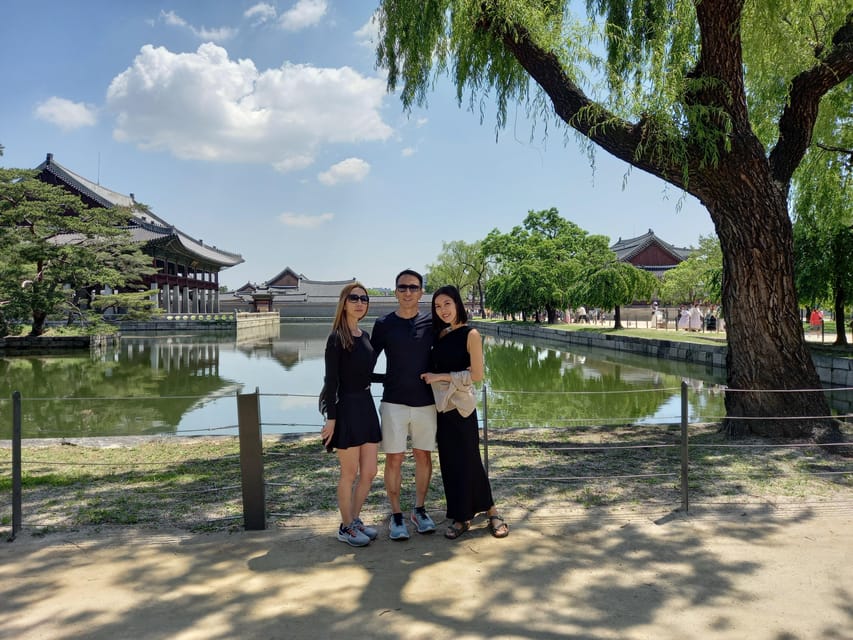
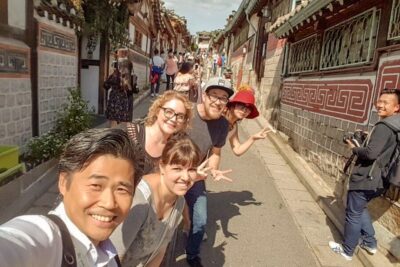
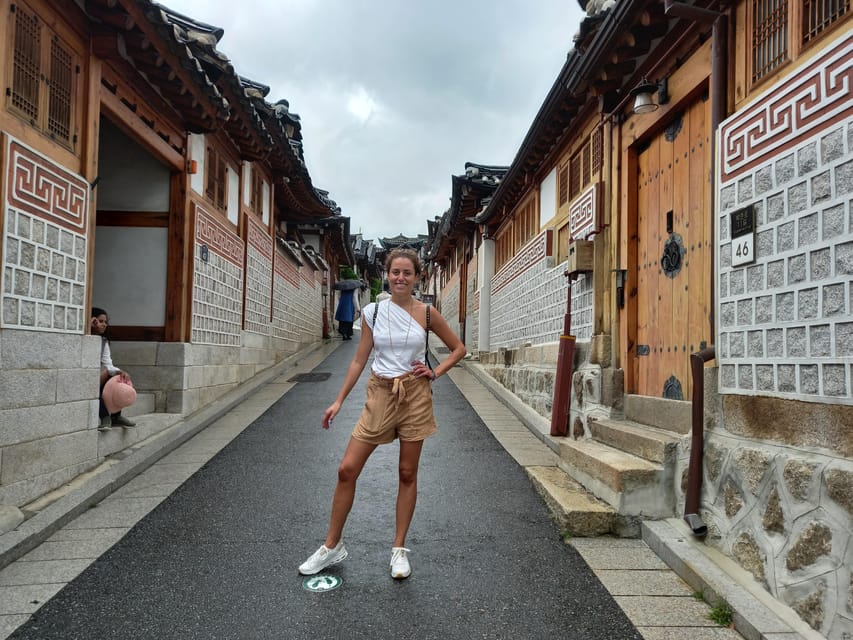
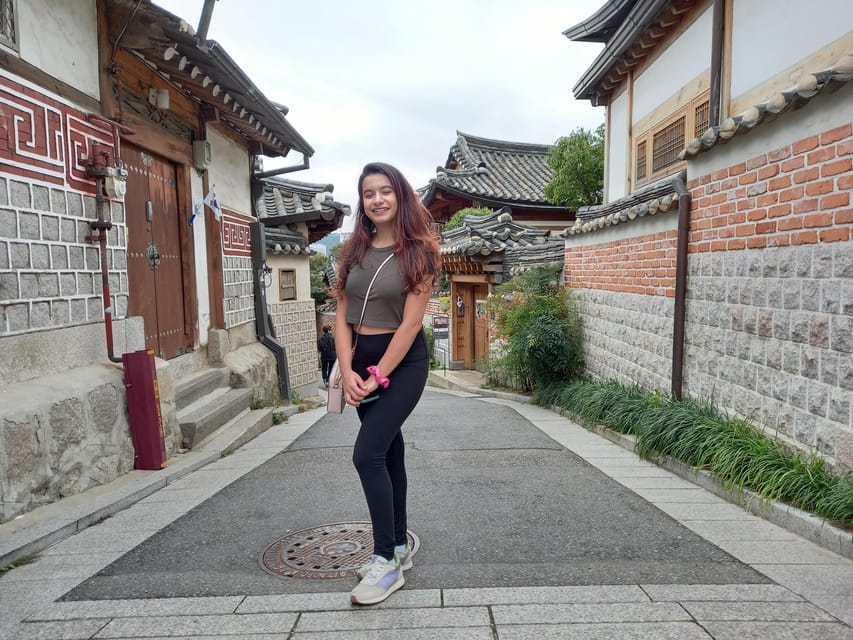
Next comes Bukchon Hanok Village (Bukchon Hanok Maeul), with about 40 minutes of guided time. This is one of those places where the photos come out better because the guide helps you read the area.
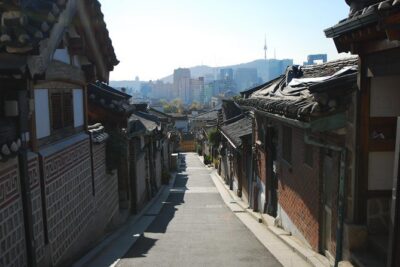
The tour description calls Bukchon a traditional hanok village with a cluster of about 1,000 hanoks. The best part is the visual contrast: you can see traditional hanok architecture while also catching modern Seoul elements like skyscrapers and even N Seoul Tower in the background.
I love that this stop makes Seoul feel layered. It’s not just “old Korea” in a museum-like setting. It’s old Korea living inside a city that never stops moving.
Practical photo tip
In the reviews, Paul Koo specifically helped with the best picture spots and even took photos for guests without extra charge, then sent them at the end of the trip. Even if you’re not counting on photo help, use the guided stops here to grab your angles efficiently. With limited time, that matters.
Insadong and Jogyesa: the religion side of Korean culture
The day ends with time around Insadong street (about one hour), and this is where Jogyesa Buddhist Temple fits in. Jogyesa is described as small, but important as the headquarters of Korean Buddhism, built in 1926 and located in Insadong. It’s also noted as being adjacent to Gyeongbokgung, which helps explain why it’s a natural “palace neighbor” on this kind of route.
Even if you’re not a temple person, Jogyesa gives you a different cultural lens. Gyeongbokgung focuses on royal Confucian order; Jogyesa introduces another major thread of Korean life—Buddhism—centered in a living religious headquarters rather than a decorative backdrop.
What you’ll actually have time to do
With only an hour for the Insadong area, you’re working with a walking-and-looking window, plus your guided explanation. You won’t be turning this into a shopping expedition, and the tour isn’t presented that way. It’s more about understanding the area and taking in the historic feel.
This stop is also a good pace change. After lots of palace-and-museum time, walking through a neighborhood gives you space to reset before the train back.
The return ride via AREX: comfortable seats, clear timing, no guesswork
The tour includes getting you from the city back to the airport-ready point: Seoul Station. The tour information explains that after your final sightseeing, your guide escorts you to Seoul Station so you can take the train departing to Incheon Airport.
The transportation plan uses AREX-style express service when possible. The details you should care about:
- Express moves almost every one hour
- In peak season, it can be sold out, so advance planning matters
- Express uses a designated-seat system (the tour information also notes comfortable amenity)
- If express timing would cause a wait longer than about 20 minutes, the tour switches to a normal train instead
I like that the tour accounts for real-world timing differences. It means your day is less likely to stall at the station. Still, the big lesson is this: designated seats and sold-out trains are real in Seoul. If your itinerary is already at the edge, the extra time cushion is your friend.
Price and logistics: what $254 covers (and what it doesn’t)
At $254 per group up to 1, you’re not paying per museum ticket. You’re paying for a guided 6-hour cultural circuit plus included entry and transport components.
From the tour info, the included pieces are:
- A 6-hour live English guide and guide information
- Transportation tied to the airport-to-seeing-stops-and-back flow, including the AREX train cost for the airport side of the day
- Gyeongbokgung Palace admission
- The route that brings you back to Seoul Station so you can depart for ICN
Not included:
- Food and beverage
- Insurance
Is it good value for a layover?
For a layover day, the value is mostly in two things: (1) saving you from transit confusion, and (2) having someone connect the sites with context. Your time at the palace and Bukchon isn’t just “walking between landmarks.” It’s guided interpretation, and that’s what makes short visits feel worthwhile.
If you’re traveling solo, a private guide can be a better deal than it sounds, because the alternative is often paying for multiple day-tickets, transit complexity, and the risk of missing key viewing areas.
If you already know Seoul very well and can build your own palace-and-museum route without stress, you might find cheaper options. But for a first Seoul layover—or if you value not thinking—this one is priced like convenience plus cultural depth.
Food reality check
Since meals aren’t included, you’ll want a simple plan. Either grab something quick before the tour starts (depending on your flight schedule), or plan to buy snacks and drinks on your own. The tour keeps you moving, so treat food as fuel, not an extra tour stop.
Who this layover tour suits best
This experience is a strong fit if:
- You have a layover and want a cultural plan that doesn’t fall apart at the train station
- You care about understanding Korean architecture and Joseon-era ideas, not just surface visuals
- You want a private English guide for a stress-light day
- You’d rather see a few places well than chase many places with no context
It’s also a great fit for travelers who like photography support. Paul Koo’s help with picture spots and sending photos at the end is a real bonus if that matters to you.
Who might want a different option
If you want a relaxed pace with long museum time, you might find the museum and neighborhood stops too short. This tour is built for efficiency.
Should you book this layover tour?
I’d book it if your goal is a meaningful Seoul taste during a short connection. Gyeongbokgung with Joseon Confucian context, Bukchon with classic hanok views, and a quick hit of folk culture create a well-rounded day in a compact time window. Add Jogyesa near Insadong, and you get a second cultural perspective beyond palace life.
The one thing I’d watch closely is your layover slack. Trains can work smoothly, but your day is tied to meeting on time and getting back to Seoul Station for your return to ICN. If you’ve got even a little extra breathing room in your schedule, this tour turns that spare time into something memorable.
FAQ
How long is the layover tour?
The tour lasts 6 hours. Meeting time is chosen after booking, and there’s an example that if you meet at 7am at ICN, it ends around 1pm at Seoul Station.
Where do I meet the guide?
You meet the guide at Incheon International Airport (ICN). The guide meets you at the airport and guides you to the tour area and back to Seoul Station.
Is the tour guided in English?
Yes. The tour includes a live English guide.
What stops are included during the day?
The tour includes Gyeongbokgung Palace, National Folk Museum of Korea, Bukchon Hanok Village, and Insadong street. It also includes Jogyesa Buddhist Temple as part of the day.
Is admission to Gyeongbokgung included?
Yes. Gyeongbokgung Palace admission is included in the tour price.
What train do you take, and what if express is difficult?
You’ll go to Seoul Station by express train or normal train. Express trains run almost every one hour and use a designated-seat system, but if you would have to wait over 20 minutes for the express, the tour switches to the normal train.
Is food included?
No. Food and beverage are not included. You’ll need to plan your own meals or snacks.
Can I cancel for a refund?
Yes. You can cancel up to 24 hours in advance for a full refund.
If you tell me your exact layover length and arrival/departure times, I can help you judge whether 6 hours is a comfy fit or whether you should add more buffer.
More Craft & Tea in Insadong
- Best Seoul City Tour (Gyeongbokgung Palace,Insadong,Namsan Tower)★ 5.0 · 1,647 reviews
- Seoul Highlights: Gyeongbok Palace, Insadong & N Seoul Tower★ 4.7 · 726 reviews
- Small Group Seoul Highlight Tour opt. Hanbok & Tea Ceremony★ 5.0 · 318 reviews
- Korean Palace and Market Tour in Seoul Including Insadong and Gyeongbokgung Palace★ 4.0 · 174 reviews
- Carve Your Personal Korean Stone Seal with Jeongju in Insadong★ 5.0 · 134 reviews
More Hanok Village Wandering
- Seoul: Gyeongbok Palace, Bukchon Village, and Gwangjang Tour★ 4.9 · 2,321 reviews
- Seoul City Sightseeing Tour Including Gyeongbokgung Palace, N Seoul Tower, and Namsangol Hanok Village★ 5.0 · 1,423 reviews
- Seoul: Gyeongbok Palace, Bukchon Village, and Gwangjang Tour★ 5.0 · 1,044 reviews
- Seoul: Gyeongbok Palace and Bukchon Hanok Walking Tour★ 4.8 · 157 reviews
- Best Walking Tour to Gyeongbok Palace Bukchon Hanok Village★ 5.0 · 138 reviews
Still More Palaces to Walk
- Seoul: Gyeongbok Palace, Bukchon Village, and Gwangjang Tour★ 4.9 · 2,321 reviews
- Best Seoul City Tour (Gyeongbokgung Palace,Insadong,Namsan Tower)★ 5.0 · 1,647 reviews
- Small-Group Royal Palace and Seoul City Tour (hotel pick-up)★ 5.0 · 1,474 reviews
- Seoul City Sightseeing Tour Including Gyeongbokgung Palace, N Seoul Tower, and Namsangol Hanok Village★ 5.0 · 1,423 reviews
- Seoul: Gyeongbok Palace, Bukchon Village, and Gwangjang Tour★ 5.0 · 1,044 reviews
Just added to Exploring Seoul
Gyeongbokgung & Palace Tours, compared.
 ★ 4.9Gyeongbok Palace, Bukchon Village, and Gwangjang TourFrom $322,321 reviews
 ★ 5.0Best Seoul City Tour (Gyeongbokgung Palace,Insadong,Namsan Tower)From $581,647 reviews
 ★ 5.0Small-Group Royal Palace and Seoul City Tour (hotel pick-up)From $561,474 reviews
 ★ 5.0Seoul City Sightseeing Tour Including Gyeongbokgung Palace, N Seoul Tower, and Namsangol Hanok VillageFrom $801,423 reviews
★ 5.0Gyeongbok Palace, Bukchon Village, and Gwangjang TourFrom $321,044 reviews
★ 5.0Seoul City Sightseeing Tour Including Gyeongbokgung Palace, N Seoul Tower, and Namsangol Hanok VillageFrom $801,423 reviews
★ 5.0Gyeongbok Palace, Bukchon Village, and Gwangjang TourFrom $321,044 reviews
 ★ 4.9Seoul Half-Day City Highlight, Palace Tour with HanbokFrom $49764 reviews
 ★ 4.9Palace, Temple and Market Guided Foodie Tour at NightFrom $60750 reviews
 ★ 4.7Seoul Highlights: Gyeongbok Palace, Insadong & N Seoul TowerFrom $26726 reviews
Browse the lists this tour appears in