
Reviewed · DMZ DAY TOURS
Private DMZ the 3rd Tunnel Tour from Seoul (optional Red Bridge)
Korean history hits hard at the DMZ. On this private day trip from Seoul, you get a dedicated guide plus hotel pickup for up to six, and the key stops include the Third Tunnel of Aggression and Dora Observatory.
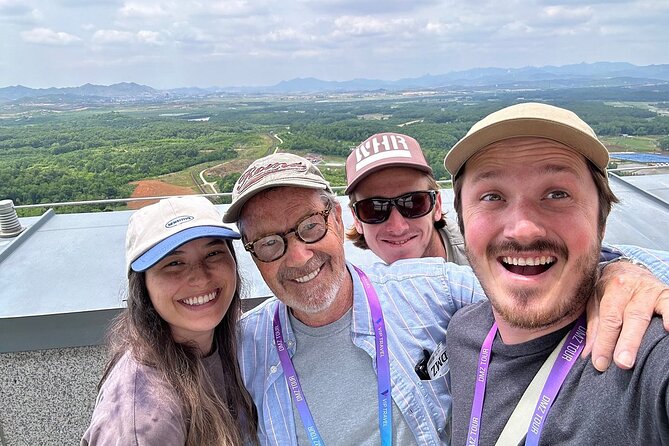
I love the small-group feel, because it keeps questions from piling up. I also love the pacing: you get a mix of short, meaningful memorial walks at Imjingak and longer, ticketed time at the major DMZ sites, with guides like Ray, Alice (of VIP Tour), Lina, Sua, and Diane praised for clear explanations and strong photo help.
One consideration: the timing can shift due to military guidelines, and the day’s order may change with weather or security. Bring your passport, expect possible shuttle logistics once inside the DMZ, and plan for an 8-hour window that can’t be treated like a clockwork museum visit.
In This Review
- Key highlights at a glance
- A Private DMZ Day for Up to 6: What Your $500 Really Buys
- Pickup in Downtown Seoul and the Flow of an 8-Hour Schedule
- DMZ Check-in: Your First Look at the 4 km Buffer
- Imjingak Peace Park: Bridge of Freedom, Memorial Altars, and the Peace Bell
- Imjingak Pyeonghwa Nuri Park (30 minutes, free)
- Bridge of Freedom (about 30 minutes, free)
- Mangbaedan Memorial Altar (about 10 minutes, free)
- Imjin River Dokgae Bridge (about 15 minutes, free)
- Steam Locomotive at Jangdan Station of the Gyeongui Line (about 10 minutes, free)
- Pyeonghwauijong Peace Bell (about 10 minutes, free)
- Unification Bridge (about 10 minutes, ticket included)
- Imjin River views from the bus
- The Third Tunnel: Concrete That Explains a Strategy
- Dora Observatory: The Closest Glimpse of North Korea
- Tongilchon-gil: A Quiet Walk Near the Civilian Control Line
- Gamaksan Chulleong Red Bridge (Optional): Extra Time, Extra Views
- Price, Time, and Value: Is This Worth It for You?
- Practical Tips for a Smoother DMZ Day
- Should You Book This Private DMZ and Third Tunnel Tour?
- FAQ
- How many people are in the private group?
- How long does the tour take?
- Is hotel pickup and drop-off included?
- Do I need a passport?
- Which stops include admission tickets?
- Is lunch included in the price?
- Can I add the optional Red Bridge?
- Can I cancel for a full refund?
Key highlights at a glance
- Private group up to 6 with hotel pickup and drop-off in Seoul
- Ticketed DMZ stops plus the Third Tunnel and Dora Observatory for the North Korea view
- Imjingak Peace sites: Bridge of Freedom, Peace Bell, Unification Bridge, and more
- Imjin River viewpoints from key bridges and even from the bus
- Optional Gamaksan Chulleong Red Bridge if you want one extra hour of stretching your legs
- Passport required and a possible DMZ shuttle transfer for smaller groups
Other ways to reach the DMZ and the border from Seoul
- DMZ Tour: 3rd Tunnel, Option(Suspension Bridge, Boat) from Seoul★ 5.0 · 21,373 reviews
- DMZ tour south Korea from Seoul (NK experience hall, defector)★ 5.0 · 20,599 reviews
- Seoul: DMZ Tour with Optional Suspension Bridge★ 4.8 · 5,277 reviews
- Seoul: DMZ The 3rd Tunnel and Suspension Bridge Tour★ 5.0 · 4,656 reviews
A Private DMZ Day for Up to 6: What Your $500 Really Buys
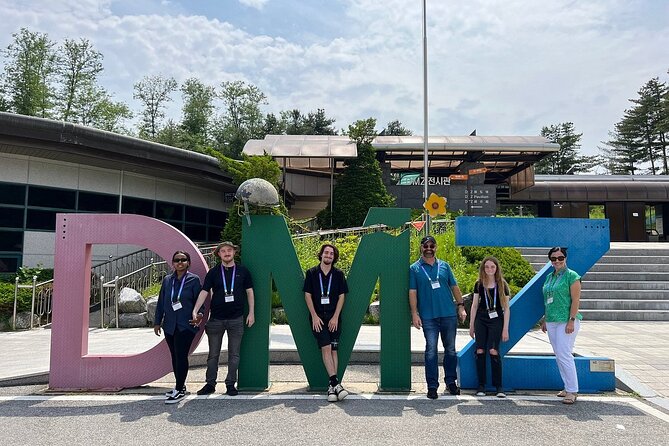
At $500 per group (up to 6), this DMZ experience is priced for families, friend groups, and anyone who wants a calmer day than a large shared tour. The math matters: you are not paying per person after a certain point, and you’re buying control—pickup convenience, a private guide, and the ability to move at a human pace.
For me, the best value here is the guide time. These are complex sites, and you’ll get more out of them if someone can translate what you’re seeing into real context you can actually use later. The tour is set up for English or Chinese speaking guides, and reviews highlight strong communication and attentiveness, with named guides like Ray and Alice, plus drivers such as Andy, getting credit for making the day feel organized and personal.
Also, the itinerary is built with a smart mix: photo-heavy checkpoints and major ticketed attractions, then free memorial sites that let you slow down and absorb what you’re walking past.
Pickup in Downtown Seoul and the Flow of an 8-Hour Schedule
Your day starts with free hotel pickup and drop-off in Seoul’s downtown area. If your hotel is tricky to access, the guide and driver can meet you at a nearby subway station instead. Either way, you’ll be traveling in comfortable transport with a skilled driver, and you’ll receive a mobile ticket.
Plan for this to run about 8 hours. The operator notes that the tour start time may change due to military guidelines, and the schedule can shift because of military issues or weather. Refunds aren’t available for those changes, so treat this as a flexible day in a heavily regulated zone, not a guaranteed-by-the-minute itinerary.
Inside the DMZ area, there’s also a practical detail: if your group is smaller than 30 people, you need to transfer to a group shuttle bus once you’re inside. That doesn’t ruin the day, but it does mean you should expect a handoff—have your passport ready and stay with your guide.
DMZ Check-in: Your First Look at the 4 km Buffer
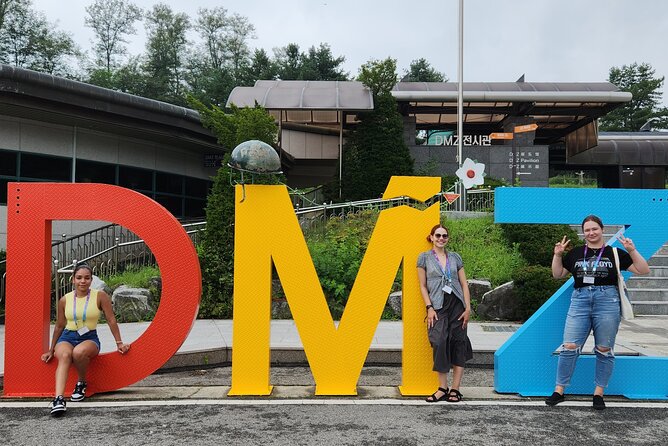
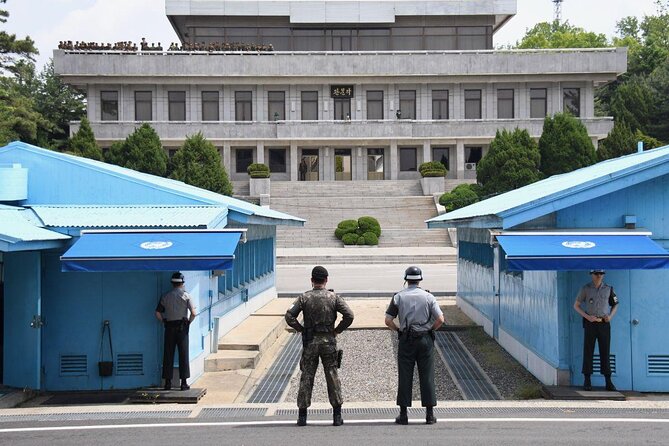
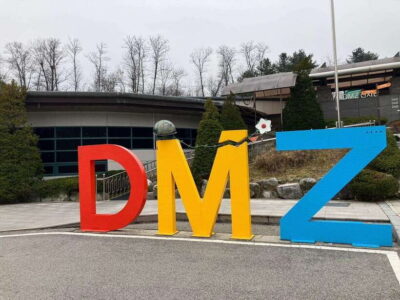
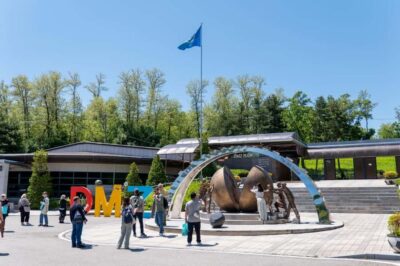
The day begins (in this itinerary order) with the main DMZ stop, around 30 minutes with an admission ticket included. This is the core of the trip: the Korean Demilitarized Zone is a 4 km-wide buffer created by the 1953 Korean War armistice. Even before you start seeing the monuments and viewpoints, you’ll feel how controlled everything is.
What I like about starting here is that it frames the rest of the day. When you later walk through Imjingak and cross key bridges, you’re not just seeing landmarks—you’re seeing them inside the same security logic that governs the DMZ.
Practical tip: treat the DMZ portion like a checklist stop. Bring your passport, keep your belongings organized, and don’t plan on long wandering. The time you have is designed for watching, learning, and moving on.
More guide-to-yourself private days in Seoul


Imjingak Peace Park: Bridge of Freedom, Memorial Altars, and the Peace Bell
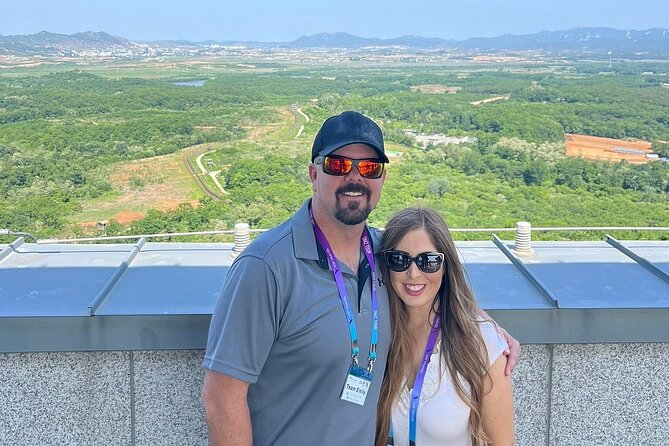
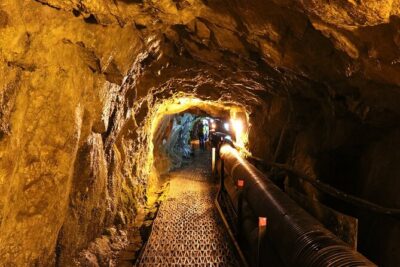
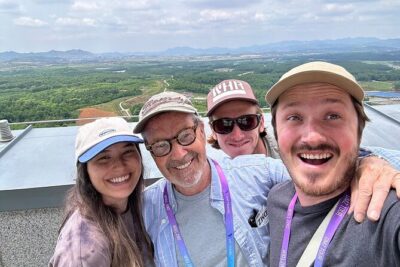
After the DMZ segment, the itinerary shifts to Imjingak Pyeonghwa Nuri Park, with multiple short stops—some walkable, some viewpoint-based—mostly free.
Imjingak Pyeonghwa Nuri Park (30 minutes, free)
This area opened in 2005 to symbolize peace near the DMZ. It’s a good place to reset your brain after the security-focused first stop. You get space to walk and reflect, and the mood is intentionally “hope-forward.”
Bridge of Freedom (about 30 minutes, free)
The Bridge of Freedom is a temporary wooden span built in 1953 to carry prisoners of war back to South Korea across the Imjin River. It’s remembered because the moment was public and symbolic: freedom wasn’t abstract; it was a physical crossing.
This stop is short, but it carries weight. If you like history that’s tied to specific human outcomes, this is one of the clearest moments in the day.
Mangbaedan Memorial Altar (about 10 minutes, free)
Mangbaedan is built for families remembering relatives left in North Korea. If you’re visiting with older kids or want something that connects the war to everyday grief and hope, this is the kind of stop that makes the day feel personal.
Imjin River Dokgae Bridge (about 15 minutes, free)
You’ll view the Imjin River Dokgae Bridge, a historic steel structure rebuilt after destruction during the Korean War. The piers are described as scarred from battles in the 1950s, which gives you a stark visual reminder: this isn’t just a scenic river stop.
Steam Locomotive at Jangdan Station of the Gyeongui Line (about 10 minutes, free)
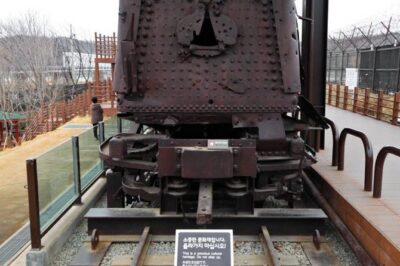
This rusted locomotive is preserved as an “iron horse” derailed by bombings in 1950 and kept since 1953. Even if you don’t care about rail history, the symbolism lands: war damage turned into an object people can point at, teach with, and remember.
Pyeonghwauijong Peace Bell (about 10 minutes, free)
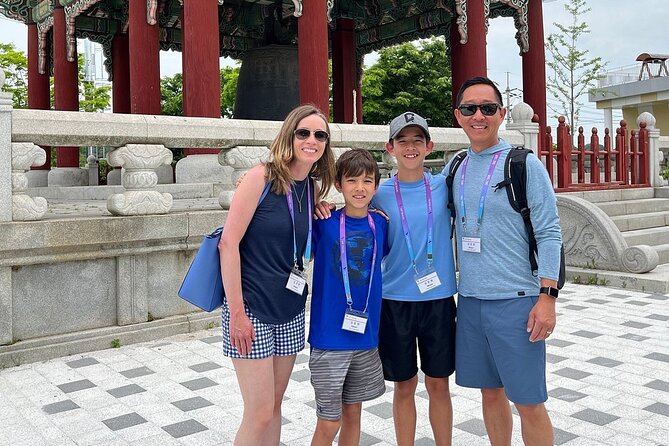
The Peace Bell is a 21-ton bronze icon cast in 2000, designed to herald hope for reunification. It’s also one of those stops where the scale matters. You’re not looking at a small plaque—you’re standing with a huge object made to echo across the area.
Unification Bridge (about 10 minutes, ticket included)
The itinerary then includes the Unification Bridge, opened in 1998. It crosses the Imjin River with military checkpoints in the context of the DMZ boundary. It’s not a “fun bridge walk” stop, and that’s part of why it works. You’re crossing a link that represents a future people here keep talking about.
Between these stops, you’ll likely pause for photos and short explanation segments from your guide. I like that the tour doesn’t throw everything at you at once. You get breaks long enough to process.
Imjin River views from the bus
The plan also includes time to view the Imjin River from your tour bus. That’s a smart move for people who want a calmer moment without getting out repeatedly. You still get the sense of place—the river is part of how the zone feels—without turning the day into nonstop walking.
The Third Tunnel: Concrete That Explains a Strategy
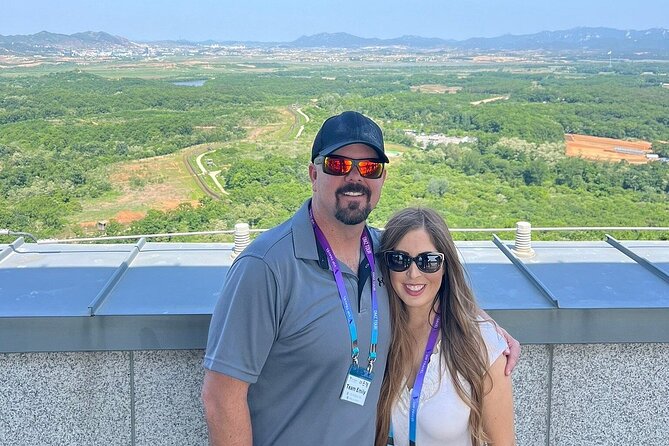
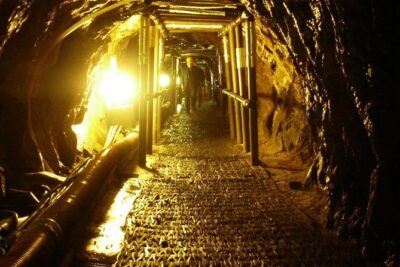
Next up is the Third Tunnel of Aggression, also known as the 3rd Infiltration Tunnel, with 30 minutes and an admission ticket included.
This tunnel was discovered in 1978 about 52 km from Seoul. It’s described as 1,635 meters long and roughly 2 meters high and wide, built by North Korea for infiltration purposes. Standing close to a site like this changes your understanding of the DMZ: it stops being only a border on a map and becomes a story about engineering, planning, and fear.
One reason this stop is so powerful is that it’s physical. It’s harder to explain away than speeches or posters. You see how a tunnel can be used as a threat mechanism, and then you connect that to why the surrounding area is so controlled.
Dora Observatory: The Closest Glimpse of North Korea

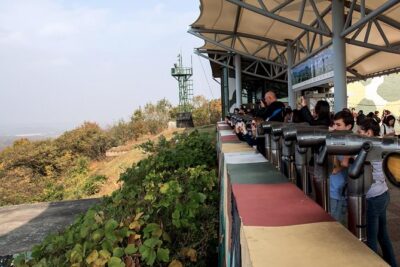
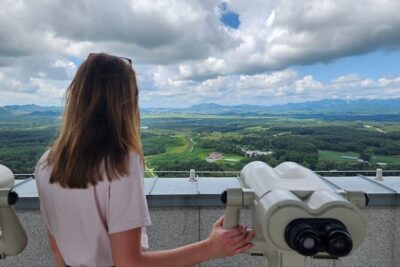
After the tunnel stop, the itinerary heads to Dora Observatory, about 30 minutes with an admission ticket included. This is often the portion people mean when they say they want to see North Korea.
Dora Observatory is established in 1986 and renovated in 2018. It’s described as the closest viewing point from South Korea. The idea is simple: use binoculars to try to spot North Korea’s Kijong-dong propaganda village and Kaesong City in the distance.
I like this stop because it’s built for observation. It rewards patience and attention. If your group likes photos, this is where you can spend time getting the shot and listening to your guide explain what you’re seeing and what you can’t.
Tongilchon-gil: A Quiet Walk Near the Civilian Control Line
Then you’ll move to Tongilchon-gil, with about 30 minutes and admission free. This road runs through Tongilchon village, just beyond the DMZ’s Civilian Control Line, and it’s described as a serene stretch framed by fields.
One specific detail included in the tour description: Jangdan soybeans are mentioned as a local product. That little agriculture clue is more important than it sounds. It helps you picture the area not only as a war boundary, but as land people farm under strict conditions.
If your group needs a calmer moment after the tunnel and observatory, this walk gives it.
Gamaksan Chulleong Red Bridge (Optional): Extra Time, Extra Views
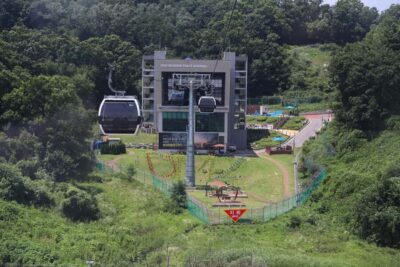
There’s an optional add-on: Gamaksan Chulleong Bridge, an extra 1 hour. It’s a red suspension bridge built in 2018 to honor Korean War heroes.
The description notes it’s 150 meters long and about 30 meters (listed as swaying 30 meter). If you’re the type who likes one more viewpoint stop after the main DMZ highlights, it’s a nice option. If your group is short on energy, you can skip it and still have a full day.
Price, Time, and Value: Is This Worth It for You?
Here’s how I’d judge the value, not just the cost.
You’re paying $500 per group up to 6 for:
- free hotel pickup/drop-off in Seoul
- a professional guide (English or Chinese)
- comfortable transport
- key sites with admissions included (DMZ, Unification Bridge, Third Tunnel, Dora Observatory)
Lunch isn’t included, and some costs could come up depending on the day (parking and tolls are mentioned as potential add-ons). Still, the structure is mostly about bundling the big ticket experience.
This tour makes the most sense if:
- you want a private guide, not a crowded bus
- you’re visiting with kids old enough to handle a long, serious day (one family with 11-year-old twins was part of a top-rated experience)
- you care about understanding the sites, not just collecting photos
- you’d rather pay once than piece together separate tickets and transport
It may be less ideal if:
- you’re traveling solo and hoping to pay the lowest possible rate per person
- you hate schedule uncertainty in general, because the start time may shift due to military guidelines
Practical Tips for a Smoother DMZ Day
A few things will make this go easier:
- Bring your passport. It’s explicitly required on tour day.
- Expect a long day. About 8 hours is normal for this route and security process.
- Dress comfortably. There’s no special dress code listed, but you’ll be outside and moving between stops.
- Plan for lunch on your own. Lunch is not included.
- Use sun and water planning. Even if the itinerary has fixed stop durations, weather can change how you feel.
- For photos, let your guide steer you to the best angles. Reviews praise guides for helping with photo spots, which matters a lot at Dora Observatory and around river bridges.
Also, keep your expectations realistic about timing. When the operator says the schedule can change and refunds aren’t available, that’s your signal to stay flexible.
Should You Book This Private DMZ and Third Tunnel Tour?
I’d book this if you want a structured, guided DMZ day that stays understandable and manageable—especially if you’re traveling in a small group. The private setup, hotel pickup, and the combination of ticketed DMZ power stops (Third Tunnel and Dora Observatory) plus free memorial walks at Imjingak makes it feel like a complete experience rather than a quick hit.
Skip it only if you’re chasing the cheapest option, or if you need a perfectly fixed schedule with no variability. In a militarized zone, some wiggle room is part of the deal.
If your goal is to leave Seoul with a clear picture of how the DMZ is enforced, remembered, and explained on the ground, this private format is a strong match.
FAQ
How many people are in the private group?
The tour is private for your group and is designed for up to 6 people.
How long does the tour take?
It’s listed as about 8 hours.
Is hotel pickup and drop-off included?
Yes. The tour includes free hotel pickup and drop-off in Seoul.
Do I need a passport?
Yes. A passport is needed on the tour day, and you should bring it with you.
Which stops include admission tickets?
Admission tickets are included for the DMZ stop, the Unification Bridge stop, the Third Tunnel stop, and Dora Observatory.
Is lunch included in the price?
No. Lunch is not included.
Can I add the optional Red Bridge?
Yes. You can add the Gamaksan Chulleong Bridge option (150-meter-long red suspension bridge). It’s listed as admission ticket free.
Can I cancel for a full refund?
Yes. You can cancel up to 24 hours in advance for a full refund.
More Tours in Seoul
- Best DMZ Tour Korea from Seoul (Red Suspension Bridge Optional)★ 5.0 · 41,422 reviews
- DMZ Tour: 3rd Tunnel, Option(Suspension Bridge, Boat) from Seoul★ 5.0 · 21,373 reviews
- DMZ tour south Korea from Seoul (NK experience hall, defector)★ 5.0 · 20,599 reviews
- Seoul: DMZ Tour with Optional Suspension Bridge★ 4.8 · 5,277 reviews
- Seoul: DMZ The 3rd Tunnel and Suspension Bridge Tour★ 5.0 · 4,656 reviews
More Tour Reviews in Seoul
- Best DMZ Tour Korea from Seoul (Red Suspension Bridge Optional)★ 5.0 · 41,422 reviews
- DMZ Tour: 3rd Tunnel, Option(Suspension Bridge, Boat) from Seoul★ 5.0 · 21,373 reviews
- DMZ tour south Korea from Seoul (NK experience hall, defector)★ 5.0 · 20,599 reviews
- Seoul: DMZ Tour with Optional Suspension Bridge★ 4.8 · 5,277 reviews
- Seoul: DMZ The 3rd Tunnel and Suspension Bridge Tour★ 5.0 · 4,656 reviews
The DMZ & the Border, More Routes
- Best DMZ Tour Korea from Seoul (Red Suspension Bridge Optional)★ 5.0 · 41,422 reviews
- DMZ Tour: 3rd Tunnel, Option(Suspension Bridge, Boat) from Seoul★ 5.0 · 21,373 reviews
- DMZ tour south Korea from Seoul (NK experience hall, defector)★ 5.0 · 20,599 reviews
- Seoul: DMZ Tour with Optional Suspension Bridge★ 4.8 · 5,277 reviews
- Seoul: DMZ The 3rd Tunnel and Suspension Bridge Tour★ 5.0 · 4,656 reviews
Just added to Exploring Seoul

DMZ Day Tours, compared.
 ★ 5.0DMZ Tour: 3rd Tunnel, Option(Suspension Bridge, Boat) from SeoulFrom $3521,373 reviews
 ★ 5.0DMZ tour south Korea from Seoul (NK experience hall, defector)From $2620,599 reviews
 ★ 4.8DMZ Tour with Optional Suspension BridgeFrom $455,277 reviews
 ★ 5.0DMZ The 3rd Tunnel and Suspension Bridge TourFrom $654,656 reviews
 ★ 5.0Signature DMZ Tour: Exclusive Defector Talk & Suspension BridgeFrom $274,459 reviews
 ★ 5.0Thrilling Korean DMZ 3rd Tunnel Tour from Seoul + Red Bridge RushFrom $353,097 reviews
 ★ 4.9DMZ Tour & Suspension Bridge (Option English/Spanish)From $352,628 reviews
 ★ 5.0DMZ Past and Present: Korean Demilitarized Zone Tour from SeoulFrom $372,481 reviews
Browse the lists this tour appears in