
Reviewed · DMZ DAY TOURS
DMZ Tour + The War Memorial of Korea Museum
Korea’s DMZ is history you can feel. This day trip from Myeong-dong pairs the front-line sights—like the Third Tunnel and Dora Observatory—with a calmer, lesson-focused visit at the War Memorial museum.
What I love most is the way the day gives you order: you start with war reminders at Imjingak, then you get oriented in the DMZ area, and only then do you face the tunnel and views.
The other big win for me is the human touch. Many guides (Bill Hwang, Kane Kim, Jae Seo are a few named examples) run tight schedules, explain clearly, and even help you navigate rules without making you feel lost. One consideration: the Third Tunnel is steep and narrow, and the whole day runs long (8–9 hours), so it rewards decent physical stamina and patience with early start times.
In This Review
- Key highlights worth your attention
- The big picture: a Seoul day that goes right to the edge
- Getting to the DMZ: early start, long day, and how to pace yourself
- Imjingak Pyeonghwa Nuri Park: where the story begins with symbols
- The DMZ exhibition + theater: getting your bearings before the view
- Dora Observatory: views across the line (and the rules that shape the moment)
- The Third Tunnel: the steep part—and why it hits harder than you expect
- War Memorial of Korea: turning the day into real context
- Guides are the difference: what you’ll want to look for on the day
- Price and value: why $65 can feel like a bargain—or not
- What to bring (and what to mentally prepare for)
- Who this tour is best for
- Should you book the DMZ + War Memorial of Korea tour?
- FAQ
- What time does the tour start?
- How long is the tour?
- Where do I meet the guide?
- Is the passport required for this tour?
- What’s included in the price?
- Is lunch included?
- Are tickets mobile?
- Is the tour physically demanding?
- What happens if the DMZ can’t be visited due to weather or military issues?
- Can I bring and use a camera in the tunnel?
Key highlights worth your attention
- Bridge of Freedom at Imjingak Pyeonghwa Nuri Park: a simple structure with heavy meaning
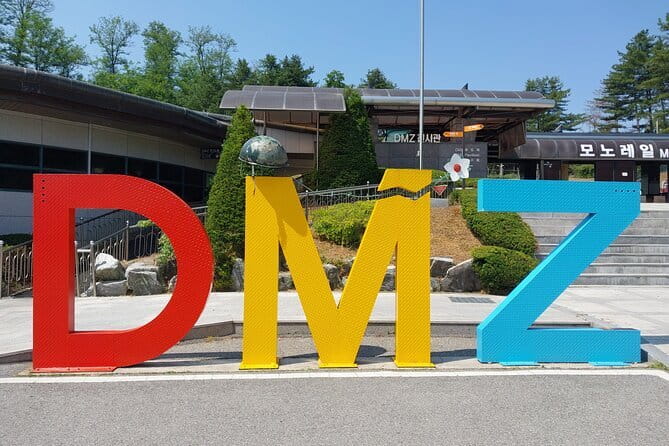
- DMZ orientation time: theater video plus an exhibition hall to frame what you’ll see
- Dora Observatory viewpoints: binocular views across the Demilitarized Zone
- Third Tunnel experience: steep, narrow, and unforgettable, with limited photo freedom
- War Memorial of Korea as the “why” stop: a museum that ties the Korean War into wider history
Other ways to reach the DMZ and the border from Seoul
- DMZ Tour: 3rd Tunnel, Option(Suspension Bridge, Boat) from Seoul★ 5.0 · 21,373 reviews
- DMZ tour south Korea from Seoul (NK experience hall, defector)★ 5.0 · 20,599 reviews
- Seoul: DMZ Tour with Optional Suspension Bridge★ 4.8 · 5,277 reviews
- Seoul: DMZ The 3rd Tunnel and Suspension Bridge Tour★ 5.0 · 4,656 reviews
The big picture: a Seoul day that goes right to the edge
This tour is built for one job: help you understand what the Korean War left behind, and why the DMZ still matters. It starts early from Myeong-dong (the meeting point is Myeong-dong Station Exit 4, with pickup near your hotel), and it runs about 8 to 9 hours. You’ll ride in an air-conditioned vehicle with a professional guide, and you’ll get admission included for the key DMZ-related stops.
The pairing is smart. The DMZ sites can be visually shocking, but they can also feel disconnected if you only show up at lookouts. The War Memorial museum at the end gives you breathing room and context, so the day doesn’t just end in photos—it ends in understanding.
Two practical notes matter. First, you’ll need your passport on the day. If you forget it, entry to the DMZ won’t be allowed. Second, DMZ access can shift due to bad weather or unexpected military issues, and the tour can be delayed or canceled in those cases.
Getting to the DMZ: early start, long day, and how to pace yourself
The tour begins at 7:00 am and returns to the Myeong-dong area. That early start is not negotiable. Even if you hate mornings (fair), you’ll appreciate the head start once the day gets full of walking, waiting, and rules.
The format is also very “guided day.” You’re not expected to freestyle. The guide is there to handle preparation and help you stay on track. In the best runs, guides keep things moving without feeling frantic, which matters because a day like this is easy to turn into a blur.
Group size is capped (maximum 40 travelers). Many people end up with a smaller van setup, which can make the day feel calmer and more responsive for questions—especially at the tunnel where you’ll need to follow instructions and move at the right pace.
Imjingak Pyeonghwa Nuri Park: where the story begins with symbols
Your first stop is Imjingak Pyeonghwa Nuri Park, about 1 hour 30 minutes from Seoul. This is a strong opener because it doesn’t start with weapons or conflict imagery. It starts with memory—what people lost, what stays, and what can’t be undone.
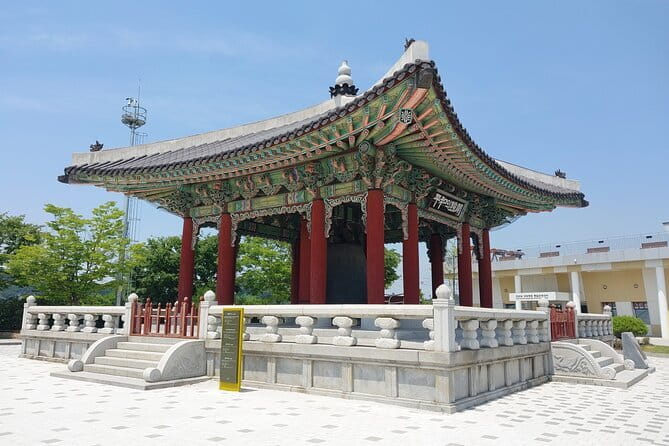
The highlight here is the Bridge of Freedom. The bridge itself is described as temporary and not architecturally impressive. That’s exactly the point. It’s not built to wow you. It’s built to remind you that freedom and division can be controlled by events far bigger than any one person.
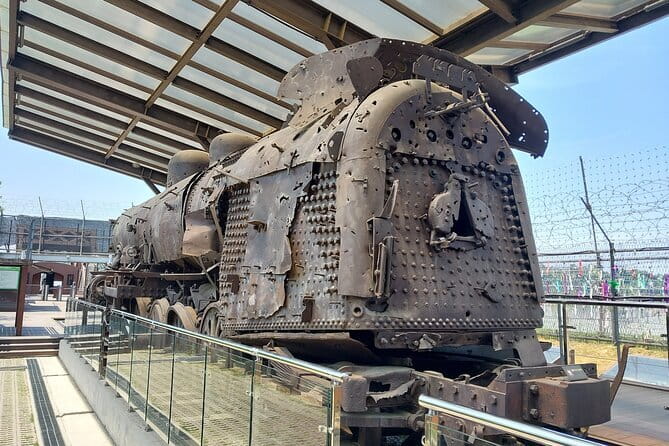
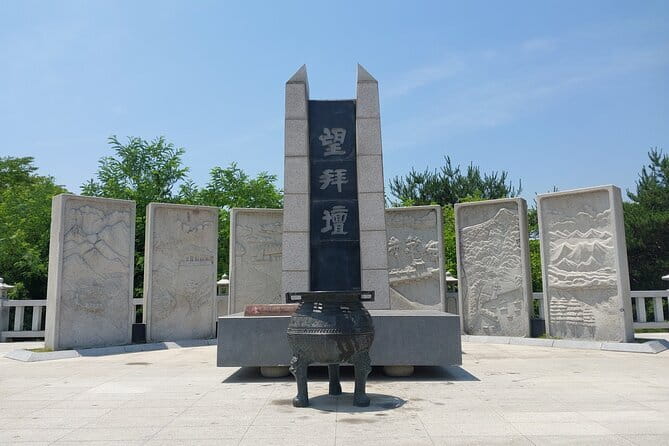
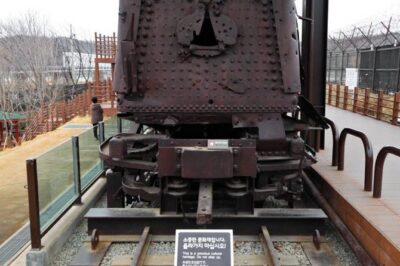
You’ll also see war-linked exhibits tied to the Korean War era, including elements such as the Mangbaedan Memorial Alatar and a steam locomotive display at Jangdan station. Think of this part as your mental warm-up. You’re getting oriented to the human cost before you go to the militarized line.
How to enjoy this stop more: slow down here. If you rush, you’ll treat it like a quick photo stop. But it works better when you treat it like the emotional prologue of the day.
A handful of other Seoul experiences to line up next

The DMZ exhibition + theater: getting your bearings before the view
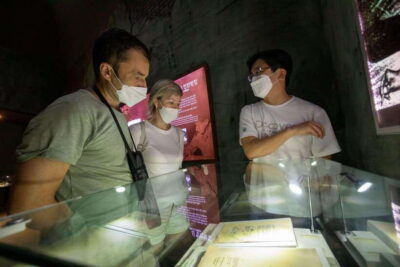
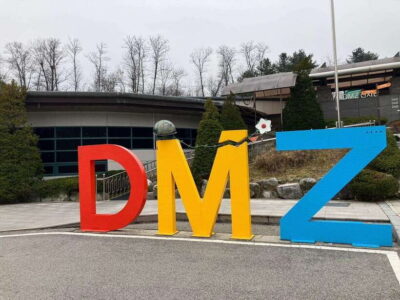
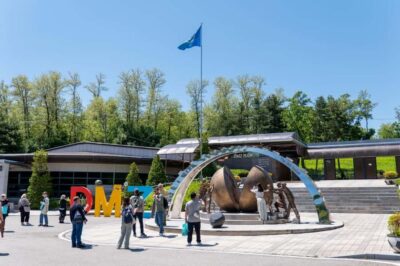
After Imjingak, the tour moves into the DMZ area with a quick orientation stop. You’ll watch a video clip about the Korean War at a theater, then head to an exhibition hall with relics and records.
This is the part that’s quietly useful. Without it, the DMZ can feel like a set of locations with no connective tissue. With it, the day starts to click: you understand what each site represents and why visitors are allowed to see what they’re allowed to see.
A good DMZ day is equal parts “seeing” and “framing.” The theater and exhibition hall do the framing so the rest doesn’t feel random.
Possible drawback: this stop is shorter than you might want if you’re a detail person. But you’ll be grateful later, because you’ll have more energy for Dora and especially the tunnel.
Dora Observatory: views across the line (and the rules that shape the moment)
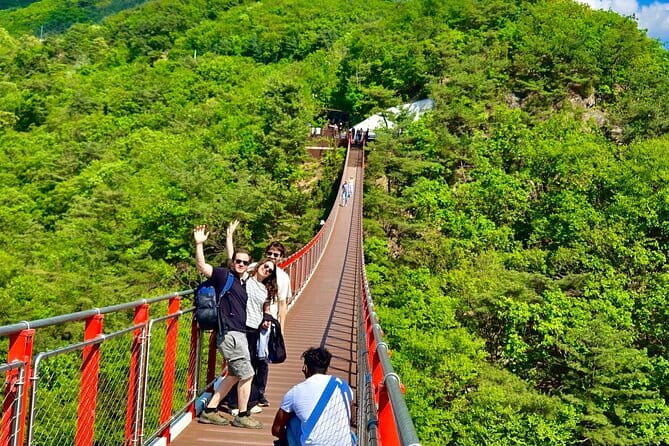
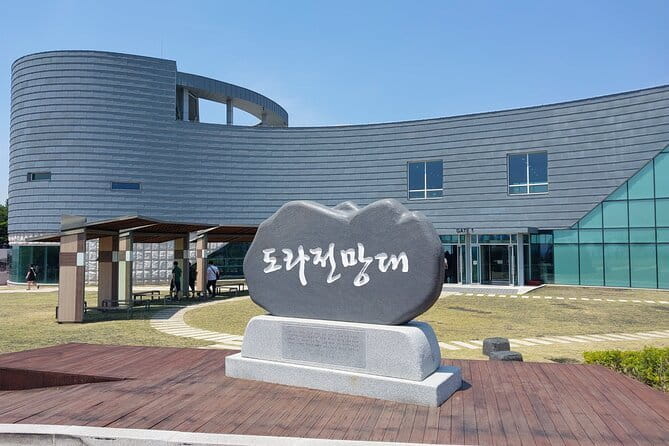
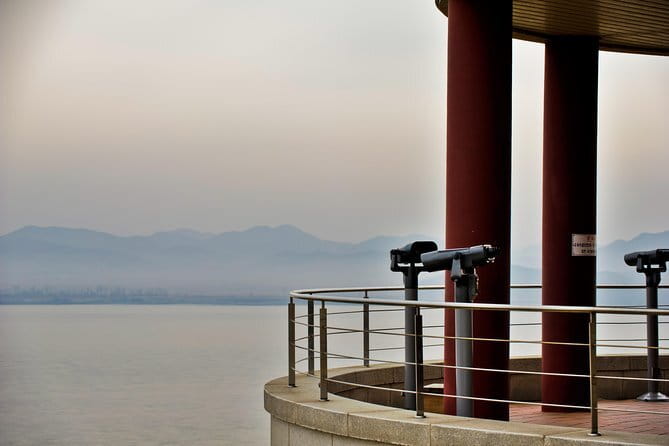
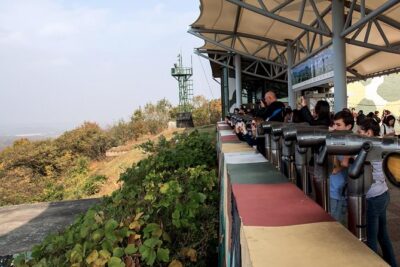
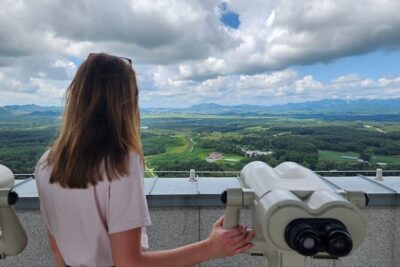
Next up is Dora Observatory. This stop is designed for one thing: looking across the Demilitarized Zone. You’ll use binoculars to see across toward North Korea, and you’ll get a sense of what “opposite side” really means when you’re physically close.
There’s also mention of a Propaganda Village area (in the North) and a jamming tower to block transmissions. The point isn’t to turn the DMZ into a sci-fi setting. It’s to show you how technology, surveillance, and information control are part of the standoff too.
You should expect scenic views, but you should also expect limits and instructions. For example, cameras and photo rules can vary by zone. One of the clearer rules that shows up in real-world experience is that photo taking is restricted in the most sensitive areas. Build flexibility into your expectations.
How to make Dora work for you: go in ready to watch longer than you plan. The views are why people remember this stop, but your memory improves if you take a few calm moments rather than just grabbing one quick shot.
The Third Tunnel: the steep part—and why it hits harder than you expect
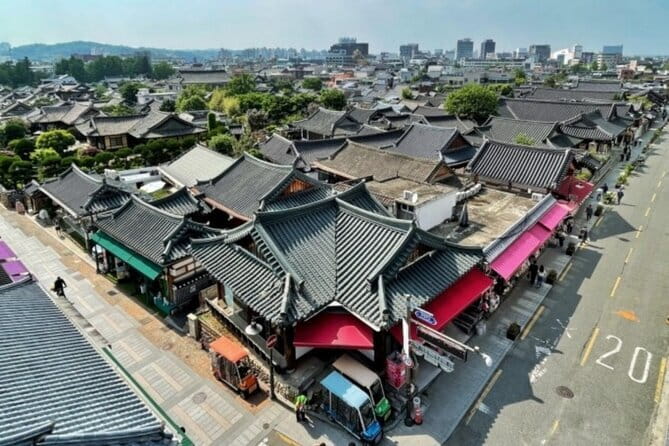
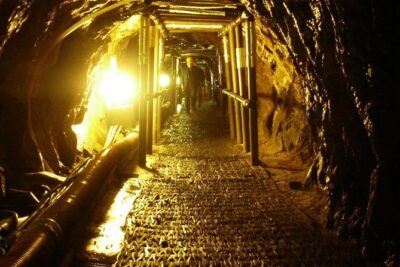
The most physically intense stop is the Third Infiltration Tunnel, dug by North Koreans into the South. You’ll explore the tunnel and look at evidence meant to show intent for invading the South.
This is the kind of experience that can surprise you. People often expect it to be just eerie and claustrophobic. Instead, it’s also intensely instructional. The tunnel’s slope is noted as approximately 0.003 degree, and the tunnel is steep and narrow, with walking steps and strict flow.
Comfort matters. The tour recommends comfortable clothes and shoes, specifically because the tunnel is steep and narrow. If you’re the kind of traveler who packs fancy shoes for Seoul, save them for dinner and wear something that can handle uneven, tight space.
Photo reality: in the tunnel area, you can’t bring a camera, and you can’t take photos facing North Korea. You may also notice soldiers watching the viewing platform. So if your brain is stuck on taking pictures, switch it to a different mission: observe, listen, and absorb.
One more small but important point: this is where having a guide who manages the group really shows. In best-case situations, guides walk with you, manage the pace, and keep everyone moving safely—especially if you’re traveling with people who need slower breaks.
War Memorial of Korea: turning the day into real context
After the DMZ sites, you end at the War Memorial of Korea. Admission here is free (for this tour), and the museum visit lasts about 1 hour.
This is where you get the broader “why.” The museum focuses on records and exhibits related to Korea’s long history and the Korean War. It’s also a useful counterbalance to the DMZ day. The DMZ shows the edge. The museum explains the road that led there.
You’ll likely feel information overload if you try to read everything. So don’t aim for completeness. Aim for a few key themes—how the modern state formed, how the war reshaped the peninsula, and how the memory of conflict gets preserved.
If you’re history-focused: you might leave wishing you had more time. That’s normal. The museum is big enough that one hour is more like a guided taste than a full meal.
Guides are the difference: what you’ll want to look for on the day
A DMZ day can go two ways: you either come out with clarity, or you come out with a collection of locations and vague impressions. The tour’s value rises fast when your guide does the “connective work.”
The tour descriptions you’ll see align with what real experiences highlight: guides are often extremely helpful with pacing, explanation, and communication. Names that show up in firsthand accounts include Bill Hwang, Kane Kim, Ann Jung, Jae Seo, and Kevin. People also describe guides reaching out in advance (WhatsApp introductions), bringing helpful tools (printed cards, flags, and even large tablets), and staying organized so the schedule doesn’t feel chaotic.
One small kindness that has been mentioned: some guides provide snacks and water, and there’s also mention of a free ice cream for solo travelers. Even if that doesn’t happen every time, it’s a good sign of care and group management.
Price and value: why $65 can feel like a bargain—or not
At $65 per person, this tour costs less than many DMZ-adjacent day trips once you factor in admissions and guided transport. Admission ticket items are included for multiple stops, and you also get an air-conditioned vehicle plus a professional guide for the full 8–9 hour run.
Here’s where the value question becomes personal. If you prefer DIY travel, you might feel the tour is paying for structure. But for DMZ visits, structure is not optional. Rules, timing, and passport requirements mean a guide adds real value.
The biggest trade-off is also clear: lunch isn’t included. That’s common on long tours, but you’ll want to plan for it. If you skip lunch, the day can feel longer and more uncomfortable—especially once you reach the tunnel.
What to bring (and what to mentally prepare for)
Based on the tour requirements and real-world notes, here’s what matters most.
Must-haves
- Your passport. Without it, you may be denied entry to the DMZ.
- Comfortable shoes and clothes suitable for tight space and a steep tunnel.
Photo and device expectations
- In sensitive zones like the tunnel, bringing a camera isn’t allowed, and photo rules apply around views toward North Korea.
Comfort tips
- The tour requires moderate physical fitness. You don’t need to be an athlete, but you do need to handle a steep, narrow walk.
- Bring patience for instructions and waiting. This day has fixed processes.
Who this tour is best for
This is a great fit if you:
- Want a guided, ordered day rather than piecing together DMZ logistics on your own
- Like history but also want modern context tied to real places
- Enjoy museums and want the War Memorial stop to do real narrative work for you
It may be less ideal if you:
- Hate early mornings and long days (7:00 am start, 8–9 hours total)
- Have mobility limitations that make steep, narrow spaces difficult
- Expect constant photo opportunities (rules reduce that)
Solo travelers also can feel well supported if the guide and group setup is small and attentive.
Should you book the DMZ + War Memorial of Korea tour?
If you want one day in Seoul that actually explains the peninsula, this is a strong choice. The combination of Imjingak, DMZ orientation time, Dora Observatory, the Third Tunnel, and then the War Memorial is efficient. It turns a high-stakes sightseeing day into a day with meaning.
Book it if you can handle early start times and you’re comfortable with the tunnel’s steep, narrow conditions. Bring solid shoes, keep an open mind about photo rules, and plan for lunch.
Skip it (or consider another option) if you need a very relaxed pace or you know the tunnel environment will be a problem for you. For most people, though, this tour is exactly the kind of structured, real-world experience that makes the DMZ stop feel less like a headline and more like understanding.
FAQ
What time does the tour start?
It starts at 7:00 am.
How long is the tour?
Plan on about 8 to 9 hours.
Where do I meet the guide?
You’ll meet at Myeong-dong Station Exit 4 (and you return to the Myeong-dong area afterward). Pickup points are near hotels close to Myeong-dong.
Is the passport required for this tour?
Yes. You must carry your passport on the day of the tour, or you won’t be allowed to enter the DMZ.
What’s included in the price?
The price includes air-conditioned vehicle transport, parking fees, a professional tour guide, and admission tickets for the DMZ-related stops. The War Memorial of Korea stop is listed as free.
Is lunch included?
No, lunch is not included.
Are tickets mobile?
Yes, it uses a mobile ticket.
Is the tour physically demanding?
You should have a moderate physical fitness level. The Third Tunnel is steep and narrow, so comfortable shoes and clothes matter.
What happens if the DMZ can’t be visited due to weather or military issues?
The tour may be canceled or delayed, and DMZ timing can change due to bad weather or unexpected military issues. The provided info notes no refund in those situations.
Can I bring and use a camera in the tunnel?
In the Third Tunnel area, you can’t bring a camera, and there are limits on photos, including restrictions on facing North Korea.
More Tours in Seoul
- Best DMZ Tour Korea from Seoul (Red Suspension Bridge Optional)★ 5.0 · 41,422 reviews
- DMZ Tour: 3rd Tunnel, Option(Suspension Bridge, Boat) from Seoul★ 5.0 · 21,373 reviews
- DMZ tour south Korea from Seoul (NK experience hall, defector)★ 5.0 · 20,599 reviews
- Seoul: DMZ Tour with Optional Suspension Bridge★ 4.8 · 5,277 reviews
- Seoul: DMZ The 3rd Tunnel and Suspension Bridge Tour★ 5.0 · 4,656 reviews
More Tour Reviews in Seoul
- Best DMZ Tour Korea from Seoul (Red Suspension Bridge Optional)★ 5.0 · 41,422 reviews
- DMZ Tour: 3rd Tunnel, Option(Suspension Bridge, Boat) from Seoul★ 5.0 · 21,373 reviews
- DMZ tour south Korea from Seoul (NK experience hall, defector)★ 5.0 · 20,599 reviews
- Seoul: DMZ Tour with Optional Suspension Bridge★ 4.8 · 5,277 reviews
- Seoul: DMZ The 3rd Tunnel and Suspension Bridge Tour★ 5.0 · 4,656 reviews
The DMZ & the Border, More Routes
- Best DMZ Tour Korea from Seoul (Red Suspension Bridge Optional)★ 5.0 · 41,422 reviews
- DMZ Tour: 3rd Tunnel, Option(Suspension Bridge, Boat) from Seoul★ 5.0 · 21,373 reviews
- DMZ tour south Korea from Seoul (NK experience hall, defector)★ 5.0 · 20,599 reviews
- Seoul: DMZ Tour with Optional Suspension Bridge★ 4.8 · 5,277 reviews
- Seoul: DMZ The 3rd Tunnel and Suspension Bridge Tour★ 5.0 · 4,656 reviews
Just added to Exploring Seoul

DMZ Day Tours, compared.
 ★ 5.0DMZ Tour: 3rd Tunnel, Option(Suspension Bridge, Boat) from SeoulFrom $3521,373 reviews
 ★ 5.0DMZ tour south Korea from Seoul (NK experience hall, defector)From $2620,599 reviews
 ★ 4.8DMZ Tour with Optional Suspension BridgeFrom $455,277 reviews
 ★ 5.0DMZ The 3rd Tunnel and Suspension Bridge TourFrom $654,656 reviews
 ★ 5.0Signature DMZ Tour: Exclusive Defector Talk & Suspension BridgeFrom $274,459 reviews
 ★ 5.0Thrilling Korean DMZ 3rd Tunnel Tour from Seoul + Red Bridge RushFrom $353,097 reviews
 ★ 4.9DMZ Tour & Suspension Bridge (Option English/Spanish)From $352,628 reviews
 ★ 5.0DMZ Past and Present: Korean Demilitarized Zone Tour from SeoulFrom $372,481 reviews
Browse the lists this tour appears in