
Reviewed · KOREAN COOKING & KIMCHI CLASSES
Seoul: Korean Cooking at Seoul Cooking Club!
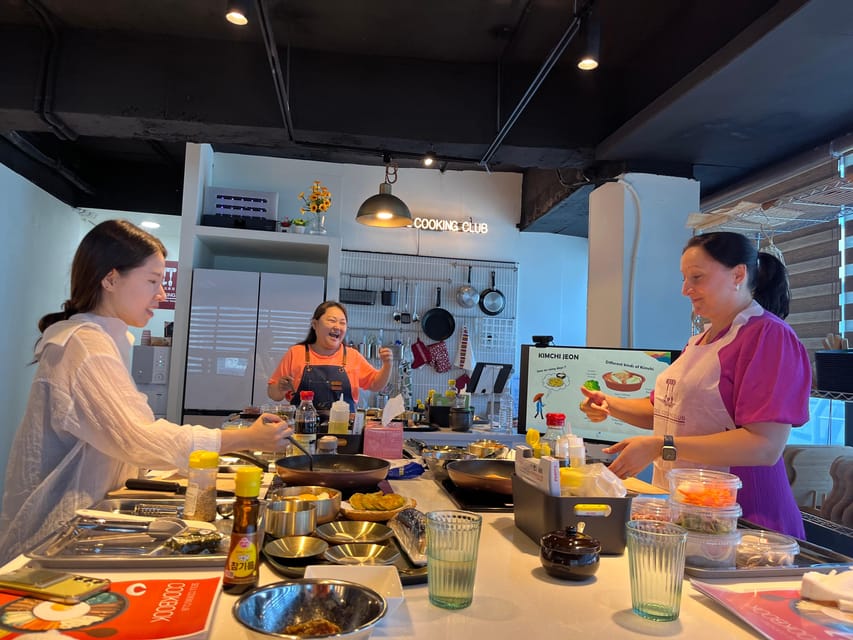
Korean cooking gets hands-on fast here. You’ll make classic Jeon pancakes and then move into core dishes like Japchae and Bulgogi, guided by an English-speaking chef. After you cook, you sit down to a three-course style meal with about ten side-dish tastings, plus a dessert that changes daily.
Two things I really liked: you get step-by-step instruction with clear pacing, and you leave with a recipe book (and the chance to take food home, too). One thing to consider: this is not a quick snack lesson. It’s a full 150 minutes of cooking, standing, and eating, so come with time and wear closed-toe shoes.
In This Review
- Seoul Cooking Club at Jonggak: what makes it worth your time
- Finding Seoul Cooking Club in Jonggak (Line 1, Exit 12)
- The class flow: 150 minutes of cooking, tasting, then eating
- Jeon pancakes: the hands-on starter you’ll actually remember
- Main dishes: Japchae, Bulgogi, and Jeonju Bibimbap
- Japchae: stir-fried vegetables and glass noodles
- Bulgogi: soy-sauce seasoned beef
- Jeonju Bibimbap: the centerpiece bowl
- Banchan tastings: about ten side dishes and how to enjoy them
- Dessert and drinks: Sikhye, Korean tea, and Bing-su
- English chefs and small-group energy that actually helps
- Value check: is $109 fair for 150 minutes of Korean food?
- Who this cooking class fits best (and who should skip it)
- Practical tips before you go
- Should you book Seoul Cooking Club?
- FAQ
- FAQ
- How long is the Seoul Cooking Club class?
- Where do I meet for the cooking class?
- What dishes will I cook?
- Do I get to eat what I cook?
- What desserts and drinks are included?
- Is the cooking class taught in English?
- Is this class wheelchair accessible?
- Are children allowed?
- What should I bring?
- Is hotel pickup and drop-off included?
Seoul Cooking Club at Jonggak: what makes it worth your time
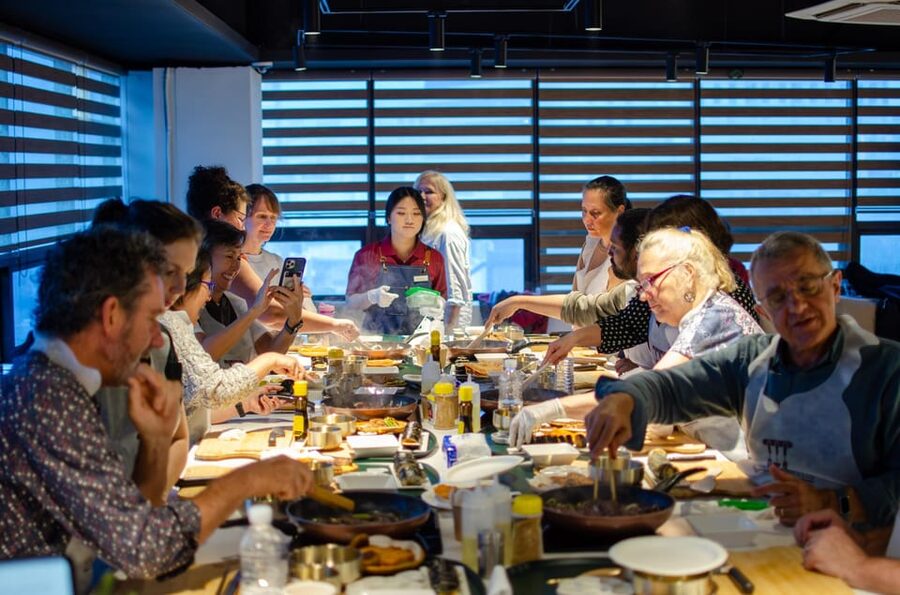
Jeon is the gateway dish—you’ll learn Korean “small pancake” techniques across flavors.
English instruction is real-world practical—you’re cooking, not just watching.
You cook then eat right away with a structured meal flow and side-dish tastings.
You get take-home tools like a recipe book and a way to pack leftovers.
Central Jongno location makes it easy to stack before/after plans near Insadong and Gyeongbokgung.
Roll up your sleeves in another Korean kitchen
- Local Home Korean Cooking Class & Market Adventure in Seoul★ 5.0 · 1,024 reviews
- Master Korean traditional cooking with a Kimchi chef★ 5.0 · 385 reviews
- Seoul: Korean Cooking Class at a Local Home and Market Tour★ 5.0 · 348 reviews
- Seoul: Korean Cooking at Seoul Cooking Club!★ 5.0 · 311 reviews
Finding Seoul Cooking Club in Jonggak (Line 1, Exit 12)
This class is in central Seoul, in Jongno, close to major sights. The meeting point is straightforward: go to Jonggak Station (Line 1), Exit 12. From there, walk straight ahead, take the first right around Pascucci, and head to the building with the orange Good Game Zone facade. The entrance is on the 7th floor, roughly 15 meters from the station.
Why I think this matters: when you’re doing a cooking class, you don’t want a 30-minute scavenger hunt with hungry stomach energy. Here, you can reach it quickly by subway, and then you can easily carry your day into nearby neighborhoods afterward—Insadong and Ikseondong are a short walk away, and Gwangjang Market and Myeongdong are also within easy reach.
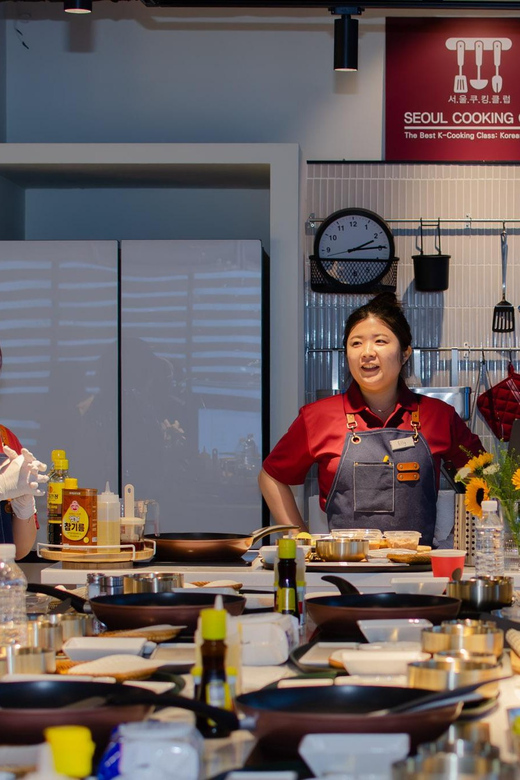
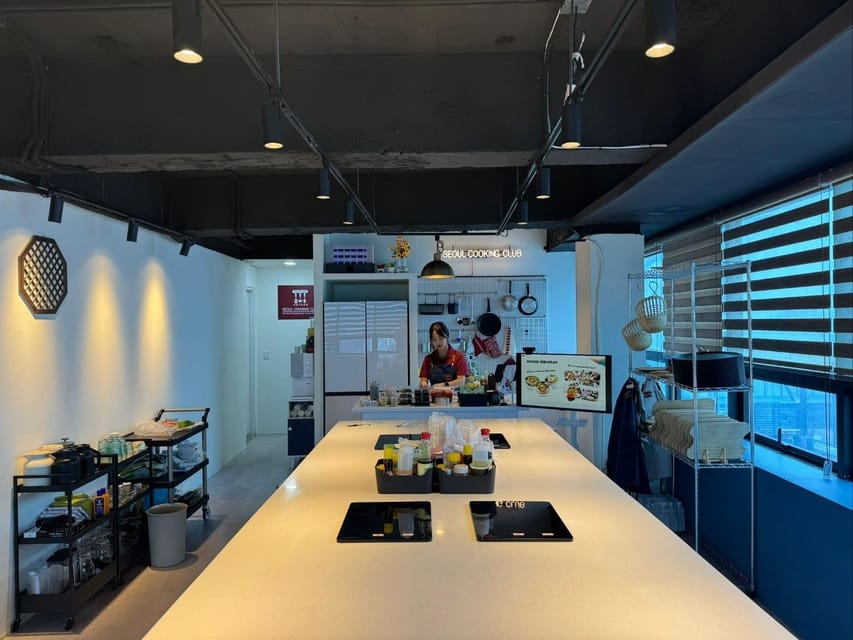
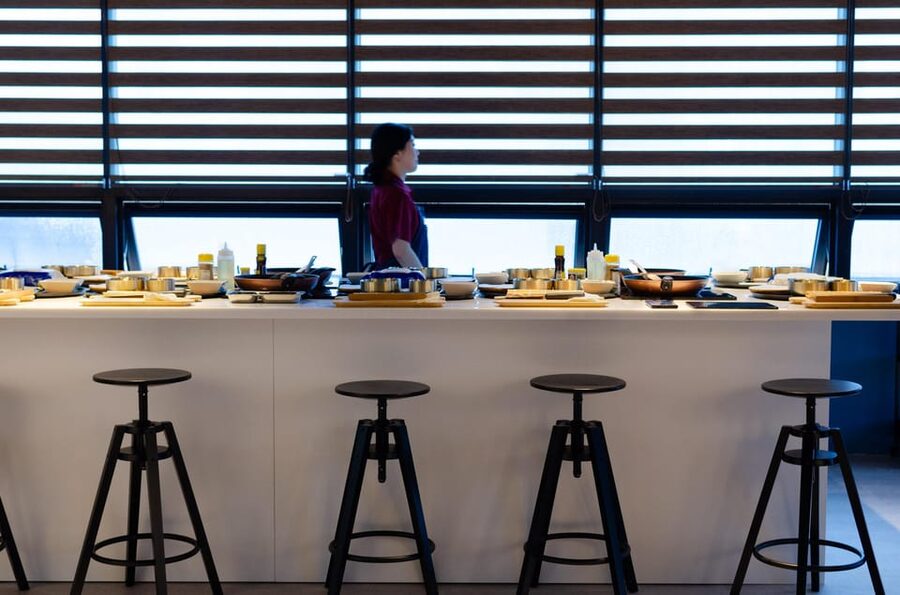
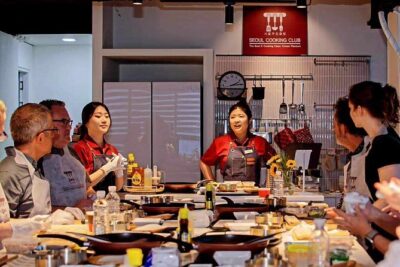
Also note the room setup: you’ll be cooking at proper stations, and the kitchen feels modern and clean based on multiple recent experiences. That makes a difference when you’re handling batter, hot pans, and chopping tasks.
The class flow: 150 minutes of cooking, tasting, then eating
The session runs 150 minutes and is scheduled for different mealtimes across the week, like brunch, lunch, or an early dinner. That affects your energy level and what kind of day you’re building, so pick the time that matches your Seoul rhythm.
Here’s how the experience typically plays out.
First comes a welcome drink and a quick orientation. Then you start cooking in sections. The structure is built so you’re not stuck watching while the chef works. You’ll rotate through tasks, from making batter-based Jeon to assembling main dishes and side flavors.
Once the cooking reaches the “food is ready” stage, you eat. Not just one plate, either: you get a meal-style sit-down plus about ten tastings of Korean banchan (side dishes). Dessert and drinks follow, so you finish with a full, satisfying arc instead of a rushed finish.
One practical tip: pace yourself. Multiple instructors keep things step-by-step, but once plates start landing, it’s easy to forget you still have cooking hands to use later in the session.
Jeon pancakes: the hands-on starter you’ll actually remember
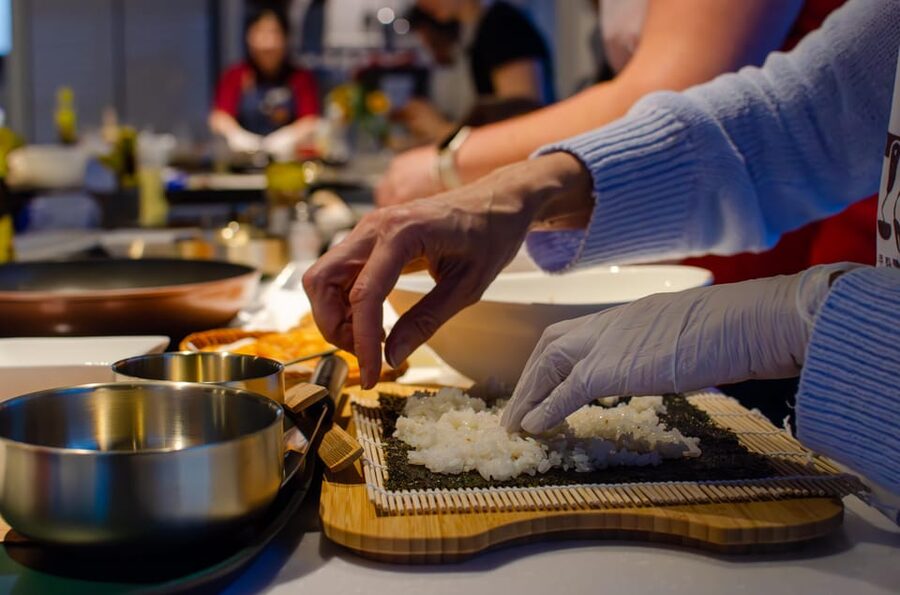
The appetizer portion is where you learn Korean technique fast. You’ll prepare 3–4 Jeon (Korean small pancakes) and make multiple flavors. The class may include options like:
- Donggrangttaeng (pan-fried battered meatballs)
- Pollack pancake
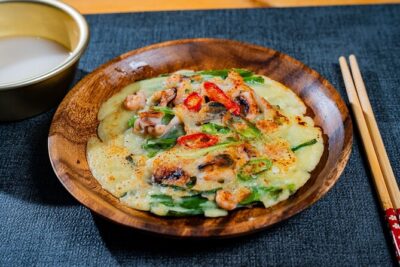
- Pajeon (seafood pancake)
- Beef pancake
- Tofu pancake
- Sesame leaf pancakes
What’s valuable here is not just tasting. You’re learning the logic of Korean “pancake” batter and the way different fillings behave in a pan. You also get repetitions—more than one pancake flavor—so you start to understand the pattern rather than treating it as a one-time recipe.
Why Jeon is such a smart choice for a visitor: these are everyday-friendly dishes at home. Even if you can’t source the exact same ingredients as in Korea, once you understand texture and the pan rhythm, you can adapt.
In the kitchen, expect a “do it, then adjust” style. You’ll get guidance in English, and the chefs handle the parts that would slow you down—so you’re not stuck waiting for water to boil for ten minutes while batter goes weird.
A handful of other Seoul experiences to line up next
Main dishes: Japchae, Bulgogi, and Jeonju Bibimbap
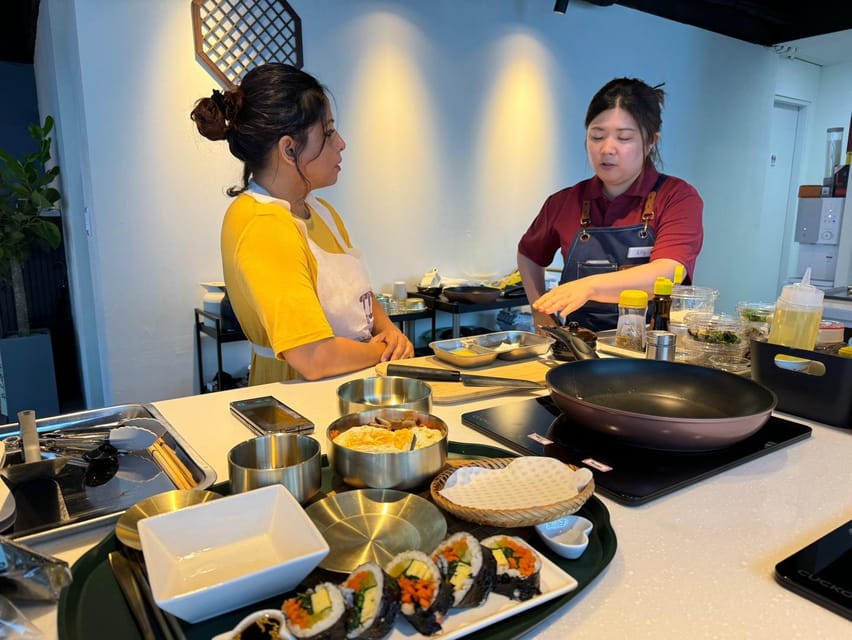
Then the class moves into the core meal dishes.
Japchae: stir-fried vegetables and glass noodles
You’ll work on Japchae, typically built around stir-frying vegetables and combining them with glass noodles. This is where you learn the Korean approach to balancing sweetness, savory notes, and texture. The key is timing—if you wait too long, the noodles and vegetables stop cooperating.
Bulgogi: soy-sauce seasoned beef
Next is Bulgogi—sliced beef seasoned with soy sauce. This is a classic reason people fall in love with Korean food. The technique you practice is how to season and cook so the meat stays tender instead of drying out.
Jeonju Bibimbap: the centerpiece bowl
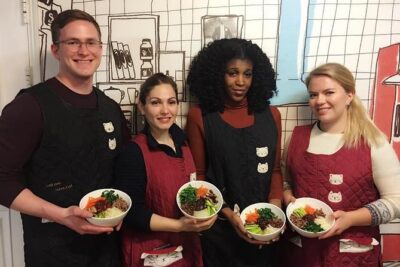
Finally, you’ll make Jeonju Bibimbap. Bibimbap is not just “mix it together.” It’s a structure: rice plus toppings plus sauces plus the right final assembly. Jeonju’s version is a little more “serious” in how the dish is built, so this is a great one to learn when you want to recreate Korean food at home with confidence.
If you’ve ever wondered why restaurant bibimbap tastes more balanced than what you make at home, this portion is the answer. You’re not only building a bowl. You’re learning how ingredients relate.
Banchan tastings: about ten side dishes and how to enjoy them
Alongside cooking, you’ll get a section focused on Korean side dishes (banchan). You’ll taste around ten items, and examples can include:
- Kimchi
- Korean egg-roll
- Stir-fried anchovy
- Radish kimchi
- Seasoned soybean sprouts
- Seasoned spinach
- Spicy cucumber
This tasting matters because Korean meals are built on contrast. You’re learning which flavors pop cleanly next to noodles or rice, and which sides give you brightness, salt, and spice.
It also helps you order smarter when you go out later. After you taste these in a guided way, you start recognizing what you should look for on menus: tangy pickles for bite, savory stir-fries for depth, and softer vegetables to cool things off.
Dessert and drinks: Sikhye, Korean tea, and Bing-su
The final stretch keeps it fun. Included with the class are drinks such as water, Sikhye (sweet rice drink), and Korean tea, plus a welcome drink at the start.
Dessert is included too, and it’s a daily changing option. Bing-su is specifically mentioned as a favorite among Koreans, so it’s worth looking forward to.
Why I like finishing with dessert in a cooking class: it turns the whole thing into a meal experience, not just “class first, food later.” You get that full stop at the end—sweet, cold, and very Seoul.
English chefs and small-group energy that actually helps
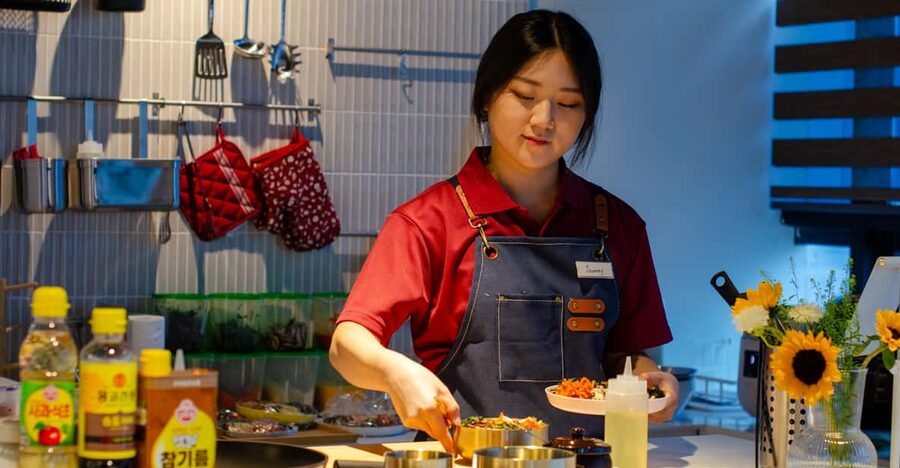
This is taught in English, and the chefs don’t just give directions—they explain origins and context while you cook. Different sessions have different instructors, and several experiences highlight names like Sally, Olivia, Elly, and Grace. The consistent thread: patient, clear instruction with a friendly kitchen vibe.
You’ll also notice the supporting structure. One common detail from recent experiences: an assistant helps keep stations organized by clearing tools as tasks finish, which keeps you from doing extra clean-up or feeling like you’re in the way.
That matters for value. A class like this is only worth it if the kitchen flow is smooth. Here, it’s designed so you cook a lot, eat what you make, and don’t lose time to mess.
Value check: is $109 fair for 150 minutes of Korean food?
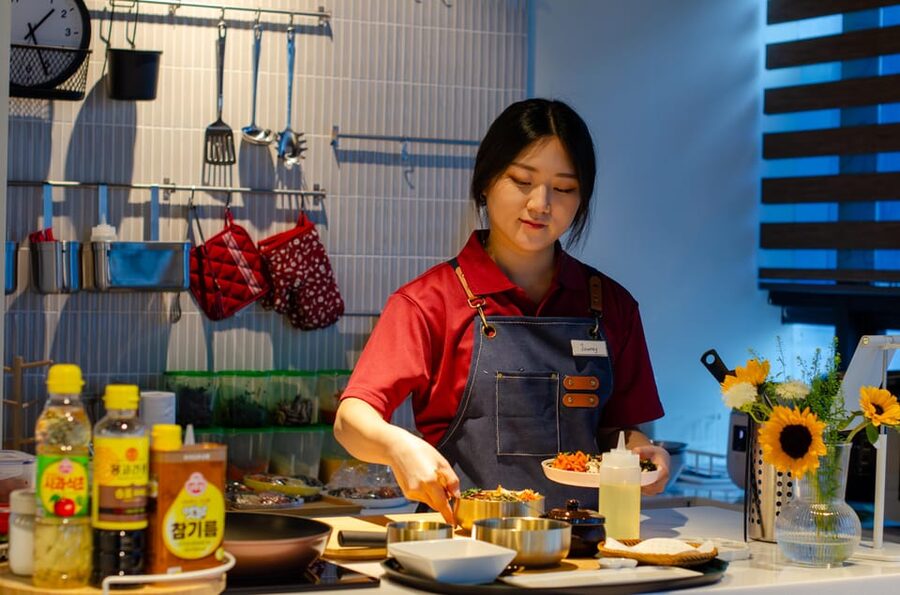
At $109 per person for 150 minutes, the price lands in the “meal + skill + take-home” category. What makes it feel fair (or not) depends on what you expect from a Seoul food experience.
Here’s the value logic I use:
- You’re not paying for a tasting only. You’re paying to cook multiple dishes and then eat them.
- You get starters (Jeon), main dishes (Japchae, Bulgogi, Bibimbap), banchan tastings, and dessert. That’s a lot of food.
- You receive a recipe book to take home, which turns the class into a skill you can repeat.
- Many experiences mention leftovers packed to go, plus a fun souvenir bag. That stretches the day into future meals.
One caution: it can be easy to spend money on cooking classes that are more like guided demos. This one leans hands-on. If you want to feel “I did this,” you’ll probably feel good about the cost.
Who this cooking class fits best (and who should skip it)
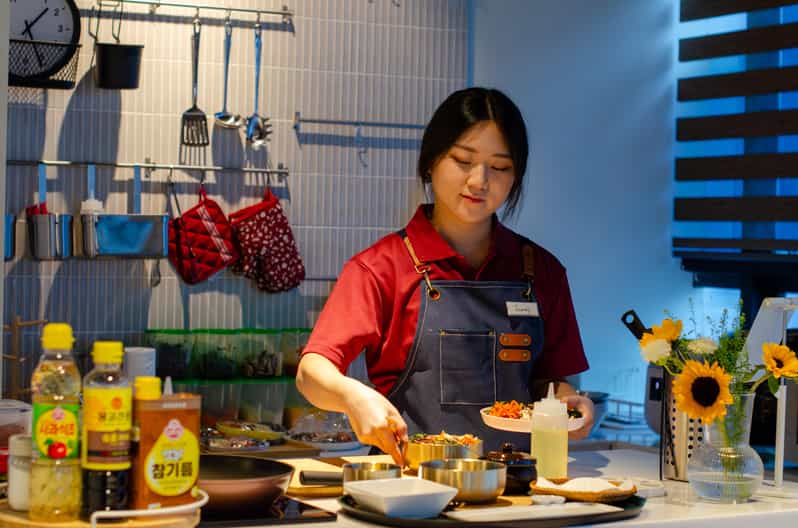
This experience is ideal if:
- You want Korean food you can actually replicate later (Jeon, bulgogi, bibimbap).
- You like structured meals with lots of tastings, not just one dish.
- You enjoy a social setting where people encourage each other while cooking.
- You prefer an English-speaking chef who guides you step-by-step.
It’s not for younger kids. It states it’s not suitable for children under 16.
Also, plan for a standing-and-stirring kind of time. Bring closed-toe shoes and come with an appetite. Multiple instructors and experiences point out that you’ll leave full, and sometimes with leftovers—so having other plans right after is possible, but only if you can manage the timing.
Practical tips before you go
Keep these in mind so you enjoy the class instead of thinking about logistics:
- Wear closed-toe shoes (kitchen comfort matters).
- Come hungry, but also pace yourself during the cooking stages so you can taste properly later.
- If you have dietary needs, ask in advance. One experience specifically mentions gluten-free being accommodated when requested.
- If you’re a solo traveler, this can be a highlight because you’re active, you eat together, and the format nudges you to talk.
Should you book Seoul Cooking Club?
Book it if you want a Seoul food experience that’s practical. This class teaches Korean staples in a way that doesn’t feel intimidating. You’ll get multiple dishes you can repeat at home, a recipe book, and enough food to make it feel like a real meal day—not a snack.
Skip it if you’re looking for a very short activity or a purely observation-style tour. This one is hands-on and ends with a full sit-down portion, so you need the time.
If your schedule is flexible, pick the session time that fits your day best. Brunch, lunch, and early dinner sessions run Monday through Sunday, so you can match it to how you want to move around Jongno afterward.
FAQ
FAQ
How long is the Seoul Cooking Club class?
The class duration is 150 minutes.
Where do I meet for the cooking class?
You meet near Jonggak Station (Line 1), Exit 12. The entrance is on the 7th floor in the same building as the Good Game Zone (orange facade).
What dishes will I cook?
You’ll prepare Jeon starters (3–4 flavors, such as pajeon, beef pancake, tofu pancake, sesame leaf pancakes, and more) and main dishes including Japchae, Bulgogi, and Jeonju Bibimbap.
Do I get to eat what I cook?
Yes. After cooking, you’ll enjoy a three-course style meal plus side dish tastings and dessert.
What desserts and drinks are included?
Dessert options change daily, and Bing-su is mentioned as a favorite option. Drinks included include water, Sikhye, and Korean tea, plus a welcome drink.
Is the cooking class taught in English?
Yes, the instructor teaches in English.
Is this class wheelchair accessible?
Yes, the experience is listed as wheelchair accessible.
Are children allowed?
No. It’s not suitable for children under 16.
What should I bring?
Wear closed-toe shoes.
Is hotel pickup and drop-off included?
No. Hotel pickup and drop-off are not included.
More Cooking Classes in Seoul
- Local Home Korean Cooking Class & Market Adventure in Seoul★ 5.0 · 1,024 reviews
- Master Korean traditional cooking with a Kimchi chef★ 5.0 · 385 reviews
- Seoul: Korean Cooking Class at a Local Home and Market Tour★ 5.0 · 348 reviews
- Korean Cooking at Seoul Cooking Club★ 5.0 · 220 reviews
- Seoul: Taste of Korea, Authentic Home Style Cooking Class★ 4.9 · 166 reviews
More Tour Reviews in Seoul
- Best DMZ Tour Korea from Seoul (Red Suspension Bridge Optional)★ 5.0 · 41,422 reviews
- DMZ Tour: 3rd Tunnel, Option(Suspension Bridge, Boat) from Seoul★ 5.0 · 21,373 reviews
- DMZ tour south Korea from Seoul (NK experience hall, defector)★ 5.0 · 20,599 reviews
- Seoul: DMZ Tour with Optional Suspension Bridge★ 4.8 · 5,277 reviews
- Seoul: DMZ The 3rd Tunnel and Suspension Bridge Tour★ 5.0 · 4,656 reviews
Back in the Korean Kitchen
- Local Home Korean Cooking Class & Market Adventure in Seoul★ 5.0 · 1,024 reviews
- Master Korean traditional cooking with a Kimchi chef★ 5.0 · 385 reviews
- Seoul: Korean Cooking Class at a Local Home and Market Tour★ 5.0 · 348 reviews
- Cook 3 Authentic Korean Dishes with Local Market Tour★ 5.0 · 231 reviews
- Korean Cooking at Seoul Cooking Club★ 5.0 · 220 reviews
Just added to Exploring Seoul



Korean Cooking & Kimchi Classes, compared.
 ★ 5.0Local Home Korean Cooking Class & Market Adventure in SeoulFrom $911,024 reviews
 ★ 5.0Master Korean traditional cooking with a Kimchi chefFrom $85385 reviews
 ★ 5.0Korean Cooking Class at a Local Home and Market TourFrom $98348 reviews
 ★ 5.0Cook 3 Authentic Korean Dishes with Local Market TourFrom $79231 reviews
 ★ 5.0Korean Cooking at Seoul Cooking ClubFrom $109220 reviews
 ★ 4.9Taste of Korea, Authentic Home Style Cooking ClassFrom $89166 reviews
Experience Korean Cooking in Modern Hanok KitchenFrom $87118 reviews
★ 4.9Taste of Korea, Authentic Home Style Cooking ClassFrom $89166 reviews
Experience Korean Cooking in Modern Hanok KitchenFrom $87118 reviews
 ★ 5.0Korean Cooking Class with Grocery Shopping at Seoul Local MarketFrom $91107 reviews
Browse the lists this tour appears in