
Reviewed · KOREAN FOOD & MARKET TOURS
Local Home Korean Cooking Class & Market Adventure in Seoul
Korean home cooking starts with a market walk. This 3.5-hour Seoul experience pairs a guided trip through Mangwon Market with hands-on cooking in a real home, then ends with a traditional hanjeongsik dinner. I love that you learn ingredients before you cook them, and the meal feels like a full Korean table, not a light snack.
You also get a small-group setup that keeps the pace friendly and the questions practical, plus a host who explains as they go. The focus on making real dishes like bibimbap and dakgalbi means you leave with techniques you can use later.
One thing to consider: it’s hands-on from start to finish, so if you prefer watching over cooking, you may want a different style of class.
In This Review
- Key Points I’d Use to Book This
- Mangwon Market Starts the Story: Street Snacks and Seasonal Ingredients
- A Local Home Kitchen, Not a Demo Theatre
- Four Dishes Made From Start to Finish
- Hanjeongsik Dinner: The Over-10 Side Dish Feast
- Price, Timing, and How to Plan Your Day in Seoul
- Who Should Book This (and Who Might Skip)
- FAQ
- Where does the tour meet?
- How long is the cooking class?
- What do you do during the market part?
- How many dishes will I cook?
- Is there dinner included?
- Is this a small group tour?
- What is the price?
- Is it near public transportation?
- What is the cancellation policy?
- Should You Book This Local Home Korean Cooking Class?
Key Points I’d Use to Book This
- Mangwon Station meeting point makes it easy to plug into a day in Seoul
- Guided market shopping + street food tasting teaches what to buy and why
- Four dishes to make (often including bibimbap and dakgalbi) with practical step-by-step help
- Hanjeongsik dinner with 10+ side dishes plus dessert and a glass of makgeolli
- Small group (max 10) helps you get direct attention in the kitchen
- Hosts like Sarah and Junghee are repeatedly praised for clear English and a warm, funny vibe
Still hungry? More Seoul market and street-food crawls
- Seoul: Gyeongbok Palace, Bukchon Village, and Gwangjang Tour★ 4.9 · 2,321 reviews
- Seoul Street Food Market Tour★ 5.0 · 1,226 reviews
- Seoul: Gyeongbok Palace, Bukchon Village, and Gwangjang Tour★ 5.0 · 1,044 reviews
- Local Home Korean Cooking Class & Market Adventure in Seoul★ 5.0 · 1,024 reviews
Mangwon Market Starts the Story: Street Snacks and Seasonal Ingredients
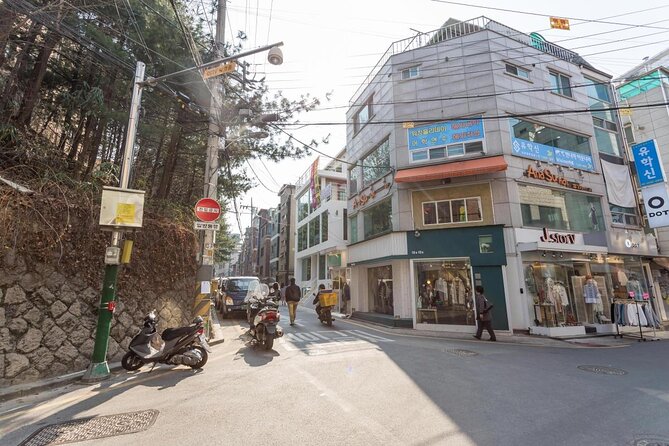
The day kicks off at Mangwon Station Entrance (377-20 Mangwon-dong, Mapo-gu), which is a smart choice if you want “real Seoul” without a long taxi hunt. Once you meet your host, you head into the market with a simple goal: learn how locals actually shop and taste as they go.
This isn’t just wandering. You’ll get a guided market visit where you learn about typical herbs and spices, plus how street foods and everyday ingredients fit into Korean cooking. The tastings matter because they show you flavors in context. If you’ve only ever tasted Korean food at restaurants, you’ll notice the difference between what’s plated and what’s sold right off the stall.
A few standout details from the experience that help you understand what to pay attention to:
- You may sample classics like kwabaeggi, a popular market snack.
- In warm weather, there’s often a sweet break like a honeydew-flavored popsicle, which is a nice reset mid-walk.
- You also pick up small but useful comparisons, like learning how spring onions are used in Korean cooking in a way that differs from the chives many people expect.
The market portion is also where your host’s personality shows. Multiple hosts (including Sarah and Junghee) are praised for stopping often, explaining what you’re seeing, and making the walk feel like a food lesson you didn’t know you needed. You’ll come away with names for ingredients you’ll spot later in grocery stores, plus a feel for what’s worth buying fresh.
Practical tip: wear comfortable shoes. Even though this is a short day, market walking adds up quickly.
A Local Home Kitchen, Not a Demo Theatre
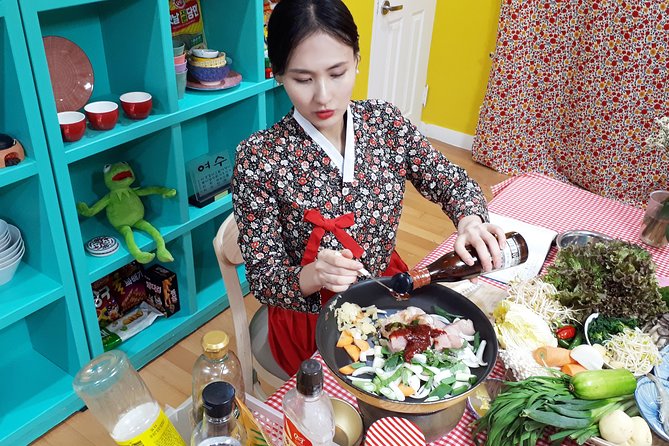
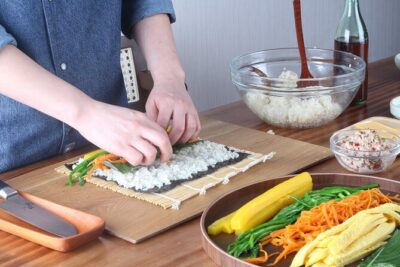
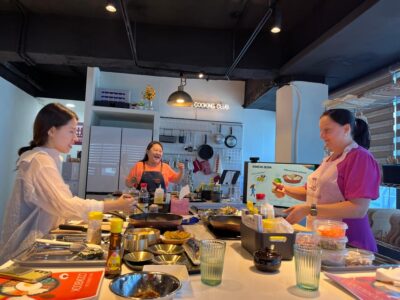
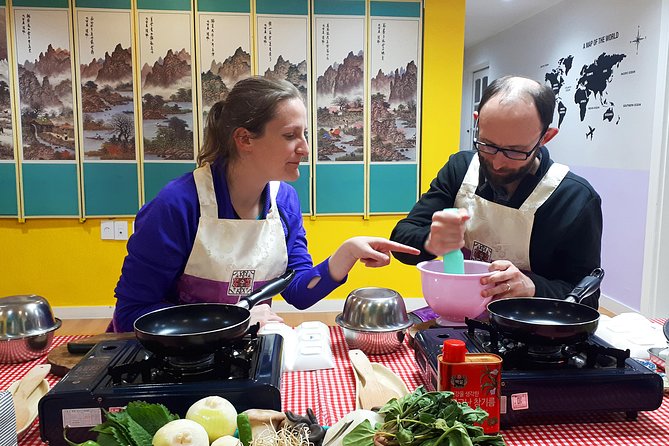
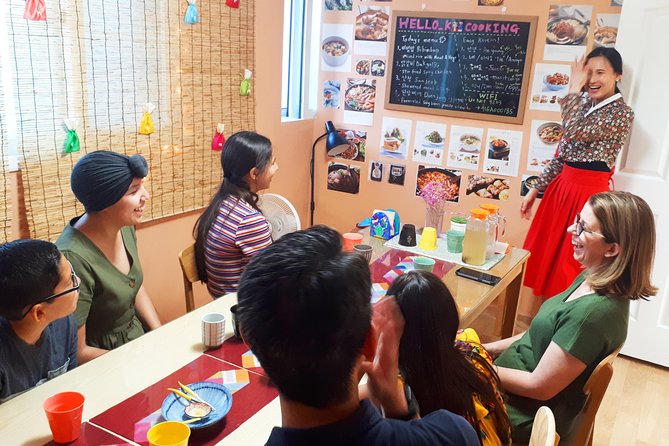
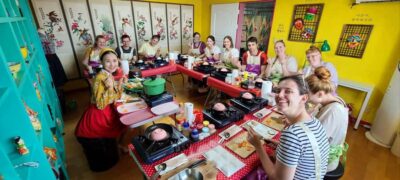
Then you shift from the market into a 100% hands-on cooking class in a local home. This is where the experience pulls ahead for most people: you’re not watching someone cook behind a counter. You’re learning techniques with your own hands, at a household pace that feels approachable.
What makes this work well is the group size. The class is capped at 10 travelers, which is small enough that your host can notice when your chopping is getting too fast—or when you need a second explanation. Reviews repeatedly mention how the host keeps things friendly and low-stress, and how English is clear enough that you can follow along even if you’re starting from zero.
Hosts like Sarah and Junghee are also described as:
- super friendly and welcoming
- funny and interactive without making it chaos
- efficient and patient when teaching
- good at sharing background, not just instructions
You may even get language tips along the way. Some participants reported learning basics like Korean words tied to what they were cooking, and even useful phrases for ordering food later. That’s a quiet win: you leave with cooking skills plus a little confidence to navigate Korea.
And because it happens in someone’s real home, you also learn cultural habits indirectly—how Koreans think about balance on the table, how sides and sauces work together, and how seasoning isn’t just an afterthought.
Four Dishes Made From Start to Finish
The class is built around making four Korean dishes. The exact lineup can vary, but the experience frequently includes famous crowd-pleasers like bibimbap and dakgalbi. Either way, the teaching style is consistent: you’ll do the steps, not just assemble the final plate.
Here’s why the dish mix is a smart choice for first-timers:
- Bibimbap teaches structure. You learn how cooked components (rice + toppings) and sauces work together, and how presentation connects to flavor.
- Dakgalbi is a hands-on way to learn how Korean cooking handles heat, seasoning, and timing. You’ll see how quickly things can go from perfect to overdone if you rush.
Even beyond the headline dishes, you’ll likely work with common Korean cooking building blocks:
- sauces and pastes used for depth
- seasonal vegetables and fresh aromatics
- balancing sweet, salty, and spicy flavors
The big practical value is that you don’t just learn a recipe—you learn technique. People leave with a sense of how to taste as you go and how to adjust seasoning in the moment. Multiple reviews mention that the class gives small, actionable tips, not vague advice.
Another helpful angle: you’ll be working from ingredients you picked up (or at least learned about) during the market visit. That means the food stops feeling abstract. When you cook later at home, you’ll remember what the ingredient tasted like in the market and why your host recommended it.
Roll up your sleeves in another Korean kitchen
Hanjeongsik Dinner: The Over-10 Side Dish Feast
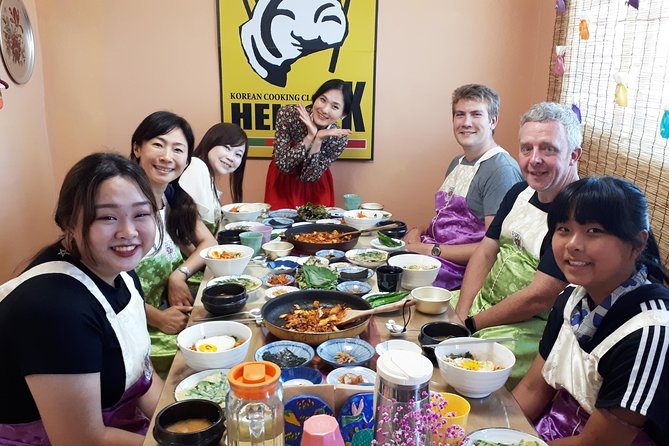
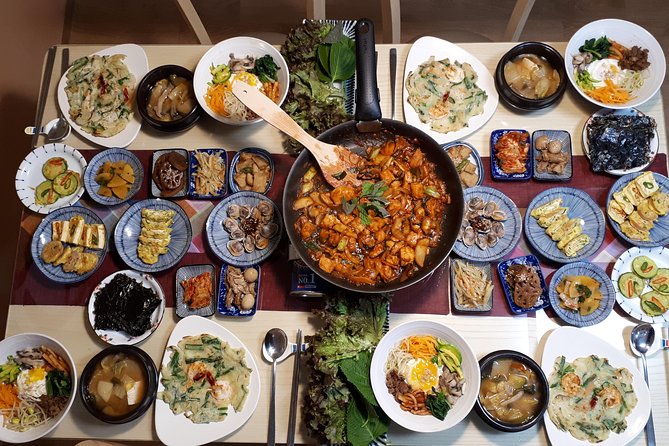
After the cooking work, you sit down to eat what you made plus more. This is the heart of the experience: a traditional hanjeongsik dinner with over 10 side dishes, plus dessert and a glass of makgeolli (Korean rice wine).
If you’ve never tried hanjeongsik, think of it as a full-table meal where the main dish is only one part of the equation. The side dishes aren’t filler—they’re part of the flavor plan. Hot and cold elements create rhythm. Salty, tangy, and spicy notes help your palate reset between bites. And the variety makes each mouthful feel intentional, not repetitive.
Why I think this is great value in a cooking class: you don’t just cook. You also get a clear model of how Korean meals are actually served. Even if you don’t replicate every side at home, you’ll learn the logic behind the spread.
Dessert also shows up at the end. Reviews mention sweet touches that fit the day’s market theme and the sense that the meal is meant to feel like a proper Korean dining experience, not a quick finish.
A small, personal note (in the best travel sense): this is the part that turns the class from a food activity into a cultural memory. You’ll taste what your host has been talking about since the market walk—balance, texture, and season-driven variety.
Price, Timing, and How to Plan Your Day in Seoul
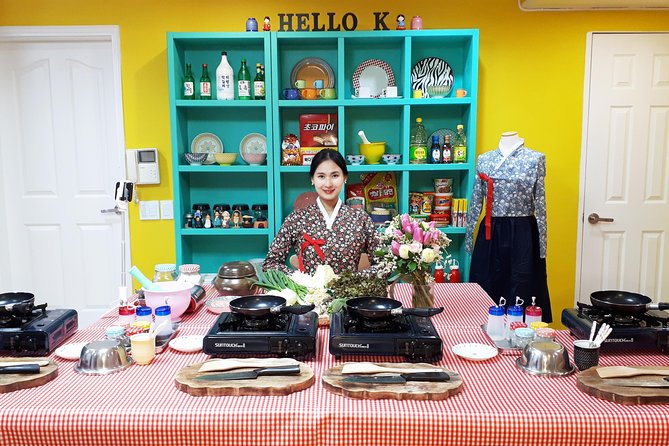
This tour costs $91.00 per person and runs about 3 hours 30 minutes. For Seoul, it’s not a throwaway deal, but it also doesn’t feel overpriced when you break down what’s included: market guide time, street food tasting, hands-on cooking for multiple dishes, then a full hanjeongsik-style meal with 10+ sides, dessert, and makgeolli.
It’s also priced like an experience aimed at quality, not just food volume. The class has a max group size of 10, and it’s located in a local home setting, which typically means fewer shortcuts and more direct coaching.
Timing matters here. A 3.5-hour block works well for:
- a free afternoon when you don’t want to rush
- an early dinner substitute
- a day when you’d otherwise be doing one “big attraction,” but want something hands-on instead
Logistics are fairly easy. You get a mobile ticket, the meeting point is near public transportation, and the tour returns back to the meeting point.
Practical advice so you get the most out of the day:
- Arrive a few minutes early so you start the market walk relaxed.
- Come hungry. Between the market snacks and the hanjeongsik dinner, you’ll likely eat more than you planned.
- If you want to remember ingredients for later shopping, bring a note app and jot down names your host repeats.
Who Should Book This (and Who Might Skip)
This class fits best if you like learning food through doing. It’s ideal for:
- food-first travelers who want more than a tasting flight
- couples who want a shared activity with a clear payoff (meal + recipes)
- families with older kids—one review specifically praised it for kids aged 16, 18, and 28
- anyone who likes small groups and hates feeling lost in a large tour crowd
It may be less ideal if:
- you prefer only observing rather than cooking
- you want a totally low-energy evening plan after the class, since you’ll be hands-on and eating a lot
A final consideration: you’ll likely leave with a stack of new food names and cooking instincts, not just photos. If that sounds fun to you, book it.
FAQ
Where does the tour meet?
The tour meets at the Mangwon Station Entrance, at 377-20 Mangwon-dong, Mapo-gu, Seoul.
How long is the cooking class?
It lasts about 3 hours 30 minutes (approx.).
What do you do during the market part?
You get a guided market visit where you learn about local street foods and ingredients, and you also sample street food snacks. The market portion includes learning about typical herbs and spices.
How many dishes will I cook?
You’ll create four Korean dishes. Bibimbap and Dakgalbi are specifically mentioned as examples.
Is there dinner included?
Yes. You end with a traditional hanjeongsik dinner that includes your homemade dishes plus additional side dishes, dessert, and a glass of makgeolli.
Is this a small group tour?
Yes. The experience has a maximum of 10 travelers, which is designed for more attention from your host.
What is the price?
The price is $91.00 per person.
Is it near public transportation?
Yes. The meeting point is described as being near public transportation.
What is the cancellation policy?
Cancellation is free up to 24 hours in advance for a full refund.
Should You Book This Local Home Korean Cooking Class?
Yes—if you want a Seoul experience that mixes market learning + hands-on cooking + a real Korean meal. The standout strength is the pairing: you shop, you taste, you cook, then you eat it as a hanjeongsik table. That flow makes the flavors stick.
Book it especially if you value small-group attention and a host who explains clearly. If you’re the kind of traveler who likes going home with practical skills (not just memories), this is a strong pick.
More Tour Reviews in Seoul
- Best DMZ Tour Korea from Seoul (Red Suspension Bridge Optional)★ 5.0 · 41,422 reviews
- DMZ Tour: 3rd Tunnel, Option(Suspension Bridge, Boat) from Seoul★ 5.0 · 21,373 reviews
- DMZ tour south Korea from Seoul (NK experience hall, defector)★ 5.0 · 20,599 reviews
- Seoul: DMZ Tour with Optional Suspension Bridge★ 4.8 · 5,277 reviews
- Seoul: DMZ The 3rd Tunnel and Suspension Bridge Tour★ 5.0 · 4,656 reviews
Back in the Korean Kitchen
- Master Korean traditional cooking with a Kimchi chef★ 5.0 · 385 reviews
- Seoul: Korean Cooking Class at a Local Home and Market Tour★ 5.0 · 348 reviews
- Seoul: Korean Cooking at Seoul Cooking Club!★ 5.0 · 311 reviews
- Cook 3 Authentic Korean Dishes with Local Market Tour★ 5.0 · 231 reviews
- Korean Cooking at Seoul Cooking Club★ 5.0 · 220 reviews
Eat Your Way Further Through Seoul
- Seoul: Gyeongbok Palace, Bukchon Village, and Gwangjang Tour★ 4.9 · 2,321 reviews
- Seoul Street Food Market Tour★ 5.0 · 1,226 reviews
- Seoul: Gyeongbok Palace, Bukchon Village, and Gwangjang Tour★ 5.0 · 1,044 reviews
- Seoul: Night Market Food Tour with Local Guide★ 4.9 · 943 reviews
- Seoul: Palace, Temple and Market Guided Foodie Tour at Night★ 4.9 · 750 reviews
Just added to Exploring Seoul

Korean Food & Market Tours, compared.
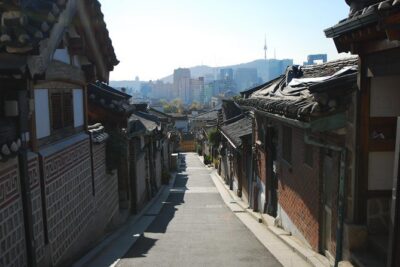 ★ 4.9Gyeongbok Palace, Bukchon Village, and Gwangjang TourFrom $322,321 reviews
 ★ 5.0Seoul Street Food Market TourFrom $731,226 reviews
★ 5.0Gyeongbok Palace, Bukchon Village, and Gwangjang TourFrom $321,044 reviews
★ 5.0Seoul Street Food Market TourFrom $731,226 reviews
★ 5.0Gyeongbok Palace, Bukchon Village, and Gwangjang TourFrom $321,044 reviews
 ★ 4.9Night Market Food Tour with Local GuideFrom $73943 reviews
 ★ 4.9Palace, Temple and Market Guided Foodie Tour at NightFrom $60750 reviews
 ★ 5.0Downtown Seoul Guided Food & Market Tour with 8+ Local TastingsFrom $98580 reviews
 ★ 5.0Drinking and Eating through the Alleys of SeoulFrom $85364 reviews
 ★ 5.0Korean Cooking Class at a Local Home and Market TourFrom $98348 reviews
Browse the lists this tour appears in