
Reviewed · KOREAN COOKING & KIMCHI CLASSES
Royal Seoul Cooking Class in a 100-Year-Old Hanok
Cooking inside a 100-year-old hanok hits different.
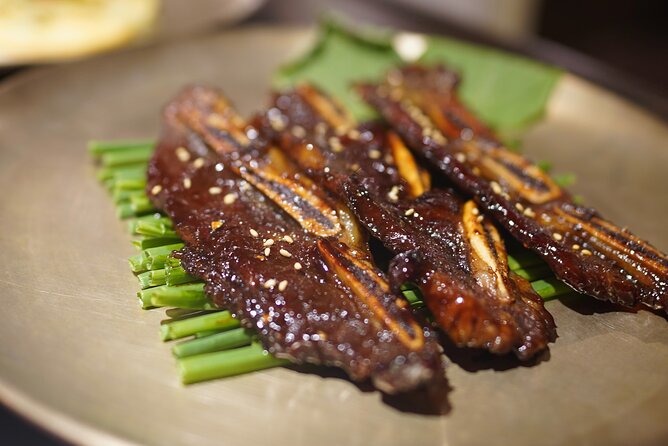
This Royal Seoul Cooking Class is built for real food learning, with a max group size of 6 and a menu that goes beyond basics into royal-style Korean favorites. You’ll cook dishes like LA galbi, fresh kimchi, pajeon, and tapyeongchae, then eat what you make on traditional bangjja bronzeware with makgeolli and Korean desserts.
Two things I really like: the setting is genuinely special, and Chef Park’s approach is structured enough that even beginners can keep up. One thing to consider: this is a short 2 hours 15 minutes, so the history stops are more about quick context than deep time inside each palace.
In This Review
- Key things to know before you go
- A 100-year-old hanok kitchen in Jongno
- Chef Park and the small-group advantage (max 6)
- The menu: royal flavors you can actually recreate at home
- LA galbi
- Fresh kimchi
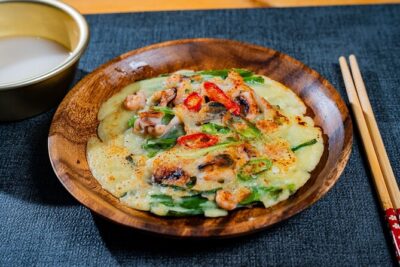
- Haemul pajeon
- Tapyeongchae
- What you make becomes your dinner
- Bangjja bronzeware dining and makgeolli, the real reason to go
- The Seoul route: palaces to market to hanok streets (with time limits in mind)
- Gyeongbokgung Palace
- Changdeokgung Palace
- Kwangjang Market
- Ikseon-dong Hanok Street
- Gwanghwamun Square
- Price and value at $98.98 per person
- Who this cooking class is best for
- A note on comfort and pacing
- Should you book Royal Seoul Cooking Class?
- FAQ
- How long is the Royal Seoul Cooking Class?
- What is the group size?
- What dishes will we cook?
- Where do I meet for the class?
- What’s included besides cooking?
- Can I get a full refund if I cancel?
- How do I get my ticket?
Key things to know before you go
- Max 6 people means you actually get help, not just a demo-and-hope situation.
- Chef Park leads the class, sharing both cooking technique and the cultural story behind each dish.
- You’ll cook LA galbi, fresh kimchi, pajeon, and tapyeongchae with guided, simplified steps.
- Eat on bangjja bronzeware on a traditional table set up in a restored hanok dining space.
- The class includes a glass of freshly brewed makgeolli plus traditional Korean desserts.
- The route includes major sights: Gyeongbokgung Palace, Changdeokgung Palace, Kwangjang Market, Ikseon-dong Hanok Street, and Gwanghwamun Square.
Roll up your sleeves in another Korean kitchen
- Local Home Korean Cooking Class & Market Adventure in Seoul★ 5.0 · 1,024 reviews
- Master Korean traditional cooking with a Kimchi chef★ 5.0 · 385 reviews
- Seoul: Korean Cooking Class at a Local Home and Market Tour★ 5.0 · 348 reviews
- Seoul: Korean Cooking at Seoul Cooking Club!★ 5.0 · 311 reviews
A 100-year-old hanok kitchen in Jongno
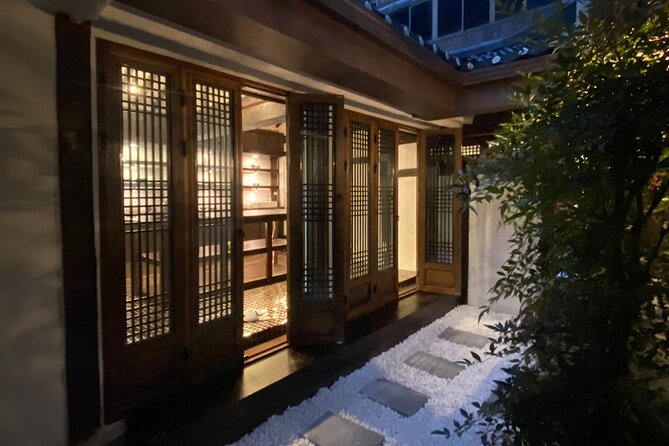
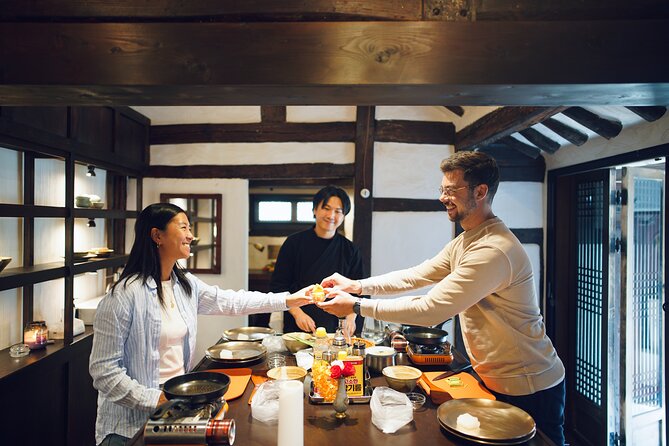
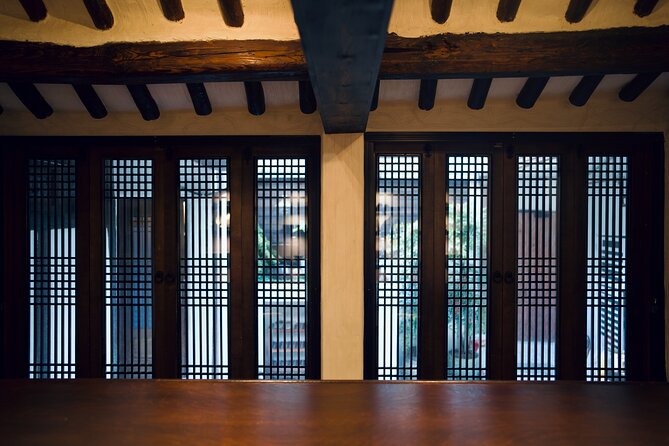
Start with the location, because the house does half the work for you. You’ll meet in Jongno District at 25 Samil-daero 32ga-gil, then spend time in a restored 100-year-old hanok that’s been kept for everyday home life—not turned into a theme park kitchen.
This matters for two reasons. First, you get a sense of how Koreans actually lived: smaller rooms, a home-like flow, and dining that feels tied to the architecture. Second, the atmosphere makes the class feel like an invitation, not a performance. When you’re surrounded by traditional materials and a warm dining space, you pay attention to details like seasoning, temperature, and timing—things you usually miss in a crowded cooking studio.
The route is also built around a strong “Seoul heritage” feel. You’ll hit big-name landmarks (palaces and squares) and then move into more local texture at places like Kwangjang Market and Ikseon-dong Hanok Street. It’s a smart way to break up the day so the cooking doesn’t feel isolated from the city.
Chef Park and the small-group advantage (max 6)
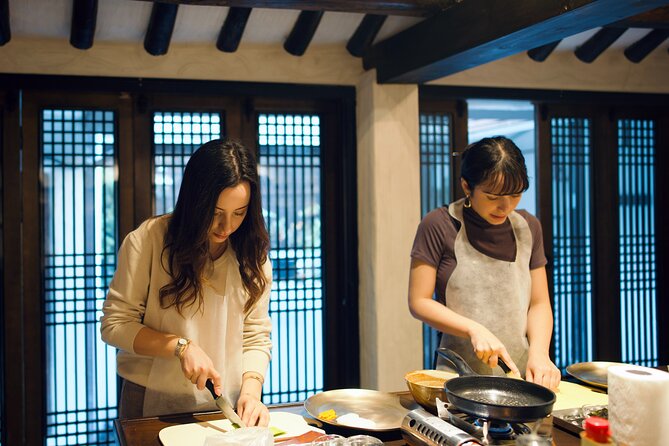
This is a class designed for interaction. The group limit is 6 travelers, and that changes everything about pacing.
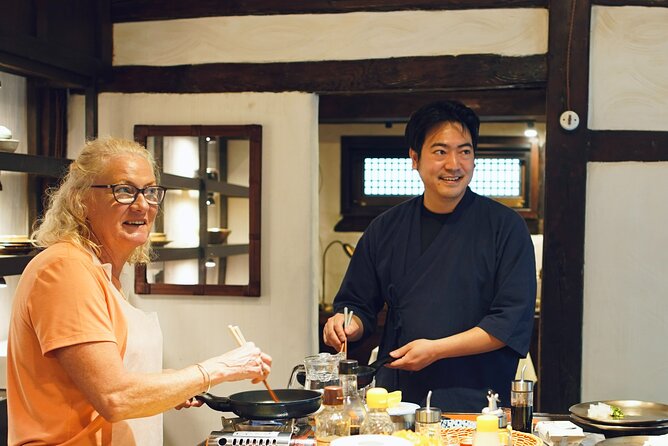
In a big class, you end up standing back, watching, and hoping the instructor notices you. Here, Chef Park can slow down for questions, check your work, and guide you while you cook. The class also explicitly aims to be approachable even if you don’t have cooking skills, with help from experts using an official culinary certificate.
From the tone of past sessions, Chef Park tends to combine hands-on teaching with storytelling. That’s not fluff—Korean cuisine is tied to regional ingredients and specific techniques, and the context makes the cooking make sense. You’ll hear cultural stories behind what you’re making, so you don’t just memorize steps. You understand why the dish is built the way it is.
One practical note: if you have mobility needs or you’d like a more comfortable cooking setup, ask in advance. There’s been at least one instance where a guest requested a stool so they could cook without pain, and Chef Park accommodated it. It’s worth reaching out early rather than waiting until you’re in the room.
The menu: royal flavors you can actually recreate at home
The big promise is royal Korean cooking, and the menu gives you a mix of dishes that cover different skills. You’re not only making one “safe” item—you’ll learn how Korean cooking works across grilling, fermenting, frying, and mixing.
A handful of other Seoul experiences to line up next
LA galbi
You’ll cook LA galbi, a Korean classic that’s all about sweet-savory balance and tender meat. What I like about this choice is that it’s familiar enough to make sense, but technique matters in getting the flavor right. If you’ve ever had trouble with sauce thickness or seasoning that tastes flat, this type of guided prep is the kind that helps you fix it.
Fresh kimchi
The class includes fresh kimchi, which is a big deal because kimchi isn’t just a side dish in Korea—it’s part of the culture of everyday meals. Even when you don’t become a kimchi expert overnight, you learn the logic of seasoning and texture. That makes it easier to recreate later, because you’re not just copying a flavor; you’re learning how the dish comes together.
Haemul pajeon
You’ll also make haemul pajeon, a seafood pancake that teaches heat control and batter behavior. Pajeon is a good “first serious dish” because you can see results fast. Get the thickness right, manage the sizzling, and the pancake turns crisp outside while staying tender inside.
Tapyeongchae
Finally, tapyeongchae rounds out the menu with a different style of Korean dish—more about freshness, balance, and presentation than heavy frying. It’s a nice way to break up the meal’s texture and give you a dish you can feel proud serving to guests.
What you make becomes your dinner
After cooking, you eat what you made right away. That’s a key value point: you taste while it’s still connected to what you just learned.
Bangjja bronzeware dining and makgeolli, the real reason to go
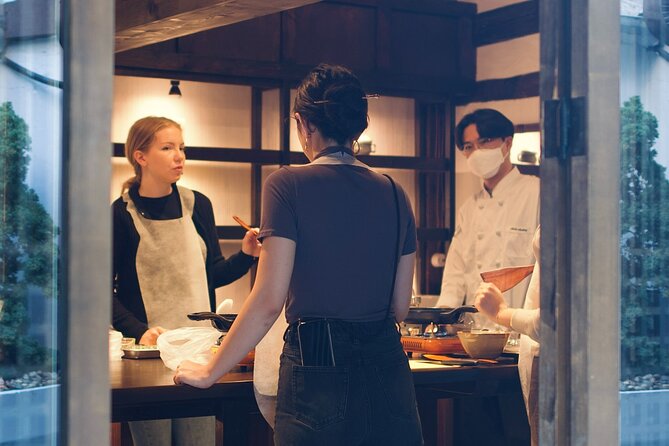
Plenty of cooking classes end with paper plates and a rushed sit-down. This one leans into Korean table culture.
Your meal is served on handcrafted bangjja bronzeware (traditional Korean metal tableware). That might sound fancy, but it’s practical too. Bronzeware is part of how Koreans historically approached heating and serving, and the weight and feel of the tableware make the meal feel ceremonial in a grounded way.
Then comes a classic pairing: a glass of freshly brewed makgeolli, plus traditional Korean desserts. Makgeolli is tangy and pleasantly cloudy, and it works well after savory dishes because it cuts through richness. The desserts help close the loop so you leave with a sense of how a Korean meal finishes, not just how it starts.
Also, Chef Park tends to share cultural stories as you cook and eat, so you’re not just eating. You’re learning how Koreans think about balance—sweet, salty, fermented, crisp, warm, and cooling elements all show up across the meal.
The Seoul route: palaces to market to hanok streets (with time limits in mind)
This tour includes five named stops, and it’s worth understanding what that means for your expectations.
Gyeongbokgung Palace
Gyeongbokgung is one of Seoul’s most famous palace complexes. As a stop, it helps you orient yourself in “big history Seoul” terms, even if your time there is limited by the class duration.
Changdeokgung Palace
Next is Changdeokgung Palace, known for its harmonious design and garden space. Again, plan for context rather than a full deep visit. The goal is to connect what you see in the city to the cultural stories you hear during the cooking.
Kwangjang Market
Then you shift gears to everyday food Seoul at Kwangjang Market. This stop is a great energy change, and it sets up your appetite for the cooking portion. Market time also helps you understand the ingredients and street-food mood that informs Korean home cooking.
Ikseon-dong Hanok Street
Ikseon-dong Hanok Street adds a more local, walkable feel. It’s where you start seeing hanok life as something you can step into nearby, not only as a distant monument.
Gwanghwamun Square
Finally, you end at Gwanghwamun Square as part of the overall route context. It’s a good anchor point in the city, so even if the cooking is the main event, you leave with a clearer mental map of where things are.
The only potential drawback here is simple: 2 hours 15 minutes is not enough to treat all of these stops as full, slow sightseeing. If you want long palace time or shopping sprees, keep those as follow-up plans after the class.
Price and value at $98.98 per person
At $98.98, this is not the cheapest way to “do Korean food” in Seoul. But it can be a good value if you’re comparing apples to apples: hands-on instruction, a small group, a restored hanok setting, and a meal that includes makgeolli and desserts.
Here’s what you’re really paying for:
- Small-group help (max 6) so you’re not just watching.
- A guided menu with multiple dishes that teach different techniques.
- An authentic dining environment with bangjja bronzeware.
- A direct connection between city culture and cooking stories.
If your goal is only to eat, you could spend less. If your goal is to leave with skills you can repeat at home, the price starts to make sense—especially because the class is designed to be approachable even without prior cooking experience.
Who this cooking class is best for
This works especially well if you fall into one of these groups:
Food lovers who want skills, not just a meal. The menu covers meat, fermented vegetables, and cooking methods like pan-frying.
Solo travelers. A small group keeps it social without feeling chaotic, and Chef Park’s teaching style supports conversation.
Families with teens and tweens. Past sessions included kids around middle-school age, with instruction that stayed clear and patient.
People who care about Seoul beyond photos. The route ties famous landmarks to market life and hanok neighborhoods, so you get both scale and texture.
If you’re the type who needs a fully flexible schedule to roam long distances on your own, this may feel too structured for you. The class is short, and the stops are designed to fit the format.
A note on comfort and pacing
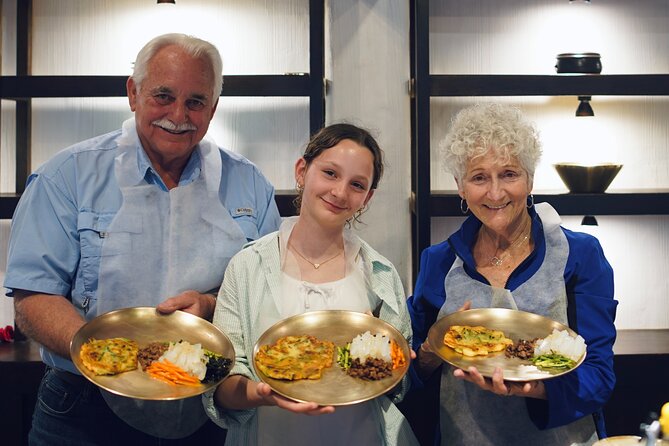
Hanok spaces can feel cozy but slightly different from modern kitchens. If you need seating support, the class has shown it can handle comfort requests (like providing a stool for bad legs). And because the group is capped at 6, pacing tends to stay manageable rather than rushed.
Bring an open mind too. Korean flavors can be unfamiliar if you don’t eat much fermented food yet. But the class structure is set up so you can learn as you cook—plus you’ll taste everything right after making it.
Should you book Royal Seoul Cooking Class?
I’d book it if you want a real Seoul cooking lesson tied to a meaningful setting. The 100-year-old hanok, the small-group format, Chef Park’s teaching style, and the dinner setup with bangjja bronzeware, makgeolli, and desserts add up to a complete experience, not just another activity on your list.
I’d skip it (or at least consider timing carefully) if you’re chasing a long, slow sightseeing day. With a 2h15 runtime, you’ll want to treat the palace and market stops as context rather than full touring.
If you want one simple rule: book this as a guided way to understand Korean food and culture, then use the rest of your trip for independent palace wandering and shopping.
FAQ
How long is the Royal Seoul Cooking Class?
The class runs for about 2 hours 15 minutes.
What is the group size?
The tour/activity has a maximum of 6 travelers, so it stays small and interactive.
What dishes will we cook?
The experience includes cooking royal-style Korean dishes such as LA galbi, fresh kimchi, pajeon, and tapyeongchae. Haemul pajeon is also listed.
Where do I meet for the class?
You meet at 25 Samil-daero 32ga-gil, Jongno District, Seoul, South Korea, and the activity ends back at the same meeting point.
What’s included besides cooking?
After cooking, you dine on traditional bangjja bronzeware. The experience also includes a glass of freshly brewed makgeolli and traditional Korean desserts.
Can I get a full refund if I cancel?
Yes. Free cancellation is available up to 24 hours in advance for a full refund. If you cancel less than 24 hours before the start time, the amount you paid is not refunded.
How do I get my ticket?
You receive a mobile ticket. Confirmation is provided at the time of booking.
More Cooking Classes in Seoul
- Local Home Korean Cooking Class & Market Adventure in Seoul★ 5.0 · 1,024 reviews
- Master Korean traditional cooking with a Kimchi chef★ 5.0 · 385 reviews
- Seoul: Korean Cooking Class at a Local Home and Market Tour★ 5.0 · 348 reviews
- Seoul: Korean Cooking at Seoul Cooking Club!★ 5.0 · 311 reviews
- Korean Cooking at Seoul Cooking Club★ 5.0 · 220 reviews
More Tour Reviews in Seoul
- Best DMZ Tour Korea from Seoul (Red Suspension Bridge Optional)★ 5.0 · 41,422 reviews
- DMZ Tour: 3rd Tunnel, Option(Suspension Bridge, Boat) from Seoul★ 5.0 · 21,373 reviews
- DMZ tour south Korea from Seoul (NK experience hall, defector)★ 5.0 · 20,599 reviews
- Seoul: DMZ Tour with Optional Suspension Bridge★ 4.8 · 5,277 reviews
- Seoul: DMZ The 3rd Tunnel and Suspension Bridge Tour★ 5.0 · 4,656 reviews
Back in the Korean Kitchen
- Local Home Korean Cooking Class & Market Adventure in Seoul★ 5.0 · 1,024 reviews
- Master Korean traditional cooking with a Kimchi chef★ 5.0 · 385 reviews
- Seoul: Korean Cooking Class at a Local Home and Market Tour★ 5.0 · 348 reviews
- Seoul: Korean Cooking at Seoul Cooking Club!★ 5.0 · 311 reviews
- Cook 3 Authentic Korean Dishes with Local Market Tour★ 5.0 · 231 reviews
Just added to Exploring Seoul

Korean Cooking & Kimchi Classes, compared.
 ★ 5.0Local Home Korean Cooking Class & Market Adventure in SeoulFrom $911,024 reviews
 ★ 5.0Master Korean traditional cooking with a Kimchi chefFrom $85385 reviews
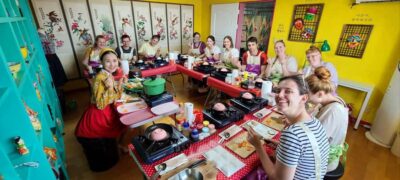 ★ 5.0Korean Cooking Class at a Local Home and Market TourFrom $98348 reviews
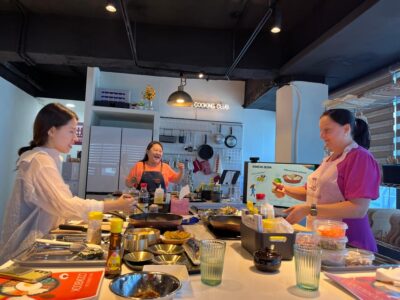 ★ 5.0Korean Cooking at Seoul Cooking Club!From $109311 reviews
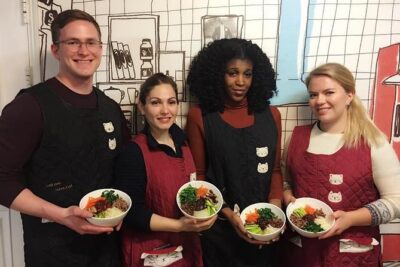 ★ 5.0Cook 3 Authentic Korean Dishes with Local Market TourFrom $79231 reviews
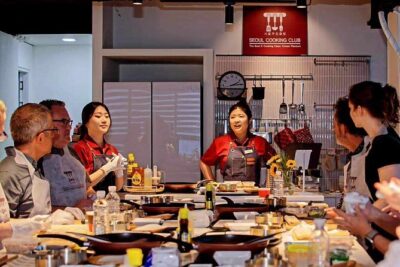 ★ 5.0Korean Cooking at Seoul Cooking ClubFrom $109220 reviews
 ★ 4.9Taste of Korea, Authentic Home Style Cooking ClassFrom $89166 reviews
Experience Korean Cooking in Modern Hanok KitchenFrom $87118 reviews
★ 4.9Taste of Korea, Authentic Home Style Cooking ClassFrom $89166 reviews
Experience Korean Cooking in Modern Hanok KitchenFrom $87118 reviews
Browse the lists this tour appears in