
Reviewed · KOREAN COOKING & KIMCHI CLASSES
2-Hour Private K Cooking Class
Seoul can feel like a food maze. This class turns it into a plan you can actually use at home, starting with a traditional market tour and finishing with Korean dining etiquette and drinking culture. It’s designed around two parts (morning and afternoon), so you get more than recipes.
I especially like the way this experience teaches you what to buy and why, not just what to cook. The market time makes the ingredients make sense, and the class keeps things practical with simple, step-by-step recipes you can follow later.
One thing to consider: the afternoon version includes alcohol culture and drinking games, so if you’d rather keep things strictly non-alcohol, check which session you’re booking and plan your pace accordingly.
In This Review
- Key things that make this class worth it
- Why this Seoul class blends market shopping and table manners
- Mangwon Station timing: a 2.5-hour day with a clear flow
- Morning at the traditional market: choosing Korean staples like a local
- Cooking time: turning ingredients into simple dishes you can repeat
- Afternoon option: alcohol culture, dining etiquette, and drinking games
- Basic Korean for real meals: what you’ll actually use
- Private tour value: why group-only changes everything
- Price and value: what $80 covers (and what it doesn’t)
- Who should book this class (and who might skip it)
- Should you book this 2-Hour Private K Cooking Class?
- FAQ
- Where does the class start?
- How long is the cooking class?
- Is this a private class?
- What kind of ticket do I get?
- What’s included in the price?
- What is not included?
- Are there different parts or time slots?
- What will I learn about culture and language?
- What’s the cancellation policy?
- Who provides the experience?
Key things that make this class worth it
- Mangwon Station start makes it easy to plug into a Seoul day without long transfers
- Traditional market shopping teaches you how to choose staples in real life, not in theory
- Multiple easy dishes with take-home recipes helps you repeat the results at home
- Dining etiquette + basic Korean gives you confidence at the table
- Drinking culture and games add a social Seoul layer beyond the kitchen
- Private group format means you can ask questions without rushing
Roll up your sleeves in another Korean kitchen
- Local Home Korean Cooking Class & Market Adventure in Seoul★ 5.0 · 1,024 reviews
- Master Korean traditional cooking with a Kimchi chef★ 5.0 · 385 reviews
- Seoul: Korean Cooking Class at a Local Home and Market Tour★ 5.0 · 348 reviews
- Seoul: Korean Cooking at Seoul Cooking Club!★ 5.0 · 311 reviews
Why this Seoul class blends market shopping and table manners
Korean cooking is not just about heat and timing. It’s about shopping smart, eating correctly, and knowing the little social rules that make a meal feel comfortable. This class leans hard into that whole package, which is why it feels more like learning a way of living than taking a cooking workshop.
You’ll start with a guided hunt for ingredients at a traditional market. Then you’ll move into cooking and recipe-building so the flavors connect to what you actually bought. Finally, the afternoon option adds drinking etiquette and drinking games, so you see another side of social Korea that most food tours skip.
The best part is the payoff. You’re not only tasting while it’s happening; you’re leaving with instructions you can use back home, plus the cultural cues that help you navigate Korean restaurants with less guesswork.
Mangwon Station timing: a 2.5-hour day with a clear flow
The class runs about 2 hours 30 minutes and ends back at the meeting point. It’s built like a tight circuit: market → cooking and learning → (if you choose the afternoon track) alcohol culture activities. With the start at Mangwon Station, you don’t have to build your day around a complicated pickup plan.
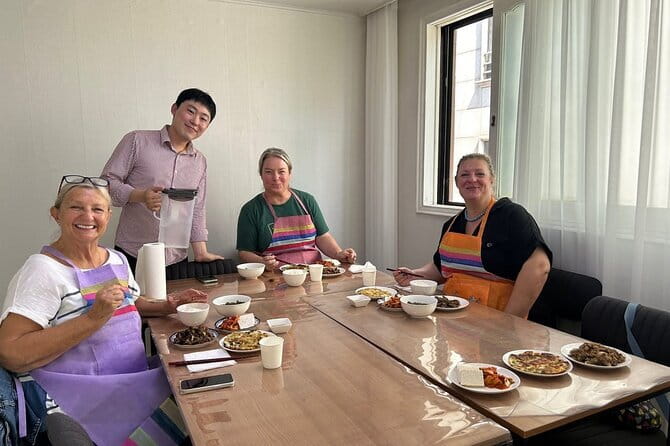
Because it’s a private experience, the pace can stay calmer than group classes. That matters when you’re learning shopping habits and cultural basics at the same time. You can ask the obvious questions without feeling like you’re slowing everyone down.
And since it’s near public transportation and uses a mobile ticket, you’ll spend less time hunting for logistics and more time focusing on food and learning.
Morning at the traditional market: choosing Korean staples like a local
The morning portion is all about a traditional market tour guided by someone who knows what matters. Instead of treating the market like a photo stop, you’ll learn what to look for when buying fresh ingredients and common Korean staples.
That’s a big deal if you usually cook Korean food at home. Many people can follow a recipe, but they still run into problems like ingredients that don’t match the flavor profile, or substitutes that flatten the dish. Market guidance helps you understand what each ingredient is doing in the meal.
You also get the cultural context around food. Markets in Korea are not just where you buy things; they’re where you learn what’s in season and how locals think about meals. Even if you don’t memorize every detail, you start to build a sense for the ingredient categories that show up again and again in Korean cooking.
Practical upside: you’ll leave knowing how to navigate similar items at Korean grocery stores. One of the strongest notes from the experience is that it’s especially helpful for expats. Learning how to pick staples locally can make cooking feel less like a guessing game.
More guide-to-yourself private days in Seoul



Cooking time: turning ingredients into simple dishes you can repeat
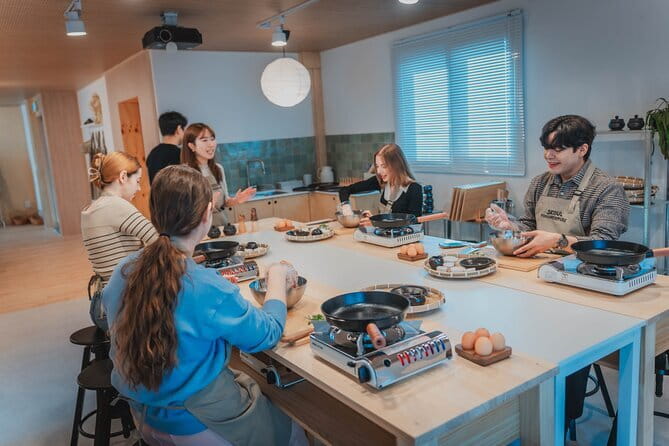
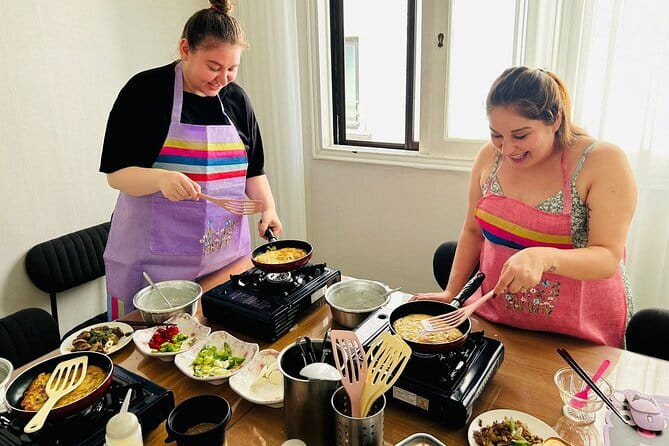
After the market, the class shifts into cooking with the ingredients and utensils provided. The program is framed around simple recipes you can recreate at home, with step-by-step guidance during the session.
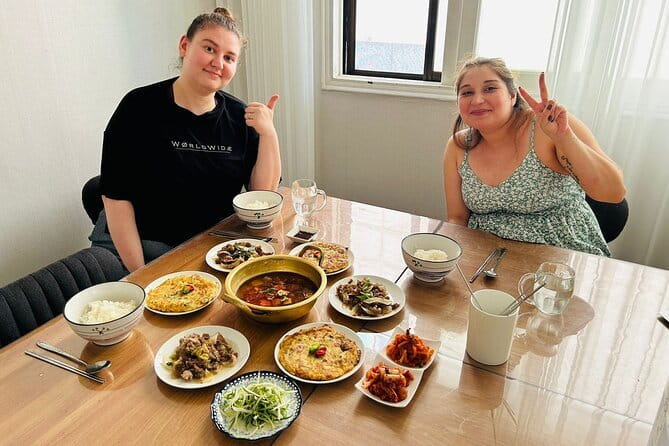
From what you can expect, the class tends to cover multiple dishes. In one of the feedback highlights, a host led a session where participants cooked four dishes and received recipes at the end. The recipes were described as beautifully illustrated, which is exactly what you want when you’re repeating the dishes later and don’t want to decode messy instructions.
What I like about this cooking format is that it connects learning to action. You don’t just hear about flavors; you handle ingredients and follow the process with the help of your guide. That makes it easier to recreate results without needing to improvise too much.
Also, since cooking utensils and ingredients are included, you don’t need to show up with a shopping list or extra equipment. You can keep your travel pack lighter and focus on learning.
Afternoon option: alcohol culture, dining etiquette, and drinking games
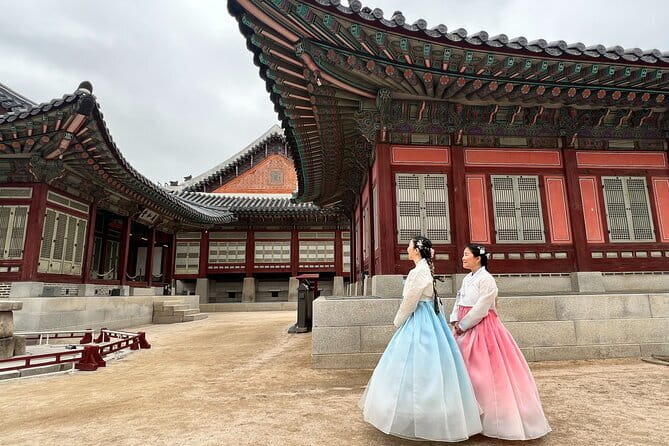
If you book the afternoon class, you’re adding a very Korean social skill set: alcohol culture and drinking games. This is not just about drinking. It’s about understanding the etiquette and rhythm of social meals in Korea.
The experience includes education around dining etiquette and drinking culture, which helps you communicate and participate more naturally if you end up in a Korean restaurant where everyone is ordering and sharing. It also gives you a friendly group setting to learn the vibe—how people socialize around food, timing, and the playful parts of drinking culture.
Then come the drinking games. The goal is not performance; it’s interaction. You practice being part of the group rather than watching from the sidelines. If you’re coming to Seoul to meet people and learn how locals behave, this section can be a highlight.
Just keep in mind the earlier note: if alcohol culture is a deal-breaker for you, consider booking the morning market-focused option only. The program is designed to offer variety by time of day.
Basic Korean for real meals: what you’ll actually use
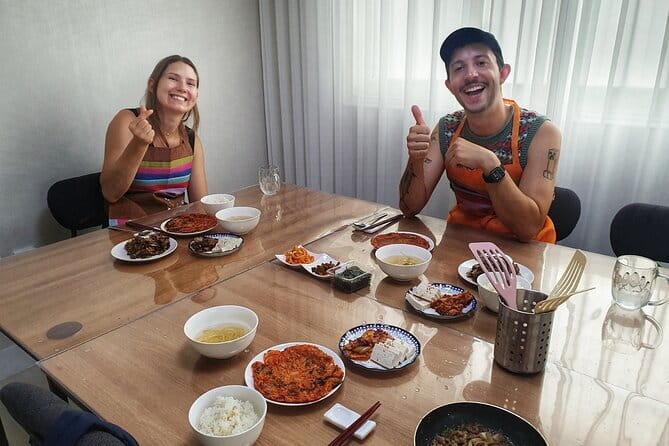
One of the more useful parts of this experience is the emphasis on basic Korean language. The class isn’t trying to turn you into a linguist in one session. It’s meant to help you communicate smoothly in dining situations.
You also get guidance on dining etiquette. In Korea, the small social rules can make a big difference in how comfortable you feel. Even learning a few key behaviors—how to handle shared meals, how to approach drinks, and how dining conversations often flow—can improve your experience in Korean restaurants.
This is especially valuable if you’re an expat or long-term visitor who’s been eating out but still feels like you’re missing pieces. One of the strongest review notes praised how this approach helps you navigate buying staples in local stores and also build understanding of Korean food traditions. That combination is rare.
Private tour value: why group-only changes everything
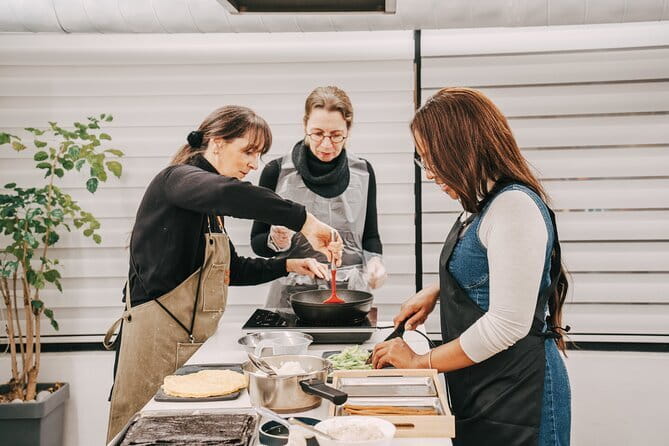
This is a private tour/activity, meaning only your group participates. That shifts the experience from workshop to coaching. When you can ask questions directly and get answers tailored to what you’re curious about, you learn faster.
It also helps with pacing. Markets require attention. Cooking requires attention. Etiquette lessons require attention. In a big group, those details can get lost. In a private setup, your guide can slow down when you need it and speed up when you’re ready.
If you’re traveling with a friend, partner, or family member who wants a more personal experience than a standard class, this format tends to feel more satisfying. It’s also a good fit if you have dietary questions or ingredient preferences. The data here doesn’t list specific accommodations, so I can’t promise anything particular—but private settings are usually more flexible for discussing needs.
Price and value: what $80 covers (and what it doesn’t)
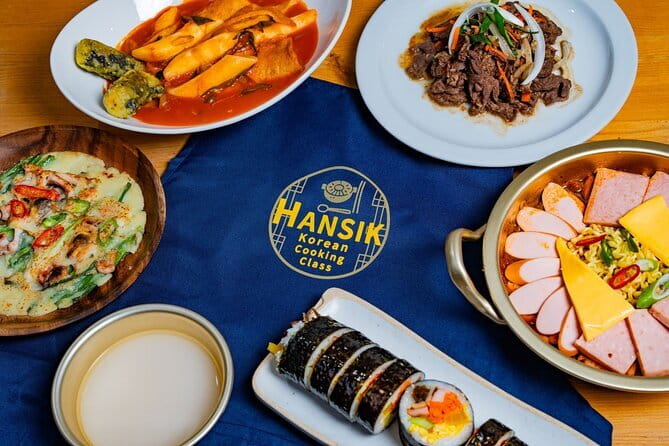
At $80, this class is priced like a guided, ingredient-included private experience. The total time is about 2.5 hours, and you’ll get ingredients plus beverages during the class, along with utensils.
So where does the value show up?
- You’re paying for guidance at the market level, not just kitchen instruction.
- You’re getting take-home recipes designed for repeat cooking at home.
- You’re also getting cultural learning around dining etiquette and drinking culture (if you choose the afternoon format).
- You’re not paying extra for ingredients and tools, which can quietly add up on classes that look cheaper at first glance.
What’s not included is noted clearly: coffee/tea and additional beverages. If you’re the type who always grabs a drink with your meal, plan to cover that separately.
To decide if it’s good value for you, ask one question: do you want to learn the “how to shop and behave” part, not just cook once? If yes, $80 starts to make sense quickly.
Who should book this class (and who might skip it)
This experience fits best if you want a hands-on Seoul day that blends food with everyday culture. It’s a strong choice for people who:
- want to cook Korean food at home with more confidence
- like learning practical shopping skills for Korean markets and stores
- are curious about dining etiquette and social drinking culture
- prefer private, low-rush instruction
It may not be the best match if:
- you want a purely non-alcohol food class
- you’re only interested in eating and tasting, with zero shopping or cooking involvement
- you dislike group social activities like drinking games
Also, this is a great option for someone who’s already traveled in Korea a bit and feels ready for the next step: understanding how Koreans choose ingredients and how meals work socially.
Should you book this 2-Hour Private K Cooking Class?
If your goal is to leave Seoul with more than photos and one good meal, I think this class is a smart bet. The strongest reason to book is the combination: market selection + easy home recipes + cultural learning around dining and, in the afternoon, drinking etiquette.
It’s also a very practical pick because the meeting point is straightforward (Mangwon Station), the class returns you to the same area, and it uses a mobile ticket. Private format means your questions won’t get squeezed out by a larger group.
My only caution is to choose your time slot carefully. If alcohol culture or drinking games aren’t your thing, lean toward the morning market focus.
FAQ
Where does the class start?
It starts at Mangwon Station in Seoul, South Korea.
How long is the cooking class?
The experience runs for about 2 hours 30 minutes (approx.).
Is this a private class?
Yes. It’s a private tour/activity, and only your group participates.
What kind of ticket do I get?
You’ll receive a mobile ticket.
What’s included in the price?
Ingredients, beverage, and cooking utensil(s), plus related items are included.
What is not included?
Coffee and/or tea and any additional beverages are not included.
Are there different parts or time slots?
Yes. The program is divided into a morning and an afternoon class, offering different experiences.
What will I learn about culture and language?
You’ll learn basic Korean language, dining etiquette, and drinking culture.
What’s the cancellation policy?
There is free cancellation up to 24 hours in advance for a full refund.
Who provides the experience?
The experience provider is K.dreams.Seoul.
More Private Days in Seoul
- Private DMZ Tour (No Shopping): 3rd Tunnel & Suspension Bridge★ 5.0 · 607 reviews
- Seoul City Private Full-Day Tour Including Lunch★ 5.0 · 469 reviews
- Private DMZ the 3rd Tunnel Tour from Seoul (optional Red Bridge)★ 5.0 · 429 reviews
- Seoul Highlights & Hidden Gems Tours by Locals: Private + Custom★ 5.0 · 359 reviews
- Premium Private DMZ Tour & (Suspension Bridge or N-Tower) include lunch★ 5.0 · 348 reviews
More Tour Reviews in Seoul
- Best DMZ Tour Korea from Seoul (Red Suspension Bridge Optional)★ 5.0 · 41,422 reviews
- DMZ Tour: 3rd Tunnel, Option(Suspension Bridge, Boat) from Seoul★ 5.0 · 21,373 reviews
- DMZ tour south Korea from Seoul (NK experience hall, defector)★ 5.0 · 20,599 reviews
- Seoul: DMZ Tour with Optional Suspension Bridge★ 4.8 · 5,277 reviews
- Seoul: DMZ The 3rd Tunnel and Suspension Bridge Tour★ 5.0 · 4,656 reviews
Back in the Korean Kitchen
- Local Home Korean Cooking Class & Market Adventure in Seoul★ 5.0 · 1,024 reviews
- Master Korean traditional cooking with a Kimchi chef★ 5.0 · 385 reviews
- Seoul: Korean Cooking Class at a Local Home and Market Tour★ 5.0 · 348 reviews
- Seoul: Korean Cooking at Seoul Cooking Club!★ 5.0 · 311 reviews
- Cook 3 Authentic Korean Dishes with Local Market Tour★ 5.0 · 231 reviews
Just added to Exploring Seoul



Korean Cooking & Kimchi Classes, compared.
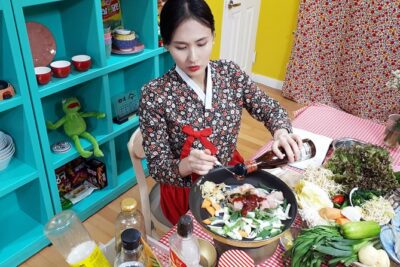 ★ 5.0Local Home Korean Cooking Class & Market Adventure in SeoulFrom $911,024 reviews
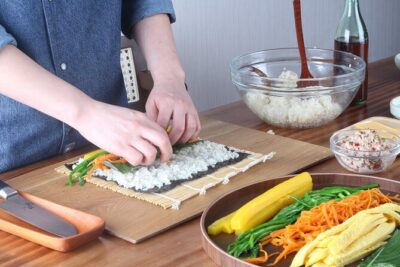 ★ 5.0Master Korean traditional cooking with a Kimchi chefFrom $85385 reviews
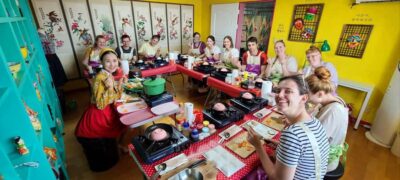 ★ 5.0Korean Cooking Class at a Local Home and Market TourFrom $98348 reviews
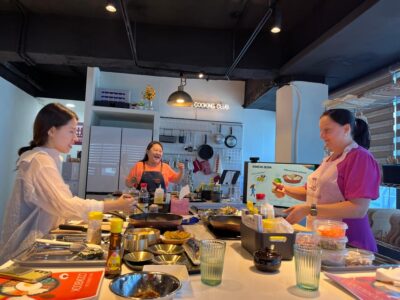 ★ 5.0Korean Cooking at Seoul Cooking Club!From $109311 reviews
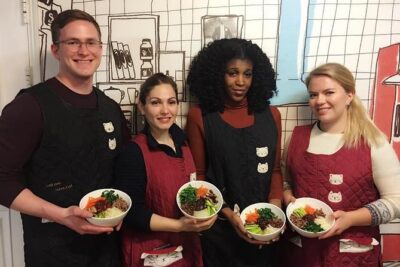 ★ 5.0Cook 3 Authentic Korean Dishes with Local Market TourFrom $79231 reviews
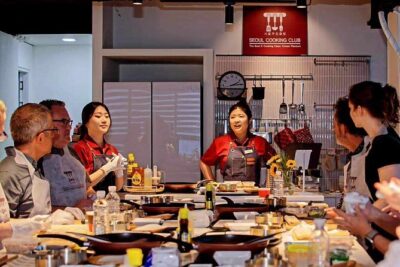 ★ 5.0Korean Cooking at Seoul Cooking ClubFrom $109220 reviews
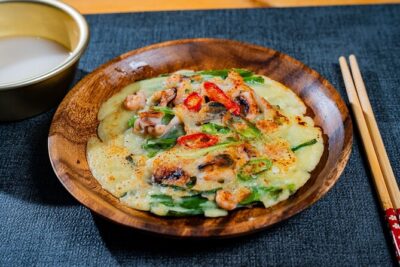 ★ 4.9Taste of Korea, Authentic Home Style Cooking ClassFrom $89166 reviews
Experience Korean Cooking in Modern Hanok KitchenFrom $87118 reviews
★ 4.9Taste of Korea, Authentic Home Style Cooking ClassFrom $89166 reviews
Experience Korean Cooking in Modern Hanok KitchenFrom $87118 reviews
Browse the lists this tour appears in