
Reviewed · DMZ DAY TOURS
Thrilling Korean DMZ 3rd Tunnel Tour from Seoul + Red Bridge Rush
A visit to the DMZ hits different. This full-day tour from Seoul strings together the story of Korea’s division with real places you can stand in front of, including the Third Tunnel of Aggression and the view from Dora Observatory. I like that the day runs with a professional guide and included admissions, so you spend less time figuring things out. My only caution: the tunnel walk and the optional Red Bridge climb are physically demanding, and the schedule can shift due to military or event conditions.
This is built as a long, structured day. You get hotel or central subway pickup (Hongdae, Seoul City Hall, or Myeongdong), guided stops with commentary, then some time to explore on your own before you’re dropped back in the city. Guides named in recent tour feedback like Nancy, Crystal, Judy, Lina, Kelly, Henry, and Camp Go-Go are repeatedly praised for clear explanations and keeping the group moving, even when the weather turns.
In This Review
- Key highlights to know before you go
- Price and value for a $35 DMZ day from Seoul
- How the day moves: pickup, timing, and why the 7.5 hours matter
- Imjingak first: where the war story becomes personal
- Imjingak Pyeonghwa-Nuri Park and Freedom Train area
- Imjingak Resort for clearance and tickets
- Bridge of Freedom and the scale of POW movement
- Mangbaedan memorial altar and the Peace Bell
- Tongilchon Jangdankong Maeul
- Entering the DMZ: what the guided stops really do for you
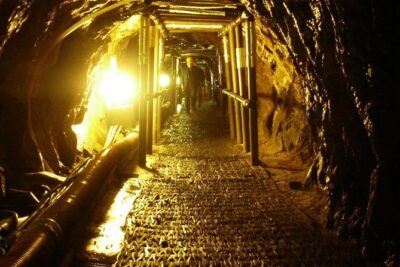
- The Third Tunnel of Aggression: the walk, the rules, and the payoff
- Expect a strenuous route
- No photos inside the tunnel
- Why it’s worth the struggle
- Dora Observatory: your closest official look over North Korea
- Optional add-ons: Peace Gondola and the Red Bridge Rush hike
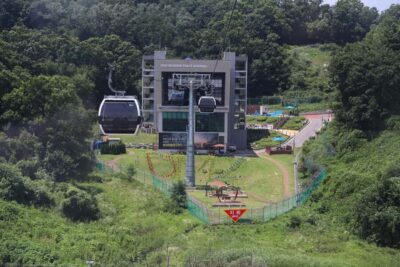
- Paju Imjingak Peace Gondola
- Gamaksan Suspension Bridge (Red Bridge Rush)
- Guides: the difference between seeing places and understanding them
- What you should pack (so the day feels manageable)
- Who should book this DMZ + 3rd Tunnel + Red Bridge Rush tour?
- Should you book it?
- FAQ
- Where does the tour pick me up in Seoul?
- How long is the tour?
- What’s included in the price?
- Is lunch included?
- Do I need a passport?
- Can the tour time change?
- Are the Peace Gondola and Red Bridge optional?
- Can I take photos inside the Third Tunnel?
- Where will I be dropped off after the tour?
- How big is the group?
Key highlights to know before you go
- Third Tunnel of Aggression experience: strict rules, no photos inside, and a physically tough route.
- Imjingak sites before the main DMZ entry: Bridge of Freedom, Freedom Train area, Peace Bell, and memorial stops.
- Dora Observatory views: rebuilt in 2018 and one of the closest official vantage points over North Korea.
- Time-efficient included admissions: transportation and entry fees are folded into the price.
- Optional Peace Gondola and Red Bridge Rush: great for views, but you’ll need steady legs.
Other ways to reach the DMZ and the border from Seoul
- DMZ Tour: 3rd Tunnel, Option(Suspension Bridge, Boat) from Seoul★ 5.0 · 21,373 reviews
- DMZ tour south Korea from Seoul (NK experience hall, defector)★ 5.0 · 20,599 reviews
- Seoul: DMZ Tour with Optional Suspension Bridge★ 4.8 · 5,277 reviews
- Seoul: DMZ The 3rd Tunnel and Suspension Bridge Tour★ 5.0 · 4,656 reviews
Price and value for a $35 DMZ day from Seoul
$35 sounds almost too cheap for a full-day DMZ outing—so I looked at what you actually get. The big value is that you’re not just paying for the right to visit. You’re paying for a whole package: hotel pickup in downtown or at main subway stations, professional guide, and included admission at the listed stops.
The parts that are not included are also clear. Lunch isn’t included, so you’ll want to plan snacks. Also, the tour ends with drop-off at central Seoul spots (Hongdae, City Hall, or Myeongdong), not at your hotel. That can save you money and time, but it’s one more thing you should plan around.
One more value angle: this route is designed to keep you on schedule. The DMZ is one of those places where time matters, and tour flow can change when officials adjust access. If you’re the kind of traveler who hates racing around on public transit, the pickup and guided pacing are a real win.
How the day moves: pickup, timing, and why the 7.5 hours matter
The tour runs about 7 hours 30 minutes. It’s not an all-afternoon “wander and see” kind of trip. Think more like: long sit-and-ride stretches, then short, focused windows at multiple places.
Pickup is offered at three central meeting points:
- Myeongdong Subway Station (Exit 9)
- Seoul City Hall Subway Station (Exit 6)
- Hongdae Subway Station (Exit 3)
Mobile ticketing is used, and the maximum group size is listed as 150 travelers, which helps explain why the schedule stays tight.
The time can change depending on military issues or events in the DMZ area. That’s not a small detail. It means you should avoid booking anything important right after you return to Seoul. A relaxed dinner plan is your friend.
Also, bring your documents. A passport is needed on tour day (Military ID cards and locally issued ARC cards are accepted). DMZ access rules are strict, and the wrong paperwork can ruin your day.
Imjingak first: where the war story becomes personal
Before you reach the Tunnel and Dora Observatory, the itinerary builds emotional context at Imjingak, a peace-oriented complex near the DMZ.
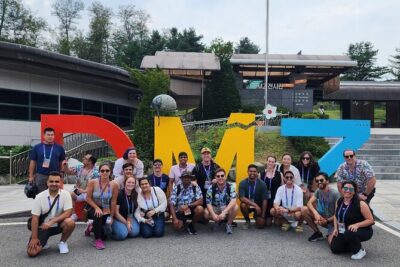
Imjingak Pyeonghwa-Nuri Park and Freedom Train area
You start with a visit to Imjingak Pyeonghwa-Nuri Park, a place created in 1972 for people affected by separation. The guide’s commentary here is part of what makes the day work. You’re not just looking at objects; you’re learning why the place exists and how it connects to later stops.
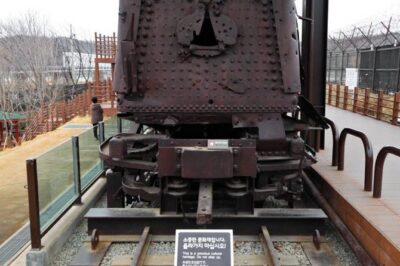
You’ll also see the bullet-scarred Freedom Train, a relic that makes the abstract idea of division feel concrete and immediate.
Imjingak Resort for clearance and tickets
There’s a short stop at Imjingak Resort so the guide can handle entrance clearance and tickets for DMZ entry via the Unification Bridge. This is one of those operational moments that doesn’t sound exciting, but it’s exactly what keeps the day from falling apart.
Bridge of Freedom and the scale of POW movement
Then you step to the Bridge of Freedom, a symbolic crossing tied to prisoners of war moving to South Korea in 1953. The bridge itself is a temporary wooden structure, and the power here is in the story: you’re standing in the place where a single crossing carried enormous human meaning.
Mangbaedan memorial altar and the Peace Bell
From there you move through quieter memorial stops:
- Mangbaedan, where families gather to honor loved ones trapped in North Korea
- Peace Bell (Pyeonghwauijong), a large bronze bell forged in 2002 to symbolize reunification
These stops are short, but they change the feel of the day. The DMZ can skew toward shock and logistics, and memorial sites bring you back to why people keep pushing for peace.
Tongilchon Jangdankong Maeul
Later on the day you visit Tongilchon Jangdankong Maeul, a village area just beyond the Civilian Control Line where the environment supports Korea’s famous ginseng. This is less about dramatic war history and more about how life continues in the shadow of division.
Entering the DMZ: what the guided stops really do for you
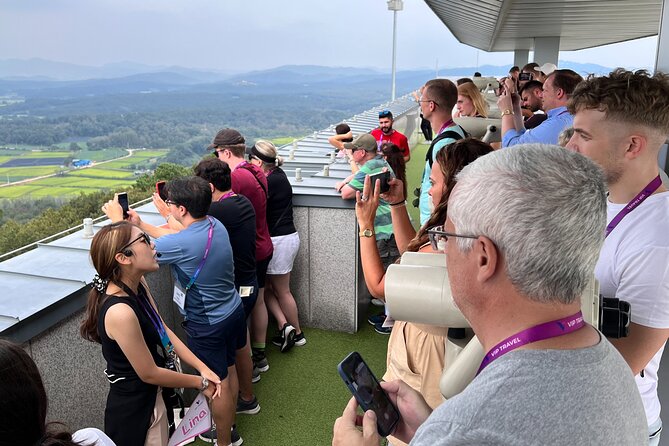
Once you’re on the DMZ side, the experience becomes controlled and limited. That’s why the guide matters. The tour includes detailed commentary in the DMZ area, and it helps you connect what you’re seeing to what it means.
One practical note: access rules also affect what you can do in terms of sightlines and photography. It’s smart to treat the day as a “stand in the place and absorb it” experience, not a “collect lots of photos” day.
The Third Tunnel of Aggression: the walk, the rules, and the payoff
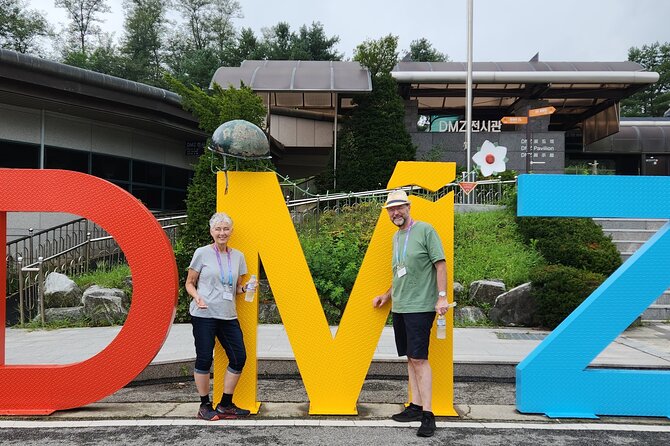
This is the headline stop, the one you should plan for physically.
Expect a strenuous route
The 3rd Tunnel (also called the Third Infiltration Tunnel) was discovered in 1978 and is located about 52 km from Seoul. The tour time at this stop is around 30 minutes, but don’t think of it as 30 minutes of comfort. Reviews and guidance around this stop point to a hard walking segment: you go down into the tunnel area, then return the same way, and the tunnel portion can feel tight and low.
One detailed account describes:
- walking around 250 meters,
- a ~20° slope,
- and a low tunnel segment (about 5 feet high).
Even if those exact measurements vary day to day, the takeaway is consistent: wear supportive shoes and expect effort. If you have mobility issues, this is the part that can make the trip feel stressful instead of memorable.
No photos inside the tunnel
You also need to follow rules inside the DMZ tunnel area. Photo-taking is not allowed inside the tunnel, so come ready to remember it with your senses, not your camera.
Why it’s worth the struggle
The payoff is psychological. Seeing a real tunnel built for infiltration makes the border feel like a living thing, not a map line. It also makes the Dora Observatory stop feel less like a viewpoint and more like the other side of the same story.
Dora Observatory: your closest official look over North Korea
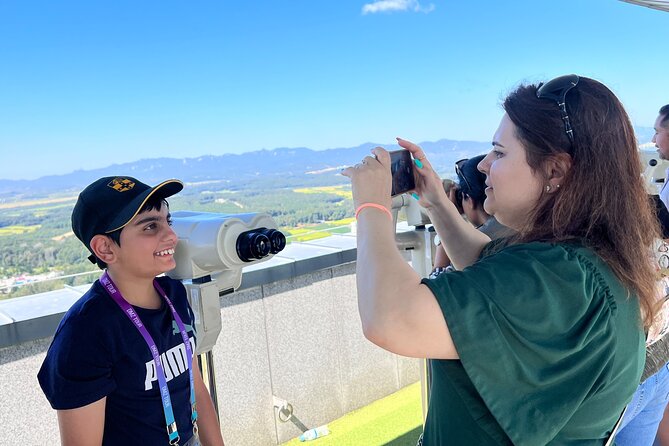
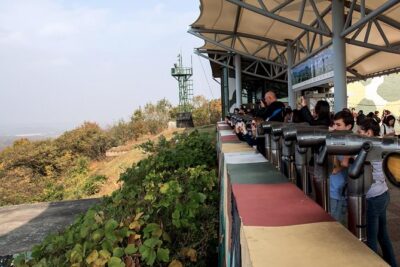
After the tunnel, you head to Dora Observatory atop Dorasan. It was rebuilt in 2018 and established in 1986.
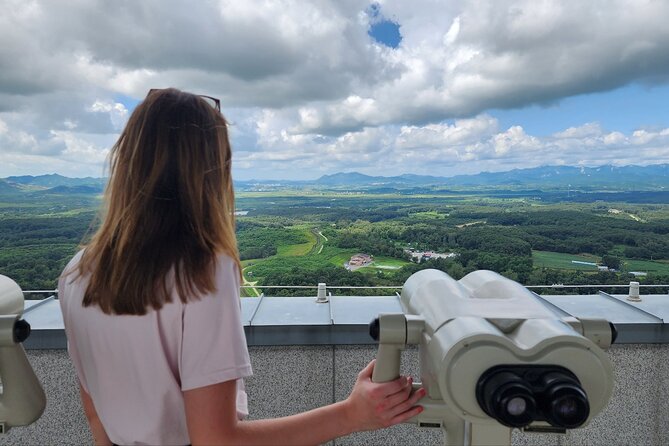
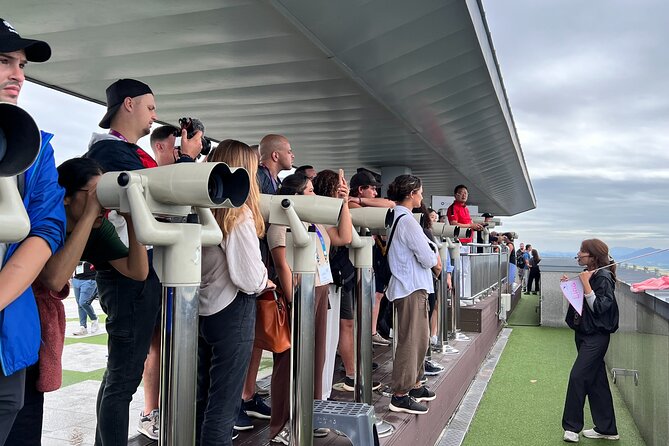
This stop is usually about 30 minutes, and it’s designed as the closest official viewing point over North Korea in this area of access. The point isn’t that you’ll see everything clearly like a movie scene. It’s that you’re getting an authorized, controlled perspective, with context from the guide so your eyes know what they’re looking at.
One practical heads-up from experience accounts: photography from the observatory toward North Korea can be restricted. Bring binoculars if you have them, since distance can make details hard to pick out, and you’ll want to use your own eyes effectively.
Optional add-ons: Peace Gondola and the Red Bridge Rush hike
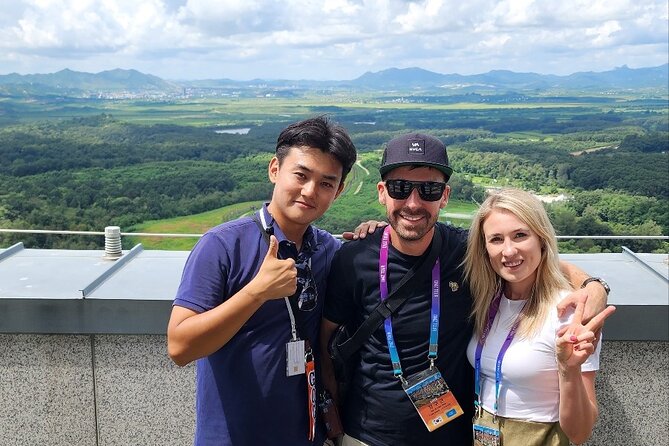
Two optional experiences can change the feel of your day: one is airy and smooth, the other is a leg workout.
Paju Imjingak Peace Gondola
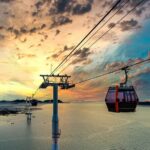
If you choose the Peace Gondola, you’ll glide above the Imjin River. It opened in 2020 and crosses into the Civilian Control Zone, which means the view feels more expansive than standing at ground level.
This is listed as optional and takes up about 1 hour. It’s a good option if you want a break from intense history stops and tunnel fatigue.
Gamaksan Suspension Bridge (Red Bridge Rush)
This is the “Red Bridge Rush” piece. The Gamaksan Suspension Bridge, also called the Gloucester Heroes Bridge, is about 150 meters long and was built in 2018.
The walk up to it can be steep. One detailed feedback note warns that it’s a real hike to reach the top, and you’ll get limited time to make the climb. That’s not a reason to skip it, but it is a reason to show up prepared:
- wear shoes with grip,
- dress for rain or cold if your day turns wet,
- and assume you’ll be moving fast to catch the group.
If you want a DMZ day that’s heavy on walking, the Red Bridge is a strong match. If you’re already worried about the tunnel, treat the bridge as optional for a reason.
Guides: the difference between seeing places and understanding them
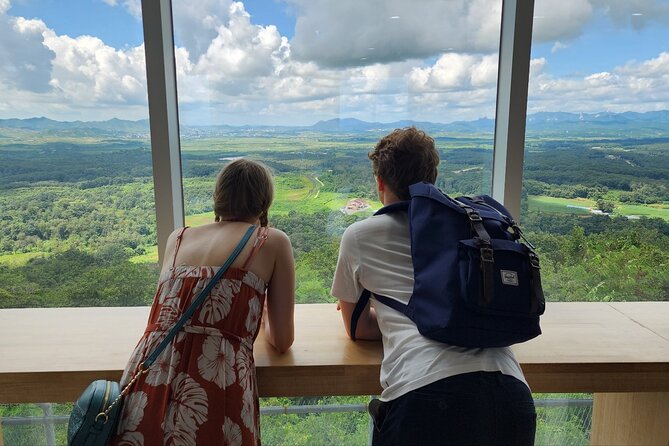
A big part of why this tour earns such high ratings is the human factor. Names showing up repeatedly include Nancy, Crystal, Judy, Lina, Kelly, Henry, and Camp Go-Go.
What stands out in the pattern of feedback:
- Guides are praised for keeping the group moving on time.
- People note that instructions are clear, including what to expect at each stop.
- Even on rainy or snowy days, guides do what they can to keep the experience workable.
That matters in the DMZ, where conditions can change. If access timing shifts, you’ll want a guide who can adapt without turning the day chaotic.
What you should pack (so the day feels manageable)
This tour is about history and access, but your comfort is what decides if you enjoy it.
Bring:
- passport (required)
- sturdy shoes (especially for the tunnel and possible bridge hike)
- snacks (lunch isn’t included, and time at stops can be tight)
- a light rain layer (the DMZ area weather can throw curveballs)
Also, be ready for no-tunnel-photo rules. It’s smart to put your phone away and focus on what you can sense inside.
Who should book this DMZ + 3rd Tunnel + Red Bridge Rush tour?
This tour makes sense if you:
- want a structured day with pickup, guided stops, and included admissions,
- care about modern Korean history and the reality of division,
- don’t mind a long day and short time windows,
- and are physically prepared for the tunnel walk.
It may be less ideal if you:
- have trouble with steep slopes, low-ceiling enclosed spaces, or fatigue from back-and-forth walking,
- want lots of free time at each stop,
- or are hoping for experiences not listed on this route (for example, Panmunjom isn’t part of the standard accessible options here).
Should you book it?
If you want a one-day DMZ experience that’s organized, ticketed, and guided from Seoul, this is a strong choice. The $35 price is the big hook, but the real value is that it covers transportation, admissions, and commentary across the places that explain Korea’s division in human terms.
Book it if you’re okay with effort and you’re ready for the Third Tunnel to be the hardest moment of your day. Consider skipping the Red Bridge climb if you know your legs won’t handle a steep, time-limited hike.
If you tell me your travel dates and your comfort level with walking and slopes, I can help you decide whether to add the Gondola or treat the bridge as a skip.
FAQ
Where does the tour pick me up in Seoul?
You can meet at Myeongdong Subway Station (Exit 9), Seoul City Hall Subway Station (Exit 6), or Hongdae Subway Station (Exit 3). Hotel pickup is available for downtown areas or main subway stations.
How long is the tour?
The duration is about 7 hours 30 minutes (approx.).
What’s included in the price?
Included items are a professional guide (English or Chinese), hotel pickup (downtown or main subway stations), and all taxes, fees, and handling charges. Admission to the listed attractions is also included.
Is lunch included?
No. Lunch is not included, and you may need to bring snacks since stops can be timed tightly.
Do I need a passport?
Yes, a passport is needed on the tour day. Military ID cards and locally issued ARC cards are also accepted.
Can the tour time change?
Yes. The tour time can change depending on military issues or events occurring within the DMZ.
Are the Peace Gondola and Red Bridge optional?
Yes. The Paju Imjingak Peace Gondola and the Gamaksan Red Bridge (suspension bridge) are listed as optional.
Can I take photos inside the Third Tunnel?
No. Photo-taking inside the DMZ tunnel is not allowed.
Where will I be dropped off after the tour?
You’ll be dropped off in central Seoul, with options at Hongdae, Seoul City Hall, or Myeongdong. Hotel drop-off is not included.
How big is the group?
The tour lists a maximum of 150 travelers.
More Tours in Seoul
- Best DMZ Tour Korea from Seoul (Red Suspension Bridge Optional)★ 5.0 · 41,422 reviews
- DMZ Tour: 3rd Tunnel, Option(Suspension Bridge, Boat) from Seoul★ 5.0 · 21,373 reviews
- DMZ tour south Korea from Seoul (NK experience hall, defector)★ 5.0 · 20,599 reviews
- Seoul: DMZ Tour with Optional Suspension Bridge★ 4.8 · 5,277 reviews
- Seoul: DMZ The 3rd Tunnel and Suspension Bridge Tour★ 5.0 · 4,656 reviews
More Tour Reviews in Seoul
- Best DMZ Tour Korea from Seoul (Red Suspension Bridge Optional)★ 5.0 · 41,422 reviews
- DMZ Tour: 3rd Tunnel, Option(Suspension Bridge, Boat) from Seoul★ 5.0 · 21,373 reviews
- DMZ tour south Korea from Seoul (NK experience hall, defector)★ 5.0 · 20,599 reviews
- Seoul: DMZ Tour with Optional Suspension Bridge★ 4.8 · 5,277 reviews
- Seoul: DMZ The 3rd Tunnel and Suspension Bridge Tour★ 5.0 · 4,656 reviews
The DMZ & the Border, More Routes
- Best DMZ Tour Korea from Seoul (Red Suspension Bridge Optional)★ 5.0 · 41,422 reviews
- DMZ Tour: 3rd Tunnel, Option(Suspension Bridge, Boat) from Seoul★ 5.0 · 21,373 reviews
- DMZ tour south Korea from Seoul (NK experience hall, defector)★ 5.0 · 20,599 reviews
- Seoul: DMZ Tour with Optional Suspension Bridge★ 4.8 · 5,277 reviews
- Seoul: DMZ The 3rd Tunnel and Suspension Bridge Tour★ 5.0 · 4,656 reviews
Just added to Exploring Seoul

DMZ Day Tours, compared.
 ★ 5.0DMZ Tour: 3rd Tunnel, Option(Suspension Bridge, Boat) from SeoulFrom $3521,373 reviews
 ★ 5.0DMZ tour south Korea from Seoul (NK experience hall, defector)From $2620,599 reviews
 ★ 4.8DMZ Tour with Optional Suspension BridgeFrom $455,277 reviews
 ★ 5.0DMZ The 3rd Tunnel and Suspension Bridge TourFrom $654,656 reviews
 ★ 5.0Signature DMZ Tour: Exclusive Defector Talk & Suspension BridgeFrom $274,459 reviews
 ★ 4.9DMZ Tour & Suspension Bridge (Option English/Spanish)From $352,628 reviews
 ★ 5.0DMZ Past and Present: Korean Demilitarized Zone Tour from SeoulFrom $372,481 reviews
 ★ 5.0Ultimate Korea DMZ Tour from Seoul (Gondola & Suspension Bridge)From $352,396 reviews
Browse the lists this tour appears in