
Reviewed · HISTORICAL TOURS
Seoul History Walking Tour
A city built on layers can be confusing fast. This Seoul History Walking Tour turns the noise into a clean story, with an Australian guide (Eric) pacing you through the historical center and tying each landmark to a specific question. I love how the route covers big turning points—from the Joseon Dynasty through modern Korea—without turning into a lecture you can’t use. I also like the practical extras, like traditional Korean snacks plus an informative memento that helps you remember what you just saw. The main thing to consider: bottled water is not included, so plan to buy some during the walk.
It lasts about 3 hours 30 minutes, stays friendly in a group of up to 8 people, and uses a mobile ticket. Since it’s typically booked well ahead (on average, about 81 days), it’s smart to lock in your spot early if your dates are fixed.
In This Review
- Key things to love about this Seoul History Walking Tour
- A 3.5-hour route that links Joseon to modern Korea
- Bosingak Bell Pavilion and Cheonggyecheon: why Seoul keeps time
- A quick reality check on these first stops
- City Hall, Seoul Plaza, and Jeongdong Observatory viewpoints
- What makes this section useful for first-timers
- Deoksugung’s stone wall, Jungmyeongjeon Hall, and the cost of occupation
- Ewha Museum, Former Russian Legation, and the way power moves
- Admiral Yi Sun-sin and King Sejong: two statues, two anchors
- Why these statue stops work on a walking tour
- Gwanghwamun Square and the Embassy of Japan protest thread
- Contemporary history on a rooftop, then Jogyesa bells
- Price, timing, and what to bring for a smooth 3.5 hours
- Should you book this Seoul History Walking Tour?
- FAQ
- How long is the Seoul History Walking Tour?
- How much does the tour cost?
- Where do I meet the tour, and where does it end?
- What time does the tour start?
- What’s included in the tour price?
- Are admissions included for the stops?
- Is bottled water included?
Key things to love about this Seoul History Walking Tour
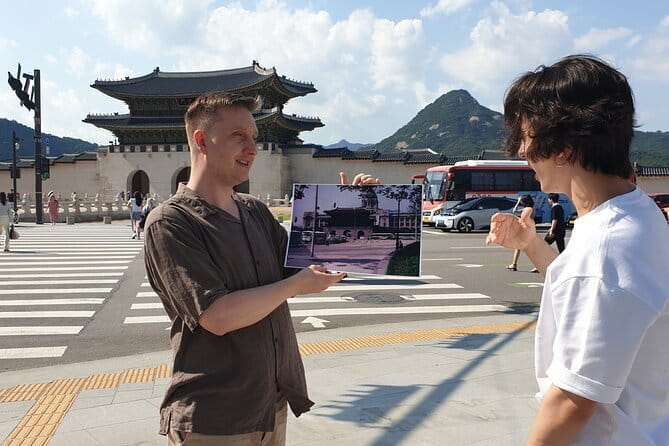
- Small group size (max 8) means you can ask questions and actually hear the answers.
- Stop-by-stop themes turn famous sites into specific story beats, not just photos.
- Eric-style guiding: clear explanations with time for questions from start to finish.
- Free entry at each stop keeps your day budget under control.
- A tight 3.5-hour arc that links Joseon-era life, occupation, and democracy movements into one walk.
- Traditional snacks plus a memento gives you a payoff beyond photos.
More of Seoul taken at walking pace
- Seoul moonlight walking tour with local historian★ 5.0 · 940 reviews
- Seoul: Nighttime Hidden Gems Walking Tour★ 5.0 · 775 reviews
- Seoul: Evening Dark History, Folklore & Ghost Story Walking Tour★ 5.0 · 593 reviews
- Seoul: Dark Side of the City and Ghost Stories Walking Tour★ 4.8 · 484 reviews
A 3.5-hour route that links Joseon to modern Korea
This is the kind of tour that helps you get your bearings fast. You’ll start at the Bosingak Bell Pavilion area and finish at Jogyesa Temple, moving through central Seoul landmarks that connect to a timeline covering roughly 630 years. Instead of trying to read every plaque, you follow a set sequence where each stop has a guiding question. That simple structure makes the information stick.
The pacing is built for an afternoon stroll. With multiple stops ranging from about 5 minutes to 40 minutes, you won’t feel trapped in one place too long. It’s also a good format if you want history but you hate the slow, sit-down style of tours. The group cap of 8 matters here: it keeps things conversational, and you’re less likely to get lost in a crowd.
One practical note: this is a walking tour. Even with short stops, you’ll cover a fair chunk of ground, so wear shoes you trust. If you’re the type who needs breaks every 20 minutes, you might feel a little rushed at some of the quicker stops.
Bosingak Bell Pavilion and Cheonggyecheon: why Seoul keeps time
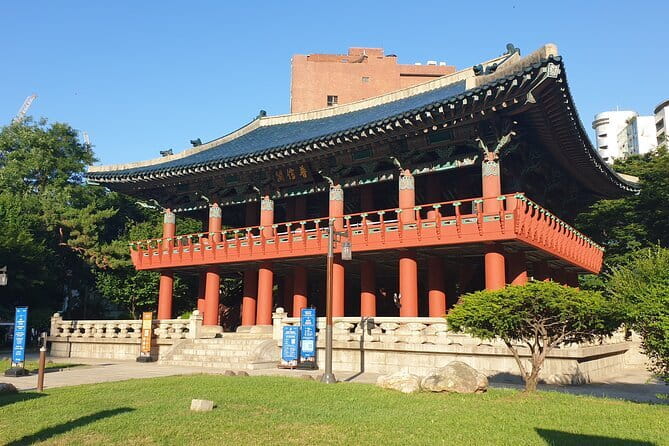
You begin at Bosingak Bell Pavilion (54 Jong-ro, Jongno District). The first stop is a bell theme, and the question is very specific: why the city bells ring 28 times at night and 33 times in the morning. That kind of detail is a gift. It gives your brain something concrete to hold onto the moment you arrive, instead of letting the site become just another landmark.
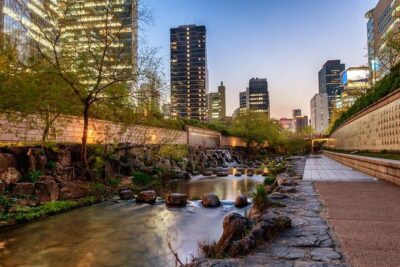
Right after that, you move to Cheonggyecheon Stream. Here, the focus is on what the stream provided Seoul through major eras: the Joseon Dynasty, the Korean War, and modern times. This is one of the smartest transitions in the route. It shows how a place isn’t static. Water systems and city life keep changing, even when the geography stays familiar.
Then you get a change of pace with Seoul City Hall, framed as an architectural highlight both inside and out. A 5-minute stop isn’t long, but architecture works well at this speed if the guide has clear talking points. If you’re the type who normally skips buildings, this is a good one to pay attention to for at least a few minutes, because it’s not just about the outside look.
A quick reality check on these first stops
The first stretch is designed to set the narrative hook. The drawback is also part of that plan: short time at each spot means you’ll likely want to return later for slower exploring if you love any one stop. Still, that’s a good tradeoff if your goal is to understand the bigger picture.
A handful of other Seoul experiences to line up next
City Hall, Seoul Plaza, and Jeongdong Observatory viewpoints
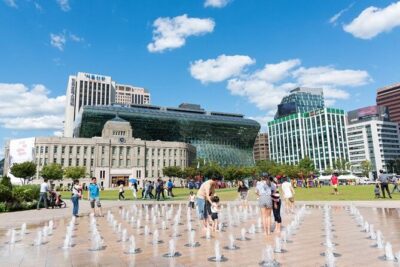
Next up is Seoul Plaza—the theme is how the plaza reflects the hearts of modern citizens. This is a neat pivot from older political and cultural anchors into something more everyday. It helps you see that history isn’t only about palaces and wars. Public spaces are part of the story too.
After that comes Jeongdong Observatory, where you’ll look for how much of the palace and cityscape appears from this perch. Even if you’re not a “view” person, observatories tend to work on walking tours because they provide orientation. You see the city layout and suddenly the landmarks feel less random.
If you’re visiting during warmer or colder weather, this section can also help you plan your comfort. You’ll have small indoor/outdoor shifts across the route depending on each stop, and the observatory moment can be a natural break in the flow.
What makes this section useful for first-timers
I like that this part helps you connect street-level walking to city scale. You’ll leave with a mental map—something you can use the next day when you’re wandering on your own.
Deoksugung’s stone wall, Jungmyeongjeon Hall, and the cost of occupation
At Deoksugung Doldam-gil, the stop is playful but loaded: Koreans say that if you walk along this stone wall with your spouse, you’ll soon be divorced. Even if you treat it as folklore, this is exactly the kind of cultural detail that turns a location from stone into something human.
From there, the tone shifts to Jungmyeongjeon Hall. The question here is blunt: how Imperial Japan forced Korea to surrender its independence. This is one of the stops where the tour’s “specific question” format really matters. When the topic is heavy, you need clear framing, or you end up with vague feelings and no context.
Because this is a walking tour, you don’t get to linger for hours at a single historical site. The good part: you keep moving through a sequence of ideas. The potential drawback: if you’re someone who processes history slowly, you might wish you had more time at the emotionally tougher stops.
Ewha Museum, Former Russian Legation, and the way power moves
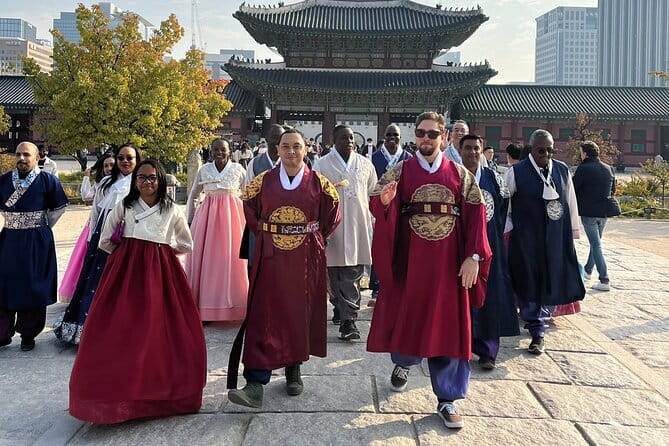
At Ewha Museum, you’ll learn how Korea’s first school for girls changed society’s views on women’s roles. This stop adds a social angle that balances the political themes. It’s also a reminder that “history” isn’t only about rulers. Education changes what people expect from the future, and that ripple effect can last for decades.
Then you move to the Former Russian Legation. The question is story-driven: why Korea’s penultimate monarch fled the palace in the middle of the night and stayed here for a year. This is the kind of stop that turns dates and titles into a real-life scenario. Even without extra time, it’s designed to help you picture urgency and fear, not just government strategy.
You may notice that these stops vary in tone: education, then escape, then power. That range is one of the tour’s strengths. It prevents the day from becoming a single-note timeline.
Admiral Yi Sun-sin and King Sejong: two statues, two anchors
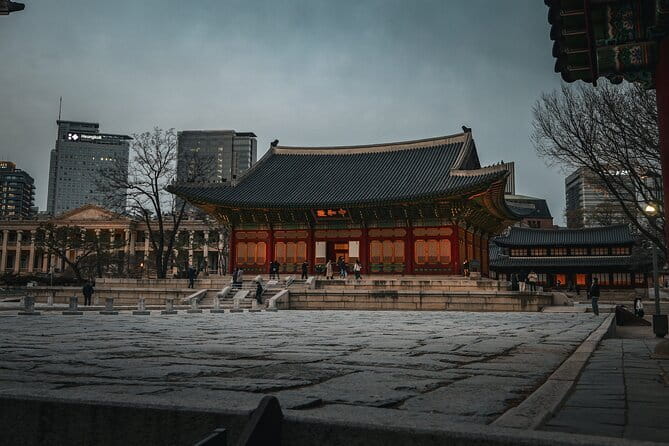
You’ll pause at the Statue of Admiral Yi Sun-sin with a big prompt: how this general saved Korea and changed the course of world history. The tour doesn’t give you a vague summary here. It frames Yi as a hinge figure, and it’s a useful anchor because it gives you a “what changed and why it mattered” moment.
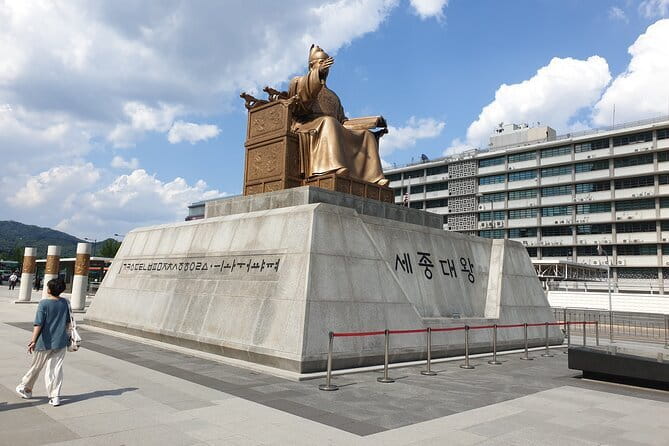
A bit later is the Statue of Sejong the Great, guided by the question of why Sejong is considered the greatest king of the Joseon Dynasty. Even if you don’t know much about the Joseon era, this pairing works. It gives you two different kinds of legacy to compare: military leadership and royal impact on the shape of society.
Why these statue stops work on a walking tour
Statues are easy to miss when you’re on your phone or rushing. Here, they’re treated as discussion points, not just photo ops. If you like learning with your feet moving, this is where the tour feels most satisfying.
Gwanghwamun Square and the Embassy of Japan protest thread
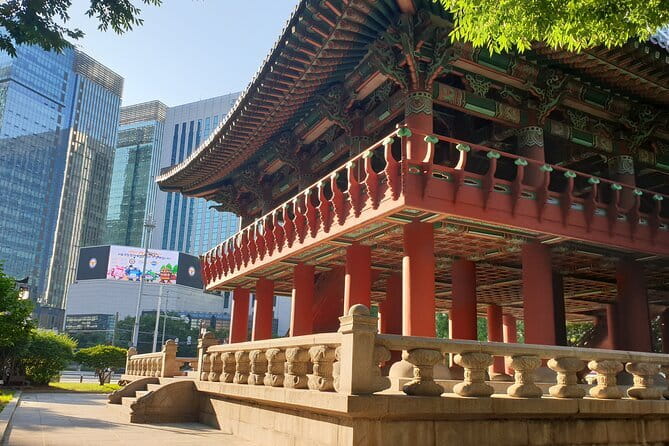
Next is Gwanghwamun Square, where the question is practical and political: how many protests does it take to change a democracy? This stop leans into modern Korea’s struggle against dictatorship, which the tour overview flags early on. It’s a clear way to connect large civic movements to real public space.
After that, you’ll visit the Embassy of Japan, framed as the site of the world’s longest running protest. That claim is dramatic, and it’s exactly why the guide’s framing matters. This is one of the moments where you should listen closely and let the guide connect the historical dots to the idea of ongoing civic action.
In this stretch, pacing matters. Some people want to stand and stare; others want to keep walking. Since the stops are timed, you get a guided experience rather than an endless wandering session.
Contemporary history on a rooftop, then Jogyesa bells

The last major museum stop is the National Museum of Korean Contemporary History. The theme is tied to one viewpoint: how much history you can see from the rooftop. Rooftop moments tend to do two things well. First, they give you a change in perspective. Second, they help you tie the city around you back to the story inside.
After that, the tour moves to Jogyesa Temple, where the question connects the ringing of bells with the universe. It’s a gentle emotional landing after protests, occupations, and modern change. Even if you’re not spiritual, bell sounds and temple spaces provide a sensory break—and they also make the tour feel like it ends where it began in terms of atmosphere.
You finish at Jogyesa Temple, and the tour notes that it ends directly up the street from where it began, with your guide helping with directions. That’s handy if you want to keep exploring after the official tour ends.
Price, timing, and what to bring for a smooth 3.5 hours
Let’s talk value. The price is $26.60 per person, and the tour lasts about 3 hours 30 minutes. That’s not a bargain “only if you skip snacks” type of deal. It’s a focused walk with multiple stops, free admission at the listed sites, and added comfort: traditional Korean snacks plus an informative memento.
You’re also booking for a small group (up to 8), and you’ll have an Australian guide. That combination tends to justify the cost better than tours that feel crowded or scripted with no breathing room. If you like asking questions, this format is the right fit.
A few practical tips:
- Bring some cash or card for bottled water, since it’s not included.
- Wear comfortable walking shoes. Even short stops add up over 3.5 hours.
- Expect a mix of street-level walking and quick site moments. If you like slow museum time, plan to revisit favorites later.
If you’re planning your day, start time is 2:30 pm. Afternoon tours can be great for city energy, but also consider weather—Seoul can feel intense depending on the season—so pack light layers.
Should you book this Seoul History Walking Tour?
Book it if you want history that feels connected to real streets, not just names in a guidebook. I’d especially recommend it if you’re:
- a first-timer to central Seoul who needs a clear “story route”
- interested in Korea’s evolution from Joseon through modern democracy
- the type who appreciates a guided Q-and-A approach rather than standing alone reading plaques
Skip or pair it with extra time if you prefer slow solo exploration. The stops move fast by design, so you’ll likely want to return to any site that grabs you.
If you do book, I’d plan to bring water, dress for walking, and show up ready to listen. This tour works best when you treat each stop like a chapter, not a photo stop.
FAQ
How long is the Seoul History Walking Tour?
It runs for about 3 hours 30 minutes (approx.).
How much does the tour cost?
The price is $26.60 per person.
Where do I meet the tour, and where does it end?
You start at Bosingak Bell Pavilion, 54 Jong-ro, Jongno District, Seoul, South Korea. The tour ends at Jogyesa Temple, and your guide will assist with directions.
What time does the tour start?
The start time is 2:30 pm.
What’s included in the tour price?
It includes traditional Korean snacks and an informative memento.
Are admissions included for the stops?
Yes. The stops listed all show admission ticket free.
Is bottled water included?
No, bottled water is not included.
More Seoul Walking Tours
- Seoul moonlight walking tour with local historian★ 5.0 · 940 reviews
- Seoul: Nighttime Hidden Gems Walking Tour★ 5.0 · 775 reviews
- Seoul: Evening Dark History, Folklore & Ghost Story Walking Tour★ 5.0 · 593 reviews
- Seoul: Dark Side of the City and Ghost Stories Walking Tour★ 4.8 · 484 reviews
- Gangnam Walking Tour on Youth and Society in Seoul Korea★ 5.0 · 401 reviews
More Tours in Seoul
- Best DMZ Tour Korea from Seoul (Red Suspension Bridge Optional)★ 5.0 · 41,422 reviews
- DMZ Tour: 3rd Tunnel, Option(Suspension Bridge, Boat) from Seoul★ 5.0 · 21,373 reviews
- DMZ tour south Korea from Seoul (NK experience hall, defector)★ 5.0 · 20,599 reviews
- Seoul: DMZ Tour with Optional Suspension Bridge★ 4.8 · 5,277 reviews
- Seoul: DMZ The 3rd Tunnel and Suspension Bridge Tour★ 5.0 · 4,656 reviews
More Tour Reviews in Seoul
- Best DMZ Tour Korea from Seoul (Red Suspension Bridge Optional)★ 5.0 · 41,422 reviews
- DMZ Tour: 3rd Tunnel, Option(Suspension Bridge, Boat) from Seoul★ 5.0 · 21,373 reviews
- DMZ tour south Korea from Seoul (NK experience hall, defector)★ 5.0 · 20,599 reviews
- Seoul: DMZ Tour with Optional Suspension Bridge★ 4.8 · 5,277 reviews
- Seoul: DMZ The 3rd Tunnel and Suspension Bridge Tour★ 5.0 · 4,656 reviews
Just added to Exploring Seoul

Historical Tours, compared.
 ★ 5.0Evening Dark History, Folklore & Ghost Story Walking TourFrom $42593 reviews
 ★ 5.0Hanbok Photoshoot and History Tour at Gyeongbokgung PalaceFrom $60276 reviews
 ★ 4.9From Seoul: Dae Jang Geum Park Historic K-Drama Set TourFrom $55143 reviews
 ★ 5.0City Highlights and Historical Experience No ShoppingFrom $4974 reviews
 ★ 5.0Street photoshoot and Seoul Hidden gem History Walking TourFrom $4568 reviews
 ★ 4.5Discover Seoul: Local Life and HistoryFrom $9653 reviews
 ★ 5.0Korean History & Heritage TourFrom $47551 reviews
 ★ 5.0Namhansanseong UNESCO Historical Sites and Korean Folk Village-Private TourFrom $19829 reviews
Browse the lists this tour appears in