

Reviewed · GANGNAM TOURS
Gangnam Walking Tour on Youth and Society in Seoul Korea
Gangnam can feel glossy. This tour shows the pressure underneath it. You’ll walk a tight loop of modern Seoul landmarks that match real youth themes, from housing stress to beauty culture, with guides like June or Jessica telling the story as you go. I love how the small group size keeps it interactive, and I love the way the walk connects everyday places to bigger social forces. One possible drawback: you’re choosing a social-issues tour, not a classic sightseeing loop.
At a steady pace for about 2 hours 30 minutes, you’ll cover five stops that are mostly “you had to know to look here” locations. I’m also a big fan of the tone: serious topics like education pressure and even suicide are handled in context, not shock-value. If you want only upbeat Seoul photos and zero discomfort, this one might feel heavy.
In This Review
- Key Points to Know Before You Go
- Why This Gangnam Youth-and-Society Walk Feels Different
- Price and Time: What You’re Really Paying For
- Where You Start and Finish (and Why It Matters)
- The Five Stops That Turn Gangnam Into a Social Classroom
- Stop 1: 강남역사거리 (Gangnam Station Square) and Development Pressure
- Stop 2: 호텔시애틀 (Hotel Seattle) and the Love Hotel Culture
- Stop 3: Gangnam Daeseong Cram School and the Education Pressure System
- Stop 4: Sinsa-dong (Gangnam-gu) and the Plastic Surgery Hotspot
- Stop 5: Hangang Park Playground (Han River) and the Darker Side of Development
- What Makes the Storywork Strong (June and Jessica’s Style)
- The Walking Reality: Wear Comfort, Expect Some Pace
- Is This Tour Only for Fans of K-Dramas?
- Who Should Book This Gangnam Tour (and Who Should Skip It)
- Should You Book It
- FAQ
- FAQ
- What’s the duration of the Gangnam Youth and Society walking tour?
- How much does the tour cost?
- Where do I meet, and where does the tour end?
- Is the subway included in the price?
- Are there admission fees at the stops?
- What happens if the weather is bad?
Key Points to Know Before You Go
- Max 15 people for an easier, more conversational pace than big-bus tours
- Youth and society themes tied to real neighborhoods: education, beauty, dating, and work pressure
- Stop-by-stop structure across five Gangnam area themes, not a random walk
- Love hotel district and plastic surgery culture are front and center, not side notes
- One subway ride during the tour, with the 1800 won fare not included
- Mobile ticket for smooth entry into the experience
South of the river: more of Gangnam
- Seoul: Gangnam Tour on Youth and Society in South Korea★ 4.9 · 466 reviews
- Gangnam Walking Tour on Youth and Society in Seoul Korea★ 5.0 · 401 reviews
- Beyond Seoul: Starfield Library, Hwaseong Fortress & Cave Quest★ 5.0 · 177 reviews
- Suwon Hwaseong+Gwangmyeong Cave+Starfield Library from Seoul★ 5.0 · 104 reviews
Why This Gangnam Youth-and-Society Walk Feels Different
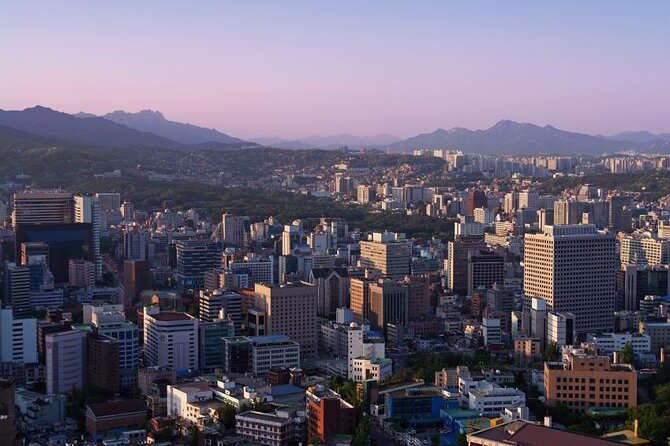
Seoul is full of places that look amazing on camera. Gangnam is also full of places that help explain why so many people feel stress, competition, and pressure. This tour uses that contrast on purpose. You walk through the kind of everyday spaces that most tourists skip because they do not fit the usual postcard script.
What I like best is that your guide turns street-level details into a story you can actually remember. You’re not just hearing facts. You’re seeing the setting for ideas like education intensity, “lookism” (appearance pressure), and the way dating and relationships get commercialized. Expect some history of how Korea’s rapid development shaped housing and everyday life, then expect the guide to connect it back to youth experiences.
And since the group is capped at 15, you can ask questions along the way. That matters when the topic is personal or sensitive. It’s much easier to get clarity when you’re not shouting over 40 people and a loud audio system.
Price and Time: What You’re Really Paying For

The price is $31.98 per person for about 2 hours 30 minutes. The “worth it” question is really about what you’re buying: access to local framing and a guided narrative that you can’t easily piece together on your own during a quick visit.
A few value signals stand out. Each stop lists free admission tickets, so you’re not paying separate entry fees at the sights. The tour also includes gratuities, so you’re not scrambling mid-day to figure out tipping norms. On top of that, you’re getting a small-group approach and the chance to ask questions, which is often the difference between learning and simply walking.
There’s one cost to remember: the subway fare is 1800 won and it’s not included. You will use the subway one time during the tour. If you’re budgeting, just add that transit cost and plan to stay flexible.
Where You Start and Finish (and Why It Matters)
You meet at 820-10 Yeoksam-dong, Gangnam District, Seoul with a 10:30am start. You finish at Apgujeong Station Exit 4, near the Han River Park area. Ending by the water is a smart move. After the social topics and the walking, the river gives your brain a chance to cool down for a bit.
You’ll be near public transportation throughout, which helps if you need to re-route. The meeting point matters too: Yeoksam-dong is close enough to get in without a long detour, but it’s still “real Seoul,” not a tourist bottleneck.
One more practical note: the tour requires good weather. If conditions are poor, it can be canceled with a different date or a full refund. So bring a plan for rain. A light rain layer beats a ruined walking mood.
More of Seoul taken at walking pace

The Five Stops That Turn Gangnam Into a Social Classroom
This is built as a themed walk. The stops are designed to connect everyday places to youth pressure and social change. You’ll move through Gangnam in a way that feels like a guided trail, not a random wandering session.
Stop 1: 강남역사거리 (Gangnam Station Square) and Development Pressure
Your tour starts at 강남역사거리. This is your “why Gangnam looks like it looks” point. The guide frames Gangnam as the most developed and wealthy area in Korea, then quickly ties that to housing problems and the history behind that development. In plain terms: rapid growth can create real winners, but it also creates real stress, especially for people trying to stay housed and competitive in a fast-moving city.
A drawback here, for some people: this is a street-and-history start, not a museum-style beginning. If you prefer built-in quiet spaces, you may want a moment to collect yourself before the walking ramps up.
Stop 2: 호텔시애틀 (Hotel Seattle) and the Love Hotel Culture
Next you head to 호텔시애틀, a love hotel district. The tour uses this area to explain love culture in Korea, including how intimacy can be shaped by commercial spaces. If you’re curious about dating norms in Seoul beyond what dramas show, this stop gives you a grounded lens.
Keep your expectations realistic. This is not about explicit details. It’s about the cultural role of these businesses and what it says about privacy, romance, and modern life. Think social anthropology, but on sidewalks.
Stop 3: Gangnam Daeseong Cram School and the Education Pressure System
Then you move to a Gangnam Daeseong Cram School, described as one of the most famous private institutes in the area. This is the education-pressure stop. The guide focuses on education culture and ties it to birth-rate-related themes. Even if you don’t know Korean education structure deeply, you’ll leave with clearer context for why “extra schooling” is such a major part of youth life here.
One thing to watch for: this topic can land hard if you’re already sensitive to school pressure. The tour doesn’t pretend it’s all fine. It gives context so it feels understandable, not just depressing.
Stop 4: Sinsa-dong (Gangnam-gu) and the Plastic Surgery Hotspot
Your fourth stop is Sinsa-dong in Gangnam-gu, described as a top area for plastic surgeries. Here the guide talks about plastic culture—how appearance expectations spread and why they connect to social status and youth identity.
This is one of the most talked-about theme sections, and for good reason. Gangnam makes the “lookism” conversation tangible. You’ll likely notice how deeply appearance is treated like a form of currency in many social settings, even when people try to downplay it.
Stop 5: Hangang Park Playground (Han River) and the Darker Side of Development
The last stop is Hangang Park Playground along the Han River. The tour frames this place through development and suicide history themes. It’s a tough ending topic, but it’s also a reminder that major cities carry shadow stories alongside the bright ones.
The Han River setting helps. You’re not trapped in a classroom mood. You’re walking beside a public space people actually use, which makes the message feel grounded in real life rather than abstract theory.
What Makes the Storywork Strong (June and Jessica’s Style)
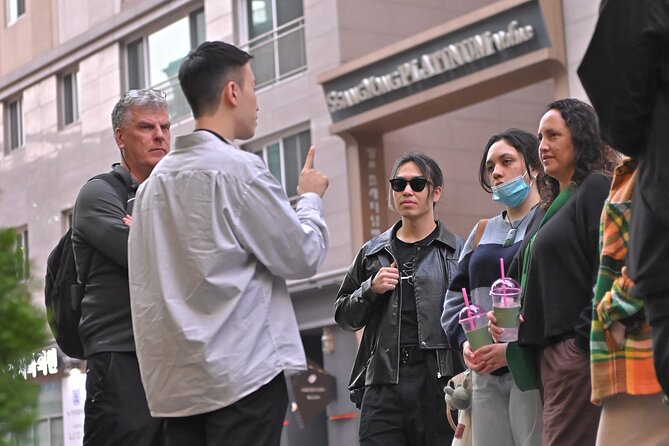
This tour earns its high marks for one main reason: the guide does the heavy lifting in storytelling, context, and pacing. I found the most valuable part is how questions are encouraged. You’re not just passively hearing a script. You can ask what you’re really wondering about and get answers in the same setting where the topic is happening.
In the guide names you might see, June and Jessica show up in the experience record. Both are described as friendly, patient, and capable of connecting Korean culture to what people from the U.S. might recognize. That comparison skill matters. It helps you stop treating Korean society like a set of weird customs and start seeing it as logic shaped by history, economics, and social expectations.
It also helps that the guide follows the schedule. One of the best compliments you can get for a walking tour is that it does not feel chaotic. You know what’s coming next.
The Walking Reality: Wear Comfort, Expect Some Pace
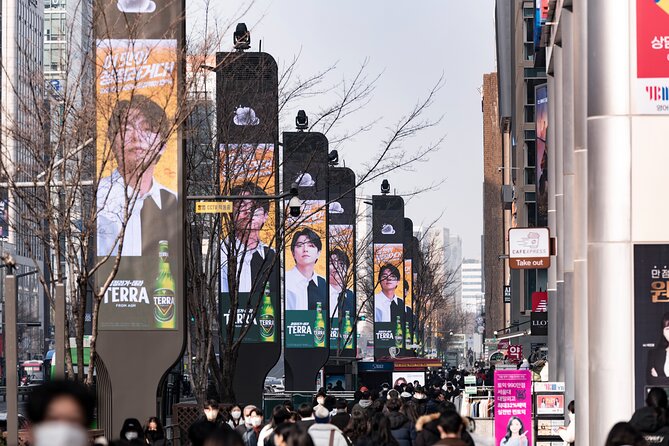
This is a walking tour with a stated duration of about 2 hours 30 minutes. That means comfy shoes are not optional. You’ll be moving through multiple Gangnam-area stops, and at least part of the route includes a subway ride.
Weather is another reality check. Because the experience depends on good conditions, you should pack for rain and heat. If it’s raining, the guide can adapt the pacing while still covering the important information.
Also, consider your energy level. Even when the group is small, the tour is still a full morning/early day walk. If you’re someone who gets tired quickly, plan a slow evening afterward.
Is This Tour Only for Fans of K-Dramas?
It can help if you like K-dramas, since the show world often points toward themes like beauty expectations and relationship pressures. But this isn’t a show-themed tour. It’s a Seoul-through-social-issues tour.
The value is that you’ll get context that makes pop culture make more sense. Why do characters obsess over appearances? Why do education systems feel intense? Why do certain dating norms look different on-screen than in real life? The tour aims to answer those questions by using Gangnam’s real-world landmarks.
If you want your Seoul experience to be more than scenery—if you want to understand how young people deal with pressure tied to economic achievement—this walk is built for that.
Who Should Book This Gangnam Tour (and Who Should Skip It)

Book it if you want:
- A small-group Gangnam experience built around real social themes
- A clear guide narrative that ties beauty, education, love culture, and housing to history
- A tour where questions are welcome and the guide stays on schedule
- A morning walk that finishes near the Han River so you can decompress
Skip it if you want:
- Only classical tourist sights and photo stops
- A purely upbeat tone with no mention of darker social topics
- A tour that focuses mainly on shopping streets or “unique landmarks” with lots of variety in scenery
One honest way to frame it: this is more “social understanding” than “sightseeing montage.” If you go in expecting that, you’ll enjoy it more.
Should You Book It
If your idea of a great Seoul tour includes the underbelly—beauty industry pressure, cram school culture, and the way commercial spaces shape dating—then yes, you should seriously consider booking this. With a high rating record (a 5-star average and 99% recommended in the available feedback), it’s the kind of experience that tends to click for people who want context, not just locations.
Just make sure you’re ready for a thoughtful, sometimes heavy conversation. You can still take breaks and enjoy the city. You just won’t leave with a sugar-coated view of youth life in Gangnam.
FAQ
FAQ
What’s the duration of the Gangnam Youth and Society walking tour?
It runs for about 2 hours 30 minutes.
How much does the tour cost?
The price is $31.98 per person.
Where do I meet, and where does the tour end?
You start at 820-10 Yeoksam-dong, Gangnam District, Seoul. You end at Apgujeong Station Exit 4 near Han River Park.
Is the subway included in the price?
No. There is a subway ride during the tour, and the fare is 1800 won, which is not included.
Are there admission fees at the stops?
Admission tickets are listed as free for the stops on the route.
What happens if the weather is bad?
The experience requires good weather. If it’s canceled due to poor weather, you’ll be offered a different date or a full refund. You can also cancel for a full refund if you cancel at least 24 hours in advance.
More Tours in Seoul
- Best DMZ Tour Korea from Seoul (Red Suspension Bridge Optional)★ 5.0 · 41,422 reviews
- DMZ Tour: 3rd Tunnel, Option(Suspension Bridge, Boat) from Seoul★ 5.0 · 21,373 reviews
- DMZ tour south Korea from Seoul (NK experience hall, defector)★ 5.0 · 20,599 reviews
- Seoul: DMZ Tour with Optional Suspension Bridge★ 4.8 · 5,277 reviews
- Seoul: DMZ The 3rd Tunnel and Suspension Bridge Tour★ 5.0 · 4,656 reviews
More Tour Reviews in Seoul
- Best DMZ Tour Korea from Seoul (Red Suspension Bridge Optional)★ 5.0 · 41,422 reviews
- DMZ Tour: 3rd Tunnel, Option(Suspension Bridge, Boat) from Seoul★ 5.0 · 21,373 reviews
- DMZ tour south Korea from Seoul (NK experience hall, defector)★ 5.0 · 20,599 reviews
- Seoul: DMZ Tour with Optional Suspension Bridge★ 4.8 · 5,277 reviews
- Seoul: DMZ The 3rd Tunnel and Suspension Bridge Tour★ 5.0 · 4,656 reviews
More South of the River
- Seoul: Gangnam Tour on Youth and Society in South Korea★ 4.9 · 466 reviews
- Beyond Seoul: Starfield Library, Hwaseong Fortress & Cave Quest★ 5.0 · 177 reviews
- Suwon Hwaseong+Gwangmyeong Cave+Starfield Library from Seoul★ 5.0 · 104 reviews
- Seoul: Suwon Hwaseong, Folk Village, & Starfield Library★ 4.8 · 55 reviews
- Korean Home Style Cooking Class in Gangnam Seoul★ 5.0 · 40 reviews
Just added to Exploring Seoul



Gangnam Tours, compared.
 ★ 4.9Gangnam Tour on Youth and Society in South KoreaFrom $33466 reviews
 ★ 5.0Beyond Seoul: Starfield Library, Hwaseong Fortress & Cave QuestFrom $69177 reviews
 ★ 5.0Suwon Hwaseong+Gwangmyeong Cave+Starfield Library from SeoulFrom $54104 reviews
 ★ 4.8Suwon Hwaseong, Folk Village, & Starfield LibraryFrom $5655 reviews
 ★ 5.0Korean Home Style Cooking Class in Gangnam SeoulFrom $8540 reviews
 ★ 4.7Suwon Hwaseong Fortress+Starfield Library+WaujeongsaFrom $4927 reviews
 ★ 4.9From Seoul: Starfield Library, Hwaseong, Gwangmyeong CaveFrom $6023 reviews
 ★ 4.7Temple & Starfield COEX Mall Gourmet Tour in GangnamFrom $6622 reviews
Browse the lists this tour appears in