
Reviewed · HISTORICAL TOURS
Korean History & Heritage Tour
Old Seoul shows up fast in Gangbuk. A private day tour links the big-statement sites—like Gyeongbokgung Palace—with the smaller, everyday stops that explain how people actually lived through the Joseon Dynasty. I love how the route feels like a story: court life, then common life, then the sights Koreans still use today. One possible drawback: the day is packed, and lunch is not included, so you’ll want a plan for food on the move.
My other favorite part is the way the tour uses contrast. At the National Folk Museum of Korea, you get a clear, organized look at life from birth to death (and even the ideas of the afterlife), then you step into real neighborhoods like Bukchon and Insadong. The only thing to keep in mind is pacing—there’s walking and a lot to see, so comfortable shoes matter.
In This Review
- Key points to know before you go
- A Gangbuk day that feels like a timeline, not a checklist
- Price and value: $475 for up to 6, with smart inclusions
- Private pickup in an A/C vehicle: the real comfort advantage
- Gyeongbokgung Palace and the changing of the guards: what to watch for
- National Folk Museum of Korea: why the afterlife and everyday life belong together
- Bukchon Hanok Village and Insadong: lived-in tradition vs souvenir street logic
- Jogyesa Temple and Cheonggyecheon: faith and water stories in one stretch
- Kwangjang Market: the 600-year food finale
- Who this Seoul heritage tour suits best
- Should you book this Korean History & Heritage Tour?
- FAQ
- How long is the Korean History & Heritage Tour?
- What time does the tour start?
- Is this a private tour or a group tour?
- How many people are included in the price?
- Does the tour include hotel pickup and drop-off?
- Are admission tickets included?
- Is lunch included?
- Is the tour ticket mobile?
- Is free cancellation available?
Key points to know before you go
- Private group format (up to 6): you get your own guide and your own schedule flow.
- Free hotel pickup and drop-off anywhere in Seoul: fewer transit hassles, more time on-site.
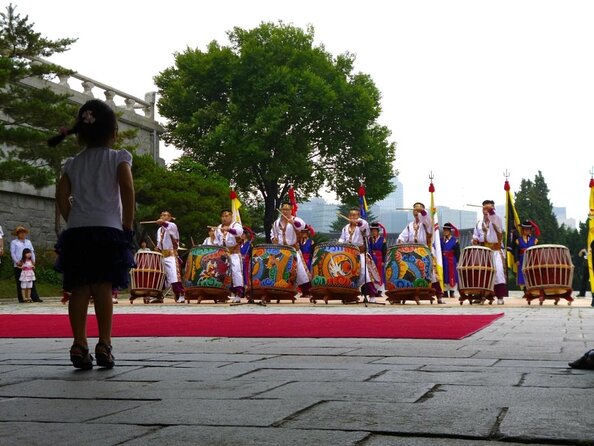
- Guard ceremony at Gyeongbokgung Palace: the most dramatic, must-see moment of the day.
- National Folk Museum of Korea is a highlight (and free): structured context for what you’ll be seeing later.
- Multiple free cultural stops: Bukchon, Insadong, Jogyesa, and Cheonggyecheon don’t add extra admission costs.
- Kwangjang Market ends the day with food options: you’ll likely want to budget extra for what you eat.
A handful of other Seoul experiences to line up next
- Seoul: Evening Dark History, Folklore & Ghost Story Walking Tour★ 5.0 · 593 reviews
- Hanbok Photoshoot and History Tour at Gyeongbokgung Palace★ 5.0 · 276 reviews
- From Seoul: Dae Jang Geum Park Historic K-Drama Set Tour★ 4.9 · 143 reviews
- Seoul: City Highlights and Historical Experience No Shopping★ 5.0 · 74 reviews
A Gangbuk day that feels like a timeline, not a checklist
This is the kind of Seoul tour that helps your brain make sense of the city. Instead of hopping randomly, you move through Gangbuk in a logical arc: royal power at the palace, belief and everyday customs at museums and temples, lived-in traditional streets, then the kind of market life that keeps culture practical.
What makes this route work well for first-timers is that it covers both the official and the human sides of Korean heritage. You’ll see a palace built for state rituals, then you’ll shift to places tied to domestic life—homes in Bukchon, craft and souvenir culture in Insadong, and the religion side of Jogyesa. By the time you reach the stream and the market, the day stops feeling like museum time and starts feeling like Seoul time.
You also get a helpful rhythm: short museum and walk stops, then a longer anchor moment at the palace, then a food-friendly finale at Kwangjang. It’s a format that keeps the day moving without turning every stop into a rush.
Price and value: $475 for up to 6, with smart inclusions
The price is $475 per group (up to 6 people), and the tour runs about 7 hours. That group pricing can be a strong value if you’re traveling as a family or a small group, because the cost spreads across more people while you still get private, door-to-door service.
Here’s how to think about it:
- If you book with a group of 4–6, the per-person cost can feel quite reasonable for a private guide plus an air-conditioned vehicle.
- If it’s just two people, it can start to feel pricier, especially since lunch isn’t included and Gyeongbokgung Palace admission is not included.
The good news is that many stops don’t charge admission on this route. The National Folk Museum of Korea is free, and the other cultural/walk areas (Bukchon Hanok Village, Insadong, Jogyesa Temple, and Cheonggyecheon) are listed as free. In practical terms, you’re paying for the guide’s time and the transportation convenience—not a pile of ticket costs on top.
My advice: treat this as a “heritage explanation day” and budget separately for the palace ticket and your meals. If you do that, the value usually makes sense.
Private pickup in an A/C vehicle: the real comfort advantage
Seoul is busy, and Gangbuk traffic can be unpredictable. So I really like that this tour offers hotel pickup and drop-off from anywhere in Seoul and uses an air-conditioned vehicle for the moves between neighborhoods.
That matters more than it sounds. When you’re doing palace, museum, village, temple, stream, and market in one day, every transit delay turns into lost viewing time. With pickup and drop-off, you cut down on the scramble of figuring out where to start, where to meet later, and how to get back.
It also helps you keep your day readable. You’re not mentally juggling logistics; you’re focused on what you’re looking at. And because it’s a private tour, you don’t have to rush to match other people’s pace.
Gyeongbokgung Palace and the changing of the guards: what to watch for
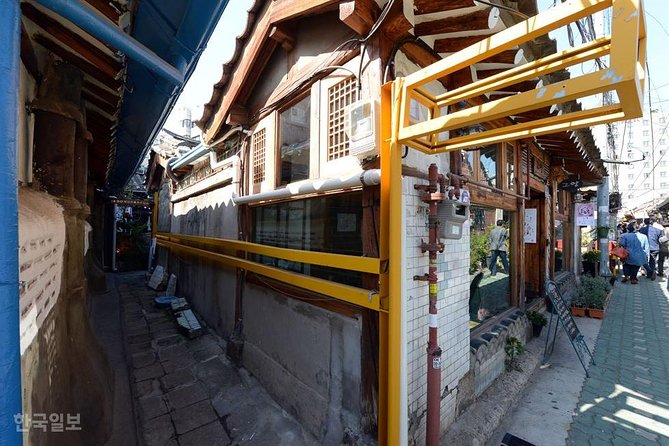
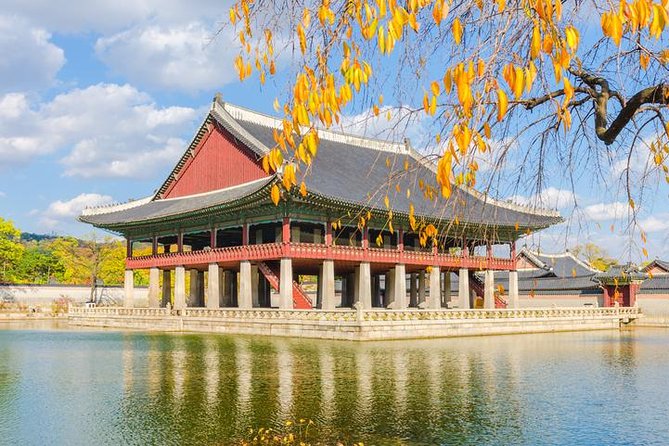
The palace visit is the flagship moment. You’ll see the Changing of the Guard Ceremony and then have time to go deeper into the grounds to appreciate the architecture and the way the palace space was meant to function.
This part runs about 45 minutes, and the palace ticket isn’t included. Translation: bring your patience for a classic crowd-and-wait situation, and plan a little extra energy for standing and watching, since ceremonial moments often come with lines and waiting.
What I like about this stop is the context effect. Once you’ve seen how formal the royal setting is, the later contrast stops hit harder. Bukchon starts to feel like lived life just beyond the palace world. The temples and museum also make more sense because you’ve already placed yourself in the historical “center of gravity” of Joseon power.
Practical tip: wear shoes you can stand in, and keep your phone battery handy. You’ll likely want photos, but the best payoff is actually looking closely at layout, gate design, and how the grounds channel movement.
National Folk Museum of Korea: why the afterlife and everyday life belong together
Next comes the museum, about 30 minutes. The National Folk Museum of Korea is a strong choice because it doesn’t just show objects—it talks through life stages, from birth to daily living to death, and even the ideas around the afterlife.
That kind of structure helps you connect the dots. When you later walk through neighborhoods that still carry traditional design cues (like Bukchon) or browse the arts and craft traditions linked to royal patronage (like Insadong), you’re seeing culture with context rather than just scenery.
Also, this stop is listed as free admission, which makes it an efficient use of time. You’re not “buying” your way through a ticketed museum day; you’re getting the explanation component included.
A drawback to know: because it’s only about 30 minutes, you won’t see everything. This works best if you’re okay with targeted highlights and you’re curious about big themes more than exhaustive detail.
Bukchon Hanok Village and Insadong: lived-in tradition vs souvenir street logic
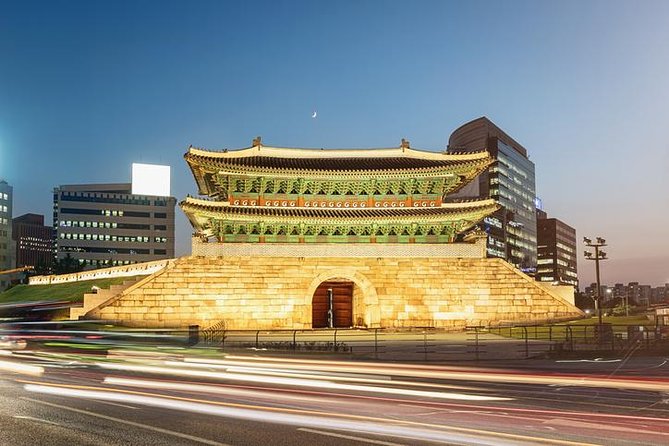
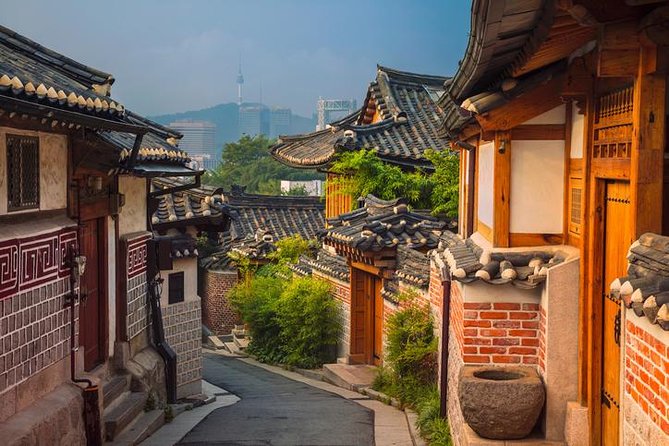
You’ll spend around 40 minutes in Bukchon Hanok Village, and this stop has a special value: people still live there. That changes how you experience the area. It’s not a theme park you can treat as scenery. Even if you’re just walking and observing, it feels more connected to real life than recreations do.
A common issue with hanok areas is that people rush photo-taking and miss the texture. Don’t do that. Give yourself a slow minute on streets where you can see building shapes, doorways, and street widths. Those details are part of how traditional neighborhood planning works.
Then you move to Insadong for about 45 minutes. This is where the tour connects culture to craft and commerce. You’ll walk through the area connected to the king’s guild and commissioned artists and designers, and today it functions as an antique alley for Korean souvenirs.
I like Insadong as a breather after Bukchon. Bukchon gives you traditional residential scale. Insadong then gives you the “how culture becomes objects” side—what gets preserved, sold, and turned into keepsakes.
One consideration: this is also a shopping zone. If you want quiet time for photos, you may need to accept that you’ll share space with people doing the same thing.
Jogyesa Temple and Cheonggyecheon: faith and water stories in one stretch
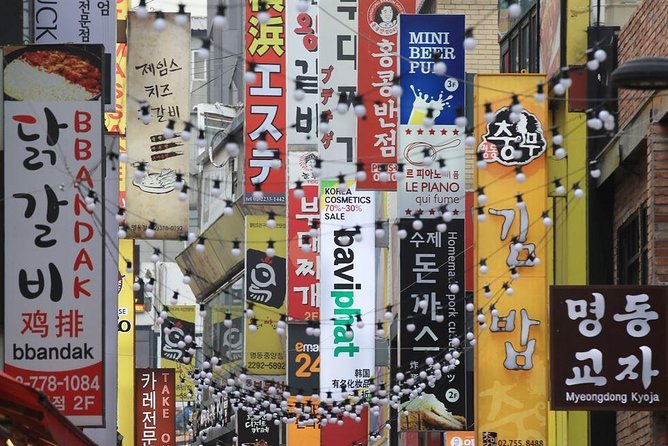
After village and souvenir streets, the tour shifts to spirituality and city life.
Jogyesa Temple takes about 20 minutes and is focused on Buddhist tradition, including the fact that Buddhism used to be the national religion of the country. That historical note matters because it helps you read the temple as more than a pretty stop. It’s part of Korea’s larger cultural story of belief and identity.
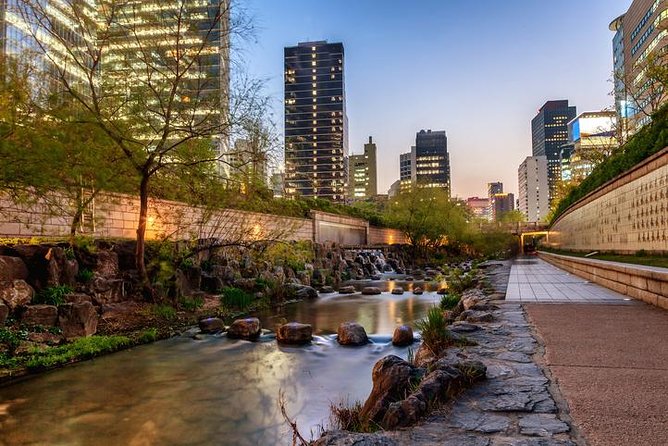
Then you’ll walk Cheonggyecheon Stream for about 30 minutes. The guide will share stories behind the stream, turning the walk into a narrative instead of just a stroll. This pairing is smart: you go from formal religious architecture to a public space where city life happens.
If you’re sensitive to walking distance, this stretch is still manageable because the time blocks are short. Still, it’s one more step in the overall “active day” format, so keep those shoes on and stay hydrated.
Kwangjang Market: the 600-year food finale
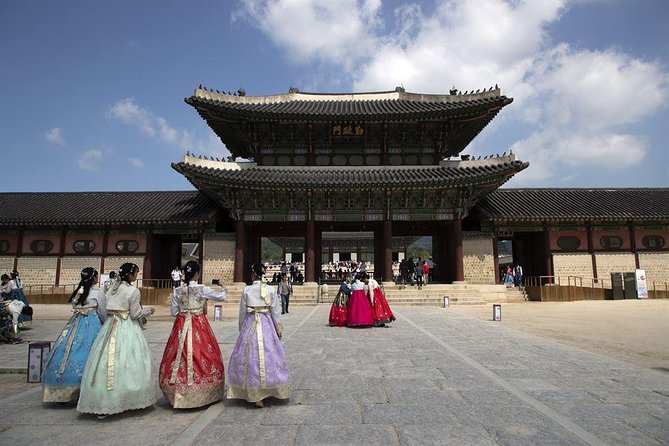
The last stop is Kwangjang Market, around 30 minutes. It’s listed as about 600 years old, with roots in linen sales for special occasions, and it has reinvented itself into a go-to place for Korean comfort street food carts.
This ending works well because you’re ready for something tangible after architecture, museums, and temples. Also, markets are where history becomes taste—ingredients, cooking styles, and snack culture all show up fast.
Since the tour doesn’t include lunch, Kwangjang is one of your best chances to grab food during the tour window. But don’t plan to eat like a sit-down meal. Treat it like a sampler stop: pick one or two things you really want, then keep moving.
A practical note: 30 minutes in a market is not “wander forever” time. If you’re the kind of person who likes to try multiple dishes, I’d go in with a small plan—maybe decide on 1 must-try item and 1 backup, so you don’t spend the whole window trying to choose.
Who this Seoul heritage tour suits best
This tour is a great fit if you want a Seoul day that’s organized by theme: royal power, daily life context, traditional neighborhoods, religion, and modern city spaces—all in one private route.
It’s also ideal if you prefer comfort and clarity:
- You’ll be in an air-conditioned vehicle between stops.
- You’ll have hotel pickup and drop-off.
- You’ll get guide commentary that connects sites to the broader Joseon story.
If you’re traveling with kids or you’re not keen on long independent transit, the private format makes the day smoother. And if you’re a couple or small group, the price can feel especially reasonable compared with paying for individual tickets plus multiple separate activities.
It may be less ideal if you want long free time in just one neighborhood, or if you’re the type who needs lunch handled for you. Lunch not being included means you should plan ahead so the market doesn’t become a last-minute scramble.
Should you book this Korean History & Heritage Tour?
If your goal is one guided day that ties together Seoul’s Korean heritage sites in a logical way, I think this is a strong booking. The combination of a palace ceremony moment, a museum that explains life and afterlife themes, traditional areas like Bukchon and Insadong, and a food-focused finish at Kwangjang Market is a smart mix.
Book it especially if you value private comfort (pickup, A/C vehicle, door-to-door drop-off) and you like a guide who can turn “what I’m seeing” into “why it matters.”
Skip it or consider a different format if you want a slower pace, lots of shopping time, or guaranteed meal planning inside the tour. In this one, the learning and the walking come first, and you handle food on your own.
Overall: for $475 per group, this is the kind of day that can save you time and confusion—while still giving you real cultural texture.
FAQ
How long is the Korean History & Heritage Tour?
The tour runs for about 7 hours.
What time does the tour start?
The start time is 9:00 am.
Is this a private tour or a group tour?
It’s a private tour/activity, so only your group participates.
How many people are included in the price?
The price is $475 per group, and the group size can be up to 6 people.
Does the tour include hotel pickup and drop-off?
Yes. Hotel pickup and drop-off are provided free of charge from anywhere in Seoul.
Are admission tickets included?
Gyeongbokgung Palace admission ticket is not included. The National Folk Museum of Korea is listed as free, and the other stops are listed as free as well.
Is lunch included?
No, lunch is not included.
Is the tour ticket mobile?
Yes, the tour offers a mobile ticket.
Is free cancellation available?
Yes. You can cancel up to 24 hours in advance for a full refund.
More Historical Tours in Seoul
- Seoul: Evening Dark History, Folklore & Ghost Story Walking Tour★ 5.0 · 593 reviews
- Hanbok Photoshoot and History Tour at Gyeongbokgung Palace★ 5.0 · 276 reviews
- From Seoul: Dae Jang Geum Park Historic K-Drama Set Tour★ 4.9 · 143 reviews
- Seoul: City Highlights and Historical Experience No Shopping★ 5.0 · 74 reviews
- Street photoshoot and Seoul Hidden gem History Walking Tour★ 5.0 · 68 reviews
More Tours in Seoul
- Best DMZ Tour Korea from Seoul (Red Suspension Bridge Optional)★ 5.0 · 41,422 reviews
- DMZ Tour: 3rd Tunnel, Option(Suspension Bridge, Boat) from Seoul★ 5.0 · 21,373 reviews
- DMZ tour south Korea from Seoul (NK experience hall, defector)★ 5.0 · 20,599 reviews
- Seoul: DMZ Tour with Optional Suspension Bridge★ 4.8 · 5,277 reviews
- Seoul: DMZ The 3rd Tunnel and Suspension Bridge Tour★ 5.0 · 4,656 reviews
More Tour Reviews in Seoul
- Best DMZ Tour Korea from Seoul (Red Suspension Bridge Optional)★ 5.0 · 41,422 reviews
- DMZ Tour: 3rd Tunnel, Option(Suspension Bridge, Boat) from Seoul★ 5.0 · 21,373 reviews
- DMZ tour south Korea from Seoul (NK experience hall, defector)★ 5.0 · 20,599 reviews
- Seoul: DMZ Tour with Optional Suspension Bridge★ 4.8 · 5,277 reviews
- Seoul: DMZ The 3rd Tunnel and Suspension Bridge Tour★ 5.0 · 4,656 reviews
Just added to Exploring Seoul
Historical Tours, compared.
 ★ 5.0Evening Dark History, Folklore & Ghost Story Walking TourFrom $42593 reviews
 ★ 5.0Hanbok Photoshoot and History Tour at Gyeongbokgung PalaceFrom $60276 reviews
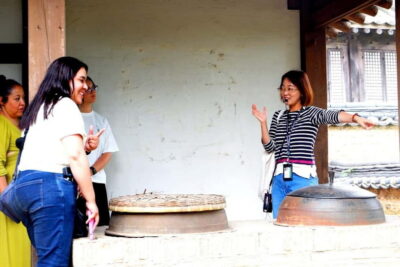 ★ 4.9From Seoul: Dae Jang Geum Park Historic K-Drama Set TourFrom $55143 reviews
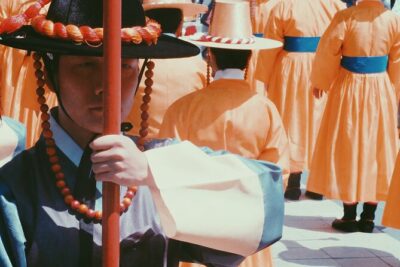 ★ 5.0City Highlights and Historical Experience No ShoppingFrom $4974 reviews
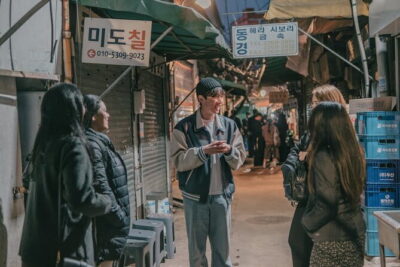 ★ 5.0Street photoshoot and Seoul Hidden gem History Walking TourFrom $4568 reviews
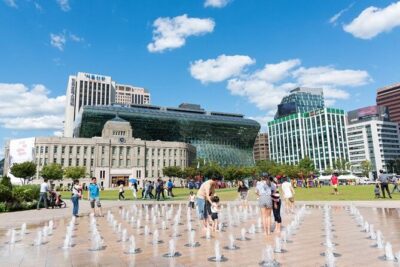 ★ 4.5Discover Seoul: Local Life and HistoryFrom $9653 reviews
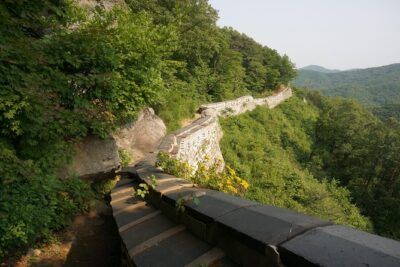 ★ 5.0Namhansanseong UNESCO Historical Sites and Korean Folk Village-Private TourFrom $19829 reviews
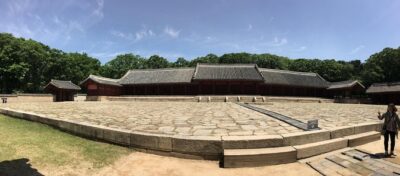 ★ 5.0Full-day UNESCO Heritage Tour with Suwon Hwaseong from SeoulFrom $7628 reviews
Browse the lists this tour appears in