
Reviewed · SEOUL NIGHT TOURS & WALKS
Seoul moonlight walking tour with local historian
Seoul at night looks different on foot. This 2-hour moonlight walk with a local historian turns an ordinary evening into a steady climb through neighborhoods, parks, murals, and city-wall viewpoints.
I especially like the build-up to Seoul’s night skyline and the way guides like Ethan and Jessica keep the story moving, mixing Korea’s everyday culture with the bigger historical picture. You get humor, context, and stops that feel designed for wandering slowly, not rushing.
One thing to plan for: the route is uphill with lots of stairs. If you’re not into steep climbs, you’ll feel it by the time you reach the best viewpoints.
In This Review
- Key points before you go
- A Night Walk That Starts in Hyehwa and Builds to Seoul City Wall Views
- Meeting at Hyehwa and Setting Yourself Up for a Smooth 2 Hours
- Stop 1: Seoul University Hospital Medical Museum and Korea’s Student Culture
- Stop 2: Marronnier Park and the Energy of Live Performance Streets
- Stop 3: Naksan Park and the Capital Story Behind the Hills
- Stop 4: Ihwa Mural Village and Why Poorer Communities Built on Hills
- Stop 5: Seoul City Wall at Night for Skyline Views That Feel Personal
- What You Actually Learn Beyond Pretty Streets
- Price and Value: Why $31.98 Feels Fair for a Guided Night Climb
- What to Bring: Shoes, Phone Battery, and Bug Spray
- Who This Tour Fits Best (and Who Should Skip)
- Should You Book the SeoulDude Moonlight Walking Tour?
- FAQ
- How long is the Seoul moonlight walking tour with a local historian?
- Where does the tour start, and does it end nearby?
- Is admission included for the stops?
- How many people are in the group?
- Is the walk mostly flat, or will there be hills and stairs?
- Is dinner included?
- What if the weather is bad?
- What’s the cancellation window for a full refund?
- Does the tour use a mobile ticket?
Key points before you go
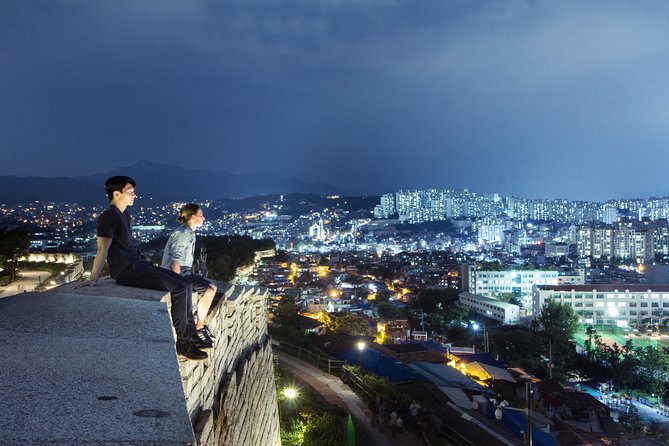
- Naksan Park to Seoul City Wall: night views that make the climb feel worth it
- Local historian pacing: time for questions and photos while the city turns on its lights
- All the major stops are free to enter as listed in the tour details
- Small group size (max 20) so you’re not shouting across the street
- Photo-ready timing as evening settles and the scenery opens up
Seoul keeps going long after dark
- Seoul: Night Market Food Tour with Local Guide★ 4.9 · 943 reviews
- Seoul moonlight walking tour with local historian★ 5.0 · 940 reviews
- Seoul: Nighttime Hidden Gems Walking Tour★ 5.0 · 775 reviews
- Seoul: Dark Side of the City and Ghost Stories Walking Tour★ 4.8 · 484 reviews
A Night Walk That Starts in Hyehwa and Builds to Seoul City Wall Views
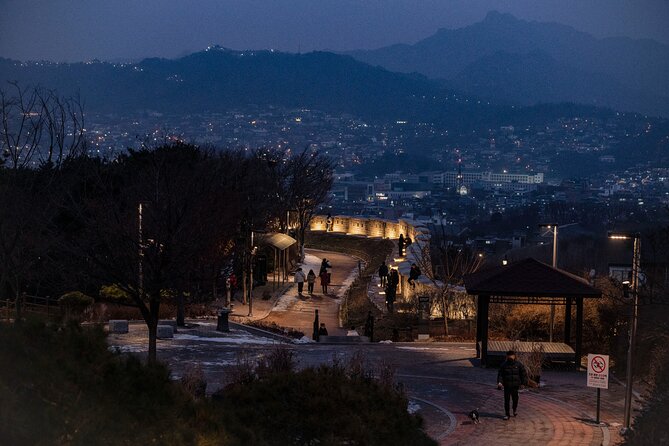
This tour is built like a movie with chapters. You start in Hyehwa area, then walk deeper into Seoul’s hills and layers of city life, with viewpoints that improve as dusk turns into full-on night.
What makes it click for me is the mix of perspectives. You’re not just looking at pretty streets. You’re learning why these places exist where they do, and how people lived here before the city became what it is today. The night format also helps you see things you’d miss in daylight, because you notice shapes, walls, street corners, and sightlines in a new way.
By the time you reach the upper areas, it stops feeling like walking and starts feeling like watching Seoul perform. The route is a steady effort, but it’s the kind you remember.
Meeting at Hyehwa and Setting Yourself Up for a Smooth 2 Hours
You meet at Hyehwa120 Daehak-ro, Jongno District. It’s a simple start point, and the tour notes it’s near public transportation, which matters because Seoul is big and evenings can get busy.
The tour runs about 2 hours and returns to the same meeting area. The group size is capped at 20, which helps because you’re traveling at “you can hear the guide” volume, not the usual mass-tour shuffle.
You’ll also want to treat this like a small outdoor mission:
- Wear comfortable shoes (you’ll be on hills and stairs).
- Keep your phone charged for skyline photos and mural details.
- Bring a little patience for walking uphill, because that’s part of the design.
It’s also a mobile-ticket experience, so have your confirmation ready on your phone.
Stop 1: Seoul University Hospital Medical Museum and Korea’s Student Culture
The first stop is Seoul University Hospital Medical Museum. The tour frames it as the highest place that students can go in the country, which is a strong hook right away. Even if you skip museum-type attractions most days, this works because it isn’t just about objects. It’s about the idea of what university life means in Korea and how institutions shape daily expectations.
A key theme here is how education culture shows up in real life. On this walk, the guide connects academic pressure and social values to places people recognize, so the story lands even for first-time visitors. It’s one of those starts that gives you a lens: you begin the night understanding that Seoul is not only buildings and views. It’s also systems and habits.
This stop is short (about 10 minutes) and the listed admission is free. That’s a big practical plus: you’re not spending time or money on tickets early when your energy level is still high.
More of Seoul taken at walking pace

Stop 2: Marronnier Park and the Energy of Live Performance Streets
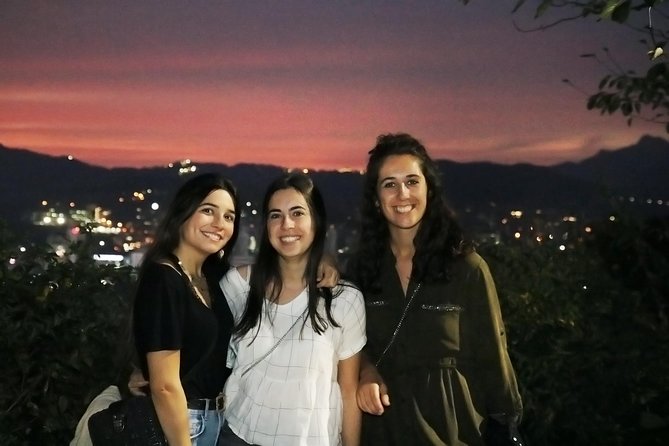
Next up is Marronnier Park, described as a cultural area known for live theaters and live shows. This is your change of pace stop. Instead of looking uphill for monuments, you’re moving through the kind of street culture that makes Seoul feel human at night.
The tour’s value here is that it doesn’t treat “art and shows” as a vague concept. It points you toward how people use neighborhoods for performance, gathering, and late-evening life. If you’ve only seen Seoul through shopping streets and glossy brand areas, this is a welcome correction.
It’s a quick stop (about 5 minutes) with free admission listed. You’ll likely use this moment to reset your legs and check your phone settings for the darker scenery ahead.
Stop 3: Naksan Park and the Capital Story Behind the Hills
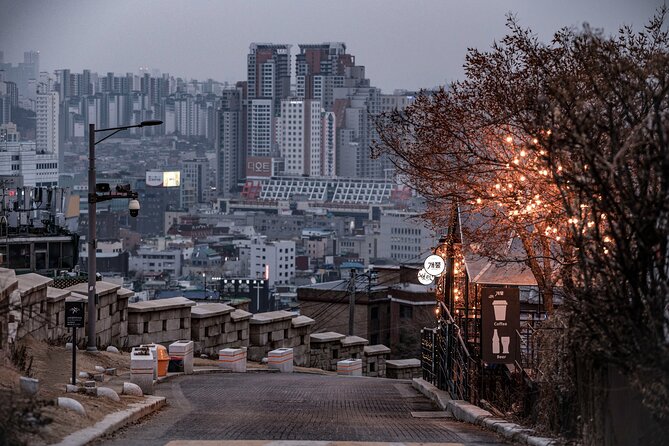
Then you reach Naksan Park, where the tour starts talking about how Korea’s capital was located in Seoul and what changed over time. The setting makes the lesson feel natural. Hills aren’t random here. They are part of how Seoul historically worked.
Naksan Park is also part of the night-view arc. The tour notes it for beautiful historical monument views, including the city wall area tied to major viewpoints. The guide also leans into pop-culture references (yes, the text calls it a K-pop Demon Hunters spot), but the point isn’t the fandom. The point is that this place draws attention for a reason, and you learn what that reason is.
Expect about 10 minutes here and free admission. This stop is also where you’ll start feeling the evening air cool down, and where your brain switches from “sightseeing” to “orientation.” You begin to recognize the city’s layout from angles you couldn’t guess from street level.
Stop 4: Ihwa Mural Village and Why Poorer Communities Built on Hills
Ihwa Mural Village is the stop where the tour gets more social and more human. You’re not just looking at murals like decorative street art. The tour frames the village as a neighborhood of unwealthy people, and highlights that much of the hillside housing here was for less fortunate residents.
This is important because murals can feel like a trendy backdrop if you don’t know the context. With this guide, you get the “why” behind the art—how people used walls and streets to leave messages, cope with life on slopes, and make space where rent and resources were never generous.
The stop runs about 20 minutes with free admission. That’s long enough to slow down, scan details, and take photos without feeling like you’re being pulled away every 10 seconds.
One drawback to keep in mind: mural villages can be visually tempting, and it’s easy to wander a half-step behind. Stay close to the group if you want the full story thread, not just the photo angle.
Stop 5: Seoul City Wall at Night for Skyline Views That Feel Personal
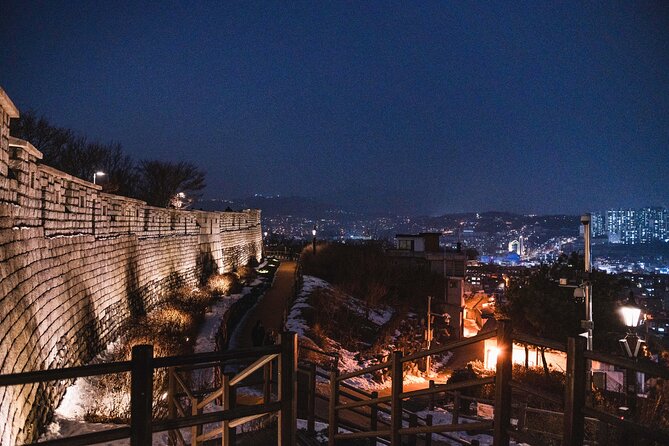
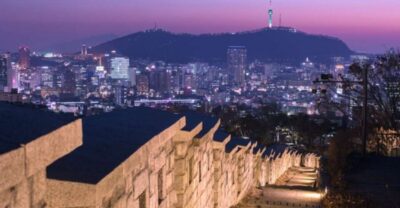
Finally, you reach the big payoff: Seoul City Wall at night. The tour describes it as a historical monument with romantic atmospheres and “hidden, but the best place” energy for night views.
This is where the walking effort turns into something emotional. The city wall gives you a natural frame, and at night you notice lighting, distance, and layers of rooftops. It also changes your relationship with the city: you’re no longer inside streets. You’re looking across Seoul from a higher, older position.
Time here is about 20 minutes and admission is listed as free. You’ll likely get a few photo pauses, and you’ll want them. The views are the kind where you’ll want multiple angles because the light shifts.
What You Actually Learn Beyond Pretty Streets
A lot of Seoul tours do the “fact dump” thing. This one aims for a different result: understanding how everyday life and bigger history connect.
Here are the themes that tend to stick with you after a night like this:
- Education and social values: the tour uses the museum stop to talk about university life and cultural expectations.
- How neighborhoods form: you don’t just see hills and walls; you learn why people lived where they did.
- Art as social language: murals at Ihwa are treated as part of community history, not only decoration.
- Modern Seoul viewed through older infrastructure: city wall viewpoints let you “read” the city’s shape.
And the tone matters. Guides on this tour are described as funny and entertaining, including names like Ethan, Jessica, Leah, June, and Smin. Even if your guide is quieter, you’ll still get the sense that the stories are told for understanding, not just recitation.
Price and Value: Why $31.98 Feels Fair for a Guided Night Climb
The price is $31.98 per person for about 2 hours. That sounds simple, but the value comes from what you’re paying for.
You’re essentially paying for:
- A local historian to connect the dots between locations
- A planned route that takes you uphill efficiently
- Night viewpoints at places you might not naturally target on your first evening
- Stops where admission is listed as free (museum and parks)
So your money is going toward guidance and time, not ticket fees. If you tried to DIY this same route, you’d spend time figuring out where the best angles are, and you might miss the “why it matters” parts.
Is it worth it if you only want photos? Maybe you can do that on your own. But if you want meaning, context, and a smoother route to Seoul’s night skyline, it’s a solid use of evening time.
What to Bring: Shoes, Phone Battery, and Bug Spray
Based on the tour details and the practical comments from the experience, plan for the basics like you’re hiking a little, not strolling.
Bring:
- Comfy shoes with grip. Stairs are part of the deal.
- A charged phone for night shots and mural details.
- Bug spray. One practical tip stands out for this type of Seoul evening walk.
- Light layers. Night air can feel cooler once you’re up on hills.
Also, keep your pace realistic. Guides help you set a comfortable rhythm, but you’re still climbing.
Who This Tour Fits Best (and Who Should Skip)
This is a great match if you:
- Want a first-night orientation to Seoul’s neighborhoods and storytelling style
- Care about how culture, education, and daily life connect to physical places
- Enjoy night views and don’t mind stairs for a good payoff
- Like guides who bring energy and humor, not just facts
It may be a poor fit if you:
- Have limited mobility or you know you can’t handle uphill walking and stairs
- Want a completely flat, low-effort evening stroll
- Expect a sit-down museum-heavy itinerary
The tour is manageable for “most travelers,” but the hill setting isn’t optional.
Should You Book the SeoulDude Moonlight Walking Tour?
If you’re choosing between a plain evening walk and something more structured, I’d book this. The price is reasonable, the stops are free to enter, and the route builds from culture areas into real night-view territory.
I’d especially recommend it if:
- You’re spending limited time in Seoul and want a concentrated “night Seoul” experience
- You like learning stories you won’t find from a map
- You want a social-but-not-chaotic group outing (max 20)
Skip it if stairs are a hard no for you, or if you’d rather spend the evening resting than climbing. For everyone else, this is one of the better ways to see Seoul after dark without feeling lost.
FAQ
How long is the Seoul moonlight walking tour with a local historian?
The tour lasts about 2 hours.
Where does the tour start, and does it end nearby?
The meeting point is Hyehwa120 Daehak-ro, Jongno District, Seoul. The tour ends back at the same meeting point.
Is admission included for the stops?
The tour details list free admission for the museum and each stop (Seoul University Hospital Medical Museum, Marronnier Park, Naksan Park, Ihwa Mural Village, and Seoul City Wall).
How many people are in the group?
The tour has a maximum of 20 travelers.
Is the walk mostly flat, or will there be hills and stairs?
It includes walking uphill and stairs. You should wear comfortable shoes and be prepared for hill terrain.
Is dinner included?
No. There is an optional food session after the tour, but the fee is not included.
What if the weather is bad?
This experience requires good weather. If it’s canceled due to poor weather, you’ll be offered a different date or a full refund.
What’s the cancellation window for a full refund?
You can cancel up to 24 hours in advance for a full refund.
Does the tour use a mobile ticket?
Yes, it uses a mobile ticket. Confirmation is received at the time of booking.
More Tours in Seoul
- Best DMZ Tour Korea from Seoul (Red Suspension Bridge Optional)★ 5.0 · 41,422 reviews
- DMZ Tour: 3rd Tunnel, Option(Suspension Bridge, Boat) from Seoul★ 5.0 · 21,373 reviews
- DMZ tour south Korea from Seoul (NK experience hall, defector)★ 5.0 · 20,599 reviews
- Seoul: DMZ Tour with Optional Suspension Bridge★ 4.8 · 5,277 reviews
- Seoul: DMZ The 3rd Tunnel and Suspension Bridge Tour★ 5.0 · 4,656 reviews
More Tour Reviews in Seoul
- Best DMZ Tour Korea from Seoul (Red Suspension Bridge Optional)★ 5.0 · 41,422 reviews
- DMZ Tour: 3rd Tunnel, Option(Suspension Bridge, Boat) from Seoul★ 5.0 · 21,373 reviews
- DMZ tour south Korea from Seoul (NK experience hall, defector)★ 5.0 · 20,599 reviews
- Seoul: DMZ Tour with Optional Suspension Bridge★ 4.8 · 5,277 reviews
- Seoul: DMZ The 3rd Tunnel and Suspension Bridge Tour★ 5.0 · 4,656 reviews
Seoul After Dark, Continued
- Seoul: Night Market Food Tour with Local Guide★ 4.9 · 943 reviews
- Seoul: Nighttime Hidden Gems Walking Tour★ 5.0 · 775 reviews
- Seoul: Evening Dark History, Folklore & Ghost Story Walking Tour★ 5.0 · 593 reviews
- Seoul: Dark Side of the City and Ghost Stories Walking Tour★ 4.8 · 484 reviews
- Seoul: Han River Night Picnic & Games with Cruise★ 4.8 · 461 reviews
Just added to Exploring Seoul

Seoul Night Tours & Walks, compared.
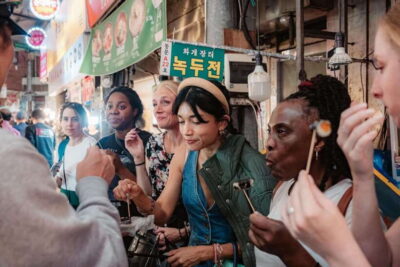 ★ 4.9Night Market Food Tour with Local GuideFrom $73943 reviews
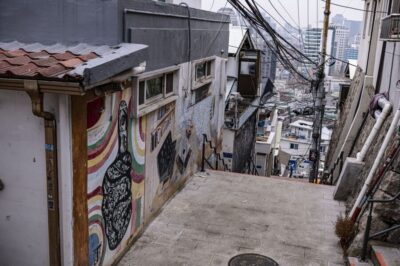 ★ 5.0Nighttime Hidden Gems Walking TourFrom $33775 reviews
 ★ 5.0Evening Dark History, Folklore & Ghost Story Walking TourFrom $42593 reviews
 ★ 4.8Dark Side of the City and Ghost Stories Walking TourFrom $42484 reviews
 ★ 4.8Han River Night Picnic & Games with CruiseFrom $87461 reviews
 ★ 5.0Seoul Night Palace & Market Food Tour with VehicleFrom $79275 reviews
 ★ 5.0Special City Night TourFrom $150162 reviews
 ★ 4.9Nighttime Tour of Palace, Market, Naksan Park & MoreFrom $43143 reviews
Browse the lists this tour appears in