
Reviewed · BUKCHON HANOK VILLAGE TOURS
Seoul: Bukchon Hanok Village Walking Tour
A time-travel walk through Seoul. This Bukchon Hanok Village tour turns traditional hanok houses into real, understandable culture through an English guide’s commentary. Two things I especially liked were seeing how Hanok houses change across periods and getting context for the lifestyle behind the architecture—down to etiquette and noble-era food culture. One watch-out: it’s a walking tour, and comfortable shoes matter.
I also like that the tour doesn’t just point at pretty buildings. You learn the meaning behind Seoul’s long-running old-store idea called OraeGage, and how Seoul preserves stories, not just sights. The only downside I’d plan around is booking on weekends: reservations can be uncertain on weekends and holidays, and small groups can cancel if there aren’t at least four participants.
You start at Anguk Station Exit 3 (Subway Line 3) and end back there, so you’re not stuck figuring out your way out. It’s also good value for what you get: a local guide plus coffee or tea included, and time to slow down in Hanok surroundings instead of rushing past them.
In This Review
- Key things that make this tour worth your time
- Bukchon Hanok Village: Seoul’s 600-Year Neighborhood Mood
- OraeGage: the “old store” idea that gives Seoul its memory
- Starting at Anguk Station Exit 3: simple logistics that reduce stress
- What you actually learn at Bukchon: Hanok houses across periods
- Noble-era culture and food etiquette: learning beyond the walls
- Tea house time: healing in Hanok, plus coffee or tea included
- Price check: is $54 good value for a Hanok walking tour?
- Who should book this Bukchon Hanok Village tour?
- Should you book this Seoul Bukchon Hanok Village Walking Tour?
- FAQ
- What is the price for this tour?
- Where is the meeting point?
- What language is the tour offered in?
- What’s included in the price?
- Is traveler’s insurance included?
- What should I bring?
- How does cancellation work?
Key things that make this tour worth your time
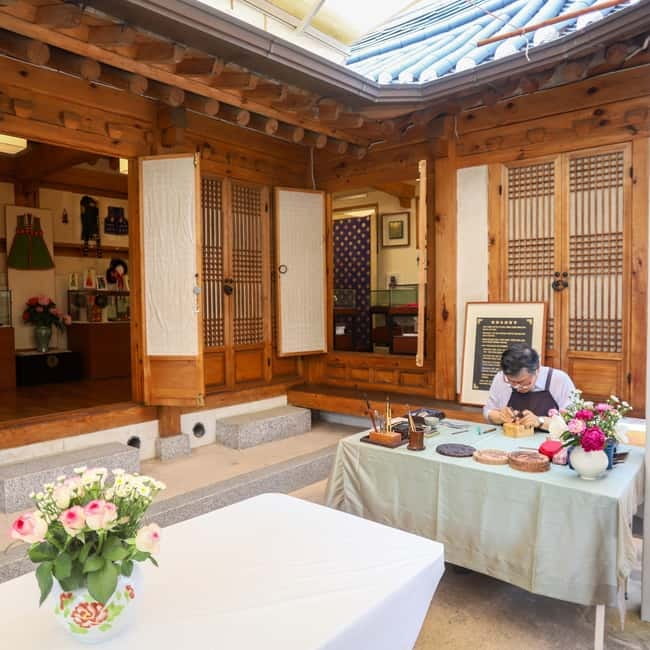
- Bukchon’s 600-year-old urban setting, north of Cheonggyecheon Stream and near Jongno
- Hanok houses from different periods, showing how the style evolved over time
- OraeGage context, explaining Seoul’s designated long-running stores and their stories
- Noble-era culture lessons: etiquette, art, and traditional food culture
- A calm tea break, with coffee or tea included and time to recharge
- English-guided commentary that connects what you see to why it matters
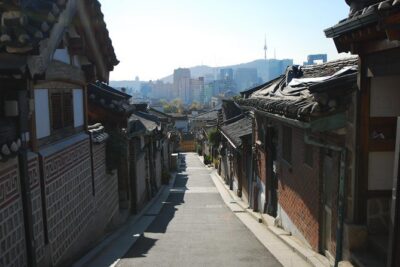
More hanok lanes and rooftops around Bukchon
- Seoul: Gyeongbok Palace, Bukchon Village, and Gwangjang Tour★ 4.9 · 2,321 reviews
- Seoul City Sightseeing Tour Including Gyeongbokgung Palace, N Seoul Tower, and Namsangol Hanok Village★ 5.0 · 1,423 reviews
- Seoul: Gyeongbok Palace, Bukchon Village, and Gwangjang Tour★ 5.0 · 1,044 reviews
- Seoul: Gyeongbok Palace and Bukchon Hanok Walking Tour★ 4.8 · 157 reviews
Bukchon Hanok Village: Seoul’s 600-Year Neighborhood Mood
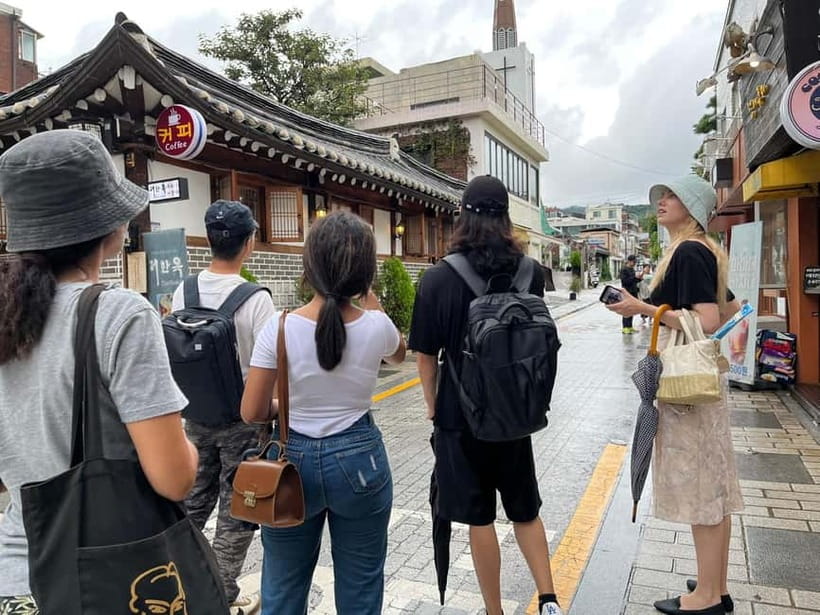
Bukchon Hanok Village is one of those places where Seoul’s modern skyline doesn’t erase the past. The area—located north of Cheonggyecheon Stream and toward Jongno—holds a 600-year-old urban history, and it still feels like you’re walking through older rhythms of the city.
What makes Bukchon special for a walking tour is how clearly the traditional houses sit inside a working urban neighborhood. The Hanok buildings haven’t been heavily distorted by outside cultures, so you get a stronger sense of what the architecture was meant to be. That matters because Hanok isn’t just a postcard. It’s a living design language that evolved across eras.
On this tour, I like that the guide keeps tying the buildings to everyday life. You’re not just looking at roofs and courtyards—you’re learning what changes over time say about the people who lived there. Even if you’ve seen photos of Hanok villages before, the guided commentary helps you read them like history you can walk through.
OraeGage: the “old store” idea that gives Seoul its memory
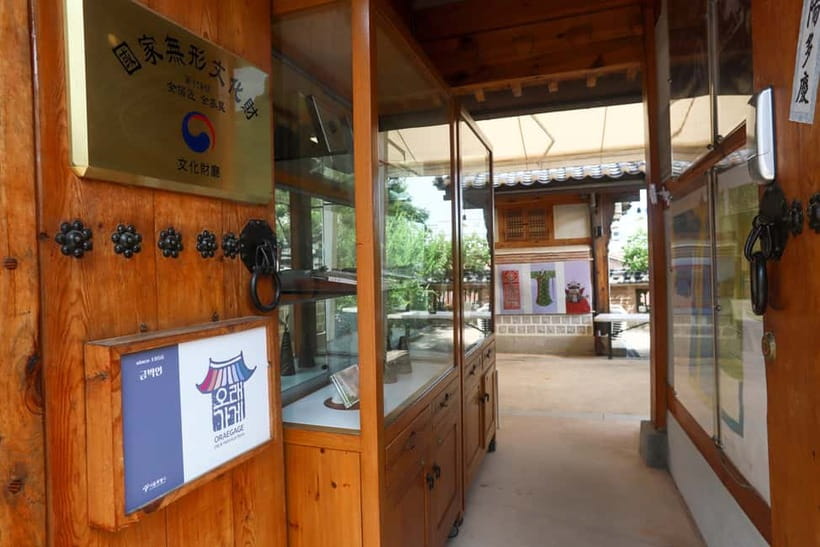
One of the most interesting parts of the tour is the explanation of OraeGage. In plain terms, OraeGage refers to an old-style shop that has carried Seoul’s tradition and values for a long time. It’s not just about age—it’s about the idea that locals want it to last.
Seoul has identified and designated OraeGage stores for the past five years starting in 2017. The purpose is to share the city’s distinctive atmosphere and stories with people visiting from abroad (and with people visiting again, too). That matters when you’re in Bukchon because it helps you connect two types of heritage:
- the heritage of buildings (Hanok)
- the heritage of everyday places (old shops)
So when the guide talks about OraeGage, it’s not random trivia. It gives you a framework for noticing how Seoul preserves continuity. You start to see the neighborhood as a place where memory lives in multiple forms, not only in architecture.
Starting at Anguk Station Exit 3: simple logistics that reduce stress
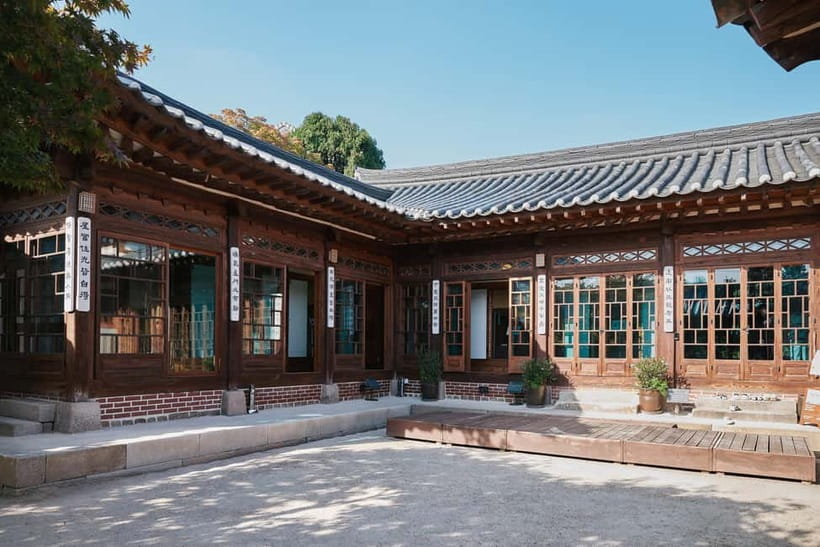
The tour begins at Anguk Station Exit No. 3 on Subway Line 3. It also ends back at the meeting point, which is a surprisingly big deal in Seoul. You’re not trying to navigate back while tired, hungry, and mildly ankle-worn from all that sightseeing.
You’ll be with a local guide and the language is English, so the historical context is meant to be accessible without you needing to research every term. The tour includes coffee or tea, which also helps with energy when you’re on your feet in a dense neighborhood.
A couple practical points to keep in mind:
- Weekend and holiday reservations may not be confirmed.
- If the group ends up with fewer than four participants, the tour can cancel, with notice sent by WhatsApp.
- No-show or day-of cancellation doesn’t get refunded.
I like tours that make the hard parts easy—this one does. Just don’t plan it as your only option for a weekend afternoon unless you’re okay with it changing.
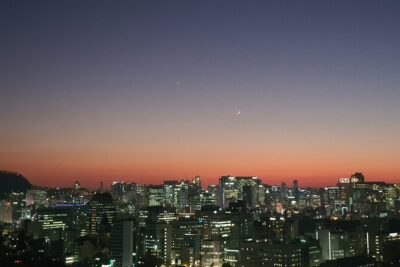
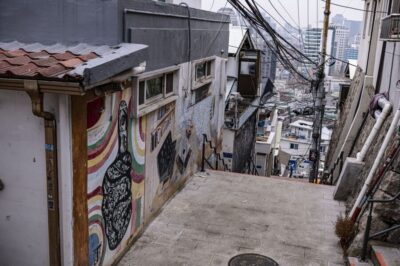
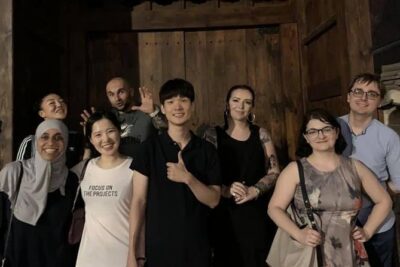
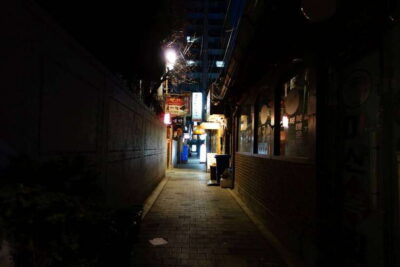
More of Seoul taken at walking pace
What you actually learn at Bukchon: Hanok houses across periods

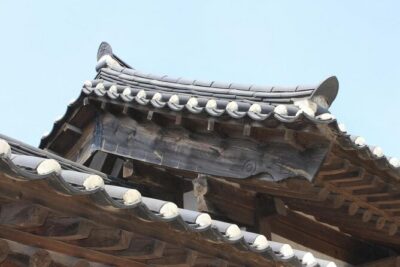
The heart of the experience is the Hanok. Hanok is the traditional Korean architectural style, shaped and refined over different eras. During the tour, you visit Hanok houses from various periods, and the guide points out the features and transformations that help explain why the style looks the way it does.
This is where a guided visit beats a casual wander. Without explanation, it’s easy to see Hanok as one consistent look. With the commentary, you start spotting differences that correspond to time, function, and changing priorities. You begin to understand Hanok as something alive—built, updated, and passed through generations.
And because Bukchon’s traditional houses are known for being well-preserved, you get a clearer view of the evolution rather than a version blended into modern reinvention. That’s why the neighborhood feels like a bridge between past and present. You see traditional architecture, then you see the modern city pressing up against it, and the contrast helps the history land.
If you like photos, this is also a strong stop—but do yourself a favor: don’t just shoot wide angles. Ask the guide what to notice, then frame your photos around that detail. You’ll come away with images that match what you learned.
Noble-era culture and food etiquette: learning beyond the walls
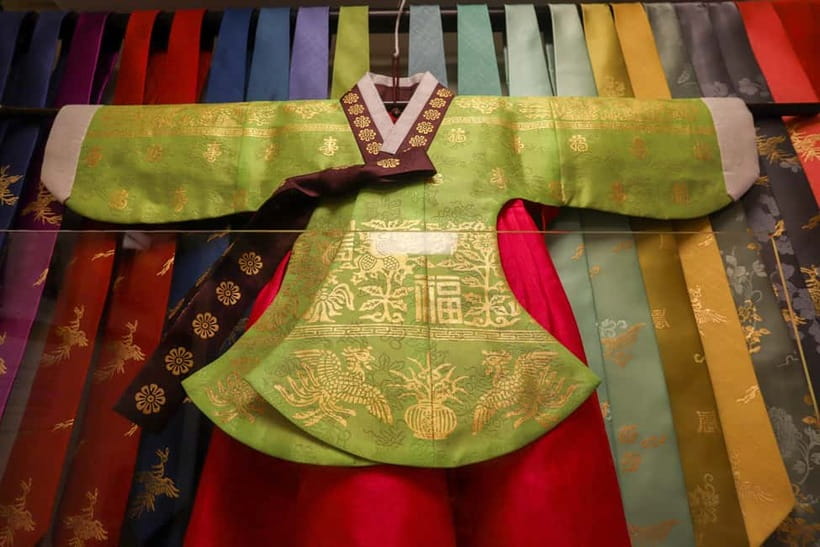
One of the most valuable parts of this tour is that it doesn’t stop at architecture. The tour includes discussion of the food and culture enjoyed by Korean nobles, and how that connects to lifestyle values of the past.
You’ll hear about traditional Korean cuisine in a way that ties it back to etiquette, art, and daily living. Even if you don’t get a full meal here, the cultural education helps you interpret what you see later—on menus, in markets, and in restaurants across Seoul.
This matters because food culture is not only ingredients and flavors. It’s also:
- manners and etiquette around dining
- social roles and values
- how art and taste connect to status and tradition
So when the guide connects Hanok life to those ideas, it turns Bukchon from a history lesson into a practical lens. You’ll be better at understanding why certain traditions exist, and you’ll spot cultural cues more easily when you eat in Korea after the tour.
Tea house time: healing in Hanok, plus coffee or tea included
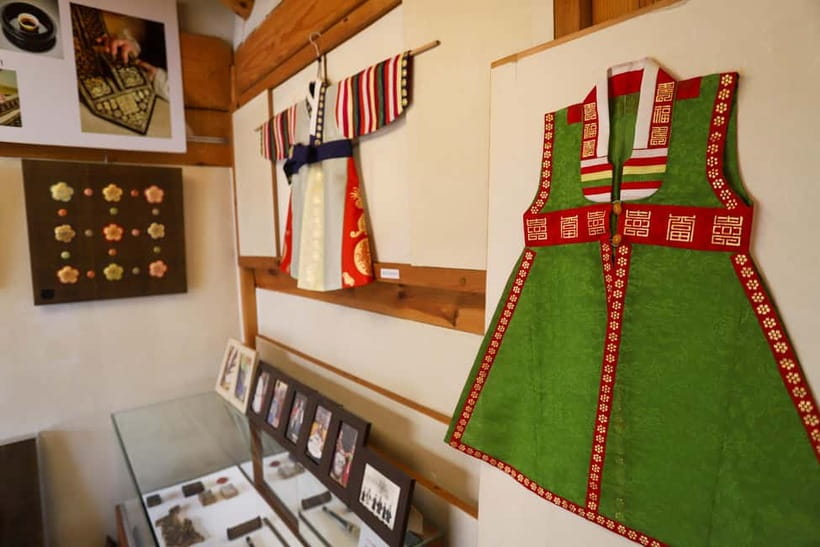
I appreciate a tour that builds in a breather. This one offers coffee or tea, and you also get a tea-house moment where you can slow down and take in the atmosphere.
In one example of the guide approach, Alan is noted for taking people to a beautiful tea house and offering tea and sweets—without rushing. That kind of pacing is exactly what you want in Bukchon. The neighborhood can feel dense and detailed, so having a calm pause helps you actually absorb what you just learned.
Use the tea break like a mini office-hour:
- Ask what neighborhood to explore next on your own.
- Ask what to look for in Hanok architecture after you leave.
- Ask how the guide would prioritize another area if you only had a short time.
And yes, it’s also a good photo moment. Just remember: a relaxed posture beats frantic scrambling. Your pictures—and your feet—will thank you.
Price check: is $54 good value for a Hanok walking tour?
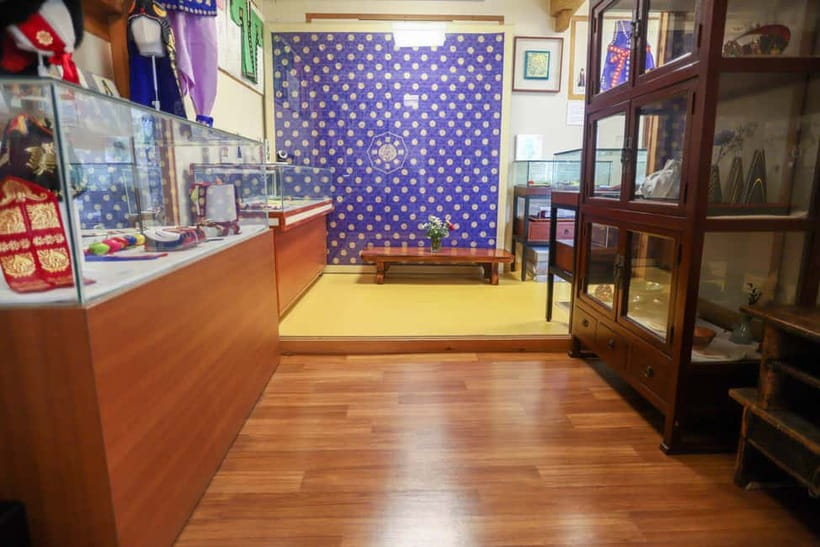
At $54 per person, this tour isn’t a cheap impulse buy, but it also isn’t pricing itself like a luxury experience. The value comes from the mix of things that add up fast if you do them independently:
- a local guide who explains Hanok across periods
- cultural context around etiquette and noble-era food culture
- coffee or tea included
- time to see and understand traditional houses without getting lost in translation
If you tried to do this area on your own, you’d still get great views. But you’d probably miss the “why.” You might also struggle to identify what’s different between houses from different time periods, because that kind of detail is exactly what the guide provides.
The only way price feels less fair is if you’re the type who hates walking or wants a completely free-form schedule. Also, because the tour can cancel when there are under four participants, you should treat it as something to confirm on your travel timeline, especially on weekends.
Who should book this Bukchon Hanok Village tour?
This tour fits best if you want more than scenery. I’d point you here if you:
- like historical context you can understand quickly
- enjoy architecture but want it explained in human terms
- want a calmer pace with tea included
- prefer English-guided walking with cultural storytelling
It’s also a good fit for couples and solo travelers who don’t want to build a research plan for Hanok. You get a ready-made framework: what Hanok is, how it evolved, and how culture connects to the buildings.
If you hate guided tours, or if you’re only in Seoul for a very short time and want maximum flexibility, you might be happier doing Bukchon at your own pace. This tour is designed to teach you; it’s not designed to be a choose-your-own-adventure.
Should you book this Seoul Bukchon Hanok Village Walking Tour?
If your goal is to understand Hanok and Bukchon’s cultural context—rather than just “see some pretty houses”—then this tour is a strong choice. The inclusion of coffee or tea, the guide-led explanations across periods, and the cultural links to noble-era etiquette and food make the price feel reasonable.
I’d book it if you’re excited by history that connects to everyday life. I’d also book it if you like walking tours that end where you started, with fewer logistical headaches.
Skip it only if you know you can’t handle walking time, or if you’re relying on a weekend slot that might not get confirmed. If that’s your situation, plan a backup neighborhood in Seoul so your afternoon stays smooth either way.
FAQ
What is the price for this tour?
The price is $54 per person.
Where is the meeting point?
You meet at Anguk Station Exit No. 3 on Subway Line 3.
What language is the tour offered in?
The tour is offered in English.
What’s included in the price?
A local tour guide is included, along with coffee or tea.
Is traveler’s insurance included?
No, traveler’s insurance is not included.
What should I bring?
Wear comfortable shoes.
How does cancellation work?
You can cancel up to 24 hours in advance for a full refund. No refund is issued in case of a no-show or cancellation on the day of the tour.
More Tours in Seoul
- Best DMZ Tour Korea from Seoul (Red Suspension Bridge Optional)★ 5.0 · 41,422 reviews
- DMZ Tour: 3rd Tunnel, Option(Suspension Bridge, Boat) from Seoul★ 5.0 · 21,373 reviews
- DMZ tour south Korea from Seoul (NK experience hall, defector)★ 5.0 · 20,599 reviews
- Seoul: DMZ Tour with Optional Suspension Bridge★ 4.8 · 5,277 reviews
- Seoul: DMZ The 3rd Tunnel and Suspension Bridge Tour★ 5.0 · 4,656 reviews
More Tour Reviews in Seoul
- Best DMZ Tour Korea from Seoul (Red Suspension Bridge Optional)★ 5.0 · 41,422 reviews
- DMZ Tour: 3rd Tunnel, Option(Suspension Bridge, Boat) from Seoul★ 5.0 · 21,373 reviews
- DMZ tour south Korea from Seoul (NK experience hall, defector)★ 5.0 · 20,599 reviews
- Seoul: DMZ Tour with Optional Suspension Bridge★ 4.8 · 5,277 reviews
- Seoul: DMZ The 3rd Tunnel and Suspension Bridge Tour★ 5.0 · 4,656 reviews
More Hanok Village Wandering
- Seoul: Gyeongbok Palace, Bukchon Village, and Gwangjang Tour★ 4.9 · 2,321 reviews
- Seoul City Sightseeing Tour Including Gyeongbokgung Palace, N Seoul Tower, and Namsangol Hanok Village★ 5.0 · 1,423 reviews
- Seoul: Gyeongbok Palace, Bukchon Village, and Gwangjang Tour★ 5.0 · 1,044 reviews
- Seoul: Gyeongbok Palace and Bukchon Hanok Walking Tour★ 4.8 · 157 reviews
- Best Walking Tour to Gyeongbok Palace Bukchon Hanok Village★ 5.0 · 138 reviews
Just added to Exploring Seoul




Bukchon Hanok Village Tours, compared.
 ★ 4.9Gyeongbok Palace, Bukchon Village, and Gwangjang TourFrom $322,321 reviews
 ★ 5.0Seoul City Sightseeing Tour Including Gyeongbokgung Palace, N Seoul Tower, and Namsangol Hanok VillageFrom $801,423 reviews
★ 5.0Gyeongbok Palace, Bukchon Village, and Gwangjang TourFrom $321,044 reviews
★ 5.0Seoul City Sightseeing Tour Including Gyeongbokgung Palace, N Seoul Tower, and Namsangol Hanok VillageFrom $801,423 reviews
★ 5.0Gyeongbok Palace, Bukchon Village, and Gwangjang TourFrom $321,044 reviews
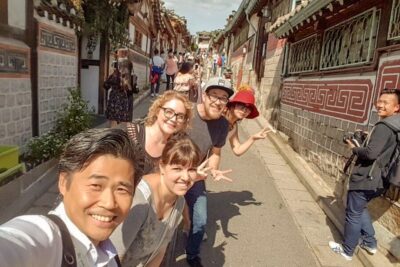 ★ 4.8Gyeongbok Palace and Bukchon Hanok Walking TourFrom $88157 reviews
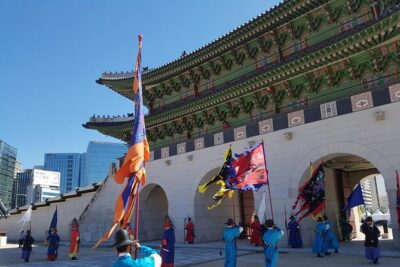 ★ 5.0Best Walking Tour to Gyeongbok Palace Bukchon Hanok VillageFrom $88138 reviews
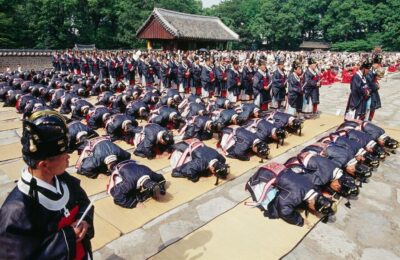 ★ 4.8UNESCO Sites tour: Palace, Shrine & Bukchon VillageFrom $3626 reviews
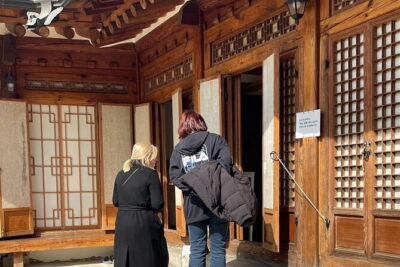 ★ 5.0Tour Seoul’s oldest district with a storyteller from BukchonFrom $3924 reviews
 ★ 4.5Seoul Morning Tour: Seoul Tower, Namsan Hanok Village, The War Memorial of KoreaFrom $6522 reviews
Browse the lists this tour appears in