
Reviewed · BUKCHON HANOK VILLAGE TOURS
Tour Seoul’s oldest district with a storyteller from Bukchon
Bukchon’s alleys have a way of talking back. This walking tour uses story as the map, taking you through one of Seoul’s most politically important neighborhoods from 1392 onward, with a guide who grew up there. You’ll connect old power, architecture, and everyday life into one clear path on foot.
I especially like that the storytelling comes from Dong, a local filmmaker and university screenwriting professor who was born and raised in Bukchon. That background shows in how he ties names, buildings, and traditions to how people actually lived in the neighborhood.
I also like that the pacing stays calm and the stops are practical to enjoy—many feature free entry and short time blocks that keep you moving without feeling rushed. The one watch-out: this is a walking tour through narrow areas, and it’s strongly recommended for ages 12+, so younger kids may find it challenging.
In This Review
- Key things to know before you go
- Bukchon’s slow-burning story, from Joseon power to the 1980s
- Meeting at Anguk Station Exit 4 and what a private start means
- Stop-by-stop: Unhyeongung and the royal twist behind a plain gate
- Cafe Onion Anguk, Bukchon hanoks, and spotting architecture layers you’d miss
- Seokjeong Boreum Well: childhood stories and what history uncovered
- Choong Ang High School and the Winter Sonata connection
- Samcheongdong/Bukchon alley tales: politicians, tycoons, and feng shui capital logic
- Bukchon Hanok Village: the 1920s–30s turning point
- Plus Tour craft: Hopae tags and why hands-on matters
- Pacing, fitness, and how to make the walk comfortable
- Price and what $39.20 buys you in real value
- Final call: who should book this Bukchon storytelling walk
- FAQ
- How long is the Bukchon Storytelling Tour?
- Where do I meet the guide?
- Is this tour private?
- Is there a minimum age recommendation?
- Are there admission fees for the stops?
- What’s included in the price?
- What if I need to cancel, or the tour has too few bookings?
Key things to know before you go
- A local Bukchon storyteller leads the walk, with first-hand neighborhood context
- Two to three hours of history told street-by-street, with a relaxed pace
- Most listed stops are free to enter, so you’re not paying admission on top of the tour
- Winter Sonata is a hook, but the real focus is the site’s deeper Korean significance
- Feng shui shows up in real decisions, from capital logic to how people interpreted place
- Plus Tour option adds a traditional craft experience like Hopae tags
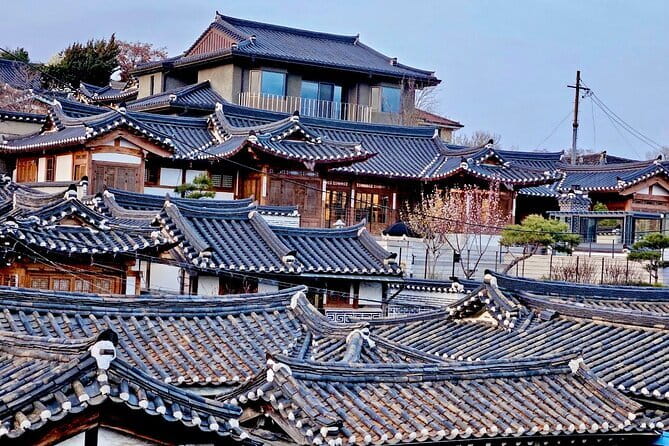
More hanok lanes and rooftops around Bukchon
- Seoul: Gyeongbok Palace, Bukchon Village, and Gwangjang Tour★ 4.9 · 2,321 reviews
- Seoul City Sightseeing Tour Including Gyeongbokgung Palace, N Seoul Tower, and Namsangol Hanok Village★ 5.0 · 1,423 reviews
- Seoul: Gyeongbok Palace, Bukchon Village, and Gwangjang Tour★ 5.0 · 1,044 reviews
- Seoul: Gyeongbok Palace and Bukchon Hanok Walking Tour★ 4.8 · 157 reviews
Bukchon’s slow-burning story, from Joseon power to the 1980s
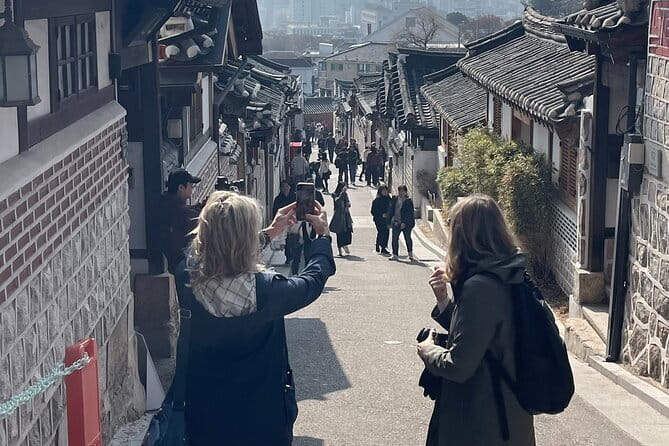
Bukchon isn’t just “old Seoul.” It’s where politics, elite culture, and the economics of influence overlapped for centuries. On this tour, you get that big picture, but you’re not forced to memorize dates. You’ll hear the logic behind where rulers lived, why certain places mattered, and how the neighborhood’s image shifted over time.
A big part of the appeal is the timeline stretch—from the Joseon era through later modern decades up to the 1980s. You start seeing Bukchon as a living document: architecture as evidence, place names as clues, and stories as the thread that connects it all. By the time you finish, Bukchon feels less like a photo backdrop and more like a real setting where decisions were made and consequences followed.
Meeting at Anguk Station Exit 4 and what a private start means
Your tour starts at Anguk Station Exit 4 in Unni-dong, Jongno District, with a 10:00 am start time. The meeting spot is near public transportation, which matters in Seoul, where getting across neighborhoods can take longer than you expect.
This is also listed as a private tour/activity, meaning it’s just your group rather than a mixed crowd. That changes the vibe in a good way. You’re more likely to ask questions, get answers on the spot, and follow the pace without feeling like you’re sprinting behind a large tour group.
One more practical note: the tour may be canceled if fewer than two guests join. If you’re traveling during a quieter week, it’s worth keeping a little flexibility in your schedule so you don’t feel stuck waiting.
Stop-by-stop: Unhyeongung and the royal twist behind a plain gate
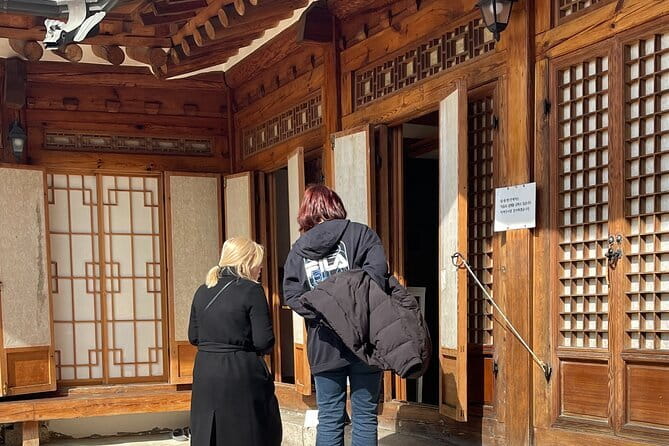
The walk begins at Unhyeongung, a site tied to an intense Joseon-era moment. The story goes like this: when a king dies without an heir, an 11-year-old royal boy born and raised here becomes the 26th king of Joseon. For the next ten years, his father would rule the country from this base.
What I like about starting here is that it sets the theme fast. You’re not just seeing buildings. You’re learning how succession, legitimacy, and power worked in real life. It also gives you a mental anchor for the rest of the tour: later stops make more sense once you understand how important place could be in shaping political outcomes.
You’ll only spend about 20 minutes at the stop, so it’s the right kind of entry point. You get enough context to care, then you move on while the story energy stays high.
Cafe Onion Anguk, Bukchon hanoks, and spotting architecture layers you’d miss
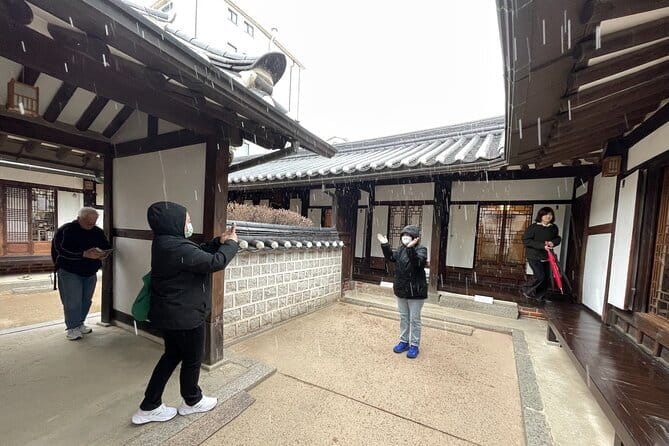
Next up is Cafe Onion Anguk, where the focus is historic architecture and how different eras overlap in one neighborhood. You’ll look at design layers associated with roughly 600, 100, and 50 years of history. Even if you’re not an architecture person, those time jumps give you something concrete to notice.
After that, you’ll visit the Bukchon Traditional Culture Center. This stop is all about appreciating the hanoks of the Yangban, the ruling class who typically lived in Seoul. The value here is perspective: you see not only the shape of traditional homes, but what they represented socially.
A short stop can still be meaningful if it gives you a lens. Here, the lens is simple: Bukchon’s buildings weren’t just aesthetic choices. They were part of a system—status, safety, neighborhood identity, and daily routines wrapped together.
Seokjeong Boreum Well: childhood stories and what history uncovered
Then you’ll reach Seokjeong Boreum Well, and the tone shifts. This isn’t a big royal palace story. It’s closer to how locals grew up hearing about the neighborhood—stories about wells—then what history reveals when you learn more.
I like this stop because it adds texture. Seoul tours often swing between “dramatic” and “photogenic.” This one threads the needle between both by showing how everyday infrastructure (like wells) became part of local memory. It also helps explain why Bukchon feels intimate even when its power stories are huge.
You’ll get around 10 minutes here, so keep your attention on two things: (1) how the guide explains what wells meant in day-to-day life, and (2) how the story connects back to larger themes like community planning and place-based belief.
Choong Ang High School and the Winter Sonata connection
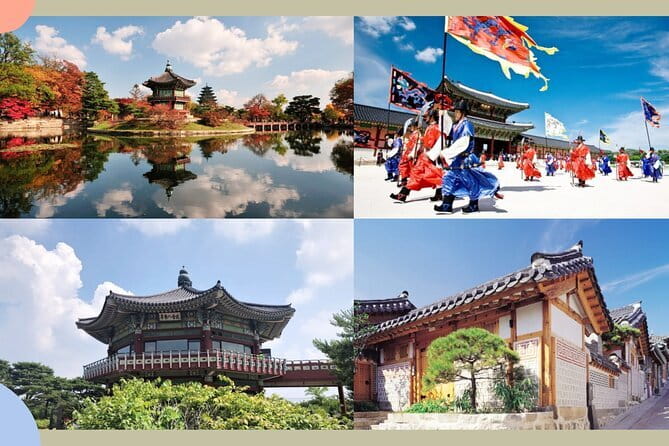
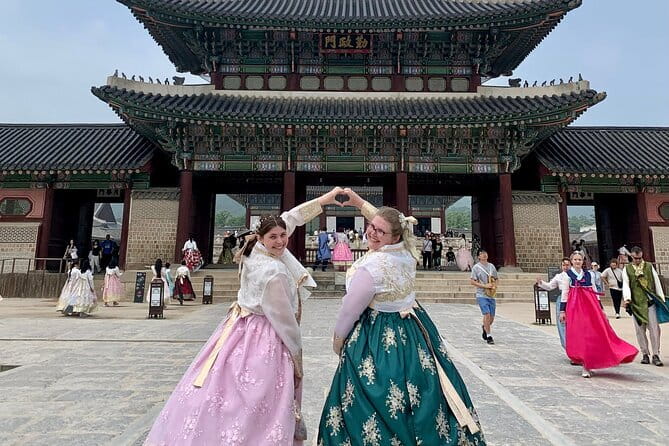
Choong Ang High School is the tour’s pop-culture bridge. Yes, it’s known for being a filming location tied to Winter Sonata and countless dramas and music videos. But the deeper point is that the building is also a historic space that helped shape Korea into the country it became.
This stop works well for first-timers because it makes learning feel easy. You recognize the reference, but you don’t get stuck in trivia. Instead, the guide uses the filming fame as a door into what the site actually meant in Korea’s longer story.
In practical terms, it’s another short 10-minute stop, which is good for keeping the walk lively. If you’re the type who gets tired when tours run long at each location, this structure helps a lot.
Samcheongdong/Bukchon alley tales: politicians, tycoons, and feng shui capital logic
A major chunk of the tour’s storytelling happens around Samcheongdong/Bukchon. Here you trace the rise and fall of powerful politicians and business tycoons who once held land in Bukchon. The neighborhood is tied to the capital’s selection principles through feng shui, including the idea that it was an auspicious place.
I like that the guide doesn’t treat feng shui like mystical wallpaper. You’ll hear it described as a belief system used by people with power to interpret place and plan decisions. When you understand that, the alleys stop being random and start feeling purposeful.
This stop is about 20 minutes, long enough for the story to build and for you to notice how politics, economics, and geography all connect. It’s also where the neighborhood identity clicks: why Bukchon kept its status and why it changed as Korea changed.
Bukchon Hanok Village: the 1920s–30s turning point
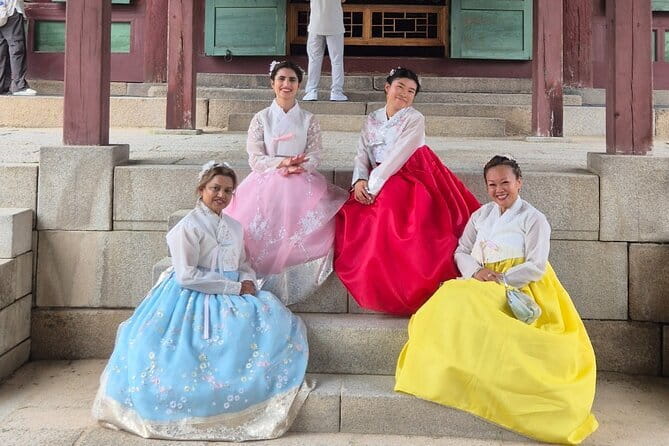
The walk ends at Bukchon Hanok Village. This is where the tour name starts to feel literal: you’re in the area people associate with traditional houses, but the focus here is on change. The story centers on the man who changed the face of Bukchon in the 1920s and 1930s.
That timeframe matters because it’s close enough to modern life that the neighborhood’s transformation can feel personal rather than “ancient.” You’re not just seeing what survived; you’re hearing how Bukchon became what visitors recognize today.
You’ll spend about 15 minutes at this last stretch. It’s the right amount of time to take photos, compare what you saw earlier with the look of the hanoks here, and land the tour’s themes: power stories in one era become cultural identity in another.
Plus Tour craft: Hopae tags and why hands-on matters
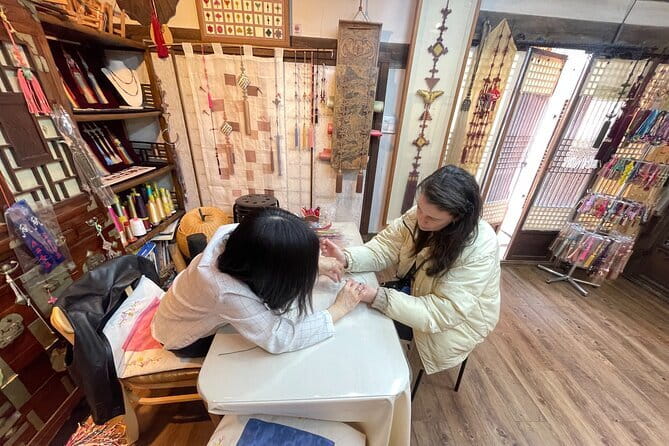
The base tour includes a professional guide from Bukchon. If you choose the Plus Tour, you add a traditional Korean handicraft experience. One review mentions making Hopae tags, which ties the craft to a distinctly Korean, identity-based object.
Why do I think the craft option is worth considering? Because walking tours are mostly visual and verbal. A hands-on activity gives you a second memory channel. Even if you only spend a little time making something, it helps you remember what you learned about daily life, not just big historical events.
If you go with Plus, arrive with a small mindset change: treat it as part of the cultural story, not a separate souvenir stop.
Pacing, fitness, and how to make the walk comfortable
The tour is listed for people with moderate physical fitness, and it’s strongly recommended for age 12 and up. That’s not about “ability” as much as it is about attention span and walking comfort in older neighborhoods. Narrow passages and uneven ground can slow you down.
Good news: the tour timing supports a steady rhythm, with many stops around 10 minutes and a couple longer ones. Reviews also describe a calm pace that doesn’t feel rushed, which is exactly what you want when you’re trying to listen to stories while walking.
My practical advice: wear shoes you can trust, and don’t plan a sprint afterward. If you’re pairing this with other Seoul must-dos that same day, leave a buffer for lingering photos and restroom breaks. Bukchon makes you want to stop and look.
Price and what $39.20 buys you in real value
At $39.20 per person, this is positioned as an affordable, focused alternative to longer multi-neighborhood day tours. The value comes from three things.
First, the guide is local and story-driven, not just a person reading facts off a sheet. Second, many of the listed stops have free admission (as indicated for each stop), so you’re not stacking costs on top of the tour price. Third, the session length is enough to build context without turning into an all-day commitment.
You’ll also see group discounts and a mobile ticket option. Those little logistics matter because they reduce friction. The less you spend time figuring out where you’re supposed to be, the more you can spend time paying attention.
The only cost to watch mentally is that coffee or tea isn’t included. So budget for that if you want it, or plan to keep going between stops.
Final call: who should book this Bukchon storytelling walk
Book this tour if you want Seoul history told through real neighborhood logic: architecture, place names, and the way power shaped daily life. It’s especially a smart pick if you enjoy storytelling more than checklists, and if you like guides who connect past and present without turning it into a lecture.
I’d also recommend it if you’re a first-time visitor and you want to understand why Bukchon matters. The structure—Unhyeongung to Wells to Winter Sonata’s campus connection—gives you multiple entry points without diluting the theme.
Skip it or rethink the timing if you’re traveling with kids under 12, or if a walking-heavy experience through older streets sounds stressful. This is best when you can listen for short bursts while moving, not when you need lots of sitting time.
If you want to understand Bukchon in a way that feels personal and grounded, this is a strong use of a half day.
FAQ
How long is the Bukchon Storytelling Tour?
It runs about 2 to 3 hours.
Where do I meet the guide?
You meet at Anguk Station Exit 4 in Unni-dong, Jongno District.
Is this tour private?
Yes. It’s listed as a private tour/activity, so only your group participates.
Is there a minimum age recommendation?
It’s strongly recommended for ages 12 and above. For younger kids, the storytelling walking tour may be challenging.
Are there admission fees for the stops?
The listed stops show free admission tickets, so you should not expect extra paid entry at these points.
What’s included in the price?
You get a professional guide from Bukchon. The Plus Tour adds a traditional Korean handicraft experience.
What if I need to cancel, or the tour has too few bookings?
You can cancel up to 24 hours in advance for a full refund. The tour may also be canceled if fewer than 2 guests join.
If you want, tell me your travel dates and whether you’re considering the Plus Tour, and I’ll help you fit the timing with other Seoul stops around it.
More Tours in Seoul
- Best DMZ Tour Korea from Seoul (Red Suspension Bridge Optional)★ 5.0 · 41,422 reviews
- DMZ Tour: 3rd Tunnel, Option(Suspension Bridge, Boat) from Seoul★ 5.0 · 21,373 reviews
- DMZ tour south Korea from Seoul (NK experience hall, defector)★ 5.0 · 20,599 reviews
- Seoul: DMZ Tour with Optional Suspension Bridge★ 4.8 · 5,277 reviews
- Seoul: DMZ The 3rd Tunnel and Suspension Bridge Tour★ 5.0 · 4,656 reviews
More Tour Reviews in Seoul
- Best DMZ Tour Korea from Seoul (Red Suspension Bridge Optional)★ 5.0 · 41,422 reviews
- DMZ Tour: 3rd Tunnel, Option(Suspension Bridge, Boat) from Seoul★ 5.0 · 21,373 reviews
- DMZ tour south Korea from Seoul (NK experience hall, defector)★ 5.0 · 20,599 reviews
- Seoul: DMZ Tour with Optional Suspension Bridge★ 4.8 · 5,277 reviews
- Seoul: DMZ The 3rd Tunnel and Suspension Bridge Tour★ 5.0 · 4,656 reviews
More Hanok Village Wandering
- Seoul: Gyeongbok Palace, Bukchon Village, and Gwangjang Tour★ 4.9 · 2,321 reviews
- Seoul City Sightseeing Tour Including Gyeongbokgung Palace, N Seoul Tower, and Namsangol Hanok Village★ 5.0 · 1,423 reviews
- Seoul: Gyeongbok Palace, Bukchon Village, and Gwangjang Tour★ 5.0 · 1,044 reviews
- Seoul: Gyeongbok Palace and Bukchon Hanok Walking Tour★ 4.8 · 157 reviews
- Best Walking Tour to Gyeongbok Palace Bukchon Hanok Village★ 5.0 · 138 reviews
Just added to Exploring Seoul

Bukchon Hanok Village Tours, compared.
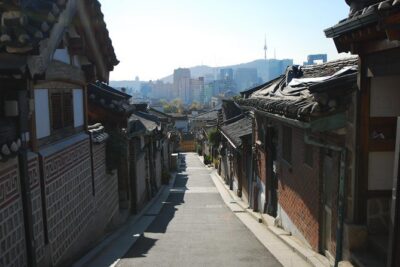 ★ 4.9Gyeongbok Palace, Bukchon Village, and Gwangjang TourFrom $322,321 reviews
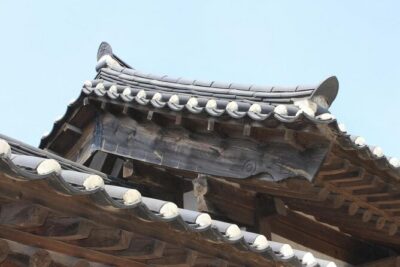 ★ 5.0Seoul City Sightseeing Tour Including Gyeongbokgung Palace, N Seoul Tower, and Namsangol Hanok VillageFrom $801,423 reviews
★ 5.0Gyeongbok Palace, Bukchon Village, and Gwangjang TourFrom $321,044 reviews
★ 5.0Seoul City Sightseeing Tour Including Gyeongbokgung Palace, N Seoul Tower, and Namsangol Hanok VillageFrom $801,423 reviews
★ 5.0Gyeongbok Palace, Bukchon Village, and Gwangjang TourFrom $321,044 reviews
 ★ 4.8Gyeongbok Palace and Bukchon Hanok Walking TourFrom $88157 reviews
 ★ 5.0Best Walking Tour to Gyeongbok Palace Bukchon Hanok VillageFrom $88138 reviews
 ★ 4.8UNESCO Sites tour: Palace, Shrine & Bukchon VillageFrom $3626 reviews
 ★ 4.5Seoul Morning Tour: Seoul Tower, Namsan Hanok Village, The War Memorial of KoreaFrom $6522 reviews
 ★ 4.5Seoul Royal Palace,Bukchon Hanok Village & Gwangjang Market FeastFrom $2916 reviews
Browse the lists this tour appears in