
Reviewed · GYEONGBOKGUNG & PALACE TOURS
Best Walking Tour to Gyeongbok Palace Bukchon Hanok Village
Three hours, two Seoul icons, one smart route. I like how this tour strings together Gyeongbokgung Palace and Bukchon Hanok Village with a guide who makes Joseon-era details click fast. You also get the practical win of entrance fees included, so you spend less time figuring tickets out and more time looking around.
This is also one of the better choices for first-timers who want context without overload, and you finish in the lively Insadong area for an easy next step. The main drawback is physical: there’s a good chunk of walking, plus steps and uphill moments around Bukchon.
In This Review
- Key Things You’ll Notice on This Tour
- Why This Route Works: Gyeongbokgung and Bukchon in One Walk
- Meeting Point and Timing: Downtown Start, Insadong Finish
- King Sejong and The Past vs Present Setup
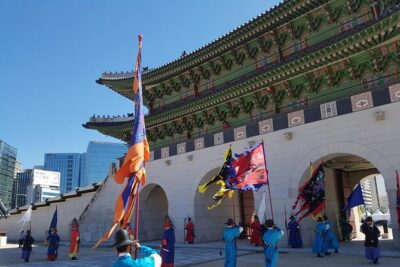
- Entering Gyeongbokgung Palace: Guard Changing and Palace Layout
- National Folk Museum of Korea: 98,000 Artifacts, In Human Terms
- Walking Between Palaces to Bukchon Hanok Village
- What to Watch: Shoes, Steps, Pace, and Group Size
- Price and Value at $88: What You’re Really Buying
- Guide Quality: Why Names Like Jay Kim, Stella, Joe, Jack, and Paul Matter
- Who This Tour Suits Best
- Should You Book This Walking Tour?
- FAQ
- How long is the Best Walking Tour to Gyeongbok Palace Bukchon Hanok Village?
- What’s included in the tour price?
- Where does the tour start and end?
- Is this tour suitable for people with mobility issues?
- How big is the group?
- What happens if the weather is bad?
Key Things You’ll Notice on This Tour
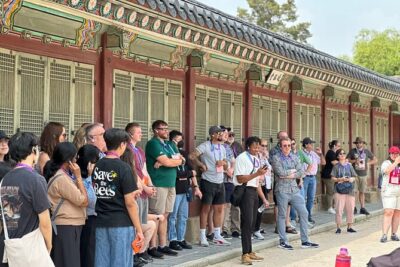
- Small group (max 8) means more chances to ask questions and adjust the pace.
- Entrance fees are handled for the big indoor stops, including Gyeongbokgung and the National Folk Museum.
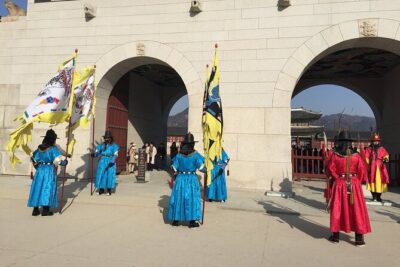
- Royal guard changing ceremony at Gyeongbokgung turns architecture into a living scene.
- A tight route from palace to village keeps you from zigzagging across Seoul all day.
- Insadong finish makes it simple to keep exploring right after the tour ends.
Keep walking the palaces of old Seoul
- Seoul: Gyeongbok Palace, Bukchon Village, and Gwangjang Tour★ 4.9 · 2,321 reviews
- Best Seoul City Tour (Gyeongbokgung Palace,Insadong,Namsan Tower)★ 5.0 · 1,647 reviews
- Small-Group Royal Palace and Seoul City Tour (hotel pick-up)★ 5.0 · 1,474 reviews
- Seoul City Sightseeing Tour Including Gyeongbokgung Palace, N Seoul Tower, and Namsangol Hanok Village★ 5.0 · 1,423 reviews
Why This Route Works: Gyeongbokgung and Bukchon in One Walk
If you’re new to Seoul, it’s easy to do “see a palace, take photos, move on.” This tour does better. It connects the grand government world of Gyeongbokgung to the everyday domestic world of Bukchon Hanok Village, so your brain builds a clear timeline instead of a pile of landmarks.
You start with the palace complex, then move through the history layer (including the National Folk Museum), and end in the hanok neighborhood where the scale changes—from sweeping courtyards to narrow lanes. The walk is designed to help you notice contrasts: rooflines, materials, how people once lived versus how they live now, and how the city’s geography shapes what you see.
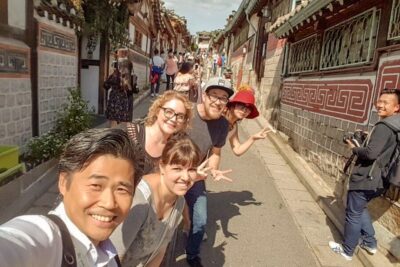
And because the group stays small (maximum 8), it doesn’t feel like cattle herded through crowd control. You can pause for photos, ask about what you’re looking at, and get the story behind details you’d otherwise gloss over.
Meeting Point and Timing: Downtown Start, Insadong Finish
The tour begins at 24-1 Taepyeongno 2(i)-ga in Jung District and ends at 75-5 Insa-dong in Jongno District, right in the Insadong area. That end point matters. Insadong is a logical place to continue—snacks, browsing, and the kind of streets where it’s easy to keep walking without needing another plan.
The duration is about 3 hours. That’s long enough to feel like you got oriented and learned something, but not so long that you lose half your day to transit and lines. You’ll also want to plan for a steady walking pace. The tour is friendly, but it’s still a walking tour.
Most people book this about a month in advance, so if you’re traveling during peak periods, it’s smart to lock in your date early. You’ll use a mobile ticket, which keeps things smooth at the start.
King Sejong and The Past vs Present Setup
Before you even reach Gyeongbokgung in earnest, the tour sets your context with a stop at the King Sejong Statue and a bit of framing that connects past and present. This kind of setup sounds small, but it pays off once you’re in the palace area.
King Sejong is a shortcut to understanding why Joseon-era culture still shows up in modern Korea. When your guide connects the statue stop to what you see later—planning, power, education, daily life—you start noticing cause-and-effect instead of treating each sight as a standalone postcard.
You’ll also get a sense of what to look for when you reach the palace: the logic of gates and courtyards, why certain buildings look the way they do, and how the space guided official life.
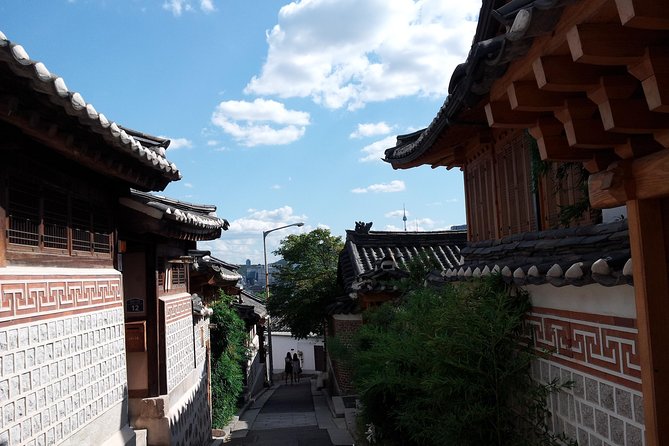
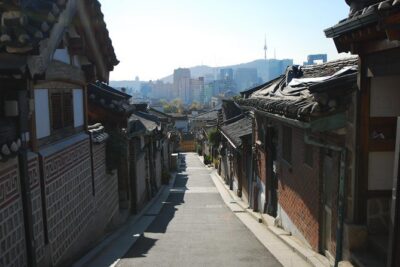
More hanok lanes and rooftops around Bukchon
Entering Gyeongbokgung Palace: Guard Changing and Palace Layout
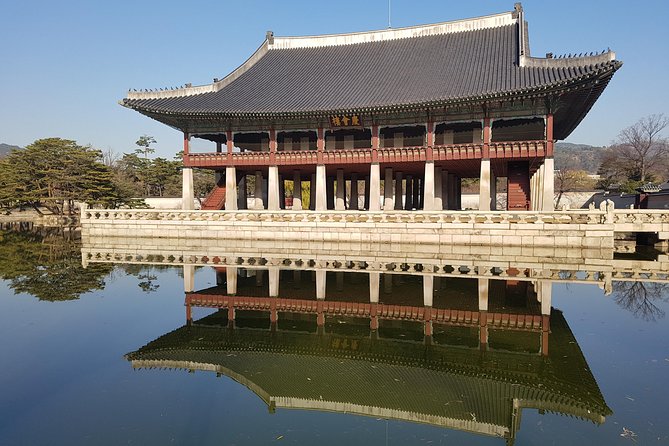
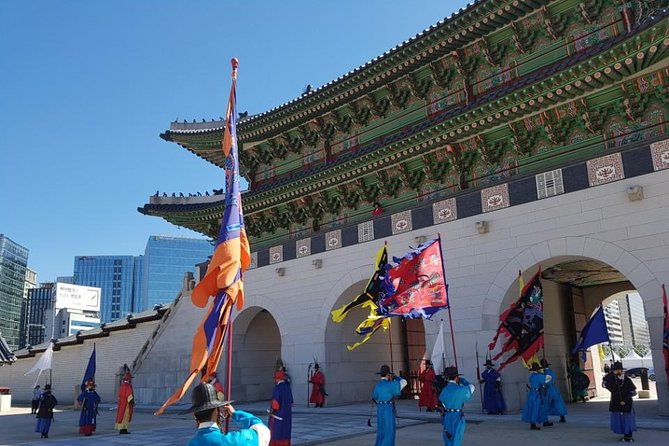
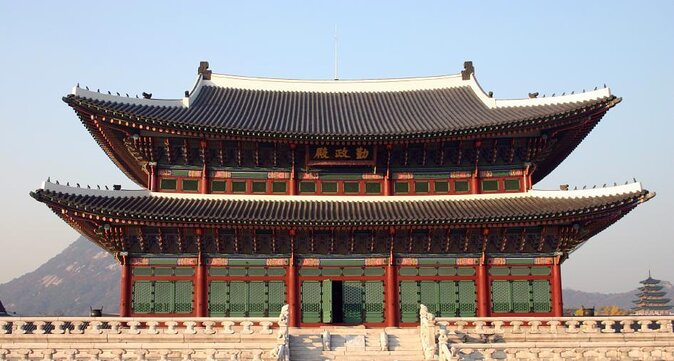
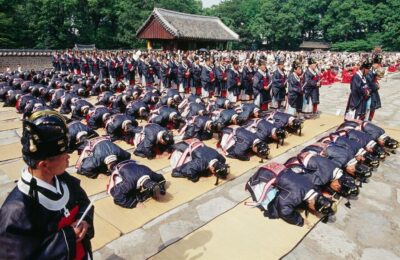
Gyeongbokgung Palace is the star of the show, and you’ll spend about 1 hour here. You’ll see the royal guard changing ceremony, which is one of those moments where the palace stops being “just architecture” and turns into a scene with timing, tradition, and atmosphere.
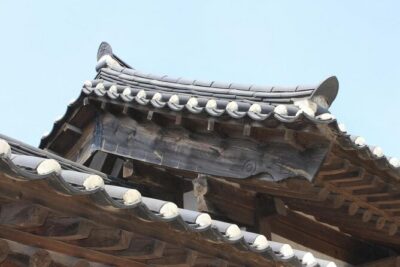
A big value of having a guide is that you don’t have to guess what each area means. You’ll also pass through the kind of palace experience most people want: views of important structures, attention to traditional construction, and a running explanation of Joseon history that connects to what you’re standing in front of.
You’re also likely to catch the approach through the palace-adjacent area, including Gwanghwamun Gate on the way. Even if you’ve seen it in photos before, it lands differently when you know what it represents in the palace world.
Photo tip: plan for photos that include scale. Many people take close-ups of details and then later realize they never captured the courtyard size. Ask your guide when the best moments for wide shots are, especially around the changing ceremony.
National Folk Museum of Korea: 98,000 Artifacts, In Human Terms
Between the palace experience and the move toward Bukchon, you’ll visit the National Folk Museum of Korea. This is the context stop that makes the day feel complete. You’ll learn how everyday life in Korea’s past worked—through objects, tools, and cultural items—and you’ll hear how they relate to what you’re seeing outdoors.
The museum’s big headline is over 98,000 artifacts. You don’t see them all in a short tour, of course. But you do get the big picture: what these objects tell you about social life, domestic routines, and how culture was built from practical needs.
This stop is also a smart pace-break. Palace tours can feel like you’re staring upward at rooftops for hours. The museum helps you switch gears to interpretation—how people lived, not just how buildings look.
If you’re traveling with a kid, this is often the kind of stop that prevents the “we’re standing around” problem. The best guides use the museum information to make the palace stories feel grounded.
Walking Between Palaces to Bukchon Hanok Village
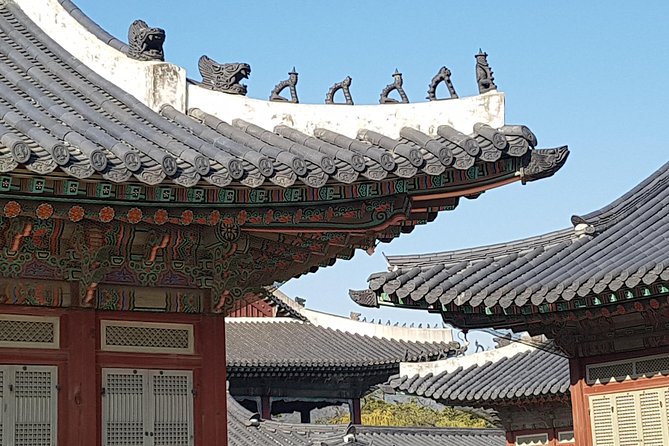
After Gyeongbokgung, you head toward Bukchon Hanok Village, passing between the area of Gyeongbokgung Palace and Changdeokgung Palace. This matters because the walking route gives you perspective on how Seoul’s historic core sits together in a tight area.
Bukchon itself is more than a photo zone. You get about 30 minutes to focus on hidden looks—small angles, traditional streetscape details, and the feel of a neighborhood built around hanok homes. The tour includes the chance to peer inside traditional houses, which is where the experience becomes more real.
Here’s the trade-off. This is a walking tour, and Bukchon has the kind of terrain that can be annoying if you’re sensitive to hills. The tour is not recommended for travelers with difficulty on steps and uphills, and even people without mobility issues should wear shoes that grip well. Comfortable attire helps too, since you’ll move for the full 3 hours.
One more practical note: the village lanes can be busy. A guide who knows where to pause makes it easier to enjoy the streets without losing your place in the group.
What to Watch: Shoes, Steps, Pace, and Group Size
This is a friendly tour, but it’s still built around walking and walking on uneven, older-city terrain. Based on the tour guidance, you should have moderate physical fitness for this route. If you’re worried about stairs, steep lanes, or long stretches on foot, it’s worth thinking twice.
The good news is that the group limit of 8 travelers helps you manage the pace. You’re less likely to feel rushed, and you can ask for small adjustments—like where to stand for the ceremony or when to take a break.
Weather matters too. The tour requires good weather, and if conditions are poor, you’ll be offered a different date or a full refund. That’s not a detail to ignore in Seoul, where rain and humidity can turn walking into a test.
Also: it’s near public transportation. That helps even more than you’d think. Seoul is efficient, but the right station and exit can save you stress when you’re trying to get to an exact meeting point.
Price and Value at $88: What You’re Really Buying
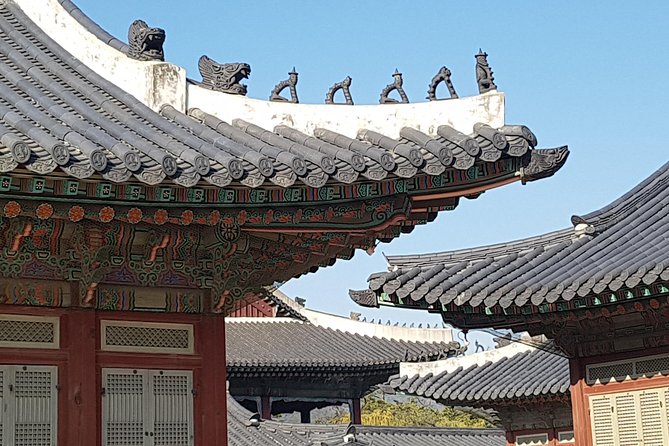
At $88 per person for about 3 hours, this isn’t a “cheap and cheerful” option. But the value is practical: entrance fees are included and you get a professional guide for the full run of the day.
If you add up what it costs to enter palace sites and major museums, plus the time you’d spend figuring it out, this price starts to look more like a time-saver than just a guided sightseeing premium. You’re also paying for interpretation. A good guide changes how you see architecture. It’s the difference between looking at a building and understanding why that building exists in the city’s story.
The small group size also increases value. With fewer people, the guide can answer questions instead of moving on at a fixed tempo. For first-timers, that’s often what turns a good outing into a memorable one.
Guide Quality: Why Names Like Jay Kim, Stella, Joe, Jack, and Paul Matter
The tour is designed around guide-led storytelling, and the difference shows up fast. In past experiences with this tour, guides like Jay Kim, Stella, Joe, Jack, and Paul have stood out for connecting palace history to daily life in a way that sticks.
A few examples from the style you can expect (not guaranteed, but common with strong guides):
- Clear English with explanations tied directly to what you’re seeing.
- Extra details that connect Joseon-era events to the palace spaces you’re walking through.
- Room for questions, including deeper curiosity about what things mean.
- Sometimes, small cultural extras—like traditional songs or street-food recommendations—depending on timing.
On rainy days, some guides have been flexible too, including using rides to reach spots that weren’t on the standard route. That’s not something you should count on, but it’s a good sign: the goal isn’t just to march through; it’s to keep the experience meaningful.
Who This Tour Suits Best
You’ll likely love this tour if:
- You’re on your first trip to Seoul and want a clean starter route.
- You care about context—why a palace looks the way it does, and how it shaped life.
- You want included entrance fees so your day stays simple.
- You like small-group pacing rather than large tour herding.
You might want to pick something else if:
- You have trouble with steps and uphill walking.
- You prefer totally unstructured time and hate fixed start/finish.
- You want a very long stay in Bukchon. This focuses on key areas, not hours of wandering.
Should You Book This Walking Tour?
I think this is a strong booking for most first-timers—especially if you value a guided story and included admissions over piecing everything together yourself. The combination of Gyeongbokgung, the National Folk Museum, and Bukchon Hanok Village gives you both power and daily-life perspective in a single half-day.
If you do book it, do two things for best results: wear truly comfortable shoes, and be ready for hills near Bukchon. If you’re good with that, this is the kind of tour that helps Seoul feel understandable fast—rather than just impressive from the outside.
FAQ
How long is the Best Walking Tour to Gyeongbok Palace Bukchon Hanok Village?
It’s about 3 hours.
What’s included in the tour price?
A professional guide and admission fees are included.
Where does the tour start and end?
It starts at 24-1 Taepyeongno 2(i)-ga, Jung District, Seoul, South Korea, and ends at 75-5 Insa-dong, Jongno District, Seoul, near Insadong.
Is this tour suitable for people with mobility issues?
It’s intended for travelers with moderate physical fitness. It’s not recommended for travelers with walking difficulty on steps and uphills.
How big is the group?
The tour has a maximum of 8 travelers.
What happens if the weather is bad?
The experience requires good weather. If it’s canceled due to poor weather, you’ll be offered a different date or a full refund.
More Tour Reviews in Seoul
- Best DMZ Tour Korea from Seoul (Red Suspension Bridge Optional)★ 5.0 · 41,422 reviews
- DMZ Tour: 3rd Tunnel, Option(Suspension Bridge, Boat) from Seoul★ 5.0 · 21,373 reviews
- DMZ tour south Korea from Seoul (NK experience hall, defector)★ 5.0 · 20,599 reviews
- Seoul: DMZ Tour with Optional Suspension Bridge★ 4.8 · 5,277 reviews
- Seoul: DMZ The 3rd Tunnel and Suspension Bridge Tour★ 5.0 · 4,656 reviews
More Hanok Village Wandering
- Seoul: Gyeongbok Palace, Bukchon Village, and Gwangjang Tour★ 4.9 · 2,321 reviews
- Seoul City Sightseeing Tour Including Gyeongbokgung Palace, N Seoul Tower, and Namsangol Hanok Village★ 5.0 · 1,423 reviews
- Seoul: Gyeongbok Palace, Bukchon Village, and Gwangjang Tour★ 5.0 · 1,044 reviews
- Seoul: Gyeongbok Palace and Bukchon Hanok Walking Tour★ 4.8 · 157 reviews
- Seoul: UNESCO Sites tour: Palace, Shrine & Bukchon Village★ 4.8 · 26 reviews
Still More Palaces to Walk
- Seoul: Gyeongbok Palace, Bukchon Village, and Gwangjang Tour★ 4.9 · 2,321 reviews
- Best Seoul City Tour (Gyeongbokgung Palace,Insadong,Namsan Tower)★ 5.0 · 1,647 reviews
- Small-Group Royal Palace and Seoul City Tour (hotel pick-up)★ 5.0 · 1,474 reviews
- Seoul City Sightseeing Tour Including Gyeongbokgung Palace, N Seoul Tower, and Namsangol Hanok Village★ 5.0 · 1,423 reviews
- Seoul: Gyeongbok Palace, Bukchon Village, and Gwangjang Tour★ 5.0 · 1,044 reviews
Just added to Exploring Seoul
Gyeongbokgung & Palace Tours, compared.
 ★ 4.9Gyeongbok Palace, Bukchon Village, and Gwangjang TourFrom $322,321 reviews
 ★ 5.0Best Seoul City Tour (Gyeongbokgung Palace,Insadong,Namsan Tower)From $581,647 reviews
 ★ 5.0Small-Group Royal Palace and Seoul City Tour (hotel pick-up)From $561,474 reviews
 ★ 5.0Seoul City Sightseeing Tour Including Gyeongbokgung Palace, N Seoul Tower, and Namsangol Hanok VillageFrom $801,423 reviews
★ 5.0Gyeongbok Palace, Bukchon Village, and Gwangjang TourFrom $321,044 reviews
★ 5.0Seoul City Sightseeing Tour Including Gyeongbokgung Palace, N Seoul Tower, and Namsangol Hanok VillageFrom $801,423 reviews
★ 5.0Gyeongbok Palace, Bukchon Village, and Gwangjang TourFrom $321,044 reviews
 ★ 4.9Seoul Half-Day City Highlight, Palace Tour with HanbokFrom $49764 reviews
 ★ 4.9Palace, Temple and Market Guided Foodie Tour at NightFrom $60750 reviews
 ★ 4.7Seoul Highlights: Gyeongbok Palace, Insadong & N Seoul TowerFrom $26726 reviews
Browse the lists this tour appears in