
Reviewed · KOREAN FOOD & MARKET TOURS
Korean Kimchi Making Day Experience with a Local Market Tour
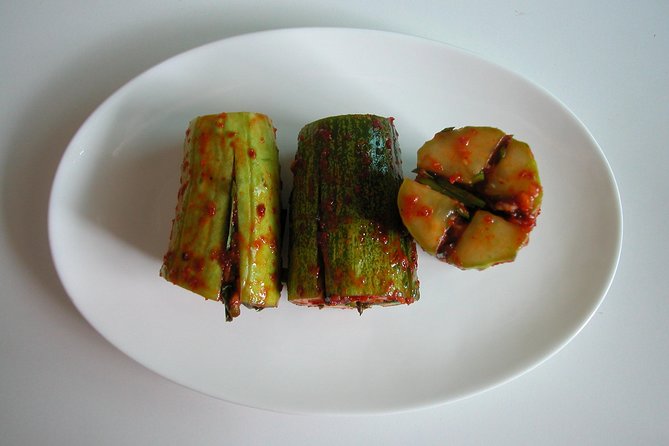
Kimchi starts at the market. This Seoul experience pairs a guided ingredient hunt at Mangwon Market with hands-on lessons on four types of kimchi, led by Jomin the whole way. You learn how to pick the right produce and then turn it into fermented magic you can recreate later.
I do want to flag one practical catch: you make a lot, and it can be a squeeze to pack in limited luggage space. If you’re flying, plan for a container and keep room for the leftovers you’re taking home.
In This Review
- Key highlights you will actually use
- Getting started at Mangwon Station without stress
- Mangwon Market: where ingredient shopping becomes part of the lesson
- The cooking studio with Jomin: hands-on kimchi, four different styles
- What you eat after cooking: kimchi with pork and fried tofu
- Taking kimchi home: the best souvenir, and the packing challenge
- Price and value: is $89 a good deal?
- Who this class fits best (and who should skip it)
- Quick logistics and smooth start tips
- Should you book Korean Kimchi Making Day in Seoul?
- FAQ
- Where do I meet for the kimchi making class?
- How long is the experience?
- How many people can be in the class?
- What is included besides cooking?
- What types of kimchi will I learn to make?
- Can vegetarians or vegans join?
- Is there a meal after the class?
- Do I get recipes or a guide to take home?
- What if the tour is canceled or I need to cancel?
Key highlights you will actually use
- Mangwon Market orientation that teaches you what to look for before you buy
- Hands-on kimchi making for four different styles, not just a demo
- Small class size so you get direct coaching when you hit a question
- Eat what you make with a simple Korean meal of kimchi, pork, and fried tofu
- Take-home container so your kimchi becomes a real souvenir, not a photo op
Still hungry? More Seoul market and street-food crawls
- Seoul: Gyeongbok Palace, Bukchon Village, and Gwangjang Tour★ 4.9 · 2,321 reviews
- Seoul Street Food Market Tour★ 5.0 · 1,226 reviews
- Seoul: Gyeongbok Palace, Bukchon Village, and Gwangjang Tour★ 5.0 · 1,044 reviews
- Local Home Korean Cooking Class & Market Adventure in Seoul★ 5.0 · 1,024 reviews
Getting started at Mangwon Station without stress
This class begins at Mangwon Station (Seoul Metro Line 6), at Entrance 2. That matters because in Seoul, a tiny wrong turn at a busy station can turn a “quick meetup” into a small adventure you did not plan.
From the station, Jomin leads you toward the cooking studio area while you learn how Koreans shop and talk about food. If you prefer clear directions and a guided start, this setup is strong. You arrive, meet your guide, and the day turns into a plan you can follow.
The experience runs about 3 hours 30 minutes, and you’ll get a mobile ticket. It is the kind of timing that works well on a short trip because you still have most of the day left, and you are not committing to something that swallows your evening.
Mangwon Market: where ingredient shopping becomes part of the lesson
The best part of the market segment is not just seeing stalls. It is learning how to tell what is fresh and what matters for the flavor of kimchi.
You walk through Mangwon Market with Jomin, who points out ingredients you will use in class. You also get chances to taste street snacks along the way. That is helpful because kimchi is not a standalone dish in Korean life. It sits next to lots of small bites, and the market tour shows you what that food world feels like day-to-day.
Here’s what you should watch for as you go:
- Look for the produce and seafood stalls that feel busy (in a normal way), because that usually means turnover.
- Pay attention to the way Jomin talks about textures. Kimchi is about the cut, the salt stage, and the mix, not just the final jar.
- Don’t be shy about asking what each ingredient does. Jomin’s explanations are part of the value here, not an optional extra.
A note on pace: you will spend a real chunk of time in the market, but it does not turn into a half-day wandering exercise. It stays tied to the cooking you will do next.
The cooking studio with Jomin: hands-on kimchi, four different styles
At the studio, the focus shifts from tasting and spotting ingredients to learning the process. This is not a sit-and-watch class. The whole point is that you make kimchi yourself, with coaching as you go.
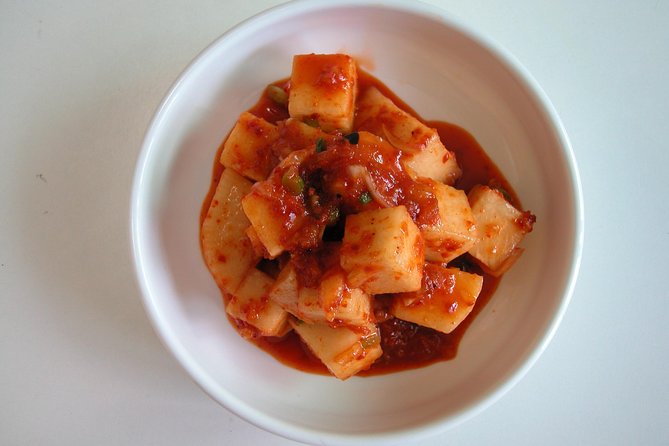
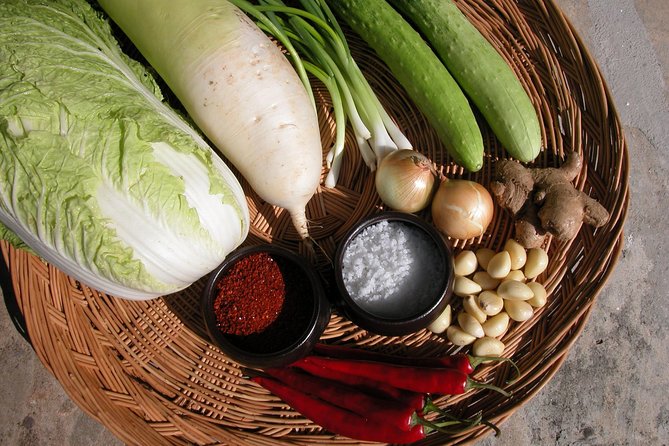
You work with fresh ingredients like Korean cabbage, radish, and cucumber. The class covers four authentic types of kimchi, so you leave with more than one flavor profile. That’s the difference between learning one recipe and learning the underlying logic of kimchi making.
Because the class is kept small (maximum four people), you get the kind of attention that helps when something goes wrong. If your mixing feels off or your prep is uneven, you have a real chance to correct it while you are still in the lesson.
What I like about the teaching style here is how it builds confidence:
- You learn technique, not just steps.
- You get guided taste points, so you understand what “right” feels like.
- You end up with a practical recipe baseline you can repeat later.
Also, if you care about dietary needs: vegetarian and vegan options are available. That is a big deal for a kimchi class, because kimchi is often made alongside non-veg dishes. You can still learn the process in a way that fits you.
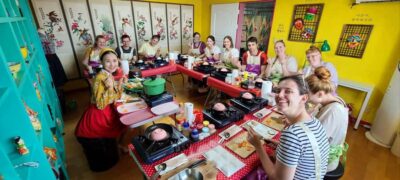
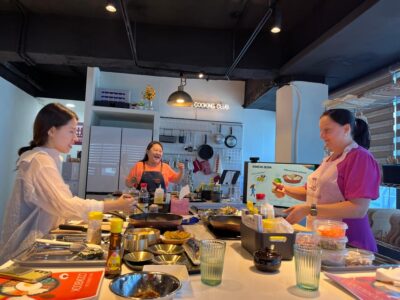
Roll up your sleeves in another Korean kitchen
What you eat after cooking: kimchi with pork and fried tofu
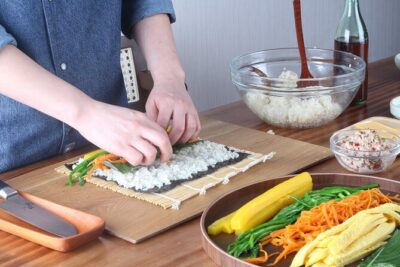
After you finish the hands-on prep, you sit down for a meal that uses what you made. Your plate includes kimchi, plus boiled pork and fried tofu—a combo that matches how kimchi shows up in everyday Korean meals, not just on restaurant menus.
Depending on the session, you may also see a traditional pairing such as makgeolli mentioned alongside the meal. Either way, the meal is not just for filling you up. It is the moment where the class clicks. You taste your own fermentation in a familiar food context, with salty and savory sides that give you a better sense of balance.
Practical tip: eat slowly. You’ll want time to notice how the different kimchi styles taste after they have been prepared in class. That memory becomes useful when you cook later at home.
Taking kimchi home: the best souvenir, and the packing challenge
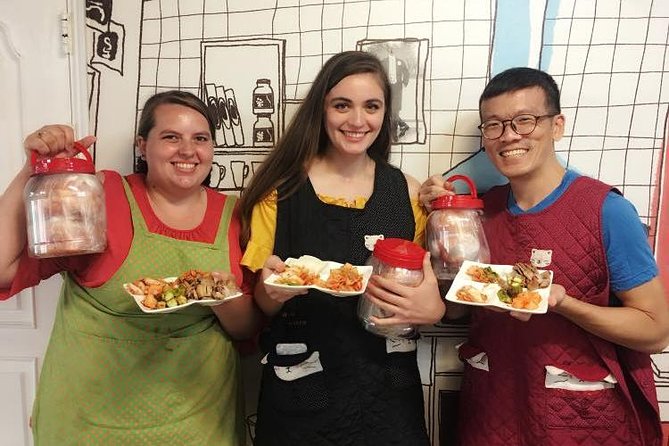
You do get to take home any leftovers, and the container is part of the experience. People love this because it turns your work into something you can actually keep eating for days.
But here is the reality check: you may end up with a lot of kimchi. One of the most common practical notes is to plan for packing space and think ahead if you are traveling.
If you are flying:
- Leave room in your luggage for the container.
- Pack like you mean it so nothing leaks or compresses.
- If the container is larger than your usual souvenir bottle, treat it like a food item in transit, not a “small add-on.”
Also, keep your expectations straight. Kimchi you make fresh in class will taste great, but fermentation changes flavor over time. So your jar will keep getting better (and sometimes stronger) as days pass.
Price and value: is $89 a good deal?
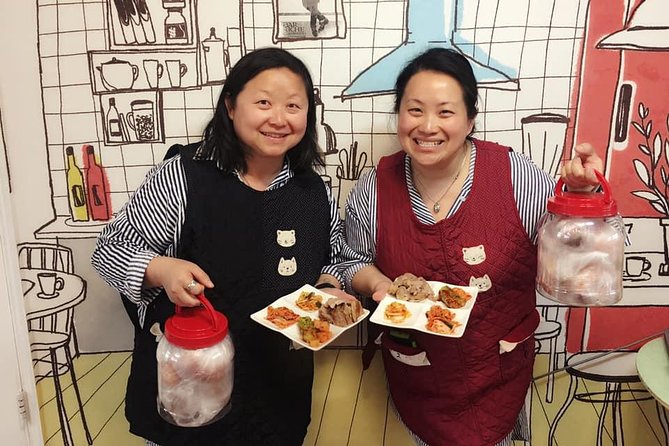
At $89 per person, this class sits in the “worth it if you like food and want hands-on learning” zone.
Here’s why the price can make sense:
- You get a market tour with ingredient guidance, not just a generic walk.
- You learn to make four kimchi types, so you get more than one lesson.
- You eat a full meal afterward (kimchi, boiled pork, fried tofu).
- You get a recipe/cookbook to help you cook again later.
- You take home what you make, which adds real value if you like eating it at home.
What might make it less appealing:
- If you only want to taste kimchi and you are not interested in the process, you could spend less by eating Korean food on your own.
- If you are traveling light and hate managing food containers, the “take-home” part may feel like a hassle instead of a perk.
For most food lovers with a mid-range budget, though, this is one of those “you will remember it” meals because you leave with both skills and food.
Who this class fits best (and who should skip it)
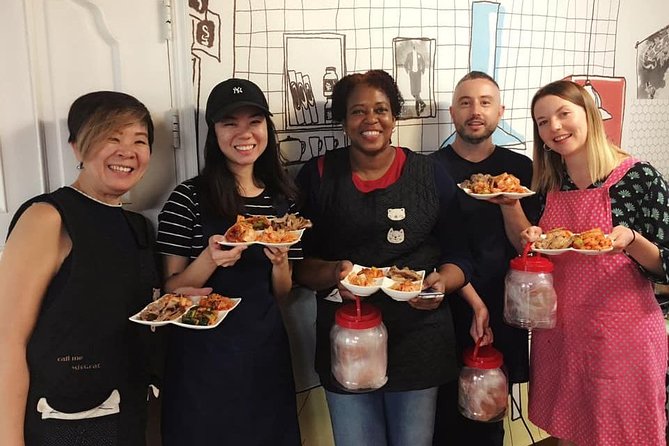
This is a great match for:
- People who like practical cooking skills, not just culinary sightseeing.
- First-timers to Korean food who want a structured way to understand ingredients.
- Anyone who wants to come away confident making at least a basic kimchi at home.
You might prefer another option if:
- You cannot deal with packing a food souvenir.
- You are mostly shopping for a quick, low-effort activity.
The small group format also makes it good for couples or friends who like learning together. It is social, but not chaotic.
Quick logistics and smooth start tips
A few things will make your experience smoother:
- Be at the meetup point at Mangwon Station, Entrance 2. (Do not trust a general station guess.)
- Wear comfortable shoes. The market walk is part of the fun, and you will be standing and moving.
- If you have dietary needs, message in advance so the vegetarian or vegan option is ready.
If you arrive expecting a museum-style presentation, you may feel under-charmed. This is a kitchen-focused class. Bring curiosity and a willingness to get your hands busy.
Should you book Korean Kimchi Making Day in Seoul?
If you want one Seoul activity that combines local shopping, hands-on cooking, and an actual edible souvenir, I think this is a strong pick.
Book it if:
- You want to learn kimchi techniques for multiple styles.
- You enjoy market food culture and ingredient shopping.
- You like the idea of leaving with a container of food you can keep eating.
Skip it if:
- You do not want food to manage during travel.
- You only want to try kimchi once and move on.
The bottom line: this is not just a cooking class. It is a small, guided way to understand how Koreans shop, prep, season, and eat kimchi. And that makes it useful long after your trip ends.
FAQ
Where do I meet for the kimchi making class?
You meet at Mangwon Station in Seoul, at Line 6, Entrance 2.
How long is the experience?
The class runs about 3 hours 30 minutes (approximately).
How many people can be in the class?
The cooking class is kept to a small group with a maximum of four people.
What is included besides cooking?
You also do a market tour at Mangwon Market, eat the kimchi with boiled pork and fried tofu, and you can take home your kimchi leftovers.
What types of kimchi will I learn to make?
The class teaches you how to prepare four authentic types of kimchi, using fresh ingredients such as Korean cabbage, radish, and cucumber.
Can vegetarians or vegans join?
Yes. Vegetarian and Vegan options are available.
Is there a meal after the class?
Yes. After cooking, you sit down and eat what you made, including kimchi served with boiled pork and fried tofu.
Do I get recipes or a guide to take home?
You receive recipe information (a cookbook/recipe materials) as part of the experience, so you can repeat the recipes at home.
What if the tour is canceled or I need to cancel?
You can cancel for a full refund up to 24 hours in advance. The experience may also be rescheduled or canceled if it does not meet the minimum number of guests (minimum is listed as 4).
More Tour Reviews in Seoul
- Best DMZ Tour Korea from Seoul (Red Suspension Bridge Optional)★ 5.0 · 41,422 reviews
- DMZ Tour: 3rd Tunnel, Option(Suspension Bridge, Boat) from Seoul★ 5.0 · 21,373 reviews
- DMZ tour south Korea from Seoul (NK experience hall, defector)★ 5.0 · 20,599 reviews
- Seoul: DMZ Tour with Optional Suspension Bridge★ 4.8 · 5,277 reviews
- Seoul: DMZ The 3rd Tunnel and Suspension Bridge Tour★ 5.0 · 4,656 reviews
Back in the Korean Kitchen
- Local Home Korean Cooking Class & Market Adventure in Seoul★ 5.0 · 1,024 reviews
- Master Korean traditional cooking with a Kimchi chef★ 5.0 · 385 reviews
- Seoul: Korean Cooking Class at a Local Home and Market Tour★ 5.0 · 348 reviews
- Seoul: Korean Cooking at Seoul Cooking Club!★ 5.0 · 311 reviews
- Cook 3 Authentic Korean Dishes with Local Market Tour★ 5.0 · 231 reviews
Eat Your Way Further Through Seoul
- Seoul: Gyeongbok Palace, Bukchon Village, and Gwangjang Tour★ 4.9 · 2,321 reviews
- Seoul Street Food Market Tour★ 5.0 · 1,226 reviews
- Seoul: Gyeongbok Palace, Bukchon Village, and Gwangjang Tour★ 5.0 · 1,044 reviews
- Local Home Korean Cooking Class & Market Adventure in Seoul★ 5.0 · 1,024 reviews
- Seoul: Night Market Food Tour with Local Guide★ 4.9 · 943 reviews
Just added to Exploring Seoul




Korean Food & Market Tours, compared.
 ★ 4.9Gyeongbok Palace, Bukchon Village, and Gwangjang TourFrom $322,321 reviews
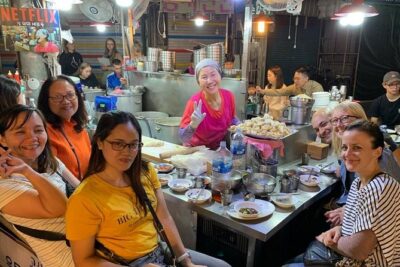 ★ 5.0Seoul Street Food Market TourFrom $731,226 reviews
★ 5.0Gyeongbok Palace, Bukchon Village, and Gwangjang TourFrom $321,044 reviews
★ 5.0Seoul Street Food Market TourFrom $731,226 reviews
★ 5.0Gyeongbok Palace, Bukchon Village, and Gwangjang TourFrom $321,044 reviews
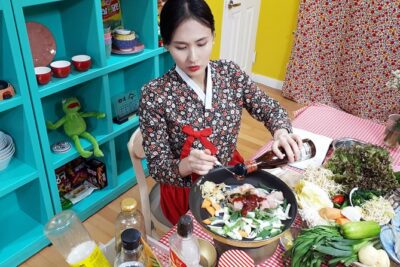 ★ 5.0Local Home Korean Cooking Class & Market Adventure in SeoulFrom $911,024 reviews
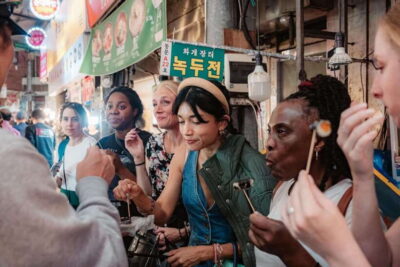 ★ 4.9Night Market Food Tour with Local GuideFrom $73943 reviews
 ★ 4.9Palace, Temple and Market Guided Foodie Tour at NightFrom $60750 reviews
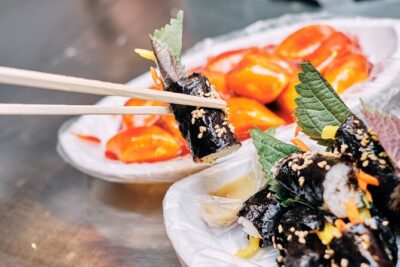 ★ 5.0Downtown Seoul Guided Food & Market Tour with 8+ Local TastingsFrom $98580 reviews
 ★ 5.0Drinking and Eating through the Alleys of SeoulFrom $85364 reviews
Browse the lists this tour appears in