
Reviewed · GYEONGBOKGUNG & PALACE TOURS
Seoul Royal Palace,Bukchon Hanok Village & Gwangjang Market Feast
Seoul can feel like a video game city sometimes. This tour slows it down with classic old-city sights, then ends in a real Seoul food crawl at Gwangjang Market. I especially like the mix of Bukchon Hanok Village streets plus the big ceremony at Gyeongbokgung Palace.
I also like the pacing. You get one focused hour in Bukchon, about an hour at the palace (with the Changing of the Guard on non-Tuesdays), plus a 30-minute stop at a Korean ginseng center and then a full hour at the market.
One thing to plan for: meals are not included, and the ginseng stop is also a shopping environment. If you hate sales pressure, go in with a clear “look only” mindset.
In This Review
- Key highlights you’ll actually feel in the day
- Getting from Myeongdong: how the day starts
- Bukchon Hanok Village: the one-hour “old Seoul” hit
- The Gwanghwamun Gate moment and guard-changing energy
- Gyeongbokgung Palace grounds: time well spent inside
- Blue House pass-by: quick modern Korea perspective
- Cheongha Korean Ginseng Center: what insam means and how to handle the shop
- Gwangjang Market feast: how to build a smart snack plan
- Tuesday swap: Changdeokgung Palace and Insadong instead
- Price and value for a 3.5-hour Seoul combo
- Who should book this tour (and who might not)
- Should you book this Seoul Royal Palace, Bukchon, and Gwangjang tour?
- FAQ
- How long is the tour?
- What is the price per person?
- Where do I meet the guide and bus?
- What are the main stops on the tour?
- Are admissions included?
- Is food included in the price?
- What’s different about Tuesdays?
- Does the tour use a mobile ticket?
- What can I do at the end of the market visit?
- Is there free cancellation?
Key highlights you’ll actually feel in the day
- Bukchon Hanok Village for photos and atmosphere: traditional Joseon-era houses and tight lanes, in a manageable one-hour window
- Gyeongbokgung Gate area on most days: you’ll see Gwanghwamun Gate and the Changing of the Guard ceremony
- A short, practical ginseng lesson: learn what insam is and how the center explains health benefits
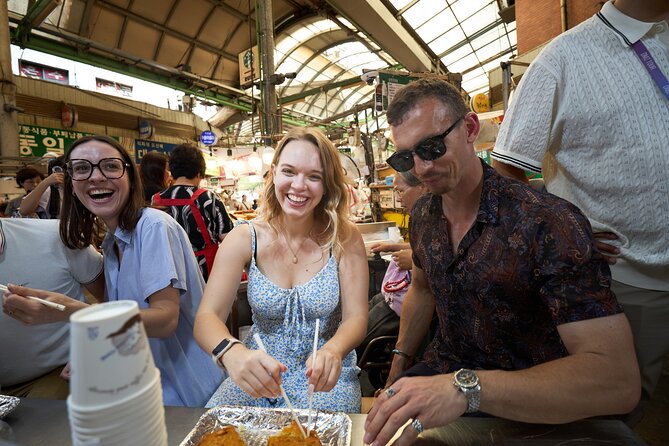
- Gwangjang Market street food time: build your own snack plan with stops like bindaetteok and mayak gimbap
- English guides who keep things moving: guides such as Eva, Gabby, Kelly, and Sunny are repeatedly praised for story flow and friendliness
- A built-in Tuesday swap: on Tuesdays you’ll shift to Changdeokgung Palace and Insadong instead of Gyeongbokgung and the ceremony
Keep walking the palaces of old Seoul
- Seoul: Gyeongbok Palace, Bukchon Village, and Gwangjang Tour★ 4.9 · 2,321 reviews
- Best Seoul City Tour (Gyeongbokgung Palace,Insadong,Namsan Tower)★ 5.0 · 1,647 reviews
- Small-Group Royal Palace and Seoul City Tour (hotel pick-up)★ 5.0 · 1,474 reviews
- Seoul City Sightseeing Tour Including Gyeongbokgung Palace, N Seoul Tower, and Namsangol Hanok Village★ 5.0 · 1,423 reviews
Getting from Myeongdong: how the day starts
The tour is built around central Seoul. You’ll start at Myeong-dong (Jung District), with two possible meeting points depending on where you’re coming from: Myeongdong Subway Station Exit 8, or Seoul City Hall Subway Station Exit 6.
That matters because Seoul subway connections can be confusing when you’re tired. Having two start options lets you choose the easiest route for your hotel area. The group travels by an air-conditioned vehicle, which is a real plus when the weather turns hot or rainy. The tour also uses a mobile ticket, so you’re not hunting for paper vouchers.
The group size caps at 100, which usually keeps the pace from turning into pure crowd management. Still, plan to stand in lines at major attractions, especially around ceremony timing.
Bukchon Hanok Village: the one-hour “old Seoul” hit
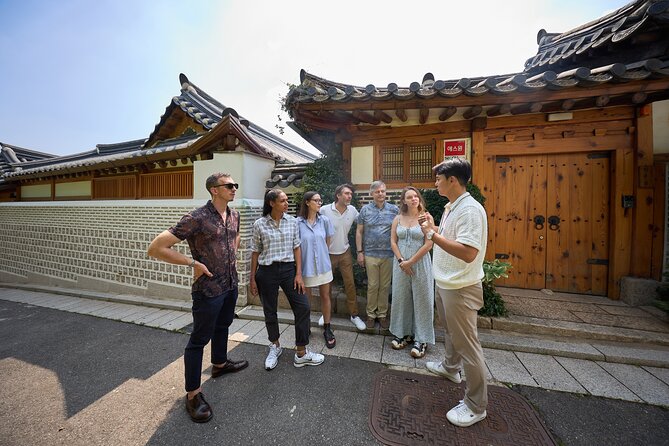
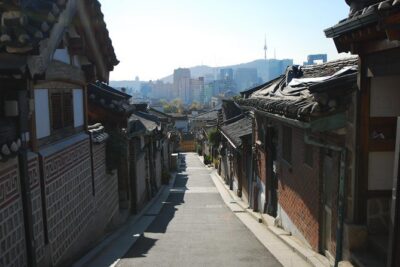
Bukchon Hanok Village is the part of Seoul that feels like it’s wearing a traditional costume, even when you’re standing a few minutes from modern skyscrapers. This stop is about an hour and is described as a 600-year-old neighborhood with hundreds of hanok houses from the Joseon Dynasty.
What you’ll love here is the experience of walking between traditional houses and scenic alleys. Bukchon’s lanes are narrow and photogenic, and your guide helps you focus on what to notice instead of drifting. I like that the stop isn’t rushed to a “look from the gate” situation. You get enough time to wander, pause for photos, and still regroup with the group.
Possible drawback: Bukchon can also be crowded at certain times, and the lanes aren’t the easiest for slow walking. If you’re prone to knee pain or you hate stairs and tight turns, keep your expectations realistic. One hour is usually the right amount of time to enjoy it without turning it into a slog.
Quick tip for your photo planning: go in early enough to catch softer light, and keep your phone handy because the alleys can tempt you into spontaneous stops. Your guide’s job is to manage the group, so you get less waiting and more meaningful walking.
The Gwanghwamun Gate moment and guard-changing energy
On most days (every day except Tuesday), the tour takes you to the Gyeongbokgung Palace area. Before you even get to the main palace entry, you’ll pass by Gwanghwa Square (a photo-friendly public space that’s also used for festivals).
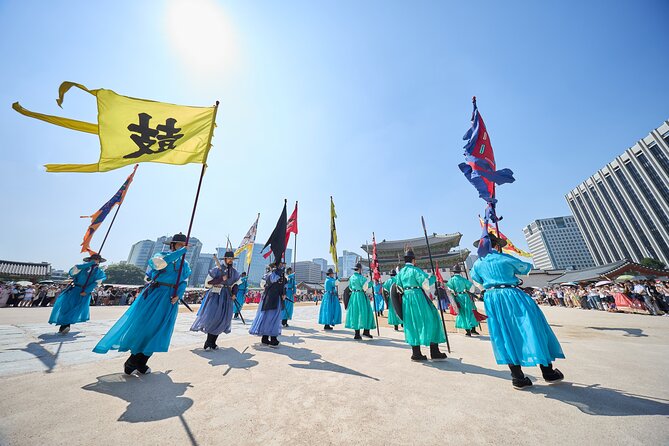
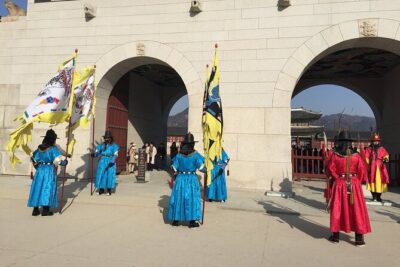
Then the big stop: Gwanghwamun Gate, the majestic entrance area for Gyeongbokgung Palace. The highlight is the Changing of the Guard ceremony, described as a reenactment from the time of Joseon. Even if you’ve never watched something like this before, your guide will help you understand what you’re seeing and when to look.
Why this matters for your trip: Seoul does ceremonies well, and this one is timed and visual. The guide context turns the event from just watching costumes to actually appreciating the symbolism and pageantry.
What to watch for:
- You’ll likely need to stand and angle yourself for a good view.
- The ceremony draws attention, so keep your phone at a comfortable height and avoid blocking others.
- Your guide will time the group movement so you can still enjoy the palace grounds after the ceremony.
If you get a guide like Kelly or Gabby, expect stronger storytelling around what each section represents and why the palace architecture and layout matter. The most helpful guides do two things: they tell you where to look, and they keep you from losing time in the wrong queue.
Still hungry? More Seoul market and street-food crawls
Gyeongbokgung Palace grounds: time well spent inside
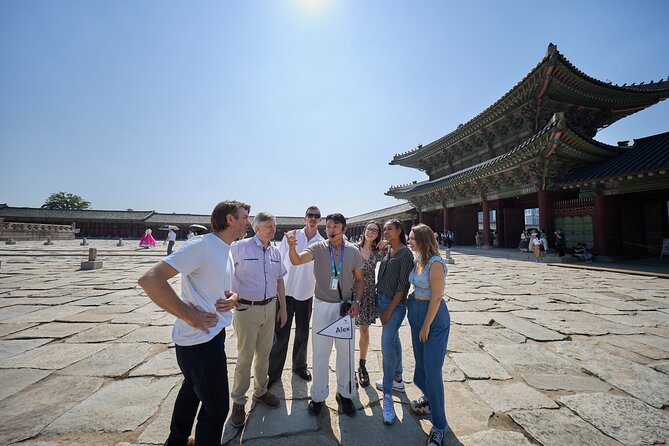
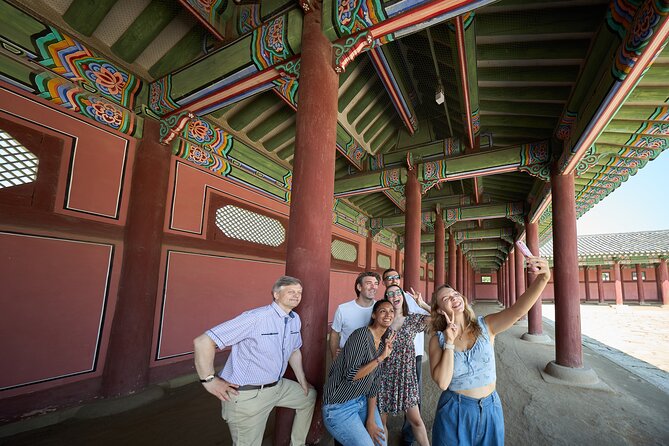
After the ceremony viewing, the tour includes entering Gyeongbok Palace (spelled as Gyeongbokgung Palace in the tour name and context). The entry is included on the non-Tuesday route, and the time budget here is about an hour.
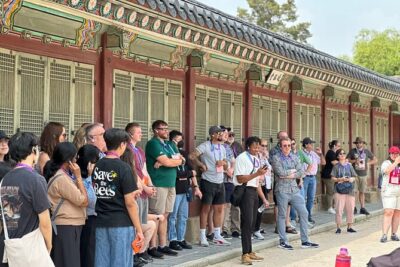
This is the part where you should slow down. Palace grounds can be huge, but an hour is long enough to:
- Get a clear sense of the main buildings’ scale
- Read the layout with your guide’s explanation
- See major viewpoints without feeling like you’re sprinting
A practical note: palace interiors and outdoor courtyards can have different walking surfaces and levels of shade. If you’re going during summer or humid weather, wear breathable clothes. If it’s cold, bring layers you can peel on the bus and put on when you’re standing still.
Blue House pass-by: quick modern Korea perspective
Between stops, you’ll pass by the Blue House, Korea’s former Presidential residence. It’s perched dramatically against Bugaksan Mountain, and the tour positions this as a scenic photo moment as you move through the area.
This isn’t a museum visit. It’s a “get your bearings and understand the geography” moment. For first-time visitors, it helps connect the palace-era setting to modern Korea’s political center.
If you care about context, your guide can frame what the Blue House represents historically and why it’s such a recognizable landmark. If you’re mainly there for photography, treat it as a short view window and keep your energy for what comes next.
Cheongha Korean Ginseng Center: what insam means and how to handle the shop
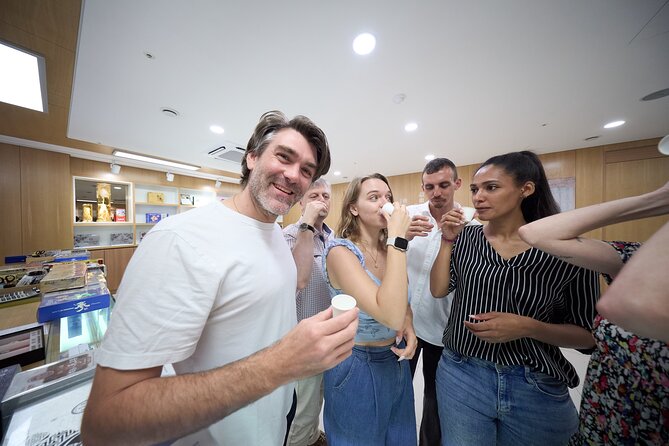
You’ll stop at the Cheongha Korean Ginseng Center for about 30 minutes. Admission is free on this tour, which helps keep the day’s cost down. The visit focuses on learning about ginseng and its health benefits, with the note that ginseng is called insam.
Here’s the useful takeaway: even if you don’t plan to buy anything, you’ll walk away with better basic vocabulary and an understanding of why ginseng is such a big deal in Korean culture and markets.
The balanced part: this type of center often comes with retail temptations. One experience on the low end of the scale was tied to perceptions of it being more sales-focused than educational. So I’d keep your expectations grounded. You can enjoy the explanation, but don’t feel obligated to purchase on the spot.
A good strategy:
- Ask questions first, before you buy anything
- Compare what you’re offered with what you’ll find later in regular shops and markets
- If you’re sensitive to strong claims, treat it like a cultural stop, not a medical prescription
Gwangjang Market feast: how to build a smart snack plan
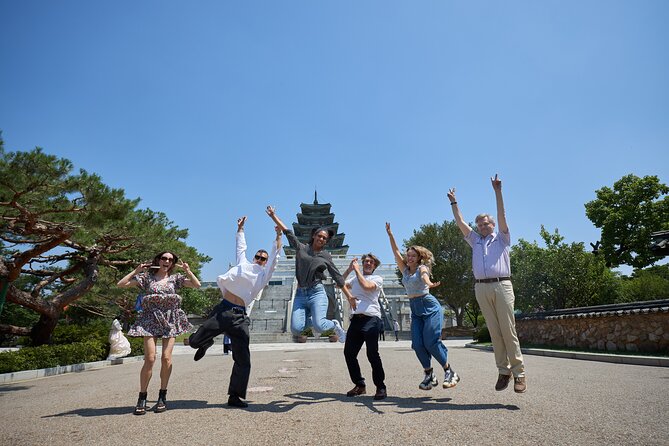
The tour’s finale is Gwangjang Market, described as Seoul’s oldest market since 1905. You get about an hour here, plus extra time options at the end depending on which drop-off you choose.
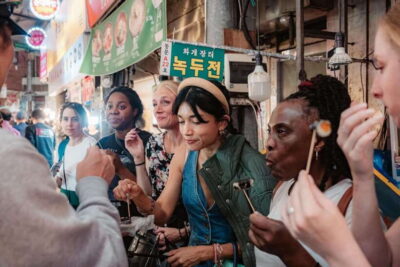
This is where you exchange guided viewing for your own choices. The tour highlights street food classics such as bindaetteok (mung bean pancakes) and mayak gimbap (bite-size seaweed rice rolls). Those two are a great combo because they cover both hot-crisp and small-handle convenience.
Why this works well as an ending: you’ve spent the day with architecture and ceremony. Then suddenly you’re eating. The sensory shift is a nice reset, and market browsing feels more “Seoul lived-in” than another formal attraction.
How to shop without stress:
- Decide on your must-eats first, then spend the rest on whatever looks best
- Keep cash or a card ready, since stalls can vary
- Expect lines and fast service rather than slow sit-down dining
Also note the tour says meals are not included. That’s normal for a market-food stop, but it means you should budget extra for your own snacks and drinks.
Drop-off options at the end are flexible. You can finish in the market area for extra eating and souvenir browsing, or you can hop off in Myeongdong, a shopping district known for beauty products, clothes, and street eats. The tour also mentions the Myeongdong Cathedral as part of that area’s sights.
Tuesday swap: Changdeokgung Palace and Insadong instead
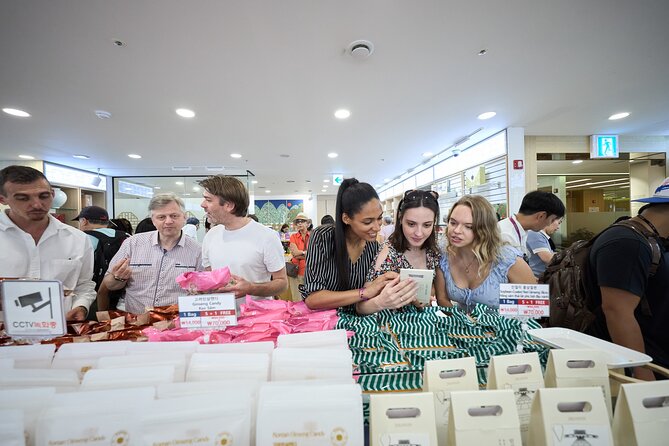
On Tuesdays, the route changes. Instead of Gyeongbokgung Palace and the Royal Guard ceremony, you’ll visit Changdeokgung Palace, a UNESCO World Heritage site built in 1405. You’ll also go to Insadong, described as a hub for Korean traditions with antique shops, handmade crafts, tea houses, and art galleries.
This swap is important because it can change the feel of your whole day:
- Changdeokgung is often more calm and garden-like than the other palace experience visitors expect
- Insadong is more “handcraft browsing + cultural snacks” than “formal ceremony viewing”
If you’re planning your trip and you care about ceremonies specifically, double-check whether your day is Tuesday. Your photo priorities may change too. Insadong is excellent for crafts and smaller-format browsing, while Gyeongbokgung is the bigger stage.
Price and value for a 3.5-hour Seoul combo
At $29 per person, this tour is priced like a practical city pass rather than a premium, long-haul excursion. The value comes from a few concrete pieces:
- Air-conditioned vehicle transport
- A guided English experience across multiple central neighborhoods
- A mix of included admissions and free-entry stops
- A structured route so you don’t spend your energy figuring out timing
Admission fees are included where the tour says so, and several stops are listed as free (Bukchon Hanok Village, the ginseng center, and Gwangjang Market). That matters because it reduces surprise costs. The only major “spend” you control is food, since meals are not included.
My rule for market-and-palace tours is simple: check whether you’ll enjoy eating along the way. If you’re excited to try street food like bindaetteok and mayak gimbap, this price is a good deal. If you only want one meal and would rather skip the ginseng center, you might still enjoy the palace area, but you’ll want to keep purchases optional.
Who should book this tour (and who might not)
This tour is a strong fit for:
- First-time visitors who want the classic Seoul mix in a short window
- People who like structure but still want time to wander (Bukchon and the market)
- Travelers who enjoy guided context, especially around palace ceremonies
It may not be ideal if:
- You hate shopping stops, because the ginseng center is part of the route
- You want a long, slow museum-style day
- You’re planning to rely on the tour for meals (it doesn’t include them)
If you’re the type who likes to get bearings fast, this is a good shape of day. You cover three major mood shifts: traditional alleys, palace ritual, and market food.
Should you book this Seoul Royal Palace, Bukchon, and Gwangjang tour?
I’d book it if you want an efficient Seoul day that doesn’t skip the big visual hits. The palace ceremony area plus Bukchon gives you the “I’m really here” feeling, and the market ending is the right kind of practical fun. At $29 with transport and guidance, it’s easy to justify.
I’d hesitate only if you’re certain you’ll dislike the ginseng stop’s retail atmosphere, or if your biggest goal is purely historical deep study with lots of downtime. For most people doing Seoul for the first time, it’s a solid, well-paced sampler that sets you up to enjoy the rest of your trip on your own.
FAQ
How long is the tour?
The tour runs about 3 hours 30 minutes.
What is the price per person?
The price is $29.00 per person.
Where do I meet the guide and bus?
You can meet at Myeongdong Subway Station Exit 8, or you can join the bus at Seoul City Hall Subway Station Exit 6.
What are the main stops on the tour?
The tour covers Bukchon Hanok Village, a palace area (Gyeongbokgung on most days), a Korean ginseng center, and Gwangjang Market for street food.
Are admissions included?
Yes for the palace stop, and several other stops are listed as free (Bukchon Hanok Village, the ginseng center, and Gwangjang Market).
Is food included in the price?
No. Meals are not included, so you’ll pay for your own food at the market.
What’s different about Tuesdays?
On Tuesdays, the tour visits Changdeokgung Palace and Insadong instead of Gyeongbokgung Palace and the Royal Guard ceremony.
Does the tour use a mobile ticket?
Yes, the tour includes a mobile ticket.
What can I do at the end of the market visit?
You can finish at Gwangjang Market for extra snacks and shopping, or hop off in Myeongdong.
Is there free cancellation?
Yes, you can cancel up to 24 hours in advance for a full refund.
More Hanok Village Wandering
- Seoul: Gyeongbok Palace, Bukchon Village, and Gwangjang Tour★ 4.9 · 2,321 reviews
- Seoul City Sightseeing Tour Including Gyeongbokgung Palace, N Seoul Tower, and Namsangol Hanok Village★ 5.0 · 1,423 reviews
- Seoul: Gyeongbok Palace, Bukchon Village, and Gwangjang Tour★ 5.0 · 1,044 reviews
- Seoul: Gyeongbok Palace and Bukchon Hanok Walking Tour★ 4.8 · 157 reviews
- Best Walking Tour to Gyeongbok Palace Bukchon Hanok Village★ 5.0 · 138 reviews
Eat Your Way Further Through Seoul
- Seoul: Gyeongbok Palace, Bukchon Village, and Gwangjang Tour★ 4.9 · 2,321 reviews
- Seoul Street Food Market Tour★ 5.0 · 1,226 reviews
- Seoul: Gyeongbok Palace, Bukchon Village, and Gwangjang Tour★ 5.0 · 1,044 reviews
- Local Home Korean Cooking Class & Market Adventure in Seoul★ 5.0 · 1,024 reviews
- Seoul: Night Market Food Tour with Local Guide★ 4.9 · 943 reviews
Still More Palaces to Walk
- Seoul: Gyeongbok Palace, Bukchon Village, and Gwangjang Tour★ 4.9 · 2,321 reviews
- Best Seoul City Tour (Gyeongbokgung Palace,Insadong,Namsan Tower)★ 5.0 · 1,647 reviews
- Small-Group Royal Palace and Seoul City Tour (hotel pick-up)★ 5.0 · 1,474 reviews
- Seoul City Sightseeing Tour Including Gyeongbokgung Palace, N Seoul Tower, and Namsangol Hanok Village★ 5.0 · 1,423 reviews
- Seoul: Gyeongbok Palace, Bukchon Village, and Gwangjang Tour★ 5.0 · 1,044 reviews
Just added to Exploring Seoul
Gyeongbokgung & Palace Tours, compared.
 ★ 4.9Gyeongbok Palace, Bukchon Village, and Gwangjang TourFrom $322,321 reviews
 ★ 5.0Best Seoul City Tour (Gyeongbokgung Palace,Insadong,Namsan Tower)From $581,647 reviews
 ★ 5.0Small-Group Royal Palace and Seoul City Tour (hotel pick-up)From $561,474 reviews
 ★ 5.0Seoul City Sightseeing Tour Including Gyeongbokgung Palace, N Seoul Tower, and Namsangol Hanok VillageFrom $801,423 reviews
★ 5.0Gyeongbok Palace, Bukchon Village, and Gwangjang TourFrom $321,044 reviews
★ 5.0Seoul City Sightseeing Tour Including Gyeongbokgung Palace, N Seoul Tower, and Namsangol Hanok VillageFrom $801,423 reviews
★ 5.0Gyeongbok Palace, Bukchon Village, and Gwangjang TourFrom $321,044 reviews
 ★ 4.9Seoul Half-Day City Highlight, Palace Tour with HanbokFrom $49764 reviews
 ★ 4.9Palace, Temple and Market Guided Foodie Tour at NightFrom $60750 reviews
 ★ 4.7Seoul Highlights: Gyeongbok Palace, Insadong & N Seoul TowerFrom $26726 reviews
Browse the lists this tour appears in