
Reviewed · TEMPLES & TEMPLESTAY
Seoul: War Memorial, Jogyesa Temple & Tapgol Park Tour
War museum, temple, and park in one afternoon. What makes this Seoul outing smart is the mix of war lessons, living faith, and a park tied to modern pop culture. I like that it’s built for an afternoon pace, not a marathon, and you move around in an air-conditioned minivan with an English-speaking guide.
My favorite part is the pairing of the War Memorial of Korea with the National Museum of Korean Contemporary History. You also get a very different side of Seoul at Jogyesa Temple, plus Tapgol Park, where the story of independence and the included lottery moment from Squid Game Season 2 show up together.
One thing to consider: this is still a museum-and-stroll route with moderate walking, and it runs rain or shine. If you’re using a wheelchair or need lots of long sitting breaks, this one may be a mismatch.
In This Review
- Key things that make this tour worth your afternoon
- Where you start and how the tour runs through central Seoul
- The War Memorial of Korea: tanks, flights, and the UN Memorial Cemetery
- National Museum of Korean Contemporary History: 2012-era context for the late 1800s to today
- Jogyesa Temple: chief temple of the Jogye order, with living spirituality
- Tapgol Park: March 1 independence movement roots and the included lottery moment
- Price and value: why $42 can make sense for this mix
- Who this half-day Seoul tour suits best (and who should reconsider)
- Guides and group vibe: what you can expect from how people lead this tour
- Should you book this Seoul War Memorial, Jogyesa Temple & Tapgol Park tour?
- FAQ
- What is included in the afternoon tour?
- Where do we meet for the afternoon option?
- Where does the tour end?
- What stops are included?
- Is lunch included?
- Does the tour run in bad weather?
- Is hanbok provided?
- Is this tour suitable for wheelchair users?
- What should I bring?
- Is alcohol allowed during the tour?
Key things that make this tour worth your afternoon
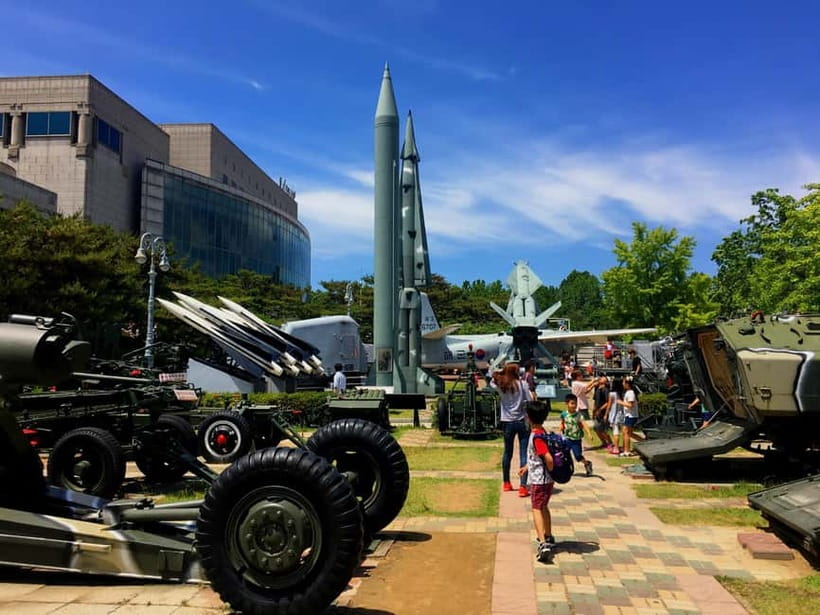
- War Memorial focus with tanks and flight displays that make 20th-century conflict easier to picture
- UN Memorial Cemetery access on the 3rd floor as part of the War Memorial complex
- Two history stops, not one, pairing a war museum with a contemporary-history museum opened in 2012
- Jogyesa Temple as a living chief temple of the Jogye order of Korean Buddhism
- Tapgol Park + the included lottery linked to the March 1 independence movement and Squid Game Season 2
Quieter hours at more of Seoul's temples
- Seoul: Palace, Temple and Market Guided Foodie Tour at Night★ 4.9 · 750 reviews
- Seoul: Mt Seorak + Naksansa Temple or Nami Island Group Tour★ 4.7 · 422 reviews
- Best Things to Do – Half Day Seoul Trip (Seoul Palace & Temple)★ 5.0 · 190 reviews
- Day Tour of Suwon Hwaseong Fortress Starfield Waujeongsa Temple★ 5.0 · 61 reviews
Where you start and how the tour runs through central Seoul
For the afternoon option, the starting point is the lobby of the Koreana Hotel’s office building. You’ll end with a drop-off at Myeongdong Cathedral, which is handy because it puts you close to a classic Seoul evening zone for food and browsing.
This is a rain or shine tour, so plan to dress for wet weather if needed. The walking level is described as moderate, which usually means museum stairs and temple grounds—not a brutal hike—but still enough that comfortable shoes matter.
One practical note: hanbok is not available on this experience. If you were hoping for a quick costume photo, don’t build your plan around it. And since the itinerary includes multiple indoor sites and one temple/park area, you’ll be glad to have layers for Seoul’s changing temperatures.
The War Memorial of Korea: tanks, flights, and the UN Memorial Cemetery
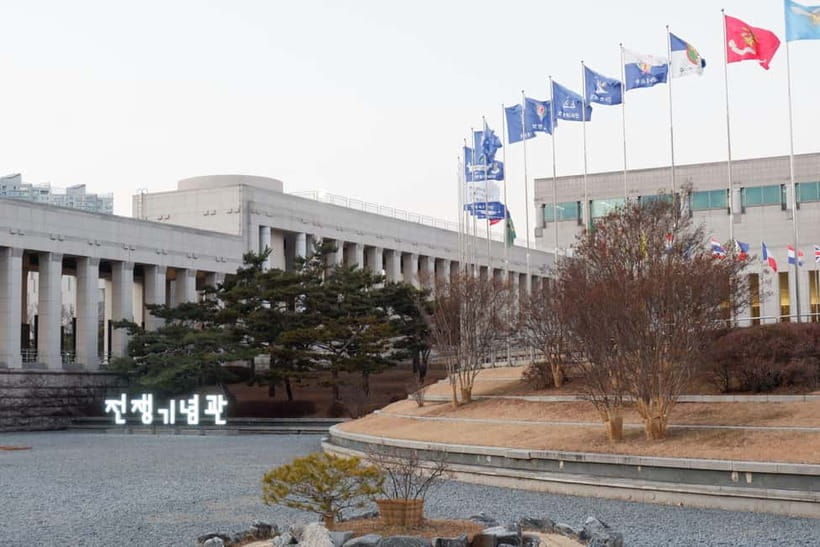
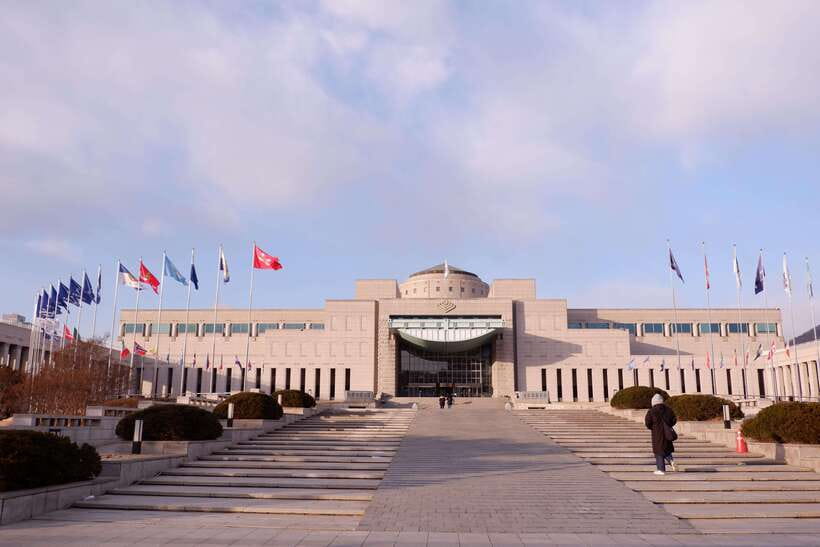
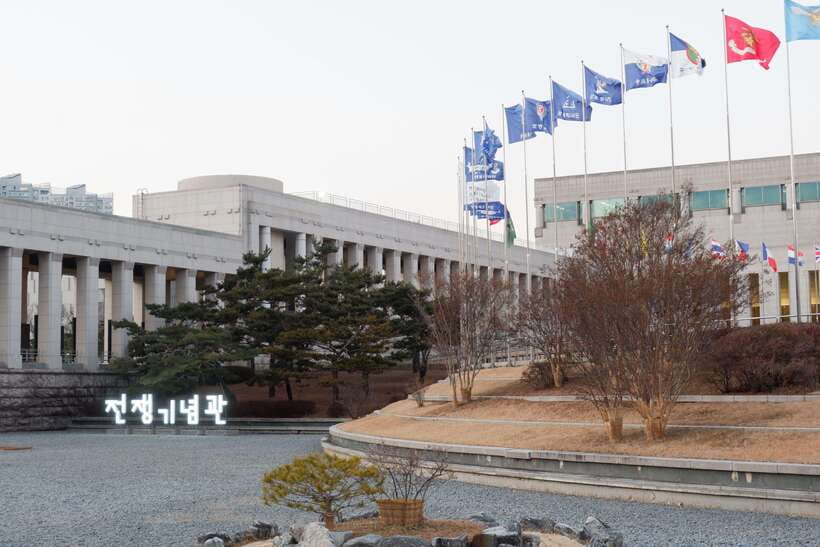
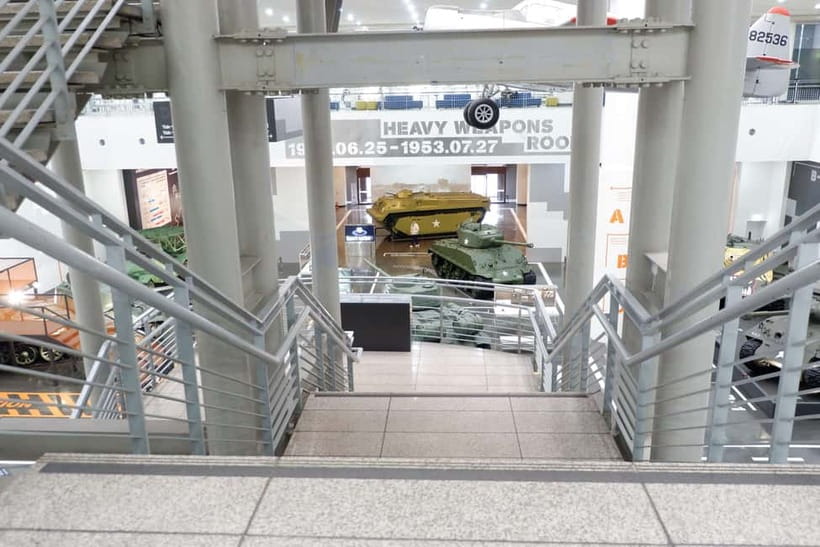
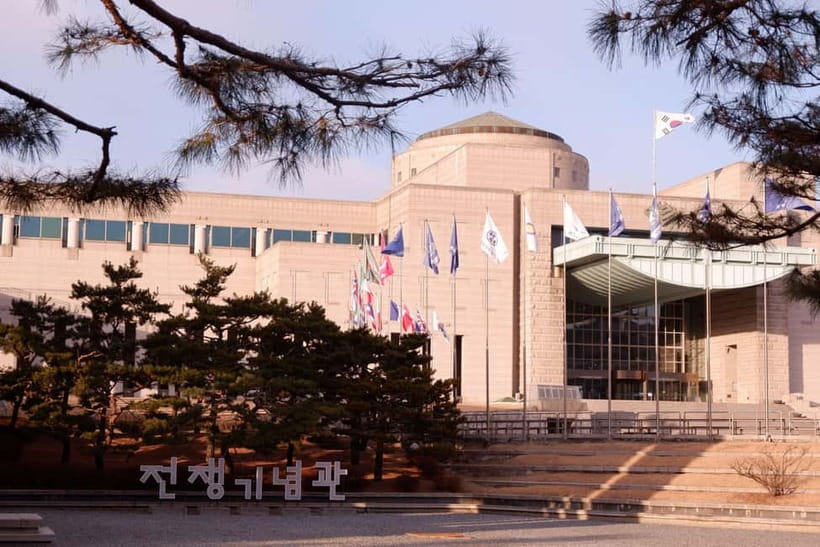
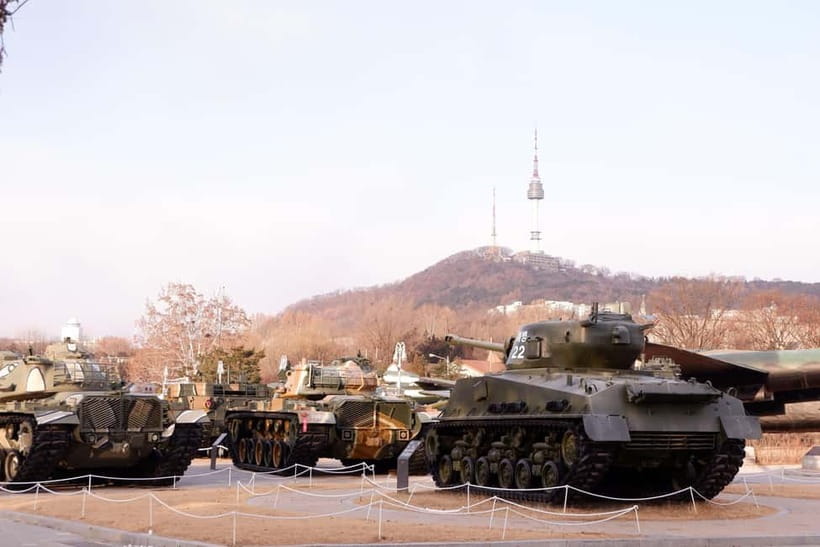
The War Memorial of Korea is the anchor stop, and it’s the kind of place where a guide really helps. The highlights aren’t subtle: you’ll see “exotic displays” with tanks and aircraft, which turns big events into visual objects you can actually process.
You’ll mainly spend time on the 3rd floor, including the United Nations Memorial Cemetery. This detail matters because it changes the emotional tone of the visit. The museum isn’t just about machines of war—it also frames the need to prevent war and talks about Korean War lessons and the hope for reunification between North and South Korea.
What I’d do during your visit is look at this as two stories running side by side:
- One is technical and visual (equipment, aircraft, how the conflict unfolded).
- The other is human and moral (why the memorial exists and what it’s asking you to remember).
If you’re the type who gets lost when museums give you too many options, the guide’s structure helps. Plus, having the UN Memorial Cemetery included keeps the stop from feeling like a one-note spectacle.
National Museum of Korean Contemporary History: 2012-era context for the late 1800s to today
After the war-focused setting, you’ll shift to the National Museum of Korean Contemporary History. It opened on December 26, 2012, and it’s organized into four permanent exhibition halls.
The key value here is time range. The museum covers South Korea from the late 19th century to the present, which is a big jump compared with a single-period museum. That means you can use it to build the “why” behind what you saw at the War Memorial—without having to research on your own between stops.
In practice, this museum works well if you treat it like a storyline rather than a checklist. You don’t need to read every label to get the main thread; instead, focus on what connects different eras:
- how Korea’s modern era formed,
- how social and political change reshaped everyday life,
- and how the country’s story continued into the present.
Because this is part of a half-day route, you won’t get unlimited time. A good strategy is to let the guide point you toward the key rooms and then use what you learn to make the later temple and park stops feel less disconnected.
Jogyesa Temple: chief temple of the Jogye order, with living spirituality
Jogyesa Temple is the chief temple of the Jogye order, which represents Korean Buddhism. What makes this stop more than a quick photo stop is the focus on community life and Bodhisattva spirit—ideas that translate into how people behave and how space is used.
The temple is also described as a historic site that has lived through turbulent modern history of Korea. So while you’re walking around, you’re not only seeing religious architecture. You’re seeing a place that has continued through periods that shook society.
Here’s how to make the most of the time: slow down your pace a bit at Jogyesa. Don’t rush between buildings like you’re sprinting to the next museum. Let the guide’s explanations frame what you’re seeing, and then watch for the small signs of everyday religious practice.
This stop plays a useful role in the day. After war and national history, you get something steadier: a living space with meaning in the present tense. That balance is one of the best reasons this itinerary feels well matched to an afternoon.
Tapgol Park: March 1 independence movement roots and the included lottery moment
Tapgol Park sits near Insadong, right in the center of Seoul. It’s famous because the March 1st Korean Independence Movement began here in 1919, calling for independence from Japanese rule. That’s not a background detail—it’s the whole reason the park matters.
Then comes the fun, slightly surreal pop-culture connection. The park is briefly featured in Squid Game Season 2 episode 1, in a scene called Bread and Lottery. In that moment, a recruiter passes out lottery tickets and bread, and then stamps down the remaining bread.
On this tour, you’ll actually experience the lottery element—it’s included. The value here isn’t just the entertainment factor. It’s the bridge between street-level storytelling and a real historical setting you’re standing in. You can enjoy the scene nod, but you’ll also leave with a clearer sense of why the location carries weight.
If you like pairing “what you saw on screen” with “what it meant in real life,” this stop is built for you. And since it’s a public park in central Seoul, it’s an easy place to breathe after museums. Just plan to be present: look at the park’s place in the city, then connect it back to the independence movement thread.
Price and value: why $42 can make sense for this mix
At $42 per person, this isn’t an expensive half-day when you account for what’s included. You get:
- a professional guide,
- entrance fees,
- transport by air-conditioned minivan,
- and the lottery experience.
So you’re paying for more than sights. You’re paying for explanation, access, and convenience. Seoul is smooth, but it still takes time to route yourself between sites—especially when one stop is a temple and another is a museum complex. The minivan removes that friction.
Where the price is especially good is the coverage. You’re seeing major history in two different museum styles, then contrasting that with Jogyesa Temple, then ending with a park tied to a major independence story. That spread is hard to assemble quickly on your own without spending extra time traveling and figuring out ticketing and timing.
Also, this is English-language guided. If you prefer not to do heavy translation work while you’re moving, the guide value adds up fast.
Who this half-day Seoul tour suits best (and who should reconsider)
This tour fits best if you want a structured afternoon with meaningful stops rather than a freeform day. It’s ideal for first-timers who want the big headline version of modern Korean memory, plus a grounding spiritual stop.
It’s also a good choice if you like pacing. The itinerary is compact enough to keep energy up, but the content is varied enough to feel like you actually did more than one thing.
Who should reconsider:
- Wheelchair users, since it’s stated as not suitable for that.
- Anyone who can’t handle moderate walking, since the day includes museum walking and outdoor temple/park time.
- Unaccompanied minors are not allowed, and children must be accompanied by an adult.
- If you’re hoping for alcohol-related plans, alcohol and drugs are not allowed.
One more small reality check: because the day runs rain or shine, pack layers and expect to move even in drizzle. A lot of the experience happens indoors, but not all of it.
Guides and group vibe: what you can expect from how people lead this tour
The tour’s success really depends on the guide’s ability to connect the dots. The style shown in past groups leans toward friendly, story-driven explanations, with an eye for keeping the pace comfortable.
Names that have come up include Dragon, Connie, Orota, Leo, Jang, and Melvin. Even when the group is mixed in age, guides are described as good at adjusting the flow and answering questions. If you’re the type who likes to ask why something matters, you’ll likely get a better day here than if you want silent sightseeing only.
Also, there’s an element of warmth in how people describe the van rides—helpful on cold or rough weather days, since you’ll spend time traveling between stops. That’s not a guarantee for everyone, but it matches the general setup: an organized half-day with transportation and a guide acting as the glue.
Should you book this Seoul War Memorial, Jogyesa Temple & Tapgol Park tour?
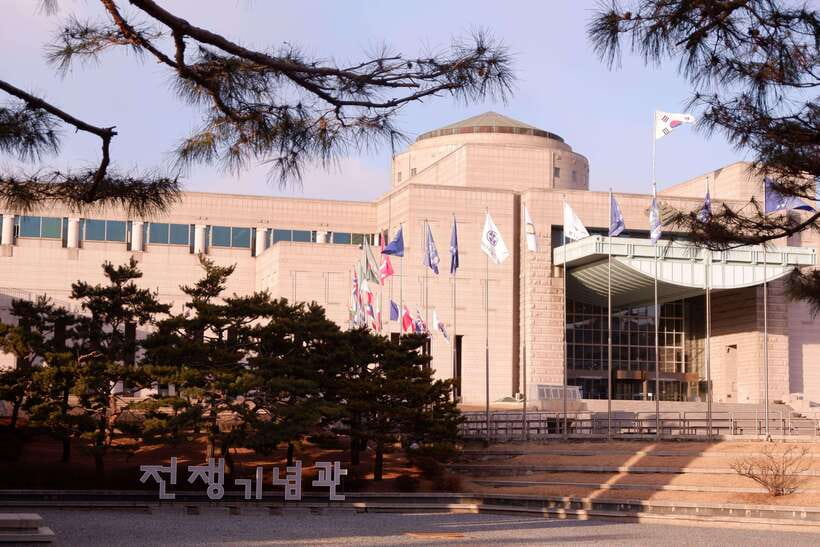
Book it if you want an afternoon that feels purposeful: war history with big visual exhibits, modern Korea context, a major living temple, and a park that links independence history to a Squid Game moment you’ll recognize.
Skip or rethink if you need heavy accessibility support, dislike moderate walking, or want a day built around food markets and shopping only. Also, if you were counting on hanbok photos, remember it’s not part of this experience.
If your goal is to leave Seoul with stronger context—why events happened and how places keep memory alive—this is a solid use of time for the money.
FAQ
What is included in the afternoon tour?
Entrance fees, a professional guide, transport by air-conditioned minivan, and the lottery experience are included. Food and drinks are not included.
Where do we meet for the afternoon option?
You meet at the lobby of the Koreana Hotel’s office building.
Where does the tour end?
The afternoon tour includes drop-off at Myeongdong Cathedral.
What stops are included?
The tour includes the War Memorial of Korea (mainly the 3rd floor United Nations Memorial Cemetery), the National Museum of Korean Contemporary History, Jogyesa Temple, and Tapgol Park.
Is lunch included?
No. Food and drinks are not included.
Does the tour run in bad weather?
Yes. The tour takes place rain or shine.
Is hanbok provided?
No. Hanbok is not available.
Is this tour suitable for wheelchair users?
No, it is not suitable for wheelchair users.
What should I bring?
Wear comfortable shoes, since there is moderate walking.
Is alcohol allowed during the tour?
No. Alcohol and drugs are not allowed.
More Tours in Seoul
- Best DMZ Tour Korea from Seoul (Red Suspension Bridge Optional)★ 5.0 · 41,422 reviews
- DMZ Tour: 3rd Tunnel, Option(Suspension Bridge, Boat) from Seoul★ 5.0 · 21,373 reviews
- DMZ tour south Korea from Seoul (NK experience hall, defector)★ 5.0 · 20,599 reviews
- Seoul: DMZ Tour with Optional Suspension Bridge★ 4.8 · 5,277 reviews
- Seoul: DMZ The 3rd Tunnel and Suspension Bridge Tour★ 5.0 · 4,656 reviews
More Tour Reviews in Seoul
- Best DMZ Tour Korea from Seoul (Red Suspension Bridge Optional)★ 5.0 · 41,422 reviews
- DMZ Tour: 3rd Tunnel, Option(Suspension Bridge, Boat) from Seoul★ 5.0 · 21,373 reviews
- DMZ tour south Korea from Seoul (NK experience hall, defector)★ 5.0 · 20,599 reviews
- Seoul: DMZ Tour with Optional Suspension Bridge★ 4.8 · 5,277 reviews
- Seoul: DMZ The 3rd Tunnel and Suspension Bridge Tour★ 5.0 · 4,656 reviews
More Temple Hours Near Seoul
- Seoul: Palace, Temple and Market Guided Foodie Tour at Night★ 4.9 · 750 reviews
- Seoul: Mt Seorak + Naksansa Temple or Nami Island Group Tour★ 4.7 · 422 reviews
- Best Things to Do – Half Day Seoul Trip (Seoul Palace & Temple)★ 5.0 · 190 reviews
- Mount Seorak and Naksansa Temple One Day Tour from Seoul★ 4.5 · 167 reviews
- Day Tour of Suwon Hwaseong Fortress Starfield Waujeongsa Temple★ 5.0 · 61 reviews
Just added to Exploring Seoul

Temples & Templestay, compared.
 ★ 4.9Palace, Temple and Market Guided Foodie Tour at NightFrom $60750 reviews
 ★ 4.7Mt Seorak + Naksansa Temple or Nami Island Group TourFrom $68422 reviews
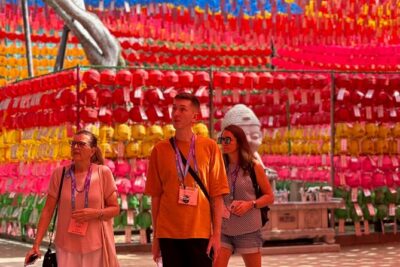 ★ 5.0Best Things to Do – Half Day Seoul Trip (Seoul Palace & Temple)From $38190 reviews
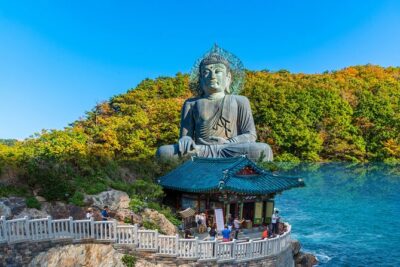 ★ 4.5Mount Seorak and Naksansa Temple One Day Tour from SeoulFrom $71167 reviews
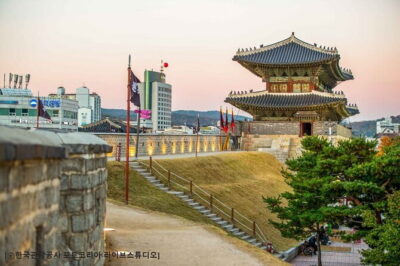 ★ 5.0Day Tour of Suwon Hwaseong Fortress Starfield Waujeongsa TempleFrom $5461 reviews
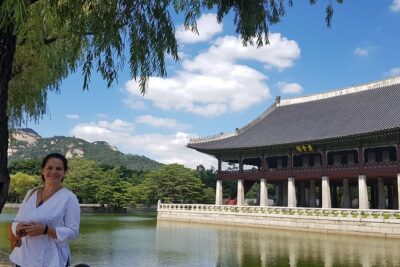 ★ 5.0Half day Morning Seoul City Tour(Temple & Gyeongbok Palace)From $3254 reviews
 ★ 4.5Korean Palace and Temple Tour in Seoul: Gyeongbokgung Palace and Jogyesa TempleFrom $4038 reviews
 ★ 4.6Vegan Temple Food Class, Jogyesa & Changdeokgung TourFrom $7334 reviews
Browse the lists this tour appears in