

Reviewed · DMZ DAY TOURS
Private Tour: Talk show with N.K. Defector and Short Hiking
Seoul can feel far from the DMZ. This private, day-long tour connects major viewpoints with a respectful talk-show style meeting with a North Korean defector. I especially love the Bugak Skyway viewpoints and the way the day stays personal in a private air-conditioned vehicle.
The itinerary also builds in a lot of face-to-face context: you get border-area perspectives from observation spots, then you hear real-life answers directly from Jae-Pyoung Seo. A small consideration: the short hiking portion is weather-dependent, so the guide may adjust what you do on the day.
With pickup at 8:00am and complimentary admission to stops, you’ll spend your energy on seeing and listening, not lining up or tracking tickets. It runs about 8 hours total, and the tour is designed for your group only.
In This Review
- Key things to know before you go
- A private Seoul day that links border views with real answers
- Price, time, and what you’re really paying for
- Morning start: Blue House pass-by and quick orientation
- Bugak Skyway and the short hike for battle-sight perspective
- Odusan Unification Tower: the observatory built for seeing northward life
- War Memorial of Korea: indoor-outdoor Korean War storytelling
- Meeting North Korean defector Jae-Pyoung Seo in a coffee shop
- What the DMZ-focused guide actually adds
- Lunch and comfort: the unglamorous stuff that makes the day work
- Who should book this tour, and who might not
- Should you book this private talk-show style DMZ viewpoint tour?
- FAQ
- What is the duration of the tour?
- What time does the tour start?
- Is this a private tour?
- Do you get pickup?
- What does the price include?
- Is admission included for all stops?
- Who do you meet during the tour?
- What are the main stops on the itinerary?
- Is there a hiking component?
- Can you cancel for a refund?
Key things to know before you go
- Private vehicle pickup keeps the whole route comfortable and controlled
- Bugak Skyway + short hiking adds a moving, on-the-ground perspective to the views
- Odusan Unification Tower’s observatory angle focuses on seeing North Korean farmland and civilians
- War Memorial of Korea’s indoor and outdoor exhibits give you the Korean War timeline in two different moods
- Talk-show style Q&A with Jae-Pyoung Seo is built for respectful questions, not just photos
Other ways to reach the DMZ and the border from Seoul
- Best DMZ Tour Korea from Seoul (Red Suspension Bridge Optional)★ 5.0 · 41,422 reviews
- DMZ Tour: 3rd Tunnel, Option(Suspension Bridge, Boat) from Seoul★ 5.0 · 21,373 reviews
- DMZ tour south Korea from Seoul (NK experience hall, defector)★ 5.0 · 20,599 reviews
- Seoul: DMZ Tour with Optional Suspension Bridge★ 4.8 · 5,277 reviews
A private Seoul day that links border views with real answers

If you like your travel to connect facts with human stories, this is a smart format. You spend the morning and early afternoon at places where you can look toward the Korean peninsula from strategic observation points. Then you shift from “seeing” to “understanding,” with a meeting where the focus is on what life and history look like from inside North Korea’s reality.
What makes it work is the pacing. It’s not just a drive-by tour. You get time at each stop for orientation and explanation, including admission that’s handled for you. And because it’s private, your guide can shape the day around what your group is actually curious about.
Also, there’s a subtle but important value here: you don’t have to assemble your own self-guided version of a politically sensitive day. You’re following a planned route from Seoul, with a DMZ-specialized tour guide. That matters when you want context that doesn’t feel rushed.
Price, time, and what you’re really paying for
The price is $180 per person for an approximately 8-hour private tour. On paper, that can look pricey compared with a standard group bus. But the inclusions change the math: you’re getting lunch, an air-conditioned vehicle, admission tickets to the visited attractions, and a DMZ-specialized tour guide. You’re also getting the most labor-intensive part of this kind of day—planning a tight route that hits specific sites—without doing the logistics yourself.
In practical terms, you’re paying for four things:
- Time (a full morning start at 8:00am and a long route planned through the day)
- Access to structured viewpoints (Bugak Skyway, Odusan Unification Tower, and War Memorial)
- Guided interpretation (especially around border history and what you can and can’t see)
- A human conversation (the meeting with defector Jae-Pyoung Seo)
The possible downside is simply intensity. It’s a full day, and it includes a short hike. If you’re the type who prefers slow mornings and long museum wandering without a schedule, you may find it a bit full.
Morning start: Blue House pass-by and quick orientation
Early in the tour, you’ll pass by the presidential Blue House. From the vehicle, you’ll also see the main building where the current South Korean president stays. This is one of those stops that doesn’t promise dramatic walking time. Instead, it helps you get a sense of where you are in Seoul’s political geography before you shift toward the border area.
Why that matters: it’s a reminder that Korea’s modern story is shaped by government decisions, not just distant history. When you then head to observation points later, you’ll likely understand why these viewing locations carry so much weight.
It’s also a good warm-up for the day’s tone. You’re being guided through high-context sites, and the guide’s job is partly to keep the narrative clear—what you’re seeing, what the site is known for, and how it connects to the next stop.
More guide-to-yourself private days in Seoul


Bugak Skyway and the short hike for battle-sight perspective
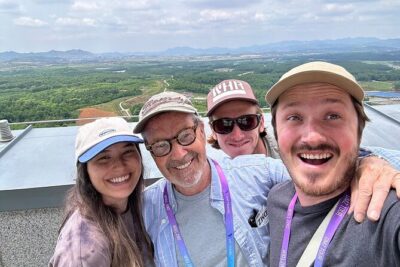
Bugak Skyway is where the day gives you that immediate “wow” view: Bukhansan Mountain and the Seoul city panorama from above. The tour uses this view as more than sightseeing. You’ll get an idea of a North Korean spy route from here, which gives the landscape a purpose.
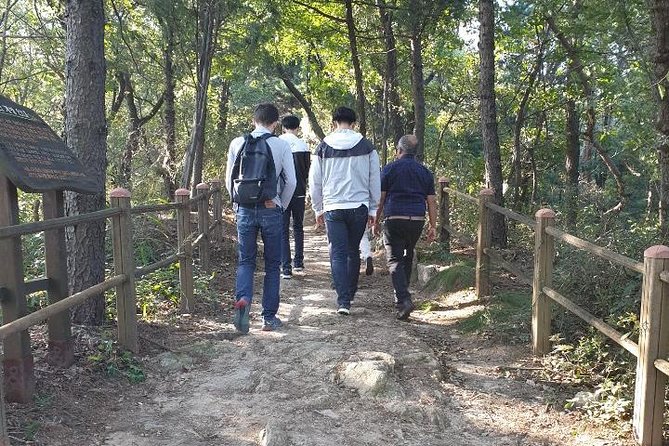
Then you head into a short hike to Bugak Mountain to see what are described as battle sights. That’s the big difference between watching a view from a road and actually moving through the terrain. Even if the hike is short, it changes your body position and your sense of scale. You get to stand in a place that matches how military observers might have thought about lines of sight.
A useful consideration: bring the kind of footwear you can trust on uneven paths. And because the hike is weather-dependent, dress in layers. If conditions are harsh, the guide may adjust the plan to make it safer and more comfortable.
Odusan Unification Tower: the observatory built for seeing northward life
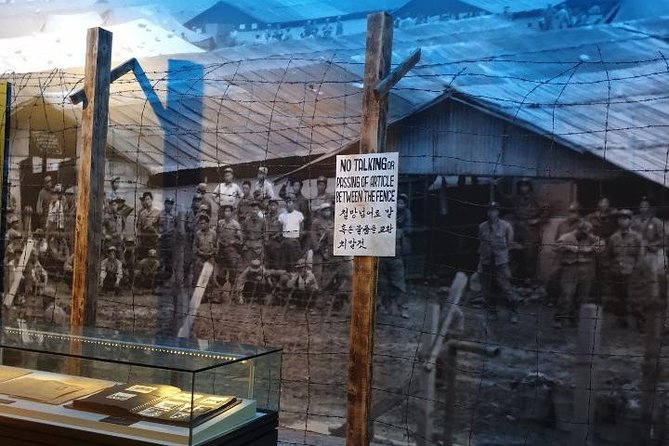
Odusan Unification Tower is presented as the only observatory where you can see North Korean farmland and civilians. That specific promise is what turns it into a must-stop if you’re interested in the everyday face of the North—not just the politics.
This stop has two distinct learning layers. First, there’s a small exhibition hall on the first floor that explains modern history of Korea. Then, on the third floor, you get the observatory perspective itself. The structure matters because you don’t jump straight into looking. You get context, then you connect that context to what you can actually see from the tower.
Here’s the practical payoff for you: at most border-related viewpoints, people focus on the distance. Odusan is different because it’s tied to a story about daily life. It’s also where a guide can help you read the scene without turning it into guesswork.
The main drawback is that observation isn’t always dramatic in every weather condition. You’re still doing your best with what the site and visibility allow. If the sky or air conditions are poor, the experience can feel more educational than visual. That said, the exhibition content still gives you something solid.
War Memorial of Korea: indoor-outdoor Korean War storytelling
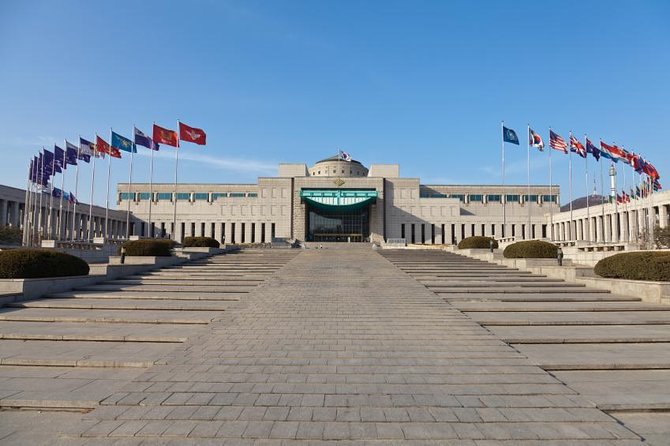
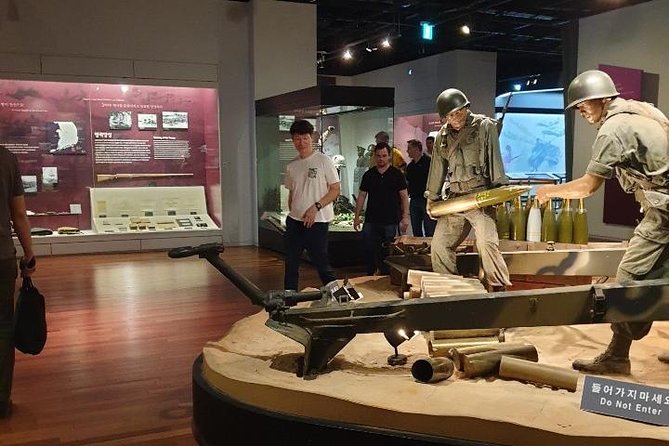
After the border-area viewpoints, you shift to the War Memorial of Korea, which is designed to help you experience the Korean War from A to Z. You’ll move through both indoor and outdoor sections, which changes how the exhibits land.
Indoors, you generally get concentrated historical storytelling—objects, displays, and information. Outdoors, the scale tends to broaden the feeling. Even if you don’t memorize every detail, the combination can help you build a more coherent picture of how the war unfolded and why it shaped the peninsula’s long-term reality.
Also, you get a longer window here than at the other stops—about three hours. That longer time is valuable because the memorial can’t be rushed well. If you only skim, you miss the moments where the exhibits clarify connections between events.
Finally, this stop sets up the transition to the talk-show meeting. You’re not just going from one place to another. You’re moving from “history and artifacts” into “a person who carries that history personally.”
Meeting North Korean defector Jae-Pyoung Seo in a coffee shop
The highlight for many people is the meeting with the North Korean defector Jae-Pyoung Seo in a coffee shop setting. The format is respectful and focused: Seo shares their story and then answers your questions.
This part can be powerful for two reasons. First, you get direct context that no museum label can provide. Second, the Q&A structure matters. It’s not just a speech where you sit back. The goal is interaction, and it helps your questions make the story more relevant to what you care about.
If you go, plan your questions lightly ahead of time. You don’t need to write a script, but deciding what you truly want to understand will help you ask in a way that’s thoughtful rather than scattered. Topics that often feel useful are about daily life, education, and how people navigate information—anything that connects to what you saw during the day.
One more practical point: coffee shop settings are usually informal, and that can make it easier to have a real conversation. Still, keep the tone respectful and remember this is not a staged performance for your entertainment.
What the DMZ-focused guide actually adds
A DMZ-specialized tour guide is part of the package, and you feel the difference in how the day is interpreted. This tour isn’t only about reaching viewpoints. It’s about understanding what you’re looking at.
In at least one case, the guide named Surag picks you up promptly and is described as very informative on what the group asks. Surag also adjusted the itinerary due to weather, choosing what worked best that day. That’s a real travel advantage: it’s easy for tours to stick to a plan even when conditions change. Here, the day is built to handle practical realities.
You’ll also likely appreciate the way admissions are handled. Complimentary entry to visited attractions means you avoid the small friction that can steal time and focus on a long day.
Lunch and comfort: the unglamorous stuff that makes the day work
Lunch is included, and that’s not a minor detail. When you’re doing an 8-hour route with multiple stops, having food handled helps you stay calm and on time. You don’t have to hunt for a meal between viewpoints or scramble for something quick near a specific site.
The private air-conditioned vehicle also matters. Even in comfortable seasons, you can end up cold or tired if your day is too open-ended. This tour is structured, with pickup at 8:00am, and the vehicle helps you stay regulated so you can concentrate on the conversation and the exhibits.
Another practical value: mobile tickets and group discounts are part of the features. Mobile entry tends to be faster, and discounts can matter if your group is large enough to qualify.
Who should book this tour, and who might not
This is best for you if you want:
- Guided context at DMZ-adjacent viewpoints, not just photos
- A private day with time for questions
- A balance of sites: observation towers, a hike, and a major memorial
- A respectful meeting with a real defector story, centered on Q&A
It may not be ideal if you:
- Hate hikes, even short ones, or dislike any uncertainty tied to weather
- Want a long, slow museum day with no movement
- Prefer informal sightseeing without structured stop times
If you’re traveling in a smaller group and want your questions answered directly, this format is hard to beat.
Should you book this private talk-show style DMZ viewpoint tour?
I’d book it if you care about understanding the Korean peninsula beyond headlines. The mix of observation points, War Memorial context, and a conversation with Jae-Pyoung Seo is a rare combination. You’re not only collecting scenery—you’re assembling a clearer mental picture of how history and daily life connect.
Book it sooner if you want a private schedule starting at 8:00am, because these private slots can go fast. And when you do, plan for a long day and bring gear for changing conditions.
If you’re on the fence, think about your goal. If your goal is a photo-heavy tour, this may feel too interpretive. If your goal is respectful, structured understanding with real questions, you’ll likely find it worth the $180.
FAQ
What is the duration of the tour?
The tour lasts about 8 hours.
What time does the tour start?
The start time is 8:00am.
Is this a private tour?
Yes. It’s a private tour/activity where only your group participates.
Do you get pickup?
Pickup is offered.
What does the price include?
Lunch, an air-conditioned vehicle, a DMZ specialized tour guide, and complimentary admission to visited attractions are included.
Is admission included for all stops?
Yes, admission tickets are included for Bugak Skyway and Odusan Unification Tower, and War Memorial of Korea admission is listed as free.
Who do you meet during the tour?
You meet North Korean defector Jae-Pyoung Seo in a coffee shop after the War Memorial stop.
What are the main stops on the itinerary?
You pass by the presidential Blue House area, visit Bugak Skyway (with a short hike), go to Odusan Unification Tower, then spend time at the War Memorial of Korea.
Is there a hiking component?
Yes, there is a short hiking portion to Bugak Mountain after Bugak Skyway.
Can you cancel for a refund?
Yes. You can cancel up to 24 hours in advance for a full refund.
More Tours in Seoul
- Best DMZ Tour Korea from Seoul (Red Suspension Bridge Optional)★ 5.0 · 41,422 reviews
- DMZ Tour: 3rd Tunnel, Option(Suspension Bridge, Boat) from Seoul★ 5.0 · 21,373 reviews
- DMZ tour south Korea from Seoul (NK experience hall, defector)★ 5.0 · 20,599 reviews
- Seoul: DMZ Tour with Optional Suspension Bridge★ 4.8 · 5,277 reviews
- Seoul: DMZ The 3rd Tunnel and Suspension Bridge Tour★ 5.0 · 4,656 reviews
More Tour Reviews in Seoul
- Best DMZ Tour Korea from Seoul (Red Suspension Bridge Optional)★ 5.0 · 41,422 reviews
- DMZ Tour: 3rd Tunnel, Option(Suspension Bridge, Boat) from Seoul★ 5.0 · 21,373 reviews
- DMZ tour south Korea from Seoul (NK experience hall, defector)★ 5.0 · 20,599 reviews
- Seoul: DMZ Tour with Optional Suspension Bridge★ 4.8 · 5,277 reviews
- Seoul: DMZ The 3rd Tunnel and Suspension Bridge Tour★ 5.0 · 4,656 reviews
The DMZ & the Border, More Routes
- Best DMZ Tour Korea from Seoul (Red Suspension Bridge Optional)★ 5.0 · 41,422 reviews
- DMZ Tour: 3rd Tunnel, Option(Suspension Bridge, Boat) from Seoul★ 5.0 · 21,373 reviews
- DMZ tour south Korea from Seoul (NK experience hall, defector)★ 5.0 · 20,599 reviews
- Seoul: DMZ Tour with Optional Suspension Bridge★ 4.8 · 5,277 reviews
- Seoul: DMZ The 3rd Tunnel and Suspension Bridge Tour★ 5.0 · 4,656 reviews
Just added to Exploring Seoul


DMZ Day Tours, compared.
 ★ 5.0DMZ Tour: 3rd Tunnel, Option(Suspension Bridge, Boat) from SeoulFrom $3521,373 reviews
 ★ 5.0DMZ tour south Korea from Seoul (NK experience hall, defector)From $2620,599 reviews
 ★ 4.8DMZ Tour with Optional Suspension BridgeFrom $455,277 reviews
 ★ 5.0DMZ The 3rd Tunnel and Suspension Bridge TourFrom $654,656 reviews
 ★ 5.0Signature DMZ Tour: Exclusive Defector Talk & Suspension BridgeFrom $274,459 reviews
 ★ 5.0Thrilling Korean DMZ 3rd Tunnel Tour from Seoul + Red Bridge RushFrom $353,097 reviews
 ★ 4.9DMZ Tour & Suspension Bridge (Option English/Spanish)From $352,628 reviews
 ★ 5.0DMZ Past and Present: Korean Demilitarized Zone Tour from SeoulFrom $372,481 reviews
Browse the lists this tour appears in