
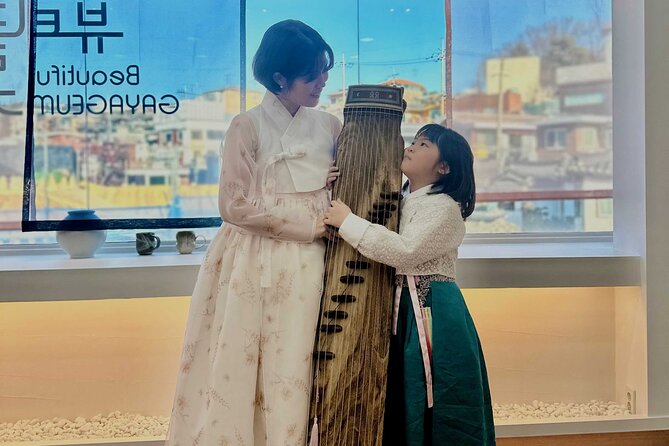
Reviewed · BUKCHON HANOK VILLAGE TOURS
Play Gayageum in Hanbok Cultural Experience in Bukchon
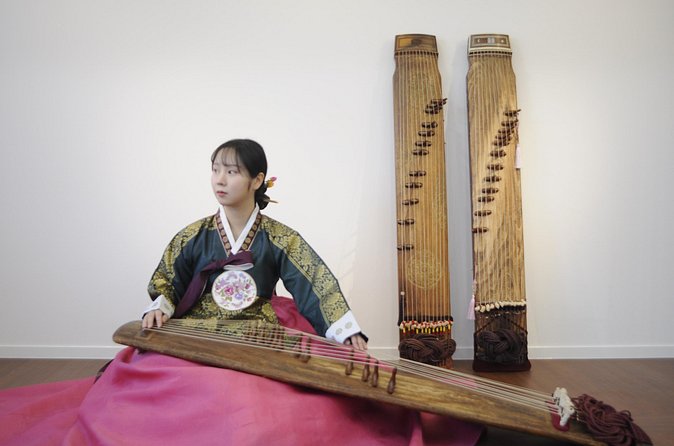
A zither lesson in hanbok is surprisingly moving. This hands-on gayageum experience in Bukchon pairs Korean traditional music with a classic hanok setting, and it even hands you a photo keepsake to remember it. I love that the lesson is built for first-timers, and I also love the small performance moment that makes you feel like you truly took part, not just watched.
Two things really land here: you’re guided step-by-step with easy sheet music, and you’ll leave with a printed photo from your time as a Korean musician. One consideration: it’s about 1 hour 20 minutes, so it’s not a long study session—if you want deep technique training, you may still want practice afterward on your own.
In This Review
- Key things that make this Bukchon gayageum class worth your time
- Bukchon’s hanok setting changes how you learn
- What you actually do in the 80-minute one-day lesson
- 1) Put on your hanbok and get oriented
- 2) Learn the basics using easy sheet music
- 3) Practice in a hanok-style music hall
- 4) Perform during the session
- 5) Photo session and a printed keepsake
- The gayageum in plain terms: what you learn fast
- Instruction style: English support with subtitle backup
- Photo keepsake: why the printed version is a smart touch
- Price and value: is $72.19 worth it?
- Who this gayageum lesson is best for
- Timing, weather, and how to plan around it
- Where to meet (and why it matters)
- Quick “should you book” verdict
- FAQ
- Where is the meeting point?
- How long does the experience take?
- What is the price per person?
- Is this experience private?
- Do I need experience playing an instrument?
- What language support is provided?
- What’s included with the lesson?
- What kind of ticket do I receive?
- Is the activity easy to get to using public transportation?
- Is there any weather requirement?
- Do they allow service animals?
Key things that make this Bukchon gayageum class worth your time
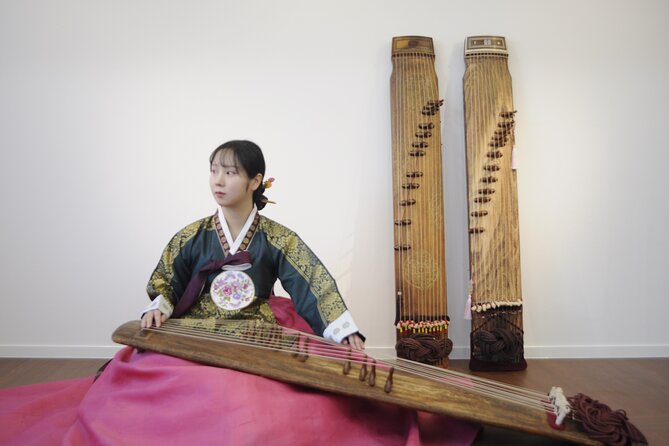
- Hanbok is part of the experience, not a quick photo prop
- Easy sheet music for beginners, so you can actually play during the lesson
- English instruction plus Japanese and Traditional Chinese subtitles
- A calm hanok-style music hall setting, which helps you focus
- A photo session and printed keepsake you can take home immediately
- Private format for your group, so the pace stays comfortable
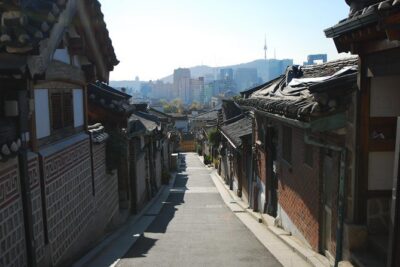
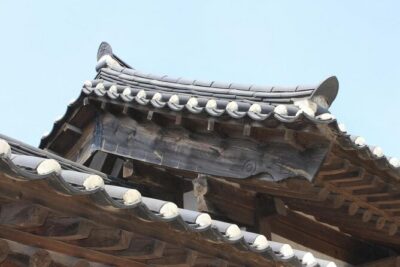
More hanok lanes and rooftops around Bukchon
- Seoul: Gyeongbok Palace, Bukchon Village, and Gwangjang Tour★ 4.9 · 2,321 reviews
- Seoul City Sightseeing Tour Including Gyeongbokgung Palace, N Seoul Tower, and Namsangol Hanok Village★ 5.0 · 1,423 reviews
- Seoul: Gyeongbok Palace, Bukchon Village, and Gwangjang Tour★ 5.0 · 1,044 reviews
- Seoul: Gyeongbok Palace and Bukchon Hanok Walking Tour★ 4.8 · 157 reviews
Bukchon’s hanok setting changes how you learn
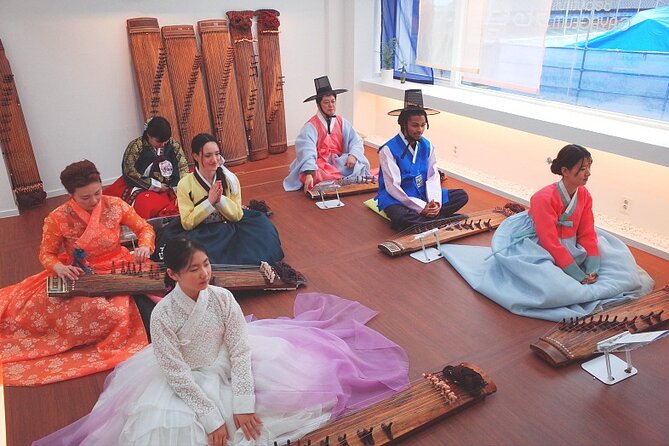
This activity takes place in Bukchon, where the old Seoul vibe actually helps the lesson. The gayageum is a traditional Korean 12-string zither with more than 1,500 years of history, but the way you learn it here feels modern and approachable. You’re not just learning facts—you’re producing notes with your hands, in a space designed to feel quiet and thoughtful.
Also, the location matters for your day. The experience is described as being just steps from Gyeongbokgung and Samcheong-dong, which is the kind of positioning that makes it easy to pair with sightseeing. If you’re already planning to walk near Gyeongbokgung, you can turn your day into a loop: palace area, Bukchon neighborhood streets, then a short cultural activity that gives you a break from walking.
Practical note: you start and finish at the same place, so you’re not left juggling directions at the end. That’s a small thing, but it lowers travel stress.
What you actually do in the 80-minute one-day lesson
The main program described is the Gayageum One-Day Lesson, running about 80 minutes. Here’s the typical flow, in the order it matters most to you as a participant.
1) Put on your hanbok and get oriented
You’ll meet at Beautiful Gayageum (3rd floor) and begin in the lesson space. Then comes the hanbok step. Wearing hanbok isn’t just a photo moment here—it sets the tone. It also signals that you’re entering a cultural setting with etiquette and attention, which makes your instructor’s guidance easier to follow.
If you’re nervous about trying something new, wearing the hanbok can help you settle in. It frames the experience as something ceremonial and friendly, not technical or intimidating.
Dress up again for another palace photo session



2) Learn the basics using easy sheet music
You get beginner-friendly sheet music. This is huge value for first-timers. Many music experiences fail because they assume you already know how to read music or place your hands confidently. Here, the lesson is designed so you can work through the song without needing a background.
The format is guided, and the goal is not perfection. It’s getting you through the right motions and sounds. That’s why this kind of short class works: you finish with a real outcome.
3) Practice in a hanok-style music hall
You’ll work in a music hall-style setting described as hanok-style and serene. Learning in a quieter room helps you hear what you’re doing. With instruments like the gayageum, you’re constantly adjusting: where your fingers land, how gently or firmly you pluck, and how cleanly notes ring.
A private group format also helps here. Your group size isn’t mixing with strangers. That makes it easier to ask questions and keep the class from feeling rushed.
4) Perform during the session
After instruction and practice, there’s a performance moment as part of the experience. You don’t need to be a musician to get something out of this. In fact, the performance element is what turns a class into a memory.
One review highlighted how the instructor helped the participant manage nerves and still succeed despite having no prior instrument experience. That’s exactly what you want from a good teacher: steady guidance that makes the first attempt feel doable.
5) Photo session and a printed keepsake
After you play, you’ll do a photo session. Then you receive a printed keepsake of your experience. This is one of my favorite parts because it turns the class into something tangible.
Even if you’re the type who never prints photos at home, you’ll likely appreciate this one. It’s linked to the moment you actually learned and performed, not just a random snapshot on a Seoul street.
The gayageum in plain terms: what you learn fast
The gayageum is a 12-string instrument, and the key word is 12. You’ll quickly understand that it’s not a guitar where you can rely on chord shapes. You’re working with multiple strings and learning a pattern that matches a melody from the sheet music.
Because you’re using easy sheet music, you’ll focus on the fundamentals that let you play right away:
- hand placement and how to move smoothly
- the timing of plucking
- how the melody translates to string-by-string movement
This class is best if you want that first meaningful contact. You leave with awareness of how the instrument behaves, and that alone makes it easier to enjoy traditional performances in Korea afterward. You’ll know what you’re seeing, and that changes how you experience concerts and cultural shows.
Instruction style: English support with subtitle backup
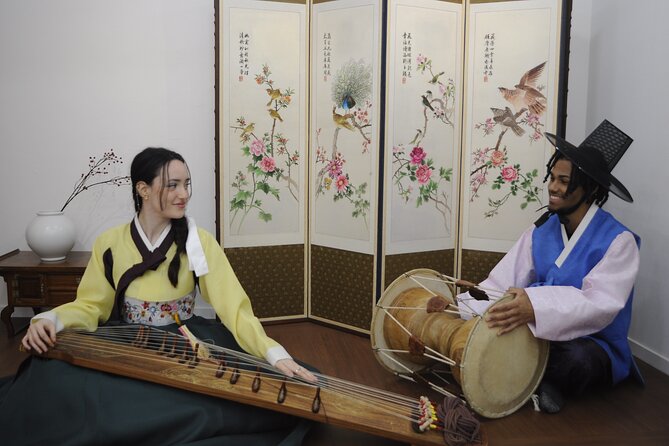
One thing I really like is the language setup. The experience provides English instruction, and it also includes Japanese and Traditional Chinese subtitles.
That means you’re not stuck if your Korean is limited. You can follow verbally, then check with subtitles to confirm tricky terms or steps. In music teaching, tiny details matter—like where to position your hand or what to do next—so having support in more than one format is a practical advantage.
A gentle warning: subtitles are there as backup, but they’re not a substitute for listening. If you want the best result, try to keep your attention on the instructor’s demonstrations as much as possible.
Photo keepsake: why the printed version is a smart touch
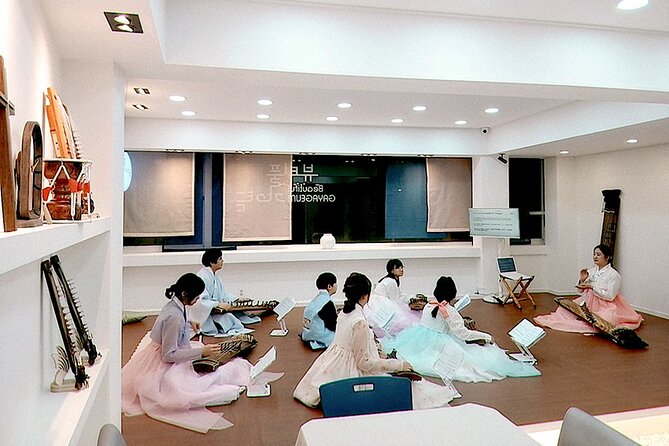
Lots of travel activities give you photos, but printed keepsakes aren’t always included. Here, the class includes both a photo session and a printed photo related to your experience.
That matters because:
- you get something physical right away, which feels special
- it’s tied to your participation, not just the venue
- it’s an easy souvenir that won’t turn into a phone-only memory
If you’re traveling light, this is also an advantage. A printed photo doesn’t add clutter like bulky souvenirs. And if you’re traveling with family or a partner, having one shared keepsake can make the class feel like a real event.
Price and value: is $72.19 worth it?
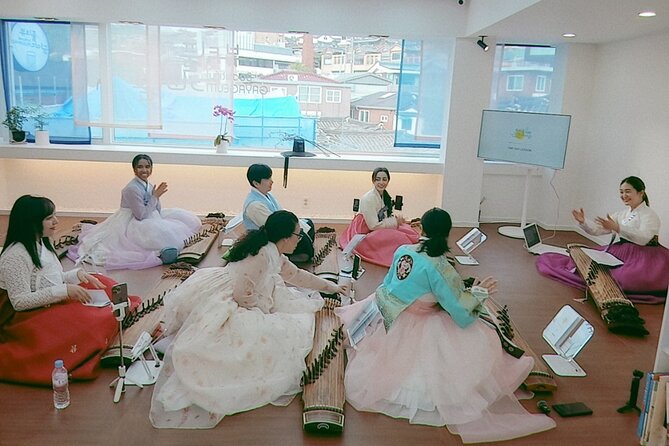
At $72.19 per person for about 80 minutes, you’re paying for more than instruction. You’re paying for:
- the hanbok included in the lesson
- guided learning with beginner-friendly sheet music
- time in a dedicated hanok-style music hall
- the photo session
- a printed keepsake
- a private format for your group
In Seoul, many cultural classes charge similarly or more, but often the included items are minimal. Here, the package is pretty complete. If you want a souvenir that doesn’t feel like a random purchase, the photo print helps justify the cost.
The biggest value test is simple: will you actually play and perform? This is built for beginners, so you shouldn’t leave feeling like you only watched someone else. If you’re willing to participate, this becomes good value quickly.
Who this gayageum lesson is best for
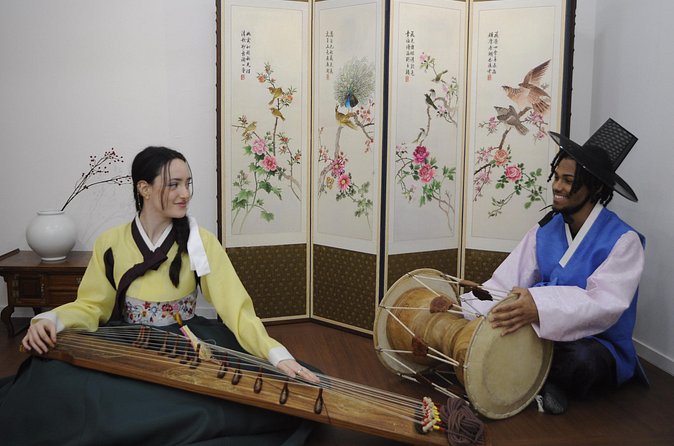
This experience is described as ideal for solo travelers, couples, and families. That checks out because:
- beginners can participate with easy sheet music
- the instructor-led format reduces the learning curve
- the photo and performance moment give couples and families a shared highlight
It also works well for travelers who want something more personal than typical museum time. You’re making sound, not just looking.
If you’re a serious musician seeking advanced technique, this may feel too short. But if your goal is cultural connection and a genuine try-yourself moment, this is a strong fit.
Timing, weather, and how to plan around it
The lesson is about 1 hour 20 minutes, and it ends back at the meeting point. That makes it easy to schedule. You can pair it with a walk through Bukchon and then continue toward the Gyeongbokgung area, or do it earlier so the rest of your day is lighter.
One practical detail: the experience requires good weather. That sounds odd for something indoors, but it’s part of the operating rules you should respect. Plan with a little flexibility on the day, especially if your schedule is tight.
Also, bookings are commonly made about 6 days in advance on average. If you’re going during peak travel seasons or on a weekend, I’d book sooner so you don’t end up choosing a time that doesn’t fit your sightseeing flow.
Where to meet (and why it matters)
Meet at Beautiful Gayageum, 3rd floor, at 43 Bukchon-ro 5ga-gil in Jongno District. The tour starts there and ends there.
Two tips for a smoother arrival:
- Go a bit early and give yourself time to find the right floor.
- Don’t treat this like a street-corner performance. You’re visiting a specific venue, so check the address carefully.
If you’re using public transportation, it’s described as being near transit. That’s helpful in Bukchon, where walking routes can shift depending on which streets are open and how you’re routing your day.
Quick “should you book” verdict
I recommend booking this gayageum in hanbok lesson if you want a hands-on cultural activity that actually produces an outcome: you play, you perform, and you take home a printed keepsake. The beginner-friendly sheet music and English instruction with subtitle backup make it low-stress, even if you’ve never touched an instrument before.
Skip it or think twice if you only want a passive cultural stop, or if you’re expecting a long, intensive music program. This experience is short on purpose, and the payoff is the first real performance moment plus a beautiful setting in Bukchon.
If your ideal Seoul day includes walking, a calm break, and a memory you can hold in your hands, this is a strong choice.
FAQ
Where is the meeting point?
You’ll meet at Beautiful Gayageum, 3rd floor, 43 Bukchon-ro 5ga-gil, Jongno District, Seoul.
How long does the experience take?
The Gayageum one-day lesson runs about 1 hour 20 minutes.
What is the price per person?
The price is $72.19 per person.
Is this experience private?
Yes. Only your group participates.
Do I need experience playing an instrument?
No. The lesson uses easy, beginner-friendly sheet music and is designed for people who have never played an instrument.
What language support is provided?
English instruction is provided, with Japanese and Traditional Chinese subtitles.
What’s included with the lesson?
Hanbok and the photo print are included in the music lesson, along with the photo session.
What kind of ticket do I receive?
You get a mobile ticket.
Is the activity easy to get to using public transportation?
It’s described as being near public transportation.
Is there any weather requirement?
Yes, the experience requires good weather. If it’s canceled due to poor weather, you’ll be offered a different date or a full refund.
Do they allow service animals?
Yes, service animals are allowed.
More Tour Reviews in Seoul
- Best DMZ Tour Korea from Seoul (Red Suspension Bridge Optional)★ 5.0 · 41,422 reviews
- DMZ Tour: 3rd Tunnel, Option(Suspension Bridge, Boat) from Seoul★ 5.0 · 21,373 reviews
- DMZ tour south Korea from Seoul (NK experience hall, defector)★ 5.0 · 20,599 reviews
- Seoul: DMZ Tour with Optional Suspension Bridge★ 4.8 · 5,277 reviews
- Seoul: DMZ The 3rd Tunnel and Suspension Bridge Tour★ 5.0 · 4,656 reviews
More Hanbok & Palace Photos
- Seoul Half-Day City Highlight, Palace Tour with Hanbok★ 4.9 · 764 reviews
- Seoul: Hanbok Rental with Gyeongbokgung Palace Entry★ 4.6 · 611 reviews
- Small Group Seoul Highlight Tour opt. Hanbok & Tea Ceremony★ 5.0 · 318 reviews
- Seoul: Gyeongbok Palace with Gigibebe Hanbok Rental★ 4.5 · 289 reviews
- Hanbok Photoshoot and History Tour at Gyeongbokgung Palace★ 5.0 · 276 reviews
More Hanok Village Wandering
- Seoul: Gyeongbok Palace, Bukchon Village, and Gwangjang Tour★ 4.9 · 2,321 reviews
- Seoul City Sightseeing Tour Including Gyeongbokgung Palace, N Seoul Tower, and Namsangol Hanok Village★ 5.0 · 1,423 reviews
- Seoul: Gyeongbok Palace, Bukchon Village, and Gwangjang Tour★ 5.0 · 1,044 reviews
- Seoul: Gyeongbok Palace and Bukchon Hanok Walking Tour★ 4.8 · 157 reviews
- Best Walking Tour to Gyeongbok Palace Bukchon Hanok Village★ 5.0 · 138 reviews
Just added to Exploring Seoul





Bukchon Hanok Village Tours, compared.
 ★ 4.9Gyeongbok Palace, Bukchon Village, and Gwangjang TourFrom $322,321 reviews
 ★ 5.0Seoul City Sightseeing Tour Including Gyeongbokgung Palace, N Seoul Tower, and Namsangol Hanok VillageFrom $801,423 reviews
★ 5.0Gyeongbok Palace, Bukchon Village, and Gwangjang TourFrom $321,044 reviews
★ 5.0Seoul City Sightseeing Tour Including Gyeongbokgung Palace, N Seoul Tower, and Namsangol Hanok VillageFrom $801,423 reviews
★ 5.0Gyeongbok Palace, Bukchon Village, and Gwangjang TourFrom $321,044 reviews
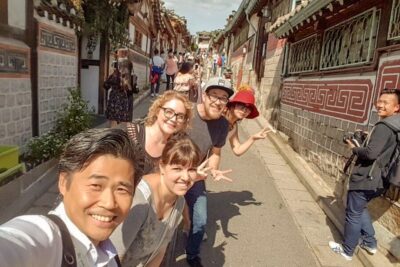 ★ 4.8Gyeongbok Palace and Bukchon Hanok Walking TourFrom $88157 reviews
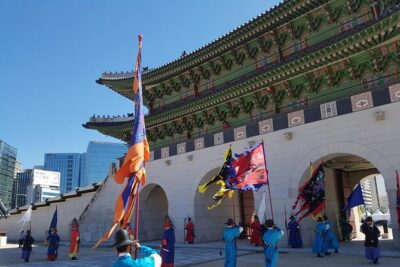 ★ 5.0Best Walking Tour to Gyeongbok Palace Bukchon Hanok VillageFrom $88138 reviews
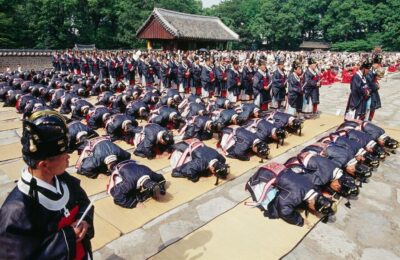 ★ 4.8UNESCO Sites tour: Palace, Shrine & Bukchon VillageFrom $3626 reviews
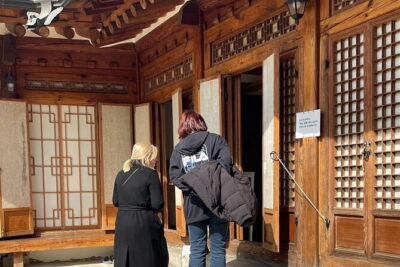 ★ 5.0Tour Seoul’s oldest district with a storyteller from BukchonFrom $3924 reviews
 ★ 4.5Seoul Morning Tour: Seoul Tower, Namsan Hanok Village, The War Memorial of KoreaFrom $6522 reviews
Browse the lists this tour appears in