
A DMZ tour hits different when led by insiders. This one brings retired military officers to the bus, then pairs their real stories with tight stops like the Third Tunnel and the day’s best North Korea view. I love how the guide explains what you’re seeing in plain language, and I also like that the schedule skips shopping and keeps things focused; the trade-off is a longer day than the label Half-Day suggests.
The best part for me is the way the tour chooses where you look from: Odusan or Dora Observatory, based on weather, visibility, and live CCTV. That means you’re not stuck with a mediocre sightline, but it also means you should be ready for last-minute changes if conditions shift.
In This Review
- Key highlights worth planning for
- A Half-Day That Still Takes Most of Your Day
- Retired Military Officers Run the Bus: Why It Changes Everything
- Odusan vs Dora: How Your North Korea View Is Chosen
- DMZ Checkpoints and the Bridge of Freedom Stops
- The Third Tunnel Walk: Where the Border Becomes Physical
- Dora’s Big View vs Odusan’s Close View
- Mangbaedan and the Railway Relic: War’s “After” Still Shows Up
- Timing, Comfort, and What You’ll Want Before You Go
- Value for $45: Why This Feels Like a Real Deal
- Who Should Book This DMZ Tour from Seoul
- Should You Book It? My Straight Answer
- FAQ
- FAQ
- What is the total duration of the tour?
- Is lunch included?
- Do I need to bring my passport?
- Which observatory will we visit?
- Are DMZ admissions included?
- Is there hotel pickup?
- Does the tour include shopping stops?
- What happens if weather is bad?
- Is the tour private?
Key highlights worth planning for
- Retired military officer guides with firsthand context and lots of Q&A, including guides such as SJ, Eddie, Julie, and Dylan
- Third Tunnel walking experience, with a low ceiling and tight scale that makes the threat feel real
- Odusan or Dora Observatory selected on the day for the clearest view, using weather and live CCTV
- DMZ checkpoint routine plus Cold War landmarks like Bridge of Freedom and Mangbaedan
- Admissions included and no “shopping stop” style filler, so your time goes to the border itself
- Early return to Seoul feel with a strict, organized flow (still about 6–7 hours door-to-door)
Other ways to reach the DMZ and the border from Seoul
- DMZ Tour: 3rd Tunnel, Option(Suspension Bridge, Boat) from Seoul★ 5.0 · 21,373 reviews
- DMZ tour south Korea from Seoul (NK experience hall, defector)★ 5.0 · 20,599 reviews
- Seoul: DMZ Tour with Optional Suspension Bridge★ 4.8 · 5,277 reviews
- Seoul: DMZ The 3rd Tunnel and Suspension Bridge Tour★ 5.0 · 4,656 reviews
A Half-Day That Still Takes Most of Your Day
On paper, this is a Half-Day DMZ tour. In real life, it’s usually a 6 to 7 hour day once you include bus time. That matters because you should plan your other Seoul activities around it, not the other way around.
The upside is you get a lot of the DMZ experience in one run: checkpoints, key sites, one of the tunnel walks, and one of the two major observatories. The pace stays brisk, but the stops aren’t rushed into tiny photo windows either.
Retired Military Officers Run the Bus: Why It Changes Everything
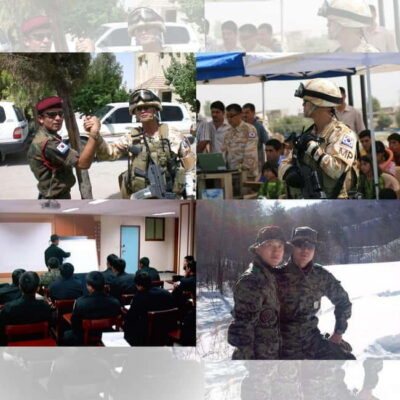
This tour’s biggest differentiator is the guide lineup. Instead of a generic narrator, you’re often with a retired military officer who can talk about the border in operational terms, not just textbook terms. The tour description highlights examples like Agent SJ (Special Forces Major, Iraq war veteran), Agent Tiger (former artillery commander with 20+ years), and Agent Eddie (tunnel expert and DMZ briefer to U.S./Korean brass). You’ll also see frequent guide names in the same role—Captain Eddie, plus Julie and Dylan—so the format is consistent even when the person behind the mic changes.
What I like about this approach is the way it turns questions into answers you can actually use. People on the bus want details—distances, why certain places matter, what different structures imply—and the guides have a way of turning that into a clear story. Expect humor too. The tone is serious where it should be, but it’s not stiff.
One practical note: because the guide is doing both education and checkpoint management, the day runs by rules. That’s a plus for organization, but it’s not the tour for you if you want to roam on your own.
Odusan vs Dora: How Your North Korea View Is Chosen
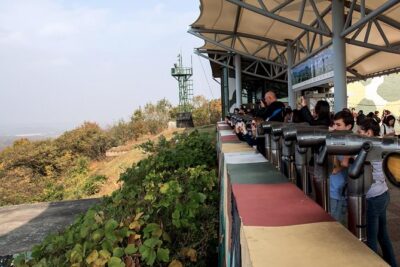
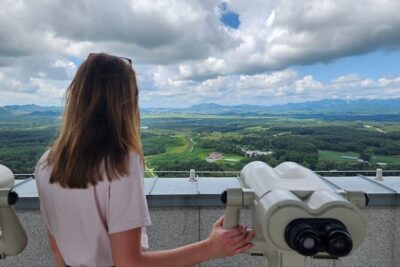
You’ll visit one observatory: either Odusan Unification Observation Deck or Dora Observatory. The choice is made in the morning after checking weather, visibility, and live CCTV to decide where the view into North Korea is clearest that day. That’s a smart setup because DMZ viewing can be brutally affected by haze or smog.
Here’s the key difference in what you’re aiming to see:
- Odusan: described as being just 2 km from North Korea, and it’s the closest point from Seoul where you can clearly view North Korea with your eyes.
- Dora Observatory: at the northern-most point of the western front, with the chance to view the Gaeseong Industrial Complex and Songhaksan Mountain in a single view.
If visibility is poor, you might still get something, but don’t bank your day on peak conditions. The tour’s selection method helps, yet the border is still weather-dependent.
A handful of other Seoul experiences to line up next
DMZ Checkpoints and the Bridge of Freedom Stops
Before you go deeper, you’ll do a formal DMZ entry flow: ID check followed by a look at major symbolic and historical sites.
You start with landmarks around the DMZ area, including:
- Bridge of Freedom (with time built in to see it properly rather than as a quick roadside stop)
- Mangbaedan Altar (a Korean War–related site)
Then, later, you also pass by Mangbaedan in Paju again as a tribute point for separated families facing north across the DMZ. The repetition might sound odd, but it works because you’re seeing the same theme at different moments of the day—first as a historical reference, then as a memorial context. It changes the mood.
One consideration: checkpoints can feel like theater with rules. You should expect to listen carefully, follow instructions fast, and avoid anything that slows the group. That doesn’t ruin the day—it’s just part of doing the border right.
The Third Tunnel Walk: Where the Border Becomes Physical
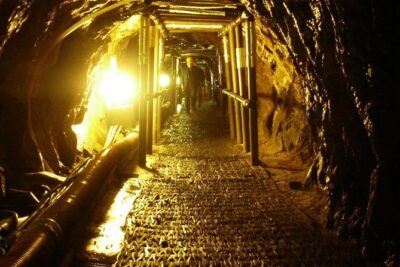
The emotional center of this tour is usually the Third Tunnel (the 3rd Invasion Tunnel). This is a walking course into the tunnel, and it’s the one stop where your body understands what your brain already knows.
You’ll go in on foot through a space described as roughly 1.95 meters high and 2.1 meters wide, with a length indicated as 1,635 meters. Those numbers matter. Even if you’re not claustrophobic, the height forces you to move carefully. You’ll likely lower your posture and go slow.
This stop is also where the guides’ role really shows. A retired officer can point out what makes an infiltration route effective or vulnerable and what that means for how defenses were built. That turns the tunnel from a “cool photo stop” into a lesson you’ll remember later.
Who should think twice? If you hate tight spaces, have mobility limits, or expect to walk and crouch for a while, it may feel more intense than you expect. The tour is described for people with moderate physical fitness, so plan accordingly.
Dora’s Big View vs Odusan’s Close View
After the tunnel, you’ll head to your day’s chosen observatory. This is where you switch from “what happened” to “what’s possible.”
At Dora Observatory, the selling point is the range of what you can see at once—the guide can frame the view in terms of geography and conflict zones, and the description calls out the chance to spot Gaeseong Industrial Complex and Songhaksan Mountain.
At Odusan, the selling point is proximity—2 km from North Korea—so the feeling is more immediate. Depending on conditions, you may be able to pick out what you’re looking at rather than just seeing a vague border line.
Either way, give yourself time to look, not just shoot photos. The guides tend to orient you fast—where to stand, what direction matters, and how the landmarks connect. That’s how the observatory becomes more than scenery.
Mangbaedan and the Railway Relic: War’s “After” Still Shows Up
Not every stop is dramatic like the tunnel, but several are excellent at showing how division lingers in everyday objects and memorials.
You’ll see:
- Mangbaedan (Paju): a symbolic altar where separated families pay tribute to ancestors facing north across the DMZ. This is brief but meaningful.
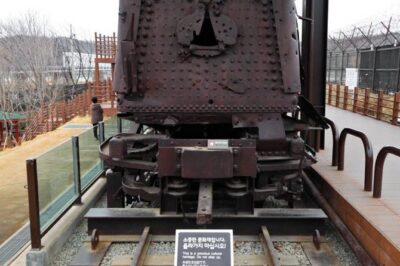
- Steam Locomotive at Jangdan Station (Gyeongui Line): a relic tied to the Korean War. The description says the locomotive was destroyed by U.S. forces in 1950 to block the Chinese advance while transporting UN supplies northward. Now it’s a lasting symbol of war and division.
These stops are short, but they’re valuable because they make the conflict feel less like a chapter in a book and more like physical evidence. Even if you’re not a history buff, you’ll probably appreciate how tangible the story becomes.
Timing, Comfort, and What You’ll Want Before You Go
Because the tour includes roundtrip transfer from Seoul and moves through security steps, you should treat it like a structured day, not a flexible afternoon.
A few practical things to keep in mind:
- Passport needed for the day of travel.
- Moderate physical fitness is recommended. That matters most for the tunnel walk and standing time at viewpoints.
- No lunch included, so eat before you go, and consider bringing water for the bus ride.
- Weather matters, and the tour schedule can change due to unexpected situations like military training schedule changes or traffic. The tour is also described as requiring good weather.
Also, bring layers. Even in Seoul, the DMZ experience can be cooler or harsher than you expect once you’re outside at checkpoints and at observatories.
Value for $45: Why This Feels Like a Real Deal
At $45 per person, this is priced to fit a normal Seoul budget. The value comes from what’s included, not the sticker price.
You get:
- a licensed professional tour guide
- roundtrip transfer from Seoul
- admission fees for DMZ sites
- admission to one observatory (Odusan or Dora)
- a format that skips shopping-style detours
For a border day that includes regulated entry, access to major sites, and guide expertise from retired officers, that inclusion list is what makes the price feel reasonable. If you tried to cobble together checkpoints and the tunnel access on your own, the time and cost would likely go up quickly—even if you could manage it.
One caution: you’re not paying for comfort extras like lunch here. Plan food and timing so you don’t feel “caught short” during a long day.
Who Should Book This DMZ Tour from Seoul
This is a great fit if you:
- want the DMZ experience with a real military perspective, especially on the tunnel and defensive context
- care about seeing the major landmarks without a long detour into shopping stops
- enjoy asking questions and getting direct answers, not just a scripted explanation
It may not be the best match if you:
- want a super relaxed pace or lots of free time
- get uncomfortable in tight spaces (the Third Tunnel walk is the most physical stop)
- hate weather-based variability, since observatory selection depends on visibility
Should You Book It? My Straight Answer
I think you should book this DMZ tour if you want a focused, well-managed border day with strong guidance. The combination of retired officer storytelling, a structured route, and the tunnel + observatory pairing gives you a lot of emotional and historical weight without wasting hours on “tourist traps.”
If you’re going on a shorter Seoul stay, the biggest trade-off is the 6–7 hour commitment. Still, for what you pack into that time, it tends to feel like a smart use of your schedule.
FAQ
FAQ
What is the total duration of the tour?
The tour runs about 6 to 7 hours, including the bus travel time.
Is lunch included?
No. Lunch is not included.
Do I need to bring my passport?
Yes. A current valid passport is required on the day of travel.
Which observatory will we visit?
You’ll visit one observatory: Odusan or Dora Observatory, chosen on the day based on weather, visibility, and live CCTV.
Are DMZ admissions included?
Yes. The tour includes admission fees to the DMZ and admission to the observatory you visit.
Is there hotel pickup?
For groups of 10+, free hotel pick-up is included. For other group sizes, you should plan on the standard roundtrip transfer from Seoul.
Does the tour include shopping stops?
The tour is described as no shopping and skips the fluff, keeping the day focused on the main sites.
What happens if weather is bad?
The tour requires good weather. If it’s canceled due to poor weather, you’ll be offered a different date or a full refund.
Is the tour private?
It’s described as a private tour/activity, meaning only your group participates.
If you want, tell me your travel month and whether you’re more interested in the tunnel, the views, or the history landmarks—I can help you decide between Odusan vs Dora based on what the day is likely to feel like.
More Tours in Seoul
- Best DMZ Tour Korea from Seoul (Red Suspension Bridge Optional)★ 5.0 · 41,422 reviews
- DMZ Tour: 3rd Tunnel, Option(Suspension Bridge, Boat) from Seoul★ 5.0 · 21,373 reviews
- DMZ tour south Korea from Seoul (NK experience hall, defector)★ 5.0 · 20,599 reviews
- Seoul: DMZ Tour with Optional Suspension Bridge★ 4.8 · 5,277 reviews
- Seoul: DMZ The 3rd Tunnel and Suspension Bridge Tour★ 5.0 · 4,656 reviews
More Tour Reviews in Seoul
- Best DMZ Tour Korea from Seoul (Red Suspension Bridge Optional)★ 5.0 · 41,422 reviews
- DMZ Tour: 3rd Tunnel, Option(Suspension Bridge, Boat) from Seoul★ 5.0 · 21,373 reviews
- DMZ tour south Korea from Seoul (NK experience hall, defector)★ 5.0 · 20,599 reviews
- Seoul: DMZ Tour with Optional Suspension Bridge★ 4.8 · 5,277 reviews
- Seoul: DMZ The 3rd Tunnel and Suspension Bridge Tour★ 5.0 · 4,656 reviews
The DMZ & the Border, More Routes
- Best DMZ Tour Korea from Seoul (Red Suspension Bridge Optional)★ 5.0 · 41,422 reviews
- DMZ Tour: 3rd Tunnel, Option(Suspension Bridge, Boat) from Seoul★ 5.0 · 21,373 reviews
- DMZ tour south Korea from Seoul (NK experience hall, defector)★ 5.0 · 20,599 reviews
- Seoul: DMZ Tour with Optional Suspension Bridge★ 4.8 · 5,277 reviews
- Seoul: DMZ The 3rd Tunnel and Suspension Bridge Tour★ 5.0 · 4,656 reviews
Just added to Exploring Seoul


DMZ Day Tours, compared.
 ★ 5.0DMZ Tour: 3rd Tunnel, Option(Suspension Bridge, Boat) from SeoulFrom $3521,373 reviews
 ★ 5.0DMZ tour south Korea from Seoul (NK experience hall, defector)From $2620,599 reviews
 ★ 4.8DMZ Tour with Optional Suspension BridgeFrom $455,277 reviews
 ★ 5.0DMZ The 3rd Tunnel and Suspension Bridge TourFrom $654,656 reviews
 ★ 5.0Signature DMZ Tour: Exclusive Defector Talk & Suspension BridgeFrom $274,459 reviews
 ★ 5.0Thrilling Korean DMZ 3rd Tunnel Tour from Seoul + Red Bridge RushFrom $353,097 reviews
 ★ 4.9DMZ Tour & Suspension Bridge (Option English/Spanish)From $352,628 reviews
 ★ 5.0DMZ Past and Present: Korean Demilitarized Zone Tour from SeoulFrom $372,481 reviews
Browse the lists this tour appears in