

Reviewed · DMZ DAY TOURS
From Seoul: Aegibong Starbucks Observatory & DMZ View
Coffee with a view of North Korea. This is a short trip that pairs Starbucks with sweeping DMZ-area sightlines from Aegibong Peace Park, then continues into guided history at Jogang Observatory. I love the sheer contrast of a coffee stop perched above the river with the serious context around it, and I also like the 112-meter suspension bridge that turns a geography lesson into a real physical experience. One thing to consider: you’ll need your passport, and if visibility is poor, the view can feel less crisp.
Plan on a tight 5-hour loop from Seoul. There’s plenty to see, but food and drinks aren’t included, so you’ll either buy something at Starbucks or eat before/after. Cloudy or foggy conditions can soften details across the border, but the visit still works because the site is built for explanation and looking—camera time is part of the point.
In This Review
- Key things that make this DMZ-view day feel different
- Aegibong Peace Eco Park: where the bridge turns the lesson physical
- Starbucks at Aegibong Peace Park: coffee with the serious backdrop
- Jogang Observatory: the outdoor look toward Gaepung-gun
- The Jogang River story: why “Neutral Waters” still shows up in your visit
- Exhibition Hall walkthrough: a fast way to get your bearings
- Timing and logistics from Seoul: how to plan your day without stress
- The guides matter: how history gets told in a usable way
- Price and value: why $45 can make sense for a focused DMZ-area day
- Who should book this DMZ-view Starbucks trip (and who might not)
- Should you book? My straight answer
- FAQ
- How long is the tour?
- What does the tour price include?
- Is there an English-speaking guide?
- What should I bring?
- Where do we meet in Seoul?
- Where does the tour end?
- Is the cancellation policy flexible?
- Can I reserve without paying right away?
Key things that make this DMZ-view day feel different
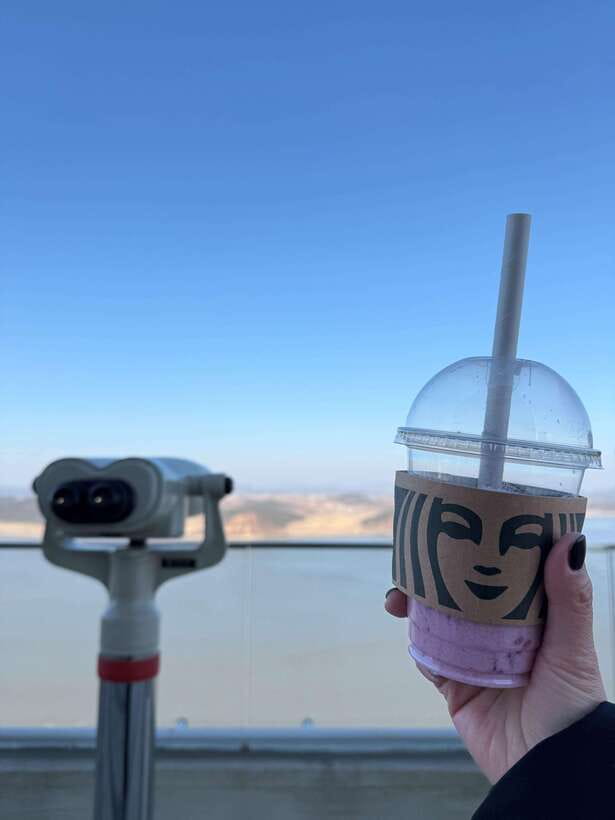
- Closest Starbucks to the DMZ: a North Korea-facing view from the Aegibong Peace Park area
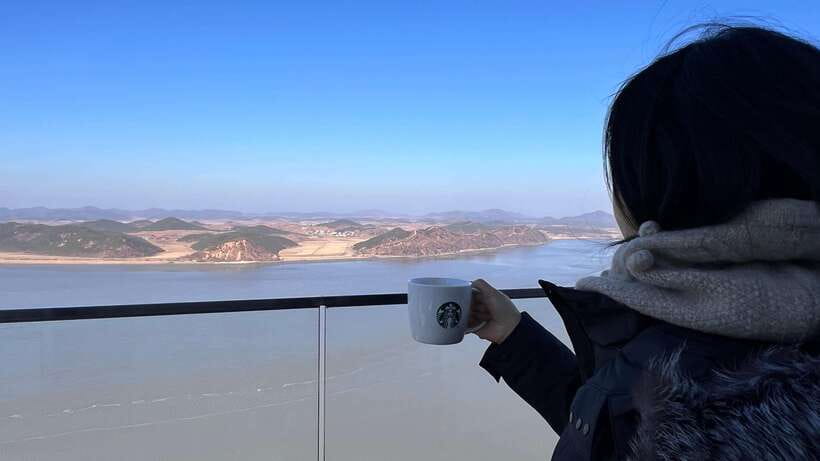
- Top-floor Starbucks setting: sit near the windows and watch the river-and-border panorama frame your coffee
- Jogang Observatory’s “distance sense”: an outdoor look from about 1.4 kilometers toward Gaepung-gun in North Korea
- 112m suspension bridge thrills: a bridge walk that connects themed gardens with the Sky Forest Garden
- History mixed with place: myth, war memories, and river ecology get tied to what you see outside
Other ways to reach the DMZ and the border from Seoul
- DMZ Tour: 3rd Tunnel, Option(Suspension Bridge, Boat) from Seoul★ 5.0 · 21,373 reviews
- DMZ tour south Korea from Seoul (NK experience hall, defector)★ 5.0 · 20,599 reviews
- Seoul: DMZ Tour with Optional Suspension Bridge★ 4.8 · 5,277 reviews
- Seoul: DMZ The 3rd Tunnel and Suspension Bridge Tour★ 5.0 · 4,656 reviews
Aegibong Peace Eco Park: where the bridge turns the lesson physical
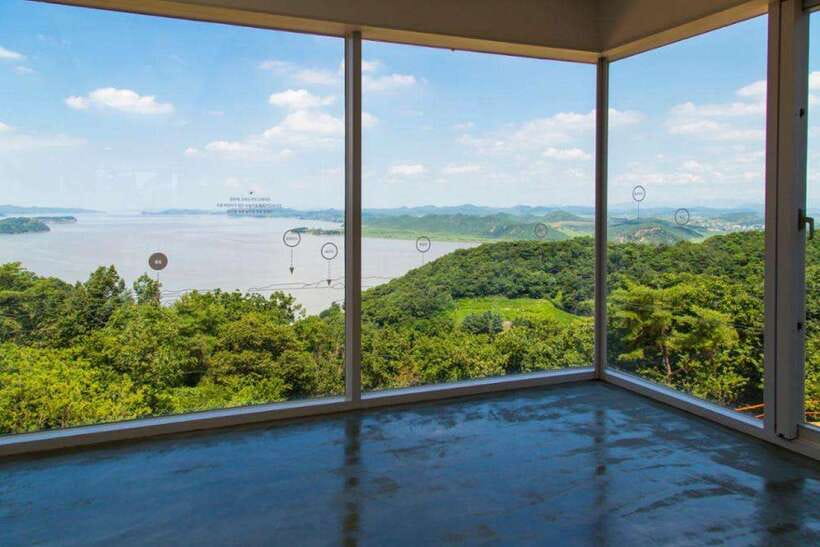
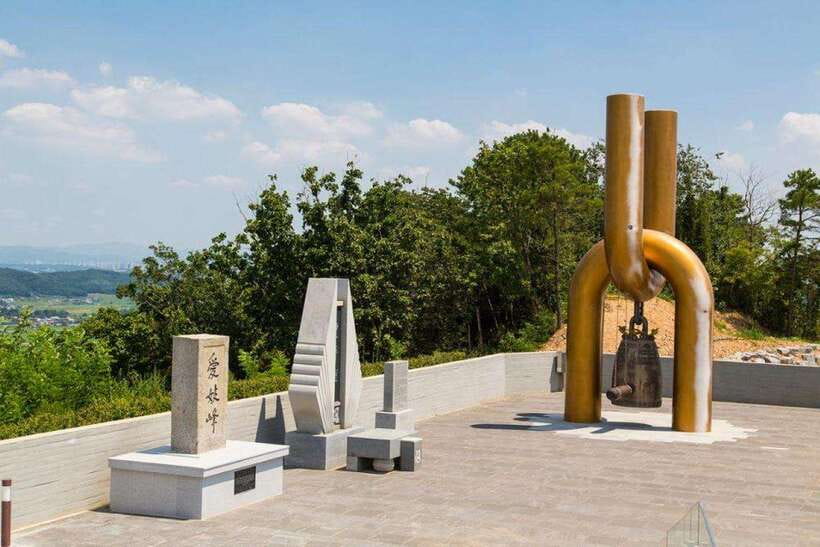
Your first real taste of the day is Aegibong Peace Eco Park, a small mountain area on Hill 154, sitting near the boundary between areas in Gimpo-si. It’s not just “a pretty park.” The place is tied to stories people still pass down, including a heartwrenching myth connected to the Qing invasion of Joseon and a governor-and-Aegi tale that has been repeated for generations.
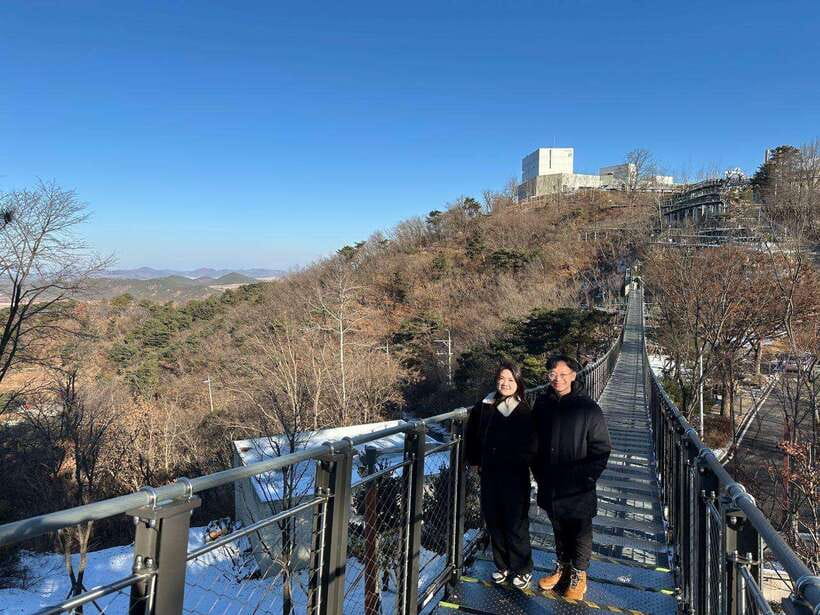
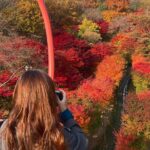
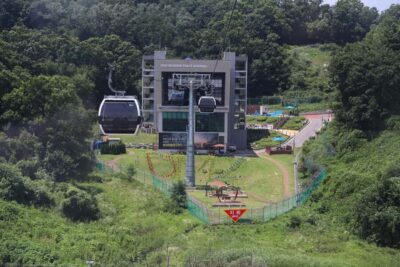
Then comes the part that makes this stop feel memorable instead of purely informational: the suspension bridge. It’s 112 meters long, connecting the themed gardens to the Sky Forest Garden. Even if you’re not usually a “walk across bridges” person, it helps you get a quick sense of height, wind, and openness—exactly what matters later when you start looking out across the Jogang River toward North Korea.
Practical note: wear shoes you’d happily walk in for 30–60 minutes, because this isn’t a sit-and-stare garden. You’ll move, you’ll climb gently, and you’ll pause for photos when your guide points out what to watch for.
Starbucks at Aegibong Peace Park: coffee with the serious backdrop
The headline for a lot of people is the Starbucks here—and yes, it’s a real draw. The café is on the top floor at Aegibong Peace Park, and it’s set up so you can enjoy a panoramic view through the large front windows. That means your break isn’t trapped indoors. You get your caffeine with context.
What I like about this setup is the way it keeps the experience human. At this kind of border viewing area, it would be easy for the whole day to feel like a lecture. Here, you can reset your brain with something familiar while still staying oriented to what’s outside. Some people grab a quick drink; others slow down and treat it as the visual “breather” before the outdoor observatory.
Inside the exhibition space, there’s also video content tied to the Jogang River area, so even before you step out, you’re given a frame for what you’re about to see. It’s a smart pairing: background first, then sightlines.
Small drawback: since food and drinks aren’t included with the tour price, your Starbucks moment may be your main snack option. If you’re budgeting, decide in advance whether you’ll buy here or plan to eat elsewhere.
Jogang Observatory: the outdoor look toward Gaepung-gun
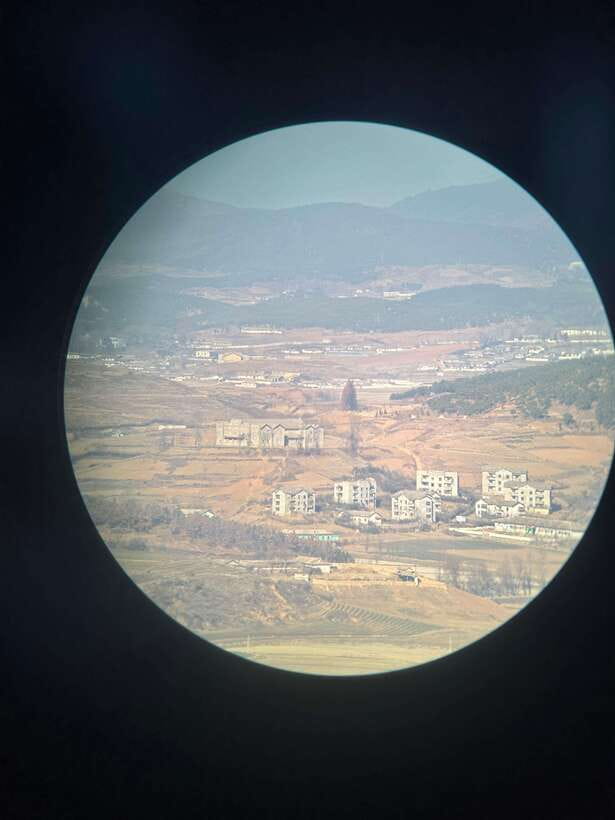
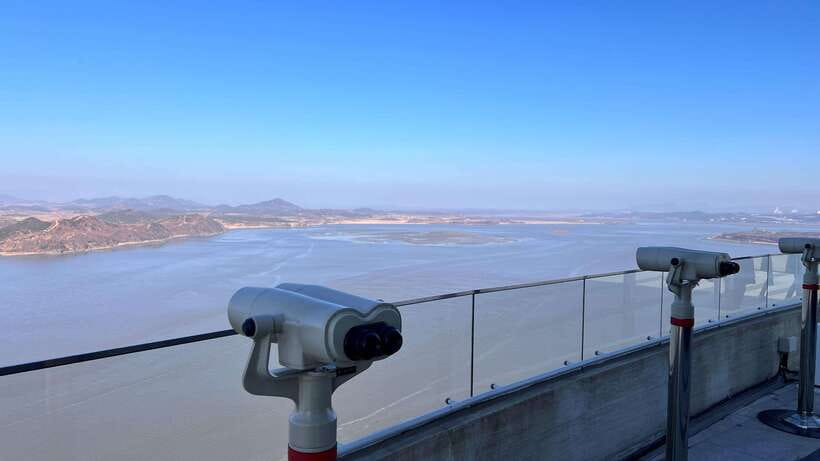
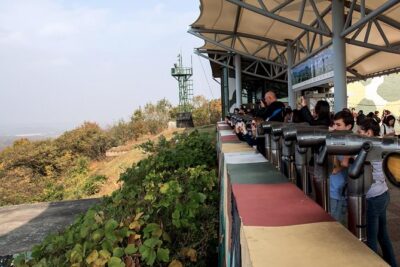
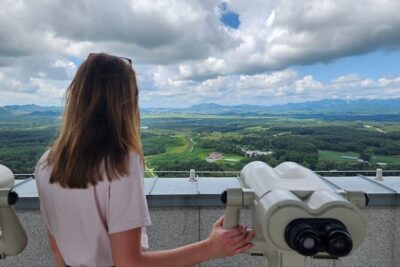
The second big anchor is Jogang Observatory, an outdoor spot designed specifically for distance viewing. The site highlights the heartrending beauty of Gaepung-gun in North Korea from a distance of about 1.4 kilometers, which is close enough to make the experience feel immediate without removing the reality of the border context.
This is also where you’ll likely do your best photo work. The atmosphere is built for looking: an outdoor vantage point plus a guide to explain what you’re seeing and why it matters. In some visits, telescopes are available, and that can help if you want a little extra help spotting shapes across the river area.
What makes this stop valuable is the way the observatory doesn’t treat the border as a “thrill.” You’re not just chasing a dramatic view. You’re learning how this place was formed—then you’re given time to look long enough for the explanation to land.
Tip that pays off: keep your hands free for camera focus and lens cleanup. Wind and mist happen around rivers, and if you’re constantly wiping your gear, the viewing time gets stressful fast.
The Jogang River story: why “Neutral Waters” still shows up in your visit
The Jogang River is the backdrop for the entire experience, and your guide will connect the geography to history and meaning. The river sits downstream of the Hangang River, near where the Imjingang, Hangang, and Yeseonggang Rivers meet before flowing into the West Sea. The name Jogang is described as meaning a large river, or “grandfather river,” reflecting how vast it feels.
Before the Korean War, this area was a large village with around 100 households. After the designation of the zone as Neutral Waters at the Hangang River Estuary in the 1953 ceasefire agreement, residents lost their homes and were scattered. That’s heavy context, but it’s not delivered in a vague way. Instead, the story connects to what the river basin became afterward: a repository of a diverse ecosystem and a home to many endangered and protected species.
Why that matters for your day: it changes what you notice when you look out the window at the Jogang River. You’re no longer just seeing a “divide on a map.” You’re seeing a place where ecology, displacement, and geopolitics overlap.
And you also get a clearer understanding of why guides keep referring back to the river in their explanations. It’s the thread tying everything together.
Exhibition Hall walkthrough: a fast way to get your bearings
Before you reach the outdoor observatory and the Starbucks windows, there’s an exhibition area that helps you orient. From the exhibition hall, you can view the Jogang River area through large front windows, so you start with sightlines, not guesses.
Inside, you’ll also see videos related to the Jogang River, which helps the place feel less abstract. It’s a good middle step: you’re learning while you can still look at the same river outside.
I like this flow because it keeps you from turning the trip into a “check the box and leave” day. Once you’ve got a basic frame, even short pauses outside feel productive.
Timing and logistics from Seoul: how to plan your day without stress
This is built as a half-day trip—about 5 hours total—with guided time at each key area. The main pattern is a drive out from central Seoul, a visit through Aegibong Peace Eco Park, then an observatory stop, then back to Seoul.
Pick-up options are offered from places in Seoul such as Myeong-dong, Hongik Univ. Station Exit 3, and THE PLAZA, Autograph Collection, though your exact meeting point may vary depending on the option you book. You also finish back at Hongik University Station Exit 4.
What I’ve seen work well with this kind of format: treat the tour as your “DMZ view block,” then keep the rest of your day flexible for a second activity near Hongik University. Since you’re back by mid-afternoon on many schedules, you don’t have to waste daylight on trains and transfers.
Transport is consistently described as comfortable—people mention smooth rides and mini-bus or Mercedes-style comfort—so you’re not spending the day cramped and regretting your snack choice.
The guides matter: how history gets told in a usable way
This tour includes a live guide in English, and the biggest difference between a forgettable trip and a memorable one is how the guide makes the story click.
Across the guide names associated with this experience—Hana, Gogo, Eva, Crystal, Alex, Lily, Diana, and others—I see a repeated theme: they keep explanations engaging while still covering tough material like the Korean War and the situation around the DMZ.
When the guide explains what you’re looking at, you’re less likely to feel like you’re staring at distant rooftops with no context. Instead, you start recognizing patterns the site is trying to show you, and you understand why those patterns are emotionally and politically loaded.
If you like asking questions, this is a good day for it. The kind of information here isn’t “memorize facts.” It’s about understanding what the view means, and a good guide helps you ask the right follow-ups.
Price and value: why $45 can make sense for a focused DMZ-area day
At $45 per person, this trip can feel like a bargain if you’re comparing it to longer DMZ tours. Here’s why the value is real: the price includes round-trip transportation, a tour guide, and all entrance fees. That means you’re not doing math all day or paying a pile of small fees at each gate.
What you should budget separately is straightforward: food and drinks. Since you’re likely buying at Starbucks if you want something during the visit, decide what you’re comfortable spending there. Even bringing your own snacks isn’t stated, so I’d keep it simple and plan around the fact that the only guaranteed stop for meals is Starbucks itself (not included).
Also, the short duration is part of the value. You get meaningful context and a genuine North Korea-facing observatory experience without committing to a full day. If you’re visiting Seoul for a limited time, this is a clean way to get the essential “DMZ view” experience without burning an entire day.
Who should book this DMZ-view Starbucks trip (and who might not)
This works best for you if:
- You want a high-impact, short-format day trip from Seoul
- You like history explained in a place-based way (river, observatory, exhibition)
- You want the novelty of a Starbucks stop that’s actually tied to the view, not just an extra
You might want a different option if:
- You’re only interested in the most intense border security experiences and not in the interpretive, educational setup
- You hate uncertainty about weather, since visibility can affect what you can make out across the border
One more practical fit check: if you’re traveling with kids, the guide style can help because it’s taught and explained, not just shown. But your comfort with the topic matters, since the stories here include war and displacement.
Should you book? My straight answer
If you’re aiming for the best mix of DMZ-area sightlines, guided context, and a half-day schedule, I’d book this. The standout value is how the day combines the coffee-stop novelty with real orientation: exhibition hall first, observatory second, and a physical highlight via the 112m suspension bridge. That combination makes it more than a photo trip.
If you’re going for a “serious history day” and you’re okay planning snacks around Starbucks since food isn’t included, this is a strong fit. Bring your passport, set expectations for possible cloudy conditions, and you’ll come away with a clearer understanding of why this river-and-border view hits people so hard.
FAQ
How long is the tour?
The duration is listed as 5 hours.
What does the tour price include?
It includes round-trip transportation, a tour guide, and all entrance fees. Food and drinks are not included.
Is there an English-speaking guide?
Yes, the live tour guide is listed as English.
What should I bring?
You should bring your passport.
Where do we meet in Seoul?
You can choose from several starting location options, such as Myeong-dong, Hongik Univ. Station Exit 3, or THE PLAZA, Autograph Collection. The exact meeting point may vary depending on the option booked.
Where does the tour end?
The tour finishes at Hongik University Station Exit 4.
Is the cancellation policy flexible?
Free cancellation is offered up to 24 hours in advance for a full refund.
Can I reserve without paying right away?
Yes, reserve now & pay later is offered.
More Tour Reviews in Seoul
- Best DMZ Tour Korea from Seoul (Red Suspension Bridge Optional)★ 5.0 · 41,422 reviews
- DMZ Tour: 3rd Tunnel, Option(Suspension Bridge, Boat) from Seoul★ 5.0 · 21,373 reviews
- DMZ tour south Korea from Seoul (NK experience hall, defector)★ 5.0 · 20,599 reviews
- Seoul: DMZ Tour with Optional Suspension Bridge★ 4.8 · 5,277 reviews
- Seoul: DMZ The 3rd Tunnel and Suspension Bridge Tour★ 5.0 · 4,656 reviews
The DMZ & the Border, More Routes
- Best DMZ Tour Korea from Seoul (Red Suspension Bridge Optional)★ 5.0 · 41,422 reviews
- DMZ Tour: 3rd Tunnel, Option(Suspension Bridge, Boat) from Seoul★ 5.0 · 21,373 reviews
- DMZ tour south Korea from Seoul (NK experience hall, defector)★ 5.0 · 20,599 reviews
- Seoul: DMZ Tour with Optional Suspension Bridge★ 4.8 · 5,277 reviews
- Seoul: DMZ The 3rd Tunnel and Suspension Bridge Tour★ 5.0 · 4,656 reviews
Just added to Exploring Seoul

DMZ Day Tours, compared.
 ★ 5.0DMZ Tour: 3rd Tunnel, Option(Suspension Bridge, Boat) from SeoulFrom $3521,373 reviews
 ★ 5.0DMZ tour south Korea from Seoul (NK experience hall, defector)From $2620,599 reviews
 ★ 4.8DMZ Tour with Optional Suspension BridgeFrom $455,277 reviews
 ★ 5.0DMZ The 3rd Tunnel and Suspension Bridge TourFrom $654,656 reviews
 ★ 5.0Signature DMZ Tour: Exclusive Defector Talk & Suspension BridgeFrom $274,459 reviews
 ★ 5.0Thrilling Korean DMZ 3rd Tunnel Tour from Seoul + Red Bridge RushFrom $353,097 reviews
 ★ 4.9DMZ Tour & Suspension Bridge (Option English/Spanish)From $352,628 reviews
 ★ 5.0DMZ Past and Present: Korean Demilitarized Zone Tour from SeoulFrom $372,481 reviews
Browse the lists this tour appears in