
Reviewed · WALKING TOURS
(Closed) Korea’s White House Walking Tour Blue House
The Blue House door still feels half-closed. This Blue House walking tour gets you inside Korea’s presidential home grounds with a real guide story—not just photos—while access lasts. You’ll see the places tied to diplomacy, politics, daily residence, and press.
I really like two things. First, the licensed English guide brings architecture and Korean history into clear, practical context. Second, the route hits the site’s full “job description,” from guest reception to the press area, so the blue roof isn’t just a landmark—it’s a symbol with meaning.
One consideration: you start at Gyeongbokgung Station and there’s no hotel pickup. If you’re coming from far out, you’ll want to plan a smooth morning commute so you’re not rushed.
In This Review
- Key highlights to know before you go
- A Rare Seat at Cheong Wa Dae, Before It Changes
- The Value Math: Is $199 a Smart Spend?
- Small Group Touring (Max 9) Makes the Difference
- The June Deadline: Why You Shouldn’t Wait
- Start at Gyeongbokgung Station: Your Smooth, Simple Launch Point
- Stop-by-Stop: How Cheong Wa Dae Tells the Story in Layers
- Yeongbingwan (Cheong Wa Dae Yeongbingwan): Where Diplomacy Waited
- Blue House Main Building (Cheong Wa Dae): The Blue Roof and the President’s Work
- The Former Main Office Area: Past and Present in the Same Grounds
- The Presidential Residence Area: Privacy as a Design Principle
- Chimnyugak House: A Small Pavilion Break for Big Context
- Sangchunjae: Traditional Beauty With a Purpose
- Chunchugwan: The Press Center Where Announcements Happened
- What Your Licensed English Guide Actually Changes
- Timing, Walking, and Comfort: Small Details That Matter
- Who Should Book This Blue House Tour?
- Should You Book the Korea’s White House Walking Tour (Blue House)?
- FAQ
- FAQ
- What is the duration of the Blue House walking tour?
- Where does the tour start?
- What time does the tour begin?
- How much does the tour cost?
- Is hotel pickup included?
- How big is the group?
- Do I get an English-speaking guide?
- What does the tour include for access?
- Which parts of Cheong Wa Dae will I see?
- Is free cancellation available?
Key highlights to know before you go
- Small group cap (max 9) means you’ll actually hear the guide and ask questions.
- Reserved entrance to Cheong Wa Dae gives you access during a limited window.
- Seven key stops cover guest hosting, the president’s office, residence areas, and the press center.
- English tour with a licensed guide keeps the story straight and easy to follow.
- Last-call timing: access before public opportunities end in June.
More of Seoul taken at walking pace
- Seoul moonlight walking tour with local historian★ 5.0 · 940 reviews
- Seoul: Nighttime Hidden Gems Walking Tour★ 5.0 · 775 reviews
- Seoul: Evening Dark History, Folklore & Ghost Story Walking Tour★ 5.0 · 593 reviews
- Seoul: Dark Side of the City and Ghost Stories Walking Tour★ 4.8 · 484 reviews
A Rare Seat at Cheong Wa Dae, Before It Changes
Cheong Wa Dae, Korea’s former presidential residence and office, has a “you’re here for a reason” feeling. For decades, it was closed to most people. Even now, access isn’t something you should treat like a casual afternoon plan.
This is the kind of tour that matters because the window is temporary. The tour runs as part of the period when entry is available before public access ends in June. If you care about Korean politics, modern history, or how power works in real spaces, this gives you the physical setting to connect the dots.
And because it’s a walking tour, you’re not stuck staring at one view. You move through the grounds and let the guide explain what each area was for, not just what it looks like.
The Value Math: Is $199 a Smart Spend?
For $199 per person, you’re paying for two big things: reserved entrance and an English-speaking licensed guide. The admissions for the stops are listed as free in the tour details, so you’re not paying extra ticket fees on top.
You’re also getting an efficient format: about 2 hours 30 minutes. That’s long enough to cover seven meaningful areas, but short enough that you won’t feel like your whole day vanished.
If you were to try this on your own, you’d likely run into the hard part: access. That’s the reason this tour costs what it does. It’s not an “expensive souvenir” purchase. It’s an access and interpretation purchase.
Is it pricey? Sure. But if you want the Blue House story explained in strong English, with time on-site, this is the kind of spend that can actually save your trip from going vague.
Small Group Touring (Max 9) Makes the Difference
The tour is capped at 9 travelers. That changes the energy. You’re not hearing your guide through a wall of other voices. You’re close enough to catch details and follow the logic behind the buildings.
It also makes the pacing work. You spend short blocks at each area—enough time for context, not enough time to feel stuck. The guide can manage the group, keep everyone together, and still tell a coherent story.
One more practical advantage: you’ll benefit from clear guidance on where to meet and how to move through security-style walking. The tour starts at 10:00 am, and it ends back at the same meeting point, so your schedule is contained.
The June Deadline: Why You Shouldn’t Wait
Access to the Blue House isn’t guaranteed forever, and the tour is specifically positioned around the period before public access ends in June. That’s your cue.
If you’re planning a trip to Seoul with a “someday” mindset, this is the wrong one. Plan it like you would a popular museum with timed entry. Book early and protect your morning.
There’s also a signal in how far ahead people typically reserve. On average, the tour is booked about 38 days in advance. That doesn’t mean you must book that early, but it does mean you should not treat this like a last-minute add-on.
Start at Gyeongbokgung Station: Your Smooth, Simple Launch Point
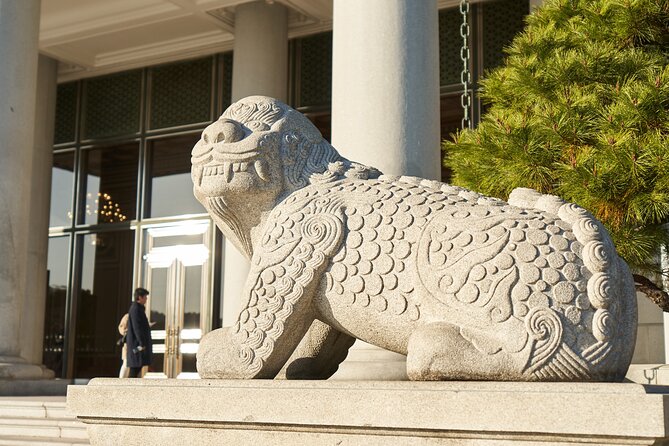
You’ll meet at Gyeongbokgung Station in Seoul. The tour begins at 10:00 am and returns to the same meeting point.
No hotel pickup is included, so I recommend doing two things:
- Get to the station a bit early to avoid losing time.
- Wear comfortable shoes. This is a walking tour through multiple buildings and courtyards.
Also remember the tour is near public transportation. That’s a big win in Seoul, where transit is straightforward when you’re not improvising last minute.
If you rely on service animals, good news: service animals are allowed.
Stop-by-Stop: How Cheong Wa Dae Tells the Story in Layers
This route doesn’t treat the Blue House like one single attraction. It treats it like an operating system: guest hosting, executive work, private residence, traditional spaces, and press announcements. Here’s what each stop is doing for you.
Yeongbingwan (Cheong Wa Dae Yeongbingwan): Where Diplomacy Waited
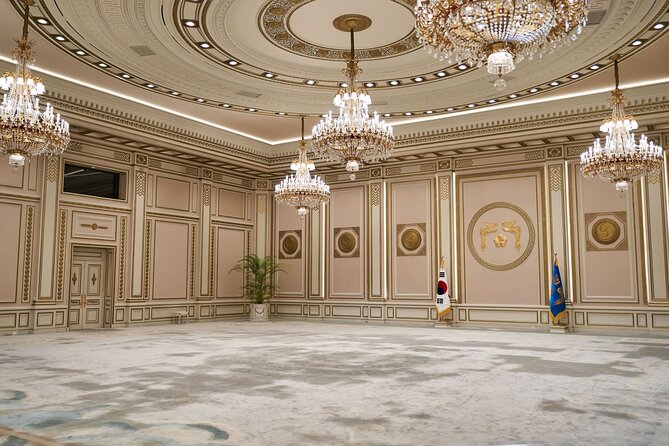
You start with Cheong Wa Dae Yeongbingwan, used to welcome important guests from other countries. This is where presidents met foreign leaders and where major events like dinners or meetings took place.
The helpful part for you is the “why” behind the space. A building like this tells you how Korea hosted leadership in a setting designed for respect, protocol, and careful formality. You’ll get the guide’s explanation of how the building functioned as part of statecraft, not just a pretty facade.
The time here is short—about 10 minutes—but it works as your orientation. It sets the mood before you see the main complex.
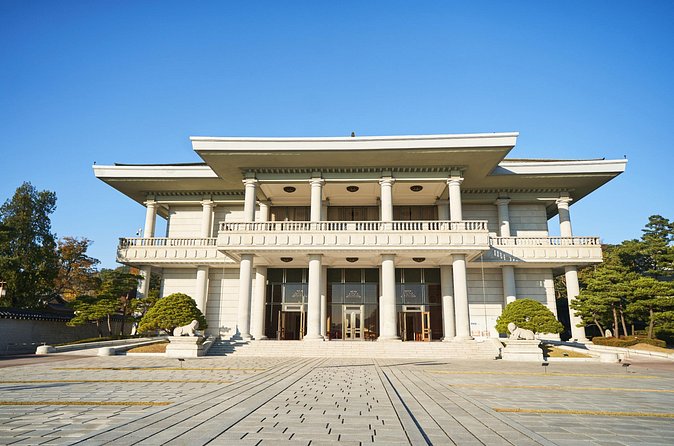
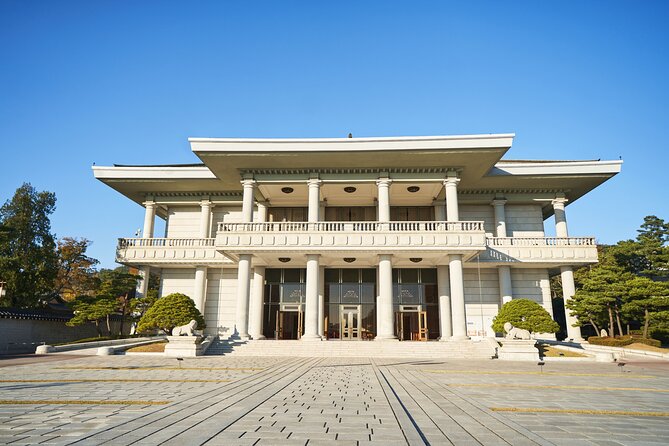
Blue House Main Building (Cheong Wa Dae): The Blue Roof and the President’s Work
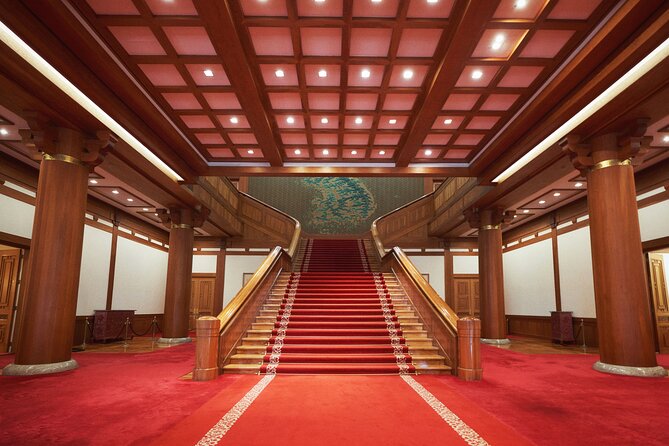
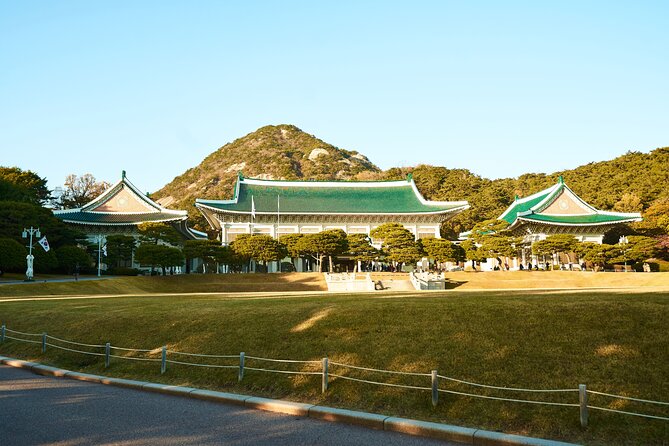
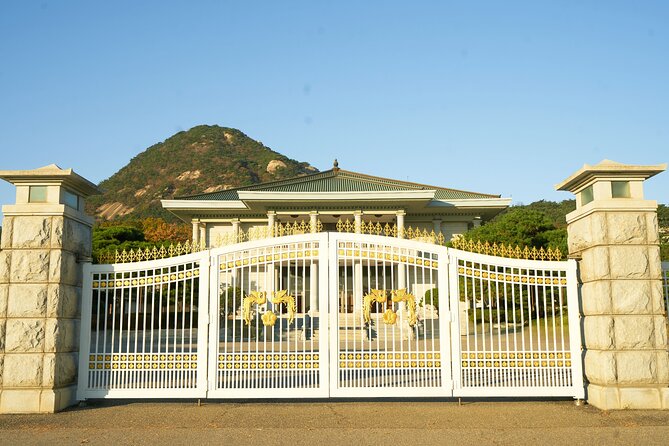
Next is the main building, where the President worked and where important meetings happened.
This is the place behind the iconic image of the Blue House roof. The tour frames that roof as a symbol of the Korean government, which helps you interpret what you’re looking at beyond aesthetics.
You spend about 20 minutes here. That’s enough time to understand the building’s role in decision-making. If you’re into politics or history, this is where you’ll feel the most “real” connection.
Admission ticket is listed as free for the stop, so the visit is about the access and the explanation—not extra payment at each location.
The Former Main Office Area: Past and Present in the Same Grounds
Then you move to the area that was once the old main office before the current main building was built.
You’ll hear how Korean presidents worked in that earlier space and hosted important modern-era events. It’s a small shift, but it helps you understand continuity: leadership didn’t just move into a new building. It continued operating inside evolving architecture.
This stop also gives you something practical: when you see multiple generations of buildings on the same grounds, you learn to read the changes in how the state presented itself.
The Presidential Residence Area: Privacy as a Design Principle
The tour brings you to the area where the President and family lived—separate from the office to support privacy.
You’ll notice the mood shift. This part is described as quiet and surrounded by trees, and the guide explains features like bedrooms and the idea of separation between public work and private life.
The time block is about 10 minutes, so don’t expect a long “residence museum.” What you get instead is the concept: the Blue House wasn’t just an office. It was a home designed to keep daily life from blending into public duty.
Chimnyugak House: A Small Pavilion Break for Big Context
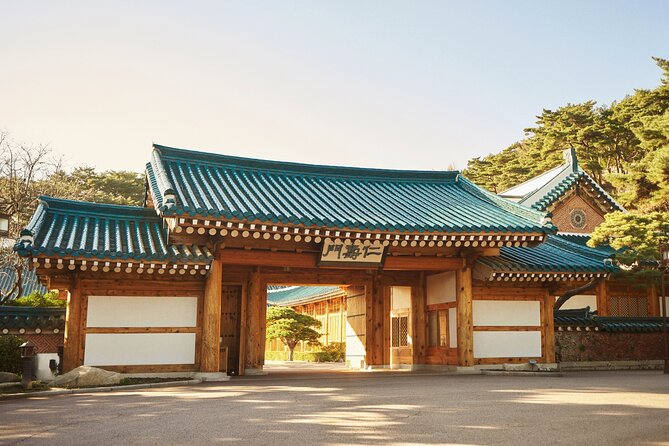
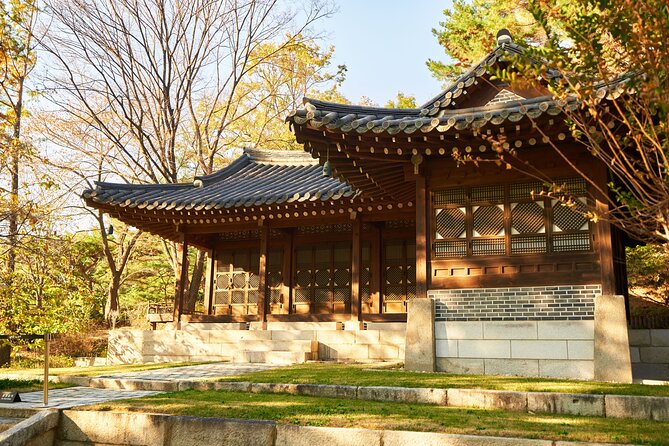
Next is Chimnyugak House, a small traditional pavilion surrounded by trees.
This is where you take a short breath—about 10 minutes—while the guide explains architecture and history. It’s one of those stops that can feel calm enough to be a pause, but still structured enough that you don’t lose the plot.
If you’ve been power-reading museums all day, this is a nice reset. It also helps you see how traditional Korean garden-and-building design fits into a modern presidential setting.
Sangchunjae: Traditional Beauty With a Purpose
You then visit Sangchunjae, described as one of the most beautiful traditional buildings on the Blue House grounds.
This stop is tied to how special guests were hosted and how quieter meetings took place. You’ll walk around the wooden structure area and hear how its design supported the kind of conversations that needed discretion.
The time here is about 10 minutes, and it’s worth treating it like a “read the room” lesson. Traditional architecture isn’t just decoration here. It’s part of how the site managed tone.
Chunchugwan: The Press Center Where Announcements Happened
Finally, you reach Chunchugwan, the former press center where official announcements were made.
This is where reporters from Korea and around the world came to hear what the President said. If you care about media, governance, or modern state communication, this stop gives you a clear physical anchor.
Your time is brief—about 5 minutes—so you’ll want to pay attention quickly and ask one good question if something sparks your curiosity. The guide’s interpretation turns the space into a story about messaging, timing, and the role of press in government.
What Your Licensed English Guide Actually Changes
The tour includes an English-speaking licensed guide, and the impact shows in how the story connects.
In particular, you’ll get:
- Clear explanations of Korean history, politics, and culture
- A sense for the hidden meaning behind what you’re seeing
- A guided flow that prevents the site from feeling like a list of buildings
One guide name that comes up often is Jungho. When Jungho guides, the strengths highlighted are his strong English, his ability to explain architectural and historical significance in an easy way, and his clear instructions on where to meet and how to move with the group. That last part matters more than you’d think in Seoul, where transit and walking can get chaotic if you’re off by even a few minutes.
If you’re the type who likes asking questions, small-group touring helps. If you don’t ask much, it still works because the guide keeps the narrative moving.
Timing, Walking, and Comfort: Small Details That Matter
A 2 hours 30 minutes tour might sound simple. On the ground, you’ll feel it in your feet because you’re switching locations across the grounds.
I recommend:
- Comfortable walking shoes
- Water or a plan to hydrate before you meet
- A light layer, especially in seasons when Seoul weather shifts during the day
Also, because this site is controlled, you should expect the day to run on the guide’s timing. That’s normal. The benefit is that you’re not losing your day to guesswork.
Who Should Book This Blue House Tour?
I think this tour fits best if you:
- Want access to Cheong Wa Dae without trying to figure out the hard logistics alone
- Care about Korea’s modern political story and how it relates to specific buildings
- Like guided interpretation in excellent English, not just silent sightseeing
- Prefer a small group format where you can hear details and stay oriented
It’s also a good choice if you’re a “meaning-first” traveler. You’ll still see the iconic scenes, but you’ll also learn how each area functioned: hosting foreign leaders, running the executive office, preserving privacy, supporting traditional gatherings, and delivering press announcements.
Should You Book the Korea’s White House Walking Tour (Blue House)?
I’d book it if you’re going to Seoul with even a moderate interest in Korean history and governance—and especially if you’re traveling before June when access is changing.
Skip it if:
- You hate guided tours and want total free wandering time.
- You can’t get to Gyeongbokgung Station easily at 10:00 am.
- You’re expecting a long, leisurely stroll with no structure. This is timed and purposeful.
One smart decision rule: if you can’t imagine learning why these buildings mattered, then you’re paying for a guide you won’t use. If you do want that context, the $199 price becomes easier to justify.
FAQ
FAQ
What is the duration of the Blue House walking tour?
The tour is about 2 hours 30 minutes (approx.).
Where does the tour start?
The tour starts at Gyeongbokgung Station in Seoul, South Korea.
What time does the tour begin?
The start time listed is 10:00 am.
How much does the tour cost?
The price is $199.00 per person.
Is hotel pickup included?
No. Hotel pick-up and drop-off are not included.
How big is the group?
The tour has a maximum of 9 travelers.
Do I get an English-speaking guide?
Yes. The tour includes a licensed English-speaking tour guide.
What does the tour include for access?
You get reserved entrance to Korea’s White House (Cheong Wa Dae).
Which parts of Cheong Wa Dae will I see?
You’ll visit multiple areas on the grounds, including Cheong Wa Dae Yeongbingwan, the Blue House main building, areas tied to the former presidential office, the presidential residence area, Chimnyugak House, Sangchunjae, and Chunchugwan.
Is free cancellation available?
Yes. You can cancel up to 24 hours in advance for a full refund. If you cancel less than 24 hours before the start time, the amount paid is not refunded.
More Seoul Walking Tours
- Seoul moonlight walking tour with local historian★ 5.0 · 940 reviews
- Seoul: Nighttime Hidden Gems Walking Tour★ 5.0 · 775 reviews
- Seoul: Evening Dark History, Folklore & Ghost Story Walking Tour★ 5.0 · 593 reviews
- Seoul: Dark Side of the City and Ghost Stories Walking Tour★ 4.8 · 484 reviews
- Gangnam Walking Tour on Youth and Society in Seoul Korea★ 5.0 · 401 reviews
More Tours in Seoul
- Best DMZ Tour Korea from Seoul (Red Suspension Bridge Optional)★ 5.0 · 41,422 reviews
- DMZ Tour: 3rd Tunnel, Option(Suspension Bridge, Boat) from Seoul★ 5.0 · 21,373 reviews
- DMZ tour south Korea from Seoul (NK experience hall, defector)★ 5.0 · 20,599 reviews
- Seoul: DMZ Tour with Optional Suspension Bridge★ 4.8 · 5,277 reviews
- Seoul: DMZ The 3rd Tunnel and Suspension Bridge Tour★ 5.0 · 4,656 reviews
More Tour Reviews in Seoul
- Best DMZ Tour Korea from Seoul (Red Suspension Bridge Optional)★ 5.0 · 41,422 reviews
- DMZ Tour: 3rd Tunnel, Option(Suspension Bridge, Boat) from Seoul★ 5.0 · 21,373 reviews
- DMZ tour south Korea from Seoul (NK experience hall, defector)★ 5.0 · 20,599 reviews
- Seoul: DMZ Tour with Optional Suspension Bridge★ 4.8 · 5,277 reviews
- Seoul: DMZ The 3rd Tunnel and Suspension Bridge Tour★ 5.0 · 4,656 reviews
Just added to Exploring Seoul

Walking Tours, compared.
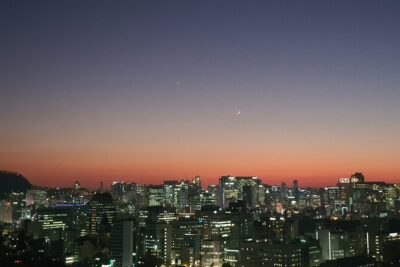 ★ 5.0Seoul moonlight walking tour with local historianFrom $31940 reviews
 ★ 5.0Nighttime Hidden Gems Walking TourFrom $33775 reviews
 ★ 5.0Evening Dark History, Folklore & Ghost Story Walking TourFrom $42593 reviews
 ★ 4.8Dark Side of the City and Ghost Stories Walking TourFrom $42484 reviews
 ★ 5.0Gangnam Walking Tour on Youth and Society in Seoul KoreaFrom $31401 reviews
 ★ 4.8Gyeongbok Palace and Bukchon Hanok Walking TourFrom $88157 reviews
 ★ 5.0Best Walking Tour to Gyeongbok Palace Bukchon Hanok VillageFrom $88138 reviews
 ★ 4.5Private Walking Tour with a LocalFrom $55103 reviews
Browse the lists this tour appears in