
Reviewed · HISTORICAL TOURS
5D4N Korea Cultural Heritage immersion Private Tour
Korean heritage, without the rush. This private 5-day route from Seoul is all about pacing, with UNESCO folk villages like Andong Hahoe and Yangdong, plus a car that keeps you moving on your schedule. I especially love the private transportation (no waiting around) and the 4-star hotel with daily breakfast that makes long travel days feel human. The main drawback is that lunch and dinner are not included, so you’ll need to budget meal stops and snacks yourself.
You’ll also get real convenience with hotel pickup and drop-off, an English-speaking driver, and mobile ticket access. I like that the trip is built for comfort, not cattle-call speed, and the guide support has included names like Irene and Jae-hun, with flexibility praised when plans need adjusting.
In This Review
- Key things to know before you go
- Why this private Korea heritage route feels different
- Price and what you’re really paying for
- The 5-day rhythm: what each day is built to do
- Day 1: Andong Hahoe Folk Village and the mask dance
- Day 2: Yangdong Folk Village, plus Silla-era Gyeongju context
- Day 3: Busan temple day—Beomeosa or Haedong Yonggungsa
- Day 4: Haeinsa’s woodblocks, then Jeonju hanok village living
- Day 5: Hwaseong Fortress and Suwon’s royal engineering
- Where this tour fits best (and who should skip it)
- Comfort details that make a difference in real life
- Should you book this Seoul-to-UNESCO private heritage tour?
- FAQ
- What time does the tour start?
- Is this a private tour?
- Are hotels and breakfast included?
- What’s included besides the hotel?
- Are lunch and dinner included?
- Which UNESCO sites are included?
- What temple will I visit on the Busan day?
- Is a single room available?
- Is there a luggage limit?
Key things to know before you go
- UNESCO folk villages: Andong Hahoe and Yangdong are the headline, with mask dance and traditional village life.
- Private vehicle, not a bus crush: your group travels together with an English-speaking driver.
- 4-star stay with breakfast: four mornings are covered, so you start temples and fortresses fueled.
- Temple choice on a Busan day: you’ll see one of two very different temples depending on the day’s flow.
- Jeonju hanok streets + Haeinsa’s woodblocks: a classic culture pairing, with major religious-art history.
More guide-to-yourself private days in Seoul
- Private DMZ Tour (No Shopping): 3rd Tunnel & Suspension Bridge★ 5.0 · 607 reviews
- Seoul City Private Full-Day Tour Including Lunch★ 5.0 · 469 reviews
- Private DMZ the 3rd Tunnel Tour from Seoul (optional Red Bridge)★ 5.0 · 429 reviews
- Seoul Highlights & Hidden Gems Tours by Locals: Private + Custom★ 5.0 · 359 reviews
Why this private Korea heritage route feels different
Most Korea “heritage” days feel like a checklist: arrive, take photos, leave. This one has a better rhythm. You’re not stuck with the slowest person in the group, and you’re not forced to speed through because a bus driver has a tight connection.
The value shows up in the basics: private transport, hotel pickup and drop-off, admission fees handled, and 4-star accommodation with breakfast for four nights. That adds up because it removes a lot of small friction—especially on multi-city days where you’d otherwise be figuring out local transport and entry tickets.
And you get a nice mix of Korea’s past styles: village culture in Andong and Yangdong, royal-era monuments around Jeonju and Suwon, and temple spirituality that changes character from inland to coastal landscapes.
The tour also requires a minimum of 2 people per booking, so it’s best when you’re pairing up with a friend, family unit, or small group.
Price and what you’re really paying for
At $1,834.62 per person, this isn’t a bargain-basement “day trip.” But you’re not just paying for sightseeing.
You’re paying for:
- a private vehicle and English-speaking driver
- hotel pickup and drop-off
- admission fees at the included stops
- four nights in 4-star accommodation with breakfast (four mornings)
If you tried to assemble this yourself, the cost typically jumps fast once you factor in private transport between cities, licensed guiding help, and entrance fees across multiple UNESCO sites. The main “watch-out” is your meals: lunch and dinner aren’t included, so plan for that when you estimate your real daily budget.
The 5-day rhythm: what each day is built to do
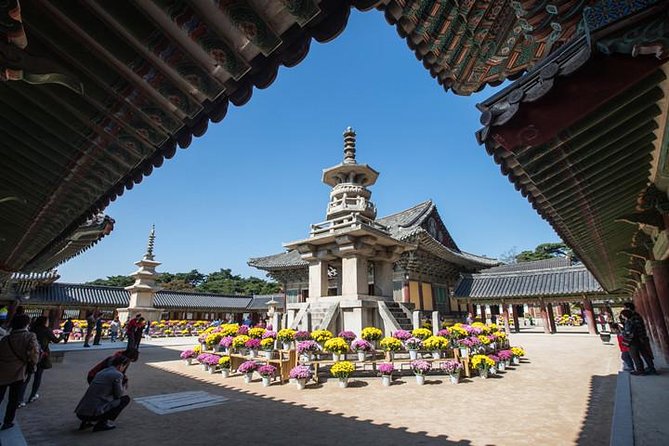
This route is structured like a culture arc: traditional village life first, then Buddhism and royal-era works, then hanok living, and finishing with a major fortress site. The driving is real (these locations aren’t all in Seoul), but the private format helps you handle it without losing the day to logistics.
The day starts at 8:00 am, so you’ll want to treat mornings as your power hours. If you like early starts, this fits your style. If you prefer late mornings, you’ll still have a comfortable pace on-site, but the departure time won’t change.
A handful of other Seoul experiences to line up next
Day 1: Andong Hahoe Folk Village and the mask dance
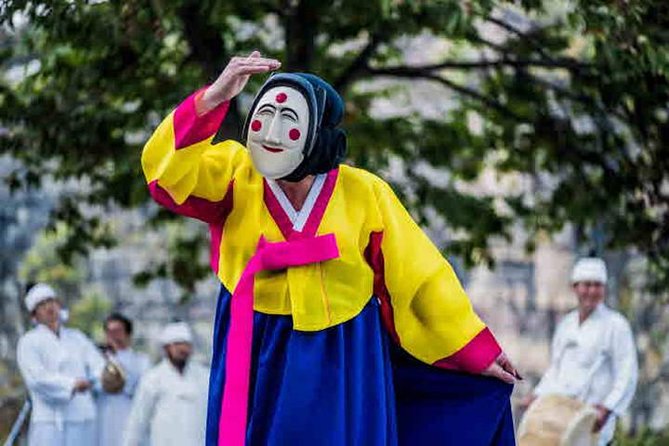
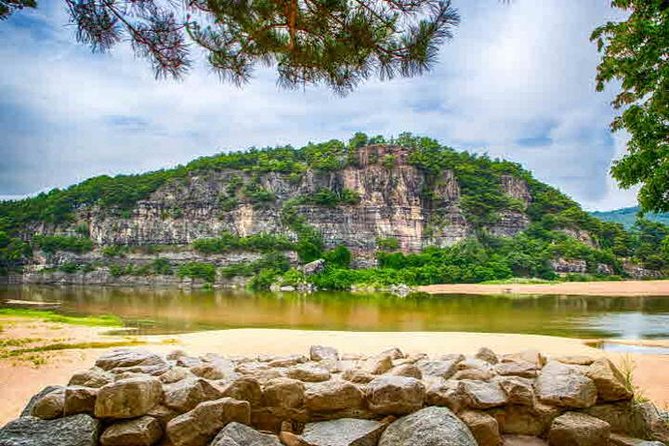
Your first UNESCO stop is Andong Hahoe Folk Village, one of the best places in Korea to see how traditional village society and folk performance connect. Here, culture isn’t behind glass. It’s tied to real storytelling—especially through the Hahoe Mask Dance Performance.
The mask dance isn’t polite theater. The characters use humor to poke at social hypocrisy, with figures like a nobleman, a Buddhist monk, a bride, farmers, and even a cow slaughterer. There’s also a sarcastic lad. It’s farce with teeth, and that matters because it shows how ordinary people used performance to comment on power.
Practical note: admission is included, and the performance slot is listed as 30 minutes. If you’re the type who likes to read every sign and slowly wander, you may want to ask your guide how much time you’ll get beyond the formal entry/performance window.
Why you’ll probably like this day: it’s not just architecture and legends. It’s human and funny, with social commentary you can feel even without perfect language skills.
Day 2: Yangdong Folk Village, plus Silla-era Gyeongju context
Day two brings you to Yangdong Folk Village, another UNESCO-listed traditional village. This is the kind of stop that rewards walking slowly. You’ll notice how the village layout supports daily life and how tradition survives because the setting still feels like a place people once lived.
The day also connects you to Gyeongju, described as the capital of the Silla Kingdom and known as a “Museum Without Walls.” That’s not just a poetic phrase. Gyeongju’s identity comes from a huge density of historic sites, so you get more than one monument—you get a sense that the city itself is the exhibit.
The link to Buddhism is part of the story here. Buddhism played a key role in strengthening royal authority and helping unify the people, which is why the city became home to major Buddhist art treasures.
Possible consideration: the day includes substantial cultural stops, and the drive time between regions can be part of your day. If you’re someone who hates long car stretches, bring snacks and plan to mentally switch into “view mode” for transitions.
Day 3: Busan temple day—Beomeosa or Haedong Yonggungsa
This is your shift in scenery: you head toward Busan, Korea’s second-largest city and its largest seaport. The tour frames the day around city dynamics too—markets, shopping opportunities, and food browsing—so you’re not locked into temple-only mode.
Then you visit one of two temples:
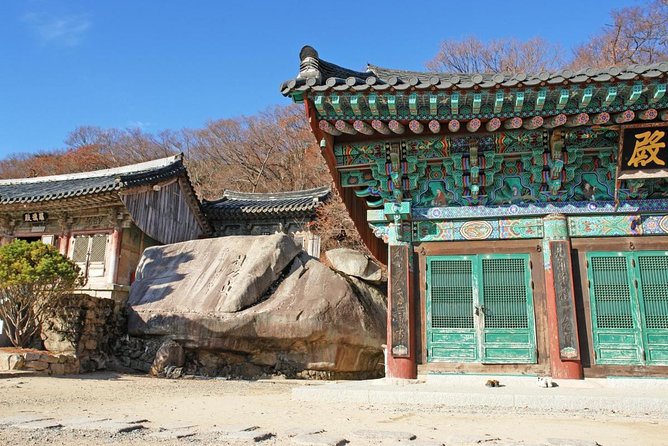
- Beomeosa Temple, built on the slopes of Geumjeong Mountain, with the meaning tied to the Nirvana fish.
- Haedong Yonggungsa Temple, also described as a Dragon Palace temple, known for its unique character and its coastal location.
I like having a temple day like this because the contrast is the point. A mountain-slope temple tends to feel quieter and more enclosed. A coastal temple tends to feel more open and airy, with the sea shaping the mood around you.
Admission is included, and the stop is listed as 30 minutes, so expect a focused visit rather than a long monastery-style day. Still, even a short temple experience can land well when you have a guide to explain what you’re seeing.
What to do for maximum value: ask your driver/guide which temple you’re visiting and what the expected time flow looks like. If you’re choosing between a mountain view and a coastline view, this question changes the whole feel of your day.
Day 4: Haeinsa’s woodblocks, then Jeonju hanok village living
Day four is one of the strongest “culture scholar” combos in this itinerary: Haeinsa Temple and Jeonju Hanok Village.
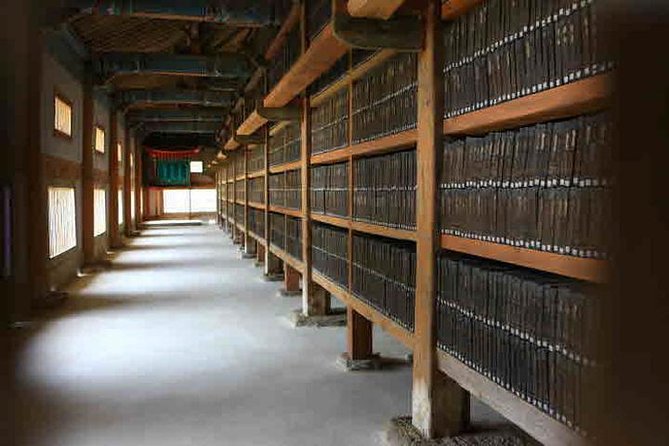
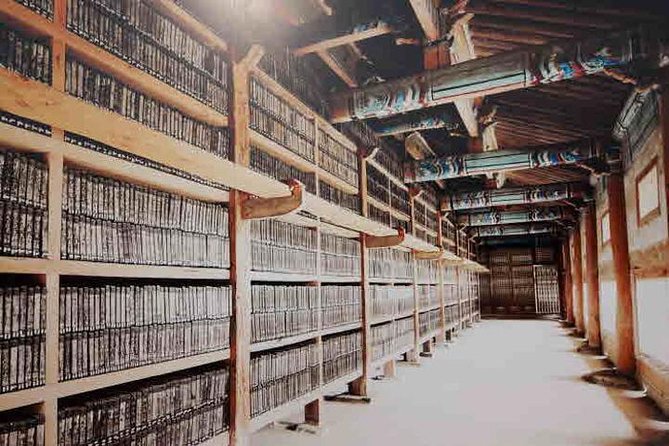
At Haeinsa, the key fact is the temple’s Buddhist text collection: the complete set is housed as woodblock engravings—80,000 woodblocks, engraved between 1237 and 1248. The tour also notes that Haeinsa was appointed as a UNESCO-type universal cultural heritage in 1995, specifically for its cultural importance and historical remains. This isn’t just a pretty temple stop. It’s one of those places where you understand how knowledge was preserved before print culture became mass.
Then you move to Jeonju for the hanok experience. Jeonju Hanok Village is described as a district of narrow alleys with over 800 traditional houses. Even though the rest of the city has industrialized, this area keeps its historic charm and traditions.
A small but smart sequencing detail: the tour explores Jeonju hanok areas before checking into your hotel in Jeonju. That makes the day easier. You avoid the “arrive tired, then try to enjoy the best streets” problem.
One thing to plan for: Jeonju’s hanok streets can reward slow walking, but the day is also packed with Haeinsa. Wear shoes you can trust.
Day 5: Hwaseong Fortress and Suwon’s royal engineering
Your final stop is Hwaseong Fortress in Suwon, a UNESCO cultural heritage site. Fortress tours can sometimes feel like an endurance test—stone walls, more stone walls, repeat. This one has the kind of story that makes walls meaningful.
The fortress was established in 1796 as a temporary palace for Jeong-jo, the 22nd King of the Joseon dynasty. The tour explains the fortress had a dual purpose: protection from enemies and functioning as the center of commerce. In other words, this wasn’t only military. It was governance and economics wrapped into one perimeter.
What I find especially interesting is the construction approach described: techniques that harmonize Western and Oriental architectural skills. The tour even notes examples like using cranes and bricks rather than relying on stone and earth alone.
Why your last day will feel satisfying: you end with something that’s both political and practical. You can stand on the fortress and “read” it as a system, not just a structure.
Where this tour fits best (and who should skip it)
This tour is a great match if you want:
- UNESCO-focused culture without sprinting
- private pacing, especially for photos and questions
- comfortable logistics between far-flung heritage sites
It’s less ideal if you:
- hate early starts at 8:00 am
- dislike long drive days outside Seoul
- don’t want to manage your own meal budget (since lunch and dinner aren’t included)
If you’re traveling with kids, there’s a minimum age of 8 years, which makes it workable for older elementary and up—though you’ll still be doing temple and village walking.
Comfort details that make a difference in real life
These small features are the kind you’ll feel day by day:
- Hotel pickup and drop-off saves you from figuring out transit across different regions.
- 4-star rooms with breakfast makes evenings easier, especially after travel days.
- The trip is private, meaning it’s only your group. That matters when you want a slower pace or you’d like a bit more time at a specific stop.
- Luggage limits are practical: 1 suitcase + 1 carry-on per traveler. If you have oversized items, you should check restrictions ahead of time.
The tour also uses mobile tickets, which generally reduces the hassle of printed vouchers, especially when you’re hopping between regions.
Should you book this Seoul-to-UNESCO private heritage tour?
I’d book it if you want a structured, UNESCO-heavy Korea experience with private comfort, not a one-size-fits-all group day. The combination of Andong Hahoe, Yangdong, Haeinsa’s 80,000 woodblocks, Jeonju hanok streets, and Hwaseong Fortress is a strong cultural arc that doesn’t feel random.
I’d think twice if you mainly want Seoul city vibes, because this is built around moving between heritage sites across South Korea. And if you have a tight budget for meals, remember that lunch and dinner aren’t included.
If you do book, do one simple thing: go into each stop with one question. Ask about what you’re seeing at the masks, the temple woodblocks, the hanok alley life, or the fortress engineering. You’ll get more than photos—you’ll walk away with meaning.
FAQ
What time does the tour start?
The tour start time is 8:00 am.
Is this a private tour?
Yes. It’s private, and only your group participates.
Are hotels and breakfast included?
Yes. The tour includes 4 nights of 4-star hotel accommodation with breakfast each day.
What’s included besides the hotel?
You get an English-speaking driver, transport by private vehicle, hotel pickup and drop-off, and admission fees. Mobile tickets are also provided.
Are lunch and dinner included?
No. Lunch and dinner are not included.
Which UNESCO sites are included?
Andong Hahoe Folk Village and Yangdong Folk Village are listed as UNESCO Cultural Heritage. The tour also includes Haeinsa Temple and Hwaseong Fortress, both identified as major cultural heritage sites in the tour information. Gyeongju is also described as UNESCO cultural heritage.
What temple will I visit on the Busan day?
You will visit either Beomeosa Temple or Haedong Yonggungsa Temple, depending on the day’s plan.
Is a single room available?
Yes. Single rooms are available for an additional cost of USD 240 per person.
Is there a luggage limit?
Yes. Each traveler is allowed a maximum of 1 suitcase and 1 carry-on bag. Oversized or excessive luggage may have restrictions, so it’s best to ask in advance.
More Private Days in Seoul
- Private DMZ Tour (No Shopping): 3rd Tunnel & Suspension Bridge★ 5.0 · 607 reviews
- Seoul City Private Full-Day Tour Including Lunch★ 5.0 · 469 reviews
- Private DMZ the 3rd Tunnel Tour from Seoul (optional Red Bridge)★ 5.0 · 429 reviews
- Seoul Highlights & Hidden Gems Tours by Locals: Private + Custom★ 5.0 · 359 reviews
- Premium Private DMZ Tour & (Suspension Bridge or N-Tower) include lunch★ 5.0 · 348 reviews
More Tours in Seoul
- Best DMZ Tour Korea from Seoul (Red Suspension Bridge Optional)★ 5.0 · 41,422 reviews
- DMZ Tour: 3rd Tunnel, Option(Suspension Bridge, Boat) from Seoul★ 5.0 · 21,373 reviews
- DMZ tour south Korea from Seoul (NK experience hall, defector)★ 5.0 · 20,599 reviews
- Seoul: DMZ Tour with Optional Suspension Bridge★ 4.8 · 5,277 reviews
- Seoul: DMZ The 3rd Tunnel and Suspension Bridge Tour★ 5.0 · 4,656 reviews
More Tour Reviews in Seoul
- Best DMZ Tour Korea from Seoul (Red Suspension Bridge Optional)★ 5.0 · 41,422 reviews
- DMZ Tour: 3rd Tunnel, Option(Suspension Bridge, Boat) from Seoul★ 5.0 · 21,373 reviews
- DMZ tour south Korea from Seoul (NK experience hall, defector)★ 5.0 · 20,599 reviews
- Seoul: DMZ Tour with Optional Suspension Bridge★ 4.8 · 5,277 reviews
- Seoul: DMZ The 3rd Tunnel and Suspension Bridge Tour★ 5.0 · 4,656 reviews
Just added to Exploring Seoul

Historical Tours, compared.
 ★ 5.0Evening Dark History, Folklore & Ghost Story Walking TourFrom $42593 reviews
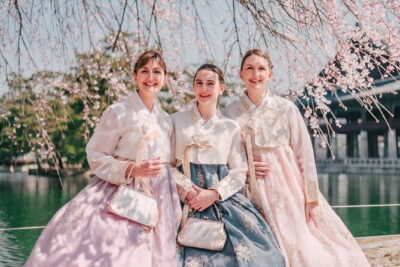 ★ 5.0Hanbok Photoshoot and History Tour at Gyeongbokgung PalaceFrom $60276 reviews
 ★ 4.9From Seoul: Dae Jang Geum Park Historic K-Drama Set TourFrom $55143 reviews
 ★ 5.0City Highlights and Historical Experience No ShoppingFrom $4974 reviews
 ★ 5.0Street photoshoot and Seoul Hidden gem History Walking TourFrom $4568 reviews
 ★ 4.5Discover Seoul: Local Life and HistoryFrom $9653 reviews
 ★ 5.0Korean History & Heritage TourFrom $47551 reviews
 ★ 5.0Namhansanseong UNESCO Historical Sites and Korean Folk Village-Private TourFrom $19829 reviews
Browse the lists this tour appears in