
Reviewed · DMZ DAY TOURS
Small Group Tour to DMZ & Suspension Bridge with Hotel Pickup
One border line tells Korea’s biggest story. This small-group DMZ day trip from Seoul pairs hotel pickup with the chance to stand near the Civilian Control Zone, then finish with a suspension bridge walk.
I love that the price stays simple: DMZ and suspension bridge entry fees are included, so you’re not scrambling for add-ons mid-day. I also like the hands-on details like the binoculars at Dora Observatory, which turns distant views into something you can actually make out.
The main trade-off is physical effort and early mornings: the day starts at 7:30am, and the Third Tunnel and bridge area involve steep walking. If the weather is poor, the across-border view can be disappointing.
In This Review
- Key highlights at a glance
- DMZ from Seoul, but with a built-in payoff: bridge + city time
- Price and value: what $65 really covers
- Morning logistics: 7:30am pickup and how a small group helps
- Imjingak Pyeonghoa-Nuri Park: Freedom Bridge and Bridge of No Return
- Entering DMZ zones: crossing the blue line and seeing 3–4 key spots
- Third Tunnel near Seoul: what to expect on the walk
- Dora Observatory plus Mangbaedan and Unification Village: the human scale
- Dora Observatory: the across-border moment
- Mangbaedan: an altar with living memory
- 통일촌장단콩마을 (Unification Village): produce and souvenirs
- Gamaksan Chulleong Bridge: war-era ground, modern views
- After DMZ: drop-offs that actually help your afternoon
- Who this DMZ tour is best for
- Should you book this DMZ & Suspension Bridge tour?
- FAQ
- FAQ
- Do I need my passport for this DMZ tour?
- How early does the tour start?
- How long is the day tour?
- Is lunch included?
- What’s included in the price?
- What DMZ sites do we visit?
- Is there a reservation system for DMZ tickets at Imjingak?
- Is the Third Tunnel walk difficult?
- What happens if the weather is poor for the view?
Key highlights at a glance
- Small group size (max 17) keeps the day feeling controlled rather than chaotic
- Hotel pickup in select Seoul locations saves you from early-morning transit stress
- Entry fees included for the DMZ stops and Gamaksan suspension bridge means fewer surprises
- Third Tunnel is a powerful, close-up experience near Seoul (and it takes effort)
- Dora Observatory gives you a shot at seeing North Korea with your naked eyes and binoculars
- Game plan for your afternoon: drop-offs at Hongdae, Myeongdong, Gwangjang Market, or Dongdaemun
Other ways to reach the DMZ and the border from Seoul
- DMZ Tour: 3rd Tunnel, Option(Suspension Bridge, Boat) from Seoul★ 5.0 · 21,373 reviews
- DMZ tour south Korea from Seoul (NK experience hall, defector)★ 5.0 · 20,599 reviews
- Seoul: DMZ Tour with Optional Suspension Bridge★ 4.8 · 5,277 reviews
- Seoul: DMZ The 3rd Tunnel and Suspension Bridge Tour★ 5.0 · 4,656 reviews
DMZ from Seoul, but with a built-in payoff: bridge + city time

This is a full day that mixes history with a little “how am I supposed to feel after this?” processing time. You’ll see the realities of division at the DMZ sites, then end with a scenic walk at Gamaksan’s suspension bridge—an effective contrast, because the last thing you want is to spend all day in somber silence without a release valve.
You get a compact tour route with multiple stops in a single day. That matters, because DMZ logistics from Seoul are not the fun part of the trip—getting there and getting the permits right is. Here, transport is included, and the schedule is built around getting you to the key checkpoints with minimal hassle.
The best-fit traveler is someone who wants context, not just photos. If you like learning what you’re looking at—why certain locations exist, and what they’re meant to represent—this format will click.
Price and value: what $65 really covers
At $65 per person, the big value is that this isn’t just a “ride there” ticket. The package includes entry fees for the DMZ and entrance for the suspension bridge, plus an air-conditioned vehicle and an experienced guide.
That matters because DMZ days can turn expensive fast once you start factoring in transport, site fees, and last-minute tickets. Here, you can treat the day like a single paid plan instead of a string of separate purchases.
What’s not included is also important: lunch is on you, and there’s no hotel drop-off. Instead, you’ll be dropped in central Seoul areas like Hongdae, Myeongdong, Gwangjang food market, or Dongdaemun. That’s convenient if your next move is shopping or street food, but less so if you want to return to your hotel and rest immediately.
You’ll also start early, which is part of the cost of doing this kind of tour. The upside is you’re less likely to lose time to morning traffic, and you can still enjoy your afternoon.
Morning logistics: 7:30am pickup and how a small group helps
Start time is 7:30am, and you should plan to be ready before pickup. The value of the small group (maximum 17 travelers) shows up in real ways: quieter moments at the stops, less waiting around, and a better chance to ask questions while you’re moving.
Your group will ride in an air-conditioned vehicle, which is more than comfort in Seoul summer—it can also make a long day feel manageable. You’ll also have a mobile ticket, so you’re not juggling paper confirmations.
One practical note: bring your passport. The tour requires your passport for everyone in your group. Don’t pack it in a checked bag, and don’t assume you can fix it later.
Finally, while the guide role is central to the day, you’ll still spend plenty of time on the bus. If you’re the type who loves rapid-fire Q&A, bring questions and ask early—then settle in for the ride.
Imjingak Pyeonghoa-Nuri Park: Freedom Bridge and Bridge of No Return
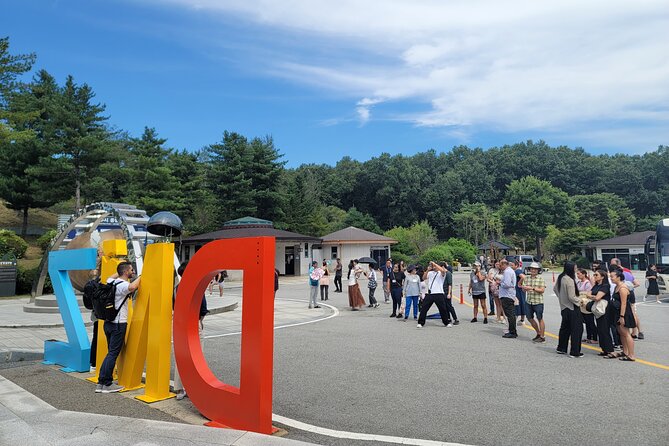
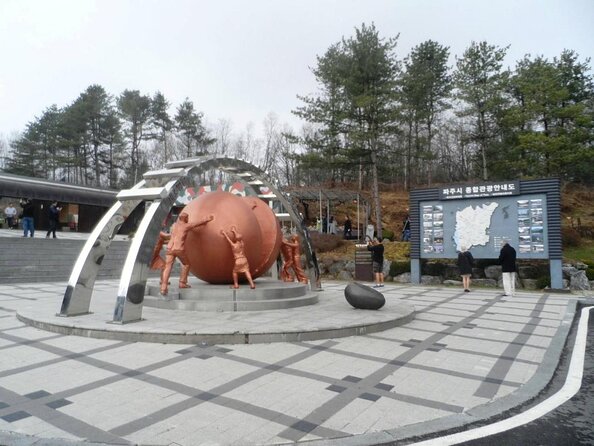
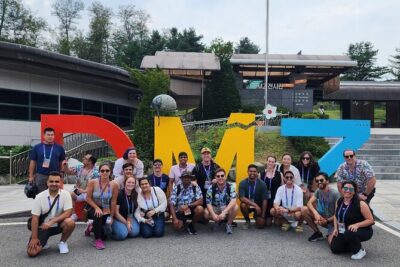
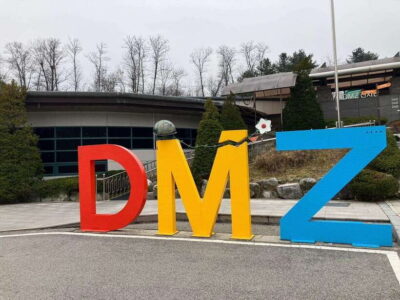
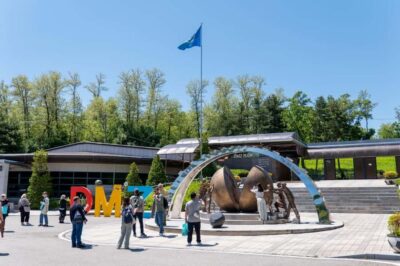
This stop sets the emotional tone for the day. At Imjingak Pyeonghoa-Nuri Park, you’ll act out a small “DMZ theme park” moment—but with real artifacts and memorials.
You’ll need to buy DMZ tickets there because there’s no reservation system mentioned. Plan for this as part of the schedule: you’re not just sightseeing casually; you’re entering the DMZ-day flow.
What you can expect to see includes:
- Freedom Bridge
- Bridge of No Return
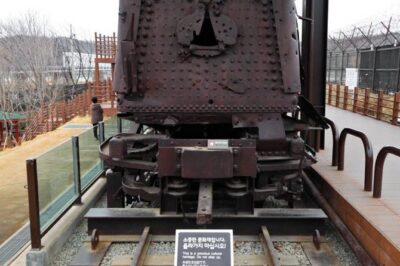
- A derailed locomotive
- Views from the top of a building (where you get a broader sense of the area)
This is also a good place to slow down and take in the symbolism before you move into the more controlled DMZ zones. If you only take one minute at each stop to look around—really look—you’ll get more out of the day later when the sights become more distant and more regulated.
Entering DMZ zones: crossing the blue line and seeing 3–4 key spots
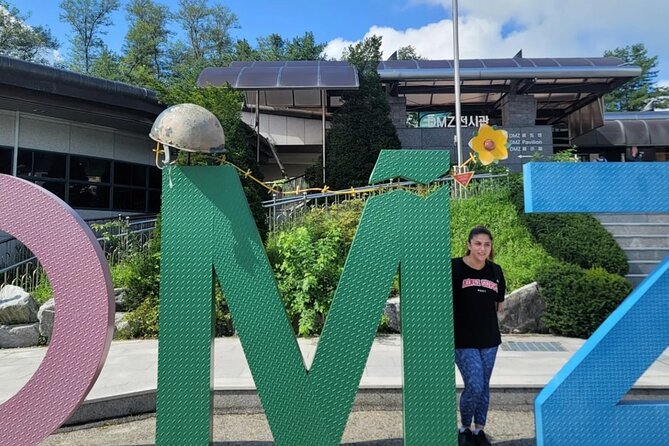
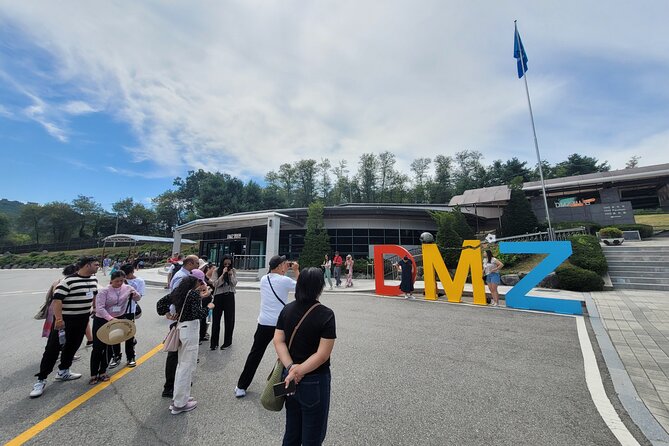
The DMZ portion is where the day stops being “tourist history” and starts being real border logistics. You’ll board a DMZ tour bus that goes into the Civilian Control Zone (CCZ), and since your destination is within the DMZ, you cross the blue line on the way—meaning you’re not just driving near it. You’re entering the DMZ context directly.
Your schedule in this section is designed around 3 to 4 places. That’s a smart rhythm for a long day: it gives you variety without dragging out any one stop so much that you lose the thread.
This segment is also where weather matters. If visibility is limited, your ability to make out what you came for can drop. When the day is clear, the later Dora Observatory moment feels more rewarding, because you’re already trained to look for details.
Expect a mix of viewing time and guide interpretation. Your guide is the one who connects the dots—why a site exists, what it meant during war and after, and how it shapes daily reality on the Korean peninsula.
Third Tunnel near Seoul: what to expect on the walk
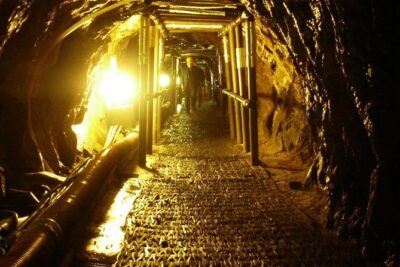
If you want one stop that feels physical—like it changes how you think—the Third Tunnel is it. The tour describes it as a tunnel dug by North Korea after the Korean War, and the location is said to be only about 52km away from Seoul. That “close to home” fact adds weight fast.
You’ll spend about one hour here, but the time is not evenly distributed. The walking matters more than the clock. Several guide-led experiences you might encounter are structured around letting you go down into the tunnel area (with safety gear), then back up.
Here’s the main practical consideration: it can be challenging for seniors on the walk down and the walk back up. You might have to bend forward for stretches, and some tours include things like a construction-style hard hat while you’re in the tunnel area. Even if you’re comfortable walking on flat ground, this is a different kind of effort—more stairs, more bending, and more time spent low and tight.
Bring comfortable, supportive shoes and plan for it to be a slow, careful experience rather than a quick photo stop. If you rush it, you’ll feel it. If you move steadily, you’ll get the full impact.
Dora Observatory plus Mangbaedan and Unification Village: the human scale
This tour doesn’t treat the DMZ like a museum piece. It gives you a few stops that explain what division does to people—not just borders.
Dora Observatory: the across-border moment
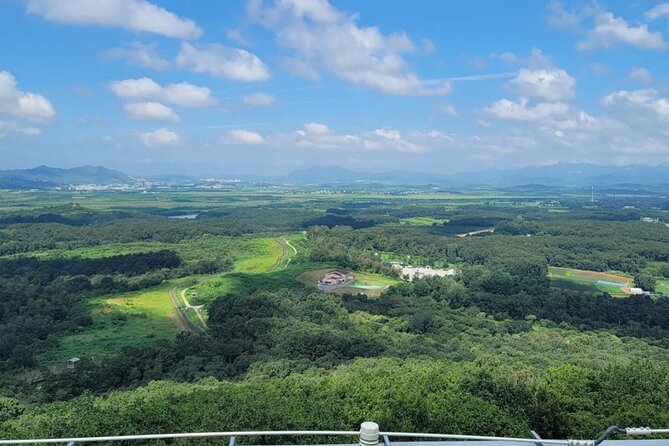
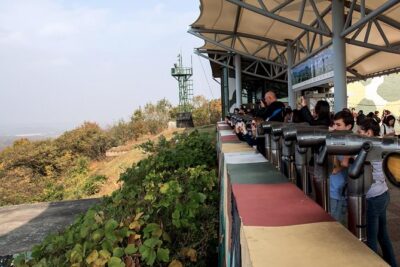
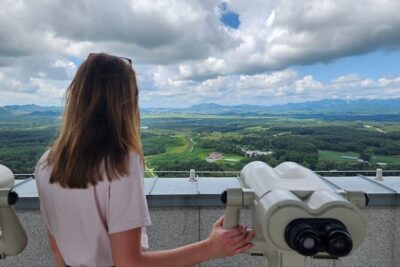
Dora Observatory is often the highlight because it’s the one place where the far side feels less abstract. You’ll get about 30 minutes here, and the tour notes you can see North Korea with your naked eyes plus binoculars provided by the guide.
That combination is what makes it work. Naked-eye views can feel frustrating if you don’t know where to look. Binoculars change that by giving your eyes the “focus tool,” helping you spot details without turning the day into a guessing game.
Mangbaedan: an altar with living memory
Next is Mangbaedan, described as an altar where North Korean refugees in the South hold ancestral rites on major holidays. There’s an exhibition hall as well, which helps shift the day from military geography into family memory and loss.
Even with limited time, this stop gives you a different emotional angle: not just what happened, but what people still do in response to what happened.
통일촌장단콩마을 (Unification Village): produce and souvenirs
Finally, you’ll visit Unification Village (통일촌장단콩마을). This is a short 15-minute stop focused on local produce harvested in the DMZ and some souvenirs.
Is it the same weight as Dora or the Third Tunnel? No. But it matters for practical reasons. You get a sense of how border zones connect to daily economics and to the stories Souvenirs carry back home.
Gamaksan Chulleong Bridge: war-era ground, modern views
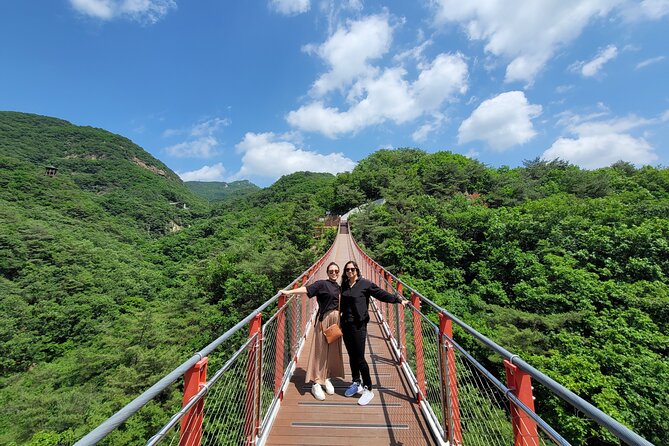
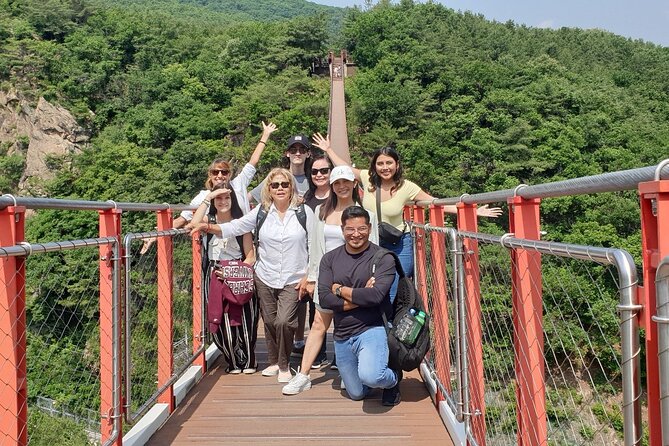
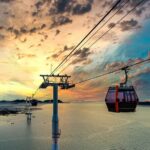
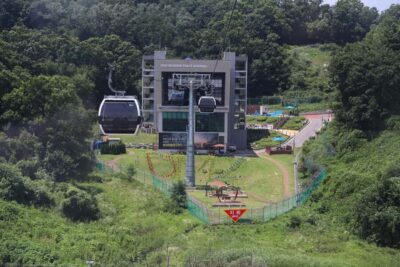
You end with a walk at Gamaksan Chulleong Bridge. The tour describes it as a suspension bridge near Mt. Gamaksan, with natural scenery and a bridge route you can enjoy—plus historical context that this area was once fierce battle ground during the Korean War.
It’s about one hour here, and this is where many people get their last “breathe and absorb” moment. A bridge works for that: you’re moving, you’re outside, and the views tend to refocus your brain away from military details.
That said, this isn’t flat ground walking. One common caution from participant feedback is that the walk to the bridge can be skipped if you need to. You should be prepared for a bit of uphill effort, especially if you’re coming off tunnel stairs earlier in the day.
If the weather is decent, this stop is also your best chance to reset your energy before heading back into Seoul’s street-food and shopping areas.
After DMZ: drop-offs that actually help your afternoon
Once the tour wraps, you’ll have drop-off options that make sense for people who don’t want to waste time commuting.
Your listed drop-off areas include:
- Hongdae
- Myeongdong
- Gwangjang food market
- Dongdaemun
The standout for food is Gwangjang food market, described as one of Seoul’s oldest markets with over 120 street food items. It’s also cited as a filming location for the Netflix series Chefs on Street. If you’re hungry after a full morning of walking and a history-heavy schedule, this is a strong payoff.
You can also get downtown shopping and snack time near Dongdaemun, including mention of places like Korean sauna jjimjilbang and shopping malls (and a Dongdaemun design area vibe). If you have a plan for evening shopping, ask for your preferred drop-off when the option is available.
Who this DMZ tour is best for
Book this if:
- You want a guided, context-heavy DMZ day rather than a rushed photo circuit
- You like history that includes people’s stories, not only military facts (Mangbaedan and Unification Village help)
- You’re okay with a long day—8 to 10 hours—and early pickup
- You’re comfortable walking and can handle tunnel stairs plus a bridge walk
You might reconsider if:
- You have mobility limitations or you don’t want steep walking (especially around the tunnel and the bridge approach)
- You’re traveling with someone who finds stairs or confined spaces difficult
- You’re expecting perfect across-border clarity regardless of weather (visibility can affect the Dora moment)
A quick note about guides: the tour is led by experienced English-speaking guides, and names that come up often include Joo-Ee and Jiwon (also Vincent, Joy, and Jones in different runs). It’s worth hoping for someone strong in English if that’s your priority, but the structure of the day is designed to work even if you’re not at maximal curiosity.
Should you book this DMZ & Suspension Bridge tour?
I’d book it if you want the best value way to do DMZ from Seoul with hotel pickup, DMZ entry included, and a final walk that helps you process the day instead of ending with another long bus ride. At $65, the price feels fair because the entry fees and transport are bundled, and you still get meaningful time in several distinct stops.
I would not book it if you hate early mornings and steep walking. This is a history tour with physical parts, not a casual half-day. If that fits you, it’s a memorable day—one that mixes the border reality with a human-scale lens and ends with a scenic bridge you can actually enjoy.
FAQ
FAQ
Do I need my passport for this DMZ tour?
Yes. The tour requires you to bring your passport, and it says everyone in your group must have it.
How early does the tour start?
The start time is listed as 7:30am, with hotel pickup in select Seoul locations.
How long is the day tour?
The duration is approximately 8 to 10 hours.
Is lunch included?
No. Lunch is not included.
What’s included in the price?
The tour includes an air-conditioned vehicle, an experienced tour guide, entry fees to the DMZ and the suspension bridge, hotel pickup, and drop-off in specified areas.
What DMZ sites do we visit?
The itinerary includes stops such as Imjingak Pyeonghoa-Nuri Park, the DMZ, Mangbaedan, the Third Tunnel, Dora Observatory, and Unification Village (통일촌장단콩마을), plus the suspension bridge at Gamaksan.
Is there a reservation system for DMZ tickets at Imjingak?
The tour notes that you must stop at Imjingak Pyeonghoa-Nuri Park to buy DMZ tickets and that there is no reservation system.
Is the Third Tunnel walk difficult?
It can be challenging, especially the walk down and back up. The information specifically notes it can be a bit challenging for seniors, so wear supportive shoes and be prepared.
What happens if the weather is poor for the view?
If weather is not perfect, the across-border highlight at Dora Observatory may be harder to see.
More Tours in Seoul
- Best DMZ Tour Korea from Seoul (Red Suspension Bridge Optional)★ 5.0 · 41,422 reviews
- DMZ Tour: 3rd Tunnel, Option(Suspension Bridge, Boat) from Seoul★ 5.0 · 21,373 reviews
- DMZ tour south Korea from Seoul (NK experience hall, defector)★ 5.0 · 20,599 reviews
- Seoul: DMZ Tour with Optional Suspension Bridge★ 4.8 · 5,277 reviews
- Seoul: DMZ The 3rd Tunnel and Suspension Bridge Tour★ 5.0 · 4,656 reviews
More Tour Reviews in Seoul
- Best DMZ Tour Korea from Seoul (Red Suspension Bridge Optional)★ 5.0 · 41,422 reviews
- DMZ Tour: 3rd Tunnel, Option(Suspension Bridge, Boat) from Seoul★ 5.0 · 21,373 reviews
- DMZ tour south Korea from Seoul (NK experience hall, defector)★ 5.0 · 20,599 reviews
- Seoul: DMZ Tour with Optional Suspension Bridge★ 4.8 · 5,277 reviews
- Seoul: DMZ The 3rd Tunnel and Suspension Bridge Tour★ 5.0 · 4,656 reviews
The DMZ & the Border, More Routes
- Best DMZ Tour Korea from Seoul (Red Suspension Bridge Optional)★ 5.0 · 41,422 reviews
- DMZ Tour: 3rd Tunnel, Option(Suspension Bridge, Boat) from Seoul★ 5.0 · 21,373 reviews
- DMZ tour south Korea from Seoul (NK experience hall, defector)★ 5.0 · 20,599 reviews
- Seoul: DMZ Tour with Optional Suspension Bridge★ 4.8 · 5,277 reviews
- Seoul: DMZ The 3rd Tunnel and Suspension Bridge Tour★ 5.0 · 4,656 reviews
Just added to Exploring Seoul

DMZ Day Tours, compared.
 ★ 5.0DMZ Tour: 3rd Tunnel, Option(Suspension Bridge, Boat) from SeoulFrom $3521,373 reviews
 ★ 5.0DMZ tour south Korea from Seoul (NK experience hall, defector)From $2620,599 reviews
 ★ 4.8DMZ Tour with Optional Suspension BridgeFrom $455,277 reviews
 ★ 5.0DMZ The 3rd Tunnel and Suspension Bridge TourFrom $654,656 reviews
 ★ 5.0Signature DMZ Tour: Exclusive Defector Talk & Suspension BridgeFrom $274,459 reviews
 ★ 5.0Thrilling Korean DMZ 3rd Tunnel Tour from Seoul + Red Bridge RushFrom $353,097 reviews
 ★ 4.9DMZ Tour & Suspension Bridge (Option English/Spanish)From $352,628 reviews
 ★ 5.0DMZ Past and Present: Korean Demilitarized Zone Tour from SeoulFrom $372,481 reviews
Browse the lists this tour appears in