
Reviewed · SHOPPING TOURS
Small Group (7pax) Seoul Tour with Pickup/Dropoff (No Shopping)
Seoul can feel like a lot fast, so this tour keeps it focused. You get small-group pacing and no-shopping sightseeing, plus pickup/dropoff in Seoul for an 8–9 hour day that hits major landmarks. I like that you move together face-to-face instead of getting shuffled into large crowds, and I also like that the guide handles the key entry points so you spend time looking around. One consideration: you will walk and stand quite a bit, so pack comfortable shoes and expect a moderate fitness level.
The day is built around history, neighborhoods, and views—starting at Gwanghwamun and ending in Insadong—without the usual time sink of storefront stops. Guides like Sean, Han, Hun, and Jeewon get special praise for keeping the energy up, giving clear explanations, and helping with photos (including cold-day warmers). If you want a laid-back day with lots of downtime, you may find the lack of long breaks a bit intense.
In This Review
- Key highlights (what makes this tour worth your time)
- Why this Seoul tour works: small group pace and no shopping detours
- Price and logistics: what $100 gets you in a real 8–9 hour day
- Morning start: Gwanghwamun Square and a smooth entry to the palace area
- Gyeongbokgung Palace: changing guard viewing and where your time goes
- Bukchon Hanok Village walk: traditional streets with story-driven pacing
- N Seoul Tower: panoramic views without turning the day into a ticket mess
- Gwangjang Market: food culture with a guided sense of what to try
- Jogyesa Temple and Insadong: calm contrast, then crafts at day’s end
- About the guides: what the best ones do right here
- Who should book this Seoul small-group tour (and who should skip it)
- Should you book this tour?
- FAQ
- How long is the Seoul tour?
- How big is the group?
- Is hotel pickup and drop-off included?
- Are entrance tickets included?
- Is shopping part of the tour?
- What happens if it is Tuesday?
- Do I need the cable car for N Seoul Tower?
- What if the weather is bad or the tour is canceled?
Key highlights (what makes this tour worth your time)
- Max 7 people means you’re not stuck behind big groups at palaces and gates.
- No shopping detours so you don’t spend the day waiting on a busier side trip.
- Guided Gyeongbokgung Palace with changing guard viewing and photo-location tips.
- Bukchon Hanok Village walk with traditional-house streets plus story-driven guiding.
- Markets and temples: Gwangjang Market food culture and Jogyesa Temple’s calm contrast.
- Optional flexibility at the end: you can linger around Insadong crafts if you want more browsing.
A handful of other Seoul experiences to line up next
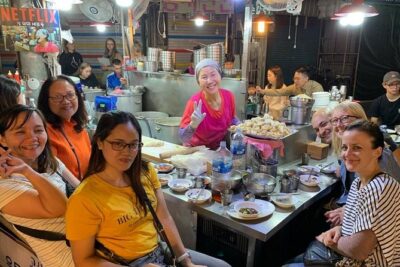
- Seoul Street Food Market Tour★ 5.0 · 1,226 reviews
- Local Home Korean Cooking Class & Market Adventure in Seoul★ 5.0 · 1,024 reviews
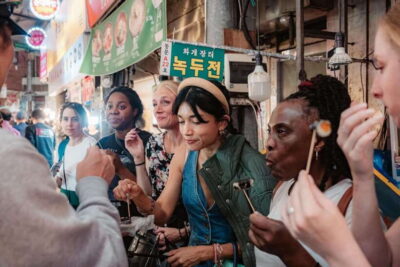
- Seoul: Night Market Food Tour with Local Guide★ 4.9 · 943 reviews
- Seoul: Palace, Temple and Market Guided Foodie Tour at Night★ 4.9 · 750 reviews
Why this Seoul tour works: small group pace and no shopping detours
If you’ve ever taken a Seoul tour that turns into a calendar of stops to promote purchases, you know the feeling. This one is designed to protect your time. The plan is straightforward: major sights, proper guidance, and then you’re back on the road to the next place before crowds fully take over.
The biggest win is the small-group size (up to 7). That changes everything at the palace area and in old neighborhoods. Lines still exist, but you’re not stuck in a moving wall of people. You also get more chances to ask questions. Guides mentioned in feedback—including Sean and Jeewon—are praised for acting more like a helpful friend than a lecturer, with attention to the pace and the questions that come up as you walk.
The second win is the no-shopping focus. The tour explicitly avoids the detour style that eats half your morning in a place that feels more like a trap than a cultural stop. You still end the day in Insadong, but the intention there is browsing the street and crafts, not being pushed into purchases.
One practical note: “no unnecessary free time” doesn’t mean you can’t rest. It means you’ll usually walk together and keep the momentum. So if you’re the type who needs long breaks every hour, plan for short stops and take breaks where it makes sense during the day.
Price and logistics: what $100 gets you in a real 8–9 hour day
At $100 per person, you’re paying for three things that add up fast in Seoul: a professional guide, guided entry logistics, and transportation that keeps you from doing a stressful hopscotch between distant neighborhoods.
You’ll get:
- a professional guide
- a fancy mini van or SUV
- entrance tickets that are included for key sights (and some stops that are free)
- hotel pickup and dropoff within Seoul
- a mobile ticket
The pickup/dropoff detail matters. Most first-timers underestimate how much travel friction drains a day. With a van/suv, you’re trading subway transfers and weather-watching for a smoother schedule. The tour also notes extra fees for pickup/dropoff when you stay in Gangnam or outside central Seoul, so if you’re far out, check that before you book.
What’s not included is also clear, and that’s good for budgeting. Meals and gratuities are on you. The only major optional add-on is the N cable car ticket ($11 per person). If you’re the kind of person who hates ticket surprises, you’ll like that the plan already flags what’s optional.
Overall, the value is strongest if you want:
- a guide to handle the “what am I looking at?” parts
- a focused route that avoids shopping-time traps
- transportation that protects your energy
It’s weaker if you prefer to wander independently with zero structure. Then you’ll likely resent the lack of long free time.
Morning start: Gwanghwamun Square and a smooth entry to the palace area
The day starts at 9:00 am with pickup and a visit beginning near Gwanghwamun Square, the modern landmark gateway for Seoul’s palace zone. Starting here is smart. It gives you orientation fast, and it puts you in the right mindset: this area isn’t just pretty architecture. It’s a political center of Joseon-era power.
From there, the guide leads you into the palace experience rather than sending you off like a self-guided audio tour. That’s part of why you avoid wasting time. You’re not deciding at every turn what’s worth seeing, where to stand, or how to time the most popular moments.
A small but helpful detail: the tour includes entrance for the first palace stop, and the guiding is described as full with practical photo advice. If you’ve struggled with photos at palaces—too many angles, too many people, not enough time—this style helps. Guides mentioned in the feedback (for example, Jeewon) are praised for taking care of tickets and for positioning people for good shots.
Gyeongbokgung Palace: changing guard viewing and where your time goes
Gyeongbokgung Palace is the headline for many Seoul first-timers, and this route gives it the attention it deserves. The plan includes about an hour for the palace walk, plus a focus on the changing guard ceremony.
This is where a guide earns their keep. It’s easy to read signs and still miss the meaning behind what you’re seeing: the layout, the ceremonial rhythm, and why certain areas matter. A guide can point out what’s symbolic and how the buildings and gates connect.
The tour also provides:
- full guiding in the palace
- changing guard viewing
- guidance on the best photo spots
The practical advantage is time management. The palace zone can feel large, and crowd flow can push you around. With the tour leading the walk, you follow a path that makes sense rather than doing zigzags that burn your energy.
One timing detail you should know: the main palace is closed on Tuesday, so you visit a secondary palace instead. That’s not a dealbreaker—if anything, it means the tour is still operating with a proper alternative plan rather than canceling or leaving you with a generic substitution.
Bukchon Hanok Village walk: traditional streets with story-driven pacing
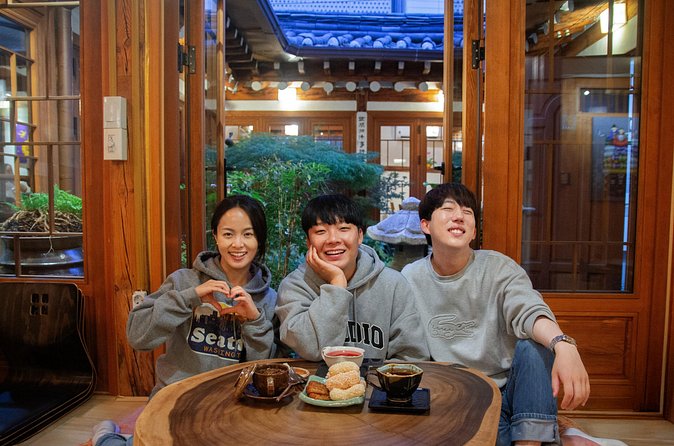
Next comes Bukchon Hanok Village, the neighborhood famous for traditional hanok houses packed into tight lanes. Two hours is a good amount of time here: long enough for wandering, short enough that you don’t feel trapped in a maze.
The key difference with this tour style is that the walk is story-based, not just a photo march. You’re taken through the village with context about Korea’s past, plus the sad stories tied to the area. That kind of interpretation changes how you look at old houses. Suddenly they aren’t just cute backgrounds; they’re part of a lived timeline.
Expect a lot of moving. You’ll want shoes that handle uneven pavement and stairs. The tour recommends moderate physical fitness, and Bukchon is one of the spots where that shows up.
A nice advantage of the small group is that you can stop without getting separated. Larger buses often force you to keep moving to keep up with the pack. Here, you’re more likely to be able to linger for a question or a better angle before the group moves on.
N Seoul Tower: panoramic views without turning the day into a ticket mess
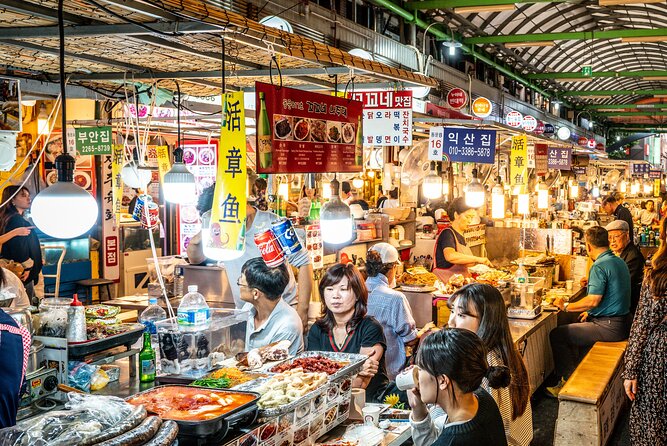
After the old neighborhood, the tour shifts to a skyline moment at N Seoul Tower. The tower stop is about one hour, and it’s free admission as part of the tour plan. The view here is the payoff: Seoul looks like a living map, with rivers, districts, and high-rise lines stretching outward.
The tower time is also a smart balance. If you try to cram tower viewing into a tiny window, you won’t enjoy it. If you give it hours and hours, it can crowd out cultural stops. This tour gives you a focused hour that usually feels like the right length to enjoy the panorama and still keep the day’s pacing.
You should also know about the option: the N cable car ticket ($11 per person) is not included. If you want the easiest route up or down, you can budget for that. If you’re fine walking, you can skip it and keep the spend down.
The tower stop’s bigger value is emotional. After palaces and narrow lanes, you finally see the scale of Seoul. It helps everything else you saw earlier make more sense.
Gwangjang Market: food culture with a guided sense of what to try
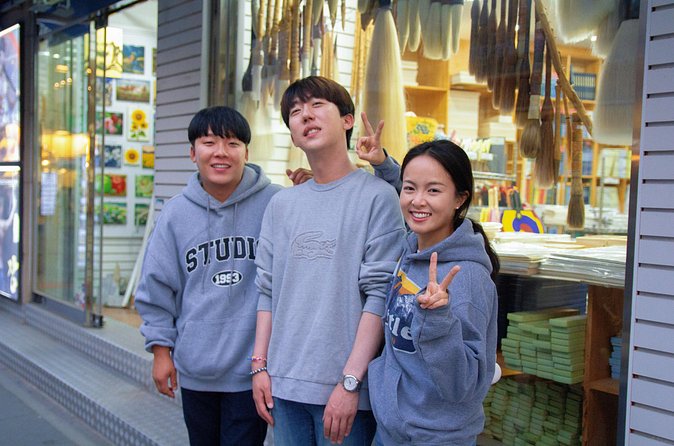
Then you hit Gwangjang Market, one of Seoul’s best-known traditional markets. The tour gives about an hour here, with the guide explaining the market’s background and introducing local specialties.
Markets can be overwhelming on your own. Everything looks good. Everything smells good. And if you don’t know the food rhythm, you can burn time figuring out what’s worth ordering. With a guide, you’re more likely to hit the right stalls and avoid getting stuck in decision fatigue.
The tour description focuses on culture and the guide’s direction, plus the chance to sample delicious snacks. Since specific menu items aren’t listed, treat this as a flexible food introduction: you’ll likely try market favorites chosen for you on the day.
A practical tip for getting the most out of this stop: go hungry. Also bring some small bills or cards that work well at street stalls, because payment systems can vary.
Also, markets are where a small group matters again. You can walk through without someone constantly stopping to wait for you. You’ll keep your place, and you’ll get the guide’s explanations as you go, not after the best eating chances have passed.
Jogyesa Temple and Insadong: calm contrast, then crafts at day’s end
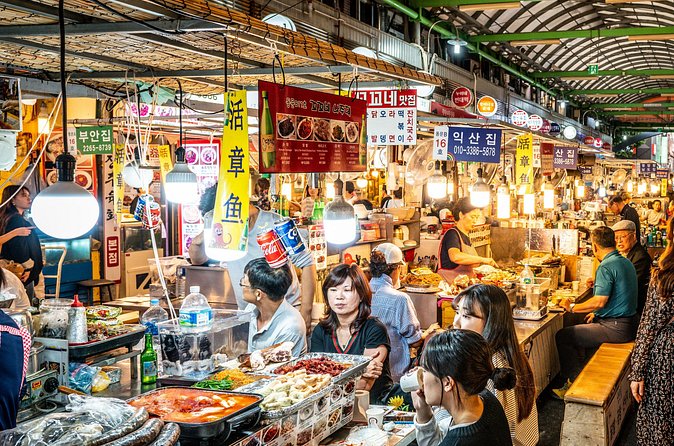
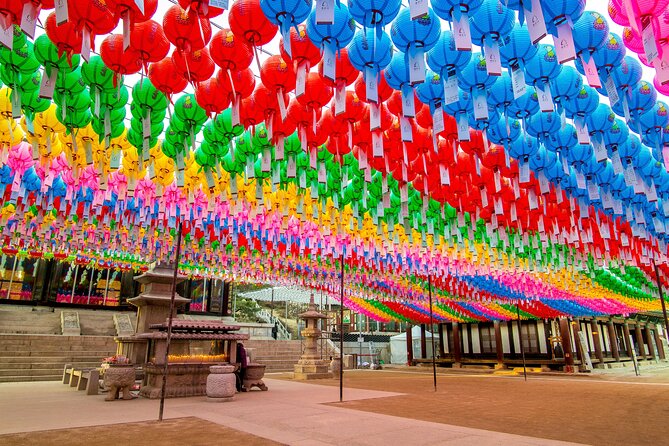
After the market’s energy, the tour shifts to Jogyesa Temple, a Buddhism center with a calmer atmosphere. The stop is about 30 minutes and includes guiding context. Buddhism has been Korea’s national religion for about 1,000 years, and the tour notes about 18% of Koreans today identify as Buddhist. That background is useful because it explains why temples aren’t occasional sightseeing stops. They’re part of the culture’s long timeline.
Jogyesa is a contrast stop. You’re moving from food stands and crowds into a slower place for a brief reset. In a day full of big landmarks, that breathing room helps.
The final stretch is Insadong, about 20 minutes on the schedule. This area is built for strolling: pottery, artwork, antiques, and cozy cafés. Even though the tour is positioned as no-shopping, Insadong is the one place where you can choose to browse longer if you want. That’s a nice compromise. You’re not forced to shop, but you can take advantage of the craft street if you enjoy that kind of wandering.
Insadong also works well as a landing point for the end of the tour. You finish with something sensory and human-scale, instead of being rushed out the door to more travel.
About the guides: what the best ones do right here
The most praised aspect across the guidance you’ll see in feedback is how the day feels. People describe it as more like spending time with a friend than being processed by a tour operator.
Guides including Sean, Han, Hun, and Jeewon come up repeatedly for things that matter on the ground:
- clear explanations tied to what you’re looking at
- polite, considerate pacing
- photo help when you don’t know where to stand
- preparedness, like warmers on cold days
That matters because Seoul sightseeing isn’t just about checking boxes. It’s about understanding what you’re seeing while you’re there, in the right place, at the right moment.
This tour’s structure supports that. It gives the guide enough control to keep the group together, and it avoids long shopping detours that typically break attention and momentum.
Who should book this Seoul small-group tour (and who should skip it)
This tour fits best if you:
- want a guided day that covers major Seoul sights
- care about avoiding shopping-time traps
- like small-group pacing and easy conversation
- want a plan that keeps moving without feeling rushed every second
It may not be ideal if you:
- want lots of free time to roam independently
- prefer a slower pace with long sit-down breaks
- have very limited walking tolerance, since you’ll move through palaces, villages, and markets
If you’re traveling solo, couples, or families who want structure but still enjoy asking questions, this style can be a strong match.
Should you book this tour?
I’d book it if your main goal is a confident first Seoul day: palace zone, old neighborhood, a tower viewpoint, a real market experience, and a temple-craft finish—without spending the day waiting on shopping stops.
I’d think twice if you hate walking and prefer to dictate your own pace. The plan is built for shared movement, and the lack of long free time is part of the appeal.
If you decide to go, do two things: wear comfortable shoes and come hungry for the market stop. Then you’ll get the full payoff of a day that’s designed to feel smooth, not chaotic.
FAQ
How long is the Seoul tour?
It runs about 8 to 9 hours.
How big is the group?
The tour is a maximum of 7 travelers.
Is hotel pickup and drop-off included?
Pickup and drop-off in Seoul are included, with an extra fee noted for Gangnam or stays outside central Seoul.
Are entrance tickets included?
Entrance tickets are included for key sights like the palace stops, while some stops on the route are free. N Seoul Tower admission is listed as free, and the N cable car ticket is not included.
Is shopping part of the tour?
No shopping is the focus. Insadong is included near the end as a street stroll area, with the option to linger if you want, but the tour is not structured around shopping stops.
What happens if it is Tuesday?
The main palace stop is closed on Tuesday, so the tour visits a secondary palace instead.
Do I need the cable car for N Seoul Tower?
The N cable car ticket is optional and costs $11 per person. Tower admission is listed as free as part of the plan.
What if the weather is bad or the tour is canceled?
This experience requires good weather. If it’s canceled due to poor weather, you’ll be offered a different date or a full refund.
More Shopping Tours in Seoul
- Seoul Street Food Market Tour★ 5.0 · 1,226 reviews
- Local Home Korean Cooking Class & Market Adventure in Seoul★ 5.0 · 1,024 reviews
- Seoul: Night Market Food Tour with Local Guide★ 4.9 · 943 reviews
- Seoul: Palace, Temple and Market Guided Foodie Tour at Night★ 4.9 · 750 reviews
- Private DMZ Tour (No Shopping): 3rd Tunnel & Suspension Bridge★ 5.0 · 607 reviews
More Tours in Seoul
- Best DMZ Tour Korea from Seoul (Red Suspension Bridge Optional)★ 5.0 · 41,422 reviews
- DMZ Tour: 3rd Tunnel, Option(Suspension Bridge, Boat) from Seoul★ 5.0 · 21,373 reviews
- DMZ tour south Korea from Seoul (NK experience hall, defector)★ 5.0 · 20,599 reviews
- Seoul: DMZ Tour with Optional Suspension Bridge★ 4.8 · 5,277 reviews
- Seoul: DMZ The 3rd Tunnel and Suspension Bridge Tour★ 5.0 · 4,656 reviews
More Tour Reviews in Seoul
- Best DMZ Tour Korea from Seoul (Red Suspension Bridge Optional)★ 5.0 · 41,422 reviews
- DMZ Tour: 3rd Tunnel, Option(Suspension Bridge, Boat) from Seoul★ 5.0 · 21,373 reviews
- DMZ tour south Korea from Seoul (NK experience hall, defector)★ 5.0 · 20,599 reviews
- Seoul: DMZ Tour with Optional Suspension Bridge★ 4.8 · 5,277 reviews
- Seoul: DMZ The 3rd Tunnel and Suspension Bridge Tour★ 5.0 · 4,656 reviews
Just added to Exploring Seoul
Shopping Tours, compared.
 ★ 5.0Seoul Street Food Market TourFrom $731,226 reviews
 ★ 5.0Local Home Korean Cooking Class & Market Adventure in SeoulFrom $911,024 reviews
 ★ 4.9Night Market Food Tour with Local GuideFrom $73943 reviews
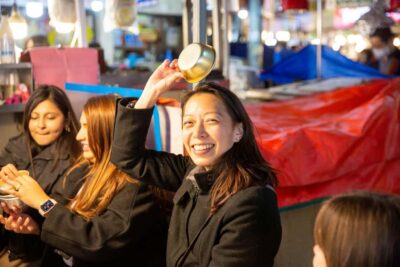 ★ 4.9Palace, Temple and Market Guided Foodie Tour at NightFrom $60750 reviews
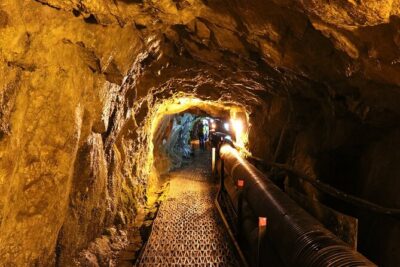 ★ 5.0Private DMZ Tour (No Shopping): 3rd Tunnel & Suspension BridgeFrom $198607 reviews
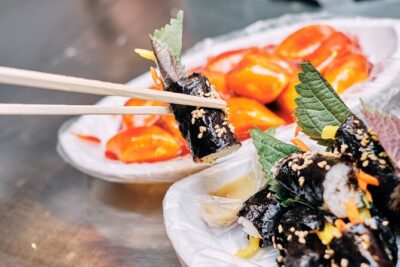 ★ 5.0Downtown Seoul Guided Food & Market Tour with 8+ Local TastingsFrom $98580 reviews
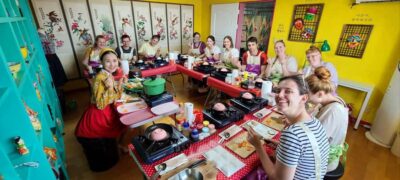 ★ 5.0Korean Cooking Class at a Local Home and Market TourFrom $98348 reviews
 ★ 4.9Guided Food & Market Tour with 8+ TastingsFrom $71342 reviews
Browse the lists this tour appears in