
Reviewed · TOURS
Small Group 7D Korea package Tour with Seoul Gyeongju Busan Jeju
One week, five worlds, no guesswork. This small-group loop strings together Seoul, Jeju, Busan, Gyeongju, and the DMZ with English-speaking guides, 3–4 star hotels, and timed entry so you can do a lot fast without feeling lost. I love the hands-on food side, especially the Gwangjang Market food tour and the Korean cooking class, and I also like that the guides (including Harry, Jung, Sang, Jiyoung, Jones, and Clover in guest feedback) mix solid context with real-life Korea talk. The trade-off is the days are full, so you’ll be moving most of the time.
You’ll be in a group that maxes at 15 travelers, and the vibe is more friendly than hectic. The tour also leans practical: pickup is offered, you get mobile tickets, and there’s room for some free time after the main program in Seoul. And yes, it’s designed to avoid the usual pressure tactics; there’s no compulsory shopping.
A possible drawback to flag up front: parts of the trip are seasonal. Cherry blossoms and canola flower timing can shift, and the DMZ day has strict document rules, so you’ll want to be organized rather than casual.
Key things I’d circle in this Korea 7-day package
- Max 15 travelers: small-group feel without the DIY stress
- Jeju classics plus lava geology: Sunrise Peak, Manjanggul Cave, and multiple waterfalls
- Busan markets with actual eats: Jagalchi and Gukje Market, plus the beach/temple pairing
- Gyeongju UNESCO highlights: Bulguksa, Seokguram, and royal-lake night views
- Seoul food skills + city icons: Korean cooking class, Gwangjang Market, palaces, Bukchon, and N Seoul Tower
- DMZ with passport checks: tunnel and observatory stops inside the controlled area
In This Review
- How a 7-Day Seoul–Jeju–Busan–Gyeongju Loop Stays Fun (Not Just Packed)
- Price and Logistics: What $1,988 Buys You (and Why It Can Still Be Fair)
- Jeju Day 1: Black-Sand Beaches, Seongsan Sunrise Peak, and Manjanggul Cave
- Jeju Day 2: Hallasan National Park, Waterfalls, and an Art Museum for the Off-Schedule Moments
- Busan Day 3: Gamcheon Stairs, Jagalchi Bites, and Haedong Yonggungsa by the Sea
- Gyeongju Day 4: UNESCO Temple Pair, Royal Lake Night Views, and the KTX Back to Seoul
- Seoul Day 5: Cooking Class Skills, Hongdae Energy, and Optional Nanta
- Seoul Day 6: Gyeongbokgung, Jogyesa, Bukchon, Gwangjang Market, and N Seoul Tower Views
- DMZ Day 7: Imjingak, Third Tunnel, Dora Observatory, and a Suspension Bridge Walk
- Who Should Book This Seoul–Jeju–Busan–Gyeongju–DMZ Tour
- Should You Book? My Take on Value and Fit
- FAQ
- How long is the tour?
- Is this a small group?
- What transportation is included?
- What meals are included?
- Is the cooking class included?
- Is the Nanta show included?
- Is there any compulsory shopping?
- What do I need for the DMZ day?
- What is the hotel standard?
- What is the cancellation policy?
How a 7-Day Seoul–Jeju–Busan–Gyeongju Loop Stays Fun (Not Just Packed)
This trip is for people who want Korea’s big hits in one go, but without having to juggle a spreadsheet of transport times, ticket lines, and translations. You get an organized flow across five major regions, with an AC vehicle handling ground movement and the expensive long-distance legs taken care of: a domestic flight to Jeju and a KTX bullet train back to Seoul.
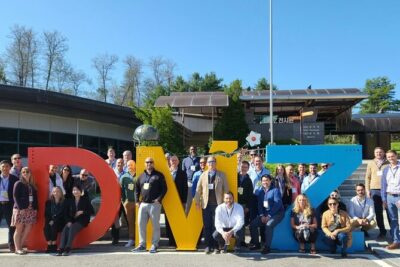
The small-group size matters here. With up to 15 people, you can ask questions, hear explanations, and still keep a social pace. If you’re the type who likes a day plan but hates being herded, this is closer to the sweet spot than most large coach tours.
One more practical plus: the tour is built around clear start and end points. It begins with pickup in the morning, then you connect to Gimpo to fly to Jeju, and the program finishes on day 7 in Seoul area—after which you can go back directly or stay a bit longer if you want.
Still deciding? These are the Seoul tours travellers book first.
- Best DMZ Tour Korea from Seoul (Red Suspension Bridge Optional)★ 5.0 · 41,422 reviews
- DMZ Tour: 3rd Tunnel, Option(Suspension Bridge, Boat) from Seoul★ 5.0 · 21,373 reviews
- DMZ tour south Korea from Seoul (NK experience hall, defector)★ 5.0 · 20,599 reviews
- Seoul: DMZ Tour with Optional Suspension Bridge★ 4.8 · 5,277 reviews
Price and Logistics: What $1,988 Buys You (and Why It Can Still Be Fair)
At $1,988 per person, this is not a budget-only option. But you are paying for a lot that is hard to replicate cheaply when you DIY:
- Domestic flight and KTX bullet train
- 6 nights in clean 3–4 star hotels
- English-speaking guide support across multiple regions
- Entrance fees for many stops
- A/C vehicle with transport costs
- A real food day at Gwangjang Market plus a cooking class
If you’ve ever tried to stitch together flights + trains + guides + entry fees for a short window, you know the total can creep up fast. The biggest value is not any single attraction—it’s the fact that the transport and “how do we get there” part is handled.
That said, the cost also fits a style of travel. If you want unlimited spontaneity, or if you love late mornings and long wandering with no schedule, this may feel intense. You’re getting a guided, efficient route—less room for drifting.
Also keep in mind that these trips often book ahead. The package averages about 69 days in advance, so if you’re traveling during a busy season, earlier planning is smart.
Jeju Day 1: Black-Sand Beaches, Seongsan Sunrise Peak, and Manjanggul Cave
Day 1 is the classic Jeju introduction: ocean scenery, volcanic shapes, and a quick hit of island culture. After you land (with morning pickup), you’ll head toward Gimpo and fly to Jeju, where the guide meets you.
Woljeongri Beach and Café Street (about 1 hour) gives you that relaxed coastal start. It’s a good place to reset after travel, and it’s easy to enjoy even if you’re still waking up. You also get a taste of the island’s café culture without needing to hunt it down.
Then you swing to Gwangchigi Beach (about 1 hour). The big draw is the black sand, formed from basalt rock weathering. It’s one of those details that makes a beach feel different here, not just another shoreline photo.
Next is Seongsan Ilchulbong (Sunrise Peak) (about 1 hour). Even if you don’t catch sunrise, the crater landscape and the tuff-cone shape give you a strong sense of Jeju’s volcanic story. The climb is short enough for most people, but it still feels like you earned the view.
After that, you may hit the Seongsan Canola Flower Field (about 1 hour, free). The timing depends on season—canola shows up from April through September, and cherry blossom timing is mentioned for late March to early April. If you’re traveling outside peak blooms, don’t worry: you’ll still get the walking and street vibe.
Finish the day with Manjanggul Cave (about 30 minutes) and Seongeup Folk Village (about 30 minutes). Manjanggul is tied to the island’s long volcanic history, and Seongeup Folk Village gives you a quick look at traditional Jeju homes and daily life. It’s a nice pairing: geology first, then culture.
Practical tip: Jeju weather can shift. Bring a light layer even on sunny days, especially if you’re doing cave time and then stepping outside again.
Jeju Day 2: Hallasan National Park, Waterfalls, and an Art Museum for the Off-Schedule Moments
Day 2 goes deeper into nature and variety. You start near Jeju National University, Ara Campus (about 1 hour). The schedule calls out cherry blossom timing around early April, so if you hit it right, you’ll get that specific seasonal feel.
There’s also a brief stop for an optical illusion where objects appear to roll uphill. It’s short, but it’s the kind of stop that gives you a laugh and a quick mental break from nonstop sightseeing.
Then comes Hallasan National Park (about 2 hours). Hallasan is Korea’s highest mountain, and the tour description leans into the geology angle—dormant volcano made mostly of basalt. Even if you don’t go for the summit, spending time in the park area helps you understand why Jeju is more than beaches.
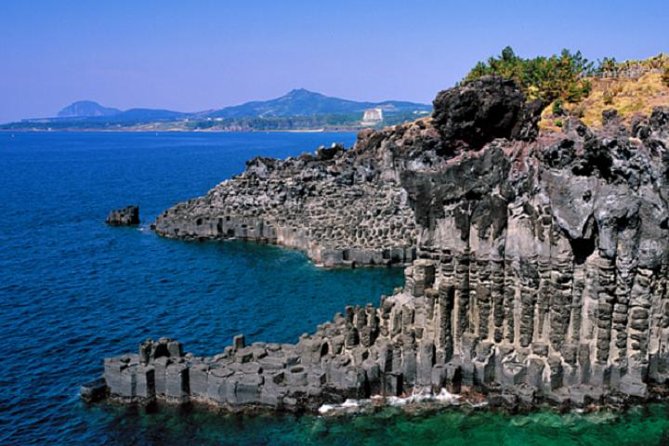
After that, you’ll see more volcanic coastal scenery: the description mentions black rock formations with cube and hexagon shapes. It’s the kind of “how did nature do that” stop that feels uniquely Jeju.
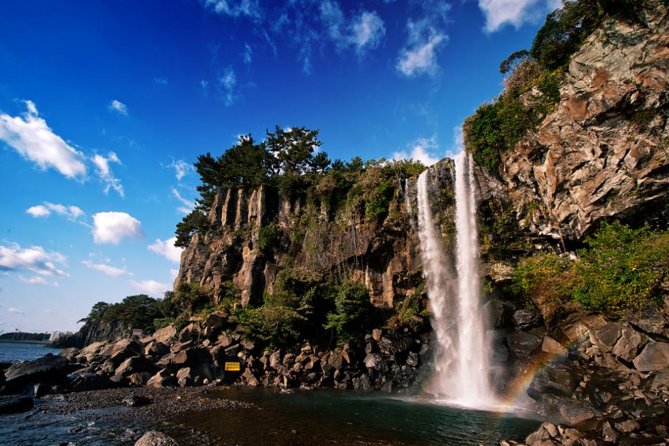
The middle of the day is waterfalls: Cheonjiyeon Falls (about a set viewing time) and Jeongbang Waterfall (described as directly descending into the ocean). These stops are great because they give you that Jeju mix of legend plus visual payoff—water, rock, and ocean all at once.
End with ARTE Museum Jeju (about 1 hour). This is the more modern, light-and-video style stop. It’s a nice counterweight to caves and trails, and it’s easy to enjoy even if the weather isn’t perfect.
Possible drawback: You’ll want comfortable shoes. Even when the stops are short, you’re often walking on uneven paths and across several different environments in one day.
Busan Day 3: Gamcheon Stairs, Jagalchi Bites, and Haedong Yonggungsa by the Sea
Busan day is about contrasts: colorful hillside lanes, food markets, and a temple that faces the ocean.
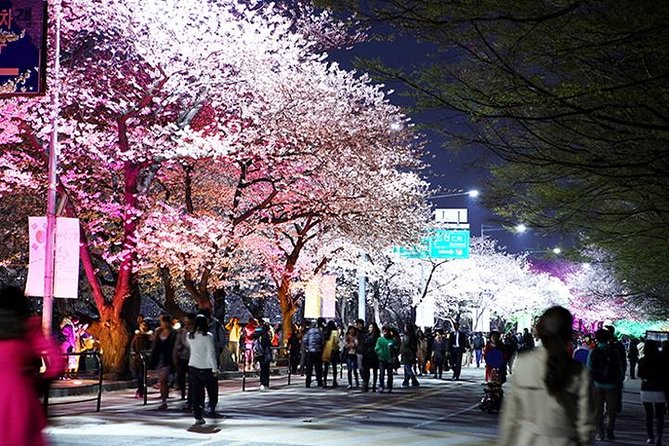
Start at Haeundae Dalmaji-gil Road (about 20 minutes). It’s positioned as a cherry blossom spot, with sea views and pine-lined paths. Even if blossoms aren’t at peak, the route gives you an easy introduction to Busan’s seaside energy.
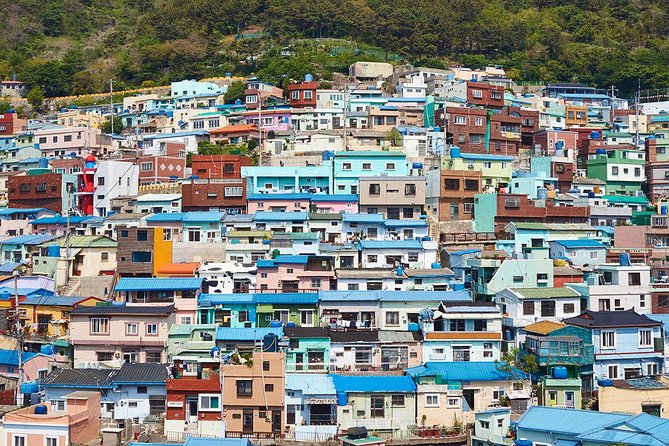
Then you’re off to Gamcheon Culture Village (about 1 hour). The key detail here is the staircase-style layout on a coastal mountain. That means you’re walking uphill/downhill through a maze of houses and streets—fun, but expect some stair effort.
Next: Jagalchi Market (about 1 hour). This is one of the big classic experiences in Korea seafood culture. You can buy and eat fresh raw fish right at the market area, and it’s described as a place where macged style stalls are common. Even if you don’t go full seafood sampler, you’ll get the atmosphere fast.
You then move through more market life with stops including BIFF Square and Gukje Market (each about 1 hour in the schedule). BIFF Square is linked to film festival venues and street-food energy, while Gukje Market is known for new and used items—something different from the “eat-only” parts of the day.
The day’s calm moment is Haedong Yonggungsa (about 1 hour). It’s described as one of the most beautiful temples in Korea and a must-visit in Busan. The main draw is the coastal setting—temple and sea together, which makes for photos that feel less generic than inland temples.
Finally, you end at Haeundae Blue Line Park (about 1 hour). This is the newer scenic train-style attraction with views along the Busan shoreline.
Practical tip: Busan can feel humid in warm months. If you’re sensitive to heat, bring water and plan to take small breaks during Gamcheon’s stair sections.
Gyeongju Day 4: UNESCO Temple Pair, Royal Lake Night Views, and the KTX Back to Seoul
Gyeongju is what makes this whole trip feel more than sightseeing tourism. You get UNESCO-style heritage stops paired with royal-era vibes.
You start with Bulguksa Temple (about 1 hour). The schedule describes it as a historic jewel of the Silla capital and part of the UNESCO world heritage set. Even in limited time, the temple compound feels like it has weight and age.
Next is Seokguram (about 1 hour). This is a stone temple/grotto tied to natural ventilation design and long preservation—over 1,200 years is mentioned. It’s the kind of place where you appreciate careful architecture, not just random ruins.
Then you shift toward scenery and slower wandering: Bomunho Lake Tourism Complex (about 1 hour), with a note about cherry blossom petals in April and pink walkways. Even if flowers are not in full swing, the lake-adjacent atmosphere helps break up the heavier temple time.
You also see Daereungwon Tomb Complex (about 1 hour). The description points out the giant tomb mounds and mentions that you can enter Cheonmachong Tomb. That extra access angle is what makes a tomb stop feel more than a photo op.
You get a cultural stroll at Gyeongju Gyochon Traditional Village (about 30 minutes), described as nobleman-style houses. Then it’s time for evening-feeling views at Donggung Palace and Wolji Pond (about 40 minutes). It’s explicitly a night-view spot, with traditional pavilions around the lake.
The final move of the day is transport: Gyeongju Station to Seoul by KTX (about 2 hours, included). This is a big deal for value. It removes a long-distance problem you would otherwise have to plan carefully.
Possible drawback: Day 4 mixes a lot of heritage walking with a transit jump. If you’re the type who hates packing and re-packing energy, plan to stay flexible and hydrate.
Seoul Day 5: Cooking Class Skills, Hongdae Energy, and Optional Nanta
By day 5 you’re back in Seoul, and the day is built around fun plus food competence.
The centerpiece is a Korean cooking class at 오미 요리연구소 (about 3 hours, included). The class is described as cooking three Korean dishes: bibimbab, a traditional pancake, and soup. Menu can change depending on season, but the structure stays the same. This is one of the strongest “you’ll use this later” parts of the trip—because now your memories can live on in dinner plans back home.
After that, you head to Hongdae (about 1 hour). Hongdae is the youthful street vibe with food and street performances. If you want Korea that feels less like museums and more like current culture, this is a good stop.
Then there’s Myeongdong NANTA Theater (about 1.5 hours). It’s optional and non-verbal, so you can still enjoy it even if you’re not fluent. Ticket seat prices are given as S $35, P $45, V $55.
I like this setup because it’s genuinely choice-based. If you want theater, go. If you’d rather do more walking in Seoul, you can.
Seoul Day 6: Gyeongbokgung, Jogyesa, Bukchon, Gwangjang Market, and N Seoul Tower Views
Day 6 is classic Seoul sightseeing with a strong food tie-in.
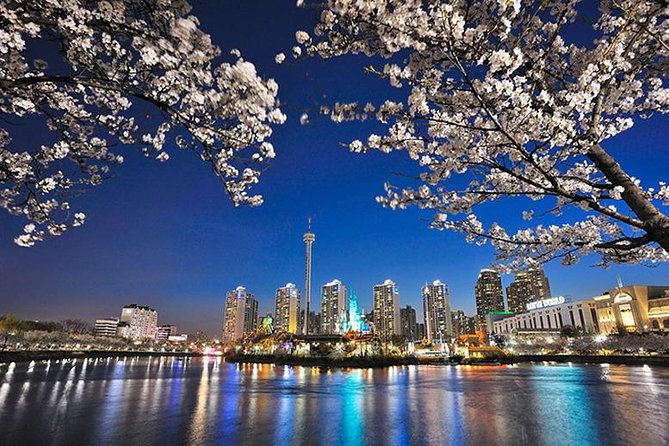
You start at Yeouido Park (about 1 hour), described as a cherry blossom festival site in spring. Even if you miss peak blossoms, the park setting gives you a calm start before palace crowds and city walking.
Then it’s Gyeongbokgung Palace (about 1 hour) at Gwanghwamun Square. This is one of the biggest palace names, and it’s a great anchor point for first-time Seoulers.
Next: Jogyesa Temple (about 1 hour). It’s described as the head temple of Korea’s Buddhism and placed in the city center. That contrast—temple stillness inside a major urban area—lands well.
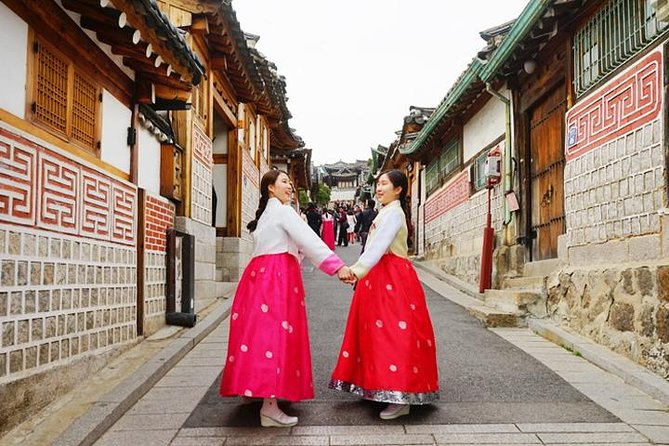
You then get a stroll through Bukchon Hanok Village. The description focuses on traditional hanok houses packed closely together, dating back to the Joseon Dynasty. Because it’s a walking area, your enjoyment depends on your comfort with small lanes and lots of steps.
Then comes the day’s food highlight: Kwangjang Market (about 1 hour). This is positioned as a food tour location, and it’s included. The market is known as Korea’s first permanent market, and a Netflix mention is included in the description. The important practical detail is that you’re not just wandering—this is set up as a guided eating experience.
Later, you ride to N Seoul Tower (about 1 hour). The tour description calls out a near 480m elevation view across Seoul, including Namsan Mountain and the tower’s height. It’s the kind of stop where even a short visit gives you a good city orientation.
To close the day, you walk through Myeongdong Shopping Street (about 1 hour) and Insadong (about 1 hour). Insadong is described as an art and antique street with tea cafes, souvenir shops, traditional restaurants, and Korean sweets.
Practical tip: Myeongdong and Insadong can be crowded. I’d keep your shopping budget in mind and focus on one or two personal goals so it doesn’t turn into decision fatigue.
DMZ Day 7: Imjingak, Third Tunnel, Dora Observatory, and a Suspension Bridge Walk
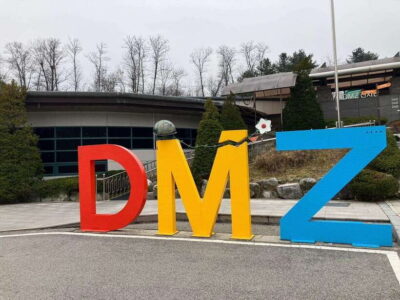
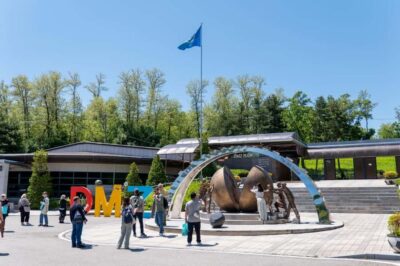
Day 7 shifts tone from city to geopolitics and natural scenery. You start at Imjingak Pyeonghoa-Nuri Park (about 30 minutes, free). It’s described as the place to buy DMZ shuttle bus tickets. The tour also stresses that you’ll need your passport because there’s an ID check point when you enter the civilian control zone.
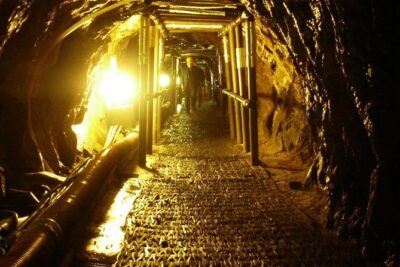
You then visit the Third Tunnel (about 1 hour, included). This is described as the first stop of the DMZ tour, with access through a controlled line. The tunnel is stated as dug by North Korea after the Korean War, and the tour includes getting inside the tunnel.
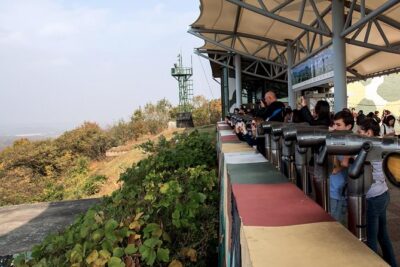
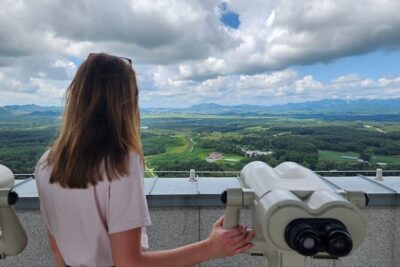
Next is Dora Observatory (about 30 minutes, included). This is described as one of the northernmost observatories open to the public, where you can see North Korea with your naked eyes.
You also stop at Tongilchonan-gil (about 15 minutes). It’s described as a village under civilian control zone with curfew, and it’s also presented as a place to browse souvenirs and local products.
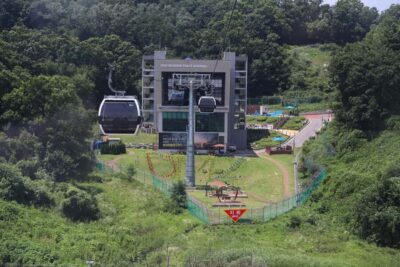
Finally, you get a nature stop with Gamaksan Chulleong Bridge (about 40 minutes, free). The tour notes only about 10 minutes of hiking to reach the suspension bridge viewpoint.
Possible drawback to consider: DMZ visits are not casual. Passport and ID requirements are explicit here, and the controlled environment can add waiting time. If you’re the type who wants long, relaxed mornings, this day will feel structured.
Who Should Book This Seoul–Jeju–Busan–Gyeongju–DMZ Tour
This package fits you if you want:
- A first-time Korea overview with the big names in Seoul plus major Jeju and Busan highlights
- Less stress over transport (flight + KTX handled, AC vehicle provided)
- Included meals and guided food experiences, not just sightseeing stamps
- A small group size that stays social without becoming a free-for-all
It might not fit you if you:
- Hate tight days and prefer slow travel
- Want total flexibility with no guided structure
- Are traveling during seasonal uncertainty and expect every cherry blossom or canola stop to be at peak bloom
For families, it’s mixed. The schedule is active, but many stops are short enough to keep momentum. For solo travelers, the small-group size helps you meet people without feeling stranded.
Should You Book? My Take on Value and Fit
If your goal is maximum Korea in seven days—Seoul culture, Jeju geology, Busan food and coastal temples, Gyeongju heritage, plus a DMZ day—this tour is a strong fit. The price makes more sense once you count what’s included: flights, KTX, hotels, entrance fees, and multiple guided experiences, especially the cooking class and the Gwangjang Market food portion.
But be honest with yourself about pace. This is not a “wander until you feel like it” trip. You’re signing up for a guided sprint with a few breathing moments, and it works best if you’re energized by organized days.
If you want a smooth, guided, high-value hit of South Korea with minimal logistics work, I’d say this is worth considering.
FAQ
How long is the tour?
The tour is 7 days (about 7 days) with 6 nights of accommodation included.
Is this a small group?
Yes. It’s a small group tour with a maximum of 15 travelers.
What transportation is included?
You get a domestic flight and KTX bullet train included, plus an AC tour vehicle during the land portions.
What meals are included?
Breakfast is included for 4 days, and lunch is included for 7 days. A food tour at Gwangjang Market is also included. Dinner inclusion can vary by the day, since the tour notes that some lunches and dinners are included—check the day-by-day details when you book.
Is the cooking class included?
Yes. A Korean cooking class at 오미 요리연구소 is included, and it includes cooking three Korean dishes: bibimbab, a traditional pancake, and soup (menu can change by season).
Is the Nanta show included?
Myeongdong NANTA Theater is optional. You can request not to attend, and ticket prices listed are S $35, P $45, and V $55.
Is there any compulsory shopping?
No. The tour description says there is no compulsory shopping.
What do I need for the DMZ day?
You need your passport for the DMZ day because there is an ID check point for entering the civilian control zone.
What is the hotel standard?
You stay in 3–4 star hotels in good condition for 6 nights.
What is the cancellation policy?
This experience is non-refundable and cannot be changed for any reason. If it is canceled because the minimum number of travelers isn’t met, you’ll be offered a different date or a full refund.
More Tours in Seoul
- Best DMZ Tour Korea from Seoul (Red Suspension Bridge Optional)★ 5.0 · 41,422 reviews
- DMZ Tour: 3rd Tunnel, Option(Suspension Bridge, Boat) from Seoul★ 5.0 · 21,373 reviews
- DMZ tour south Korea from Seoul (NK experience hall, defector)★ 5.0 · 20,599 reviews
- Seoul: DMZ Tour with Optional Suspension Bridge★ 4.8 · 5,277 reviews
- Seoul: DMZ The 3rd Tunnel and Suspension Bridge Tour★ 5.0 · 4,656 reviews
More Tour Reviews in Seoul
- Best DMZ Tour Korea from Seoul (Red Suspension Bridge Optional)★ 5.0 · 41,422 reviews
- DMZ Tour: 3rd Tunnel, Option(Suspension Bridge, Boat) from Seoul★ 5.0 · 21,373 reviews
- DMZ tour south Korea from Seoul (NK experience hall, defector)★ 5.0 · 20,599 reviews
- Seoul: DMZ Tour with Optional Suspension Bridge★ 4.8 · 5,277 reviews
- Seoul: DMZ The 3rd Tunnel and Suspension Bridge Tour★ 5.0 · 4,656 reviews
Just added to Exploring Seoul
Tours, compared.
 ★ 5.0DMZ Tour: 3rd Tunnel, Option(Suspension Bridge, Boat) from SeoulFrom $3521,373 reviews
 ★ 5.0DMZ tour south Korea from Seoul (NK experience hall, defector)From $2620,599 reviews
 ★ 4.8DMZ Tour with Optional Suspension BridgeFrom $455,277 reviews
 ★ 5.0DMZ The 3rd Tunnel and Suspension Bridge TourFrom $654,656 reviews
 ★ 5.0Signature DMZ Tour: Exclusive Defector Talk & Suspension BridgeFrom $274,459 reviews
 ★ 5.0Thrilling Korean DMZ 3rd Tunnel Tour from Seoul + Red Bridge RushFrom $353,097 reviews
 ★ 4.9DMZ Tour & Suspension Bridge (Option English/Spanish)From $352,628 reviews
 ★ 5.0DMZ Past and Present: Korean Demilitarized Zone Tour from SeoulFrom $372,481 reviews