
Reviewed · GUIDED
Seoul Self-Guided Audio Tour
Seoul in your ears beats a brochure. This self-guided audio route strings together 16 major attractions across royal palaces, Buddhist temples, and modern design icons. It’s built for quick orientation, with short talks you can play on demand as you move through the city.
I like the quick, practical stop-by-stop context. Each location is designed around a tight time window (about 10 minutes of audio), so you get the “what you’re looking at and why it matters” without needing a guide’s full schedule.
I also like the flexibility. You get a mobile-friendly access link via SoundCloud plus an interactive Google My Maps itinerary, and your access links stay valid for up to 6 days, so you can adjust your pacing or even split it across days.
One real drawback to keep in mind: this is not a step-by-step navigation app, and it’s not a timed guided tour. If you expect timed entry coordination or automatic street guidance, you’ll want to set your expectations before you start.
In This Review
- Key highlights you’ll feel right away
- Using the SoundCloud links and My Maps route
- Gyeongbokgung Palace: Joseon power in a fast, focused stop
- Bukchon Hanok Village: a living lesson in hanok design
- Changdeokgung Palace: UNESCO grounds and the Secret Garden idea
- Jogyesa Temple: Korean Buddhism’s public face
- Cheonggyecheon Stream: an urban renewal walk with an ecological angle
- Dongdaemun Design Plaza (DDP): Zaha Hadid and Seoul’s future mood
- Myeong-dong Cathedral: Gothic lines and democracy-era context
- N Seoul Tower: panoramic views plus the love lock tradition
- Namsan Park: feng shui rules and a green pause
- Leeum Art Museum: traditional and contemporary under one roof
- The War Memorial of Korea: making modern history feel immediate
- National Museum of Korea: 5,000 years in one place
- Hangang Park: the river that shapes daily Seoul
- Bongeunsa Temple: a quiet pause near modern Seoul
- Starfield Library: literature meets commerce in a single space
- Seoul Sky: engineering, height, and rapid urban growth
- Price and what you really get for $9
- Who this self-guided audio tour suits best
- Should you book this Seoul Self-Guided Audio Tour?
- FAQ
- How much does the Seoul Self-Guided Audio Tour cost?
- How long is the audio tour?
- Is this tour fully self-guided?
- What’s included in the price?
- What do I receive after booking?
- Are admission tickets included for the landmarks?
- Where do I start the tour?
- Is this tour refundable or changeable?
- How many attractions are included?
Key highlights you’ll feel right away
- SoundCloud audio tracks that you can play per attraction or the whole loop
- Google My Maps points that jump you directly to the matching audio
- Many free stops (temples, streams, parks, museums) that stretch your $9 value
- A “big picture” route that’s ideal for first-time orientation
- A mix of Seoul eras, from Joseon palaces to modern design and super-tall views
A handful of other Seoul experiences to line up next
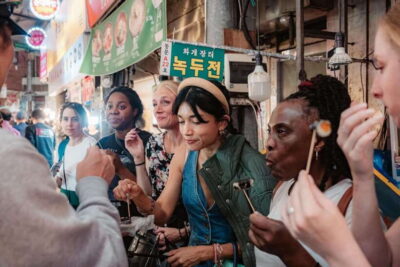
- Seoul: Night Market Food Tour with Local Guide★ 4.9 · 943 reviews
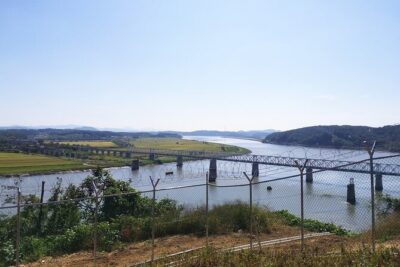
- DMZ Guided Tour with Suspension Bridge / Gondola from Seoul★ 5.0 · 876 reviews
- Seoul: Palace, Temple and Market Guided Foodie Tour at Night★ 4.9 · 750 reviews
- Downtown Seoul Guided Food & Market Tour with 8+ Local Tastings★ 5.0 · 580 reviews
Using the SoundCloud links and My Maps route
This tour gives you two private links. One is a secure SoundCloud web link for the audio, and the other is a Google My Maps link with an interactive map covering all 16 stops.
On your selected travel date, you’ll receive the links by email before your starting time. Access is valid for up to 6 days, which is handy if your schedule slips or you want to spread the sites out.
Because the audio is delivered through a web link, plan to have your phone ready to play it (think internet access and decent headphones). And since there’s no pick-up or drop-off, you’ll be relying on public transportation and your own walking between stops.
Gyeongbokgung Palace: Joseon power in a fast, focused stop
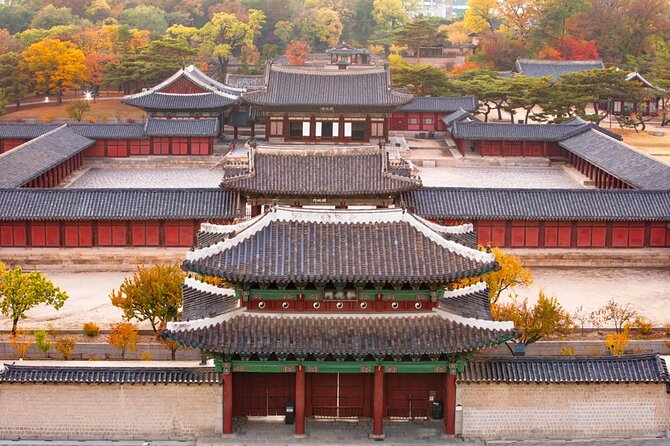
Gyeongbokgung Palace is the Joseon Dynasty’s grand royal seat, and the audio helps you read the place beyond the photo spots. You’ll get a quick look at the palace architecture and why it sits at the center of Korea’s historical story.
Admission is not included here, so you’ll want to decide whether you’re doing the paid interior time or keeping it to a shorter outside-and-explain-yourself visit. Either way, the 10-minute format is meant to get your bearings fast.
Tip for using the 10 minutes well: arrive with one question in your head, like what made this “seat of royal power” different from other palaces. The audio is designed to answer that kind of focus quickly.
Bukchon Hanok Village: a living lesson in hanok design
Bukchon Hanok Village is free and easy to love if you enjoy traditional neighborhoods you can actually walk through. The audio covers hanok principles—how these traditional houses are shaped by layout, materials, and climate logic.
This stop is also framed as a place that has shifted into a trendy cultural district. That contrast is part of the point: it’s not a museum set; it’s a neighborhood that keeps changing.
With only about 10 minutes planned, you won’t see every alley. Use the audio to pick a direction, then slow down on the streets that pull your attention.
Changdeokgung Palace: UNESCO grounds and the Secret Garden idea
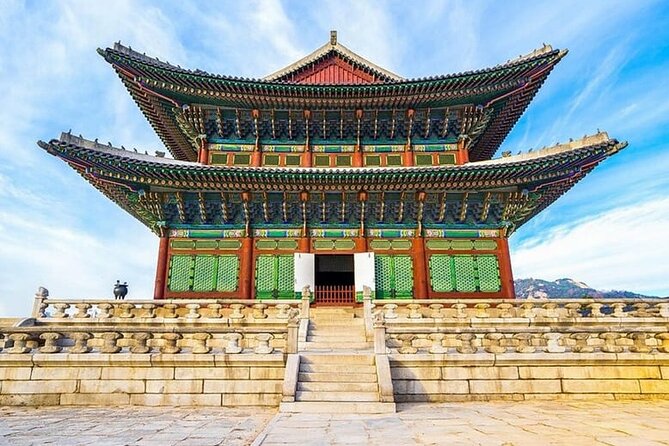
Changdeokgung Palace is a UNESCO World Heritage site, and the audio focuses on its harmony with nature. It’s also where you’ll hear the spotlight on the Secret Garden, one of the palace’s most famous references.
Admission is not included, so the same decision applies: budget time and tickets if you want the interior experience, or use the stop as a context-builder for what you’re seeing. Either way, the structure is meant to give you the “why this palace feels different” explanation.
If you’re short on time, don’t try to sprint through the grounds. The audio timing works best when you pause for a few key views and let the description land.
Jogyesa Temple: Korean Buddhism’s public face
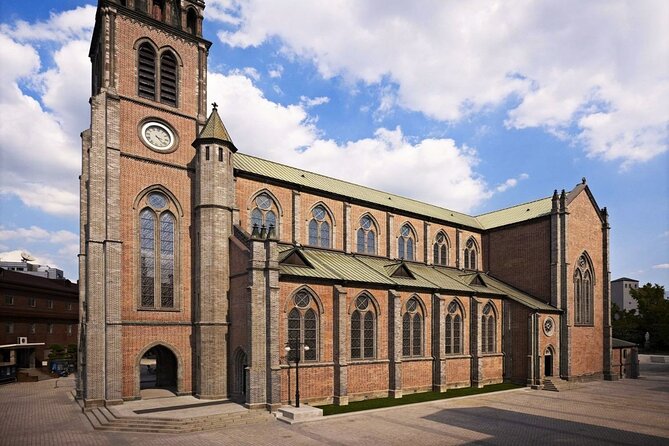
Jogyesa Temple is free and serves as a center point for Korean Buddhism. The narration is built to connect Buddhist practices and symbolism with what you see on site, not just random facts.
It also points to the temple’s role in modern Korean history. That matters because you’re not only looking at an old building—you’re looking at a living religious site with a place in the country’s recent story.
Give yourself a moment to slow down here. Ten minutes can feel short, but it’s enough to switch gears after palaces and neighborhoods.
Cheonggyecheon Stream: an urban renewal walk with an ecological angle
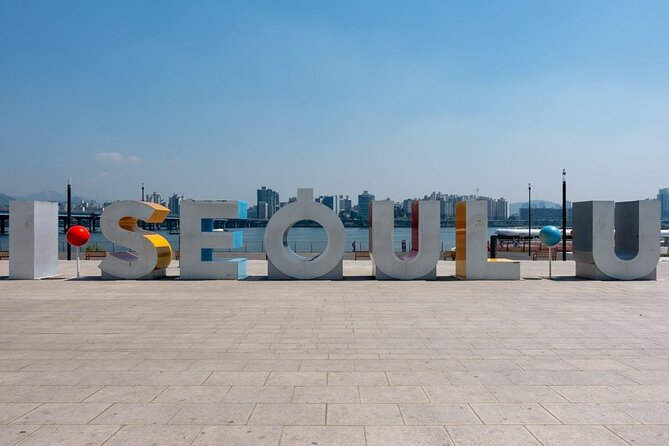
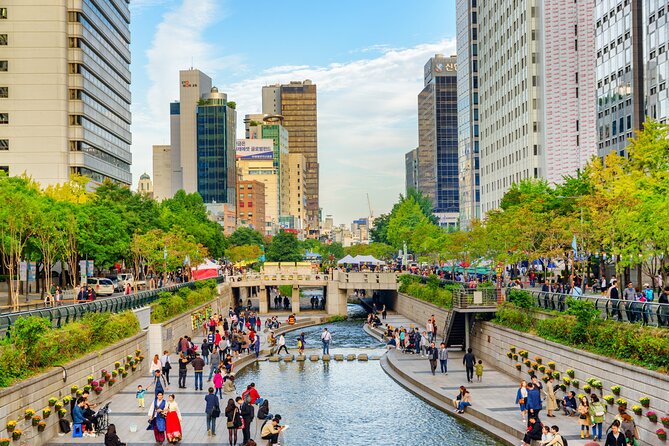
Cheonggyecheon Stream is free and designed for an easy reset. The audio explains its transformation—from a covered highway to a public space—and how that shift affected Seoul’s ecology.
This is one of the stops where the “short audio” format actually works well. A stream walk is naturally paced, and you can match the audio cadence with where you are.
If your feet are tired from earlier walking, this is a good place to reclaim comfort. It’s still a meaningful stop, not just a break in the schedule.
Dongdaemun Design Plaza (DDP): Zaha Hadid and Seoul’s future mood
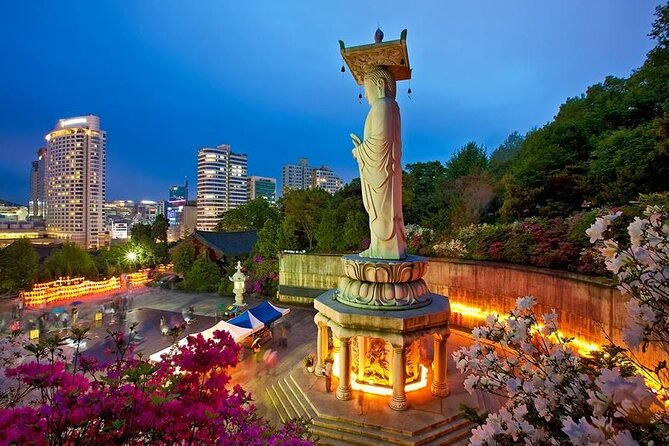
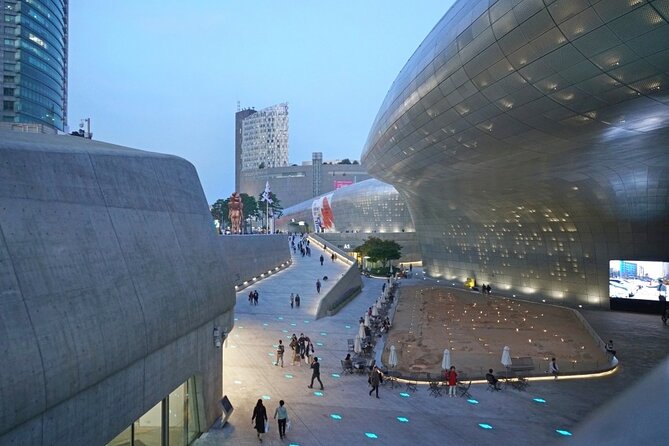
DDP is free and built for people who like architecture with a strong personality. The audio calls out the futuristic design by Zaha Hadid and frames the complex as a hub for design and fashion.
Because this stop is about modern identity, it’s less about quiet contemplation and more about noticing form, curves, and public space. Ten minutes can be enough to get oriented before you decide if you want longer time on any side.
This is also a useful “modern Seoul check” after the palace and temple sequence. You’ll feel the city changing as soon as you step into this zone.
Myeong-dong Cathedral: Gothic lines and democracy-era context
Myeong-dong Cathedral is free and famous for its Gothic revival look. The audio helps you connect the building’s style to its role in Korea’s democracy movement.
This is a good stop for anyone who likes understanding how landmarks carry human stories. The cathedral’s shape is easy to admire, but the audio pushes you to notice the historical meaning too.
Since it’s a 10-minute slot, keep your eyes moving: architecture first, then the context. That combo is what makes it more than a quick selfie stop.
N Seoul Tower: panoramic views plus the love lock tradition
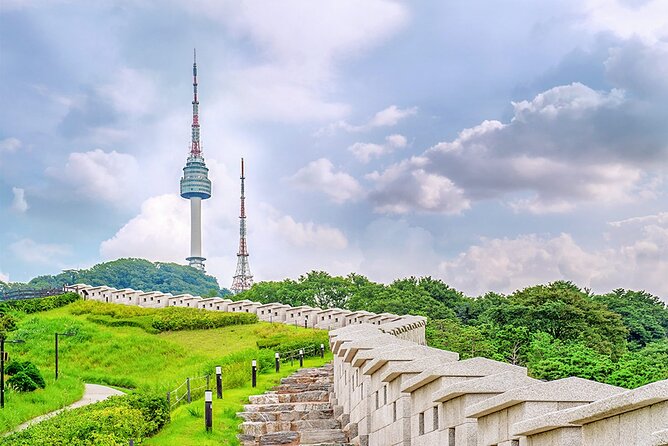
N Seoul Tower is where you’ll trade street-level walking for big skyline perspective. The audio highlights its communication history and also the love lock tradition that made it a recognizable romance hotspot.
Admission is not included, so again, decide if you’re paying for the viewpoint time. If you are, this stop is a strong payoff because it reframes the entire city you’ve been walking through.
If you want the 10-minute audio to help, don’t just look outward. Listen to what the tower represents, then compare that with how Seoul looks from above.
Namsan Park: feng shui rules and a green pause
Namsan Park is free and acts like a breathing space in the middle of the city. The audio connects the area to feng shui principles and explains why this mountain park matters as a green oasis.
This is a stop where you’ll likely want a bit more than ten minutes, even if the audio is timed. Nature breaks your mental rhythm, which makes everything after it feel sharper.
Use the audio as your interpretation lens, then let your senses do the rest: air, shade, city sounds fading in and out.
Leeum Art Museum: traditional and contemporary under one roof
Leeum Art Museum is not free (admission is not included here), but it’s one of the more “art-experience” stops in the route. The narration points out the blend of traditional Korean art with contemporary works.
It also highlights that the museum buildings were designed by renowned architects. That’s a clue: even if you only catch a portion of exhibits, the structure itself is part of the experience.
If you’re choosing between paying and skipping, consider your personal art interest. The audio can set expectations, but you’ll only truly enjoy Leeum if you’re ready to spend real time inside.
The War Memorial of Korea: making modern history feel immediate
The War Memorial of Korea is free and emotionally heavier than most of the other stops. The audio focuses on Korean War exhibits and the ongoing impact of the peninsula’s division.
This is a place where speed can work against you. Even though the audio slot is short, treat it as a prompt to read labels and look carefully at what you’re seeing.
If you feel the urge to skip, don’t. This stop gives the tour a modern historical backbone that helps the rest of Seoul make more sense.
National Museum of Korea: 5,000 years in one place
The National Museum of Korea is free and built for a wide timeline. The audio guides you through 5,000 years of Korean history and culture and points you toward key artifacts tied to Korean identity, from prehistoric times through the modern era.
This stop is one of the best uses of the tour audio because it helps you avoid wandering in circles. Even in ten minutes, you can pick what theme you want to follow if you decide to extend later.
If you’re more of a “show me the highlights” person, this stop is a smart anchor. If you want deeper reading, you’ll quickly outgrow the audio’s short format.
Hangang Park: the river that shapes daily Seoul
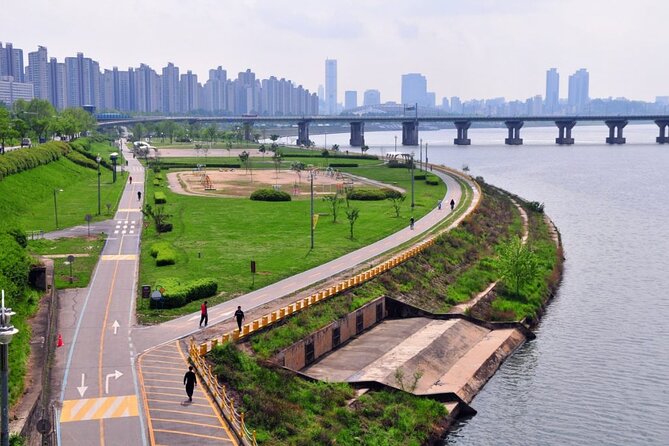
Hangang Park is free and focused on one of Seoul’s biggest lifestyle themes: the Han River. The audio explains the river’s role in Seoul’s development and why it’s such a core part of Korean culture.
This stop is less about learning facts and more about feeling the city’s scale. The riverline gives you a calmer visual rhythm after temples, towers, and museums.
If the weather’s good, give yourself extra minutes. Even when the tour audio says ten, your best experiences often happen in the minutes you choose to add.
Bongeunsa Temple: a quiet pause near modern Seoul
Bongeunsa Temple is free and intentionally contrasts with the surrounding modern district. The audio highlights its 1,200-year history and its role in spreading Korean Buddhism.
This stop works best when you let the atmosphere take over a little. After more design-and-views energy, Bongeunsa gives you a slower tempo and a different kind of attention.
Ten minutes is enough to understand the basics, but the temple’s setting encourages lingering if you have time.
Starfield Library: literature meets commerce in a single space
Starfield Library is free and built for visual curiosity. The audio talks about how this Instagram-famous public library blends literature with commerce in a distinctly Seoul-style way.
Even if you’re not a library superfan, the place is worth a short visit. The audio frames what you’re seeing as a real cultural mash-up, not just a photo background.
Use this stop as a change of pace. It’s light, playful, and a good “end-of-day fun” without dragging you into another museum hour.
Seoul Sky: engineering, height, and rapid urban growth
Seoul Sky is one of the most payoff-heavy stops, but admission is not included. The audio points you toward the engineering behind Korea’s tallest building and connects it to Seoul’s rapid urban development.
This is another viewpoint stop, like N Seoul Tower, but it’s designed around the city’s growth story rather than romance tradition. If you care about architecture and modern infrastructure, you’ll likely get more from this than a generic skyline glance.
Give yourself time to look slowly. From above, Seoul’s different eras start to feel like layers instead of separate neighborhoods.
Price and what you really get for $9
At $9 per person, this audio tour is priced like a budget-friendly way to get structure. The catch is that it’s only as valuable as your willingness to self-direct: you’re paying for narration and mapping, not for entry tickets or transportation.
The value improves because many stops are free, including Bukchon Hanok Village, Jogyesa Temple, Cheonggyecheon Stream, Dongdaemun Design Plaza, Myeong-dong Cathedral, Namsan Park, War Memorial of Korea, National Museum of Korea, Hangang Park, Bongeunsa Temple, and Starfield Library.
You do still have several paid sites where admission is not included: Gyeongbokgung Palace, Changdeokgung Palace, N Seoul Tower, Leeum Art Museum, and Seoul Sky. So your real total cost depends on which of those you choose to enter.
Think of the $9 as buying clarity. You’re paying to avoid the guesswork of what to look for at each stop—and that can save you real time.
Who this self-guided audio tour suits best
This is a good fit if you want a big-picture route and like learning while you walk. The short intro format works nicely when you’re first in town and want a map-based way to decide where to spend extra time later.
It also suits people who prefer privacy and control. Since it’s private to your group, you’re not stuck in someone else’s pace or forced into a fixed group conversation.
It’s a weaker choice if you want hands-free navigation or a guided tour feel. This is still self-guided, with you managing the walking and timing between stops.
Should you book this Seoul Self-Guided Audio Tour?
I’d book it if you’re arriving in Seoul and want to quickly connect palaces, temples, neighborhoods, and modern landmarks into one coherent story. The format is built for a practical overview, and the free-site mix means you can keep costs under control even if you add a few paid entries.
Skip it if you need timed entry help, step-by-step routing, or instant access right at the moment you want to start. Also, since it’s non-refundable and cannot be changed for any reason, be confident in your travel date before you hit confirm.
If you like planning but still want flexibility on the ground, this $9 audio package is a smart, low-risk way to get started. Just bring your own patience, your own navigation skills, and a charged phone—and you’ll get a lot more out of Seoul than if you wander on autopilot.
FAQ
How much does the Seoul Self-Guided Audio Tour cost?
It costs $9.00 per person.
How long is the audio tour?
The duration is approximately 3 hours.
Is this tour fully self-guided?
Yes. It’s a self-guided audio tour with a mobile ticket and audio access links. Entry fees and transportation are not included.
What’s included in the price?
You get private access links to the audio guide playlist for 16 attractions and a private access link to an itinerary map (with audio linked to each attraction). The access links are valid up to 6 days.
What do I receive after booking?
On your selected date of travel, before your starting time, you receive an email with two links: one for the audio guides (SoundCloud) and one for the interactive Google My Maps itinerary.
Are admission tickets included for the landmarks?
No. Entry fees are not included where required, but many stops listed are free.
Where do I start the tour?
Because it’s self-guided, you can choose your starting point and ending point based on your convenience. The start and end are both listed as Seoul, South Korea.
Is this tour refundable or changeable?
No. It is non-refundable and cannot be changed for any reason.
How many attractions are included?
The audio itinerary covers 16 attractions.
More Guided in Seoul
- Seoul: Night Market Food Tour with Local Guide★ 4.9 · 943 reviews
- DMZ Guided Tour with Suspension Bridge / Gondola from Seoul★ 5.0 · 876 reviews
- Seoul: Palace, Temple and Market Guided Foodie Tour at Night★ 4.9 · 750 reviews
- Downtown Seoul Guided Food & Market Tour with 8+ Local Tastings★ 5.0 · 580 reviews
- Seoul: DMZ Guided Tour with Suspension Bridge and Gondola★ 4.9 · 553 reviews
More Tours in Seoul
- Best DMZ Tour Korea from Seoul (Red Suspension Bridge Optional)★ 5.0 · 41,422 reviews
- DMZ Tour: 3rd Tunnel, Option(Suspension Bridge, Boat) from Seoul★ 5.0 · 21,373 reviews
- DMZ tour south Korea from Seoul (NK experience hall, defector)★ 5.0 · 20,599 reviews
- Seoul: DMZ Tour with Optional Suspension Bridge★ 4.8 · 5,277 reviews
- Seoul: DMZ The 3rd Tunnel and Suspension Bridge Tour★ 5.0 · 4,656 reviews
More Tour Reviews in Seoul
- Best DMZ Tour Korea from Seoul (Red Suspension Bridge Optional)★ 5.0 · 41,422 reviews
- DMZ Tour: 3rd Tunnel, Option(Suspension Bridge, Boat) from Seoul★ 5.0 · 21,373 reviews
- DMZ tour south Korea from Seoul (NK experience hall, defector)★ 5.0 · 20,599 reviews
- Seoul: DMZ Tour with Optional Suspension Bridge★ 4.8 · 5,277 reviews
- Seoul: DMZ The 3rd Tunnel and Suspension Bridge Tour★ 5.0 · 4,656 reviews
Just added to Exploring Seoul

Guided, compared.
 ★ 4.9Night Market Food Tour with Local GuideFrom $73943 reviews
 ★ 5.0DMZ Guided Tour with Suspension Bridge / Gondola from SeoulFrom $35876 reviews
 ★ 4.9Palace, Temple and Market Guided Foodie Tour at NightFrom $60750 reviews
 ★ 5.0Downtown Seoul Guided Food & Market Tour with 8+ Local TastingsFrom $98580 reviews
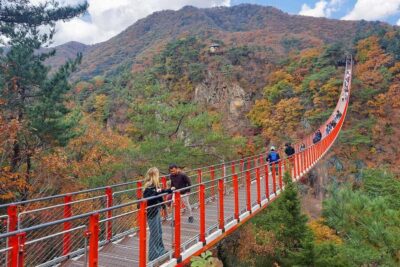 ★ 4.9DMZ Guided Tour with Suspension Bridge and GondolaFrom $48553 reviews
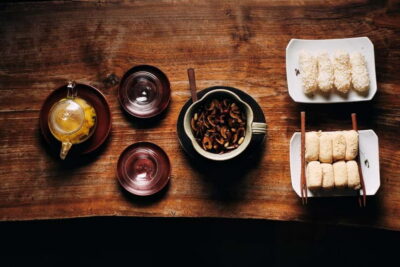 ★ 4.9Guided Food & Market Tour with 8+ TastingsFrom $71342 reviews
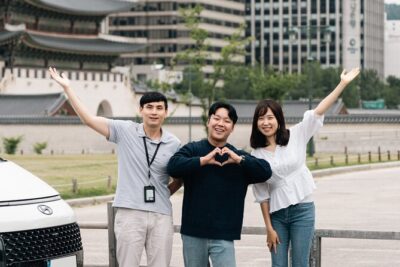 ★ 5.0Flexible Private Guided Tour in Seoul (Optional Incheon Layover)From $225323 reviews
DMZ Guided tour from Seoul with Suspension Bridge or GondolaFrom $45319 reviews
★ 5.0Flexible Private Guided Tour in Seoul (Optional Incheon Layover)From $225323 reviews
DMZ Guided tour from Seoul with Suspension Bridge or GondolaFrom $45319 reviews