
Reviewed · TICKETS
Korean Traditional Music Performance Ticket
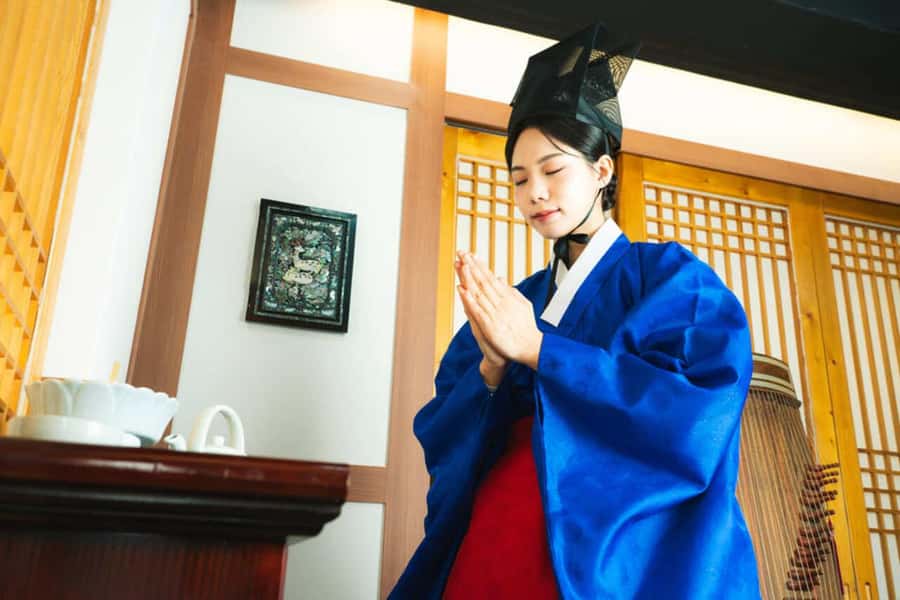
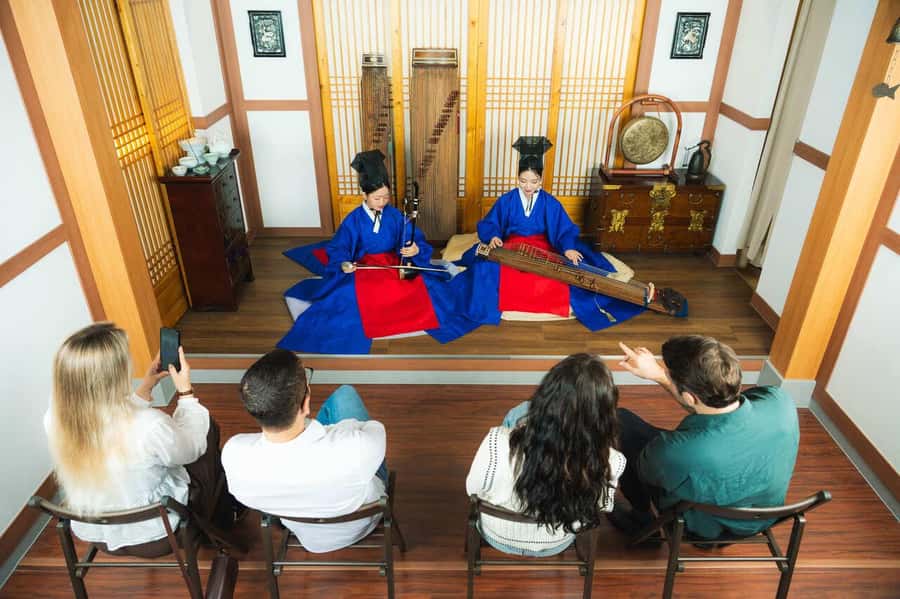
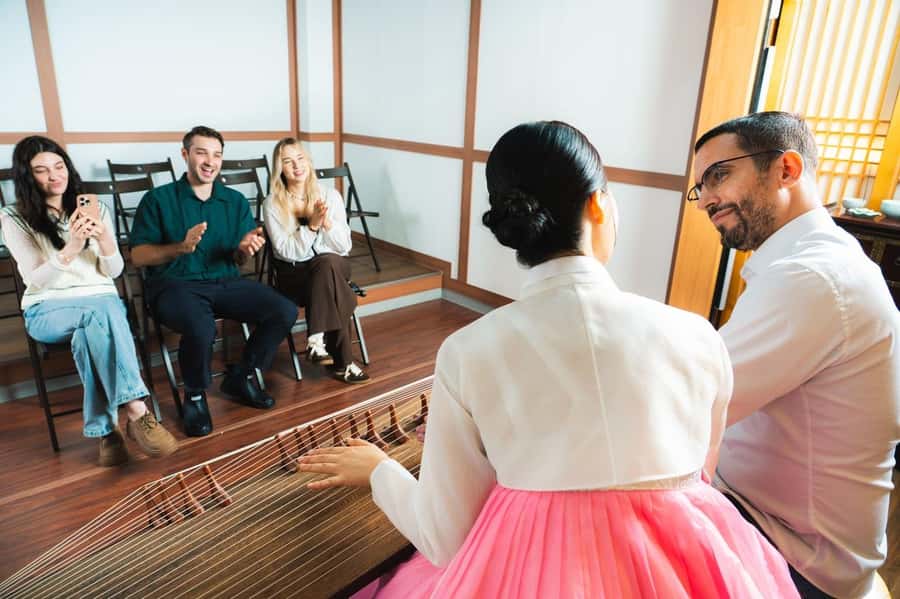
A concert in a hanok feels like time travel. Insa-dong’s traditional setting turns Korean traditional music into something you can almost see, especially with a structured three-part program performed by seasoned musicians.
Two things I really like: the show’s intimacy (you sit in prepared seating inside a small space) and the way the performance connects old-school sounds to modern pop through traditional instruments.
One thing to consider: getting up to the venue is via stairs only, so plan your route and pace accordingly.
Key points at a glance
- Three named stages: Gilje (opening blessing), Jinyeon (banquet-style court music), and Together in Harmony (folk songs plus K-pop/drama OST fusions).
- Hanok atmosphere in Insa-dong: you’re in a traditional wooden setting in Jongno-gu, right where Seoul’s culture scene lives.
- About an hour of music: roughly 60 minutes with comfortable chairs provided.
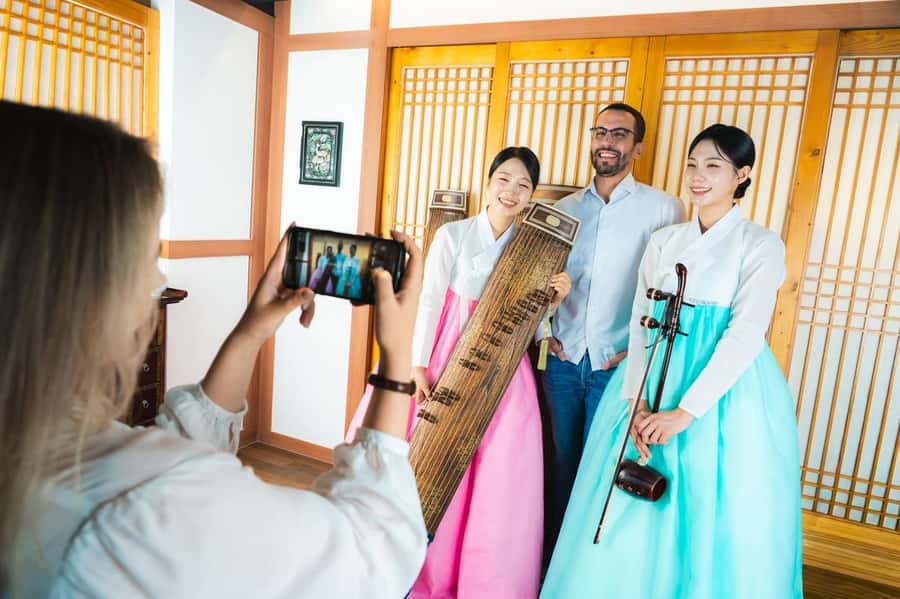
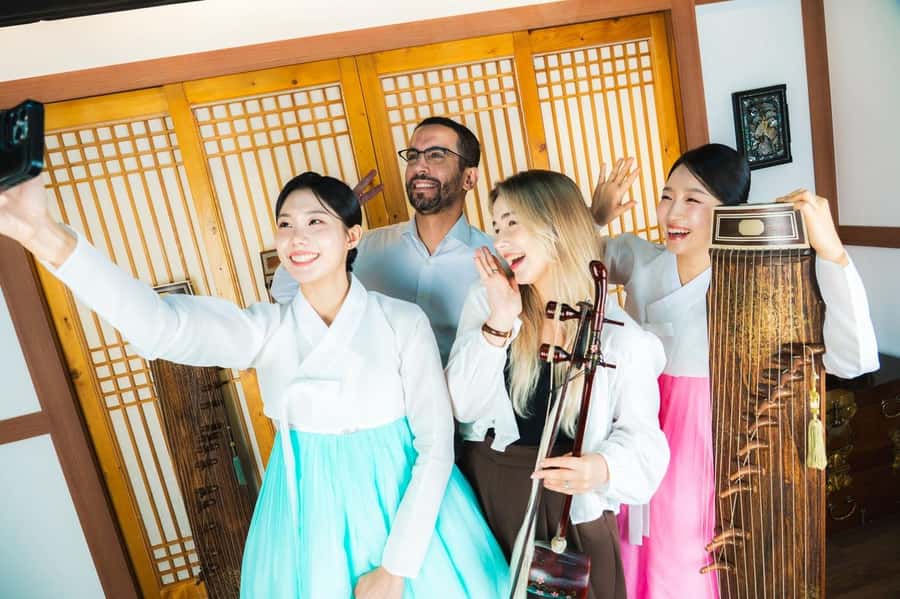
- Up-close after the show: there’s a chance to take photos with the musicians, and you may even get interaction time.
- Weekday-only performances: shows run on weekdays at 11:00, 13:00, and 15:00.
In This Review
- Insa-dong Hanok Setting: Why the Room Matters as Much as the Music
- Ticket Details and What $47 Actually Buys
- Getting to Jinyeon Hall: Simple, but Don’t Ignore the Stairs
- Inside the Show: Gilje, Jinyeon, and Together in Harmony
- 1) Gilje: An Opening Blessing Ceremony
- 2) Jinyeon (The Banquet Performance): Court Music and Solo Mastery
- 3) Together in Harmony: Folk Songs and K-pop/Drama OST Fusions
- After the Performance: Photos and Musician Interaction
- The Practical Comfort Stuff: Seating, Phone Silence, and Timing
- Who This Experience Fits Best (and Who Should Skip It)
- Value Check: Is $47 Worth It?
- A Few Tips to Make Your Evening Smoother
- Should You Book This Korean Traditional Music Performance in Insa-dong?
- FAQ
- Where is the meeting point for the performance?
- How long is the Korean traditional music performance?
- What showtimes are available?
- Is the venue accessible by elevator?
- What languages are supported during the experience?
- Does the ticket include hotel pickup or drop-off?
- Are food and drinks included?
- What should I do with my phone during the performance?
- Is there an option to reserve and pay later?
- How late can I cancel for a full refund?
Insa-dong Hanok Setting: Why the Room Matters as Much as the Music
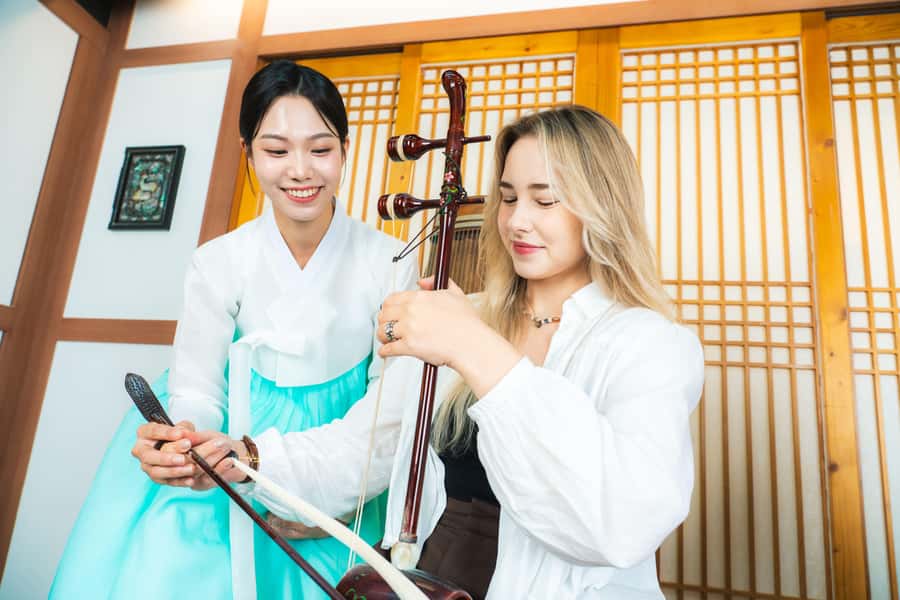
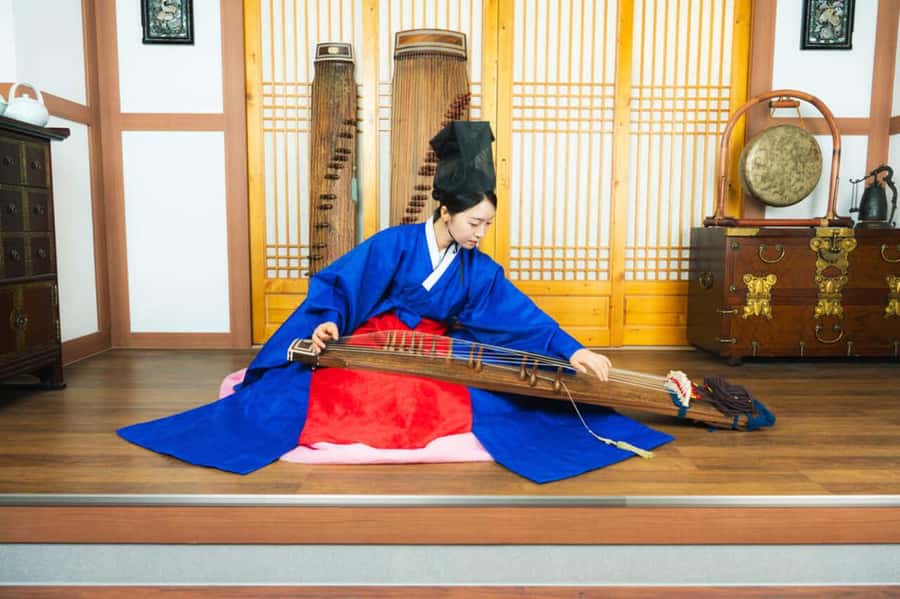
This isn’t a big theater experience. You’re seated in a traditional hanok setting, in an area known for arts and craft shops, tea stops, and alleyway culture. The effect is practical: smaller rooms help you catch details in the sound—soft tones, short bursts, and the way instruments layer together.
The venue also does something subtle to the mood. When musicians begin in that calm, formal space, the music doesn’t feel like background entertainment. It feels like an event with its own pace and etiquette.
And yes, the “traditional” look helps. Some visitors experience the performance with hanbok vibes in their photos and memories, which makes the whole night feel more connected to Korean aesthetics than a standard concert.
A handful of other Seoul experiences to line up next
- Seoul: Jamsil Baseball Stadium Game Ticket with Dinner& Beer★ 4.8 · 248 reviews
- Seoul: TOUCH FIVE Performance Show Ticket★ 4.9 · 231 reviews
- Seoul: Sky Lotte World Tower Ticket★ 4.7 · 209 reviews
- Seoul: N Seoul Tower Observatory Ticket★ 4.6 · 196 reviews
Ticket Details and What $47 Actually Buys
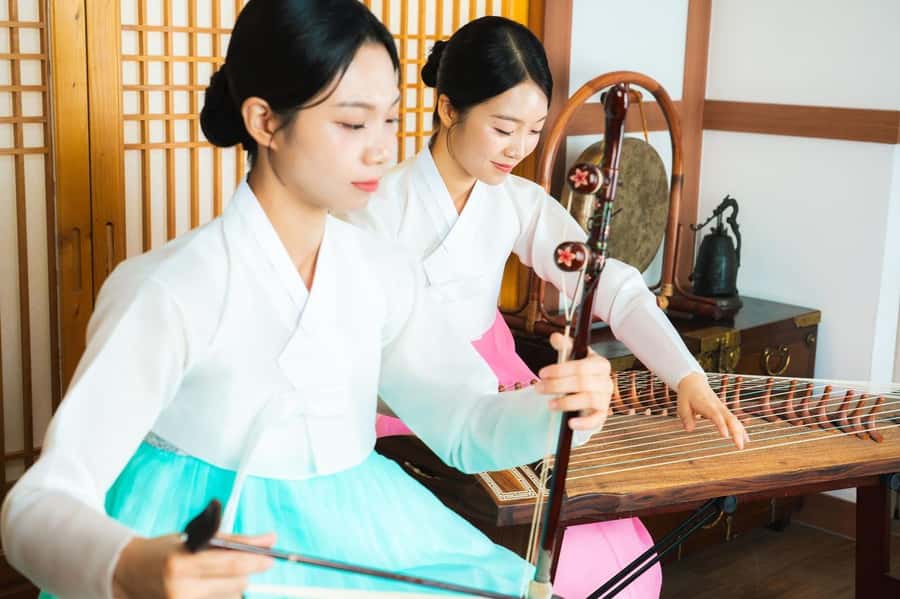
For $47 per person, you’re paying for a premium, seated cultural performance—not just a casual street music stop. The show runs for about 60 minutes, which is a sweet spot: long enough to feel complete, short enough that it won’t wreck your day plan.
You also get a small-group format. The group size can be 1–20 people, so you’re not lost in a crowd. That matters here because the performance leans into subtlety and presence.
Language support is built in: the experience is available in English and Korean. Chairs are provided, and you’ll have a prepared seating area rather than standing room logistics.
What you don’t get is also clear. There’s no hotel pickup/drop-off and no food or drinks. So you’ll want to eat before, and treat this as a focused cultural stop rather than a dinner-and-show package.
Getting to Jinyeon Hall: Simple, but Don’t Ignore the Stairs
The meeting point is Jinyeon Hall, 2F, 10 Insadong 5-gil, Jongno-gu, Seoul. It’s a short walk from major transit points: about 6 minutes from Jonggak Station (Line 1), Exit 3-1, and about 8 minutes from Jongno 3-ga Station (Line 5), Exit 5.
You’ll want to arrive about 10 minutes early. It’s not just to be polite; it’s also to give yourself time to find the correct entrance and get settled before the formal start.
A practical tip: one common issue is navigation to the exact spot. If your usual map app drops you a little off, switch to Google Maps to locate the studio entrance more precisely.
Parking is available nearby via public facilities, but expect city-style constraints—so don’t plan on driving unless you’re comfortable with limited options.
One more real-world detail: access to the venue is stairs only, with no elevator. If stairs are a problem for you, this is not the right activity. The experience specifically isn’t suitable for people with mobility impairments.
Inside the Show: Gilje, Jinyeon, and Together in Harmony
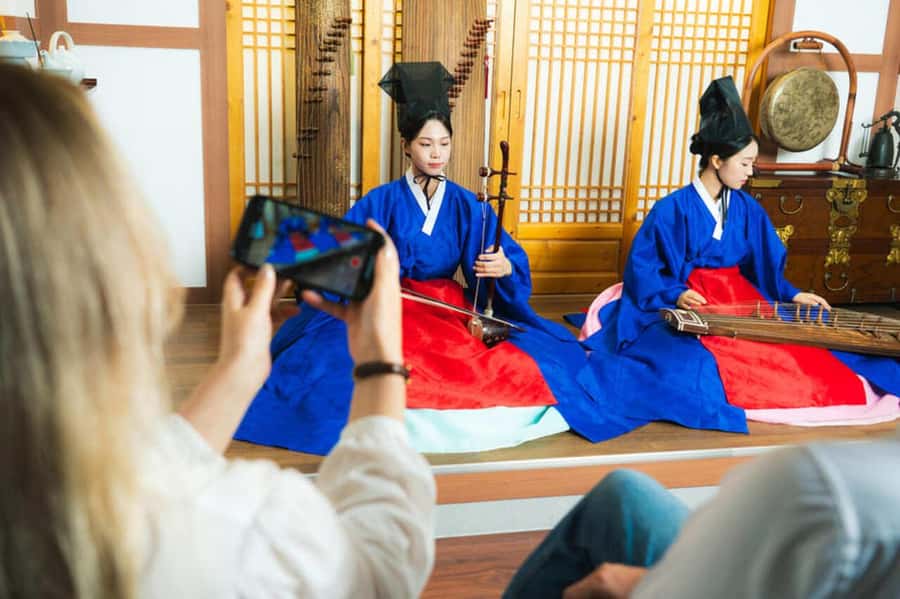
The performance has a clean, three-part structure. That’s not just marketing—it helps you understand what you’re hearing as the program moves from blessing to court music to folk and modern fusions.

1) Gilje: An Opening Blessing Ceremony
The show begins with Gilje, described as an opening blessing ceremony. Even if you don’t know the technical terms, you’ll feel the intention: the program sets a respectful tone right away, with peace and good wishes.
This stage is like tuning your ears. The sound world shifts from everyday Seoul noise to a more ceremonial rhythm, so you’re ready for what comes next.
2) Jinyeon (The Banquet Performance): Court Music and Solo Mastery
Next is Jinyeon, the banquet performance. Here you’ll hear graceful court music and powerful solo instrumentals.
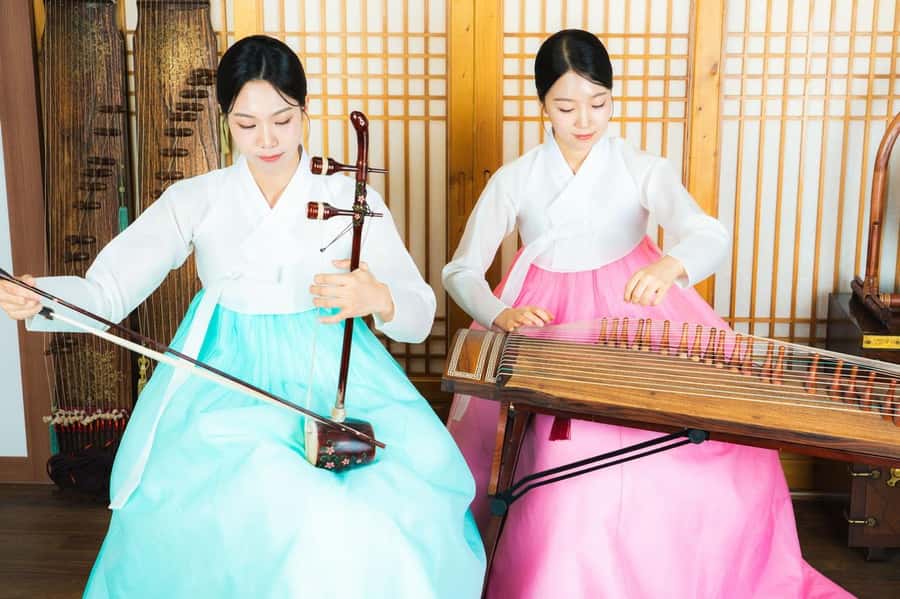
This is where you’ll start noticing individual instrument voices. In particular, visitors highlight the blending of sounds from traditional string instruments such as gayageum and haegeum. That combination is a good clue that you’re not listening to a single melody line—you’re hearing interlocking roles.
If you’re the type who likes to identify instruments as you go, this stage rewards attention. Sit still, listen for the “personality” of each instrument, and don’t rush the moment.
3) Together in Harmony: Folk Songs and K-pop/Drama OST Fusions
The final stage is Together in Harmony. This is where the performance connects tradition to modern pop culture.
You’ll hear the soul of Korean folk songs, and then you get creative fusions of K-pop and drama OSTs, performed using traditional instruments. This is one of the best parts of the whole experience if you’re visiting from outside Korea and worry that “traditional music” might feel too unfamiliar.
It also helps people who are already fans of K-dramas or idol music feel included without turning the show into a novelty act. The instruments stay Korean; the melodies reference modern listening habits.
A note on what you might hear: some performances are described as including pieces like Arirang and even international selections. Since the program structure is consistent, you can expect a similar arc even if the exact songs vary by session.
After the Performance: Photos and Musician Interaction
Don’t sprint out the door. After the show, there’s a chance to take photos with the musicians. Some visitors also describe additional interaction where musicians explain their instruments and how they play.
That part is meaningful because traditional performance can feel mysterious at first. When you hear an instrument described in plain terms, the sounds make more sense in your head, and you leave with a stronger memory than just “it sounded beautiful.”
The Practical Comfort Stuff: Seating, Phone Silence, and Timing
You’ll sit in a prepared seating area with chairs provided, so you don’t need to hunt for a cushion or stand for the full hour. The comfort level is part of why this format works—no one is fighting the floor while trying to hear fine details.
The vibe is also solemn, so the rules are simple. Put your phone on silent mode before the performance starts. It’s one of those small steps that keeps the experience respectful for everyone in the room.
Timing matters. Arrive about 10 minutes early, settle in, and take the moment to get your bearings. It sounds basic, but in a small space, late entry is distracting for you and for the musicians.
Who This Experience Fits Best (and Who Should Skip It)
This is a great match if you want a strong cultural moment without needing a long day plan. It’s also a smart choice if you like music but don’t want to spend hours reading or researching before you hear it.
I’d especially recommend it for:
- First-time visitors who want Korean traditional music in a guided, story-like structure
- People who enjoy both traditional arts and modern references (K-pop and drama OST fusions)
- Anyone who appreciates small-format performances with a calm atmosphere
Skip it if:
- Stairs are difficult for you, since the venue is accessible only by stairs and has no elevator
- You’re looking for food, drinks, or a “hang out” activity. This is a performance-first ticket.
Value Check: Is $47 Worth It?
For Seoul, $47 isn’t a bargain price, but it also isn’t random. You’re paying for a seated traditional music performance in an atmospheric hanok setting, plus a program designed in three distinct stages rather than one long undifferentiated set.
You’re also getting trained performers. The experience describes musicians with over 10 years of experience, and the quality shows up in the attention people give to instrument blending and solo moments. The small group size also makes the experience feel less like “I paid to sit near others” and more like “I’m part of the room.”
If you think of the ticket as “an hour of music,” you may find it pricey. But if you treat it as a compact cultural evening—with photo time and potential musician interaction—the value feels more justified.
A Few Tips to Make Your Evening Smoother
- Wear shoes that handle stairs and compact hallways. Even if you’re fine on your feet, last-minute climbing isn’t fun.
- Plan to eat first. There are no food or drinks included.
- If navigation tries to fool you, use Google Maps to find the exact studio location.
- Treat your phone like a silent witness. The performance expects quiet.
These aren’t big hacks. They’re just the difference between a calm, respectful hour and a slightly stressful one.
Should You Book This Korean Traditional Music Performance in Insa-dong?
If you want Korean culture in a way that feels close up—music, instruments, and the room’s atmosphere—this is an easy yes. The three-part flow (blessing to court to harmony with pop references) makes it approachable whether you’re a music nerd or a casual listener.
Book it if you’re:
- Staying in or near Jongno-gu / Insa-dong
- Available on weekdays at one of the set times (11:00, 13:00, 15:00)
- Comfortable with stairs and quiet performance etiquette
Don’t book it if stairs are a no-go or if you need food/drinks and pickup included. In that case, you’ll spend your energy managing logistics instead of enjoying the music.
In the end, this is one of those Seoul experiences that doesn’t try to impress you with scale. It impresses by focus: an atmospheric hanok, skilled musicians, and a program built to make traditional Korean sound feel understandable in about an hour.
FAQ
Where is the meeting point for the performance?
The meeting point is Jinyeon Hall, 2F, 10 Insadong 5-gil, Jongno District, Seoul, Republic of Korea.
How long is the Korean traditional music performance?
The performance lasts approximately 60 minutes.
What showtimes are available?
Performances are scheduled on weekdays only (excluding weekends and public holidays) at 11:00, 13:00, and 15:00.
Is the venue accessible by elevator?
No. Access to the venue is via stairs only, and there is no elevator.
What languages are supported during the experience?
The experience is available in English and Korean.
Does the ticket include hotel pickup or drop-off?
No. Hotel pickup and drop-off are not included.
Are food and drinks included?
No. Food and drinks are not included.
What should I do with my phone during the performance?
Because the atmosphere is solemn, you’re asked to set your mobile phone to silent mode before the performance begins.
Is there an option to reserve and pay later?
Yes. The booking offers Reserve & Pay Later, so you can book a spot and pay nothing today.
How late can I cancel for a full refund?
You can cancel up to 24 hours in advance for a full refund.
More Tickets in Seoul
- Seoul: Jamsil Baseball Stadium Game Ticket with Dinner& Beer★ 4.8 · 248 reviews
- Seoul: TOUCH FIVE Performance Show Ticket★ 4.9 · 231 reviews
- Seoul: Sky Lotte World Tower Ticket★ 4.7 · 209 reviews
- Seoul: N Seoul Tower Observatory Ticket★ 4.6 · 196 reviews
- Seoul: Baseball Game Ticket with Dinner/Beer with the host★ 5.0 · 94 reviews
More Tour Reviews in Seoul
- Best DMZ Tour Korea from Seoul (Red Suspension Bridge Optional)★ 5.0 · 41,422 reviews
- DMZ Tour: 3rd Tunnel, Option(Suspension Bridge, Boat) from Seoul★ 5.0 · 21,373 reviews
- DMZ tour south Korea from Seoul (NK experience hall, defector)★ 5.0 · 20,599 reviews
- Seoul: DMZ Tour with Optional Suspension Bridge★ 4.8 · 5,277 reviews
- Seoul: DMZ The 3rd Tunnel and Suspension Bridge Tour★ 5.0 · 4,656 reviews
Just added to Exploring Seoul




Tickets, compared.
 ★ 4.8Jamsil Baseball Stadium Game Ticket with Dinner& BeerFrom $83248 reviews
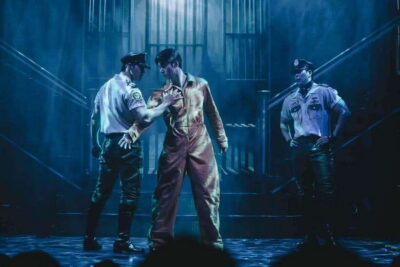 ★ 4.9TOUCH FIVE Performance Show TicketFrom $70231 reviews
 ★ 4.7Sky Lotte World Tower TicketFrom $21209 reviews
 ★ 4.6N Seoul Tower Observatory TicketFrom $18196 reviews
 ★ 5.0Baseball Game Ticket with Dinner/Beer with the hostFrom $7794 reviews
 ★ 4.7Comic Martial Arts Performance JUMP Show TicketFrom $2062 reviews
 ★ 4.9Everland Theme Park Admission Ticket with TransferFrom $6049 reviews
 ★ 4.2Lotte World Seoul Entry TicketFrom $3147 reviews