
Reviewed · DMZ DAY TOURS
Into DMZ: 2nd Tunnel, Hantangang & Scenic Wonders Tour from Seoul
Underground facts meet starry bridges in one day. I love visiting the 2nd Tunnel with a clear explanation of how it was discovered and why it matters. I also love the round-trip transport and guide-led pacing, so you’re not trying to figure out routes and logistics on your own.
One thing to plan for: this is a long outing, and while the English/Chinese-speaking guide helps a lot, translation quality can vary at some visitor-center exhibits. Also, meals are not included, so bring a plan for snacks or expect to rely on whatever you can grab during breaks.
In This Review
- Key highlights worth aiming for
- Cheorwon DMZ feels more complete than a quick tunnel stop
- Price and value: what you’re paying for in practical terms
- Goseokjeong Pavilion: your scenic warm-up before the DMZ
- Hantangang Jusangjeolli-gil and the Milky Way Bridge pause the day
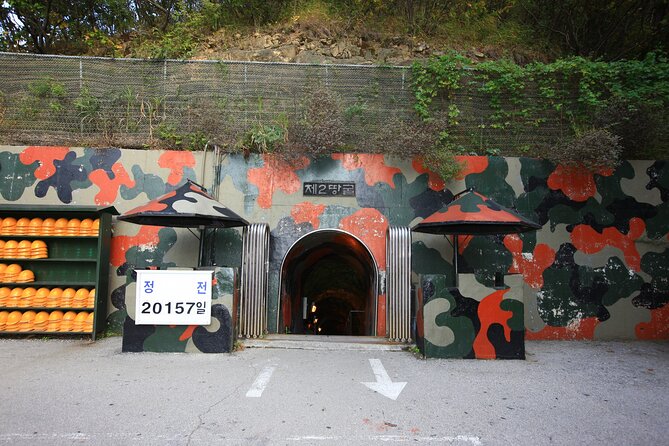
- The 2nd Tunnel security tourism site: engineering plus a discovery tale
- Peace Observatory and Woljeongri Station: wide views and sharp symbolism
- Korean Workers’ Party Headquarters and Cheorwon History and Culture Park for context
- Korean Workers’ Party Headquarters
- Cheorwon History and Culture Park
- Timing, language, and passport rules you need to take seriously
- Should you book this Cheorwon DMZ day trip?
- FAQ
- How long is the Into DMZ: 2nd Tunnel, Hantangang & Scenic Wonders Tour?
- What does the tour cost?
- Do I need a passport for this tour?
- What’s included in the price?
- Are meals included?
- Can the tour be canceled?
Key highlights worth aiming for
- The 2nd Tunnel story and setting: found by guards, carved through granitic rock, about 3.5 km long, 50–160 m underground, and open as a security tourism site
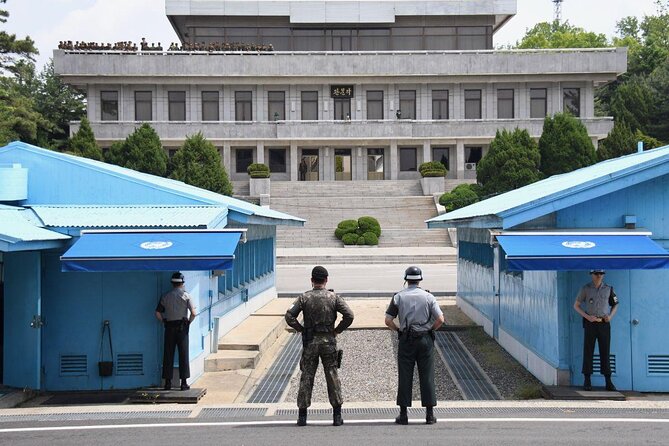
- Cheorwon viewpoints that make the geography click: Peace Observatory for wide DMZ panoramas and Woljeongri Station for the partition-line symbolism
- Hantangang UNESCO Global Geopark scenery: Hantangang Jusangjeolli-gil plus the Milky Way Bridge built to follow the natural path
- War history plus political context in one circuit: Woljeongri’s battle location, Korean Workers’ Party HQ (built in 1946), and Cheorwon History and Culture Park
- A manageable group size: up to 43 people, with an English/Chinese-speaking guide and included admission fees
Other ways to reach the DMZ and the border from Seoul
- DMZ Tour: 3rd Tunnel, Option(Suspension Bridge, Boat) from Seoul★ 5.0 · 21,373 reviews
- DMZ tour south Korea from Seoul (NK experience hall, defector)★ 5.0 · 20,599 reviews
- Seoul: DMZ Tour with Optional Suspension Bridge★ 4.8 · 5,277 reviews
- Seoul: DMZ The 3rd Tunnel and Suspension Bridge Tour★ 5.0 · 4,656 reviews
Cheorwon DMZ feels more complete than a quick tunnel stop
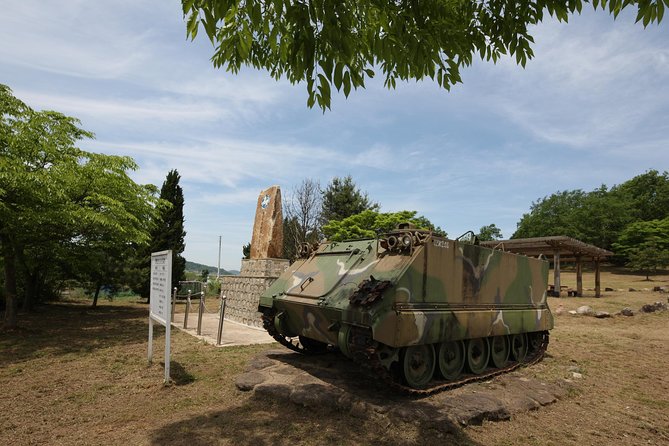
This tour is designed for people who want more than a photo at one DMZ site. Cheorwon covers both the military side and the political side: you’ll see the Second Tunnel, but you’ll also stop at places that explain how the war and the division still shape life and decisions today.
What I like about this format is the pacing. You start with scenic Cheorwon views, then move toward the DMZ proper, and finish with context through history exhibits. It helps your brain connect the dots instead of treating each stop like a separate “interesting place.”
Also, it’s built for first-timers. The logistics are handled: you ride between sights and your guide provides the framework, so you spend your energy looking, listening, and asking questions.
Price and value: what you’re paying for in practical terms
At $72.38 per person, the value comes from the structure. You’re not just buying access to one tunnel—you’re paying for a full-day route with round-trip transportation, an English/Chinese-speaking guide, and admission fees included.
A few cost-related reality checks:
- Meals are not included. With a 13–14 hour day, plan on needing food during breaks.
- Hotel pick-up and drop-off aren’t included. The tour is listed as being near public transportation, so you’ll want to be comfortable getting yourself to the meeting point.
- The tour uses a mobile ticket, which is convenient if you like paper-free travel.
There’s also a big “DMZ reality” point: you’ll need a passport, and the information you enter has to match it exactly. If your passport name or number is wrong, entry can be denied. That’s not a fee issue—it’s a safety and access rule.
Goseokjeong Pavilion: your scenic warm-up before the DMZ
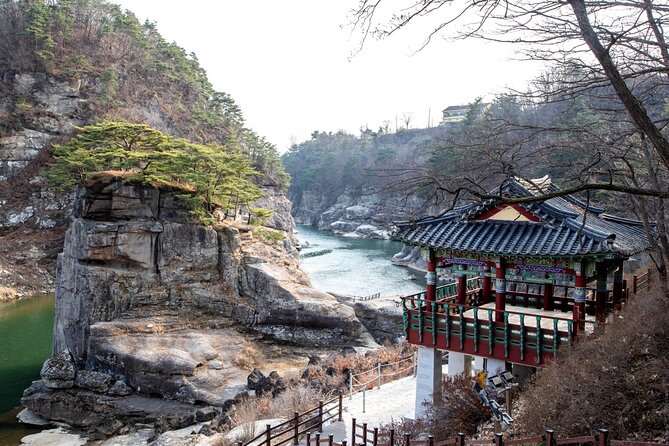
Goseokjeong Pavilion is the starting stop and one of Cheorwon’s eight scenic views. It’s more than a pretty photo spot—this location also connects directly to the DMZ tour system, since the Iron Triangle Battlefield Conservation Office is located here.
You get about 2 hours 20 minutes, and since admission is free, you can use the time in a no-stress way: stretch your legs, settle into the day, and let your guide set expectations before you head toward the more intense parts.
Possible drawback: the first information center experience can be hit-or-miss for English support. If you’re relying on reading panels at every stop, don’t assume all exhibit text will be fully translated.
Hantangang Jusangjeolli-gil and the Milky Way Bridge pause the day
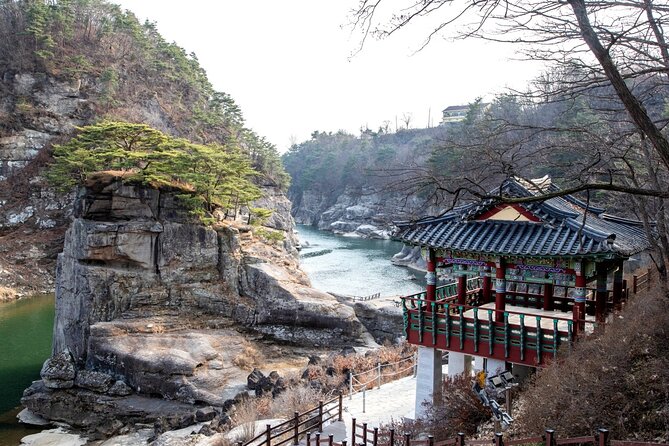
After the pavilion, you shift to nature and geology at Hantangang Jusangjeolli-gil, part of the UNESCO Global Geopark area for the Hantangang River.
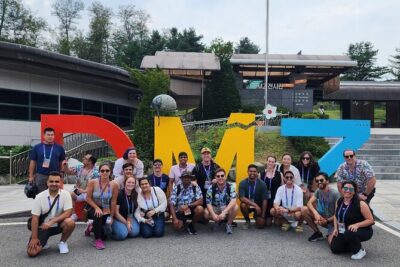
You’ll also walk near the Milky Way Bridge, built to follow a natural path. The name ties together the Hantangang regional identity with eunhasu, described as the Milky Way path made of stars. It’s a calming contrast to the war-focused stops, and the bridge idea makes the walk feel intentionally guided rather than like a random viewpoint detour.
This stop is shorter—about 40 minutes—so it’s best thought of as a reset, not a long hike.
The 2nd Tunnel security tourism site: engineering plus a discovery tale
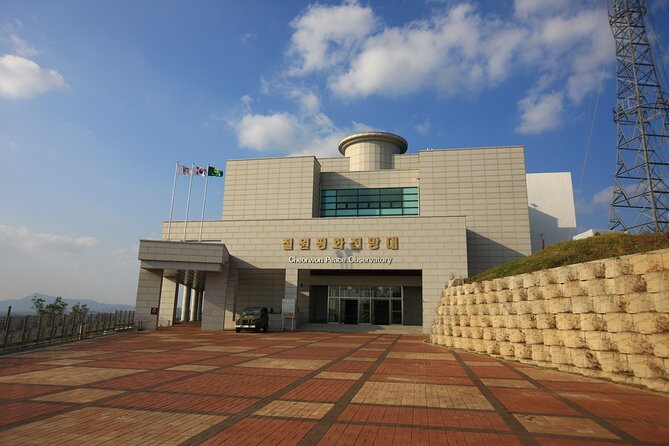
Then you reach the main event: the 2nd Tunnel. It’s located in the DMZ on the military demarcation line, and this site has a specific backstory that your guide will explain in plain terms.
Key facts you’ll hear on-site:
- The tunnel was discovered because Korean guards heard explosion sounds underground while on duty.
- Investigators used advanced drilling equipment to confirm what was happening.
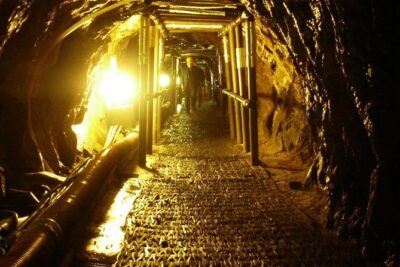
- The tunnel is carved through a granitic layer and is about 3.5 km long.
- It sits roughly 50 m to 160 m underground.
- Today, it operates as a security tourism site.
The visit is about 30 minutes. That’s not a long time underground, so you’ll want to treat it like a focused lesson, not a sightseeing stroll.
Why this matters for your day: tunnels like this aren’t just “cool structures.” They show you how conflict was planned and carried out in practical, physical ways. Even if you’re not a military-history person, the proportions and setting tend to land.
Peace Observatory and Woljeongri Station: wide views and sharp symbolism
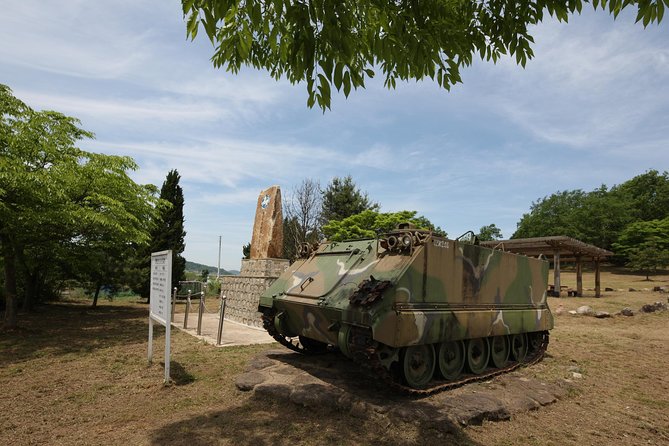
Next comes a combination that works well together: big-picture observing, then a more grounded link to a specific battle location.
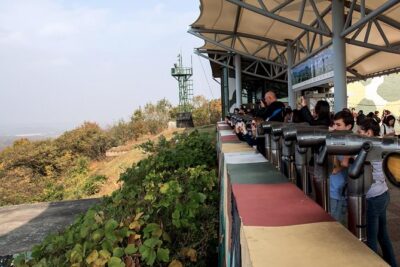
At Cheorwon Peace Observatory, you get around 1 hour and free admission. The payoff is the panoramic view of the DMZ in the central forward area of Cheorwon-gun. This is the kind of stop where your guide’s explanation turns the geography from confusing to understandable.
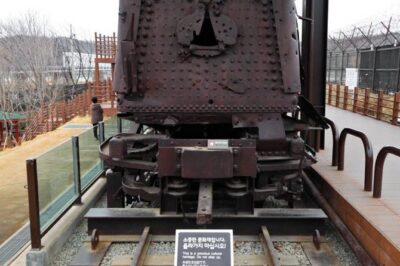
Then you move to Woljeongri Station, also called the Iron Triangle Battlefield area. This is the last stop before reaching the DMZ and it sits at the spot where the fiercest Korean War battle is tied. The station is also described as marking the partition line of the Korean peninsula, with the train tied to that symbolism.
You’ll have about 1 hour here, and the mix of history and the partition-line concept tends to be the moment when people feel the emotional weight of the topic.
Korean Workers’ Party Headquarters and Cheorwon History and Culture Park for context
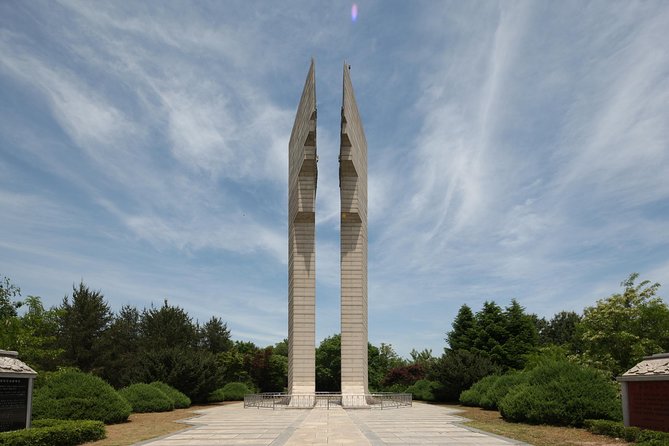
After the DMZ-facing stops, you get pulled back into history and politics without the heaviness of an underground visit.
Korean Workers’ Party Headquarters
This three-story building in Cheorwon-eup was constructed in 1946. It was used as the headquarters of the Labor Party until the outbreak of the Korean War on June 25. Your time here is about 20 minutes, and it’s tied to the security-tour course through Cheorwon-gun office control.
If you care about how political organizations operated during that era, this stop gives you an anchor beyond battle dates and tunnel dimensions.
Cheorwon History and Culture Park
Finally, you visit a site built to preserve the region’s turbulent history and cultural heritage. It’s near the former North Korean administrative zone, and it includes exhibits like war relics, photographs, historical records, restored structures, memorial monuments, and interactive displays.
This is a short 10-minute stop, so it’s not meant to replace museum time. Still, it helps you carry the “why” home—what the division has done to everyday life and identity in the Cheorwon area.
Timing, language, and passport rules you need to take seriously
This tour runs about 13 to 14 hours, so you’re committing to a full day. The route is set up so you’re transported between stops, which reduces stress, but it also means your “down time” is limited to the breaks built into each site.
A few practical points that matter:
- You need a passport to get into the DMZ, and the name and number you submit must match it exactly. If your details don’t match your passport, you may be denied entry into the DMZ area.
- You’re asked for details for DMZ entry, including nationality, passport name, passport number (with gender listed), and date of birth.
- The guide is English/Chinese speaking. That’s a huge help when you’re listening to explanations about events that aren’t common knowledge.
- The tour uses a mobile ticket.
- The tour can be canceled due to security reasons. If that happens, you’ll want flexibility in your schedule that day.
From the guidance-quality side: the tour has a track record of strong interpretation. People have specifically praised guides like Cecelia for sensitive guidance and Jonathan for detailed explanations tying together historical and natural sights. Translation isn’t always perfect at every display, but a solid guide can do a lot to bridge the gap.
Should you book this Cheorwon DMZ day trip?
Book it if you want a DMZ day that feels structured and meaningful, not random. It’s especially worth it if you:
- like history and politics and want the story behind each stop,
- prefer not to wrestle with transportation on your own,
- enjoy mixing scenic Cheorwon viewpoints with serious historical sites.
Skip it or choose another option if you:
- really want long, unhurried time at exhibits (this is a packed route),
- need meals included (they’re not),
- can’t handle a 13–14 hour day with limited flexibility.
If you’re preparing for the DMZ part carefully—passport accuracy is key—and you’re okay with a long day, this is one of the better ways to see the Cheorwon area without making the logistics your main project.
FAQ
How long is the Into DMZ: 2nd Tunnel, Hantangang & Scenic Wonders Tour?
It’s listed as approximately 13 to 14 hours.
What does the tour cost?
The price is $72.38 per person.
Do I need a passport for this tour?
Yes. A passport is necessary to get into the DMZ, and the information you provide must match your passport details to avoid denial of entry.
What’s included in the price?
Included: round-trip transportation, an English/Chinese speaking guide, and admission fees.
Are meals included?
No. Meals are not included.
Can the tour be canceled?
Yes. The tour can be canceled due to security reasons. Separately, you can cancel up to 24 hours in advance for a full refund.
More Tours in Seoul
- Best DMZ Tour Korea from Seoul (Red Suspension Bridge Optional)★ 5.0 · 41,422 reviews
- DMZ Tour: 3rd Tunnel, Option(Suspension Bridge, Boat) from Seoul★ 5.0 · 21,373 reviews
- DMZ tour south Korea from Seoul (NK experience hall, defector)★ 5.0 · 20,599 reviews
- Seoul: DMZ Tour with Optional Suspension Bridge★ 4.8 · 5,277 reviews
- Seoul: DMZ The 3rd Tunnel and Suspension Bridge Tour★ 5.0 · 4,656 reviews
More Tour Reviews in Seoul
- Best DMZ Tour Korea from Seoul (Red Suspension Bridge Optional)★ 5.0 · 41,422 reviews
- DMZ Tour: 3rd Tunnel, Option(Suspension Bridge, Boat) from Seoul★ 5.0 · 21,373 reviews
- DMZ tour south Korea from Seoul (NK experience hall, defector)★ 5.0 · 20,599 reviews
- Seoul: DMZ Tour with Optional Suspension Bridge★ 4.8 · 5,277 reviews
- Seoul: DMZ The 3rd Tunnel and Suspension Bridge Tour★ 5.0 · 4,656 reviews
The DMZ & the Border, More Routes
- Best DMZ Tour Korea from Seoul (Red Suspension Bridge Optional)★ 5.0 · 41,422 reviews
- DMZ Tour: 3rd Tunnel, Option(Suspension Bridge, Boat) from Seoul★ 5.0 · 21,373 reviews
- DMZ tour south Korea from Seoul (NK experience hall, defector)★ 5.0 · 20,599 reviews
- Seoul: DMZ Tour with Optional Suspension Bridge★ 4.8 · 5,277 reviews
- Seoul: DMZ The 3rd Tunnel and Suspension Bridge Tour★ 5.0 · 4,656 reviews
Just added to Exploring Seoul

DMZ Day Tours, compared.
 ★ 5.0DMZ Tour: 3rd Tunnel, Option(Suspension Bridge, Boat) from SeoulFrom $3521,373 reviews
 ★ 5.0DMZ tour south Korea from Seoul (NK experience hall, defector)From $2620,599 reviews
 ★ 4.8DMZ Tour with Optional Suspension BridgeFrom $455,277 reviews
 ★ 5.0DMZ The 3rd Tunnel and Suspension Bridge TourFrom $654,656 reviews
 ★ 5.0Signature DMZ Tour: Exclusive Defector Talk & Suspension BridgeFrom $274,459 reviews
 ★ 5.0Thrilling Korean DMZ 3rd Tunnel Tour from Seoul + Red Bridge RushFrom $353,097 reviews
 ★ 4.9DMZ Tour & Suspension Bridge (Option English/Spanish)From $352,628 reviews
 ★ 5.0DMZ Past and Present: Korean Demilitarized Zone Tour from SeoulFrom $372,481 reviews
Browse the lists this tour appears in