
Reviewed · MT. SEORAK & EAST COAST DAY TRIPS
From Seoul: Seoraksan Mountain with Cable Car- Shuttle Bus
Autumn in Seoraksan can feel like a movie set. This day trip mixes Mount Seorak scenery with Sinheungsa Temple culture, and the cable car turns the big viewpoints into an easy win.
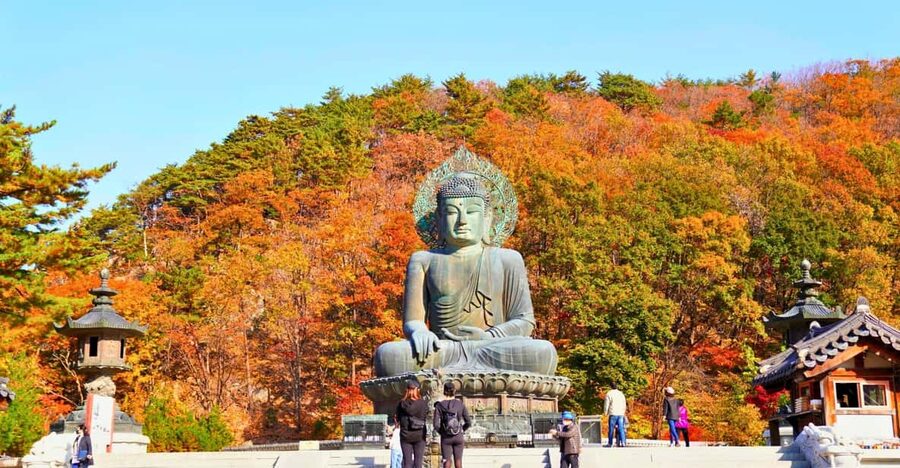
I really like two parts: you get sweeping mountain vistas from the cable car, and you also slow down at Sinheungsa to see the famous 14-meter bronze Buddha at Gwaneumjeon. That combo gives you both photo-worthy nature and real temple context instead of just a quick stop.
One thing to consider: the pace can be tight if traffic or weather runs the schedule, and strong wind can mean trails close. Bring your patience, good shoes, and a backup plan for hiking.
In This Review
- Key highlights that make this tour worth it
- Seoraksan autumn: big mountain views with a guided anchor
- Getting from Seoul to Seoraksan without turning it into a project
- Sinheungsa Temple and the 14-meter Gwaneumjeon Buddha
- The cable car to Gwongeumseong Fortress: less hiking, better views
- Hiking reality at Seoraksan: plan for options, not just a route
- Autumn leaves in October: what you can count on (and what you can’t)
- Price and value: is $67 fair for what you get?
- Who this tour fits best (and who should think twice)
- What to pack so the day doesn’t fight you
- Should you book Seoraksan with cable car and Sinheungsa Temple?
- FAQ
- How much does the tour cost?
- What’s included in the tour price?
- Is food included?
- Do I need to bring anything?
- Where do we meet, and where does the tour end?
- What languages are available for the guide?
- Is the tour suitable for wheelchair users?
- Will autumn leaves be at peak color?
- How large does the group need to be, and what if it’s canceled?
Key highlights that make this tour worth it
- Mount Seorak (third-highest in Korea): the big mountain energy is real, even if you do the easier route
- Sinheungsa’s Gwaneumjeon Buddha: a towering bronze icon tied to Queen Jindeok’s era
- Cable car to Gwongeumseong Fortress: less grunt, more wow views over the park
- Expert guide in English and Chinese: you’ll get context at the temple, not just directions
- Autumn colors in October: expect maple-and-pine scenery, but conditions control leaf show
- Group-friendly format from Seoul: round-trip air-conditioned transport and guided stops
Bigger mountains east: more Seoraksan and coast trips
- Mt. Seorak+Nami Island+Garden of Morning Calm Day Trip from Seoul★ 5.0 · 959 reviews
- Seoul: Gangwon-do Day Trip with Alpaca World & Nami Island★ 4.7 · 581 reviews
- Seoul: Mt Seorak + Naksansa Temple or Nami Island Group Tour★ 4.7 · 422 reviews
- Full-Day Tour in Mt. Seorak & Nami (+Rail Bike Option)★ 5.0 · 186 reviews
Seoraksan autumn: big mountain views with a guided anchor
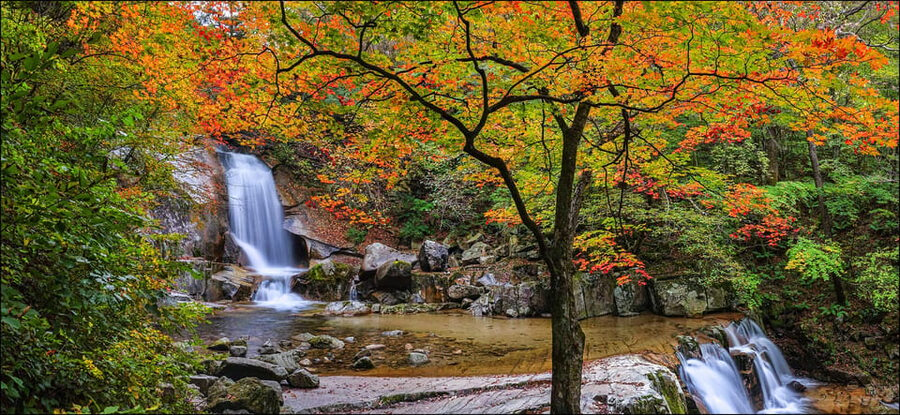
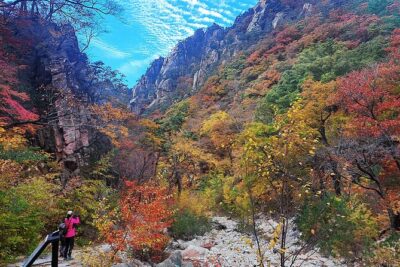
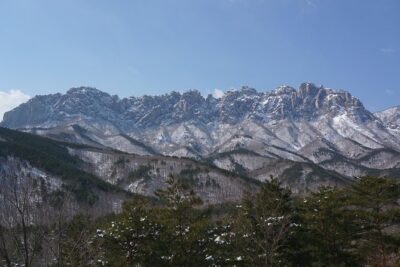
Seoraksan National Park has a simple superpower: you can feel the scale fast. Even without doing a super-hard hike, you’re surrounded by steep slopes, forested ridges, and that clear autumn light that makes everything look sharply defined.
What makes this experience work is the pairing. You start with nature, then shift to temple history. That balance matters because autumn days can be visually intense. After a few hours of scenery, it’s satisfying to step into Sinheungsa and understand what you’re actually looking at.
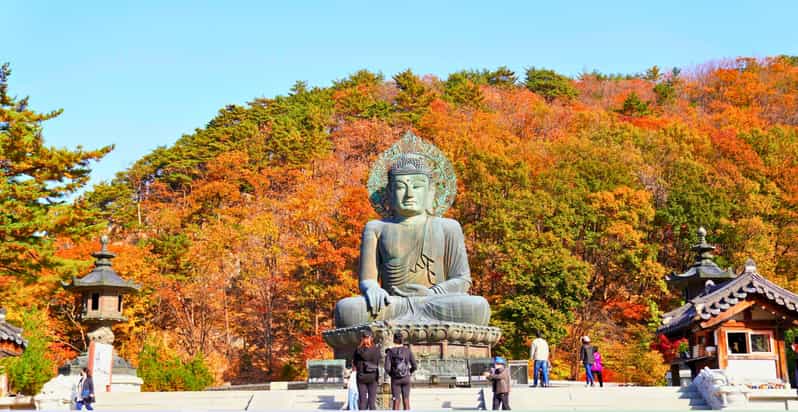
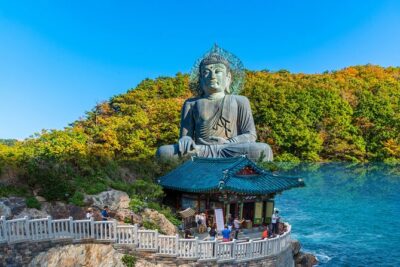
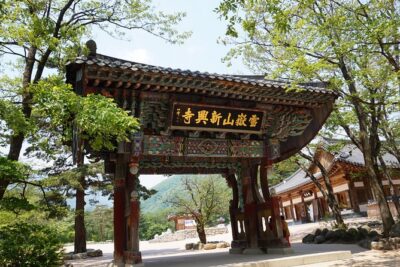
At Sinheungsa, the star attraction is the Gwaneumjeon, a bronze Buddha statue about 14 meters tall. It’s not just a landmark; it’s a focal point of the temple experience, and the guide helps connect it to the temple’s older roots.
Getting from Seoul to Seoraksan without turning it into a project
This is built for convenience. You’ll use round-trip air-conditioned transport from Seoul, and you’ll be guided from a meeting point that depends on the option you booked. If you selected a private option, hotel pick-up and drop-off are included; otherwise, you meet at the listed start point.
Why this matters: Seoraksan is popular. Going with transport saves you from juggling timing, transfers, and parking stress. You also get a professional guide who can keep the day moving and answer questions as you go.
The catch is that you’re still at the mercy of roads and weather. One hard lesson from real-world conditions is that traffic in Seoul can hit schedules, especially on busier travel days. If you’re the type who wants a long, slow hike with no interruptions, you should plan for the possibility of a more efficient route that day.
Sinheungsa Temple and the 14-meter Gwaneumjeon Buddha
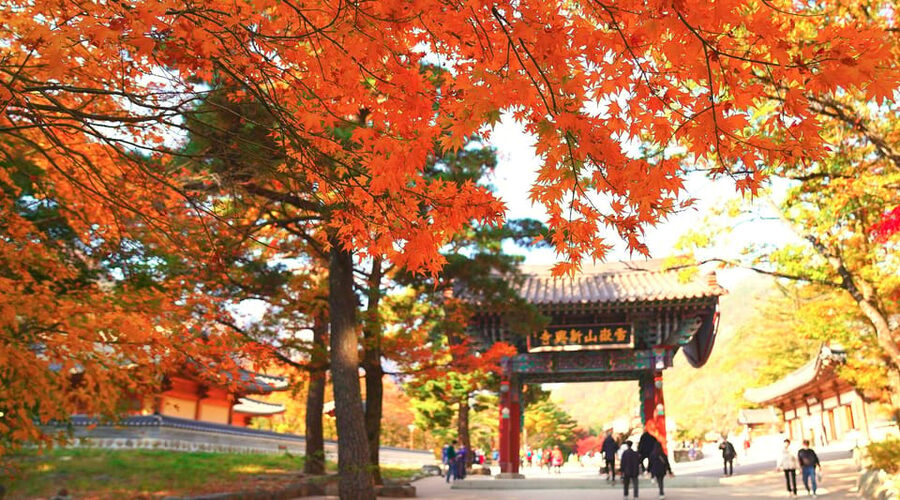
Sinheungsa Temple is where this trip earns its cultural weight. You’ll spend time at the temple grounds with a professional guide fluent in English and Chinese (and the tour materials also list Korean among available languages). The goal here isn’t a checklist. It’s understanding why this place looks the way it does, and why the central statue matters.
The headline sight is the bronze Buddha statue in Gwaneumjeon, described as towering at about 14 meters. It’s tied to the era of Queen Jindeok, and that historical link gives the visit more meaning than a photo stop. Around the statue, you’ll also notice the way the temple setting uses pine and seasonal foliage as part of the atmosphere—especially in autumn when maples show up.
Practical note: temples are calm but you’re still walking on uneven ground. Comfortable shoes are essential, and I’d also wear layers. Temple areas can feel cooler than the bus ride, and autumn wind can change fast.
The cable car to Gwongeumseong Fortress: less hiking, better views
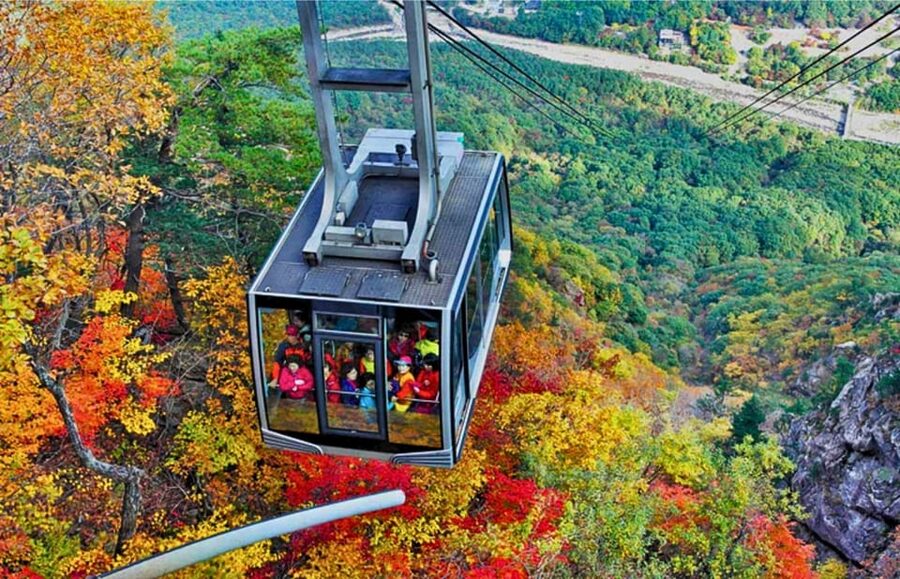
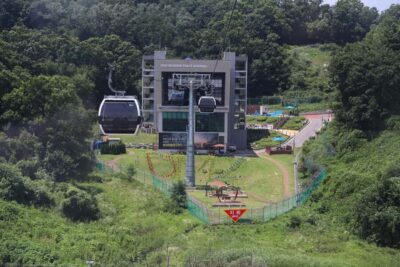
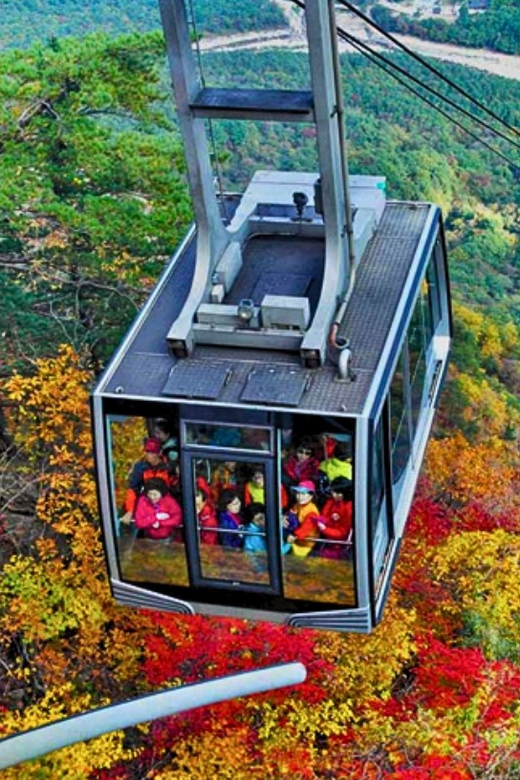
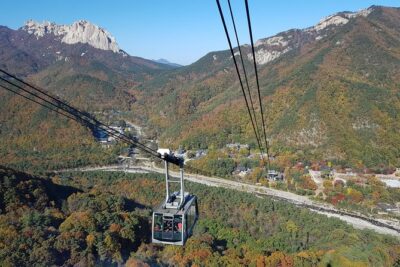
The most efficient thrill on this tour is the cable car ride up toward Gwongeumseong Fortress. You get elevation without spending the whole day gaining it on foot, and that changes how you can enjoy the mountain.
From the cable car, you’ll be looking down over mountain folds and forest texture—exactly the kind of view that’s hard to achieve if you’re too tired after a steep climb. It’s a great way to enjoy Seoraksan even if you’re not trying to conquer every trail.
This section also helps with timing. Instead of gambling all your daylight on one long hike, the cable car gives you a guaranteed high-impact experience. If wind or trail limits affect hiking later, you still get those broader views.
One more thing: cable cars can be visually crowded during peak times, and weather can affect operations. Keep an eye on what your guide says in the moment, and don’t assume conditions will match your ideal autumn postcard.
Hiking reality at Seoraksan: plan for options, not just a route
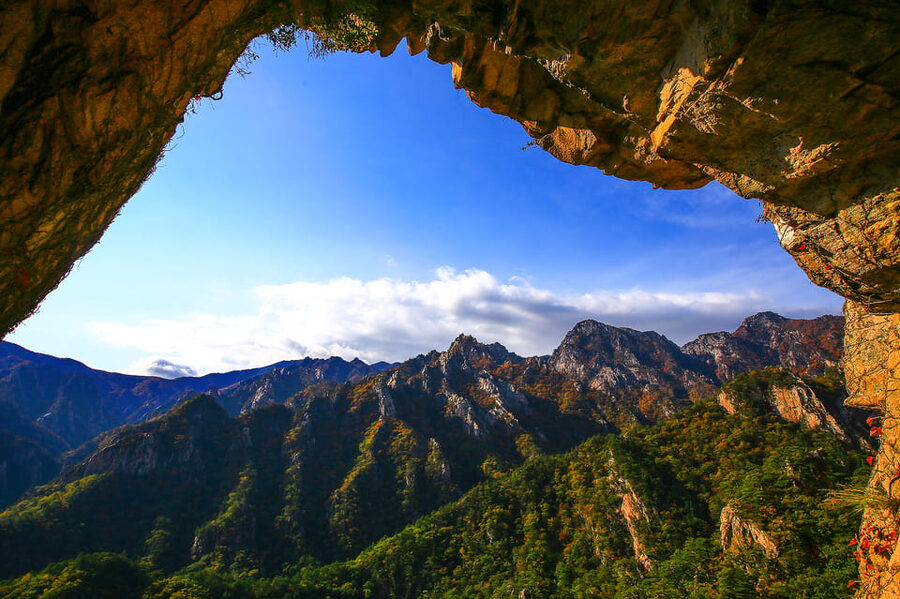
This tour isn’t marketed as a hardcore expedition, but it still gives you access to mountain scenery and walking time around the park area. The biggest thing to understand is how quickly plans can shift.
Two common disruptors you should be ready for:
- Traffic delays can shorten hiking time. If your schedule depends on arriving early, that’s a risk on any day-trip from Seoul.
- Strong winds can lead to trail closures. There’s at least one real example where trails had to close because winds were intense, which completely changes what you can do on the mountain.
So how do you make this work well? Think in terms of flexibility:
- If trails open, choose the option that matches your energy and time.
- If trails close, focus on the parts you can still do comfortably—like temple time, viewpoints, and the cable car ride.
Also, September-to-November weather in the mountains can feel sharper than in the city. Even when it’s sunny, wind can make the air feel cold. Bring a wind-resistant outer layer if you have one.
Autumn leaves in October: what you can count on (and what you can’t)
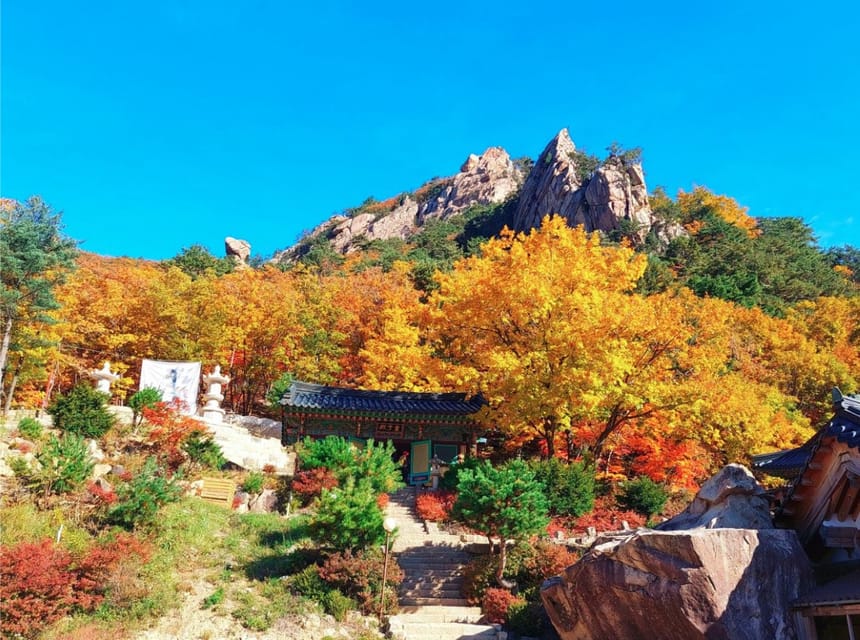
This is a seasonal trip, but autumn at Seoraksan comes with a reality check. The schedule is described as adjusted based on weather conditions, and the maple leaf situation is not guaranteed.
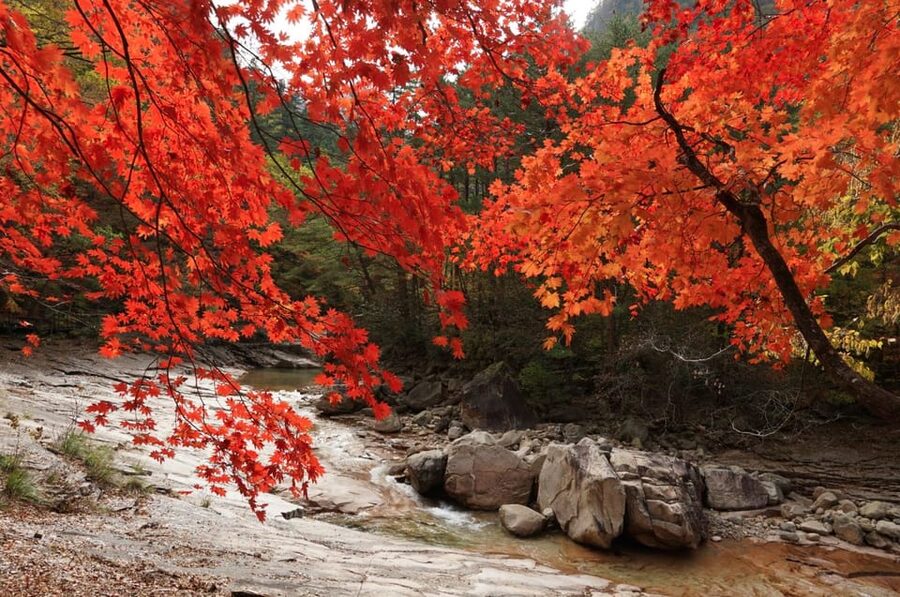
That means you should treat this as an autumn adventure, not a locked-in foliage guarantee. Some days will deliver deep red maples with golden tones. Other days will be more mixed, or the color will be delayed or uneven across slopes.
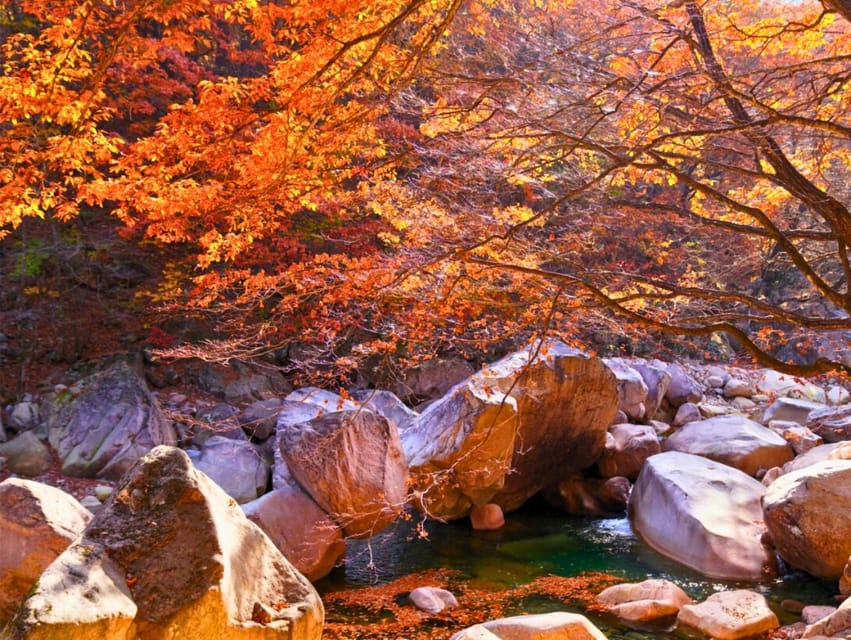
What you can count on: you’ll still see fall-leaning vegetation, pine textures, and the dramatic mountain setting that makes Seoraksan famous. In other words, even if the leaves aren’t at peak, the mountain still provides the main show.
If you’re coming from Seoul expecting a perfect fall scene, I’d aim to manage expectations. The best approach is to enjoy what’s there rather than chasing a specific color level.
Price and value: is $67 fair for what you get?
At $67 per person, this tour sits in the midrange for guided day trips out of Seoul. Here’s the practical value math.
You’re paying for:
- Round-trip air-conditioned transportation
- A professional guide fluent in English and Chinese
- Admission fees
- A Seoraksan cable car ticket
- Return to the meeting point (hotel pick-up/drop-off only if a private option is selected)
What you’re not paying for:
- Food and beverages
- Personal expenses
So the value depends on whether you’d otherwise pay separately for transport, a guide, and the cable car. If you plan to visit both Seoraksan sights and want the cultural explanation at Sinheungsa, a guided format usually saves time and reduces guesswork. If you’re a solo traveler who enjoys building the day yourself and you’re comfortable navigating, you might compare costs—but you’ll still be paying for admission and the cable car either way.
My take: $67 is a fair price if you care about both the temple context and the views, not just one or the other.
Who this tour fits best (and who should think twice)
This is a good match if you want:
- A guided, straightforward way to see Seoraksan without doing all elevation on foot
- A temple visit with explanation, especially around the 14-meter Gwaneumjeon Buddha
- A cable car viewpoint that keeps the day fun even if hiking time gets shortened
It’s also a smart pick if you’re traveling in autumn and want structured timing with transport from Seoul.
I’d think twice if:
- You’re wheelchair-bound, because the tour is not suitable for wheelchair users
- You need a long, uninterrupted hiking block with no possible weather or traffic changes
- You dislike group pacing. Even with a good guide, bus schedules and weather rules will shape the flow.
If you’re flexible and you enjoy both sights, you’re likely to walk away happy.
What to pack so the day doesn’t fight you
You’re told to bring comfortable shoes, and I agree with that in a big way. Temple paths and mountain walking can be uneven, and you don’t want sore feet ruining the views.
Beyond that, keep it simple:
- Layers: mountain air can cool down fast
- Wind protection: especially in autumn when gusts can be strong
- A light day bag for water and your essentials (food isn’t included)
And do one classic travel move: eat breakfast before you go. It’s not a small detail—when a day involves transport and guided stops, hunger can make everything feel slower.
Should you book Seoraksan with cable car and Sinheungsa Temple?
If your goal is to get the best “Seoraksan mix” from Seoul—Mount Seorak scenery, the cable car to Gwongeumseong Fortress, and the Sinheungsa Temple focus on the 14-meter bronze Buddha—this tour makes a lot of sense. The guide-led temple time is a strong reason to choose a package rather than just going solo.
But if you’re the type who needs maximum hiking time no matter what, go in knowing that weather (like strong wind) and traffic can change the hiking plan. This isn’t a promise of a long trail day. It’s a promise of a well-rounded mountain-and-temple experience that’s designed to work even when conditions are imperfect.
FAQ
How much does the tour cost?
The price is listed as $67 per person.
What’s included in the tour price?
Included are round-trip air-conditioned transportation, a professional guide fluent in English and Chinese, admission fees, the Seoraksan cable car ticket, and hotel pick-up and drop-off if the private option is selected.
Is food included?
No. Food and beverage are not included.
Do I need to bring anything?
You should bring comfortable shoes. Also, the information notes that you should eat breakfast before you start the activity.
Where do we meet, and where does the tour end?
The meeting point can vary depending on the option booked. The tour ends back at the meeting point.
What languages are available for the guide?
The materials list English, Chinese, and Korean.
Is the tour suitable for wheelchair users?
No. The tour is not suitable for wheelchair users.
Will autumn leaves be at peak color?
Not guaranteed. Autumn timing is adjusted based on weather conditions, and the maple leaf situation depends on conditions.
How large does the group need to be, and what if it’s canceled?
A minimum of 6 people are required. If the minimum isn’t met, the tour may be canceled and you should receive a notification email 1 day prior to departure.
More Tour Reviews in Seoul
- Best DMZ Tour Korea from Seoul (Red Suspension Bridge Optional)★ 5.0 · 41,422 reviews
- DMZ Tour: 3rd Tunnel, Option(Suspension Bridge, Boat) from Seoul★ 5.0 · 21,373 reviews
- DMZ tour south Korea from Seoul (NK experience hall, defector)★ 5.0 · 20,599 reviews
- Seoul: DMZ Tour with Optional Suspension Bridge★ 4.8 · 5,277 reviews
- Seoul: DMZ The 3rd Tunnel and Suspension Bridge Tour★ 5.0 · 4,656 reviews
Mountains & Coast, Further East
- Mt. Seorak+Nami Island+Garden of Morning Calm Day Trip from Seoul★ 5.0 · 959 reviews
- Seoul: Gangwon-do Day Trip with Alpaca World & Nami Island★ 4.7 · 581 reviews
- Seoul: Mt Seorak + Naksansa Temple or Nami Island Group Tour★ 4.7 · 422 reviews
- Full-Day Tour in Mt. Seorak & Nami (+Rail Bike Option)★ 5.0 · 186 reviews
- Mount Seorak and Naksansa Temple One Day Tour from Seoul★ 4.5 · 167 reviews
Just added to Exploring Seoul

Mt. Seorak & East Coast Day Trips, compared.
 ★ 5.0Mt. Seorak+Nami Island+Garden of Morning Calm Day Trip from SeoulFrom $95959 reviews
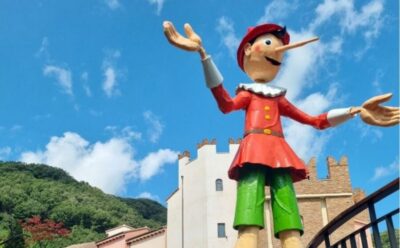 ★ 4.7Gangwon-do Day Trip with Alpaca World & Nami IslandFrom $64581 reviews
 ★ 4.7Mt Seorak + Naksansa Temple or Nami Island Group TourFrom $68422 reviews
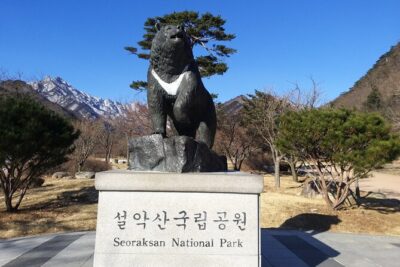 ★ 5.0Full-Day Tour in Mt. Seorak & Nami (+Rail Bike Option)From $85186 reviews
 ★ 4.5Mount Seorak and Naksansa Temple One Day Tour from SeoulFrom $71167 reviews
 ★ 5.0[Premium Private Tour] Mt Seorak & East Sea or Nami island from SeoulFrom $25867 reviews
 ★ 4.5Mount Seorak and Nami Island One Day Tour from SeoulFrom $8048 reviews
 ★ 5.0Seoraksan National Park Ulsanbawi Hiking from SeoulFrom $23815 reviews
Browse the lists this tour appears in