
Reviewed · DMZ DAY TOURS
DMZ Tour Seoul to North Korea’s 3rd Tunnel & Majang Lake Crossing
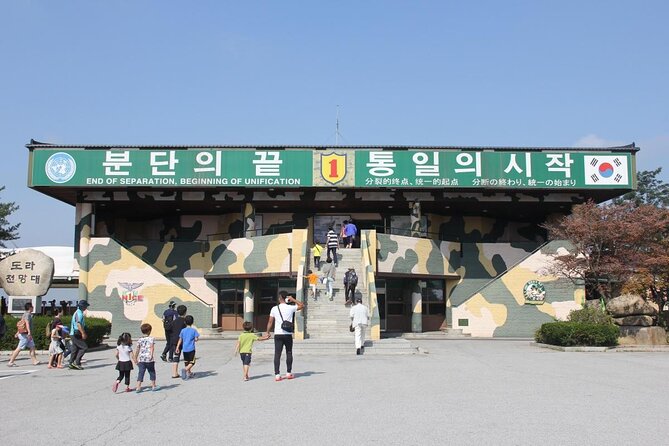
North Korea feels real on this DMZ trip. You’ll see the Cold War up close—then look north through a telescope at Dora Observatory as the day moves from peace parks to the Third Tunnel.
I love how the tour is built for one full, organized day: hotel pickup, clear meeting points, and a timed run of stops that don’t leave you wandering. I also like the range of what you get—memorials and bridges for context, then physical, unforgettable access like the tunnel and the observatory.
One thing to plan around: it’s a long day with ID checks and a bit of walking up and down. Bring your passport (or the ID types they accept at the checkpoint), wear comfy shoes, and don’t plan on lunch being included.
In This Review
- Key things that make this DMZ tour worth your time
- A Practical Way to See the DMZ: pickups, timing, and group size
- How the meeting points work from Myeongdong, Seoul City Hall, and Hongdae
- Imjingak and the Peace Park stops: where the Cold War gets human
- Bridge of Freedom: the POW return story you can actually walk to
- Steam locomotive, memorial altars, and the gondola option
- The Unification Bridge checkpoint: ID checks are part of the script
- Third Tunnel of Aggression: what to expect underground
- Dora Observatory: telescope viewing and North Korea souvenirs
- Tongilchon-gil and soybeans, plus Majang Lake suspension bridge if you add it
- Price and Logistics: is $35 real value for this kind of day?
- Who this tour fits best (and who should think twice)
- Should you book this DMZ tour from Seoul?
- FAQ
- What does the tour include for $35?
- How long is the DMZ tour from Seoul?
- Where do I meet the group in Seoul?
- Do I need a passport for the DMZ portion?
- Is lunch included?
- What are the biggest paid highlights included in the DMZ route?
- Are the gondola and Majang Lake crossing optional?
- Is there a limit on group size?
- Can I choose extra activities like strawberry picking?
Key things that make this DMZ tour worth your time
- Telescope time at Dora Observatory so you can actually look toward North Korea from South Korea
- Third Tunnel of Aggression access plus the practical tip to keep your hard hat secure
- Bridge of Freedom history in plain view including the story of 12,773 returning POWs
- Imjingak’s peace symbolism from the Bell Tower vibes to the 21-ton Peace Bell
- Optional Paju Imjingak Peace Gondola and Majang Lake bridge if you pick the add-ons
- A guide-led day that stays on schedule, with English or Chinese interpretation and multiple pickup points
Other ways to reach the DMZ and the border from Seoul
- DMZ Tour: 3rd Tunnel, Option(Suspension Bridge, Boat) from Seoul★ 5.0 · 21,373 reviews
- DMZ tour south Korea from Seoul (NK experience hall, defector)★ 5.0 · 20,599 reviews
- Seoul: DMZ Tour with Optional Suspension Bridge★ 4.8 · 5,277 reviews
- Seoul: DMZ The 3rd Tunnel and Suspension Bridge Tour★ 5.0 · 4,656 reviews
A Practical Way to See the DMZ: pickups, timing, and group size
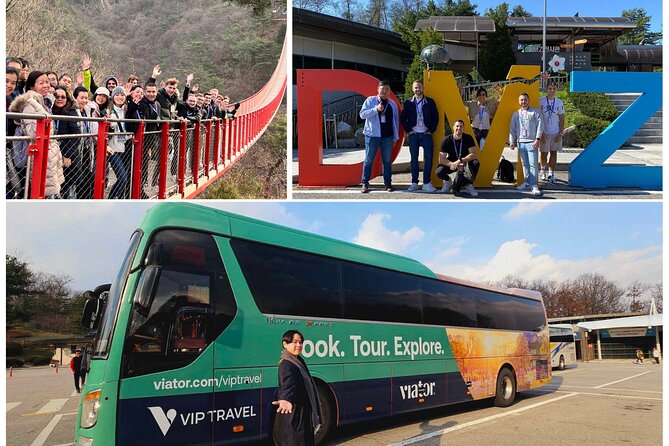
This DMZ day trip runs about 8 hours, and it moves fast enough to fit a lot in, but not so fast that you feel rushed at every stop. The tour limits the group to up to 150 people, which usually means you’ll have company but still be able to hear the guide’s explanations at key moments.
Price is $35 per person, and for that you get a professional guide (English or Chinese), complimentary hotel pickup from the downtown subway area, and multiple included admission tickets once you’re in the DMZ zone. Lunch isn’t included, so you’ll want to budget for food on your own.
The format also gives you flexibility: the tour includes a “base DMZ” experience, and some extras are optional (like the Paju Imjingak Peace Gondola, a Majang Lake suspension bridge crossing, and an optional Gamaksan Red Suspension Bridge plus strawberry picking if selected).
How the meeting points work from Myeongdong, Seoul City Hall, and Hongdae
You don’t start at one generic “city center” spot—you start at one of three subway-linked pickup points so the day is easier before your mind is full of geopolitics.
They meet at:
- Myeongdong Subway Station Exit 9
- Seoul City Hall Subway Station Exit 6
- Hongdae Subway Station Exit 3
For each meeting point, the tour asks you to arrive 10–15 minutes early. That’s a good idea because you’re dealing with a lot of coaches and a lot of people heading to the same kinds of checkpoints.
At the end of the day, you’re dropped off at one of three places (not hotel door-to-door): Myeongdong, Hongik Univ Subway Station, or City Hall. Plan your next activity around one of those.
Imjingak and the Peace Park stops: where the Cold War gets human
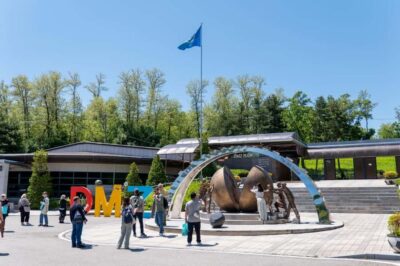
The heart of the early part of the day is Imjingak, a place built as a kind of emotional waypoint for people affected by division. You start with a short clearance/ticket step where the guide collects what’s needed to enter the civilian-controlled areas of the DMZ zone. Think of this as the admin moment that makes the rest of the day possible.
Then you move into Imjingak’s memorial spaces, where the tone turns less like a museum and more like a pause button.
Expect stops like:
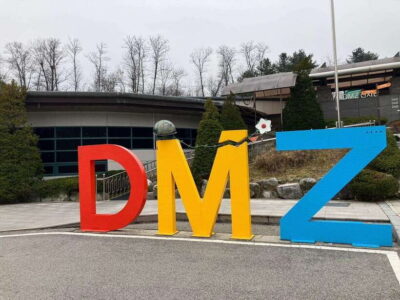
- Imjingak Resort / Peace Park area, where you’ll see the Bell Tower and feel the symbolism of reunification hope
- The Peace Bell (Pyeonghwauijong), described as a massive 21-ton bronze bell cast in 2002
- Short memorial stops along the way that connect families and separation, not just military history
One reason I like this part of the route is that it anchors the technical and tense parts of the DMZ later. When you reach the tunnel and observatory, you’re not only looking at cold infrastructure—you’re remembering why it matters to real lives.
Bridge of Freedom: the POW return story you can actually walk to
Next comes one of the most iconic moments: the Bridge of Freedom.
This is a simple wooden bridge built in 1953 to replace a war-damaged railroad bridge over the Imjin River. What makes it powerful is the way the tour frames it: it’s tied to the return of 12,773 prisoners of war to South Korea, described through the idea of liberation shouts.
This is also a short stop by design. You don’t need hours to understand what the bridge represents; you need minutes where the guide sets the scene, you walk across, and you let the symbolism land.
Practical note: the stop is time-limited, so it’s smart to stand where you can get both the guide’s context and a photo without blocking other people.
Steam locomotive, memorial altars, and the gondola option
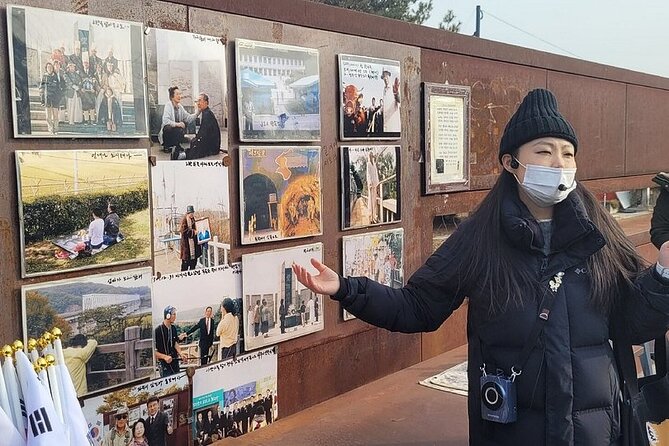
The route doesn’t only focus on the dramatic DMZ boundaries. It also includes objects and spaces that remind you the Korean Peninsula was built for movement—then stopped.
You’ll likely see:
- Mangbaedan Memorial Altar (built 1987) where families pay tribute to relatives in North Korea during traditional holidays
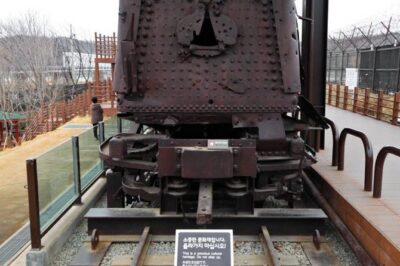
- A preserved steam locomotive at Jangdan Station on the Gyeongui Line, originally used until the Korean War halted operations in 1950
These are quick stops, but they add texture. They make the day feel grounded instead of purely cinematic.
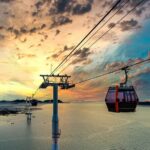
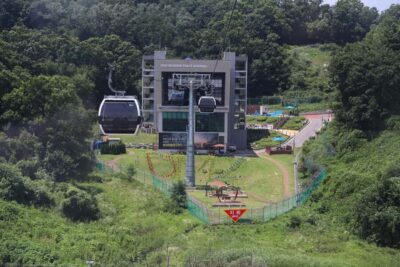
Then there’s a major optional add-on: the Paju Imjingak Peace Gondola.
- It launched in 2020
- It crosses over the Imjin River and is described as floating about 20 meters
- You get a view over the edge of the DMZ area
If you like views that feel like you’re seeing a boundary rather than just reading about one, the gondola is a good choice. If you’re trying to keep the day simpler and move straight to the core DMZ highlights, you can skip it.
The Unification Bridge checkpoint: ID checks are part of the script
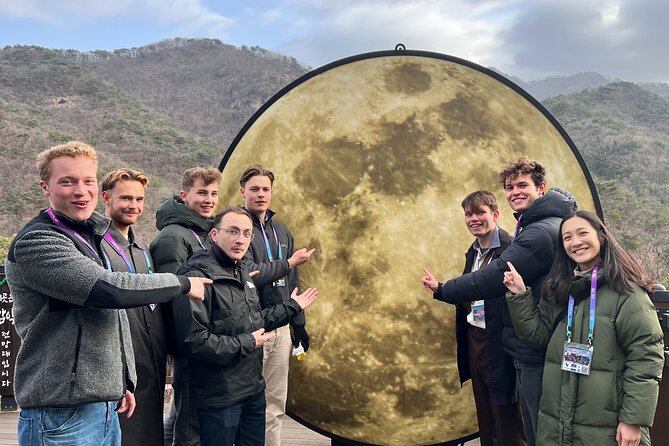
Right after you pass through additional Imjin River views, you’ll have a brief stop at the Unification Bridge area, which functions as a military checkpoint.
The tour specifically warns that soldiers will:
- inspect the bus, and
- perform ID checks before allowing entry
This is why bringing your ID matters. The tour data says to make sure you have your passport, a Military ID Card, or a South Korea-issued ID type they accept. If you show up without the right document, it can cost time you do not want to lose.
I also recommend this: keep your ID where you can grab it fast. Checkpoints run on their own rhythm, not yours.
Third Tunnel of Aggression: what to expect underground
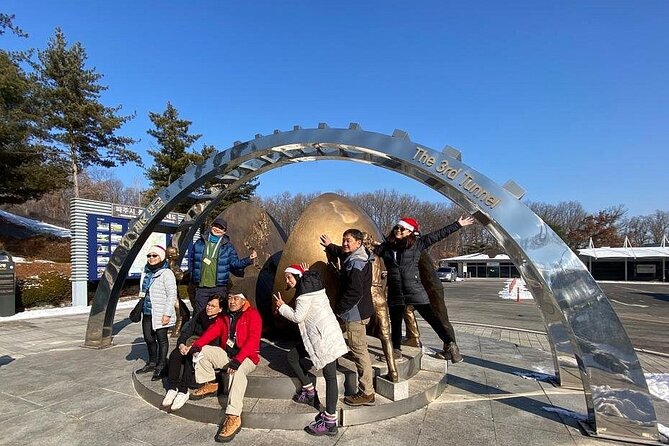
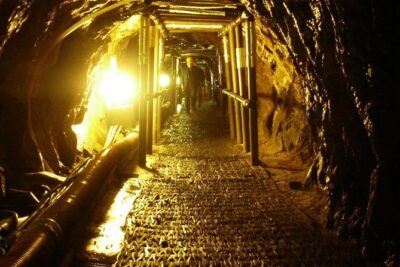
Now you get to one of the most memorable parts of the day: the Third Tunnel (also called the 3rd Infiltration Tunnel).
This tunnel was unearthed in 1978, and it’s described as being 52 km from Seoul and 12 km from Munsan. It runs about 1,635 meters long, and the stop time is around an hour.
What you should expect underground:
- Tight, enclosed conditions
- Low ceilings and a need to move carefully in a group
- A hard-hat moment
One practical tip stands out from the experience people describe: make sure your hard hat is fastened securely, because visitors who are taller (around 6 feet+) can bump their head if it’s not snug. That’s simple, but it’s the kind of detail that makes the difference between a smooth visit and a clumsy one.
If you don’t like confined spaces or you’re dealing with mobility issues, this is the part to think about first. For most people, it’s exactly what makes the DMZ feel real rather than theoretical.
Dora Observatory: telescope viewing and North Korea souvenirs
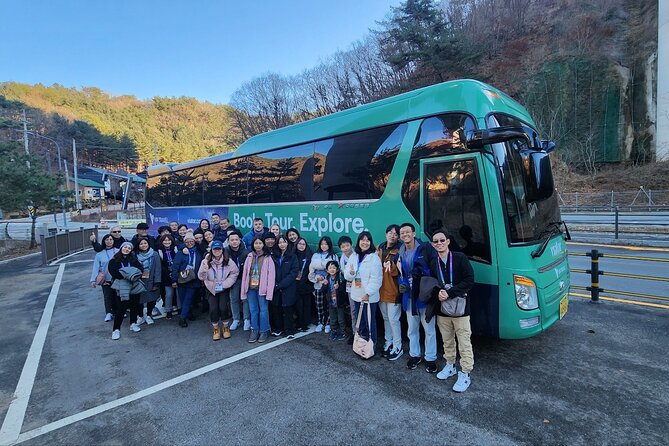
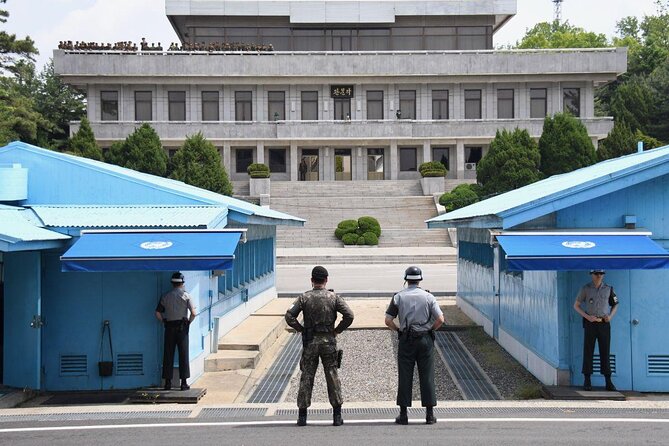
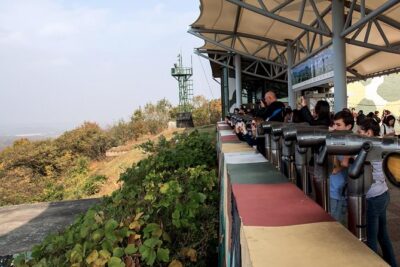
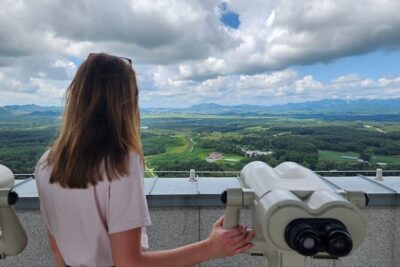
Dora Observatory at Dorasan is the peak viewing stop from the South Korean side.
It was established in 1986 and revamped in 2018, and the tour frames it as the closest view of North Korea from South Korea. Here, you can look toward the North using a high-powered telescope.
This is not about seeing buildings with perfect clarity. It’s about realizing that a boundary exists, and you’re standing on the side where access is limited—but not imaginary.
Another practical perk: you can buy North Korean products at the observatory. Whether you want a souvenir or just want the story behind what’s for sale, it’s a unique way to make the visit feel tangible.
The time for this stop is about 40 minutes, so don’t spend it all walking for photos. Take a moment to listen, then take a moment to look.
Tongilchon-gil and soybeans, plus Majang Lake suspension bridge if you add it
After the tunnel and observatory, the tour shifts into calmer, everyday details that help you catch your breath.
You’ll stop at Tongilchon-gil, described as a tranquil village just past the Civilian Control Line. The idea here is that the DMZ’s untouched soils allow cultivation of Jangdan soybeans. The tour even frames it as a chance to treat yourself to the soybean flavor (the description cuts off mid-sentence, but the theme is clearly food-based).
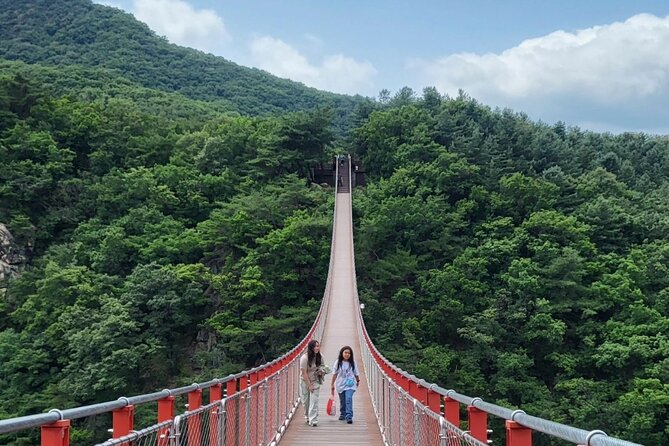
Then, if you chose the optional end section, you’ll cross the Majang Lake Suspension Bridge.
- It’s 262 meters long
- Opened in 2020
- It rises about 25 meters above the lake
This optional crossing is a nice contrast to everything else you’ve seen. After tunnels and memorials, walking a modern bridge over a quiet body of water feels almost surreal—and that’s the point.
Price and Logistics: is $35 real value for this kind of day?
At $35 per person, this tour is good value if you want one organized DMZ day without piecing together transport, entry permissions, and multiple stops yourself.
Here’s why the math works (based on what’s included):
- English or Chinese guide
- Complimentary hotel pickup
- Entrance tickets included for key DMZ components (Tunnel and Observatory, plus included times at the DMZ zone)
- Optional add-ons included only if you select them (like the gondola and Majang Lake bridge, and some options tied to Gamaksan and strawberry picking)
What’s not included:
- Lunch
- Hotel drop-off back to your exact lodging (you’ll get dropped at downtown subway areas)
So the biggest “cost” isn’t money—it’s time and energy. You’ll be out for about 8 hours, moving between multiple sites, and dealing with checkpoints. If you’re already tired from jet lag or you hate walking, you’ll feel it more than the price tag suggests.
Who this tour fits best (and who should think twice)
This is a strong choice if you:
- Want a guided DMZ day with clear context
- Prefer a structured route that hits the main emotional and physical highlights
- Like having time to look through a telescope rather than just seeing a fence line from far away
- Appreciate small memorial stops that add human meaning, not just big-photo viewpoints
It might be less ideal if you:
- Don’t handle enclosed spaces well (the tunnel is underground and physical)
- Struggle with stairs and inclines, since the day includes walking and uneven terrain
- Need long, unstructured downtime (the schedule is timed, so free time won’t be the focus)
A final note on the guide experience: many of the best-rated outings mention guides like Nancy, Kelly, Alex, Crystal, Lina, and Moon for mixing stories with pacing and answering questions. That matters, because the DMZ is heavy—and you want someone who can explain it without turning it into a dry lecture.
Should you book this DMZ tour from Seoul?
If you’re visiting Seoul and you want one day that covers the DMZ’s emotional core and its practical reality, this is an easy yes. The included stops hit the big markers: Imjingak memorial spaces, the Bridge of Freedom, the Third Tunnel, and Dora Observatory with telescope viewing. Add the gondola or Majang Lake bridge if you want variety in scenery and feel.
Book it if you can do a long day, bring the right ID, and you’re okay with a bit of physical effort. Skip it or choose a simpler option if tunnels make you uncomfortable or if you need a slow, flexible pace.
FAQ
What does the tour include for $35?
You get a professional guide (English or Chinese), complimentary hotel pickup from the downtown subway area, and multiple admission tickets included for the DMZ day’s core stops. Lunch is not included.
How long is the DMZ tour from Seoul?
The duration is listed as about 8 hours.
Where do I meet the group in Seoul?
You’ll meet at one of three locations: Myeongdong Subway Station Exit 9, Seoul City Hall Subway Station Exit 6, or Hongdae Subway Station Exit 3.
Do I need a passport for the DMZ portion?
Yes. At the military checkpoint stop (Unification Bridge), the tour specifically asks you to bring your passport (or a Military ID Card or an accepted South Korea-issued ID type).
Is lunch included?
No. The tour does not include lunch.
What are the biggest paid highlights included in the DMZ route?
Key DMZ admissions are included for the Third Tunnel and Dora Observatory (with telescope viewing). Other DMZ zone time with included tickets appears throughout the day.
Are the gondola and Majang Lake crossing optional?
Yes. The Paju Imjingak Peace Gondola and the Majang Lake Suspension Bridge are optional and included only if selected during checkout.
Is there a limit on group size?
Yes. The maximum group size is listed as 150 travelers.
Can I choose extra activities like strawberry picking?
There’s an optional strawberry picking add-on mentioned in the included section, but it’s only included if selected during checkout.
More Tours in Seoul
- Best DMZ Tour Korea from Seoul (Red Suspension Bridge Optional)★ 5.0 · 41,422 reviews
- DMZ Tour: 3rd Tunnel, Option(Suspension Bridge, Boat) from Seoul★ 5.0 · 21,373 reviews
- DMZ tour south Korea from Seoul (NK experience hall, defector)★ 5.0 · 20,599 reviews
- Seoul: DMZ Tour with Optional Suspension Bridge★ 4.8 · 5,277 reviews
- Seoul: DMZ The 3rd Tunnel and Suspension Bridge Tour★ 5.0 · 4,656 reviews
More Tour Reviews in Seoul
- Best DMZ Tour Korea from Seoul (Red Suspension Bridge Optional)★ 5.0 · 41,422 reviews
- DMZ Tour: 3rd Tunnel, Option(Suspension Bridge, Boat) from Seoul★ 5.0 · 21,373 reviews
- DMZ tour south Korea from Seoul (NK experience hall, defector)★ 5.0 · 20,599 reviews
- Seoul: DMZ Tour with Optional Suspension Bridge★ 4.8 · 5,277 reviews
- Seoul: DMZ The 3rd Tunnel and Suspension Bridge Tour★ 5.0 · 4,656 reviews
The DMZ & the Border, More Routes
- Best DMZ Tour Korea from Seoul (Red Suspension Bridge Optional)★ 5.0 · 41,422 reviews
- DMZ Tour: 3rd Tunnel, Option(Suspension Bridge, Boat) from Seoul★ 5.0 · 21,373 reviews
- DMZ tour south Korea from Seoul (NK experience hall, defector)★ 5.0 · 20,599 reviews
- Seoul: DMZ Tour with Optional Suspension Bridge★ 4.8 · 5,277 reviews
- Seoul: DMZ The 3rd Tunnel and Suspension Bridge Tour★ 5.0 · 4,656 reviews
Just added to Exploring Seoul

DMZ Day Tours, compared.
 ★ 5.0DMZ Tour: 3rd Tunnel, Option(Suspension Bridge, Boat) from SeoulFrom $3521,373 reviews
 ★ 5.0DMZ tour south Korea from Seoul (NK experience hall, defector)From $2620,599 reviews
 ★ 4.8DMZ Tour with Optional Suspension BridgeFrom $455,277 reviews
 ★ 5.0DMZ The 3rd Tunnel and Suspension Bridge TourFrom $654,656 reviews
 ★ 5.0Signature DMZ Tour: Exclusive Defector Talk & Suspension BridgeFrom $274,459 reviews
 ★ 5.0Thrilling Korean DMZ 3rd Tunnel Tour from Seoul + Red Bridge RushFrom $353,097 reviews
 ★ 4.9DMZ Tour & Suspension Bridge (Option English/Spanish)From $352,628 reviews
 ★ 5.0DMZ Past and Present: Korean Demilitarized Zone Tour from SeoulFrom $372,481 reviews
Browse the lists this tour appears in