
Reviewed · DMZ DAY TOURS
DMZ 2nd Tunnel and Cheorwon Peace Observatory with Admission
Your day starts with a quiet registration line. This DMZ tour pairs the 2nd Tunnel with the Cheorwon Peace Observatory, plus a stop at Woljeongri Station’s Korean War train wreck. I love the way the stops connect history to emotion, not just dates and names. I also like that you avoid the usual bus shuffle and stay in your own vehicle during part of the DMZ entry process. One catch: lunch costs extra (15,000 KRW per person), so plan to eat before or after.
This route also has a lot going on in one long-but-doable stretch, about 8 hours with pickup and bottled water included. You’ll move through a very controlled area, with the added weight of knowing the DMZ has been left mostly untouched for over 70 years. That stillness shows in the scenery—migratory birds, cranes, and animals tend to make the “human conflict” story feel even more haunting.
At the observatory, you can take the round-trip monorail to save your legs on the climb. And if you’re the type who likes clear explanations, I’ve seen guides like Jun and Moon (and in some groups, Wendy) bringing the cold war stories to life with steady, personable pacing.
In This Review
- Key highlights
- Entering the DMZ the Cheorwon way, with fewer bus hassles
- DMZ Cheorwon Peace Center registration: the step that sets the tone
- 2nd Tunnel: the invasion route you can still feel in your body
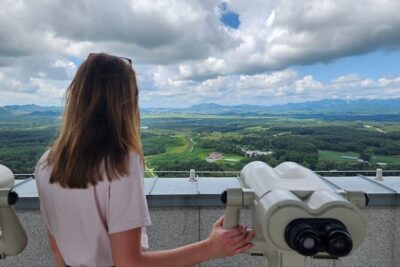
- Cheorwon Peace Observatory: views plus specific war stories
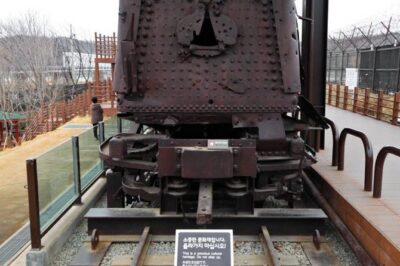
- Woljeongri Station: the train wreck that still marks the war
- What makes this tour good value (and where you spend extra)
- The real takeaway: history with emotional weight, not just facts
- Who should book this DMZ day?
- Should you book DMZ 2nd Tunnel and Cheorwon Peace Observatory with Admission?
- FAQ
- FAQ
- How long is the DMZ 2nd Tunnel and Cheorwon Peace Observatory tour?
- Does this tour include pickup in Seoul?
- Is DMZ admission included in the price?
- Is the monorail included at Cheorwon Peace Observatory?
- Do I need to switch into a group bus during DMZ entry?
- How far can you go inside the 2nd Tunnel?
- Is lunch included?
- What is included besides admission and monorail?
- Is this tour private?
- What are the cancellation terms?
- Does the tour use a mobile ticket?
Key highlights
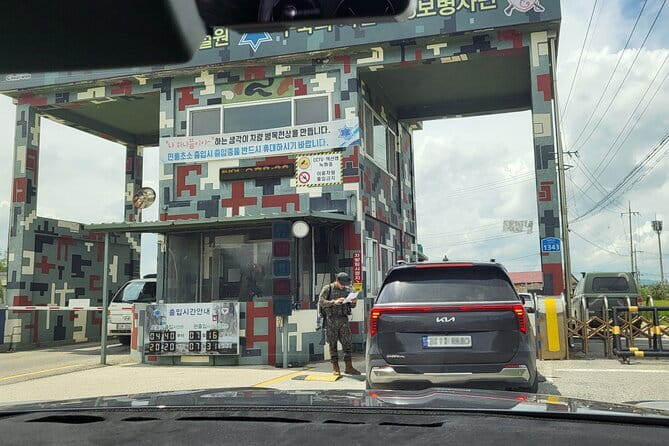
- Civilian-controlled DMZ entry in your own vehicle: you register first, then follow a lead vehicle in single file (no switching to a group bus).
- 2nd Tunnel access up to 300 meters from the demarcation line: long, deep, and built for invasion—now open for guided exploration.
- Monorail round trip at Cheorwon Peace Observatory: less walking, better views.
- Battle of Blood Ridge context from the overlook: includes both sides’ casualty figures so the scale lands.
- Woljeongri Station train wreck stop: a visible war scar behind the station building.
Other ways to reach the DMZ and the border from Seoul
- Best DMZ Tour Korea from Seoul (Red Suspension Bridge Optional)★ 5.0 · 41,422 reviews
- DMZ Tour: 3rd Tunnel, Option(Suspension Bridge, Boat) from Seoul★ 5.0 · 21,373 reviews
- DMZ tour south Korea from Seoul (NK experience hall, defector)★ 5.0 · 20,599 reviews
- Seoul: DMZ Tour with Optional Suspension Bridge★ 4.8 · 5,277 reviews
Entering the DMZ the Cheorwon way, with fewer bus hassles
Most DMZ days try to cram your group onto one big vehicle shuffle. Here, you start with pickup in Seoul and then head toward Cheorwon-gun, where entry begins with registration.
The nice part is how the movement works once you’re cleared. You don’t have to swap into a separate “tour” bus to join a mass caravan of strangers. Instead, you enter the civilian-controlled area with your own vehicle, then you follow the lead vehicle in a single-file line. For a lot of people, that makes the day feel calmer and more organized, which matters when the real story is heavy.
It also helps that this is a private tour/activity for your group. You’ll still follow the rules of the day, but you’re not stuck sharing the experience with an unpredictable crowd.
DMZ Cheorwon Peace Center registration: the step that sets the tone
Before you go anywhere inside the DMZ zone, you’ll stop at the DMZ Cheorwon Peace Center to register. They’ll take the vehicle’s license number and the visitors’ names.
This kind of registration sounds routine—until you remember where you are. The DMZ is one of the most sensitive borders on earth, and this small paperwork moment is your first reminder that access here is controlled for a reason. It’s also why it helps to be on time. When you’re dealing with strict entry windows, being late doesn’t just delay you—it can disrupt the whole flow.
If you’re traveling with kids, this part can be a quiet, grounding “rules moment” before things get intense.
2nd Tunnel: the invasion route you can still feel in your body
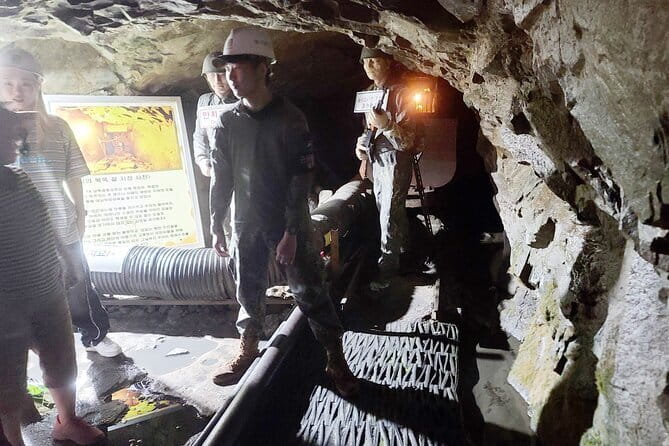
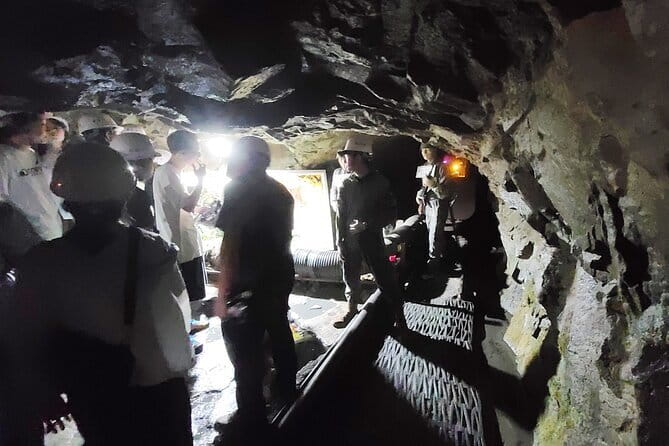
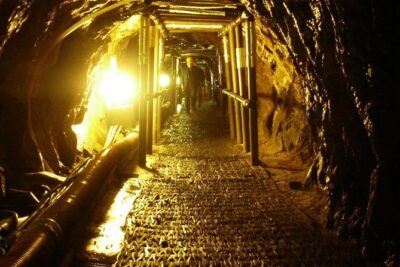
The highlight for many people is the 2nd Tunnel. It was discovered on March 24, 1975. Excavation began after two soldiers reported hearing explosions during their sentry duty on November 20, 1973.
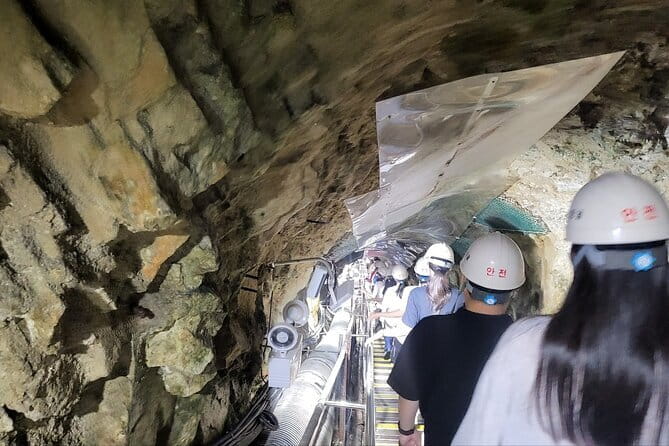
What makes the 2nd Tunnel stand out is scale. It’s described as twice longer and deeper than the 3rd Tunnel. You won’t just look at it from a doorway. You’ll explore inside it up to a point about 300 meters from the military demarcation line.
That distance detail matters because it tells you what kind of access you get: you’re going far enough to understand how long and purposeful this was, but you’re still within the controlled limits of what visitors can safely and officially experience.
Inside the tunnel, the experience is less about dramatic scenery and more about physical atmosphere—tight space, the sense of human intent under the earth, and the cold logic of what this infrastructure was designed to do. Even if you’re not a military-history person, you’ll likely come away thinking differently about how close both sides once stood.
Cheorwon Peace Observatory: views plus specific war stories
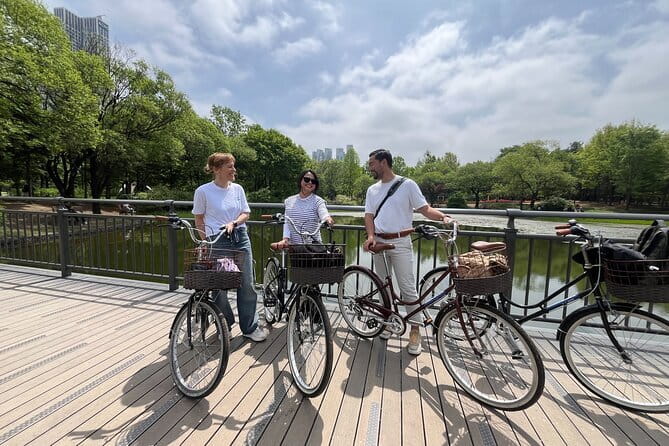
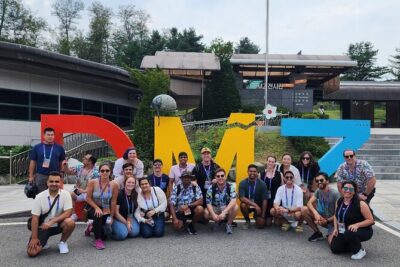
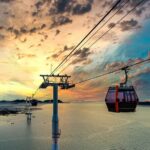
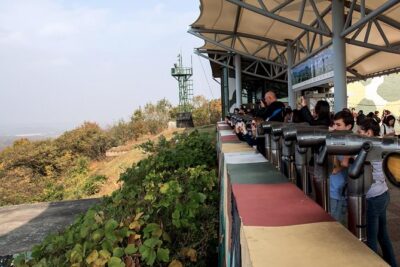
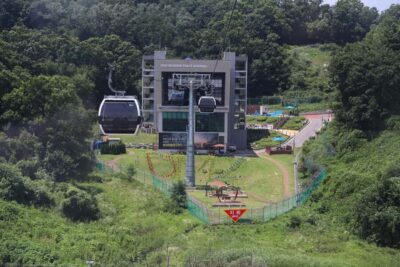
Next comes the Cheorwon Peace Observatory, and it has a smart design for day comfort. You can take the monorail to the top instead of walking the whole way. That’s especially useful for older visitors or anyone traveling with kids who don’t want a long climb layered on top of a long travel day.
From the observatory, you’re able to look across multiple features and locations, including:
- the ecosystem (the DMZ’s preserved nature affects what you see)
- the Battle of Blood Ridge, with casualty figures: 1,250 North Korean soldiers and 1,030 South Korean soldiers
- Kim Il-sung’s high land, including the note that he cried for three days after losing Cheorwon land
- the fortress of Gung-Ye Castle town
- Pyeonggang tableland
- the Propaganda town of North Korea in the DMZ
Here’s why I think this stop is so effective: it’s not one generic “war panorama.” It’s a set of named places tied to real events and real losses. When a guide connects those labels to what you’re seeing from above, the landscape becomes a map of conflict rather than just scenery.
One practical note: if you’re the type who wants photos, bring your camera strap and be ready to move slowly. Observatories tend to have their own pace—people shuffle, look, step aside—so you’ll enjoy it more if you’re not rushing.
Woljeongri Station: the train wreck that still marks the war

The final stop is Woljeongri Station. Behind the station building, you’ll see the wreck of a train bombed during the Korean War.
The information given for this site is clear: the train was used by the North Korean army, and it was bombed by UN forces. Seeing that kind of physical remnant tends to hit a different nerve than a tunnel. A tunnel is hidden. A wreck is blunt. It’s a visible interruption of ordinary life—rails, a vehicle meant for movement, turned into evidence.
This stop can also help your day “click” emotionally. Earlier you learn about infiltration routes and large-scale battles. Here you’re looking at an object that embodies the human cost in a concrete way.
What makes this tour good value (and where you spend extra)

The price is $245.29 per person, and it’s often booked about 11 days in advance. For a DMZ day, that can feel steep until you unpack what’s included.
You’re getting:
- Air-conditioned vehicle and private transportation
- bottled water
- DMZ admission
- monorail ticket (round trip)
And you avoid extra hassle like switching into a group bus during the civilian-controlled entry portion. That matters because time in a day like this is valuable. The more time you spend in transit chaos, the less time you get at the actual sites.
The one obvious cost not included is lunch (15,000 KRW per person). So budget for that. If you’re the kind of traveler who hates spending money on rushed meals, plan around it: eat before you go, or bring a snack you’re allowed to carry and keep for later (the tour includes bottled water, which helps).
Overall, this feels like a solid value if you want a guided, structured DMZ day without sacrificing comfort.
The real takeaway: history with emotional weight, not just facts
A DMZ tour can become a checklist. This one aims at something harder: it connects you to why reunification still carries such emotion for many Koreans.
The experience is also explicitly educational for more than just adults. A lot of young Korean students visit DMZ to learn lessons from the cold war. That’s why the explanations here matter. You’re not just seeing locations—you’re being guided through what those locations meant, why they were strategic, and what they cost.
Even if you go in knowing only basics, the combination works:
- 2nd Tunnel gives you the physical reality of infiltration planning
- Cheorwon observatory turns the view into a map of battles and losses
- Woljeongri Station leaves you with a visible war trace
That pacing is part of the value. It keeps the day from being one long, heavy lecture.
Who should book this DMZ day?
I think this tour fits best if you:
- want a structured DMZ day that focuses on major sites in the Cheorwon area
- prefer private-group comfort over crowd logistics
- like guided context that includes casualty figures and named locations
- want an easier observatory option thanks to the monorail
You might want to think twice if you:
- hate spending extra on meals (lunch is not included)
- don’t like confined or controlled settings, since DMZ entry and the tunnel environment are strictly managed
Should you book DMZ 2nd Tunnel and Cheorwon Peace Observatory with Admission?
Yes—if you want a DMZ day with clear stops and less “tour-bus inconvenience.” The standout value is that you get DMZ admission plus the monorail, and the route is organized around your time: register, enter smoothly, then focus on three major points (tunnel, observatory, and the train wreck).
Book it especially if you’re traveling with kids or you want a day that’s educational without turning into a dry history lecture. Just budget for lunch and plan to move at the pace of a tightly controlled day.
FAQ
FAQ
How long is the DMZ 2nd Tunnel and Cheorwon Peace Observatory tour?
The tour duration is about 8 hours.
Does this tour include pickup in Seoul?
Yes, pickup is offered.
Is DMZ admission included in the price?
Yes. DMZ admission fee is included.
Is the monorail included at Cheorwon Peace Observatory?
Yes. The price includes a round-trip monorail ticket.
Do I need to switch into a group bus during DMZ entry?
No. The description says visitors can enter the civilian controlled area with their own vehicle and follow the lead vehicle in a single file, rather than switching into a group tourist bus.
How far can you go inside the 2nd Tunnel?
Visitors can explore inside the tunnel up to a point about 300 meters away from the military demarcation line.
Is lunch included?
No. Lunch is not included, and it’s listed as 15,000 KRW per person.
What is included besides admission and monorail?
You also get an air-conditioned vehicle, private transportation, bottled water, and admission/monorail.
Is this tour private?
Yes. It’s listed as a private tour/activity, meaning only your group participates.
What are the cancellation terms?
You can cancel for a full refund if you cancel at least 24 hours before the experience’s start time (based on local time).
Does the tour use a mobile ticket?
Yes, a mobile ticket is included.
If you want, tell me your travel dates and whether you’re bringing kids or older relatives, and I’ll help you plan what to eat timing-wise so lunch doesn’t slow your day down.
More Tour Reviews in Seoul
- Best DMZ Tour Korea from Seoul (Red Suspension Bridge Optional)★ 5.0 · 41,422 reviews
- DMZ Tour: 3rd Tunnel, Option(Suspension Bridge, Boat) from Seoul★ 5.0 · 21,373 reviews
- DMZ tour south Korea from Seoul (NK experience hall, defector)★ 5.0 · 20,599 reviews
- Seoul: DMZ Tour with Optional Suspension Bridge★ 4.8 · 5,277 reviews
- Seoul: DMZ The 3rd Tunnel and Suspension Bridge Tour★ 5.0 · 4,656 reviews
The DMZ & the Border, More Routes
- Best DMZ Tour Korea from Seoul (Red Suspension Bridge Optional)★ 5.0 · 41,422 reviews
- DMZ Tour: 3rd Tunnel, Option(Suspension Bridge, Boat) from Seoul★ 5.0 · 21,373 reviews
- DMZ tour south Korea from Seoul (NK experience hall, defector)★ 5.0 · 20,599 reviews
- Seoul: DMZ Tour with Optional Suspension Bridge★ 4.8 · 5,277 reviews
- Seoul: DMZ The 3rd Tunnel and Suspension Bridge Tour★ 5.0 · 4,656 reviews
Just added to Exploring Seoul

DMZ Day Tours, compared.
 ★ 5.0DMZ Tour: 3rd Tunnel, Option(Suspension Bridge, Boat) from SeoulFrom $3521,373 reviews
 ★ 5.0DMZ tour south Korea from Seoul (NK experience hall, defector)From $2620,599 reviews
 ★ 4.8DMZ Tour with Optional Suspension BridgeFrom $455,277 reviews
 ★ 5.0DMZ The 3rd Tunnel and Suspension Bridge TourFrom $654,656 reviews
 ★ 5.0Signature DMZ Tour: Exclusive Defector Talk & Suspension BridgeFrom $274,459 reviews
 ★ 5.0Thrilling Korean DMZ 3rd Tunnel Tour from Seoul + Red Bridge RushFrom $353,097 reviews
 ★ 4.9DMZ Tour & Suspension Bridge (Option English/Spanish)From $352,628 reviews
 ★ 5.0DMZ Past and Present: Korean Demilitarized Zone Tour from SeoulFrom $372,481 reviews
Browse the lists this tour appears in