
Reviewed · GYEONGBOKGUNG & PALACE TOURS
Seoul: Full-Day Royal Palaces Private Tour
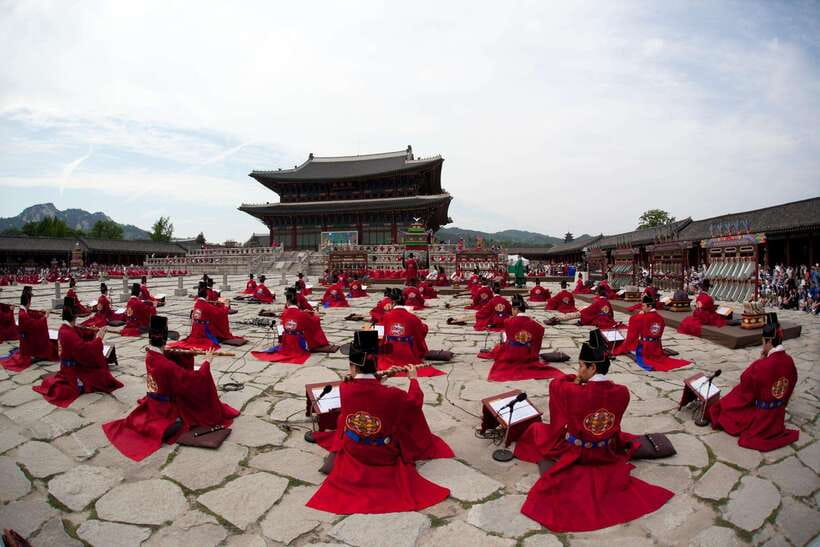
Royal guards and palace photos in one day. This private day tour pairs the Gyeongbokgung royal guard-changing ceremony with a guided visit to Namdaemun Market, and I like that entrance fees and lunch are handled. One catch: the palaces and a few landmarks change depending on the day of the week, so your exact highlights depend on when you go.
I also like the way this tour mixes big-photo history with practical breaks for shopping and food. With a local guide in English or Japanese, you get clear context while you’re moving through Seoul’s must-sees without spending your time figuring out logistics. For some people, the ginseng stop can feel a bit salesy, but it’s also a cultural checkpoint that helps explain why Korean ginseng is such a big deal.
In This Review
- Key Points to Know Before You Go
- How the Day Flows: A Practical 8.5 Hours of Seoul
- Cheongwadae Photo Stop: Seeing the Blue House Area From the Road
- Gyeongbokgung Palace and the Royal Guard Changing Ceremony
- A Ginseng Stop That Explains a Korean Cultural Symbol
- Lunch After Bibimbab: A Real Break in the Middle
- Changdeokgung Palace and UNESCO-Listed Courtyards (Plus Monday Swaps)
- Insadong Antique Shop Alley: Souvenirs With Street-Level Context
- Hanok Village vs. Bukchon: Traditional Houses in the City
- Sungnyemun (Namdaemun Gate): City-Wall Symbol Photos
- Namdaemun Market: Street Food, Clothing, and Last-Minute Gifts
- Private Group Advantage: Why This Format Works in Seoul
- Price and Value: What $295 Buys You
- What to Bring (And What to Avoid)
- Who Should Book This Royal Palaces Tour
- Should You Book? My Decision Shortcut
- FAQ
- How long is the Seoul Royal Palaces Private Tour?
- How much does the tour cost?
- What’s included in the price?
- Are drinks included with lunch or meals?
- Does the tour include three main meals?
- Where do you pick up and where do you drop off?
- What happens if I’m on a Tuesday?
- What happens if I’m on a Monday?
- Is the tour rain or shine, and can I cancel?
Key Points to Know Before You Go
- Gyeongbokgung Royal Guard Changing Ceremony is the star moment, and it’s built into a full-day route.
- Day-of-week swaps protect your itinerary when certain palaces are closed or when UNESCO sites shift.
- Hotel pickup + a/c minivan means less friction, especially if your lodging is outside the main hotspots.
- Entrance fees, service fees, and lunch included, so you can budget without surprise add-ons.
- Insadong + hanok villages + antique alleys give you souvenir time with context, not just shopping stops.
- Namdaemun Market finishes the day with street-food energy and tons of variety for last-minute gifts.
Keep walking the palaces of old Seoul
- Seoul: Gyeongbok Palace, Bukchon Village, and Gwangjang Tour★ 4.9 · 2,321 reviews
- Best Seoul City Tour (Gyeongbokgung Palace,Insadong,Namsan Tower)★ 5.0 · 1,647 reviews
- Small-Group Royal Palace and Seoul City Tour (hotel pick-up)★ 5.0 · 1,474 reviews
- Seoul City Sightseeing Tour Including Gyeongbokgung Palace, N Seoul Tower, and Namsangol Hanok Village★ 5.0 · 1,423 reviews
How the Day Flows: A Practical 8.5 Hours of Seoul
This is a full-day tour designed to keep momentum. You start with pickup from centrally located areas like Gangnam, Myeongdong, Gwanghwamun, Itaewon, and Dongdaemun. If your hotel is harder to reach, the guide meets you at a nearby central hotel or a nearby subway station.
Your total time on the ground is about 8.5 hours, but the exact pace depends on traffic. That matters in Seoul, where short distances can still turn into longer drives during busy stretches. The good news is you’re in an air-conditioned minivan, so you’re not burning energy in transit.
This tour runs rain or shine, so plan for weather changes. I’d treat comfortable shoes as a non-negotiable, because you’ll do real walking around palaces, lanes, and market areas.
Cheongwadae Photo Stop: Seeing the Blue House Area From the Road
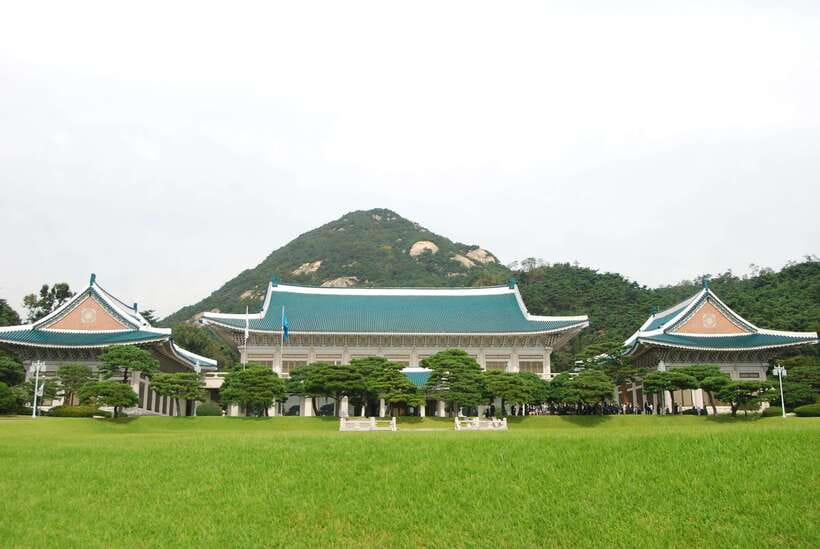
The itinerary begins with a visit to Cheongwadae, the official residence of the President of South Korea. In practical terms, this stop is mostly about the view and the photo moment—so you’re not expecting a deep museum experience here.
I like this as a warm-up because it sets the tone for the day: formal, political, and tied to modern Korea. You also get an easy way to orient yourself visually before you move into the older palace grounds.
If your camera battery runs low, this is the moment to use it. The guide will point out what to shoot in a way that helps you leave with at least one strong souvenir-style photo.
Gyeongbokgung Palace and the Royal Guard Changing Ceremony
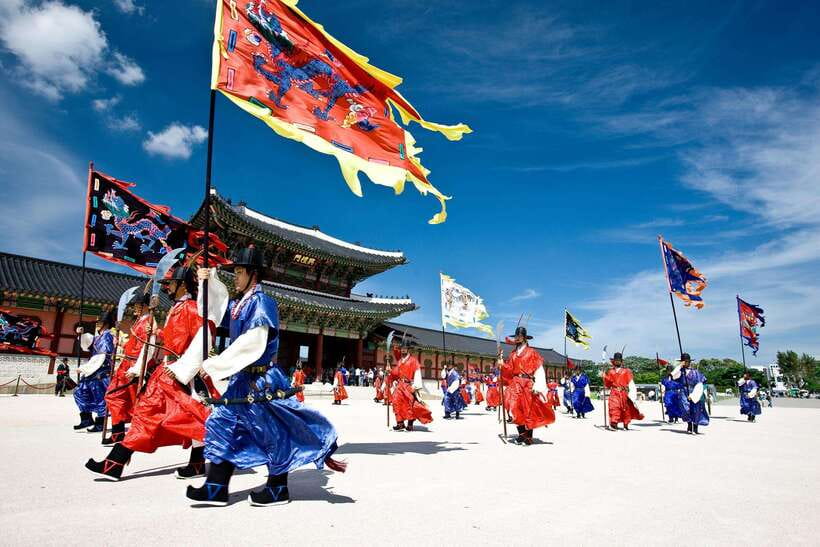
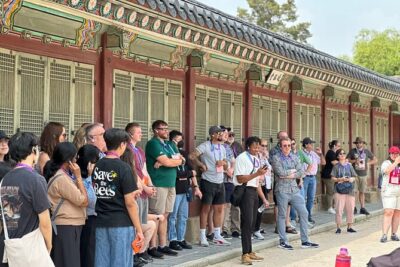
Gyeongbokgung Palace is the main event, and it’s one of the biggest reasons to book. It’s the oldest palace of the Joseon Dynasty, built in 1394 as the main palace by King Taejo. Among the five Joseon palaces, it’s known as the most comprehensive and grand.
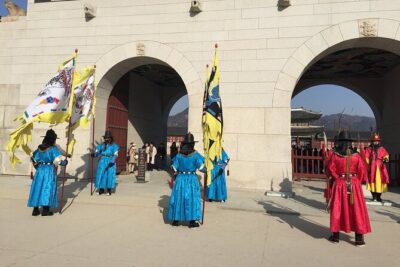
What makes this stop special is the Royal Guard Changing Ceremony. This is one of those rare, traditional scenes where you can see the guards’ costumes up close—especially the primary-color patterns that photograph well. If you’re coming for visuals and atmosphere, this is where the tour earns its keep.
Bring your camera and use it freely. The point here isn’t to rush through; it’s to watch the ceremony and understand what you’re seeing. Your guide explains the meaning behind the ritual so the outfits and movements land as something more than just a photo-op.
Important timing note: Gyeongbokgung Palace is closed on Tuesdays. On Tuesdays, the tour replaces it with Deoksugung Palace instead. If Gyeongbokgung is your top priority, double-check your day before you lock in dates.
More guide-to-yourself private days in Seoul
A Ginseng Stop That Explains a Korean Cultural Symbol
Next comes Cheongha Korea Ginseng. The tour frames ginseng as something with long roots in traditional Asian medicine, mentioned in historical texts going back centuries. The guide also talks about Korean ginseng and why it’s considered significant, including the idea of adaptogenic properties.
Here’s the balanced take: this part can feel like a sales stop depending on your tolerance. But if you want cultural context, it’s not just a “walk-through store.” You get a simple explanation of why ginseng shows up in everything from drinks to supplements.
If you have dietary or supplement concerns, tell the guide in advance. The tour notes that you should share dietary requirements ahead of time, and it’s smart to do that early rather than on the bus.
Lunch After Bibimbab: A Real Break in the Middle
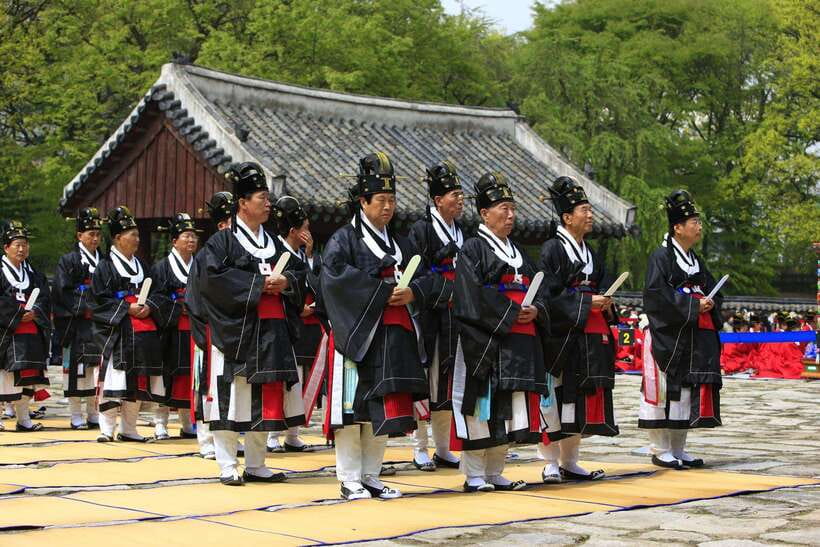
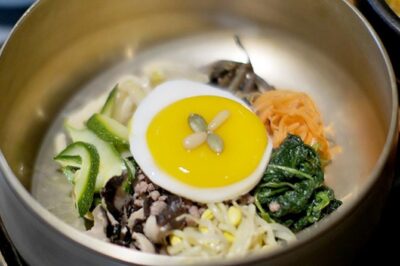
Then you’ll stop for lunch. The tour calls out a bibimbab lunch, which is a practical choice because it’s filling and works well after palace walking. You’re not scrambling to find food on your own, and you’re not choosing blindly from a menu you can’t read.
One important budgeting point: lunch is included. Drinks are not included, so if you want water, tea, or coffee, you’ll need to purchase it separately.
If you select the option that includes extra meals, you may get three main meals (breakfast, lunch, dinner). The standard baseline included meal is lunch, so confirm what your chosen option covers.
Changdeokgung Palace and UNESCO-Listed Courtyards (Plus Monday Swaps)
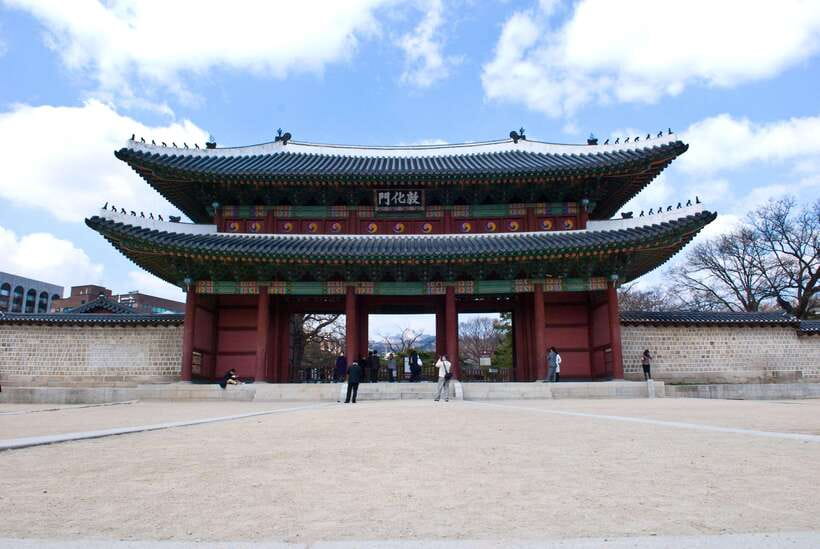
After lunch, you head to Changdeokgung Palace. This palace served as a main palace for many Joseon kings and is described as very well preserved. It’s also UNESCO-listed (1997), which is a useful marker if you want to know you’re seeing something recognized on a global level.
The feel here is different from Gyeongbokgung. Changdeokgung tends to reward slower attention—less about sheer size and more about how the palace grounds work as a living space tied to the people who ruled there.
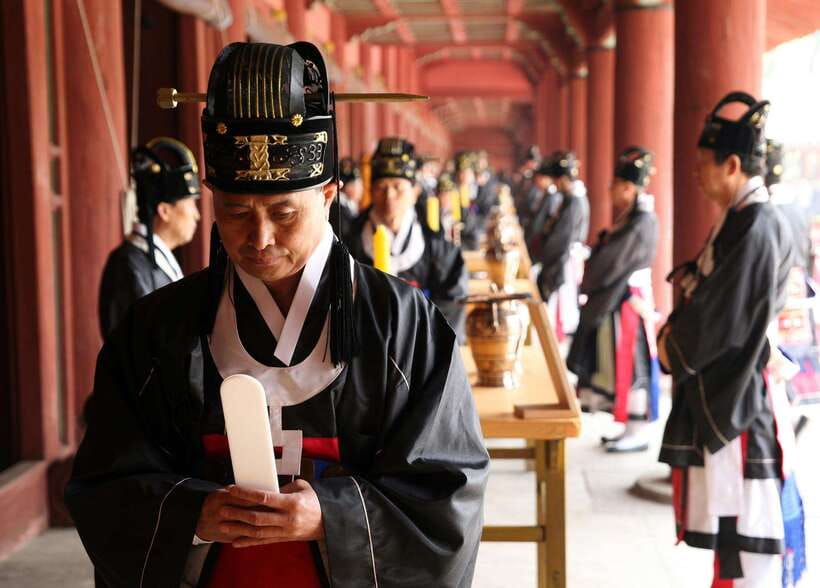
There’s also a Monday substitution to note. On Mondays, the tour visits Jongmyo Royal Shrine instead of Changdeokgung. That switch matters because it changes the vibe: shrine time feels more ceremonial and focused, while palace time is more architectural and expansive. If you’re choosing between Monday vs. another day, decide whether you want palace grounds or shrine atmosphere more.
Insadong Antique Shop Alley: Souvenirs With Street-Level Context
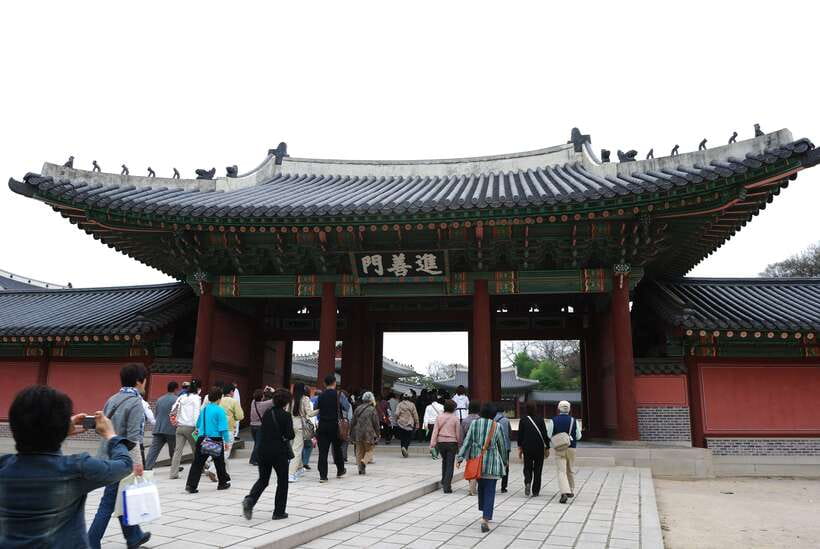
Next is Insadong Antique Shop Alley. This is where you can shift from history to shopping without losing the narrative. You’ll find art galleries, traditional tea houses, and antique shops along a street layout that’s easy to explore on foot.
I like this stop because it’s not just grabbing random items. The guide’s role here is to help you understand what you’re looking at—so you can buy with a little more confidence and style sense.
Tip: go into this stop with a small plan. Decide what you’re shopping for (teaware, small crafts, framed prints, or antiques), because the street can tempt you into impulse purchases quickly.
Hanok Village vs. Bukchon: Traditional Houses in the City
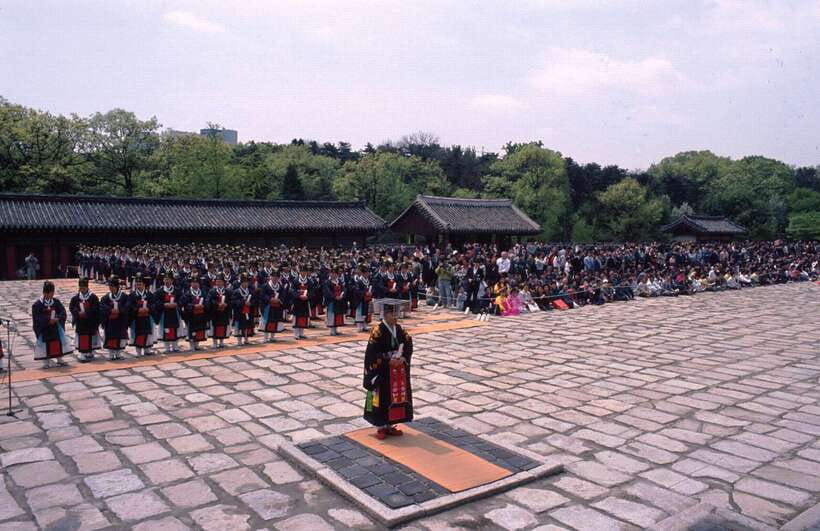
Your next cultural reset is time in an hanok village setting. The itinerary includes Namsangol Hanok Village, described as a cluster of restored traditional Korean houses with a pavilion, a pond, and even a time capsule. It’s a reminder that Seoul’s traditional architecture isn’t locked in museums—it’s part of the city’s identity.
But again, day-of-week swaps apply. On Mondays, you’ll visit Bukchon Hanok Village instead of Namsangol.
Practical difference: Bukchon tends to be more photo-heavy because you’re surrounded by traditional houses across streets and viewpoints. Namsangol can feel more contained and easier to navigate. Either way, wear shoes you trust, because you’ll be walking on uneven or textured surfaces.
Sungnyemun (Namdaemun Gate): City-Wall Symbol Photos
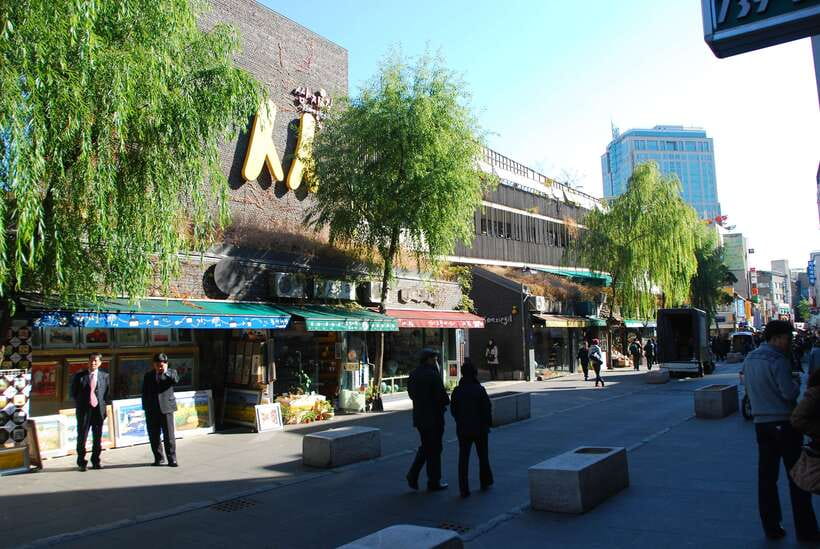
Then you’ll see Sungnyemun, also called Namdaemun Gate. It’s one of the Eight Gates in the Fortress Wall of Seoul, and it’s a strong visual symbol of the city’s historic defenses.
On your scheduled day, access changes: it’s outside only on Mondays. That means you can still get the photos, but you shouldn’t expect the same kind of entry experience you might get on other days.
If you’re photo-focused, you’ll want to time your shots at the right angles. Gates look best when you include surrounding context—so listen to the guide about where to stand for a clear frame.
Namdaemun Market: Street Food, Clothing, and Last-Minute Gifts
Finally, you finish at Namdaemun Market. It’s described as one of the oldest and largest open-air traditional markets in Seoul, with a wide range of goods—clothing, accessories, and souvenirs—and plenty of street-food options.
This is a good ending point because the day’s walking fatigue is real, and markets are where you can slow down naturally. You can also decide how adventurous you want to be with snacks and what you want to buy.
Since drinks aren’t included, this is one of the moments to plan for small purchases. If you like trying street food, budget for it even if lunch filled you up.
Private Group Advantage: Why This Format Works in Seoul
This is a private group tour, not a large bus crowd. That matters because you get more flexibility in how quickly you move through crowds, and your guide can keep the story straight as you go.
You’ll also appreciate the setup if your Korean is limited. The tour runs with live guide support in English or Japanese, and the guide helps translate what you’re seeing—especially at places where signage and timing matter.
In the best versions of this kind of private day, the guide’s energy makes the ceremonies and palace details click. In the past, guides such as Heidi, Leo, and Melvin have been praised for being friendly, talkative in English, and good at keeping the group moving with patience and clear explanations. If you want a guide who treats the day like a shared conversation instead of a timed checklist, you’ll want that kind of vibe.
Price and Value: What $295 Buys You
At $295 per person, this is not the budget option. You’re paying for a package: hotel pickup, private transport in an a/c minivan, a local guide, entrance fees/tickets, and lunch.
That can be good value if you hate logistics. Seoul’s palace areas can be confusing if you’re piecing together transport and ticket timing on your own. Here, you’re paying for fewer decisions and less waiting.
It’s less cost-effective if you’d rather self-guide and spend extra time where you like. The tour structure is fixed, including the schedule swaps for Mondays and Tuesdays, so your freedom is limited compared with independent travel.
My advice: if you’re visiting for a short trip and want a big slice of classic Seoul in one day, the bundled approach makes sense. If you have plenty of time and enjoy wandering without a timetable, you might get more out of independent palace visits.
What to Bring (And What to Avoid)
Do:
- Wear comfortable shoes.
- Dress for weather since it runs rain or shine.
- Bring your passport (the tour specifically asks for it).
- Bring a camera for the ceremony and gate photos.
Skip these:
- Intoxication isn’t allowed.
- Unaccompanied minors aren’t allowed.
- The tour is not suitable for wheelchair users, so plan accordingly if mobility is a concern.
Also, if you have dietary requirements or allergies, tell the guide in advance. The tour says you should share those needs early.
Who Should Book This Royal Palaces Tour
You’ll probably like this tour if:
- You want a structured palace day without solving transit and ticket puzzles.
- You care about ceremonies and want someone to explain what you’re seeing.
- You want shopping time (Insadong and Namdaemun) with an itinerary that keeps you moving.
You might reconsider if:
- You’re strongly price-sensitive.
- You hate any stop that feels like a retail/education environment (like the ginseng stop).
- You want to spend most of your time only in palaces and would rather skip markets and shopping.
This tour works well for couples, small groups, and first-timers who want classic Seoul highlights in one compact route.
Should You Book? My Decision Shortcut
If your top priorities are Gyeongbokgung, the guard changing ceremony, and a smooth day with pickup, guide, entry fees, and lunch included, then yes, this is a strong choice. The weekday swaps are the only big “gotcha,” so pick your travel day with intention.
If you’re going mainly for palace architecture and want full freedom to wander on your own, a self-guided plan might feel better. But for most people, the balance of history, shopping, and guided context makes this private full-day route feel like your best use of time.
FAQ
How long is the Seoul Royal Palaces Private Tour?
The tour duration is about 8.5 hours, and starting times vary by availability.
How much does the tour cost?
The price is listed at $295 per person.
What’s included in the price?
You get hotel pickup, transportation by air-conditioned minivan, a local guide, entry fees/tickets, lunch, and a drop-off at a separate location.
Are drinks included with lunch or meals?
No. Drinks are not included.
Does the tour include three main meals?
Three main meals (breakfast, lunch, dinner) are included only if you select the option that provides that. Lunch is included in the tour overall.
Where do you pick up and where do you drop off?
Pickup is offered from centrally located Seoul areas such as Gangnam, Myeongdong, Gwanghwamun, Itaewon, and Dongdaemun, or a nearby central hotel/subway station if needed. Drop-off is either at Myeongdong or City Hall depending on your preference.
What happens if I’m on a Tuesday?
Gyeongbokgung Palace is closed on Tuesdays, so it’s replaced with a tour of Deoksugung Palace.
What happens if I’m on a Monday?
On Mondays, the tour swaps in Jongmyo Royal Shrine instead of Changdeokgung, visits Bukchon Hanok Village instead of Namsangol Hanok Village, and Sungnyemun is visited outside only.
Is the tour rain or shine, and can I cancel?
The tour runs rain or shine. It also offers free cancellation up to 24 hours in advance for a full refund.
More Tours in Seoul
- Best DMZ Tour Korea from Seoul (Red Suspension Bridge Optional)★ 5.0 · 41,422 reviews
- DMZ Tour: 3rd Tunnel, Option(Suspension Bridge, Boat) from Seoul★ 5.0 · 21,373 reviews
- DMZ tour south Korea from Seoul (NK experience hall, defector)★ 5.0 · 20,599 reviews
- Seoul: DMZ Tour with Optional Suspension Bridge★ 4.8 · 5,277 reviews
- Seoul: DMZ The 3rd Tunnel and Suspension Bridge Tour★ 5.0 · 4,656 reviews
More Tour Reviews in Seoul
- Best DMZ Tour Korea from Seoul (Red Suspension Bridge Optional)★ 5.0 · 41,422 reviews
- DMZ Tour: 3rd Tunnel, Option(Suspension Bridge, Boat) from Seoul★ 5.0 · 21,373 reviews
- DMZ tour south Korea from Seoul (NK experience hall, defector)★ 5.0 · 20,599 reviews
- Seoul: DMZ Tour with Optional Suspension Bridge★ 4.8 · 5,277 reviews
- Seoul: DMZ The 3rd Tunnel and Suspension Bridge Tour★ 5.0 · 4,656 reviews
Still More Palaces to Walk
- Seoul: Gyeongbok Palace, Bukchon Village, and Gwangjang Tour★ 4.9 · 2,321 reviews
- Best Seoul City Tour (Gyeongbokgung Palace,Insadong,Namsan Tower)★ 5.0 · 1,647 reviews
- Small-Group Royal Palace and Seoul City Tour (hotel pick-up)★ 5.0 · 1,474 reviews
- Seoul City Sightseeing Tour Including Gyeongbokgung Palace, N Seoul Tower, and Namsangol Hanok Village★ 5.0 · 1,423 reviews
- Seoul: Gyeongbok Palace, Bukchon Village, and Gwangjang Tour★ 5.0 · 1,044 reviews
Just added to Exploring Seoul
Gyeongbokgung & Palace Tours, compared.
 ★ 4.9Gyeongbok Palace, Bukchon Village, and Gwangjang TourFrom $322,321 reviews
 ★ 5.0Best Seoul City Tour (Gyeongbokgung Palace,Insadong,Namsan Tower)From $581,647 reviews
 ★ 5.0Small-Group Royal Palace and Seoul City Tour (hotel pick-up)From $561,474 reviews
 ★ 5.0Seoul City Sightseeing Tour Including Gyeongbokgung Palace, N Seoul Tower, and Namsangol Hanok VillageFrom $801,423 reviews
★ 5.0Gyeongbok Palace, Bukchon Village, and Gwangjang TourFrom $321,044 reviews
★ 5.0Seoul City Sightseeing Tour Including Gyeongbokgung Palace, N Seoul Tower, and Namsangol Hanok VillageFrom $801,423 reviews
★ 5.0Gyeongbok Palace, Bukchon Village, and Gwangjang TourFrom $321,044 reviews
 ★ 4.9Seoul Half-Day City Highlight, Palace Tour with HanbokFrom $49764 reviews
 ★ 4.9Palace, Temple and Market Guided Foodie Tour at NightFrom $60750 reviews
 ★ 4.7Seoul Highlights: Gyeongbok Palace, Insadong & N Seoul TowerFrom $26726 reviews
Browse the lists this tour appears in