
Reviewed · GYEONGBOKGUNG & PALACE TOURS
Seoul: Deoksugung Palace Night Tour
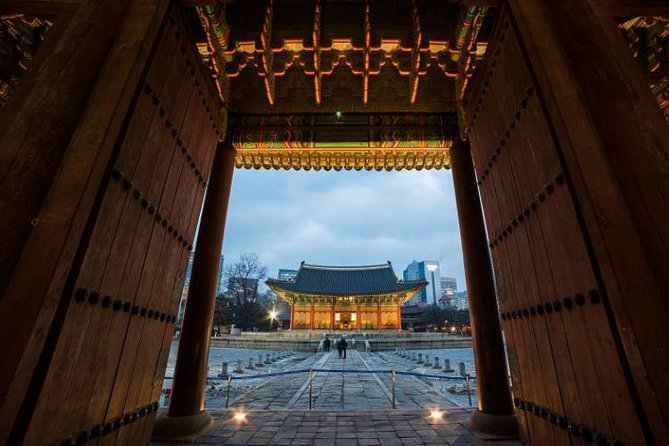
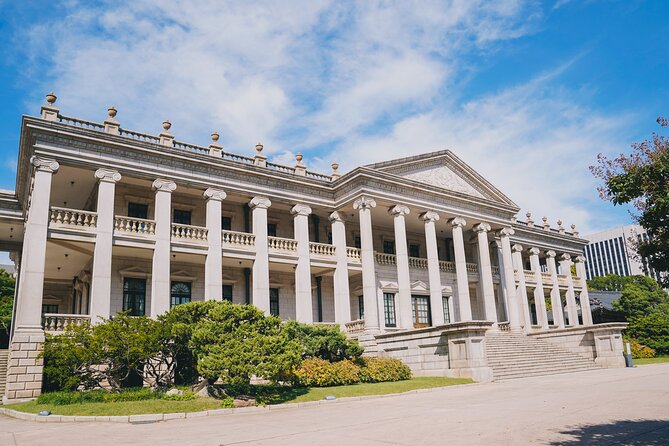
Night at Deoksugung hits different. This 2-hour walk turns Seoul’s royal grounds into a clear storyline, moving from the palace gates into the rooms tied to the Daehan Empire and Emperor Gojong’s struggle for sovereignty during Japanese colonial rule. I especially like how you get a mix of Oriental and Western influence in the architecture while staying grounded in real history, and I also like that the tour points out specific palace buildings you can later recognize while you roam on your own.
There is one consideration: this isn’t a long, slow palace wander. With a set route and stops like Junghwajeon and Hamnyeongjeon, you’ll want comfortable shoes and realistic expectations about time—if you love hanging out in one spot for photos, you’ll probably save that for after the guided portion.
In This Review
- Key highlights you’ll actually care about
- Why Deoksugung Palace feels different after dark
- Finding your guide near City Hall (and why the meeting point matters)
- Entering through Daehanmun Gate: the palace as a storybook cover
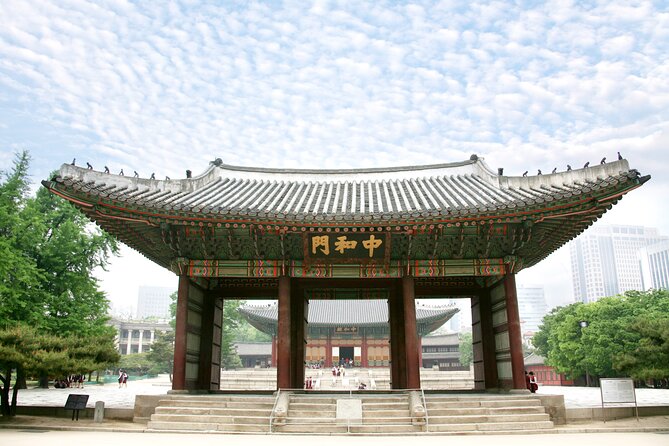
- Junghwajeon throne hall: where the meaning lands
- Seokeodang: the building you’ll remember because it feels personal
- Hamnyeongjeon bed chamber: history gets quieter here
- Jungkwanheon Hall: the coffee detail that makes the imperial world real
- Morning/evening walk + the architecture mix you’ll start spotting on your own
- The guide makes or breaks it (names worth paying attention to)
- Price and value: $38 for a 2-hour, guided palace route
- After the tour: how to spend your time inside the grounds
- Who this tour suits best
- Should you book Deoksugung Palace Night Tour?
- FAQ
- How long is the Deoksugung Palace Night Tour?
- What does it cost?
- Where do I meet the guide?
- Is the tour guided, or self-guided?
- What’s included in the price?
- Is traveler’s insurance included?
- What should I bring?
- Is the tour wheelchair accessible?
- Can I stay after the tour ends to explore?
- What if I cancel close to the tour date?
Key highlights you’ll actually care about
- Daehanmun Gate start: you begin at the main entrance area, not at some random courtyard.
- Junghwajeon + throne-hall context: you learn what you’re looking at, not just where to take a picture.
- Seokeodang and Hamnyeongjeon: two especially personal-feeling buildings tied to King Gojong’s life.
- Jungkwanheon Hall coffee-story moment: a small detail that makes imperial life feel human.
- Architectural “meet-in-the-middle”: you’ll notice where Korean palace tradition connects to Western influence.
- Stay after the tour: the option to keep exploring and take photos is part of the experience.
Keep walking the palaces of old Seoul
- Seoul: Gyeongbok Palace, Bukchon Village, and Gwangjang Tour★ 4.9 · 2,321 reviews
- Best Seoul City Tour (Gyeongbokgung Palace,Insadong,Namsan Tower)★ 5.0 · 1,647 reviews
- Small-Group Royal Palace and Seoul City Tour (hotel pick-up)★ 5.0 · 1,474 reviews
- Seoul City Sightseeing Tour Including Gyeongbokgung Palace, N Seoul Tower, and Namsangol Hanok Village★ 5.0 · 1,423 reviews
Why Deoksugung Palace feels different after dark
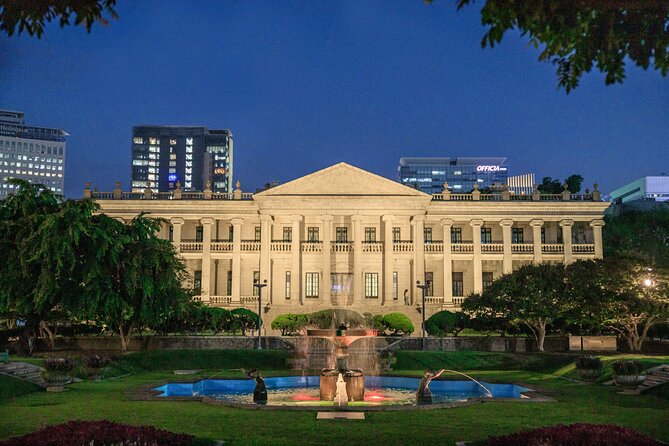
Deoksugung has a special pull at night because the palace starts feeling less like a museum stop and more like a stage. The lights change the way the grounds read, and the story you’re hearing has more gravity when the setting turns quiet. You’re also in an area where modern Seoul is never far away, so the palace feels like a deliberate pause in the city’s pace.
What makes this tour worth your time is that it connects three things you might otherwise keep separate: the palace layout, the people who lived here, and the political pressure around them. The palace served as royal quarters for 13 years, and the tour frames what happened next as a fight over authority and control—especially for the first and last Emperor Gojong—when sovereignty was pressured under Japanese occupation.
And yes, you do get the sights, but the goal isn’t only Instagram angles. The tour is built to help you understand what the buildings symbolize, and why that matters to modern Korean history.
Finding your guide near City Hall (and why the meeting point matters)
You’ll meet outside Exit 1 of City Hall Station. That’s a practical choice because City Hall is a major transit hub, so you’re not forced into a complicated detour. If you’re already using public transit for most of your Seoul days, this meeting point keeps the day easy.
You’ll also get an email/WhatsApp message about the meetup place and time. That detail matters because palace tours run on tight timing—getting there five minutes late can mean you miss the start through the main gate area.
The tour is in English with a live local guide, and the experience is listed as wheelchair accessible. If you’re traveling with someone who needs step-free access, it’s a useful point to have confirmed before you go.
Entering through Daehanmun Gate: the palace as a storybook cover
After meeting your guide, you go through Daehanmun Gate, the main gate that sets the tone for the whole route. Think of the gate like the title page: once you pass it, the tour’s history framing starts to feel real. You’re not just walking around old walls—you’re stepping into a sequence tied to power, daily life, and national pressure.
This is a smart start for first-time palace visitors. You get oriented early, so later stops like Junghwajeon land better in your brain. Even if you’re the type who plans to explore alone afterward, beginning with the main entrance gives you reference points for the rest of the grounds.
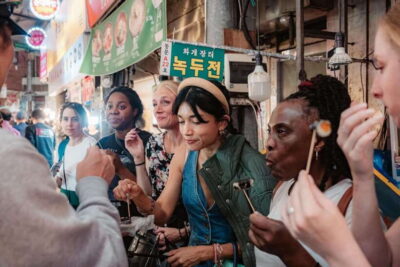
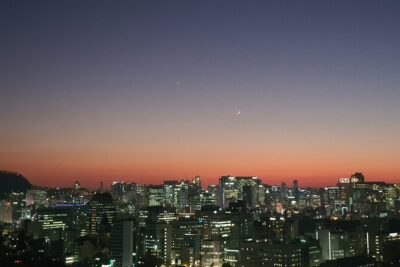
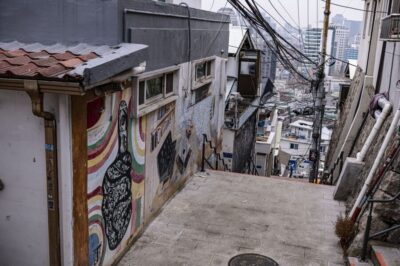
Seoul keeps going long after dark
Junghwajeon throne hall: where the meaning lands
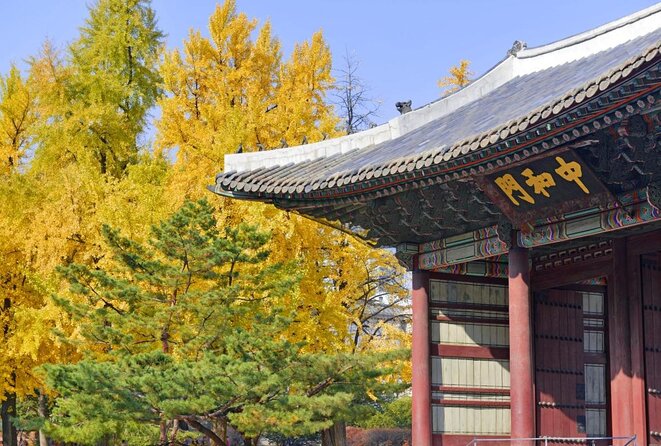
Next up is Junghwajeon, the main throne hall. This is one of those places where details can feel overwhelming if you only look at it visually. The guide’s job here is to help you connect the structure to its function—how royal ceremonies worked, and why the hall mattered in the emperor’s public authority.
I like that the tour doesn’t treat the architecture as trivia. You’ll learn what the building represents in the palace hierarchy and in the larger story of the Daehan Empire. Under the surface, it’s also a lesson in how politics shapes space: rulers didn’t just choose grand buildings because they were pretty. They used them to project legitimacy.
Practical note: throne halls and major indoor/outdoor transitions can involve standing for a while while the guide explains. Comfortable shoes matter.
Seokeodang: the building you’ll remember because it feels personal
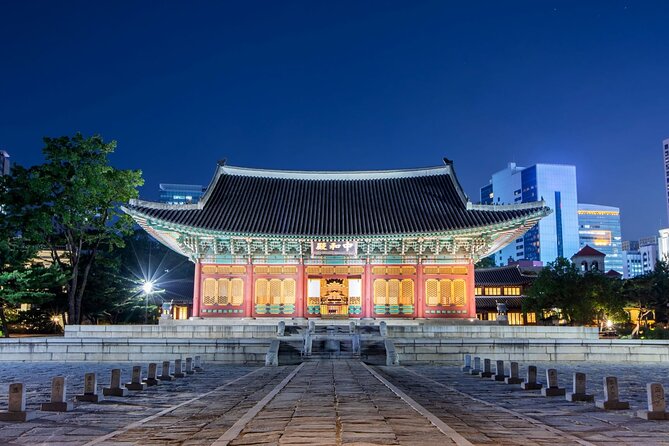
Then you’ll head to Seokeodang, described as King Gojong’s most beloved building. That framing changes how you look at it. Instead of seeing it as only another palace structure, you start treating it like a place connected to preference and daily presence.
It’s a good stop on the route because it adds a human layer. Even when the tour is discussing major national events, you keep landing back at rooms and buildings tied to the king’s life. For many visitors, that shift is what turns a historical tour from information into understanding.
Also, this is where the architectural theme becomes easier to spot. You’ll be watching for the way Korean palace tradition meets Western influence, and this stop gives you a place to connect those ideas to a named building rather than a vague impression.
Hamnyeongjeon bed chamber: history gets quieter here
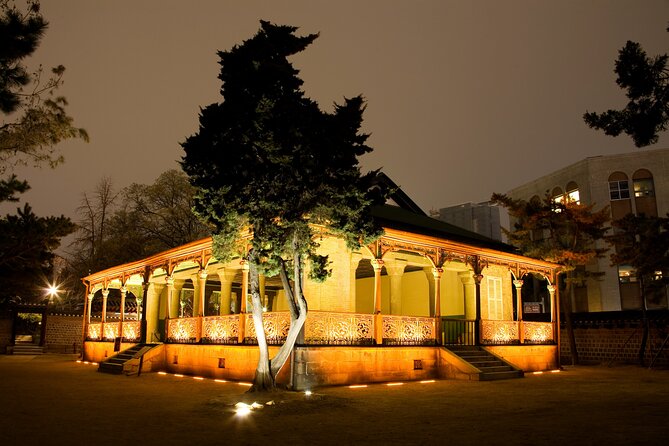
Hamnyeongjeon, the king’s bed chamber, is one of the most thoughtful stops on the route. It’s quieter, more intimate, and it helps balance the grandness of ceremony spaces like Junghwajeon.
If you’re used to palace tours that only focus on what leaders did in public, this is the correction. A bed chamber is where life becomes routine, not performance. The tour’s ability to connect a personal space to the broader story of sovereignty and pressure makes this stop hit harder than you might expect from a “two-hour palace tour.”
I also find it useful because it helps you pace your attention. You can go from grand hall symbolism to everyday-life symbolism without your brain overheating.
Jungkwanheon Hall: the coffee detail that makes the imperial world real
The route ends with Jungkwanheon Hall, described as the emperor’s cafeteria where he enjoyed his coffees. It sounds like a small detail, but it does real work in the tour.
When a guide points out a practical, everyday habit—like drinking coffee—you’re reminded that history isn’t only about battles and policies. It’s about people living through their world with tastes, comforts, and private rhythms. That detail also fits the tour’s broader theme: Korea’s story here isn’t frozen in one era. It’s a story of contact, change, and the way Western influence made its way into the daily life of a palace context.
If you like tours that give you at least one or two specific, memorable facts you can reuse while wandering later, this coffee moment is a strong candidate.
Morning/evening walk + the architecture mix you’ll start spotting on your own
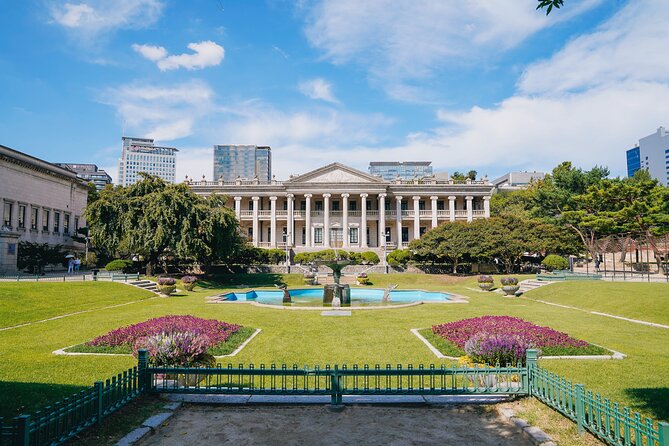
A big part of this experience is the walking time across the palace grounds in a morning/evening setting. In practice, that means you’ll have shifting light on buildings and courtyards, and that makes the architectural mix more noticeable.
The tour’s theme—Korean-style palace architecture meeting Western influence—can be hard to “see” if you only hear it in general terms. Here, you get that theme attached to named stops. After the tour, when you return to take photos or continue exploring, you’ll likely find yourself comparing details rather than just scanning for photo spots.
That’s the main value: you learn how to look.
The guide makes or breaks it (names worth paying attention to)
The experience runs with an English-speaking local guide, and the quality shows up in how the tour answers questions clearly and with solid detail. Past sessions have included guides such as Sally Sung, Joy, and Alan, all praised for being helpful and patient, and for explaining things in a way that stays precise when you ask follow-ups.
You don’t need a background in Korean history to enjoy this, but you’ll benefit if you’re the type who likes asking why certain buildings matter. The tour works well when you’re curious, not just when you’re checking boxes.
Price and value: $38 for a 2-hour, guided palace route
At $38 per person for a 2-hour tour, the price feels fair for what you get: an English-speaking guide plus an entrance fee included. You’re essentially paying for structure, context, and a guided connection between the palace you’re seeing and the political story around it.
Where the value really shows is that Deoksugung can be confusing if you wander alone. The guide helps you move through major buildings in the right order and explains what each stop signifies. If you enjoy history but don’t want to spend your time piecing it together from guidebooks, this kind of guided route is exactly the middle ground between a free stroll and a deep scholarly lecture.
If you’re mostly after wide open time to roam with no schedule, you might prefer a self-guided palace visit. But if you want the story threaded through the spaces, this is good value.
After the tour: how to spend your time inside the grounds
One of the best features is that you can stay behind after the guided portion to explore at your own pace and take photos. That means you get the best of both worlds: explanation first, then freedom.
Here’s how I’d use that extra time:
- Revisit whichever building stuck with you most (Junghwajeon, Hamnyeongjeon, or Seokeodang).
- Walk slowly enough to spot the architectural mix the guide described.
- Take your photos when the flow of the group has moved on.
If you’re the kind of traveler who likes ending with your own discoveries, this add-on is worth it.
Who this tour suits best
This is a great fit if you:
- Want a focused 2-hour palace experience rather than a half-day commitment.
- Like historical meaning tied to specific places, not generic background.
- Enjoy night or evening sights and like how lighting changes the feel of a site.
- Want an English guide and prefer questions answered directly.
It’s less ideal if you:
- Don’t like walking and standing for guided explanations.
- Want a long, wandering palace day with no structure.
Should you book Deoksugung Palace Night Tour?
If you’re visiting Seoul and you care about seeing Deoksugung as a real historical setting—not just a pretty palace—this tour is a smart booking. The guide-led route through Daehanmun, Junghwajeon, Seokeodang, Hamnyeongjeon, and Jungkwanheon gives you a clean framework to understand the Daehan Empire and Emperor Gojong’s story under intense political pressure. Add in the chance to keep exploring afterward, and you’re getting more than a quick guided walk.
I’d book it if you want history you can point to with your eyes. You’ll finish knowing what you saw, and you’ll likely keep spotting details once you’re on your own.
FAQ
How long is the Deoksugung Palace Night Tour?
The tour lasts 2 hours.
What does it cost?
It’s $38 per person.
Where do I meet the guide?
Meet outside Exit 1 of City Hall Station.
Is the tour guided, or self-guided?
It’s a live English tour with a local guide.
What’s included in the price?
The price includes a local tour guide and an entrance fee.
Is traveler’s insurance included?
No. Traveler’s insurance is not included.
What should I bring?
Wear comfortable shoes.
Is the tour wheelchair accessible?
Yes, it’s listed as wheelchair accessible.
Can I stay after the tour ends to explore?
Yes. You can stay behind after the tour to explore at your own pace and take photos.
What if I cancel close to the tour date?
The tour offers free cancellation up to 24 hours in advance for a full refund. No refund is issued for a no-show or cancellation on the day of the tour.
More Tour Reviews in Seoul
- Best DMZ Tour Korea from Seoul (Red Suspension Bridge Optional)★ 5.0 · 41,422 reviews
- DMZ Tour: 3rd Tunnel, Option(Suspension Bridge, Boat) from Seoul★ 5.0 · 21,373 reviews
- DMZ tour south Korea from Seoul (NK experience hall, defector)★ 5.0 · 20,599 reviews
- Seoul: DMZ Tour with Optional Suspension Bridge★ 4.8 · 5,277 reviews
- Seoul: DMZ The 3rd Tunnel and Suspension Bridge Tour★ 5.0 · 4,656 reviews
Seoul After Dark, Continued
- Seoul: Night Market Food Tour with Local Guide★ 4.9 · 943 reviews
- Seoul moonlight walking tour with local historian★ 5.0 · 940 reviews
- Seoul: Nighttime Hidden Gems Walking Tour★ 5.0 · 775 reviews
- Seoul: Evening Dark History, Folklore & Ghost Story Walking Tour★ 5.0 · 593 reviews
- Seoul: Dark Side of the City and Ghost Stories Walking Tour★ 4.8 · 484 reviews
Still More Palaces to Walk
- Seoul: Gyeongbok Palace, Bukchon Village, and Gwangjang Tour★ 4.9 · 2,321 reviews
- Best Seoul City Tour (Gyeongbokgung Palace,Insadong,Namsan Tower)★ 5.0 · 1,647 reviews
- Small-Group Royal Palace and Seoul City Tour (hotel pick-up)★ 5.0 · 1,474 reviews
- Seoul City Sightseeing Tour Including Gyeongbokgung Palace, N Seoul Tower, and Namsangol Hanok Village★ 5.0 · 1,423 reviews
- Seoul: Gyeongbok Palace, Bukchon Village, and Gwangjang Tour★ 5.0 · 1,044 reviews
Just added to Exploring Seoul
Gyeongbokgung & Palace Tours, compared.
 ★ 4.9Gyeongbok Palace, Bukchon Village, and Gwangjang TourFrom $322,321 reviews
 ★ 5.0Best Seoul City Tour (Gyeongbokgung Palace,Insadong,Namsan Tower)From $581,647 reviews
 ★ 5.0Small-Group Royal Palace and Seoul City Tour (hotel pick-up)From $561,474 reviews
 ★ 5.0Seoul City Sightseeing Tour Including Gyeongbokgung Palace, N Seoul Tower, and Namsangol Hanok VillageFrom $801,423 reviews
★ 5.0Gyeongbok Palace, Bukchon Village, and Gwangjang TourFrom $321,044 reviews
★ 5.0Seoul City Sightseeing Tour Including Gyeongbokgung Palace, N Seoul Tower, and Namsangol Hanok VillageFrom $801,423 reviews
★ 5.0Gyeongbok Palace, Bukchon Village, and Gwangjang TourFrom $321,044 reviews
 ★ 4.9Seoul Half-Day City Highlight, Palace Tour with HanbokFrom $49764 reviews
 ★ 4.9Palace, Temple and Market Guided Foodie Tour at NightFrom $60750 reviews
 ★ 4.7Seoul Highlights: Gyeongbok Palace, Insadong & N Seoul TowerFrom $26726 reviews
Browse the lists this tour appears in