
Reviewed · GYEONGBOKGUNG & PALACE TOURS
Seoul: Deoksugung Palace Night Tour
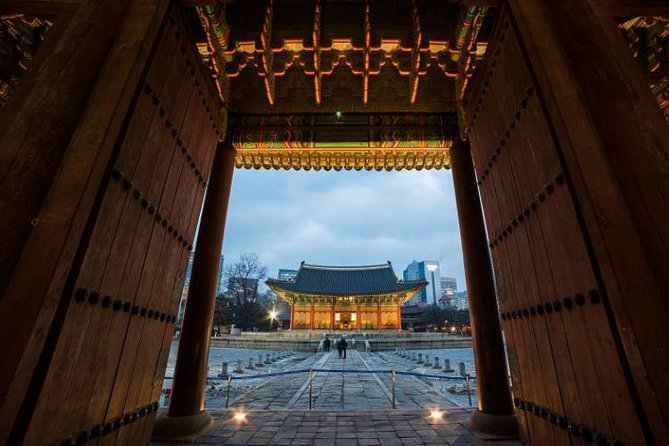
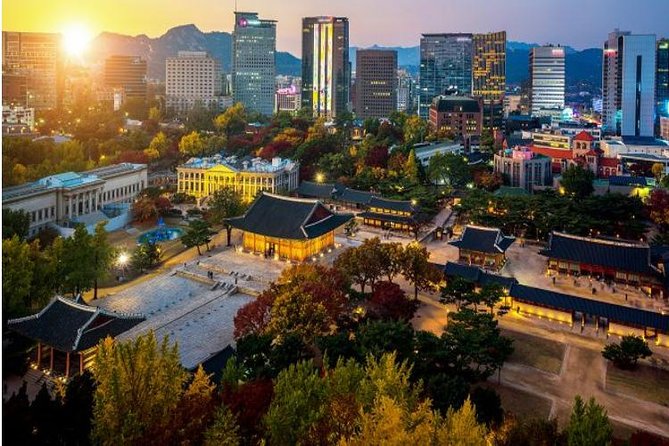
Night lights make Deoksugung tell new stories. This Deoksugung Palace Night Tour is a focused 2-hour visit that explains how Korea’s royal world changed in the late Korean Empire era, all while the palace grounds feel calmer after dark.
I love the night-time architecture payoff—Deoksugung is the one Seoul palace that blends traditional and western-style buildings in the same complex, and the lighting really helps you spot the contrasts. I also love the guide-led Q&A: on my watchlist for this tour are guides like Alan Han and Lee, who clearly connect the buildings to the people who used them, so you can ask questions instead of guessing.
One thing to consider: this tour depends on good weather, and it runs on a set schedule from City Hall. If rain shows up, you may get a different date or refund options, so build in some flexibility.
In This Review
- Key reasons this night tour is worth your time
- Deoksugung Palace at night: the lighting changes everything
- The City Hall meetup: easy start, clear plan
- Stop by stop: what you see at Deoksugung Palace Night Tour
- Junghwajeon: the main throne hall
- Seokjojeon: the western-style building
- Seokeodang: a favorite of King Gojong
- Hamnyeongjeon: the king’s bed-chamber
- Jungkwanhun: a cafeteria stop
- The Korean Empire stories you actually remember
- The stone wall moment: don’t rush it
- Price and value: $35 for a guided night at a major Seoul site
- When this tour fits your travel style
- What to expect on the day: rules that keep things smooth
- Should you book the Deoksugung Palace Night Tour?
- FAQ
- FAQ
- How long is the Deoksugung Palace Night Tour?
- What time does the tour meet?
- Where do I meet, and where does the tour end?
- Are the explanations available in English?
- Is there an admission ticket fee included?
- Which buildings will we see during the tour?
- Is Deoksugung Palace open every day for this tour?
- Can I record or film during the tour?
- What if the tour is canceled due to weather or too few people?
Key reasons this night tour is worth your time
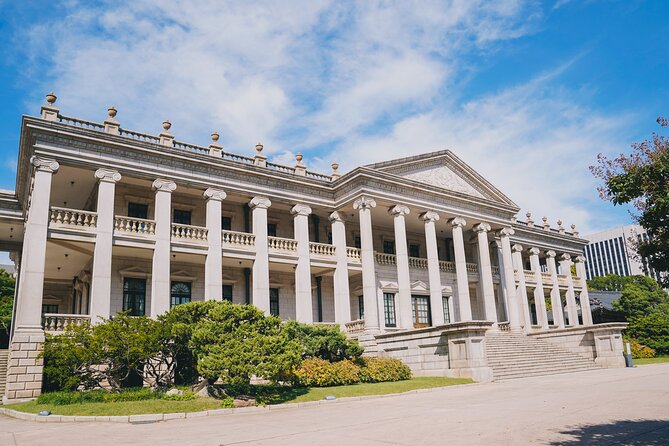
- Deoksugung’s mixed architecture: traditional halls next to western-style structures, explained clearly
- Night calm + palace lighting: easier to appreciate details when it is not mid-day crowded
- English and Chinese explanations: built-in guidance instead of a solo museum puzzle
- Ask-the-guide format: real conversation about Korean Empire history and architecture
- Small-group feel: max 20 people, with the chance for more personal attention if the group is tiny
Keep walking the palaces of old Seoul
- Seoul: Gyeongbok Palace, Bukchon Village, and Gwangjang Tour★ 4.9 · 2,321 reviews
- Best Seoul City Tour (Gyeongbokgung Palace,Insadong,Namsan Tower)★ 5.0 · 1,647 reviews
- Small-Group Royal Palace and Seoul City Tour (hotel pick-up)★ 5.0 · 1,474 reviews
- Seoul City Sightseeing Tour Including Gyeongbokgung Palace, N Seoul Tower, and Namsangol Hanok Village★ 5.0 · 1,423 reviews
Deoksugung Palace at night: the lighting changes everything
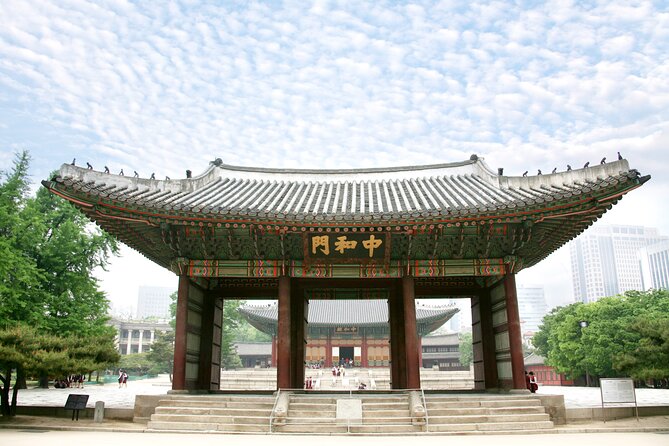
Deoksugung is often picked because it is different from the bigger, flashier palace your brain already knows. This one is associated with the Korean Empire era—about a hundred years ago—and it served as the main palace when Korea was in the thick of early modernization. That matters, because it gives the site a layered story: royal power, new influences, and the hard aftermath of Japanese invasion are all part of the context you hear about during the tour.
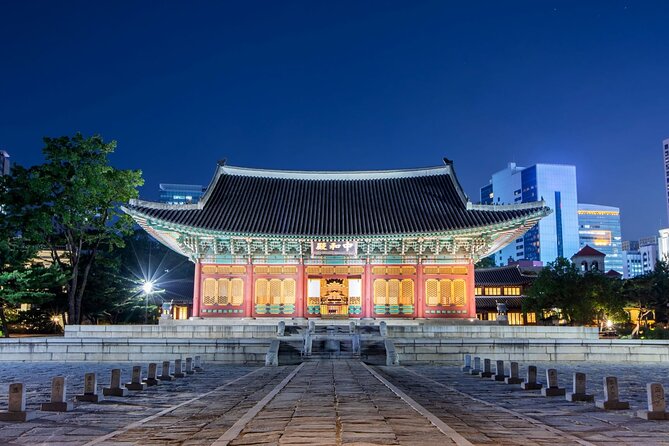
At night, you also get a different visual read. Daytime makes everything look sharp but flat. Night lighting adds shadow and contrast, so you can actually notice the shifts in style—from traditional roofs and ceremonial spaces to western-style building features. If you like “spotting what changed and why,” this time of day helps your eye do the work.
And yes, the palace walls matter here. There is a stone wall next to Deoksugung that is famous for its beauty, and you will get time and direction to notice it instead of walking past it like generic Seoul scenery. For me, that is the best kind of value: you see what you would have missed on your own.
The City Hall meetup: easy start, clear plan
This tour starts near City Hall Station, meeting in front of Exit 1 on Line 1 and 2. The practical sweet spot is showing up a bit early—your start time is listed as 6:30 pm, with the meet time around 6:20 pm. That buffer matters at dusk, when it is easy to misread signs or get caught behind a slow-moving crowd.
You are also not trapped in a hard-to-reach location. Deoksugung is near major transit, including Gwanghwamun Station, so if your plan A is one metro line and your plan B is another, you can usually adjust without stress.
The tour uses a mobile ticket, which is convenient. Bring your phone charged, and keep the confirmation handy so you do not waste time hunting for information at the meeting point.
Group size is capped at 20 people, and the tour is designed for most travelers to participate. That means you can keep your day simple: you do not need a second reservation around a complicated itinerary, and the whole plan is built around a calm, guided walk.
Stop by stop: what you see at Deoksugung Palace Night Tour
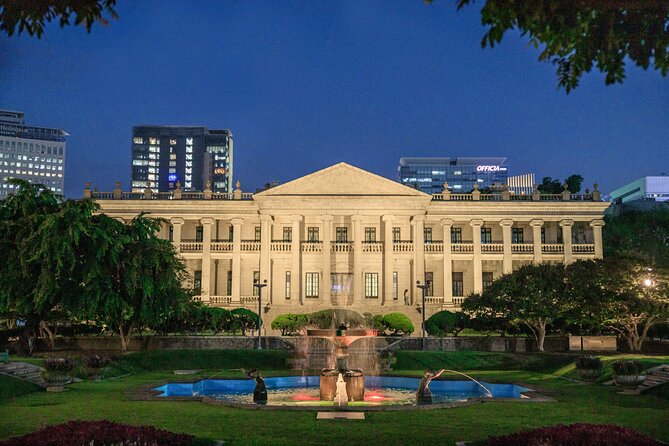
You are basically touring Deoksugung as a “read the site like a story” experience. The guide helps you connect names of buildings to how power and daily life worked in that era, then points out the style differences you can see in person.
Seoul keeps going long after dark
Junghwajeon: the main throne hall
Junghwajeon is the main throne hall, and it is where you get your foundation. The key is not just the building name—it is the sense of ceremony. The guide’s explanations help you understand what kinds of events and authority this space represented, so later stops make more sense.
In a solo visit, you might see a striking hall and move on. With a guide, you understand what you are looking at and why it was built the way it was.
Seokjojeon: the western-style building
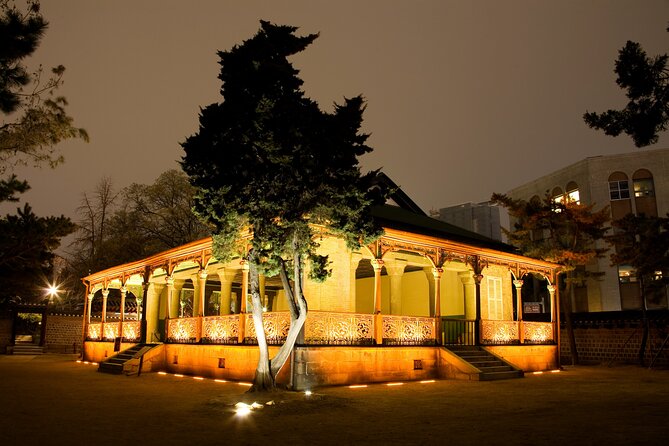
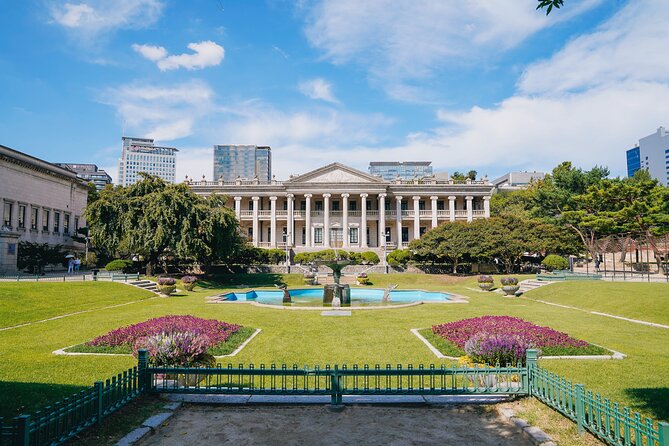
Seokjojeon is one of the site’s big “wait, what is that doing here?” moments. Deoksugung is known as the palace that combines traditional and western-style buildings in the same complex, and this stop is the clearest example.
This is where the Korean Empire modernization story becomes visual. Instead of reading abstract history, you see the architectural shift the guide connects to the time period. If you care about how cultures influence each other through buildings and materials, this is a highlight.
Seokeodang: a favorite of King Gojong
Seokeodang is described as the most beloved building by King Gojong. That detail matters because it reframes the hall stops from “royal objects in a museum” into “used spaces with personal meaning.”
When a guide connects a place to a person’s preferences, the architecture stops feeling like a random collection. It becomes a map of relationships—what mattered, what was comfort, what was authority.
Hamnyeongjeon: the king’s bed-chamber
Hamnyeongjeon is the king’s bed-chamber, and it is often the stop that surprises people. Palaces can feel distant when you only focus on throne rooms. But a bed-chamber pulls you toward daily life and privacy—still royal, but more human.
The guide’s storytelling here is the difference between seeing a room and understanding the role of a room. Even if you do not know all the dates, the tour helps you grasp the idea of how power played out in ordinary routines and controlled spaces.
Jungkwanhun: a cafeteria stop
Jungkwanhun is listed as a cafeteria. Think of this as a structured pause point within the tour. It gives you a breather so you are not sprinting from one named building to the next at night.
If you want to stay comfortable, this is where you can reset your attention. It also helps you keep the tour enjoyable instead of turning it into a 2-hour endurance walk.
The Korean Empire stories you actually remember
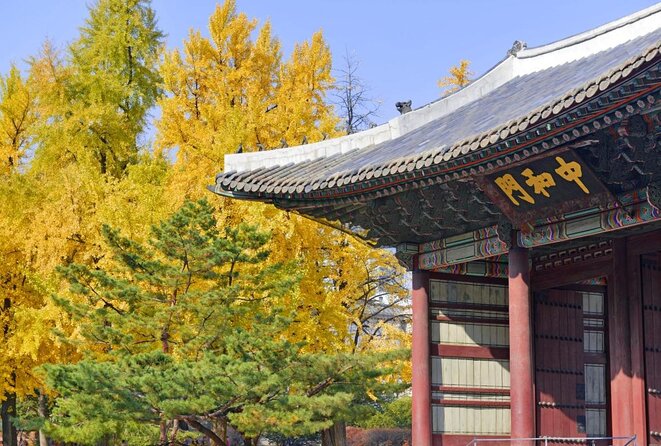
The headline promise here is history tied to the architecture. The tour focuses on the Korean Empire era—around the shift period when Korea was called the Korean Empire—and it weaves in the tension and pain connected to Japanese invasion, not as a vague mention but as part of the palace’s preserved story.
The practical benefit of this kind of storytelling is that you walk away with more than photos. You remember the reason the site looks the way it does. You also start recognizing themes: modernization attempts, how foreign influence showed up in local structures, and how the late-empire period left marks that still sit in the buildings today.
A small but important plus: explanations are offered in English and Chinese. That helps you feel less lost even if your Korean is limited.
On the guide side, names like Alan Han and Lee show up in the experience background, and both are described as strong narrators. Even if you do not know the full biography of your guide, the consistent thread is clear: this is meant to be conversational and question-friendly, not a lecture where you only catch every other sentence.
The stone wall moment: don’t rush it
Deoksugung is not only the buildings. The stone wall beside the palace is famous for its beauty, and it deserves your slow attention.
At night, walls can look either dramatic or flat, depending on the angle and lighting. With a guide, you get timing—when to look up, when to notice the texture, and how the wall fits into the palace’s overall layout. This is one of those small “I’m glad someone pointed it out” parts, because you could easily miss it when you’re focused on the palace halls.
If your schedule is tight, keep your pace steady but do not speed through the wall section. You will thank yourself when the photos turn out sharper and your memories feel more specific.
Price and value: $35 for a guided night at a major Seoul site
The price is $35.00 per person, and the tour is marked as having admission ticket included/free. In plain terms, you are paying mainly for guided interpretation and an organized night walk with a professional guide—not for a separate palace entry fee.
When you do the math, value comes from three things:
- Two hours of context, so you can understand what you see instead of guessing
- Guidance in multiple languages (English and Chinese), so the experience is accessible
- A small-group ceiling (max 20), which tends to keep questions from vanishing into the crowd
Also, this tour is booked about 45 days in advance on average, which tells you demand is real. If you are in Seoul during a popular week, it is smart to reserve early so you do not end up hunting for a last-minute slot.
The tour is also designed to feel low-pressure: the meeting point is near major transit, and it is not structured like a marathon across half the city. For a night activity, that matters. You want your evening to feel relaxing, not like another commute.
When this tour fits your travel style
This is a strong match if you:
- Like history that connects to what you can see in front of you
- Care about architecture (especially the traditional vs western-style contrast)
- Want a guided experience but do not want to spend your whole evening in a large group event
- Prefer a calm, well-timed night visit (the tour is specifically positioned as a night tour for greater beauty and peace)
This is also a good idea if you are already planning to visit Seoul landmarks around City Hall and Gwanghwamun. The location makes it easy to stack with other nearby plans.
On the other hand, if your must-see palace priority is Gyeongbokgung, or if you only visit on a Monday, you may need a plan B. Deoksugung Palace is closed on Mondays, and the tour provider directs you to their Gyeongbok Palace tour instead.
What to expect on the day: rules that keep things smooth
A few guidelines are part of the experience setup, and knowing them ahead of time helps you avoid awkward moments:
- Recording or filming is not allowed during the tour
- Pets are not allowed
- Joining after the tour begins is not allowed for other participants in the group
- If you book, you should leave a name and contact number that works in Korea, since the operator sends meet-up details by email/WhatsApp
Weather also matters. The tour requires good weather, and if conditions are poor it may be offered on a different date or refunded.
Finally, remember Monday closure for Deoksugung. Build your palace schedule around it so your trip does not hinge on one night.
Should you book the Deoksugung Palace Night Tour?
If you want an evening activity that feels purposeful, I think this is an easy yes.
Book it if you enjoy architecture details, want context about the Korean Empire period, and like the idea of seeing the palace in softer light. The tour’s biggest strength is that it turns “a palace visit” into a guided understanding of why the site is unique—traditional and western-style buildings together, plus the story of modernization and its costs.
Skip (or reconsider) if you hate night walks, have no flexibility for weather, or need a solo, self-paced wander where you can film freely. Also, if Monday is your only possible day in Seoul, you should plan for the Gyeongbok Palace alternative instead of counting on Deoksugung.
If you are deciding between DIY and a guide: for this specific palace, the guide-led explanations are what make the difference. You can absolutely visit on your own, but you will likely get more out of Deoksugung when someone connects each named stop to the bigger story.
FAQ
FAQ
How long is the Deoksugung Palace Night Tour?
The tour runs about 2 hours.
What time does the tour meet?
You meet around 6:20 pm at City Hall Station Exit 1, and the tour start time is listed as 6:30 pm.
Where do I meet, and where does the tour end?
You meet in front of Exit 1 of City Hall Station (Line 1 and 2). The tour ends at Jeonggwanheon (Jeonggwanheon99 Sejong-daero, Jung District).
Are the explanations available in English?
Yes. The tour includes explanations in English and Chinese.
Is there an admission ticket fee included?
The experience notes admission is free, and the tour price is listed as $35.00 per person.
Which buildings will we see during the tour?
The tour includes Junghwajeon, Seokjojeon, Seokeodang, Hamnyeongjeon, and a stop at Jungkwanhun.
Is Deoksugung Palace open every day for this tour?
No. Deoksugung Palace is closed on Mondays, and you can book the provider’s Gyeongbok Palace tour instead.
Can I record or film during the tour?
No. Recording or filming is not allowed.
What if the tour is canceled due to weather or too few people?
The tour requires good weather. If canceled due to weather, you are offered a different date or a full refund. Also, if the group does not meet a minimum number of travelers (under 4), the tour can be canceled and you will be notified via WhatsApp. In that case, you are offered a different date/experience or a full refund.
More Tour Reviews in Seoul
- Best DMZ Tour Korea from Seoul (Red Suspension Bridge Optional)★ 5.0 · 41,422 reviews
- DMZ Tour: 3rd Tunnel, Option(Suspension Bridge, Boat) from Seoul★ 5.0 · 21,373 reviews
- DMZ tour south Korea from Seoul (NK experience hall, defector)★ 5.0 · 20,599 reviews
- Seoul: DMZ Tour with Optional Suspension Bridge★ 4.8 · 5,277 reviews
- Seoul: DMZ The 3rd Tunnel and Suspension Bridge Tour★ 5.0 · 4,656 reviews
Seoul After Dark, Continued
- Seoul: Night Market Food Tour with Local Guide★ 4.9 · 943 reviews
- Seoul moonlight walking tour with local historian★ 5.0 · 940 reviews
- Seoul: Nighttime Hidden Gems Walking Tour★ 5.0 · 775 reviews
- Seoul: Evening Dark History, Folklore & Ghost Story Walking Tour★ 5.0 · 593 reviews
- Seoul: Dark Side of the City and Ghost Stories Walking Tour★ 4.8 · 484 reviews
Still More Palaces to Walk
- Seoul: Gyeongbok Palace, Bukchon Village, and Gwangjang Tour★ 4.9 · 2,321 reviews
- Best Seoul City Tour (Gyeongbokgung Palace,Insadong,Namsan Tower)★ 5.0 · 1,647 reviews
- Small-Group Royal Palace and Seoul City Tour (hotel pick-up)★ 5.0 · 1,474 reviews
- Seoul City Sightseeing Tour Including Gyeongbokgung Palace, N Seoul Tower, and Namsangol Hanok Village★ 5.0 · 1,423 reviews
- Seoul: Gyeongbok Palace, Bukchon Village, and Gwangjang Tour★ 5.0 · 1,044 reviews
Just added to Exploring Seoul
Gyeongbokgung & Palace Tours, compared.
 ★ 4.9Gyeongbok Palace, Bukchon Village, and Gwangjang TourFrom $322,321 reviews
 ★ 5.0Best Seoul City Tour (Gyeongbokgung Palace,Insadong,Namsan Tower)From $581,647 reviews
 ★ 5.0Small-Group Royal Palace and Seoul City Tour (hotel pick-up)From $561,474 reviews
 ★ 5.0Seoul City Sightseeing Tour Including Gyeongbokgung Palace, N Seoul Tower, and Namsangol Hanok VillageFrom $801,423 reviews
★ 5.0Gyeongbok Palace, Bukchon Village, and Gwangjang TourFrom $321,044 reviews
★ 5.0Seoul City Sightseeing Tour Including Gyeongbokgung Palace, N Seoul Tower, and Namsangol Hanok VillageFrom $801,423 reviews
★ 5.0Gyeongbok Palace, Bukchon Village, and Gwangjang TourFrom $321,044 reviews
 ★ 4.9Seoul Half-Day City Highlight, Palace Tour with HanbokFrom $49764 reviews
 ★ 4.9Palace, Temple and Market Guided Foodie Tour at NightFrom $60750 reviews
 ★ 4.7Seoul Highlights: Gyeongbok Palace, Insadong & N Seoul TowerFrom $26726 reviews
Browse the lists this tour appears in