
Reviewed · SEOUL NIGHTLIFE & PUB CRAWLS
Learn and Make Your Very Own Craft Makgeolli
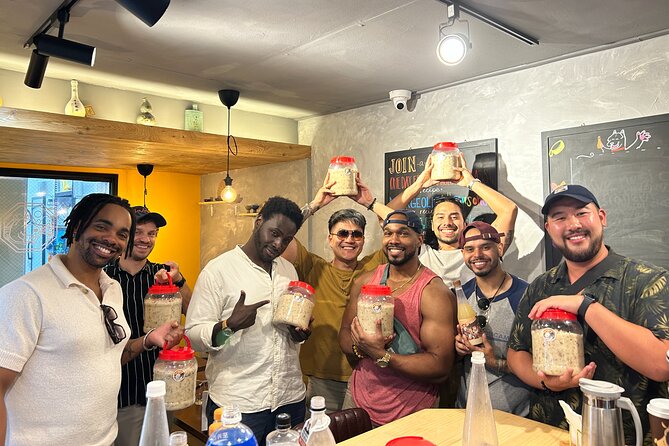
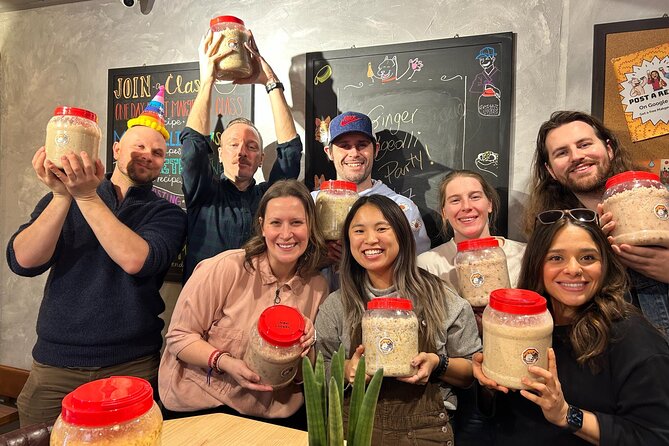
Fermenting Korean rice wine is hands-on fun. This small Seoul class at Baekusaeng Makgeolli teaches you how makgeolli flavor comes together, starting with a tasting flight that helps you read aroma, sweetness, acidity, and texture. I also like that you leave with a 1.2-liter batch to keep fermenting at home, so the class turns into a skill, not just a souvenir.
The only real catch is that the work doesn’t stop when class ends. You’ll need a bit of patience and a practical setup for at-home fermentation, since you’re taking the process home with you rather than getting a fully finished drink to travel with.
In This Review
- Key highlights if you like learning by doing
- What Baekusaeng Makgeolli Teaches Beyond a One-Day Class
- Price and Value for Two Hours of Real Craft
- Where You Start in Mapo-gu: Finding the Class Spot
- The Tasting Flight That Teaches You How Makgeolli Works
- The Ingredients and Tools: Traditional Methods, Not Shortcuts
- Making Your Own Batch: Hands-On Brewing Steps
- What You Take Home: About 1.2 Liters to Ferment
- The Instructor Factor: Joe’s Teaching Style
- Group Size and Timing: Why the Two-Hour Length Works
- Who This Class Is Best For (and Who Might Want Something Else)
- How to Get the Most Out of Your Class Day
- Should You Book Baekusaeng Makgeolli?
- FAQ
- FAQ
- Where does the class meet in Seoul?
- How long is the makgeolli class?
- How much does the class cost?
- What do I get to take home?
- How many people are in a class?
- Do I need a printed ticket?
- Can I cancel for a full refund?
- Is the meeting point near public transportation, and are service animals allowed?
Key highlights if you like learning by doing
- Taste before you brew so you can connect flavors to ingredients
- Nuruk and fermentation taught step-by-step with practical techniques
- Hands-on brewing you can continue at home using your own take-home batch
- Small group (up to 15) which makes questions easier
- Instructor support (often with translation help) when language gets tricky
One more round through Seoul's bars
- Seoul: Pub Crawl★ 4.7 · 903 reviews
- The Seoul Pub Crawl Official★ 5.0 · 838 reviews
- Seoul Pub Crawl by Absolute★ 5.0 · 141 reviews
- Seoul: Premium Pub Crawl with Open Bottles★ 4.9 · 129 reviews
What Baekusaeng Makgeolli Teaches Beyond a One-Day Class
This experience is built for people who want more than a sip-and-smile activity. Baekusaeng Makgeolli focuses on traditional-style brewing with real, fresh ingredients and the sort of method you can actually repeat later. The goal is simple: you should understand the craft well enough to brew on your own, not just follow a recipe once.
I like the mindset here. The class treats makgeolli like a living fermentation process, not a canned product. That changes how you pay attention, from the mash and nuruk to the “why” behind filtering and conditioning.
You’ll also get a cultural layer without turning it into a lecture. Makgeolli has regional and personal styles, and the class encourages experimentation. By the end, you’re not trying to copy one final flavor. You’re learning how to build your style.
Price and Value for Two Hours of Real Craft
At $70.70 per person for about 2 hours, this isn’t a budget tasting. But it’s also not a tour where you sit and watch. You’re paying for hands-on instruction, tasting samples, and the chance to take home roughly 1.2 liters of makgeolli to keep fermenting.
Two hours is short, but fermentation skills aren’t. The value is in what you learn that you can repeat: how ingredients behave, how nuruk activity matters, and what techniques change the final texture and finish. If you plan to keep brewing after your trip, the class price starts looking like a starter kit for your hobby.
Also worth knowing: the class tends to get booked ahead (around 23 days on average). If your Seoul days are fixed, book early so you don’t end up settling for a time that ruins your evening plans.
Where You Start in Mapo-gu: Finding the Class Spot
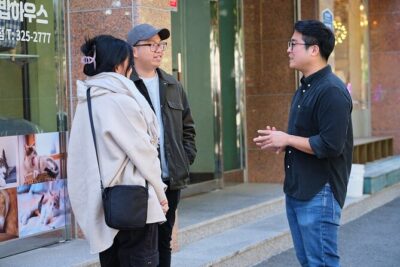
The meeting point is at 346-35 Ahyeon-dong, Mapo-gu, Seoul. The experience ends back at the same meeting spot, so you’re not drifting all over the city.
It’s designed to be easy to reach. The activity is near public transportation, and you’ll use a mobile ticket. In plain terms: have your phone ready, and don’t rely on paper slips.
A couple practical notes from the kind of setting people describe: it can feel like a small shop space, more intimate than a big classroom. If you’re the type who hates wandering, give yourself a little buffer time to locate the exact doorway, especially on your first night in Seoul.


The Tasting Flight That Teaches You How Makgeolli Works
You don’t start with tools. You start with your senses.
The class includes tasting thoughtfully selected makgeolli, with guidance on how the major flavor and texture factors show up. You’ll learn to connect:
- Aroma
- Sweetness
- Acidity
- Texture
This is one of the most useful parts because it turns “I like it” into “I can taste the differences and explain why.” Once you can notice these features, the brewing steps make more sense.
And it’s not only theory. In an experience like this, tasting also helps you calibrate your expectations. Makgeolli can taste very different depending on fermentation activity and conditioning. If you’ve only tried the commercial version in a restaurant, the tasting flight is where your palate gets educated fast.
The Ingredients and Tools: Traditional Methods, Not Shortcuts
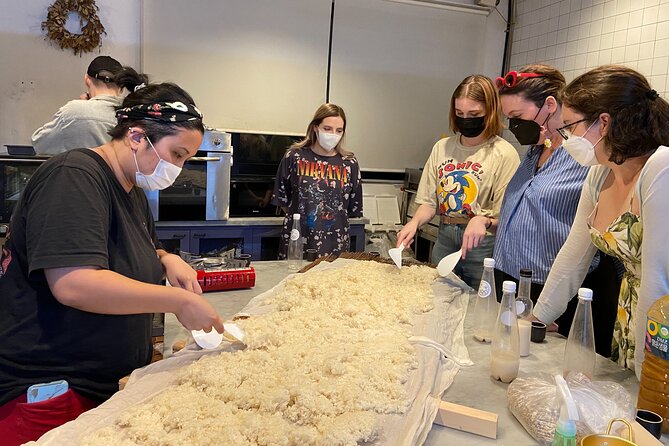
After tasting, the class moves into what actually makes makgeolli. You’ll cover the essential ingredients and tools used in traditional and modern brewing, with an emphasis on fresh, real ingredients rather than simplified shortcuts.
I like that this section doesn’t treat the process like magic. You’re not asked to blindly trust the end result. You learn what each step is for and what you can control.
You’ll also be shown how fermentation works in practice:
- Yeast and nuruk activity
- Filtering
- Conditioning techniques
That sequence matters. Fermentation creates the character, and filtering/conditioning shapes what you taste later. If you want to brew at home, understanding that chain is everything.
Making Your Own Batch: Hands-On Brewing Steps
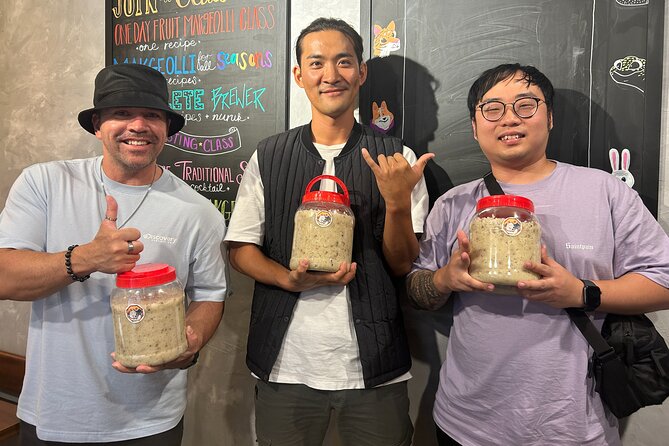
This is the part you’ll feel in your hands.
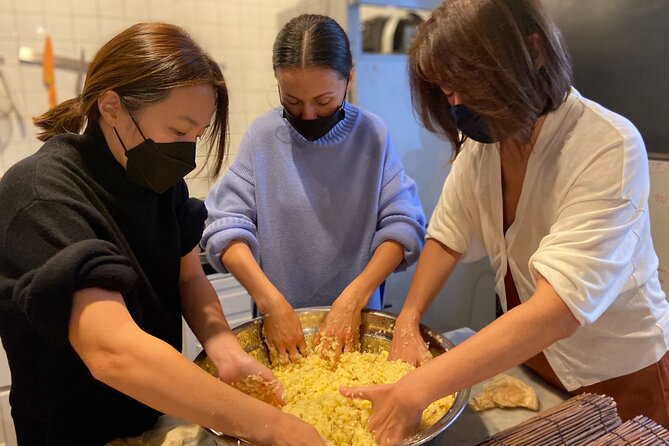
In the class, you’ll actively make your own makgeolli setup (not just watch someone else do it). You’ll work through the key brewing moments that connect ingredients to fermentation. The goal isn’t to produce a perfect batch on day one, but to build your confidence to continue fermenting independently afterward.
The class is also designed to be fun, with an organized flow and lots of time for questions. The group size stays small (up to 15), so you’re not lost in a crowd when you want clarification.
If language is a worry, don’t panic. One of the nice things about this format is that brewing is visual and hands-on. You’ll still need communication, and the instructor is described as doing the work to help people understand (including using translation tools when needed). You can focus on the process, not the jargon.
What You Take Home: About 1.2 Liters to Ferment
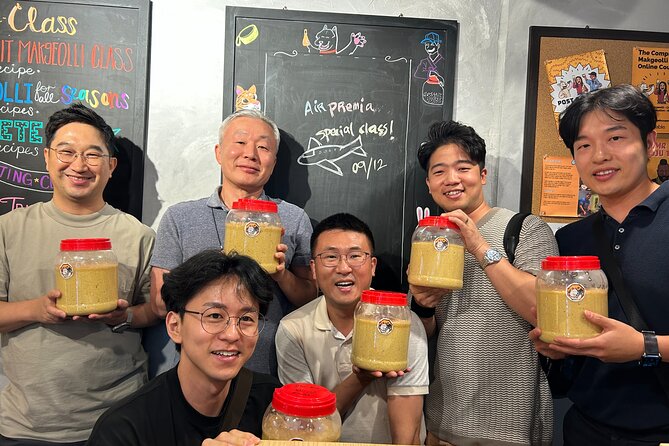
The best souvenir is the one you don’t drink immediately.
You’ll take home your own makgeolli to ferment, approximately 1.2 liters. That means you get to continue the process after you’re back in your room, with the same foundational understanding you learned in class.
This is the moment where you need to think practically. Fermentation means timing, temperature awareness, and storage hygiene. You don’t need a brewing shed, but you do need basic space and a plan. If you’re moving hotels frequently, you might want to choose your class day carefully so you’re not transporting your fermenting bottle through Seoul.
Also, remember this: the class teaches you to keep going, not just to start. If you treat the take-home batch as a one-time item, you’ll miss the real payoff. If you treat it like a mini-project, you’ll leave with a skill you can build on.
The Instructor Factor: Joe’s Teaching Style
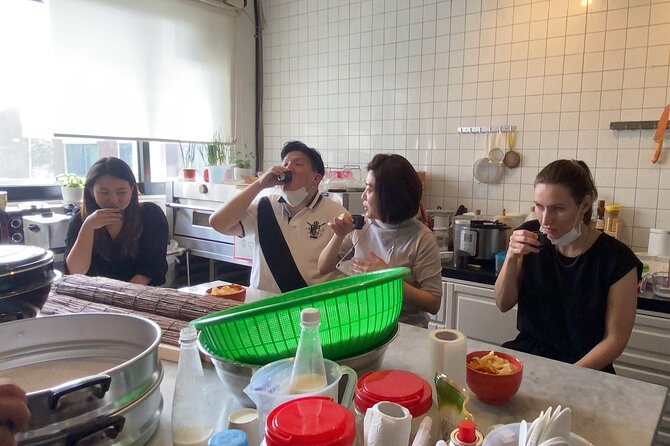
Several details about the experience revolve around the host, Joe. The common thread is that he explains clearly, keeps things organized, and makes time for questions. That matters in fermentation because small details can change outcomes.
Some people specifically mention that he uses board notes for Korean terms and adapts when English isn’t enough. That’s a big plus for international visitors because you’re not left guessing what you just learned.
One more thing that comes up: patience. If you show up a little confused or late, the communication style described sounds accommodating. In a small class setting, that kind of support turns a stressful search for the meeting spot into a minor problem instead of a whole evening gone sideways.
Group Size and Timing: Why the Two-Hour Length Works
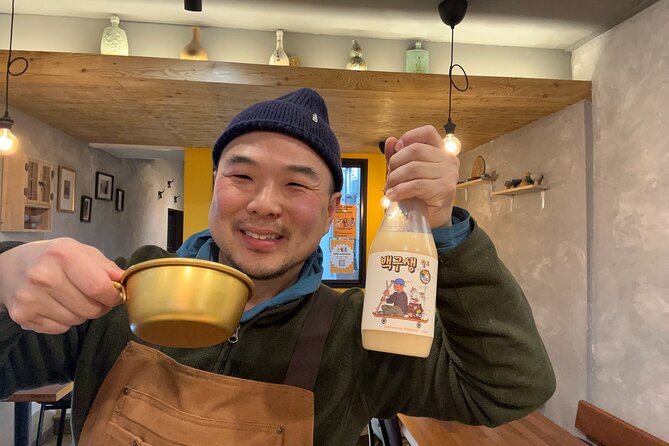
The class runs about 2 hours and caps at 15 travelers. That short duration is actually a strength. You’ll get a full “learn-taste-make” cycle without burning a whole day.
And because it’s not huge, you can ask specific questions when something clicks—or when it doesn’t. Brewing has lots of little points (timing, consistency, how fermentation behaves). In a small setting, those points get answered instead of ignored.
For planning, pick an afternoon or early evening slot where you can go home and set up your take-home batch afterward. Don’t schedule this right before a late-night flight where you’ll be rushing through hotel changes.
Who This Class Is Best For (and Who Might Want Something Else)
This is ideal if you:
- Like hands-on workshops more than passive tours
- Want a cultural food experience with a practical outcome
- Are curious about fermentation beyond the usual alcohol-tasting angle
- Plan to keep brewing after the trip
It may be less ideal if you:
- Want a ready-to-drink product right away
- Don’t have any room or tolerance for fermentation at home
- Prefer large-scale show-and-tell experiences
If you’re the type who enjoys cooking experiments, this class fits naturally. If your goal is only to sample Korean alcohol, you could probably find easier tastings. But if your goal is skill + understanding, this class is aimed right at that.
How to Get the Most Out of Your Class Day
If you want this experience to stick, do a few smart things before you go:
- Go in with questions. Ask how flavor changes during fermentation and what variables you can control later at home.
- Pay attention during the tasting. Try to name what you like using the categories you’re taught: aroma, sweetness, acidity, texture.
- Plan your home setup. You’re taking home about 1.2 liters, so think about storage and timing immediately after class.
- Choose a stable day. If your Seoul trip includes moving hotels, consider scheduling the class near your final base.
And one more tip: take notes right after the most important steps. Fermentation is one of those topics that feels clear during instruction, then gets fuzzy later. Your memory will thank you.
Should You Book Baekusaeng Makgeolli?
Book it if you want an authentic Seoul food workshop that turns into a real brewing ability. The format checks the right boxes: tasting + hands-on brewing + a take-home batch you can continue at home. At $70.70 for about two hours, it’s good value if you’ll actually use what you learn.
Don’t book it if you’re only chasing quick drinking entertainment. This class is about process and fermentation, and you’ll leave with responsibilities tied to that process.
If you want one Korea experience that feels practical, cultural, and genuinely fun, this is the kind of class that can keep paying off long after you’re back home.
FAQ
FAQ
Where does the class meet in Seoul?
The meeting point is 346-35 Ahyeon-dong, Mapo-gu, Seoul, South Korea.
How long is the makgeolli class?
The experience runs for about 2 hours.
How much does the class cost?
The price is $70.70 per person.
What do I get to take home?
You take home your own makgeolli to ferment, approximately 1.2 liters.
How many people are in a class?
The class has a maximum group size of 15 travelers.
Do I need a printed ticket?
No. It’s listed as having a mobile ticket.
Can I cancel for a full refund?
Yes. You can cancel up to 24 hours in advance for a full refund.
Is the meeting point near public transportation, and are service animals allowed?
Yes, it’s near public transportation, and service animals are allowed.
More Tour Reviews in Seoul
- Best DMZ Tour Korea from Seoul (Red Suspension Bridge Optional)★ 5.0 · 41,422 reviews
- DMZ Tour: 3rd Tunnel, Option(Suspension Bridge, Boat) from Seoul★ 5.0 · 21,373 reviews
- DMZ tour south Korea from Seoul (NK experience hall, defector)★ 5.0 · 20,599 reviews
- Seoul: DMZ Tour with Optional Suspension Bridge★ 4.8 · 5,277 reviews
- Seoul: DMZ The 3rd Tunnel and Suspension Bridge Tour★ 5.0 · 4,656 reviews
Another Round in Seoul
- Seoul: Pub Crawl★ 4.7 · 903 reviews
- The Seoul Pub Crawl Official★ 5.0 · 838 reviews
- Soju Tasting at Distillery – story of 3 pigs★ 5.0 · 166 reviews
- Seoul Pub Crawl by Absolute★ 5.0 · 141 reviews
- Seoul: Premium Pub Crawl with Open Bottles★ 4.9 · 129 reviews
Just added to Exploring Seoul




Seoul Nightlife & Pub Crawls, compared.
 ★ 4.7Pub CrawlFrom $25903 reviews
 ★ 5.0The Seoul Pub Crawl OfficialFrom $21838 reviews
 ★ 5.0Soju Tasting at Distillery – story of 3 pigsFrom $43166 reviews
 ★ 5.0Seoul Pub Crawl by AbsoluteFrom $20141 reviews
 ★ 4.9Premium Pub Crawl with Open BottlesFrom $65129 reviews
★ 4.5The Seoul Pub Crawl [official]From $24117 reviews
Itaewon Premium Pub Crawl with VIP Bottle ServiceFrom $84101 reviews
★ 4.9Premium Pub Crawl with Open BottlesFrom $65129 reviews
★ 4.5The Seoul Pub Crawl [official]From $24117 reviews
Itaewon Premium Pub Crawl with VIP Bottle ServiceFrom $84101 reviews
 ★ 4.9Soju Tasting at DistilleryFrom $4979 reviews
Browse the lists this tour appears in