
Reviewed · NATIONAL PARKS
Bukhansan National Park: The Summit Course
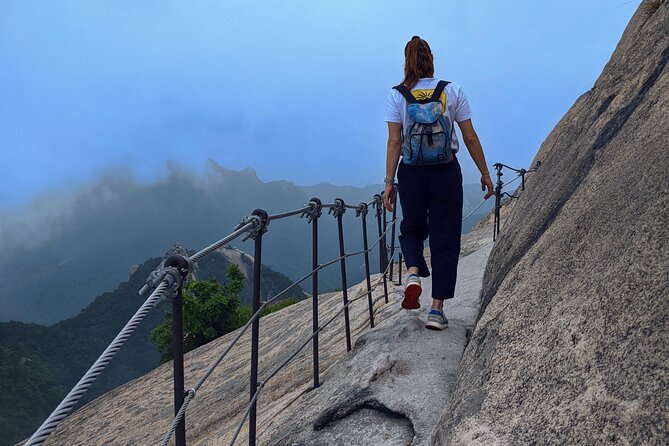
Seoul’s highest hike starts with a morning alarm. On the edge of the city, Bukhansan National Park puts you on the 836 m / 2,743 ft summit of Baek-un-dae, and you can feel the season changing as the trail climbs. I like that this experience is built around a faster 4-hour path (instead of the usual 6) while keeping safety front and center.
I especially liked two things: the pace is organized for real comfort on a steep ascent, and the guide team (Koa and Sam) keeps the group moving as one—without turning it into a chaotic line of people. The one drawback to plan around is physical strain: you’ll gain about 600 meters of elevation quickly, and it’s not recommended if you have knee issues.
In This Review
- Quick hits to know before you choose this hike
- Bukhansan National Park and the Baek-un-dae payoff
- Your 8:00 am plan: start location, timing, and the 4-hour idea
- The steep climb: 600 meters in 2.1 km (and why you should take it seriously)
- Baek-un-dae summit section: rope help, steep angles, and an option to step back
- How the guides make it feel organized (Koa and Sam)
- The optional tofu lunch after the hike: what to expect nearby
- What to bring (and what you can skip)
- Price and value: why $64.89 can make sense here
- When weather matters (and how the experience responds)
- Who should book this hike (and who should skip it)
- Should you book this Bukhansan Summit Course?
- FAQ
- What time does the hike start?
- How long is the hike?
- Where do we meet and where does it end?
- What peak are you hiking to?
- Is lunch included?
- Can I rent hiking poles?
- What fitness level do I need?
- Is it recommended for people with knee problems?
- What if the weather is bad?
Quick hits to know before you choose this hike
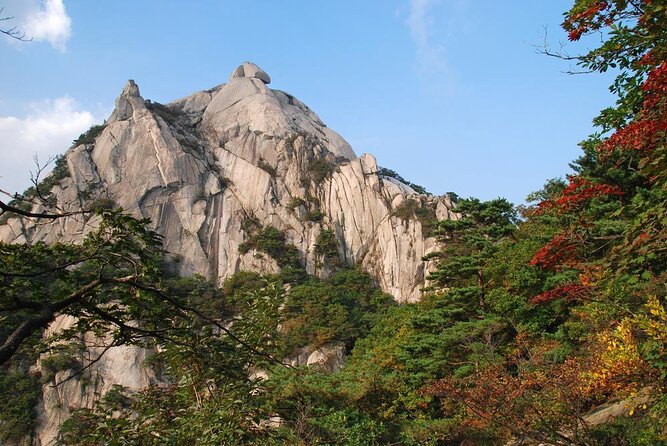
- Seoul’s highest viewpoint (Baek-un-dae, 836 m / 2,743 ft) with a route aimed at time efficiency
- A planned 4-hour climb toward the summit, versus a more typical 6-hour hike
- Steep grade you should respect: 600 m elevation gain in about 2.1 km
- Rope-assisted peak section (about 20–30 minutes) with an option to avoid it by taking a break
- Small group size (max 20), which helps with safety and keeping together
- Tofu-focused lunch nearby is optional and vegan/vegetarian friendly
Still deciding? These are the Seoul tours travellers book first.
- Best DMZ Tour Korea from Seoul (Red Suspension Bridge Optional)★ 5.0 · 41,422 reviews
- DMZ Tour: 3rd Tunnel, Option(Suspension Bridge, Boat) from Seoul★ 5.0 · 21,373 reviews
- DMZ tour south Korea from Seoul (NK experience hall, defector)★ 5.0 · 20,599 reviews
- Seoul: DMZ Tour with Optional Suspension Bridge★ 4.8 · 5,277 reviews
Bukhansan National Park and the Baek-un-dae payoff
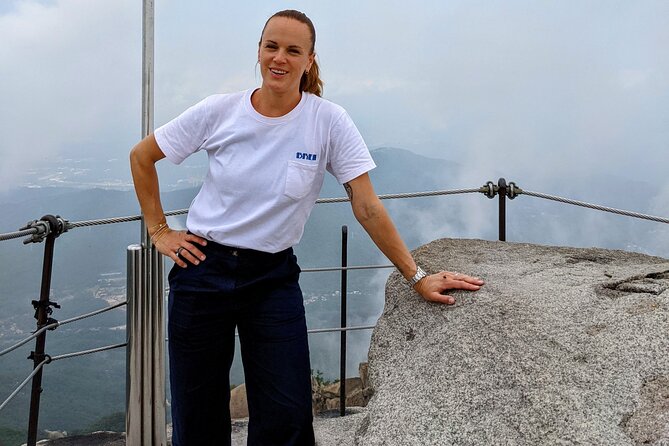
If you only know Seoul from palaces, shopping streets, and neon at night, a big mountain morning can feel like a plot twist. Bukhansan changes that fast. You’re still in the Seoul area, but the air gets sharper, the views start layering, and the hike has that real “up toward the sky” feeling.
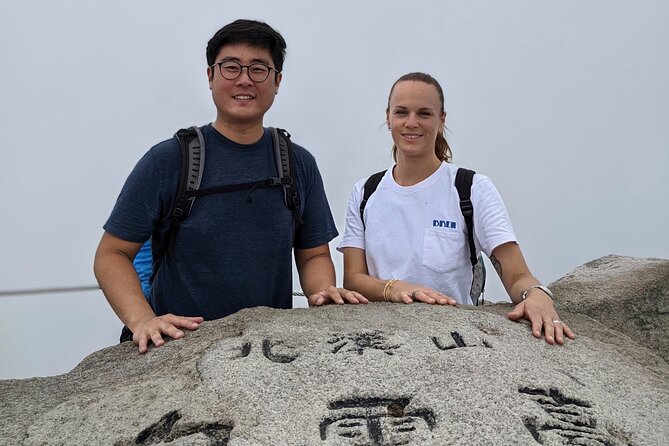
The prize is the summit of Baek-un-dae, the highest peak in Seoul at 836 m / 2,743 ft. That altitude isn’t just a bragging right. It’s what makes the trail feel like a true vertical workout—and why the top is such a satisfying reward.
This experience also leans into the seasonal mood of the park. Different months change what you notice on the way up: the trail surface and footing, how your legs feel on the gradient, and the way the city looks as it fades behind the hills. The guide team is focused on getting you there safely, not just “getting you to suffer.”
Your 8:00 am plan: start location, timing, and the 4-hour idea
You start at Bukhansan UiSeoul, South Korea at 8:00 am, and you finish back at the same meeting point. The hike runs about 4 hours 30 minutes total (approx.), which is a big deal if you’re trying to fit nature into a packed Seoul itinerary.
Here’s the big promise: with research, the route is designed so you reach the peak in about 4 hours, not the more common 6. That doesn’t mean it’s easy. It means the guide plan is about removing wasted time and choosing a straightforward path to the summit.
Why does that matter? Because Bukhansan is one of the most visited mountains around Seoul, and it also has a reputation for rescues every year. A “faster” route is only valuable if someone is guiding the group toward sensible pacing and safer sections. That’s the core value here: less wandering, more control.
Also, you’ll have a mobile ticket, and the meeting point is near public transportation, which makes it realistic even if you’re not planning a full-day escape.
The steep climb: 600 meters in 2.1 km (and why you should take it seriously)
The climb portion is where you’ll feel the physics. You’ll gain about 600 meters (2,000 ft) within around 2.1 km (1.3 miles). The info is blunt for a reason: this normally takes around 100–120 minutes, even with steady effort.
Think of it like climbing about 200 floors of stairs, then doing it while on a real mountain trail. If your idea of a “workout” is walking slowly and taking photos every 30 seconds, you’ll want to adjust expectations. If you hike at home sometimes—or you’re the type who walks briskly—this should feel challenging but doable.
This is also where the group size helps. With a maximum of 20 travelers, you’re not trying to pass dozens of strangers on a narrow slope. The guide team can manage spacing, keep everyone oriented, and help you keep your rhythm.
What I like about this setup is that you’re not left guessing how hard to go. You’re guided through the “ascending part” with enough structure that you can focus on your breathing and footing instead of constantly re-checking where you are.
Baek-un-dae summit section: rope help, steep angles, and an option to step back
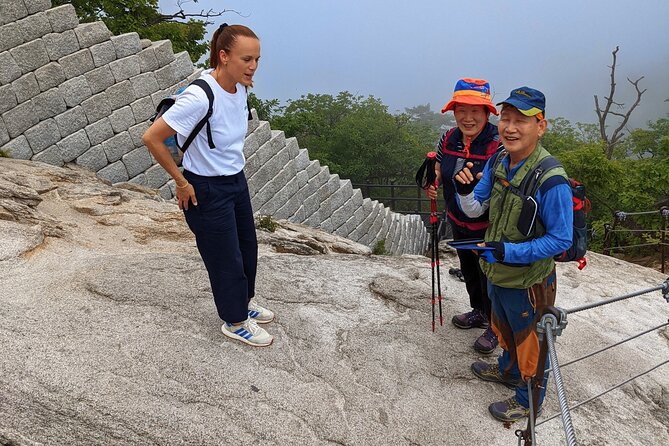
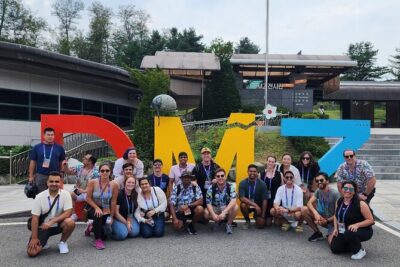
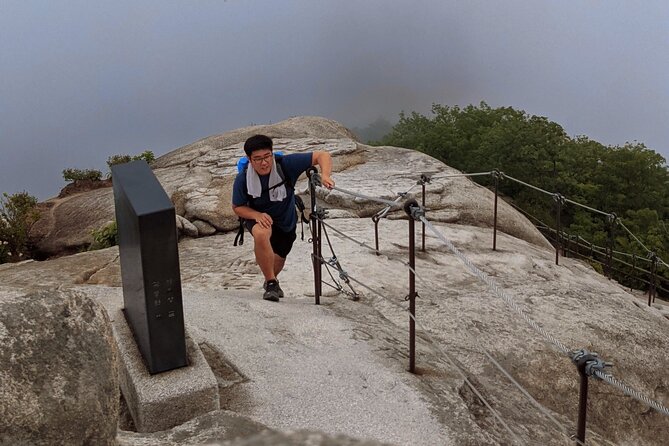
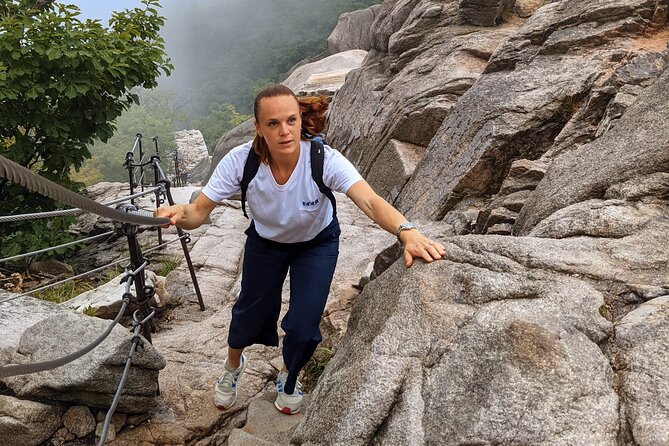
The headline moment isn’t just altitude. It’s the summit approach. Baek-un-dae includes a segment with an estimated 25–45 degree-angle climbing. You’ll have rope assistance for this part, and it lasts roughly 20–30 minutes.
If you have even mild fear of heights, this is the part to plan your mindset around. The good news is that the route has a built-in reality check: the info says the 20–30 minute part can be avoided by having a break. That doesn’t mean you skip the entire summit experience. It means you’re not forced into a worst-case scenario if you’re uncomfortable.
Also, don’t confuse rope assistance with “no worries.” Ropes are there to help you, not to eliminate risk. Your job is simple: slow down, keep three points of contact when it feels steep, and use the rope like support—not like a substitute for balance.
This is one of those hikes where your “mental fitness” matters. When you hit the steep section, remind yourself that you’re not rushing. You’re moving through a short, important piece and then getting back to a steadier rhythm.
How the guides make it feel organized (Koa and Sam)
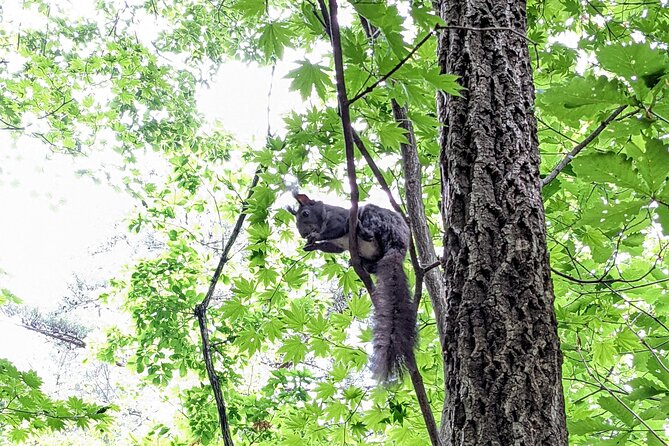
Good hikes aren’t just about trails. They’re about management: timing, group cohesion, and safety decisions when conditions change.
In this experience, the guide team—Koa and Sam—is described as focused on keeping people safe first while still making sure you get to enjoy the moment. That balance shows up in the way the route is planned to be direct, and in the way the climb is treated as a controlled progression instead of a free-for-all stampede.
I also like that they work for small groups. When a guide can actually see what everyone is doing, you get fewer silent struggles. People can ask questions. The group can regroup. And when you’re dealing with a steep climb plus a rope-assisted segment, that kind of “eyes-on” support is the difference between a fun challenge and a stressful one.
If you’re the kind of hiker who likes learning as you go, this kind of guide-led pacing tends to keep you from getting mentally lost. You’re not just trying to follow landmarks; you’re hiking with a plan.
The optional tofu lunch after the hike: what to expect nearby
After the summit portion, lunch is optional and paid individually, typically 9,000–15,000 KRW.
The plan is to eat at a place specializing in tofu dishes. The best part for many people: they make things from scratch and they offer meat options too. For vegan/vegetarian diners, it’s noted as friendly, which is helpful because Seoul has plenty of meat-focused menus, especially when you’re hungry after a hike.
Why I think this lunch option works: it’s not just “food after hiking.” It’s a local meal style you might not pick on your own when you’re exhausted. Plus, it gives you a natural decompression after the steep parts, without turning your entire day into a restaurant search.
What to bring (and what you can skip)
You’re dealing with a steep climb and a rope-assisted segment, so your gear should support stable movement. The most practical items are the ones that keep your footing solid.
From the experience details:
- Hiking poles can be rented, but only if you inform the provider in advance. They’re noted as not really necessary unless you have bad knees.
- You should plan for moderate physical fitness. If you’re not regularly active, this hike will test you.
- The hike is not recommended for people with knee issues. Even with poles available, the steep ascent and descent can be rough.
Footwear matters. Wear shoes with good traction and avoid anything you wouldn’t trust on rocky, uneven sections. Bring water (especially if you’re prone to getting lightheaded on climbs), and consider light layers because mountain mornings can feel cooler than the city.
And one small but real tip: start your day early (this one begins at 8:00 am) so you’re not hiking in the hottest part of the day. Timing affects how your body handles that 600-meter climb.
Price and value: why $64.89 can make sense here
The price is $64.89 per person. At first glance, that’s more than a solo subway-and-walk plan. The value question is whether this hike is buying you something real.
Here’s what you’re paying for:
- A faster summit route (about 4 hours instead of 6), which saves time without cutting safety corners in the plan.
- A guided approach for a mountain that sees rescues every year—this isn’t a casual stroll.
- Small-group management (max 20), which is a huge advantage on narrow or steep sections.
- Rope-assisted terrain handling, where having guidance can help you take it one step at a time.
- A built-in post-hike meal plan (optional tofu lunch), so your day doesn’t fall apart after the summit.
Hikes can be cheap when you go alone. But steep terrain isn’t the best place to improvise your risk management. For many people, $64.89 is a fair trade for a controlled morning and a smoother path to the top.
Booking is also described as typically made about 14 days in advance on average, which suggests demand is real. If you’re traveling in peak season, it’s smart to plan earlier.
When weather matters (and how the experience responds)
This hike requires good weather. That matters because steep, rope-assisted terrain becomes more dangerous when the ground is slick or visibility is poor.
If it’s canceled due to poor weather, you’ll be offered a different date or a full refund. If you cancel voluntarily, the experience is described as non-refundable and cannot be changed. So the practical move is: if weather is a concern, make your booking once you’re comfortable with your schedule, then keep an eye on conditions.
You’re also hiking early, which is usually good. But mountains can still shift quickly, so don’t assume morning forecasts always tell the whole story.
Who should book this hike (and who should skip it)
This is a strong choice if:
- you want a real summit experience near Seoul without spending all day on the mountain
- you like hiking and can handle an ascent with 600 m elevation gain
- you want a guide-led pace, especially for the rope-assisted section
- you want small group energy (max 20) rather than being swallowed by crowds
It may not be the right choice if:
- you have knee issues (not recommended)
- you feel unsteady with steep angles and exposure, even with rope assistance
- you’re looking for an easy walk with lots of flat sections
If you do have some fear of heights, that summit segment is still something you should plan for. The info says you can avoid that steep section by taking a break, which is helpful. But you’ll still be in a mountain setting where you’ll need careful footing and a steady head.
Should you book this Bukhansan Summit Course?
If you want the “highest peak in Seoul” experience without gambling your day on trail guesswork, this one is worth serious consideration. The big strengths are the time-efficient route, the safety-first guide approach, and the way the summit terrain is handled with ropes and options for people who need a pause.
Book it if you’re moderately fit, have good knees, and enjoy a challenge with a clear payoff at the top. Skip it if your knees aren’t reliable or if steep exposure would stress you too much to enjoy the hike.
FAQ
What time does the hike start?
It starts at 8:00 am.
How long is the hike?
The duration is about 4 hours 30 minutes (approx.).
Where do we meet and where does it end?
You start at Bukhansan UiSeoul, South Korea, and the activity ends back at the same meeting point.
What peak are you hiking to?
The hike is to the summit of Baek-un-dae, the highest peak in Seoul at 836 m / 2,743 ft.
Is lunch included?
Lunch is optional and paid by individuals (about 9,000–15,000 KRW). The plan is to eat at a tofu-focused restaurant after the hike.
Can I rent hiking poles?
Yes, hiking poles can be rented out at a cost, but only if you inform the provider in advance. They’re not really necessary unless you have bad knees.
What fitness level do I need?
The hike is described as requiring moderate physical fitness.
Is it recommended for people with knee problems?
No. It is not recommended for people with knee issues.
What if the weather is bad?
The experience requires good weather. If it’s canceled due to poor weather, you’ll be offered a different date or a full refund.
More Tour Reviews in Seoul
- Best DMZ Tour Korea from Seoul (Red Suspension Bridge Optional)★ 5.0 · 41,422 reviews
- DMZ Tour: 3rd Tunnel, Option(Suspension Bridge, Boat) from Seoul★ 5.0 · 21,373 reviews
- DMZ tour south Korea from Seoul (NK experience hall, defector)★ 5.0 · 20,599 reviews
- Seoul: DMZ Tour with Optional Suspension Bridge★ 4.8 · 5,277 reviews
- Seoul: DMZ The 3rd Tunnel and Suspension Bridge Tour★ 5.0 · 4,656 reviews
Just added to Exploring Seoul


National Parks, compared.
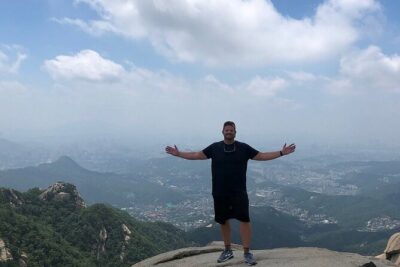 ★ 5.0Hiking in Seoul : Bukhansan National ParkFrom $14283 reviews
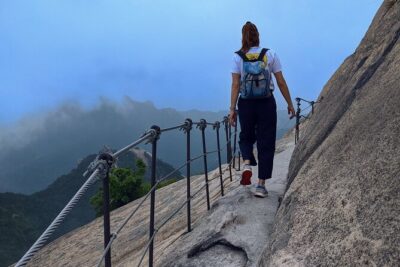 ★ 4.9Bukhansan National Park- The Summit CourseFrom $6720 reviews
 ★ 4.3Mt. Seoraksan National Park Autumn Foliage Day TourFrom $6015 reviews
 ★ 5.0Seoraksan National Park Ulsanbawi Hiking from SeoulFrom $23815 reviews
 ★ 5.0Private Day Trip to Seoraksan National ParkFrom $26014 reviews
 ★ 5.0Hike and Explore the Wonder of Bukhansan National Park with hiking professional(including Lunch)From $1709 reviews
 ★ 4.5Naejangsan National Park Autumn Foliage One Day Tour from SeoulFrom $469 reviews
 ★ 3.8Naejangsan National Park Autumn Foliage One Day TourFrom $465 reviews
Browse the lists this tour appears in