Reviewed · SEOUL
Traditional Korean Bookbinding Experience in Seoul, Hongdae
A notebook you make by hand in Seoul. This traditional Korean bookbinding class uses Hanji paper and a silk-pattern cover, then finishes with a classic No-ri-gae knot detail you can tie and take home.
I love that you’re not just watching a craft—you’re making a usable, beautiful journal with your own choices: silk pattern, ornament (Norigae), and thread color. One thing to consider: this is a hands-on workshop and entry is limited to ages 17+, so it’s not a pick for younger kids.
In This Review
- Key Highlights Worth Your Time
- Why Hanji-and-Silk Bookbinding Feels Like More Than a Souvenir
- Price and What You Actually Get for $49
- The Hongdae-Day Logistics: Where Danchoodan Is and How the Timing Works
- Step 1 and 2: Choosing Your Silk Pattern, Norigae, and Thread
- Step 3: Learning About Hanji Paper Before You Bind
- Step 4: Making the Notebook with Traditional Binding
- Step 5: Decorating With the Norigae Knot Detail
- Step 6: Pack It Like a Gift and Take It Home
- What Makes This Class Feel Authentic (Not Just Decorative)
- How Long Your Notebook Might Last (and How to Treat It)
- Who Should Book This Hanji Bookbinding Workshop
- Should You Book This Traditional Korean Bookbinding Class in Hongdae?
- FAQ
- What is the price of the traditional Korean bookbinding experience?
- How long does the class last?
- What is included in the $49 price?
- What materials will I use?
- Where do I meet, and where does it end?
- How many people can join the class?
- Can I cancel for a full refund?
Key Highlights Worth Your Time
- UNESCO-listed Hanji paper (Hanji is tied to the Annals of the Joseon Dynasty)
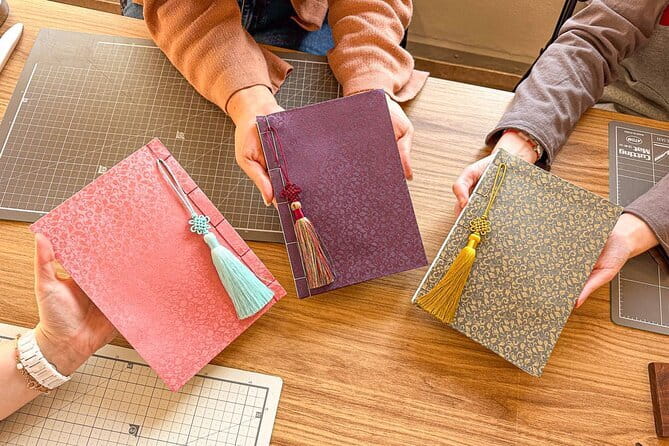
- Choose from 22 silk cover patterns before binding
- Norigae knot finishing step with plenty of thread and ornament options
- Traditional binding method taught step by step with tools and materials provided
- Gift-ready packaging so your notebook comes home ready to keep or share
- Small group size (max 12) for more time with your licensed guide
Still deciding? These are the Seoul tours travellers book first.
- Best DMZ Tour Korea from Seoul (Red Suspension Bridge Optional)★ 5.0 · 41,422 reviews
- DMZ Tour: 3rd Tunnel, Option(Suspension Bridge, Boat) from Seoul★ 5.0 · 21,373 reviews
- DMZ tour south Korea from Seoul (NK experience hall, defector)★ 5.0 · 20,599 reviews
- Seoul: DMZ Tour with Optional Suspension Bridge★ 4.8 · 5,277 reviews
Why Hanji-and-Silk Bookbinding Feels Like More Than a Souvenir
This class is built around materials that matter. Hanji is traditional Korean handmade paper, used historically for important writings like diaries and notes, including records associated with the Joseon Dynasty. And it’s specifically linked to UNESCO’s Memory of the World—so you’re not working with random craft paper. You’re working with paper that has real cultural weight.
Then there’s the cover. You pick a silk fabric with Korean traditional patterns, and that silk becomes part of the structure and look of your finished notebook. In the workshop’s own framing, silk can last 500 years and Hanji can last 1,000 years. Even if you treat that as a poetic benchmark, the point lands: you’re making something durable and worth keeping, not a disposable keepsake.
Price and What You Actually Get for $49
At $49 per person for about 2 hours, the value comes from what’s included: binding tools and materials plus a licensed guide. You’re also taking the finished notebook home in gift-ready packaging. That combination matters because bookbinding supplies can be expensive, and classes that include everything typically cost more once you factor in materials and instruction time.
What you’re paying for is the whole process, from learning about Hanji to binding silk and paper in a traditional way, then finishing with your Norigae knot. If you want a Korean craft you can use later—an actual journal—it’s a strong deal. If you’re looking for a passive sightseeing stop, this isn’t that. You’ll be hands-on the whole time.
The Hongdae-Day Logistics: Where Danchoodan Is and How the Timing Works
The meeting point is at danchoodan in Mapo-gu, Daeheung-dong: Daeheung-ro, 100 3층. The start time is 10:30 am, and the activity ends back at the same meeting point.
A couple of practical notes:
- The studio only lets in the number of people who reserved, so show up as close to the start time as you can.
- It’s near public transportation, so you can plan to arrive on foot or by transit rather than relying on a car.
- Air-conditioned vehicle service is not included, so on hot days you’ll want to think about how you’re getting there before the class starts.
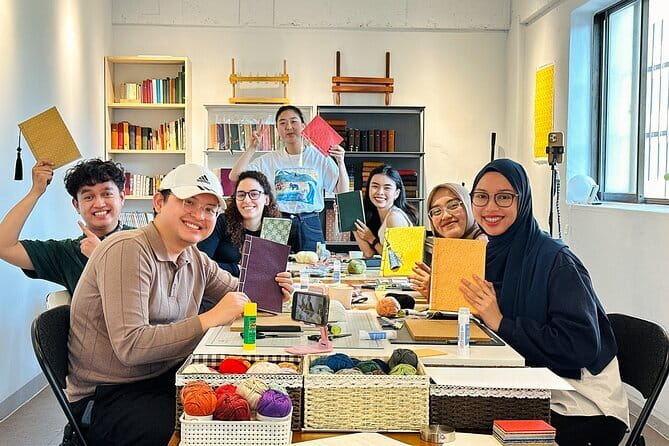
Group size is capped at 12 travelers, which helps with the feel of the workshop. You’re more likely to get individual attention when your hands are actually tying threads and aligning paper.


Step 1 and 2: Choosing Your Silk Pattern, Norigae, and Thread
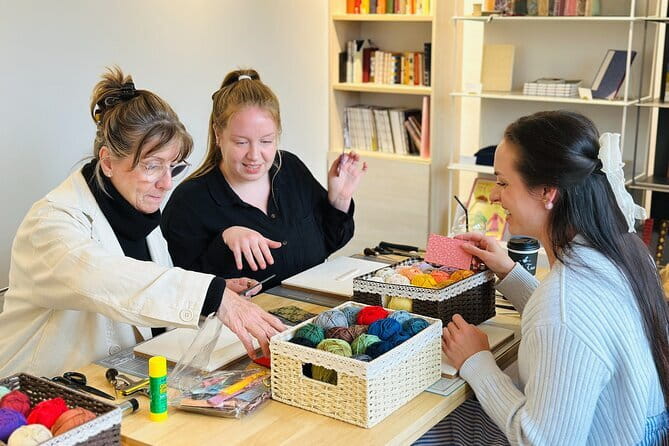
The workshop design is smart because it starts with decision-making, not just instruction. Before you bind anything, you’ll:
1) Choose your silk: you can pick from 22 silk covers with Korean traditional patterns.
2) Select Norigae and thread: you choose a Norigae ornament and the color of the thread(s) used for the details.
This is where the class turns personal. It’s easy to forget that “traditional” can still be playful. Your notebook won’t look like everyone else’s because your silk pattern and your Norigae choice become the visual signature.
Also, thread color is not a tiny afterthought. Thread is part of how the knot and binding read as one design. If you like color coordination (or you’ve ever matched outfits in your head), this step will feel satisfying.
Step 3: Learning About Hanji Paper Before You Bind

Before you start working with materials, you’ll learn why Hanji is special. The class frames it around how Hanji was used by Joseon-era people for diaries and notes, including scholars and intellectuals.
Here’s why that background is useful for you, not just “fun facts.” When you understand how the paper is valued historically, you’re more likely to handle it with care. You’ll also appreciate why the binding method is taught the way it is. Traditional crafts often have a reason for every step, even when it seems slow at first.
If you’re a curious person—book nerd, paper nerd, history-by-way-of-craft type—this portion helps connect your finished object to the bigger story of how Koreans wrote and recorded daily life.
Step 4: Making the Notebook with Traditional Binding
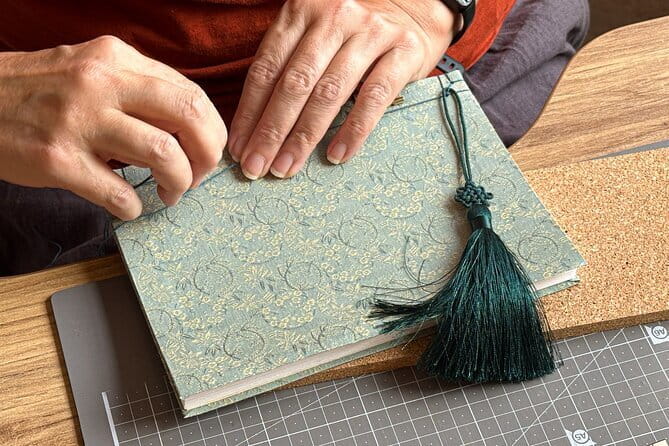
Now comes the work. You’ll bind silk and Hanji using a Korean traditional binding method with the tools and materials provided.
This step is the heart of the experience. You’re not just adding decoration; you’re assembling structure: the paper, the silk cover, and the binding components all have to come together cleanly. Expect some concentration. Even if you’re crafty, paper and silk can behave differently depending on how you handle them.
A good reason to do this workshop even if you’re not a “craft person” is that the class is paced and guided. Your licensed guide is there with the tools, the materials, and the method—so you’re not stuck guessing at each stage. And because the group stays small (max 12), you’re not competing for help.
If you want to photograph your progress, do it during the selection and finishing steps. During the binding, focus first. You’ll thank yourself when your edges line up and your notebook closes the way it should.
Step 5: Decorating With the Norigae Knot Detail
The final step isn’t just stamping a design on. The workshop includes the traditional No-ri-gae knot as a finishing touch, and you can make it and add it to your notebook.
Norigae knots and ornaments are a recognizable part of Korean decorative craft. In this class, the knot acts like the “signature closure” between your choices (thread color and ornament) and the traditional form of the notebook.
This is where your notebook stops being simply functional. It becomes a small wearable-feeling object in spirit—something decorative you can carry, write in, and show people without needing an explanation.
If you’re worried this might be too fussy, don’t. The guide supports the process, and the knot is part of the structured sequence. Your goal isn’t perfection; it’s making something that looks like it belongs in the same world as the materials you used.
Step 6: Pack It Like a Gift and Take It Home

When you finish, you’ll be able to take your creation home right away. The notebook is packed in a gift-ready package, which is especially useful if you’re traveling light and don’t want to do extra shopping for wrapping.
This also matters for the practicality of your day. You’re not wondering what to do with fragile materials after the class. You leave with a complete product, ready to store safely or give as a gift.
What Makes This Class Feel Authentic (Not Just Decorative)
A lot of craft classes make something pretty. This one leans into authenticity in two ways that you’ll actually feel as you work:
- The materials are historically specific: Hanji paper connected to Joseon-era record keeping, plus silk and traditional knot finishing.
- The process is structured like a craft method: you choose materials, learn about the paper, bind in a traditional way, and then finish with Norigae.
In plain terms, you’re learning the craft logic, not only the final look. That’s why the finished notebook can feel like a meaningful souvenir instead of a random “I tried a class” memory.
Also, based on the workshop’s teaching style described in past experiences, the guidance tends to be patient and supportive. If you’re nervous about making mistakes, this helps you relax and focus on the steps you’re given.
How Long Your Notebook Might Last (and How to Treat It)
The workshop highlights the durability story: silk lasts about 500 years, and Hanji about 1,000 years. That’s an enormous claim, but it points to a real idea—these materials are valued for longevity.
For your practical day-to-day, treat your notebook like a paper-and-silk object, not like a disposable sketchbook:
- Keep it in its gift-ready package when you’re not using it.
- Avoid crushing it in a crowded bag.
- Use it regularly, but don’t soak it or leave it in wet conditions.
If you want something that can genuinely hold your Seoul notes, ticket stubs, or a Korean-trip scrapbook page-by-page, this format makes sense.
Who Should Book This Hanji Bookbinding Workshop
You’ll probably love it if you:
- enjoy crafts where you make decisions with your hands (silk pattern and knot details)
- want a Seoul activity that’s not just walking and photos
- like paper, books, and writing—especially if you keep a journal
- want a take-home project that feels connected to Korean culture, not just generic souvenirs
You might reconsider if:
- you’re not interested in hands-on making (the class is built around doing)
- you’re traveling with younger kids, since entry is only for ages 17 and older
- you’re expecting a climate-controlled car transfer as part of the experience (air-conditioned vehicle service isn’t included)
Should You Book This Traditional Korean Bookbinding Class in Hongdae?
If you want one activity in Seoul that combines real materials, a guided traditional method, and a take-home notebook you’ll actually use, this is a solid pick. The price is reasonable because the class supplies everything you need, and the finished result is gift-ready when you leave.
Book it when you have time to show up early, focus for two hours, and enjoy the step-by-step making. If you like crafts with a cultural backbone—Hanji paper, silk patterns, and a Norigae knot—this kind of workshop is exactly the sort of experience that turns into a lasting memory you can hold.
FAQ
What is the price of the traditional Korean bookbinding experience?
The price is $49.00 per person.
How long does the class last?
The experience is about 2 hours.
What is included in the $49 price?
The class includes binding tools and materials, plus a licensed guide.
What materials will I use?
You’ll use Hanji paper and a silk cover you choose, plus threads and a Norigae knot to decorate and finish your notebook.
Where do I meet, and where does it end?
You meet at danchoodan at Daeheung-ro 100, 3rd floor in Mapo-gu, Seoul. The activity ends back at the meeting point.
How many people can join the class?
The workshop has a maximum of 12 travelers.
Can I cancel for a full refund?
Yes. You can cancel up to 24 hours in advance for a full refund. Canceling less than 24 hours before the start time isn’t refunded.
More Tour Reviews in Seoul
- Best DMZ Tour Korea from Seoul (Red Suspension Bridge Optional)★ 5.0 · 41,422 reviews
- DMZ Tour: 3rd Tunnel, Option(Suspension Bridge, Boat) from Seoul★ 5.0 · 21,373 reviews
- DMZ tour south Korea from Seoul (NK experience hall, defector)★ 5.0 · 20,599 reviews
- Seoul: DMZ Tour with Optional Suspension Bridge★ 4.8 · 5,277 reviews
- Seoul: DMZ The 3rd Tunnel and Suspension Bridge Tour★ 5.0 · 4,656 reviews