
Reviewed · GYEONGBOKGUNG & PALACE TOURS
(Small Group) Palace & Seoul Old Town Highlights
Seoul’s history is a short walk away. This 3-hour, max-10 tour stacks big Joseon-era landmarks and modern Seoul orientation into one handy route. I like that the pacing is tight enough to fit sightseeing into limited vacation time, yet still structured so you know what you’re looking at.
My two favorite parts: you get a small-group guide-led walk (with lots of chances to ask questions), and Gyeongbokgung Palace entry is included so one key ticket chore is already handled. The main drawback to consider is that the timing is compressed at each stop, so you’ll probably want to come back later if a particular site really grabs you.
In This Review
- Key highlights at a glance
- A 3-hour Joseon-era sampler starting at Anguk Station
- Insadong lanes and tea-house culture in 10 minutes
- Jogyesa Temple: calm center-of-city Buddhism for 30 minutes
- Gwanghwamun Square as your orientation checkpoint
- Gyeongbokgung Palace: ticket included and real time to see it
- Bukchon Hanok Village: short look at the old neighborhood feel
- Why the small group size (max 10) changes the whole experience
- Lee’s teaching style: history plus real questions
- Price and value: why $60.27 can make sense here
- Timing and what to do if you want more time later
- Getting the most out of a weather-dependent walking tour
- Who this tour fits best
- Should you book the Palace & Seoul Old Town Highlights tour?
- FAQ
- FAQ
- How long is the Small Group Palace & Seoul Old Town Highlights tour?
- What is the group size limit?
- Where do we meet for the tour?
- Does the tour end at the same meeting point?
- Is a mobile ticket used?
- Is the admission ticket for Gyeongbokgung Palace included?
- Are the other stops free to visit?
- What sights are included in the itinerary?
- What should I know about weather?
- What is the cancellation policy?
Key highlights at a glance
- Max 10 people keeps the walk from turning into a crowded shuffle
- Lee as your guide blends Joseon history with day-to-day Korean culture facts
- Gyeongbokgung ticket included saves you from planning one major admission step
- Short stop windows at Insadong, Jogyesa, Gwanghwamun, and Bukchon make this a fast orientation loop
- Mobile ticket means less paperwork and more time walking
- Free admission stops along the way help you control your spending
Keep walking the palaces of old Seoul
- Seoul: Gyeongbok Palace, Bukchon Village, and Gwangjang Tour★ 4.9 · 2,321 reviews
- Best Seoul City Tour (Gyeongbokgung Palace,Insadong,Namsan Tower)★ 5.0 · 1,647 reviews
- Small-Group Royal Palace and Seoul City Tour (hotel pick-up)★ 5.0 · 1,474 reviews
- Seoul City Sightseeing Tour Including Gyeongbokgung Palace, N Seoul Tower, and Namsangol Hanok Village★ 5.0 · 1,423 reviews
A 3-hour Joseon-era sampler starting at Anguk Station
This is the kind of Seoul tour that works well when you’re trying to make a first visit feel simple. You meet at Anguk Subway Station (Exit 6, outside) and the tour ends back at the meeting point, which is great if you want to keep your day flexible afterward.
The total time is about 3 hours, with a schedule that moves through older neighborhoods, major royal sites, and a temple stop that feels calm even though you’re in the city. The group size matters here: with up to 10 travelers, your guide can manage questions without the tour feeling like a lecture you can’t interrupt.
Practical note: this is a walking format, and the stop durations are short by design. That’s not a problem if your goal is orientation. It’s a problem if you want long, unhurried time at each attraction.
Insadong lanes and tea-house culture in 10 minutes
Your first stop is Insadong, known for traditional goods, restaurants, and tea houses. In a short visit, you’re not going to see every street, but you will learn what to look for and how to read the area.
What I like about starting here is the vibe. Insadong gives you a quick taste of Korea’s everyday relationship with tradition: shops and tea stops aren’t museum artifacts here. They’re part of what people actually do, even while the city keeps changing around them.
One consideration: with only about 10 minutes, you should treat Insadong as a first look. If you want to shop, snack, or slow-walk photos, plan to return on your own with the route your guide gives you.
Jogyesa Temple: calm center-of-city Buddhism for 30 minutes
Next comes Jogyesa Temple, the head temple of the Jogye Order of Korean Buddhism. It was founded in 1910, and the feeling is what you’d hope for in the middle of Seoul: a quieter pocket where you can reset your brain before royal architecture takes over.
You get about 30 minutes here, which is long enough to notice details and still short enough to keep the tour moving. If you’ve only seen temples as scenery before, this stop helps you see them as lived religious spaces with rules, symbols, and atmosphere—not just a photo backdrop.
Practical tip: wear shoes you trust. Even when the walking time is short, temple grounds can mean uneven paths and more standing than you expect.
Gwanghwamun Square as your orientation checkpoint
Before the palace gates, you pause at Gwanghwamun Square—a central public plaza in front of Gyeongbokgung Palace. This is where the tour helps you get your bearings fast.
You’ll see statues connected to Korean history, including King Sejong the Great and Admiral Yi Sun-sin. This stop is useful even if you’re not a deep history reader, because it frames what’s coming: this area is designed to make the palace feel important in the broader story of the country.
Time here is around 20 minutes, so it’s not meant to be a long sightseeing detour. It’s more like a pre-game briefing that makes the palace visit click.
Gyeongbokgung Palace: ticket included and real time to see it
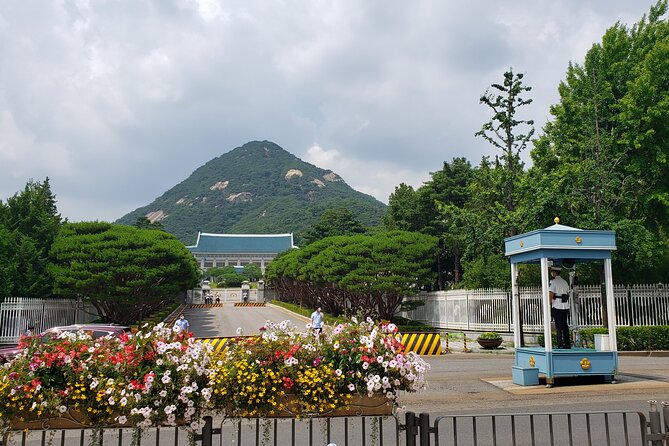
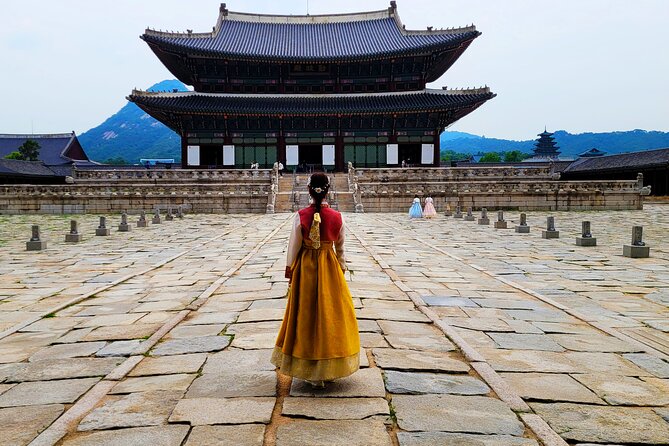
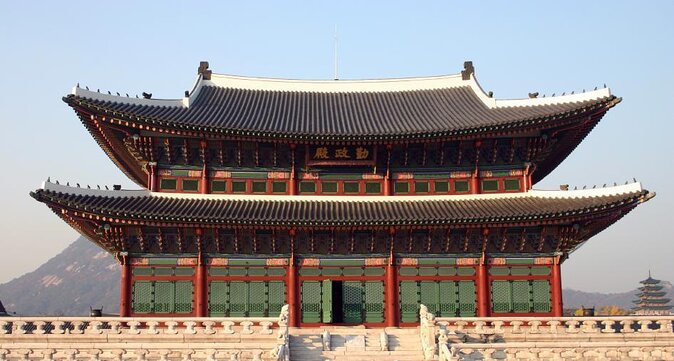
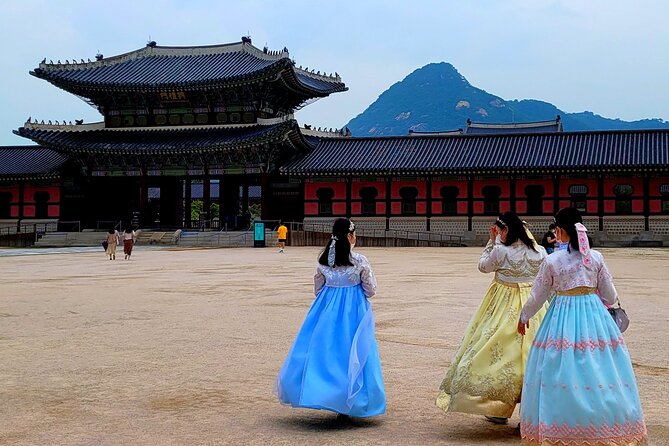
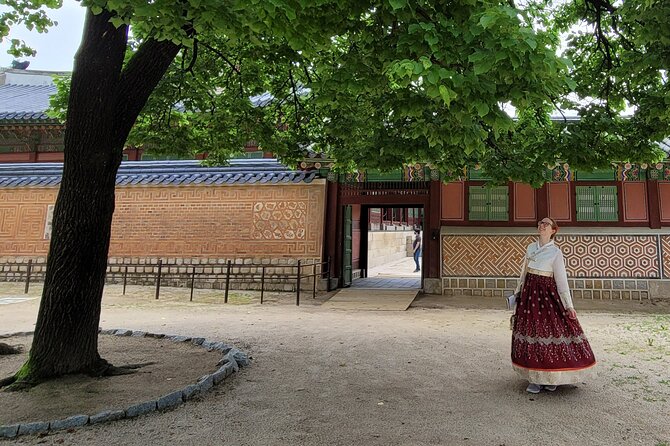
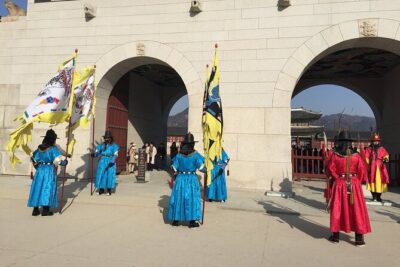
This is the star of the route. Gyeongbokgung Palace is the main palace of the Joseon Dynasty, built in 1395. The setting is part of the design idea—mountains behind and the city in front—so you get a sense of how the palace fits the geography and values of the time.
You spend about 1 hour 30 minutes here, and the important piece for planning is that the Gyeongbokgung Palace ticket is included. That means fewer logistics and less time checking admissions details while you’re already in the neighborhood.
What makes this stop work on a guided tour is the story the guide can connect to what you’re looking at. Joseon-era architecture isn’t just pretty; it’s built around power, philosophy, and order. When your guide explains that in plain language, it changes the way you walk through the grounds. You’re not just ticking off buildings. You’re understanding the logic behind the layout.
The main drawback with palace visits: the time limit. Ninety minutes can feel both generous and short at the same time, depending on how interested you are in specific halls and courtyards. If you’re the type who loves details, you’ll want to come back later with more time.
Bukchon Hanok Village: short look at the old neighborhood feel
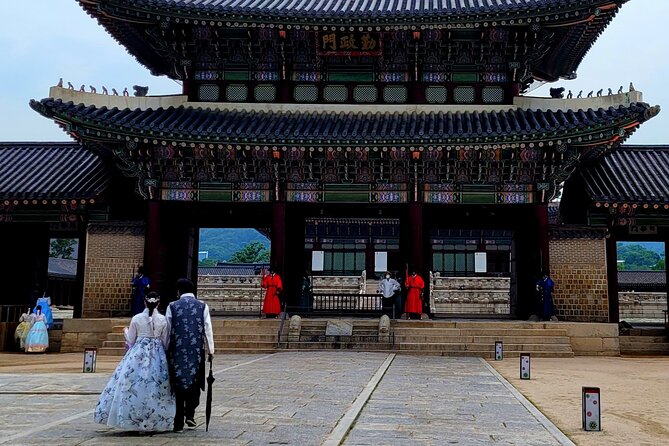
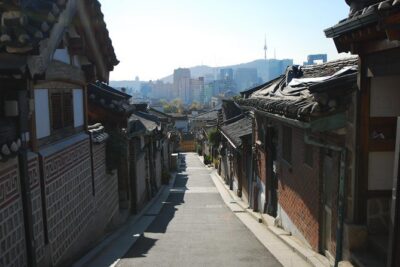
After the palace, you head to Bukchon Hanok Village, a historic neighborhood between two royal palaces. The key feature here is the hanok houses—traditional Korean homes with rooftops and alleys that show how people lived during the Joseon period.
You get about 30 minutes, and that makes this stop a “taste” more than a long exploration. Still, it’s a valuable taste because the terrain and rooflines give you immediate visual context for how the palaces related to everyday life.
If you’ve been staring at palaces all morning, Bukchon helps balance the day. It shifts your attention from royal spaces to residential scale—narrow streets, small turns, and the feel of a neighborhood shaped by tradition.
Consideration: expect lots of walking and photo stops. If you want the best angles, you’ll need to move a bit carefully through the lanes.
Why the small group size (max 10) changes the whole experience
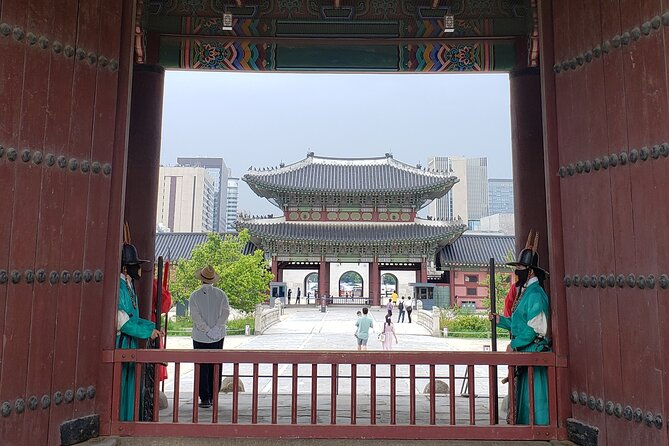
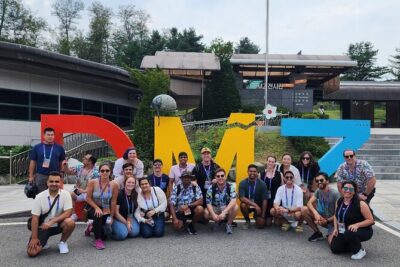
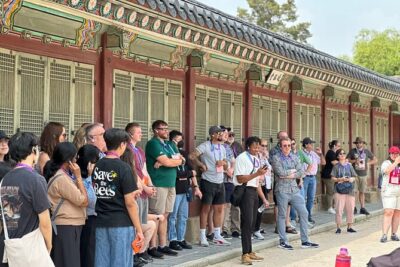
When a tour is max 10 people, the guide can actually respond to you, not just march you along. In the reviews tied to this tour, the guide is praised for being patient and for giving a strong history-and-current-culture balance.
That matters because Seoul can be overwhelming at first. One person may want architecture context, another may want practical advice for where to eat or how neighborhoods function. With a small group, the tour can flex in a way that feels like conversation instead of a script.
Also, a smaller group tends to make the pacing feel more human. You still have fixed stop durations, but you’re less likely to feel stuck at the back, unable to see or ask questions.
Lee’s teaching style: history plus real questions
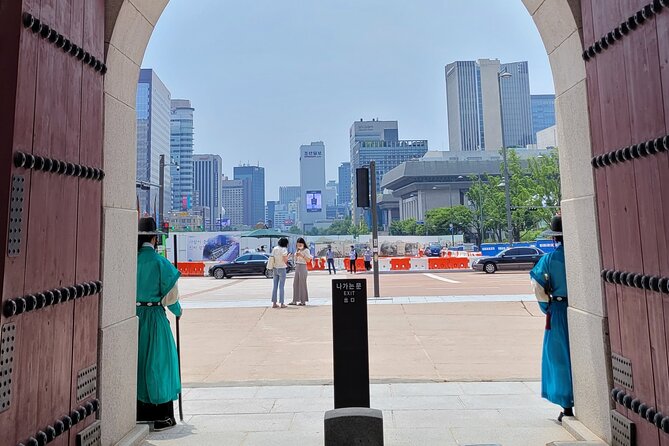
One detail that shows up strongly is the guide’s approach. Lee is described as blending Joseon history with modern Korea context, and she’s also known for keeping people engaged with mini quizzes and traditional games during breaks.
Even if you’re not trying to win a game, that kind of interactivity helps you remember what you just heard. It also makes the walk feel less like you’re listening the whole time.
There’s another practical benefit: questions are encouraged. If you’re curious about everyday Korean life—food, manners, what different areas feel like—this tour gives you a good starting point, especially during your first days in Seoul.
Price and value: why $60.27 can make sense here
The price is $60.27 per person, and it’s scheduled for about 3 hours with a mobile ticket. You’re also getting Gyeongbokgung Palace admission included, which is a meaningful value add because that’s usually one of the biggest “ticket moments” on a palace-heavy route.
On top of that, the tour bundles several key areas that are normally time-consuming to piece together yourself: Insadong, Jogyesa, Gwanghwamun Square, Gyeongbokgung, and Bukchon. Even though some stops have free admission, the real value is the coordination and the guided interpretation that helps you understand why each place matters.
Bottom line: this costs more than doing it solo with subway tickets, but you pay for time saved and context provided. For a first-timer with limited hours, that trade can be a good one.
Timing and what to do if you want more time later
The itinerary is designed to be fast. Here are the approximate time blocks:
- Insadong: ~10 minutes
- Jogyesa Temple: ~30 minutes
- Gwanghwamun Square: ~20 minutes
- Gyeongbokgung Palace: ~1 hour 30 minutes (ticket included)
- Bukchon Hanok Village: ~30 minutes
So yes, you’ll cover a lot of ground in a half-day slot. The “smart move” after this tour is choosing one or two places you want to revisit: either the palace halls that mattered most to you, or the hanok lanes you liked for photos and atmosphere.
If you don’t revisit, you still leave with a useful mental map. And if you do revisit, your second trip will feel easier because you know what’s what.
Getting the most out of a weather-dependent walking tour
This experience requires good weather. That’s not just a technicality. Seoul weather can change quickly, and because you’re out walking, you’ll feel it in your feet and attention.
If you’re booking during a season where rain is common, I’d plan to have a flexible day nearby. Also, pack for walking: comfortable shoes, water, and a light layer. Even with short stop times, you’ll be on your feet.
Service animals are allowed, and the tour is listed as near public transportation, which helps if you need to break your day into manageable chunks.
Who this tour fits best
This works especially well for you if:
- It’s your first time in Seoul and you want orientation fast
- You prefer a guided route that links royal history to real neighborhood context
- You like asking questions and want a tour that stays interactive
- You’re trying to fit major sights into a short schedule
It might not be the best fit if:
- You want long, slow time at palaces and temples
- You’re aiming for deep architectural detail in one sitting
- You hate walking in the open air (even though stop times are controlled)
Should you book the Palace & Seoul Old Town Highlights tour?
I think you should book this tour if you want a high-value introduction to Seoul’s Joseon-era highlights without spending your whole day figuring things out. The small group size, the included Gyeongbokgung Palace ticket, and the way the guide helps you connect history to what you’re standing in front of make it a practical choice for many first-timers.
If your perfect vacation day is slow and unstructured, you may feel rushed. But if your goal is seeing the right places in the right order and leaving with a map in your head, this is a strong start.
FAQ
FAQ
How long is the Small Group Palace & Seoul Old Town Highlights tour?
It lasts about 3 hours (approx.).
What is the group size limit?
This experience has a maximum of 10 travelers.
Where do we meet for the tour?
You meet at Anguk Station (Exit 6, outside).
Does the tour end at the same meeting point?
Yes, the activity ends back at the meeting point.
Is a mobile ticket used?
Yes, the tour uses a mobile ticket.
Is the admission ticket for Gyeongbokgung Palace included?
Yes. Gyeongbokgung Palace ticket is included.
Are the other stops free to visit?
The tour lists admission tickets as free for Insadong, Jogyesa Temple, Gwanghwamun Square, and Bukchon Hanok Village.
What sights are included in the itinerary?
The stops are Insadong, Jogyesa Temple, Gwanghwamun Square, Gyeongbokgung Palace, and Bukchon Hanok Village.
What should I know about weather?
The experience requires good weather. If it’s canceled due to poor weather, you’ll be offered a different date or a full refund.
What is the cancellation policy?
You can cancel for a full refund up to 24 hours in advance of the experience’s start time. If you cancel less than 24 hours before, the amount paid is not refunded.
More Tour Reviews in Seoul
- Best DMZ Tour Korea from Seoul (Red Suspension Bridge Optional)★ 5.0 · 41,422 reviews
- DMZ Tour: 3rd Tunnel, Option(Suspension Bridge, Boat) from Seoul★ 5.0 · 21,373 reviews
- DMZ tour south Korea from Seoul (NK experience hall, defector)★ 5.0 · 20,599 reviews
- Seoul: DMZ Tour with Optional Suspension Bridge★ 4.8 · 5,277 reviews
- Seoul: DMZ The 3rd Tunnel and Suspension Bridge Tour★ 5.0 · 4,656 reviews
Still More Palaces to Walk
- Seoul: Gyeongbok Palace, Bukchon Village, and Gwangjang Tour★ 4.9 · 2,321 reviews
- Best Seoul City Tour (Gyeongbokgung Palace,Insadong,Namsan Tower)★ 5.0 · 1,647 reviews
- Small-Group Royal Palace and Seoul City Tour (hotel pick-up)★ 5.0 · 1,474 reviews
- Seoul City Sightseeing Tour Including Gyeongbokgung Palace, N Seoul Tower, and Namsangol Hanok Village★ 5.0 · 1,423 reviews
- Seoul: Gyeongbok Palace, Bukchon Village, and Gwangjang Tour★ 5.0 · 1,044 reviews
Just added to Exploring Seoul

Gyeongbokgung & Palace Tours, compared.
 ★ 4.9Gyeongbok Palace, Bukchon Village, and Gwangjang TourFrom $322,321 reviews
 ★ 5.0Best Seoul City Tour (Gyeongbokgung Palace,Insadong,Namsan Tower)From $581,647 reviews
 ★ 5.0Small-Group Royal Palace and Seoul City Tour (hotel pick-up)From $561,474 reviews
 ★ 5.0Seoul City Sightseeing Tour Including Gyeongbokgung Palace, N Seoul Tower, and Namsangol Hanok VillageFrom $801,423 reviews
★ 5.0Gyeongbok Palace, Bukchon Village, and Gwangjang TourFrom $321,044 reviews
★ 5.0Seoul City Sightseeing Tour Including Gyeongbokgung Palace, N Seoul Tower, and Namsangol Hanok VillageFrom $801,423 reviews
★ 5.0Gyeongbok Palace, Bukchon Village, and Gwangjang TourFrom $321,044 reviews
 ★ 4.9Seoul Half-Day City Highlight, Palace Tour with HanbokFrom $49764 reviews
 ★ 4.9Palace, Temple and Market Guided Foodie Tour at NightFrom $60750 reviews
 ★ 4.7Seoul Highlights: Gyeongbok Palace, Insadong & N Seoul TowerFrom $26726 reviews
Browse the lists this tour appears in