Reviewed · SEOUL
Seoul Tram Pedal Challenge
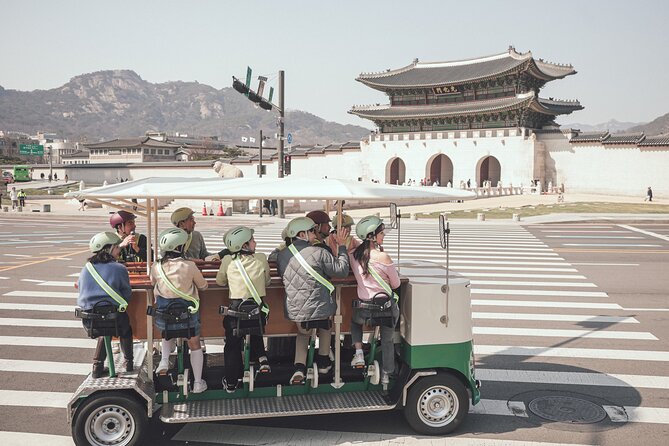
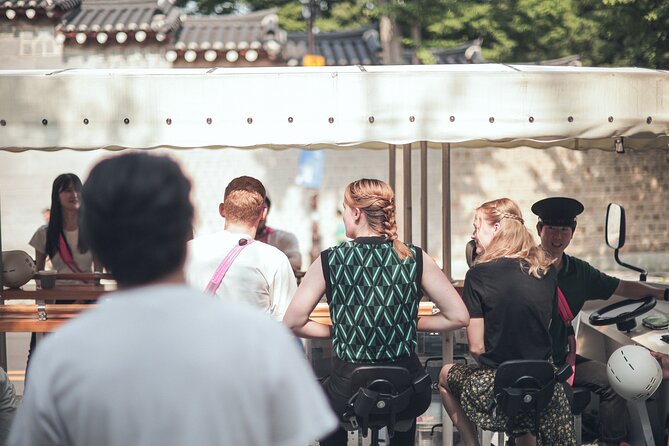
One pedal stroke and you start understanding Seoul. This Seoul Tram Pedal Challenge turns big sights into an easy, guided loop with a tram bike and built-in food stops.
I particularly like how it handles navigation for you, so you can focus on the views instead of maps. I also enjoy the mix of architecture-and-street sightseeing, capped with a stop at Tongin Market for a snack you’re not likely to hunt down on your own.
One thing to consider: there are height rules (under 100 cm can’t board, and 100–140 cm riders need extra safety gear), so it pays to check before you buy.
In This Review
- Key things to know before you go
- Why a tram bike is the smart way to see central Seoul
- Getting started at WeRide Seoul Tram Shop (Jongno Station)
- Jeongdong Observatory: a quick win for skyline views
- Gwanghwamun Square and the statues you can’t miss
- Insadong Antique Street: old-school streets with a tram-bike perspective
- Ikseon-dong Hanok Street and Ikseondong Salt Bread
- Changdeokgung Royal Palace: the graceful stop you’ll spot from the road
- Wonseodong Hanok Village: walking through quiet lanes
- Tongin Market: the snack break that feels like Seoul, not a detour
- Returning to WeRide: drop gear and grab your daypack
- Pace, group size, and how the guide actually helps
- Price and value: is $85 worth it?
- Who this tour suits best (and who might want something else)
- Should you book the Seoul Tram Pedal Challenge?
- FAQ
- How long is the Seoul Tram Pedal Challenge?
- How much does it cost?
- Where do I meet, and where does the tour end?
- Does the tour use a mobile ticket?
- What food is included?
- Are there height requirements to ride?
- Is the tram bike hard to ride?
- How many people are in the group?
- What if the weather is bad?
Key things to know before you go
- Tram bike logistics are simplified so you cover major sights without wrestling with Seoul’s public transport
- Jeongdong Observatory is included for a high-up skyline view with lots of landmarks in one frame
- The route mixes riding and short walking to keep it fun and not exhausting
- Tongin Market is a real food moment, with time to eat and try a new style of tteokbokki
- Small-group pace (max 9) keeps the guide responsive for photos, breaks, and questions
- Guides like Ma Dong-seok and Vincent are specifically praised for history explanations and photo help
Still deciding? These are the Seoul tours travellers book first.
- Best DMZ Tour Korea from Seoul (Red Suspension Bridge Optional)★ 5.0 · 41,422 reviews
- DMZ Tour: 3rd Tunnel, Option(Suspension Bridge, Boat) from Seoul★ 5.0 · 21,373 reviews
- DMZ tour south Korea from Seoul (NK experience hall, defector)★ 5.0 · 20,599 reviews
- Seoul: DMZ Tour with Optional Suspension Bridge★ 4.8 · 5,277 reviews
Why a tram bike is the smart way to see central Seoul
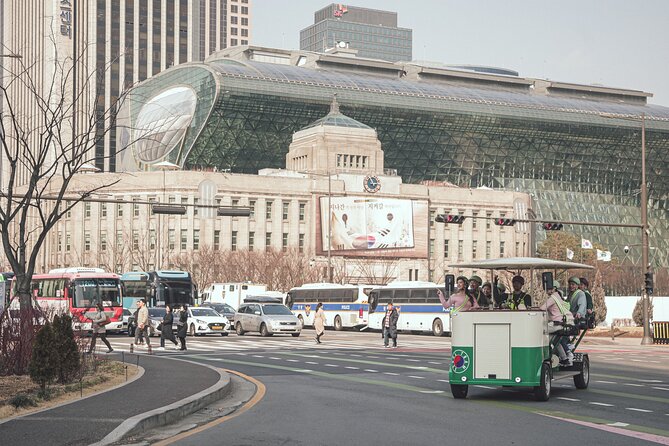
Seoul can be a lot. Even when you’re trying your best, you end up spending energy on stairs, transfers, and figuring out which exit to use. This tour solves that with a tram bike format: you still get movement and photos, but you don’t burn your day on transit puzzles.
The tram bike also changes the feel of the day. You’re not stuck inside a minivan, and you’re not always walking with sore legs. It’s built for hopping between key neighborhoods—then letting the guide point out what to actually notice.
And because you’re going with a guide, you get better “reading” of the city. You’ll be shown the landmarks in context instead of just passing by big names on your own.
Getting started at WeRide Seoul Tram Shop (Jongno Station)
Your day begins at the WeRide Seoul Tram Shop near Jongno Station, meeting at Le Meiller Jongno Town (19 Jong-ro, Jongno District). Plan to arrive about 20 minutes before your reserved time. That early buffer is not optional fluff—it’s for ticketing, safety training, and equipment fitting.
This start matters because a tram bike is part bike and part safety system. You’ll be measured on-site. If you’re under 100 cm, you won’t be allowed to board. If you’re 100–140 cm, you’ll need additional safety equipment including a harness, and you’re asked to wear pants so the gear can be fitted correctly. If you refuse the safety equipment, you won’t be allowed to ride.
For most people, this setup is quick and straightforward. Once you’re suited up, the rest of the tour is about sightseeing with momentum.
Jeongdong Observatory: a quick win for skyline views
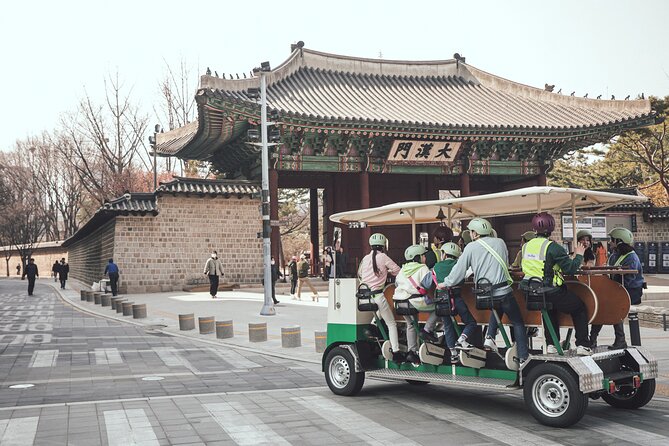
Early on, you head to Jeongdong Observatory on the 13th floor of the Seoul City Hall annex in Seosomun. It’s a short stop (about 20 minutes) with free admission, and it’s designed to give you instant orientation.
From up here, you can pick out a cluster of major spots: Jeong-dong, Deoksugung Palace, Seoul City Hall, Seoul Square, and—on a clear day—Inwang Mountain. That “clear day” note matters. If visibility is good, your photos will look better and the rest of the route will make more sense.
Even if you’re not a big “lookout” person, this stop helps you connect what you saw earlier to what you’ll see later at street level.
Gwanghwamun Square and the statues you can’t miss
Next comes Gwanghwamun Square, the historic heart of Seoul’s central core. This wide plaza sits between Gwanghwamun Gate and City Hall, and it’s where you’ll find the iconic statues of King Sejong and Admiral Yi Sun-sin.
What I like about this stop: it’s not just sightseeing, it’s photo-friendly and easy to understand. You’ll know where you are in the story of modern Seoul pretty quickly.
You’ll also ride through nearby areas that connect old and new Seoul in a single day—so the plaza works as a visual anchor.
Insadong Antique Street: old-school streets with a tram-bike perspective
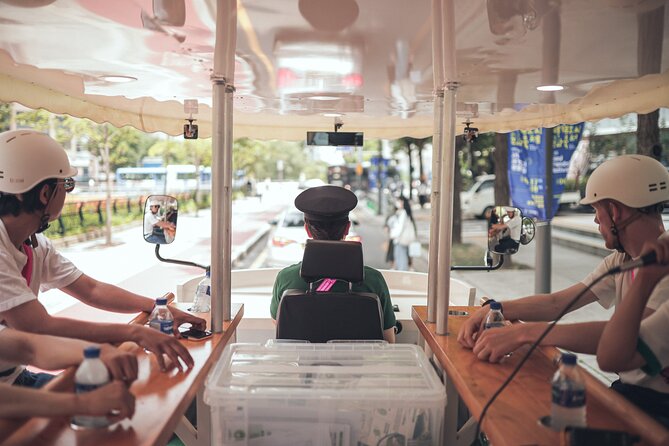
Then you’ll move into Insadong Antique Street, often called a traditional Korean culture street. It’s the kind of place where you can wander for an hour and still feel like you barely scratched the surface—but you don’t have that luxury on most short trips.
The tour handles this by giving you the ride-and-look approach. You’ll pass through this part of the city with a guide, so you get the highlights without needing to navigate every side street yourself. It’s a great way to get the atmosphere quickly.
If you love browsing craft and antiques, you might want to return later on your own time. But as part of this 2.5-hour loop, it does its job: you get the vibe and the main sight lines.
Ikseon-dong Hanok Street and Ikseondong Salt Bread
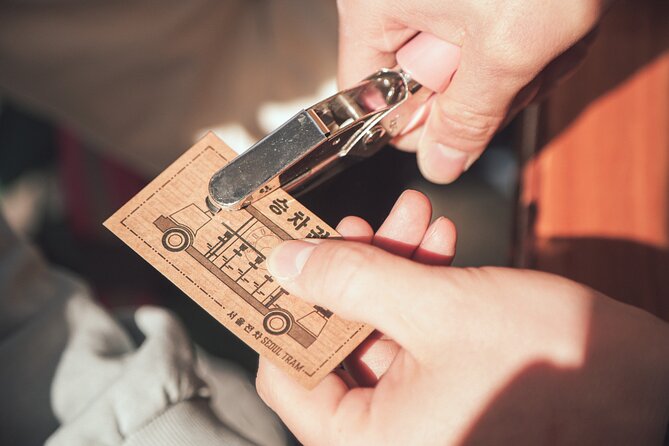
After Insadong, the tour shifts into a more traditional-feeling zone with Ikseon-dong Hanok Street. The stop includes Ikseondong Salt Bread, and it’s built into the timing (about 15 minutes, with the snack included).
This is one of those “small” parts that actually makes the tour feel local. You’re not just eating somewhere trendy—you’re sampling food in a neighborhood known for traditional-style houses. The timing is short, so don’t expect a long sit-down. But you do get a quick taste and a reason to stop and look around.
Also, a note from the overall experience: the food component has a reputation for being vegetarian-friendly, and the included snack has been described as excellent. If you’re vegetarian, that’s a real advantage.
Changdeokgung Royal Palace: the graceful stop you’ll spot from the road
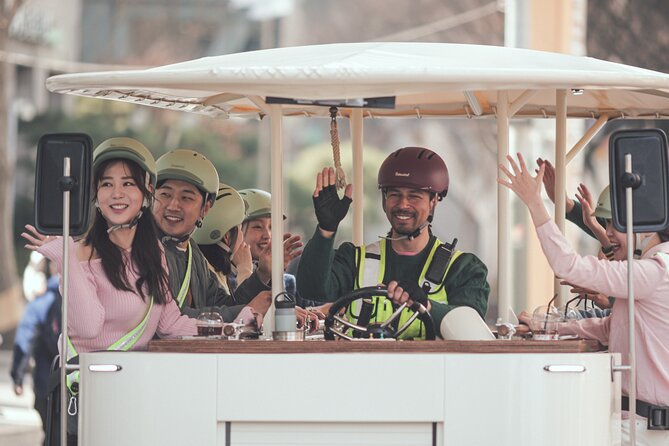
You don’t just rush past Changdeokgung Royal Palace. As the tram bike rolls by, you get time for your eyes to rest on one of Seoul’s most graceful palaces. This is part of the route’s pacing trick: you get the big-name sight without forcing the whole day to revolve around palace ticket lines.
The tour time here is shorter than a deep palace visit would be, so think of it as a visual highlight—enough to appreciate the scale and beauty, not enough to replace a full palace day later.
If your travel style is more “see it properly” than “glance and go,” consider this as your introduction. Then you can come back when you have more time.
Wonseodong Hanok Village: walking through quiet lanes
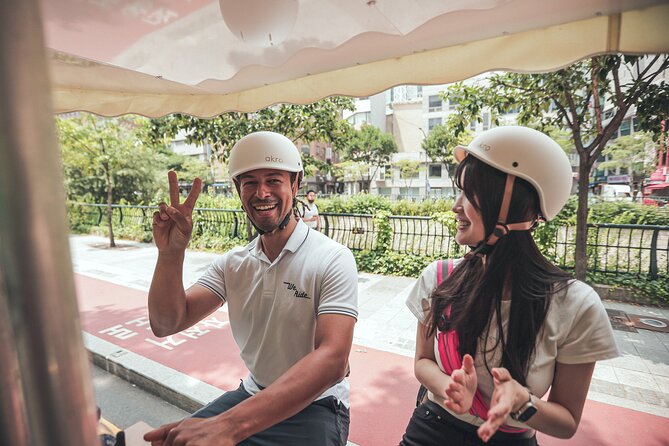
After the ride segments, the tour includes a Wonseodong Hanok Village walking tour. This is the slower moment, and it’s where the day’s texture changes.
You’ll stroll through peaceful alleyways lined with traditional Korean houses. The walking is short, but it’s long enough to notice details that don’t show up well from a vehicle: street shape, the scale of doorways, and the way the neighborhood feels.
This stop is also a practical reset. If you’ve been pedaling and steering, a calm walking segment gives your body a break while still keeping you moving.
Tongin Market: the snack break that feels like Seoul, not a detour
Next is Tongin Market, one of the more fun parts of the tour because it’s food-forward. You’ll have about 20 minutes to eat recommended dishes at a Korean traditional market with the local feel of people who live and shop around it.
You’ll try a new type of tteokbokki plus more food options. The key word here is “try,” not “memorize.” This isn’t a heavy lesson in Korean cooking—it’s a short, guided tasting that makes it easier to understand how market food works in real life.
If you’re traveling with picky eating habits, you’ll want to pay attention to what’s available. The tour has been described as having vegetarian food that worked well for people, but the exact menu can still vary, so bring your flexibility.
Also, one of the best practical benefits: a strong guide can turn market time into a confident win. In the past, guides such as Ma Dong-seok and Vincent have been praised for considerate pit stops and for helping people time food and restroom breaks without rushing.
Returning to WeRide: drop gear and grab your daypack
At the end, you go back to the WeRide shop at Jongno Station. You’ll drop off the safety gear and collect your belongings. There’s also a small selection of souvenirs if you want a last-minute shopping impulse.
That closure matters more than you’d think. On city-bike days, you often end with a scramble for your things. Here, the finish point is built in, so you stay calm and ready for whatever you do next in Seoul.
Pace, group size, and how the guide actually helps
The tour runs with a maximum of 9 travelers, which keeps things from turning into a chaotic caravan. That small size is a big deal with tram bikes, because gear fitting, spacing, and photo moments all need room to breathe.
The guide also affects your experience more than you might expect. In the specific feedback for this tour, guides like Ma Dong-seok and Vincent are highlighted for professional historical introductions plus photo-taking skills—meaning they know how to position you for pictures, not just narrate.
There’s also a real practical element to the pacing. Breaks matter on this kind of route, and the experience has been described as having considerate restroom and snack timing. If you’re doing Seoul in a short window, those small management details keep your day from feeling stressful.
Price and value: is $85 worth it?
At $85 per person for about 2 hours 30 minutes, the value depends on what you compare it to.
You’re not just paying for a bike rental. You’re paying for:
- guided sightseeing through multiple high-demand areas
- the tram bike experience that covers distance with less effort
- helmet use
- included food components (the Tongin Market snack, plus the Ikseondong Salt Bread)
Another part of value is the admissions mix. Some stops are free (like Jeongdong Observatory), and other moments are built as short experiences rather than full-ticket attractions. That means you aren’t constantly paying add-ons on the fly.
If you were doing this on your own, you’d likely spend time figuring out transit, spacing, and what to see in what order. This tour compresses that into a single guided loop that still feels active.
Who this tour suits best (and who might want something else)
This works best for you if:
- you want a fast but structured taste of central Seoul
- you’re okay with a mix of riding and short walks
- you appreciate photo guidance and short, focused history explanations
- you’d rather spend energy looking at places than decoding transit
It may be less ideal if:
- you want a long, deep-dive palace visit (this is more of an overview route)
- you’re sensitive to any safety-gear rules around height (check requirements early)
- you’re expecting a long market linger or a heavy-food crawl (time is limited by design)
Should you book the Seoul Tram Pedal Challenge?
I’d book it if you’re short on time and want an easy way to connect major Seoul landmarks—especially if your plan includes Gwanghwamun, palace-area architecture, and Tongin Market food. The tram bike format is the real selling point: you get movement without the usual Seoul transit friction.
If you’re picky about accessibility due to height rules, double-check the measurements and harness requirements before committing. Also, plan your day around weather that’s comfortable for outdoor activity, since the experience notes a good-weather requirement and can be adjusted if conditions are poor.
Overall, for $85, it’s a smart, active introduction to central Seoul: guided, photo-friendly, and built around the kinds of stops most first-timers want—without making your legs and brain do all the work.
FAQ
How long is the Seoul Tram Pedal Challenge?
It runs for about 2 hours 30 minutes.
How much does it cost?
The price is $85.00 per person.
Where do I meet, and where does the tour end?
You meet at Le Meiller Jongno Town, 19 Jong-ro, Jongno District, Seoul. The tour ends back at the same meeting point.
Does the tour use a mobile ticket?
Yes, the tour includes a mobile ticket.
What food is included?
You get a snack at Tongin Market. The tour also includes Ikseondong Salt Bread.
Are there height requirements to ride?
Yes. If you are under 100 cm, you will not be allowed to board. If you are between 100 cm and 140 cm, you must wear additional safety equipment including a harness, and you should wear pants. Children who refuse safety equipment will not be allowed to board.
Is the tram bike hard to ride?
The tram bike is described as fun and not hard to cycle.
How many people are in the group?
The tour has a maximum of 9 travelers.
What if the weather is bad?
The experience requires good weather and can be canceled due to poor weather. If that happens, you’ll be offered a different date or a full refund.
More Tour Reviews in Seoul
- Best DMZ Tour Korea from Seoul (Red Suspension Bridge Optional)★ 5.0 · 41,422 reviews
- DMZ Tour: 3rd Tunnel, Option(Suspension Bridge, Boat) from Seoul★ 5.0 · 21,373 reviews
- DMZ tour south Korea from Seoul (NK experience hall, defector)★ 5.0 · 20,599 reviews
- Seoul: DMZ Tour with Optional Suspension Bridge★ 4.8 · 5,277 reviews
- Seoul: DMZ The 3rd Tunnel and Suspension Bridge Tour★ 5.0 · 4,656 reviews