
Reviewed · GYEONGBOKGUNG & PALACE TOURS
Seoul: Royal Palace Morning Tour including Cheongwadae
Morning courtyards beat the city rush. This tour strings together Cheongwadae photo time, a royal guard changing ceremony, and Gyeongbokgung Palace before crowds fully kick in. I love how it’s structured enough to keep things moving, and I also like the practical help for photos in front of the Blue House and during the guard ceremony. The one thing to weigh is that you’ll do a moderate amount of walking, plus it’s rain-or-shine, so you’ll want sensible shoes and a bit of flexibility around timing.
You’ll meet your guide at Lotte Hotel Seoul and ride in an air-conditioned minivan with a small group. By around 12:00, you’re dropped off at Myeongdong Lotte Hotel or near Namdaemun Market, which is perfect if you’re turning this morning into shopping and lunch plans.
In This Review
- Key Things to Know Before You Go
- Cheongwadae and the Blue House Complex: what you’ll actually see
- Royal Guard Changing Ceremony: a rare sight worth your camera battery
- Gyeongbokgung Palace: where the Joseon court took center stage
- Tuesday reality check: Gyeongbokgung closes, Deoksugung steps in
- Cheongha Korea Ginseng: what the stop is for (and how to handle it)
- Photo timing and small-group comfort at this pace
- Price and value: is $175 per person fair for a 3.5-hour morning?
- Who this tour is best for (and who should reconsider)
- Should you book this Seoul royal-palace morning tour?
- FAQ
- Where do we meet for this tour?
- Is hotel pickup included?
- How long is the tour?
- What’s included in the price?
- Is food included?
- Where do you get dropped off at the end?
- Do I need to bring a passport?
- What should I wear and bring?
- Does it run in bad weather?
- What happens on Tuesdays?
- Are children allowed?
Key Things to Know Before You Go
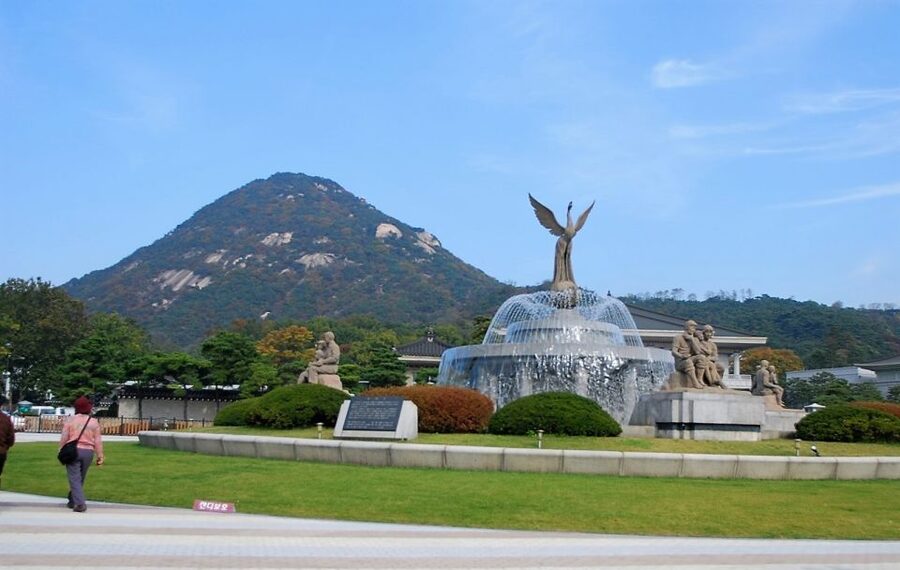
- Cheongwadae photo stop: You get time for souvenir-style photos right in front of the Blue House.
- Guard ceremony camera moment: Bring your camera—your guide gives tips for photographing the guards.
- Palace switch on Tuesdays: Gyeongbokgung Palace is replaced with Deoksugung Palace because of closure.
- Ginseng stop included: You’ll visit Cheongha Korea Ginseng as part of the route.
- Moderate walking, rain-or-shine: Wear comfortable shoes and expect outdoor time even in bad weather.
- Passport is required: Bring it with you for this tour.
Keep walking the palaces of old Seoul
- Seoul: Gyeongbok Palace, Bukchon Village, and Gwangjang Tour★ 4.9 · 2,321 reviews
- Best Seoul City Tour (Gyeongbokgung Palace,Insadong,Namsan Tower)★ 5.0 · 1,647 reviews
- Small-Group Royal Palace and Seoul City Tour (hotel pick-up)★ 5.0 · 1,474 reviews
- Seoul City Sightseeing Tour Including Gyeongbokgung Palace, N Seoul Tower, and Namsangol Hanok Village★ 5.0 · 1,423 reviews
Cheongwadae and the Blue House Complex: what you’ll actually see
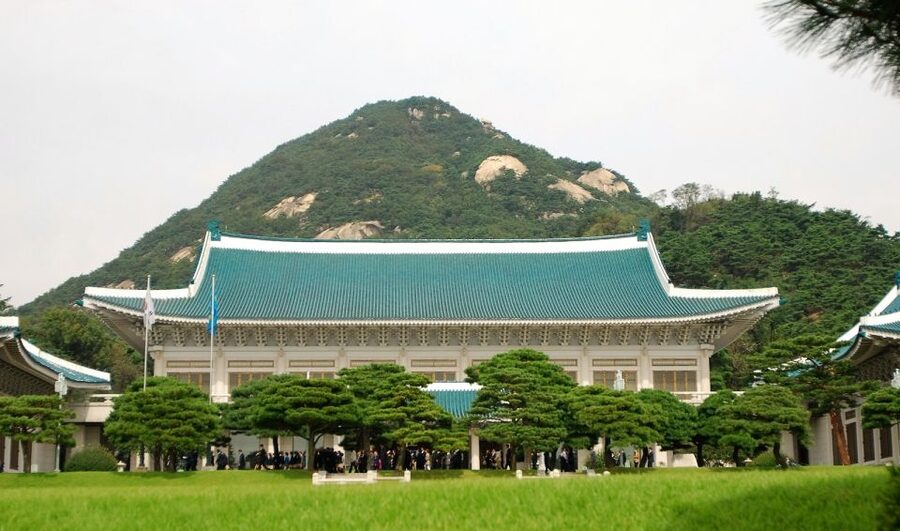
The first big draw is Cheongwadae, the Blue House complex. This is the executive office and official residence of South Korea’s president, and it’s known for combining traditional Korean architectural styles with some modern elements. Even if you’ve seen photos online, it helps to be there early, when the area feels calmer and you’re not fighting the day’s biggest wave of visitors.
The tour also builds in time for a souvenir photo in front of the Blue House. That sounds simple, but it’s a real value-add—guides know how to time moments so you can get a clean shot without wasting your whole morning. If you like having a few strong photos for your trip album, this is the stop that tends to deliver.
One practical note: you’ll want your passport ready. For tours involving secure sites like this, they tend to make the process smoother when you come prepared.
Royal Guard Changing Ceremony: a rare sight worth your camera battery
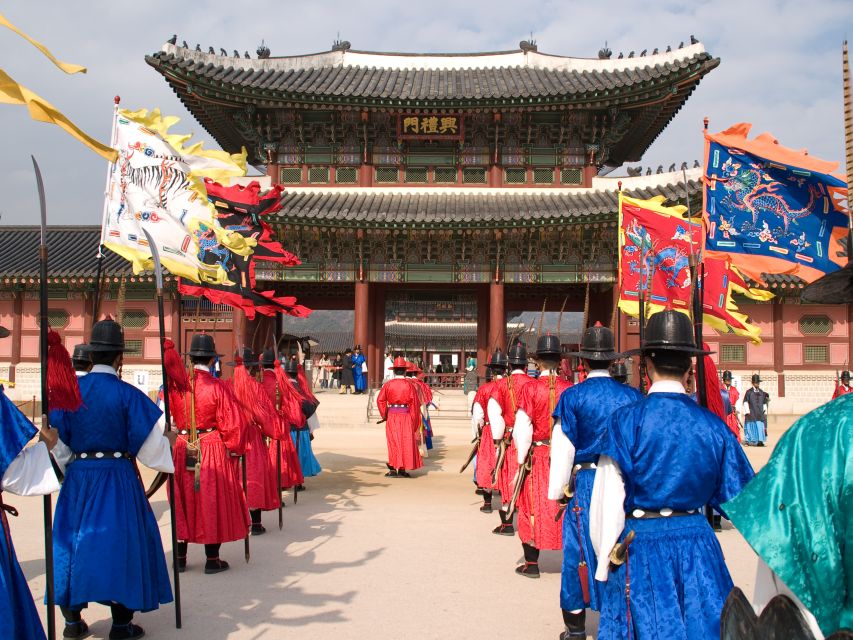
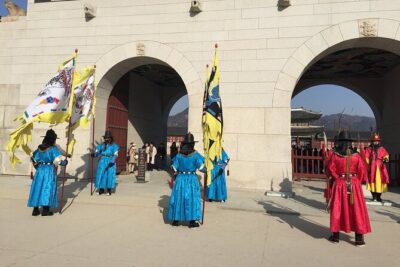
Next comes the Royal Guard Changing Ceremony, one of those Korea moments that feels unusually “special” compared to a standard sightseeing circuit. It’s a traditional scene that’s not something you can casually recreate on your own later in the day—so catching it as part of a morning plan makes a lot of sense.
You’ll want to bring your camera (and yes, make sure it’s charged). The guide’s role here matters: they help with the best approach for photos and timing while the guards are moving. In other words, you’re not just waiting around—you’re getting photo tips so you actually walk away with usable shots instead of blurry “I was there” evidence.
The ceremony is also short enough that you don’t feel trapped in one place for hours. That’s part of the tour’s appeal: you get a strong cultural moment, then you’re on to the next iconic location while your energy is still high.
Gyeongbokgung Palace: where the Joseon court took center stage
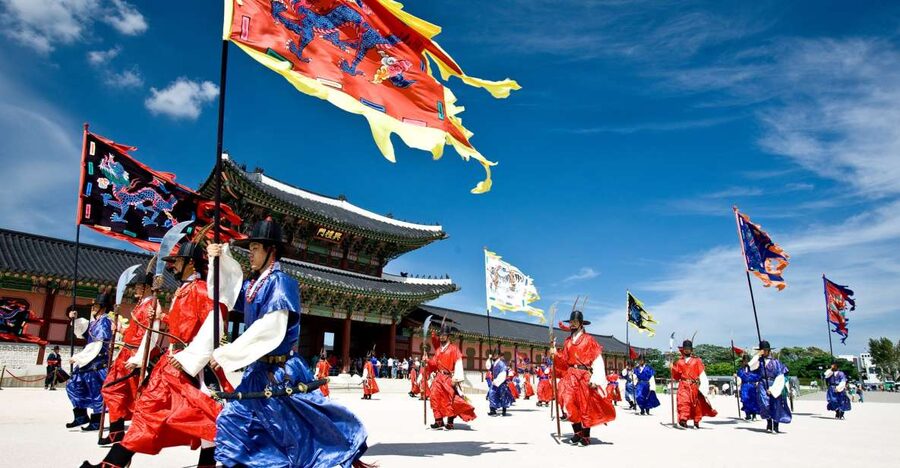
After the ceremony, you’ll head to Gyeongbokgung Palace, described as the largest of the five grand Joseon palaces. This is the one that many first-time visitors put at the top of the list—and for good reason. The palace wasn’t just a pretty backdrop; it formed the heart of the capital’s government district and reflected Joseon sovereignty.
What you’ll notice as you walk through is how the palace design is meant to communicate authority and order. The tour focuses on the idea that architectural principles of ancient China were harmoniously incorporated into the tradition and look of the royal court. In plain terms: it’s not random decoration. It’s a carefully planned visual system meant to project power and stability.
A practical heads-up: palaces involve uneven outdoor surfaces and lots of standing/walking. The tour is only about 3.5 hours, so the pace stays efficient, but you still need comfortable walking shoes. If you’re the type who gets sore quickly, plan to stretch afterward or keep your afternoon activities lighter.
A handful of other Seoul experiences to line up next

Tuesday reality check: Gyeongbokgung closes, Deoksugung steps in
Here’s one detail that can make or break your expectations: Gyeongbokgung Palace is closed on Tuesday. On those days, the tour replaces it with Deoksugung Palace.
If you’re traveling on a Tuesday, you won’t arrive disappointed—you’ll still see a major Joseon-era palace setting—but it’s smart to know in advance so you don’t picture the exact same grounds as other itinerary days. This swap also affects the overall feel of your morning, since each palace has its own layout and visual character.
If you’re flexible and you want the guard ceremony plus a grand palace experience in a single morning, this is still a solid plan—even with the change.
Cheongha Korea Ginseng: what the stop is for (and how to handle it)
Between the palace and your drop-off, the itinerary includes a visit to Cheongha Korea Ginseng. If you like learning about Korea’s plants and traditional health ideas, this part can be interesting because the tour frames ginseng as more than a souvenir.
Ginseng has a long mention in East Asian texts, and you’ll hear how it was used widely as a herb for many ailments. The tour also points to studies where Korean ginseng shows strong performance in adaptogenic properties—basically, the concept that it may help the body adapt to stress.
One thing to keep in mind: ginseng stops often come with product explanations and purchasing opportunities. The tour data doesn’t promise forced shopping, but it does mean you’ll be in a shop environment. If you’re not interested in buying, you can still treat it like a short cultural stop—look around, learn the terminology, and decide later.
Photo timing and small-group comfort at this pace
This tour runs like a well-paced morning sprint: you’re not stuck waiting for slow transitions between stops. It’s also set up as a private group experience (and described as a small group), which usually means less chaos than large group bus tours.
You’ll ride in an air-conditioned minivan, and you’ll be dropped off near your afternoon plans at Myeongdong or Namdaemun. That matters because it reduces the “what do we do now?” stress after a structured morning. You can walk out, reorient quickly, and head for lunch or shopping.
The best part is how the guide supports the flow. The experience information and feedback highlight that the guide can help with what to do for photos—especially with the guards. That’s a big deal if you’re traveling without another photographer friend who knows where to stand.
Price and value: is $175 per person fair for a 3.5-hour morning?
At $175 per person, this isn’t a budget add-on. But when you look at what’s included, the value starts to make more sense.
Your price covers:
- Admission tickets
- A professional guide and a local guide (so you get more than one set of eyes and explanations)
- Air-conditioned minivan transport
- The core sequence: Cheongwadae, the guard changing ceremony, and a major palace (or the Tuesday swap)
For many travelers, the “value” isn’t just the sites. It’s the fact that you get them in the right order, early enough to feel less crowded, with someone who can help you make sense of what you’re looking at. It also saves you from piecing together multiple transit legs on your own for a tight schedule.
That said, if you already feel confident navigating Seoul, don’t mind self-guided pacing, and you only care about one palace photo, you might decide you can do parts independently. But if your priority is an efficient morning with strong cultural moments and photo support, the price is easier to justify.
Who this tour is best for (and who should reconsider)
This is a great fit if:
- You want a structured morning that hits multiple high-demand landmarks.
- You care about the guard changing ceremony and want help photographing it.
- You like having a guide interpret what you’re seeing instead of just walking past signs.
You might reconsider if:
- You have mobility limits. The tour involves moderate walking and it’s noted as not suitable for wheelchair users.
- You dislike any shop stop. The ginseng visit means you’re in a commercial environment.
- You’re sensitive to rain. The tour runs rain or shine, so plan accordingly.
Should you book this Seoul royal-palace morning tour?
If you want an organized, morning-focused day that delivers three headline experiences—Cheongwadae, a true traditional guard ceremony, and a grand Joseon palace setting—this is a smart booking. The itinerary is tight for a reason, and the guide help with photo tips is exactly the kind of detail that makes the difference between great memories and frustrating photos.
I’d book it if your schedule is short, you want someone to manage the route, and you’re excited by the mix of government-site symbolism plus palace ceremony atmosphere. I’d skip it only if you strongly prefer slow, self-paced wandering, or if you’re not up for outdoor walking in changing weather.
FAQ
Where do we meet for this tour?
You meet your guide at Lotte Hotel Seoul.
Is hotel pickup included?
Yes, hotel pickup is included only for centrally-located Seoul hotels. If your hotel is hard to access, your guide meets you in front of the nearest central hotel or subway station.
How long is the tour?
The duration is 3.5 hours. Starting times vary, so check availability for exact times.
What’s included in the price?
The tour includes admission tickets, a professional guide and local guide, and transport by air-conditioned minivan.
Is food included?
No. Food and drinks are not included.
Where do you get dropped off at the end?
You’re dropped off at Myeongdong Lotte Hotel or Namdaemun Market.
Do I need to bring a passport?
Yes—please bring your passport.
What should I wear and bring?
Wear comfortable walking shoes because there’s moderate walking. Also bring a camera for the guard changing ceremony photo moments.
Does it run in bad weather?
Yes. The tour takes place rain or shine.
What happens on Tuesdays?
On Tuesdays, Gyeongbokgung Palace is closed, so the tour is replaced with Deoksugung Palace.
Are children allowed?
Children are allowed, but must be accompanied by an adult.
More Tours in Seoul
- Best DMZ Tour Korea from Seoul (Red Suspension Bridge Optional)★ 5.0 · 41,422 reviews
- DMZ Tour: 3rd Tunnel, Option(Suspension Bridge, Boat) from Seoul★ 5.0 · 21,373 reviews
- DMZ tour south Korea from Seoul (NK experience hall, defector)★ 5.0 · 20,599 reviews
- Seoul: DMZ Tour with Optional Suspension Bridge★ 4.8 · 5,277 reviews
- Seoul: DMZ The 3rd Tunnel and Suspension Bridge Tour★ 5.0 · 4,656 reviews
More Tour Reviews in Seoul
- Best DMZ Tour Korea from Seoul (Red Suspension Bridge Optional)★ 5.0 · 41,422 reviews
- DMZ Tour: 3rd Tunnel, Option(Suspension Bridge, Boat) from Seoul★ 5.0 · 21,373 reviews
- DMZ tour south Korea from Seoul (NK experience hall, defector)★ 5.0 · 20,599 reviews
- Seoul: DMZ Tour with Optional Suspension Bridge★ 4.8 · 5,277 reviews
- Seoul: DMZ The 3rd Tunnel and Suspension Bridge Tour★ 5.0 · 4,656 reviews
Still More Palaces to Walk
- Seoul: Gyeongbok Palace, Bukchon Village, and Gwangjang Tour★ 4.9 · 2,321 reviews
- Best Seoul City Tour (Gyeongbokgung Palace,Insadong,Namsan Tower)★ 5.0 · 1,647 reviews
- Small-Group Royal Palace and Seoul City Tour (hotel pick-up)★ 5.0 · 1,474 reviews
- Seoul City Sightseeing Tour Including Gyeongbokgung Palace, N Seoul Tower, and Namsangol Hanok Village★ 5.0 · 1,423 reviews
- Seoul: Gyeongbok Palace, Bukchon Village, and Gwangjang Tour★ 5.0 · 1,044 reviews
Just added to Exploring Seoul
Gyeongbokgung & Palace Tours, compared.
 ★ 4.9Gyeongbok Palace, Bukchon Village, and Gwangjang TourFrom $322,321 reviews
 ★ 5.0Best Seoul City Tour (Gyeongbokgung Palace,Insadong,Namsan Tower)From $581,647 reviews
 ★ 5.0Small-Group Royal Palace and Seoul City Tour (hotel pick-up)From $561,474 reviews
 ★ 5.0Seoul City Sightseeing Tour Including Gyeongbokgung Palace, N Seoul Tower, and Namsangol Hanok VillageFrom $801,423 reviews
★ 5.0Gyeongbok Palace, Bukchon Village, and Gwangjang TourFrom $321,044 reviews
★ 5.0Seoul City Sightseeing Tour Including Gyeongbokgung Palace, N Seoul Tower, and Namsangol Hanok VillageFrom $801,423 reviews
★ 5.0Gyeongbok Palace, Bukchon Village, and Gwangjang TourFrom $321,044 reviews
 ★ 4.9Seoul Half-Day City Highlight, Palace Tour with HanbokFrom $49764 reviews
 ★ 4.9Palace, Temple and Market Guided Foodie Tour at NightFrom $60750 reviews
 ★ 4.7Seoul Highlights: Gyeongbok Palace, Insadong & N Seoul TowerFrom $26726 reviews
Browse the lists this tour appears in