
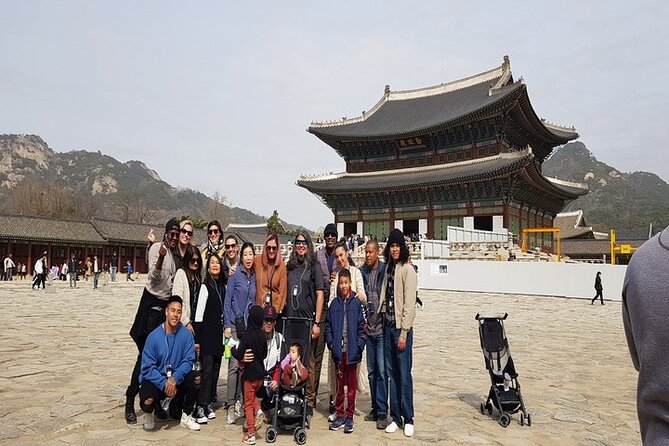
Reviewed · GYEONGBOKGUNG & PALACE TOURS
Seoul: Gyeongbokgung Palace Half day Tour
Palaces feel better with a guide. This half-day Gyeongbokgung Palace tour focuses on what you’re looking at, with English explanations that make the Joseon era easy to follow. It’s a smart way to see the palace’s main rooms without spending your whole day getting confused by names on signs.
I love that the tour hits the palace’s big architectural moments, from the south gate to the throne hall and beyond. You also get time to understand why each space mattered, not just take photos.
One thing to keep in mind: tours are around 2 hours, so it’s not a slow, museum-style wander. If you want to linger for long breaks, you may feel a bit rushed.
In This Review
- Key highlights you’ll care about
- Gyeongbokgung Palace in about two hours: what this tour does well
- Where you start: National Palace Museum of Korea and finding your group
- Gwanghwamun Gate: the south entrance with real meaning
- Geunjungjeon (main throne hall): where the Joseon story clicks
- Sajeongjeon: the king’s office space and the everyday side of power
- Gangnyeongjeon: the king’s bed-chamber and the human angle
- Gyotaejeon: the queen’s bed-chamber and the other half of court life
- Gyeonghoiru pavilion: an event hall moment with details to watch for
- What the guide actually adds (and why you’ll ask questions)
- Price and value: is $35 a good deal for Gyeongbokgung?
- When to go: Tuesday closure and smart plan B
- Practical expectations: mobile tickets, no filming, and what to bring
- Who this tour fits best
- Should you book this Gyeongbokgung Palace half-day tour?
- FAQ
- Is this tour in English?
- How long is the Gyeongbokgung Palace half-day tour?
- Is the palace admission included in the price?
- Where does the tour meet?
- Where does the tour end?
- Is Gyeongbok Palace open on Tuesdays?
- Is there a limit on group size?
- Can I record or film during the tour?
- What’s the cancellation window?
Key highlights you’ll care about
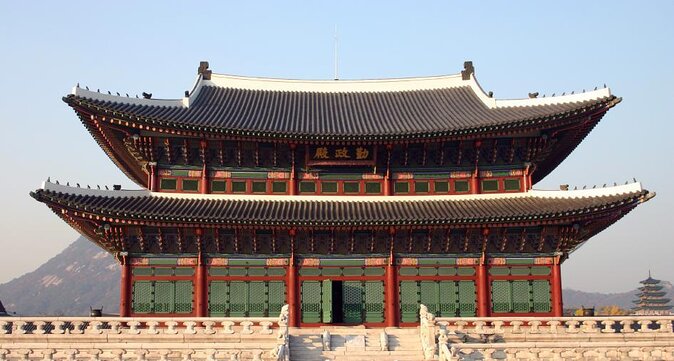
- English-first storytelling of the Joseon Dynasty, tied directly to what you see on-site
- Geunjungjeon (main throne hall) plus the nearby royal spaces that explain how power worked
- Gyeongbokgung’s restoration story, including what happened during the Japanese Colonial Period and why you’re seeing restored sections today
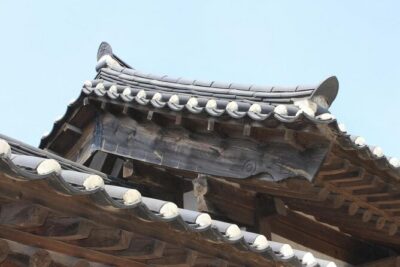
- Animal statues and decorative details called out throughout the grounds, so nothing looks random
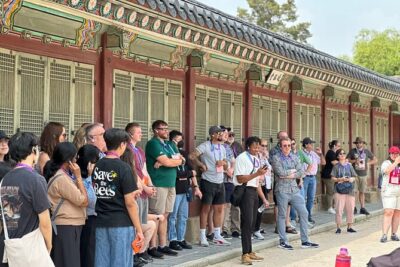
- Small-group feel (up to 20 travelers), with time to ask questions
- Mobile ticket + admission included, so you’re not juggling extra paperwork
Keep walking the palaces of old Seoul
- Seoul: Gyeongbok Palace, Bukchon Village, and Gwangjang Tour★ 4.9 · 2,321 reviews
- Best Seoul City Tour (Gyeongbokgung Palace,Insadong,Namsan Tower)★ 5.0 · 1,647 reviews
- Small-Group Royal Palace and Seoul City Tour (hotel pick-up)★ 5.0 · 1,474 reviews
- Seoul City Sightseeing Tour Including Gyeongbokgung Palace, N Seoul Tower, and Namsangol Hanok Village★ 5.0 · 1,423 reviews
Gyeongbokgung Palace in about two hours: what this tour does well
Gyeongbokgung Palace is the palace people picture when they think of Korea’s royal past. It was built in 1394, and it’s often described as the oldest and most important of Seoul’s five main palaces. The grounds and buildings are also a “what you see is what survived” kind of place, because the palace was heavily damaged during the Japanese Colonial Period and has been preserved through continuous restoration work.
The big value of this tour is that it doesn’t treat the palace like a photo backdrop. It’s set up as a guided route through the spaces that shaped royal life and government. The result: you leave with a mental map of the palace layout and the story behind it, instead of just a stack of pictures.
And the timing matters. At roughly 2 hours, you can fit it into a busy Seoul itinerary. You’re not forced into a full day of palace stamina, and you still get the core rooms people come for.
Where you start: National Palace Museum of Korea and finding your group
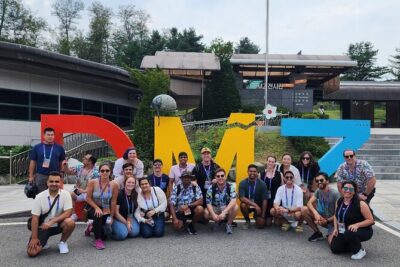
The meeting point is the National Palace Museum of Korea, at 12 Hyoja-ro, Jongno District. The tour ends at 7-25 Tongui-dong, Jongno District, so you typically get a natural walking flow rather than doubling back.
Two practical notes that save stress:
- You’ll receive details by email/WhatsApp about meetup place and time.
- Joining after the tour begins isn’t allowed, so don’t show up five minutes late and hope for the best.
This is also a tour where the mobile ticket is part of the setup. That’s convenient in Seoul, where you’ll constantly be switching between transit apps, maps, and plans.
If you’re planning around weather, remember: the tour notes it requires good weather. If conditions are poor, you’ll be offered a different date or a full refund.
Gwanghwamun Gate: the south entrance with real meaning
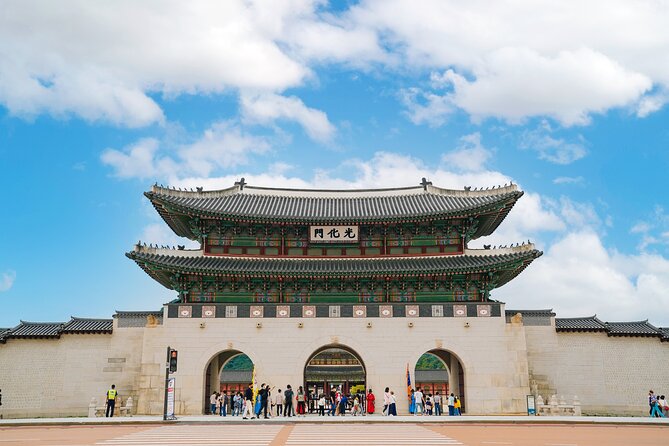
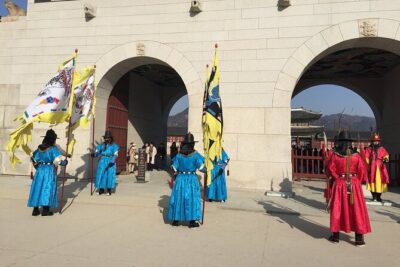
You begin at Gwanghwamun Gate, described as the south gate of Gyeongbokgung Palace. Even if you’ve seen it in photos, it’s worth slowing down here. Palace gates aren’t just entrances. They signal status and set the tone for the power structure inside.
The guide’s job is to help you read what you’re looking at. At the gate, that usually means explaining the overall palace logic—how the space is organized and why visitors move through certain areas in a certain order. It’s the difference between walking in circles and actually understanding where you are.
One subtle benefit: once you understand the gate’s role, later halls don’t feel like separate buildings. They feel connected, like a system.
Geunjungjeon (main throne hall): where the Joseon story clicks
Next comes Geunjungjeon, the main throne hall. This is one of the highest-impact stops in the itinerary because it anchors the whole Joseon narrative. When you stand in front of a throne hall, you can almost see how government and ceremony were meant to work—if you know what to look for.
This tour is designed to make that understanding happen fast. Instead of vague commentary, the guide explains in detail and in English what this hall represented and how it functioned. You’re not just being told that something is important; you’re shown why it mattered.
If you like architecture as much as history, this is where the buildings start to “make sense.” You’ll also get context about the palace’s long timeline, including the restoration efforts that help bring key areas back into view today.
Sajeongjeon: the king’s office space and the everyday side of power
Then you move to Sajeongjeon, the king’s office space. This stop is valuable because it balances the ceremonial vibe of a throne hall. It shifts the emphasis from public ritual to governance.
Here’s what I find useful for your brain: many visitors only understand palaces as spectacle. Sajeongjeon helps you understand palaces as workplaces, too. The guide’s explanations connect the dots between who used these rooms and what kind of decisions were made inside.
Even if the buildings look similar from the outside, this stop helps you notice the differences in function. That alone makes the tour feel like more than “a walk around pretty buildings.”
Gangnyeongjeon: the king’s bed-chamber and the human angle
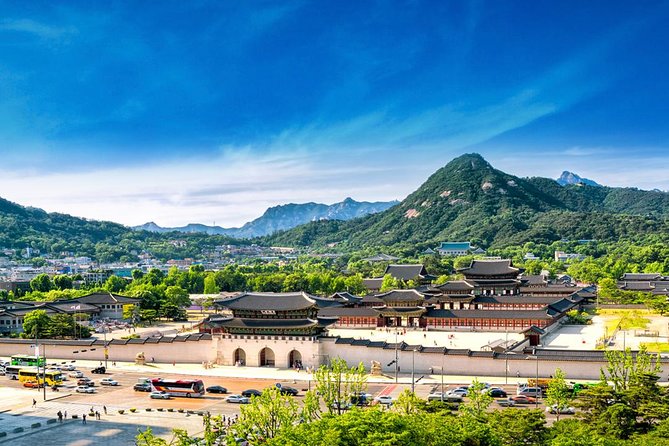
Gangnyeongjeon is the king’s bed-chamber. It’s a natural curiosity magnet: you’re stepping into a space that feels private compared to the public-facing rooms.
This is where the tour can surprise you, because palaces often look like they’re all about grand authority. The bed-chamber reminds you that the Joseon court wasn’t only ceremonies and speeches. It was real people living inside strict rules.
The guide’s detailed English explanations help keep this from turning into guesswork. Instead of you wondering what you’re looking at, you’re given a clearer sense of how royal daily life was structured.
Gyotaejeon: the queen’s bed-chamber and the other half of court life
Gyotaejeon is the queen’s bed-chamber. Paired with the king’s spaces, this stop rounds out your understanding of the court layout.
If you’re the kind of traveler who likes equal attention to both sides of a story, you’ll likely appreciate that this itinerary doesn’t ignore the queen’s areas. The tour frames these rooms as part of the palace’s full system, not as an optional side note.
You also get another chance to learn how the palace’s layout supports separation and hierarchy. That’s a theme that can run through all five spaces on the itinerary if the guide handles it well.
Gyeonghoiru pavilion: an event hall moment with details to watch for
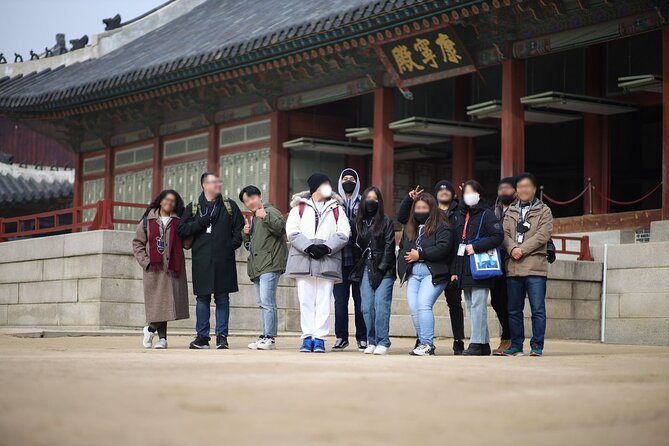
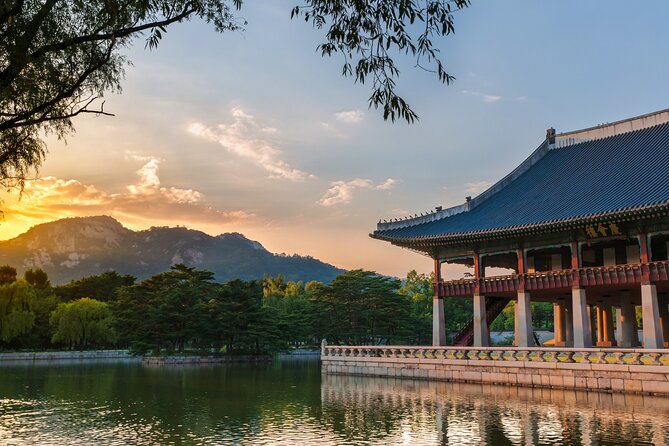
Finally, you’ll reach Gyeonghoiru pavilion, the event hall. This is a good wrap-up stop because pavilion spaces often feel designed for gathering, with visual lines that pull you toward social moments.
In this tour, it’s also where the guide’s attention to smaller details can really land. The overall tour highlights animal statues placed throughout the palace, and you can expect those kinds of decorative calls to pop here as you’re moving through the grounds.
Even if you don’t know much about Korean symbolism, being pointed to repeated details makes them easier to notice on your own. It turns the palace from a “wow big buildings” experience into a “wow, there are patterns everywhere” experience.
What the guide actually adds (and why you’ll ask questions)
The tour is built around a professional guide who explains everything in detail in English, and you can ask questions. That question time matters more than people expect.
Here’s how it usually plays out in palace tours: you see a hall, you recognize it’s important, but you can’t tell what you’re missing. With a guide, you can ask one good question—like what role a space played or what a design detail signals—and suddenly the whole place becomes clearer.
One example from feedback: a guide named Gabriela was praised for being kind and for offering lots of insight that you wouldn’t get if you tour the palace alone. Gabriela was also noted for helping when someone walked to the wrong meeting spot and needing to find them. That’s not just “nice”—it reflects that the tour’s value isn’t only the words, but also the care around keeping you on track.
With a small maximum group size (20 travelers), the experience doesn’t feel like you’re stuck behind a wall of strangers. You’re more likely to hear explanations clearly and ask at least a couple of questions without rushing.
Price and value: is $35 a good deal for Gyeongbokgung?
At $35 per person, this is positioned as a half-day option that includes admission. For many visitors, the question isn’t just cost—it’s whether the ticket buys enough explanation to justify a guided route.
Here’s why it can be good value:
- You get a structured highlight route through major halls, not a random self-guided drift.
- You’re getting English explanations tied to specific rooms (gate, throne hall, king’s and queen’s spaces, and the event pavilion).
- You have a professional guide available for questions, which is where “value” really shows up in history-heavy places.
Could you do it cheaper alone? Sure, if you’re comfortable reading signage, using apps, and building context on the fly. But this tour is for people who want the context delivered quickly, while standing in front of the real buildings.
In practical terms: if you only have a limited amount of time in Seoul, spending $35 to compress the learning curve can be a bargain.
When to go: Tuesday closure and smart plan B
One timing detail you’ll want to know: Gyeongbok Palace is closed on Tuesdays. The tour notes that on Tuesdays, you can book a Deoksugung night tour instead.
That matters because it prevents a common frustration. If you’re building a Seoul palace day plan, it’s easy to accidentally schedule Gyeongbokgung on the wrong day. Use Tuesday for something else, and keep your half-day window for open days.
Practical expectations: mobile tickets, no filming, and what to bring
A few rules are part of how the tour runs:
- Recording or filming the tour is not allowed.
- Pets are not allowed.
- Confirmation is received at booking.
- The tour is near public transportation.
For what to bring, the data doesn’t go deep, but you can safely plan like you would for outdoor palace walking: comfortable shoes and a weather-ready layer. You’re outside more than you expect, and the pace is designed for a 2-hour walkthrough.
Also, keep an eye on the tour’s group policy: if the group has fewer than 4 participants, the tour can be canceled. In that case, the cancellation notice is sent via WhatsApp.
Who this tour fits best
This Gyeongbokgung half-day tour is a strong match if:
- You want English explanations without doing heavy research before you arrive.
- You’re more interested in understanding the palace than spending hours wandering.
- You like clear, room-by-room storytelling (especially the throne hall and royal chambers).
- You want a guided option that works even if your Seoul schedule is tight.
It’s less of a match if:
- You plan to spend long stretches sitting and reading every sign without a guide.
- You’re trying to pack in multiple major attractions and you hate walking schedules.
- You’re someone who needs lots of flexibility to roam off-route (this tour is structured for its 2-hour window).
Should you book this Gyeongbokgung Palace half-day tour?
I’d book it if you want your palace visit to feel understandable. The itinerary targets the rooms that most people struggle to interpret alone: the gate, the main throne hall, the king’s and queen’s bedchambers, and the event pavilion. With detailed English explanations and the ability to ask questions, you’ll likely leave with a clearer sense of how the Joseon court worked.
I’d skip or rethink it if you’re a slow wanderer who wants to linger for long periods in one spot. At 2 hours, you’re guided through the highlights, not given endless time to stretch the day.
If your schedule works (not Tuesday), and you like the idea of a focused, explanation-driven walk, this is a good-value way to see why Gyeongbokgung is such a must-see stop in Seoul.
FAQ
Is this tour in English?
Yes. The palace tour offers explanations in detail in English.
How long is the Gyeongbokgung Palace half-day tour?
The duration is about 2 hours.
Is the palace admission included in the price?
Yes. The itinerary notes that an admission ticket is included.
Where does the tour meet?
The start location is the National Palace Museum of Korea, 12 Hyoja-ro, Jongno District, Seoul.
Where does the tour end?
The tour ends at 7-25 Tongui-dong, Jongno District, Seoul.
Is Gyeongbok Palace open on Tuesdays?
No. The tour notes that Gyeongbok Palace is closed on Tuesdays, and you can book a Deoksugung night tour instead.
Is there a limit on group size?
Yes. The tour has a maximum of 20 travelers.
Can I record or film during the tour?
No. Recording or filming the tour is not allowed.
What’s the cancellation window?
Free cancellation is available up to 24 hours in advance for a full refund. If you cancel less than 24 hours before the start time, the amount paid is not refunded.
More Tours in Seoul
- Best DMZ Tour Korea from Seoul (Red Suspension Bridge Optional)★ 5.0 · 41,422 reviews
- DMZ Tour: 3rd Tunnel, Option(Suspension Bridge, Boat) from Seoul★ 5.0 · 21,373 reviews
- DMZ tour south Korea from Seoul (NK experience hall, defector)★ 5.0 · 20,599 reviews
- Seoul: DMZ Tour with Optional Suspension Bridge★ 4.8 · 5,277 reviews
- Seoul: DMZ The 3rd Tunnel and Suspension Bridge Tour★ 5.0 · 4,656 reviews
More Tour Reviews in Seoul
- Best DMZ Tour Korea from Seoul (Red Suspension Bridge Optional)★ 5.0 · 41,422 reviews
- DMZ Tour: 3rd Tunnel, Option(Suspension Bridge, Boat) from Seoul★ 5.0 · 21,373 reviews
- DMZ tour south Korea from Seoul (NK experience hall, defector)★ 5.0 · 20,599 reviews
- Seoul: DMZ Tour with Optional Suspension Bridge★ 4.8 · 5,277 reviews
- Seoul: DMZ The 3rd Tunnel and Suspension Bridge Tour★ 5.0 · 4,656 reviews
Still More Palaces to Walk
- Seoul: Gyeongbok Palace, Bukchon Village, and Gwangjang Tour★ 4.9 · 2,321 reviews
- Best Seoul City Tour (Gyeongbokgung Palace,Insadong,Namsan Tower)★ 5.0 · 1,647 reviews
- Small-Group Royal Palace and Seoul City Tour (hotel pick-up)★ 5.0 · 1,474 reviews
- Seoul City Sightseeing Tour Including Gyeongbokgung Palace, N Seoul Tower, and Namsangol Hanok Village★ 5.0 · 1,423 reviews
- Seoul: Gyeongbok Palace, Bukchon Village, and Gwangjang Tour★ 5.0 · 1,044 reviews
Just added to Exploring Seoul
Gyeongbokgung & Palace Tours, compared.
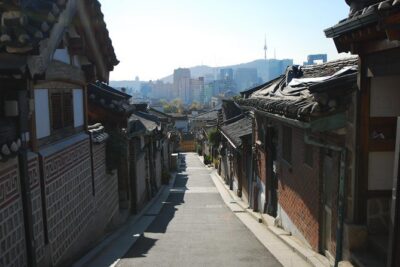 ★ 4.9Gyeongbok Palace, Bukchon Village, and Gwangjang TourFrom $322,321 reviews
 ★ 5.0Best Seoul City Tour (Gyeongbokgung Palace,Insadong,Namsan Tower)From $581,647 reviews
 ★ 5.0Small-Group Royal Palace and Seoul City Tour (hotel pick-up)From $561,474 reviews
 ★ 5.0Seoul City Sightseeing Tour Including Gyeongbokgung Palace, N Seoul Tower, and Namsangol Hanok VillageFrom $801,423 reviews
★ 5.0Gyeongbok Palace, Bukchon Village, and Gwangjang TourFrom $321,044 reviews
★ 5.0Seoul City Sightseeing Tour Including Gyeongbokgung Palace, N Seoul Tower, and Namsangol Hanok VillageFrom $801,423 reviews
★ 5.0Gyeongbok Palace, Bukchon Village, and Gwangjang TourFrom $321,044 reviews
 ★ 4.9Seoul Half-Day City Highlight, Palace Tour with HanbokFrom $49764 reviews
 ★ 4.9Palace, Temple and Market Guided Foodie Tour at NightFrom $60750 reviews
 ★ 4.7Seoul Highlights: Gyeongbok Palace, Insadong & N Seoul TowerFrom $26726 reviews
Browse the lists this tour appears in