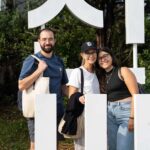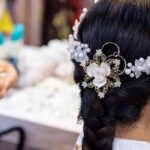
Cookies with Korean history, in one alley. This small Seoul class pairs traditional Korean desserts with trendier cookie baking, and you’ll learn the meaning behind what you’re making. I also like the one-to-one attention style of teaching, which matters when you’re trying something new. One consideration: it’s not recommended if you have nut or gluten-and-nut allergies.
You’ll meet at maremohe in Yeonnam-dong, tucked on Donggyo-ro 51-gil, which is a handy area for planning the rest of your day. It’s roughly a 20-minute bus ride from Gyeongbokgung Palace and about a 15-minute walk from Hongdae Station, so you can realistically pair this with major sightseeing without turning your schedule into a spreadsheet.
At $69 per person for about 1 hour 20 minutes, this is priced like a hands-on workshop, not a quick photo stop. The shop is in a quieter alley feel within the Yeonnam-dong café streets, and the class caps at 8 people—so you get room to work, not just watch.
In This Review
- Key highlights to know before you book
- A 1-hour-20-minute Seoul cookie workshop in Yeonnam-dong
- What you’ll bake: traditional Korean desserts in cookie form
- Hands-on setup: ingredients, equipment, and one-to-one help
- The take-home souvenir package that actually feels special
- Price and value: is $69 worth a cookie class in Seoul?
- Where to fit it in your Seoul day plan
- Who should book (and who should skip it)
- Should you book Korean Traditional and Trendy Cookie in Seoul?
- FAQ
- How long is the Korean cookie baking class in Seoul?
- Where is the meeting point?
- Does the activity end back at the meeting point?
- What is the price per person?
- What is the group size limit?
- Is the class private or small group?
- Are equipment and ingredients included?
- Is it suitable for people with nut or gluten-and-nut allergies?
- Is it near public transportation?
- What is the cancellation policy?
Key highlights to know before you book
- Small group limit of 8 for more help while you bake
- Everything provided (equipment and ingredients), so you show up ready
- Traditional + trendy combo: dessert history meets modern cookie form
- Take-home packaging in a traditional style you can actually gift
- Yeonnam-dong location near Hongdae and workable from Gyeongbokgung
Still deciding? These are the Seoul tours travellers book first.
- Best DMZ Tour Korea from Seoul (Red Suspension Bridge Optional)★ 5.0 · 41,422 reviews
- DMZ Tour: 3rd Tunnel, Option(Suspension Bridge, Boat) from Seoul★ 5.0 · 21,373 reviews
- DMZ tour south Korea from Seoul (NK experience hall, defector)★ 5.0 · 20,599 reviews
- Seoul: DMZ Tour with Optional Suspension Bridge★ 4.8 · 5,277 reviews
A 1-hour-20-minute Seoul cookie workshop in Yeonnam-dong
This experience is built for people who want something real to do in Seoul, not just something to look at. The class runs about 1 hour 20 minutes, which is long enough to learn the process and get your hands dirty, but short enough to still enjoy the rest of your day in Hongdae or nearby neighborhoods.
Maremohe is on Donggyo-ro 51-gil in Mapo-gu, with the meeting point at the shop’s third floor (73 3층). If you’re the type who likes a smooth start, this matters: it’s easy to get to using public transit, and the walk from Hongdae Station is about 15 minutes. It also sits in Yeonnam-dong café streets, which is a good mix for post-class wandering.
Because this is a small group setting (maximum 8 travelers), the pace tends to be practical. You’re not stuck waiting behind a crowd while your “turn” comes much later. Instead, you can ask questions while the recipe is still in progress, and that’s the difference between feeling confused and feeling confident.
One planning tip: since the class is booked on average about 23 days ahead, treat it like a popular activity. If your trip dates are fixed, don’t leave this to the last week and hope for availability.
What you’ll bake: traditional Korean desserts in cookie form
The whole appeal here is the mash-up of old and new. You’re making Korean desserts, but the end result is a cookie you can bake and take home—so you get both the tradition and the novelty.
Expect the host to explain Korean tradition and share historical tips connected to the desserts you’re working with. That kind of framing turns a recipe into something you can talk about later. It’s also how you avoid the “I followed steps, but I didn’t understand what I was doing” problem.
If you’re choosing this because you like food education, pay attention during the explanation segment. Even short context—like why an ingredient matters or what a dessert is known for—helps you understand the texture, smell, and final look you should be aiming for. And when you know what success looks like, you’re more likely to get a cookie you actually want to eat.
The trendy part isn’t just branding. It’s the reason people book classes like this: you’ll leave with a souvenir that feels modern enough for photos and gifts, but grounded in Korean dessert culture.
Hands-on setup: ingredients, equipment, and one-to-one help
This class includes equipment and ingredients, which is one of the best value points. You’re not paying for a ticket that assumes you’ll bring your own materials. Instead, you can focus on learning the steps and enjoying the process.
The host is also described as providing plenty of one-to-one attention, which is exactly what you want in a kitchen class. Baking is the sort of thing where a tiny correction—how something is mixed, how dough is handled, what stage something should be at—can change the outcome. With a small group, you’re more likely to get that kind of correction quickly.
If you’re traveling with friends, you’ll likely enjoy the shared teamwork. But even if you’re alone, this setup tends to work well because you’re not competing for attention. The room is built for making, not just observing.
One practical reality: you’ll be baking and handling dough in a compact class format. If you’re picky about timing, plan to arrive a few minutes early so your start doesn’t feel rushed. In a 1 hour 20 minute session, that first setup time matters.

The take-home souvenir package that actually feels special
A big promise of this experience is what you bring home. You’re not just leaving with a snack you might finish on the walk back. You’ll pack your cookies in a traditional package designed as a special souvenir.
That matters for two reasons. First, it’s easier to gift. Second, it helps preserve the “experience” feeling after the class ends. Food gifts can be plain—sweets in a bag, paper plates, or whatever you happen to carry. Here, the packaging is part of the concept, which makes the cookie feel like something you collected, not something you grabbed.
If you like sending food to family or bringing home edible souvenirs that don’t crumble instantly, this kind of packaged takeaway is a real advantage.
And since you’re making a cookie version of Korean dessert, it’s a souvenir that’s both familiar and curious. You can tell someone, I made this in a class focused on Korean dessert traditions, and then you have a sweet you can show them right away.
Price and value: is $69 worth a cookie class in Seoul?
At $69 per person, this isn’t the cheapest activity in Seoul. But it also isn’t trying to be. You’re paying for a short, structured workshop where you get guided baking, included ingredients and equipment, a small group size, and a take-home package.
Here’s the value math in plain terms:
- Time: 1 hour 20 minutes is enough for real participation.
- Inclusions: equipment and ingredients are provided.
- Teaching style: the description emphasizes one-to-one attention.
- Group size: maximum 8 travelers usually leads to better help.
- Takeaway: a traditional package souvenir adds to what you get.
Also, there are group discounts, which can make a difference if you’re traveling with a small party. Even if you’re solo, check whether your booking option reflects any group pricing, since it can move this from “nice but pricey” to “good deal for what’s included.”
If you’re the kind of traveler who loves hands-on experiences—cooking, workshops, craft classes—this price feels more reasonable. If you only want the cheapest, quickest activity, then $69 will feel steep. The class is for people who want to do something with guidance.
Where to fit it in your Seoul day plan
This is the kind of class that works well as a mid-day or late-afternoon activity. The location supports that.
- From Hongdae Station, you’re looking at about a 15-minute walk. That’s a comfortable option if you’ve been shopping or eating around Hongdae.
- From Gyeongbokgung Palace, it’s about a 20-minute bus ride. That means you can do a major sight, then get to Yeonnam-dong for a calmer, hands-on break.
Yeonnam-dong is also a good place to recover after cooking. Since the shop sits in a quiet alley in the café street area, you’re not jumping from one loud tourist zone to another. You can keep your momentum without feeling like you’re on constant transit.
If you’re trying to pack in multiple tours, keep buffer time. A kitchen class can run a bit tighter than a museum visit, because everyone is working through steps. You’ll enjoy your day more if you’re not sprinting across the city right after class.
One more scheduling note: the class booking pattern suggests it’s popular enough that you should reserve early. If your trip is short, don’t build your whole schedule around only this one option.
Who should book (and who should skip it)
This experience is a strong match if you:
- want a hands-on food souvenir rather than another pass to an attraction
- enjoy learning the “why” behind Korean desserts, not just the recipe
- like small groups and clearer attention while you work
- want a place that’s easy to pair with Hongdae or Gyeongbokgung
It may be a poor match if you have nut or gluten and nut allergies. The activity is specifically not recommended for those allergy situations, so don’t assume you can substitute ingredients on the fly. If allergies are a concern, look for a class that explicitly supports your needs.
Also, if your travel plan is extremely inflexible, keep an eye on availability. One short-stay traveler reported a booking cancellation and couldn’t adjust their schedule. That’s not something you can control, but it’s a reminder to avoid stacking your days so tightly that one change ruins everything.
Should you book Korean Traditional and Trendy Cookie in Seoul?
I’d book it if you want a practical, small-group Seoul experience with included ingredients and real guided baking, plus a take-home souvenir package that feels thoughtfully made. The short duration makes it easy to fit into a day, and the Yeonnam-dong location gives you options for food and walking before or after.
I wouldn’t book it if you need gluten and nut allergy accommodations, or if your schedule is so tight you can’t handle a change. Cooking classes are fun, but kitchens depend on staffing and availability.
If you’re in the mood for learning through doing, this is one of those “worth the money” activities. You’ll come away with a cookie you made, a story you can explain, and a souvenir you can share—without spending your entire trip hunched over a museum audio guide.
FAQ
How long is the Korean cookie baking class in Seoul?
The class runs for about 1 hour 20 minutes.
Where is the meeting point?
You start at maremohe, Mapo-gu, Donggyo-ro 51-gil, 73 3층 in Seoul, South Korea.
Does the activity end back at the meeting point?
Yes, the activity ends back at the meeting point.
What is the price per person?
The price is $69.00 per person.
What is the group size limit?
The class has a maximum of 8 travelers.
Is the class private or small group?
It’s described as a private and small group class.
Are equipment and ingredients included?
Yes, all equipment and ingredients are provided.
Is it suitable for people with nut or gluten-and-nut allergies?
It is not recommended for those with nut or gluten and nut allergies.
Is it near public transportation?
Yes, it’s near public transportation.
What is the cancellation policy?
You can cancel for a full refund up to 24 hours in advance. Confirmation is received at booking time.
More Tour Reviews in Seoul
- Best DMZ Tour Korea from Seoul (Red Suspension Bridge Optional)★ 5.0 · 41,422 reviews
- DMZ Tour: 3rd Tunnel, Option(Suspension Bridge, Boat) from Seoul★ 5.0 · 21,373 reviews
- DMZ tour south Korea from Seoul (NK experience hall, defector)★ 5.0 · 20,599 reviews
- Seoul: DMZ Tour with Optional Suspension Bridge★ 4.8 · 5,277 reviews
- Seoul: DMZ The 3rd Tunnel and Suspension Bridge Tour★ 5.0 · 4,656 reviews