
Reviewed · GYEONGBOKGUNG & PALACE TOURS
Korean Heritage Tour: Palaces and Villages of Seoul Including Gyeongbokgung Palace
Seoul in one day sounds tough, until it is structured like this. You start with a palace-focused morning, then add temple calm, museum context, and a hands-on folk-culture stop at the Korean Folk Village. I love the way this tour connects big historical sites with everyday Korean life, instead of treating everything like separate photo ops.
What I really liked: first, Gyeongbokgung Palace on foot with enough guide-led detail to make the Joseon Dynasty feel real. Second, the Korean Folk Village experience, where you see traditional craft work rather than just staring at displays. One possible drawback: the day can feel time-tight around scheduled shopping-style stops like ginseng, depending on your group and guide pacing.
In This Review
- Key Highlights to Know Before You Go
- Gyeongbokgung Palace: The Day Starts With the Joseon Big Guns
- The National Folk Museum: Replicas That Make Everyday Life Understandable
- Jogyesa Temple: A 500-Year Main Hall Moment
- Lunch Plus a Ginseng Stop: Great Food, But Watch the Time
- Korean Folk Village: Real Crafts, Real Expectations Check
- Coach Days Are All About Pacing: Blue House and a Smooth Flow
- Price and Value: When $140 Works (and When It Might Not)
- Should You Book This Seoul Heritage Tour?
- FAQ
- What time does the tour start?
- Does the tour include hotel pickup and drop-off?
- How long is the tour?
- What sites are included?
- Is lunch included?
- Is there admission/ticket cost included for attractions?
- What if Gyeongbokgung Palace is closed?
- How much walking is involved?
- Is a mobile ticket provided?
- What is the group size?
Key Highlights to Know Before You Go
- Gyeongbokgung Palace walking route with ticket included and strong focus on palace architecture
- National Folk Museum stop using replicas to explain daily life from ancient to 20th century
- Jogyesa Temple quick but meaningful visit to a major Buddhist site (main hall dates back about 500 years)
- Korean Folk Village as a living showcase, including craft demonstrations and traditional making skills
- Small group size (up to 10) and professional guides can make the day move smoothly
- Guides matter: several guides named Sunny, Winnie, David, Dora, and Michelle were called out for clear English and helpful explanations
Keep walking the palaces of old Seoul
- Seoul: Gyeongbok Palace, Bukchon Village, and Gwangjang Tour★ 4.9 · 2,321 reviews
- Best Seoul City Tour (Gyeongbokgung Palace,Insadong,Namsan Tower)★ 5.0 · 1,647 reviews
- Small-Group Royal Palace and Seoul City Tour (hotel pick-up)★ 5.0 · 1,474 reviews
- Seoul City Sightseeing Tour Including Gyeongbokgung Palace, N Seoul Tower, and Namsangol Hanok Village★ 5.0 · 1,423 reviews
Gyeongbokgung Palace: The Day Starts With the Joseon Big Guns
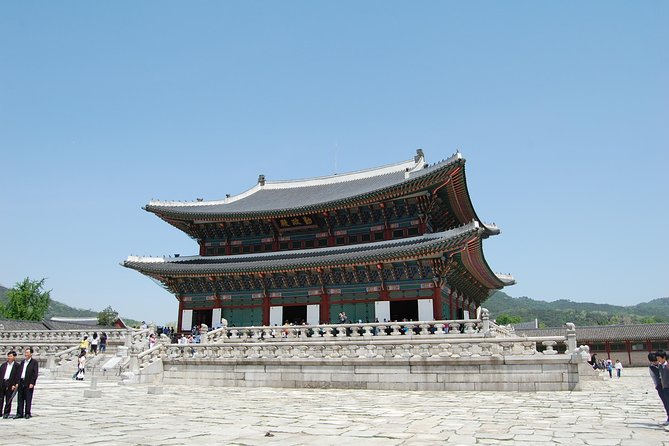
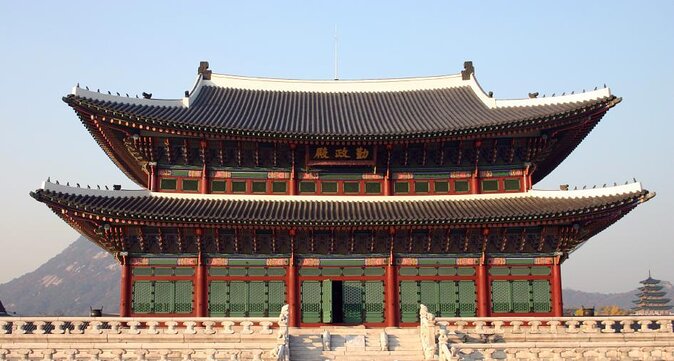
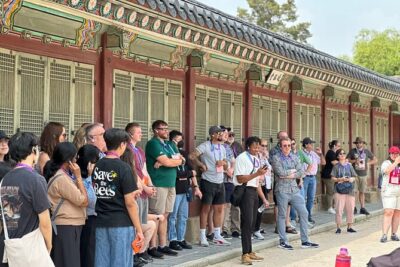
The heart of this tour is Gyeongbokgung Palace, the first royal palace built by the Joseon Dynasty and the largest of Seoul’s five grand palaces. If you like architecture and layout (not just gates for gate selfies), the guided walk helps you understand why the grounds are built the way they are. You’ll have about an hour here, with admission included, so it is not a rushed drive-by.
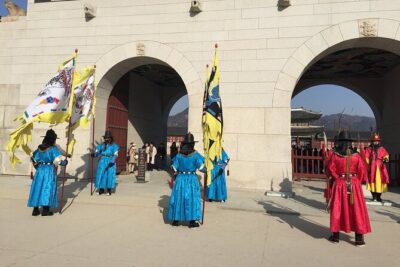
Gyeongbokgung was heavily damaged during the Japanese occupation, and restoration efforts have worked to bring it closer to its earlier appearance. That context changes how you look at the walls, pavilions, and courtyards. Also, the tour is timed so you can catch something like the palace changing of the guard if the schedule and your timing line up. Even if the ceremony you want is not on the exact moment you arrive, the palace is still impressive in a big, very walkable way.
Tip for your comfort: bring comfortable shoes. The palace compounds reward walking, and this is a moderate-walk day overall. If you hate crowds, go slow on the most popular photo angles and let the group surge pass.
One important timing note: Gyeongbokgung Palace is closed on Tuesdays. If you book for a Tuesday, the tour swaps in Deoksugung Palace, and you also tour the Seoul Museum of History there. Same general theme—royal Seoul—different setting.
The National Folk Museum: Replicas That Make Everyday Life Understandable
Next up is the National Folk Museum, and it is a clever palate cleanser after palace grandeur. The museum focuses on how Korean people lived from ancient times through the 20th century, using artifacts and model replicas to make changes over time feel concrete.
The biggest value here is that replicas can be easier to “read” than a single object behind glass. When you can picture how daily life was arranged—tools, models, and historical representations—it gives you something to carry into the rest of the day. The museum stop is short (about 20 minutes) and admission is free, so it is not meant to replace a full museum visit. But as a context-builder, it works.
What you might miss if you are a museum superfan: this is not a long, slow, deep museum session. You get the highlights, guided, then you move on. I’d treat this stop like the day’s history decoder ring.
Jogyesa Temple: A 500-Year Main Hall Moment
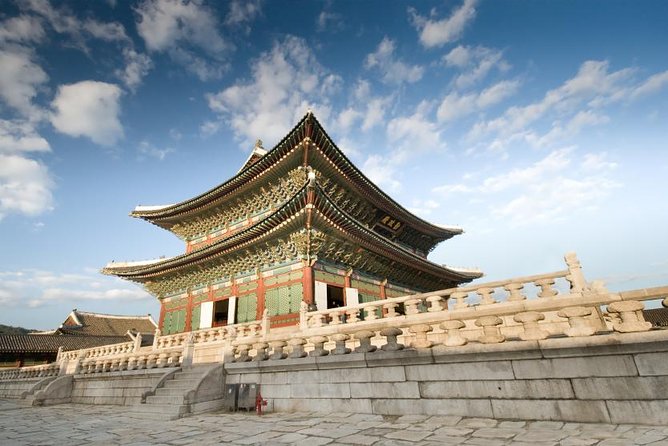
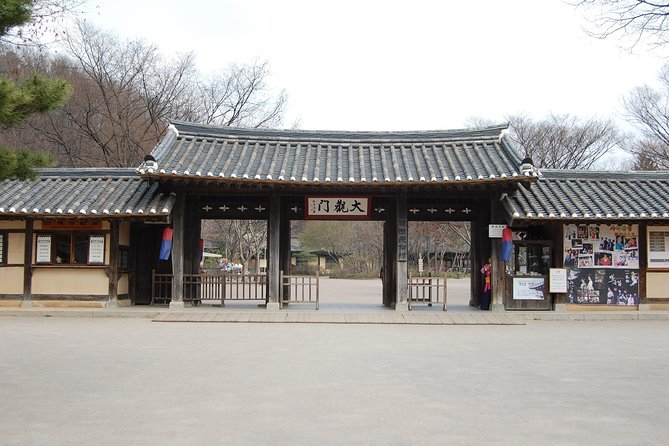
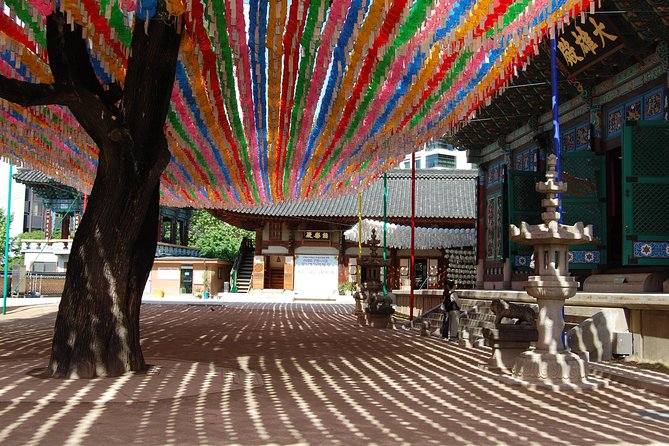
Jogyesa Buddhist Temple is one of Seoul’s central spiritual sites, and it gives you a different tempo from palaces and museums. The tour takes you inside the main hall, Daeungjeon, which is described as having a main hall dating back about 500 years. Even if you are not a Buddhism expert, the physical space—timber, incense atmosphere (where it applies), and the way people move through the hall—tells you you are in a living tradition.
You also get a quick look at the trees lining the entrance. It is a small detail, but it helps break up the “only stone and history” feeling from earlier stops. This portion is brief (about 2 minutes described for the stop), so don’t expect long quiet time. Think of it as a focused stop that sets mood.
If you’re the type who likes to photograph religious interiors: keep your camera low when the group is moving and follow staff cues. You’ll get better shots by being considerate and not blocking anyone.
A handful of other Seoul experiences to line up next
Lunch Plus a Ginseng Stop: Great Food, But Watch the Time
Around midday, you’ll stop at a Korean lunch restaurant. Lunch is included, and it is one of the places where the tour seems to deliver consistently—food is often described as a highlight and a good cultural moment rather than an afterthought.
Right before lunch, the schedule includes a stop at a ginseng center. Korea is famous for its ginseng industry, and the tour frames this as educational, with time to learn and the option to purchase ginseng. Here is the balanced truth: this can be either interesting or annoying, depending on what you came for. The palace and folk village are heritage-focused; a sales-oriented shop stop can feel off-theme to some people.
How to handle that: decide in advance whether you want to buy anything. If you do, treat it as a guided chance to understand products. If you do not, plan to use the time as a break—sit, hydrate, and listen only as much as you want. This stop is one of the most common pressure points in feedback, especially when people felt it ran long or overshadowed heritage time.
If you are sensitive to sales pitches, consider this your biggest risk factor on the schedule.
Korean Folk Village: Real Crafts, Real Expectations Check
In the afternoon, you head to the Korean Folk Village, described as a living showcase of traditional Korean life and folk culture. This is the tour’s hands-on portion, and it is where many people feel they got the most “this is Korea” feeling.
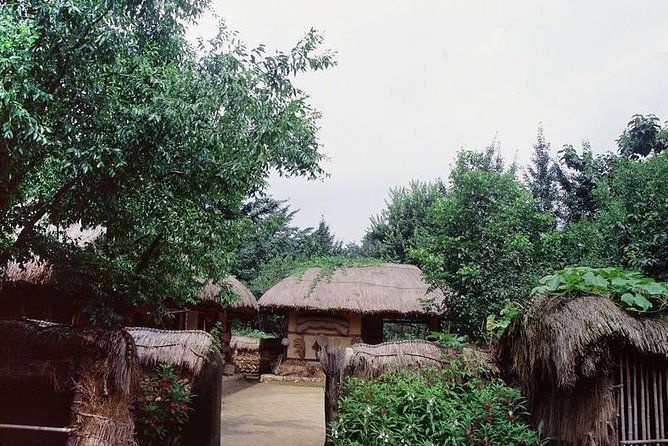
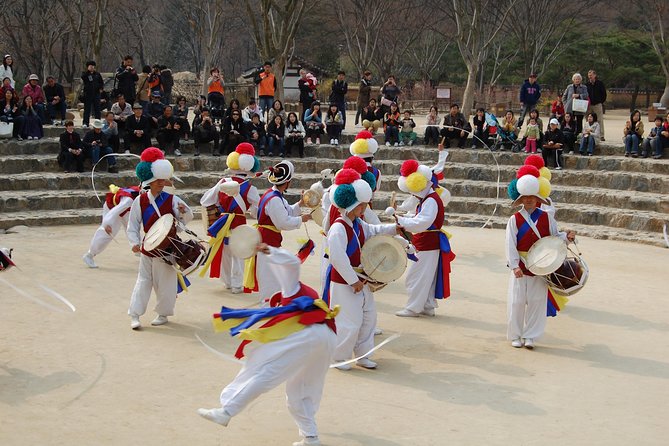
You’ll have about 1 hour 20 minutes here, and the experience includes watching craft demonstrations such as pottery making, basket weaving, and the hand-making of winnows. There are also mentions of musical instruments, embroidery, and traditional wares made from bamboo, wood, and brass. That mix matters. It is not just one craft show—it’s a range that helps you see how daily work shaped culture.
Here’s the consideration: the Korean Folk Village can feel different from what some people expect. If your mental image is small-village authenticity only, a well-organized heritage village can feel more like an attraction than a pure slice of life. The good news is that you still get demonstrations and a sense of how crafts functioned in earlier years.
My practical advice: go with a “watch and learn” mindset rather than a “hunt for the most untouched street” mindset. If you do, you’ll enjoy it more, because the value is in the craft process and guided explanations.
Coach Days Are All About Pacing: Blue House and a Smooth Flow
The tour includes round-trip hotel transport by air-conditioned coach, and it starts with pickup around 8:30 am. That matters in Seoul, where sites can be clustered but traffic and walking time can still mess up a tight day on your own. Being on a coach with a group also helps you keep momentum.
You’ll ride past the Blue House area while the guide narrates. You won’t get a visit, but you do get context about the executive office and official residence of the President of the Republic of Korea—what it is and why it is part of modern Seoul’s identity. Even just seeing it from the road gives a sense of how today’s political geography sits beside the older palace story.
Back-to-back stops like this can either feel efficient or rushed, depending on your guide and timing. Feedback on this tour suggests that when the guide is strong, explanations land well and transitions feel organized. When pacing slips, the “heritage touring time” can feel shorter than you hoped, especially if a scheduled stop runs long.
The good sign: the tour is set up as a small-group experience, with a maximum of 10 travelers. Small groups are better for moving as a unit and hearing directions.
Price and Value: When $140 Works (and When It Might Not)
At $140 per person for about 8 hours 30 minutes, the value comes from bundling transportation, guide time, and included entries—especially the palace and the folk village. You’re not paying separately for your biggest visits in the same day, and you get narrative context that you might not get if you just take transit and wander.
Where the price can feel less perfect is the balance of time. If you’re excited mainly for palaces, temples, and museums, you may find the scheduled ginseng stop takes more time or attention than you expected. If you also enjoy learning about traditional products and want a chance to buy locally made goods, that stop can feel worthwhile.
Group size helps here. With up to 10 people, you’re more likely to get personal attention than on a huge bus. Also, several guides named in feedback—Sunny, Winnie, David, Dora, and Michelle—were singled out for English clarity and making the day easier to follow. A great guide is part of what you are paying for on a tour like this.
Who it suits best:
- First-timers in Seoul who want a structured day without map stress
- People who like walking and want a guide-led “story” across multiple historical layers
- Travelers who enjoy craft demonstrations and traditional culture beyond museums
Who might want a different plan:
- Anyone who dislikes shopping-style stops or feels uncomfortable with sales pressure
- People who prefer long stays at fewer sites rather than multiple short ones
Should You Book This Seoul Heritage Tour?
If you want a guided overview that covers the palace core plus Korea’s everyday-life story, I think this is a solid booking. The combination of Gyeongbokgung Palace, a context-building museum stop, Jogyesa Temple, and the Korean Folk Village can give you a rounded picture of Seoul’s heritage in a single day.
But I’d book with eyes open if you care most about pure palace/temple time. The ginseng center stop is the main place where your day’s feeling can change—either an interesting learning break or a time sink. If that is your biggest concern, you can still enjoy the tour by mentally treating that stop as optional-shopping time, not the main event.
If you do your homework on what you want from the day—architecture, crafts, and guided context—you’re likely to leave happy, with a clearer sense of how modern Seoul grew out of older traditions.
FAQ
What time does the tour start?
The tour starts at 8:30 am.
Does the tour include hotel pickup and drop-off?
Yes. Round-trip hotel transport by air-conditioned coach is included.
How long is the tour?
The duration is about 8 hours 30 minutes.
What sites are included?
You visit Gyeongbokgung Palace (or Deoksugung Palace on Tuesdays), the National Folk Museum of Korea, Jogyesa Temple, a Korean lunch restaurant, a ginseng center, and the Korean Folk Village.
Is lunch included?
Yes. Lunch at a traditional Korean restaurant is included.
Is there admission/ticket cost included for attractions?
Gyeongbokgung Palace includes an admission ticket, and the Korean Folk Village includes admission. The National Folk Museum and Jogyesa Temple are listed as admission-free stops.
What if Gyeongbokgung Palace is closed?
Gyeongbokgung Palace is closed on Tuesdays. In that case, the tour visits Deoksugung Palace and also tours the Seoul Museum of History.
How much walking is involved?
A moderate amount of walking is involved, so comfortable walking shoes are recommended.
Is a mobile ticket provided?
Yes. The tour includes mobile ticket access.
What is the group size?
The tour requires a minimum of 4 people and has a maximum of 10 travelers.
More Tours in Seoul
- Best DMZ Tour Korea from Seoul (Red Suspension Bridge Optional)★ 5.0 · 41,422 reviews
- DMZ Tour: 3rd Tunnel, Option(Suspension Bridge, Boat) from Seoul★ 5.0 · 21,373 reviews
- DMZ tour south Korea from Seoul (NK experience hall, defector)★ 5.0 · 20,599 reviews
- Seoul: DMZ Tour with Optional Suspension Bridge★ 4.8 · 5,277 reviews
- Seoul: DMZ The 3rd Tunnel and Suspension Bridge Tour★ 5.0 · 4,656 reviews
More Tour Reviews in Seoul
- Best DMZ Tour Korea from Seoul (Red Suspension Bridge Optional)★ 5.0 · 41,422 reviews
- DMZ Tour: 3rd Tunnel, Option(Suspension Bridge, Boat) from Seoul★ 5.0 · 21,373 reviews
- DMZ tour south Korea from Seoul (NK experience hall, defector)★ 5.0 · 20,599 reviews
- Seoul: DMZ Tour with Optional Suspension Bridge★ 4.8 · 5,277 reviews
- Seoul: DMZ The 3rd Tunnel and Suspension Bridge Tour★ 5.0 · 4,656 reviews
Still More Palaces to Walk
- Seoul: Gyeongbok Palace, Bukchon Village, and Gwangjang Tour★ 4.9 · 2,321 reviews
- Best Seoul City Tour (Gyeongbokgung Palace,Insadong,Namsan Tower)★ 5.0 · 1,647 reviews
- Small-Group Royal Palace and Seoul City Tour (hotel pick-up)★ 5.0 · 1,474 reviews
- Seoul City Sightseeing Tour Including Gyeongbokgung Palace, N Seoul Tower, and Namsangol Hanok Village★ 5.0 · 1,423 reviews
- Seoul: Gyeongbok Palace, Bukchon Village, and Gwangjang Tour★ 5.0 · 1,044 reviews
Just added to Exploring Seoul
Gyeongbokgung & Palace Tours, compared.
 ★ 4.9Gyeongbok Palace, Bukchon Village, and Gwangjang TourFrom $322,321 reviews
 ★ 5.0Best Seoul City Tour (Gyeongbokgung Palace,Insadong,Namsan Tower)From $581,647 reviews
 ★ 5.0Small-Group Royal Palace and Seoul City Tour (hotel pick-up)From $561,474 reviews
 ★ 5.0Seoul City Sightseeing Tour Including Gyeongbokgung Palace, N Seoul Tower, and Namsangol Hanok VillageFrom $801,423 reviews
★ 5.0Gyeongbok Palace, Bukchon Village, and Gwangjang TourFrom $321,044 reviews
★ 5.0Seoul City Sightseeing Tour Including Gyeongbokgung Palace, N Seoul Tower, and Namsangol Hanok VillageFrom $801,423 reviews
★ 5.0Gyeongbok Palace, Bukchon Village, and Gwangjang TourFrom $321,044 reviews
 ★ 4.9Seoul Half-Day City Highlight, Palace Tour with HanbokFrom $49764 reviews
 ★ 4.9Palace, Temple and Market Guided Foodie Tour at NightFrom $60750 reviews
 ★ 4.7Seoul Highlights: Gyeongbok Palace, Insadong & N Seoul TowerFrom $26726 reviews
Browse the lists this tour appears in