
Reviewed · FOOD
Getting a good feel of local Seoul through food (itseoulgood)
Seoul tastes better when guided. This 3-hour Seoul food walk keeps things practical and snackable, moving from Insadong to Kwangjang Market with a guide who helps you choose and understand what you’re eating. I like the built-in food focus (all tastings are included) and the small-group feel, plus you get real tea with dumplings instead of the usual powdery stuff. The one downside is that markets can feel crowded and a bit overwhelming if you dislike close quarters.
I’m also into the layout: you start in a classic area, then you weave through quieter back alleys and finish in a traditional teahouse area near Anguk Station. It’s set up for a moderate walking day, about an extra hour on top of the stop time. If you want a low-stress sit-down meal tour, this probably isn’t your format—but if you want local Seoul through food, it’s an excellent way to get your bearings fast.
In This Review
- Key things to know before you go
- Food-first Seoul: the logic behind the route
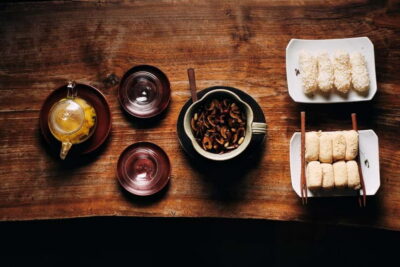
- Insadong dumplings and real tea at the start
- Kwangjang Market: eating your way through the intimidating part
- Back alleys and a modernized cultural area you might miss
- Insadong shopping lanes with context, not pressure
- The traditional teahouse finish near Anguk Station
- Price and value: why $94 can work in your favor
- Group size, timing, and what it feels like day-of
- Who this tour suits best (and who might rethink it)
- Should you book it?
- FAQ
- How long is the tour?
- What’s the price per person?
- Is food included in the tour fee?
- Do I need to pay admission fees at the stops?
- Where does the tour start and where does it end?
- What time does the tour begin?
- How much walking is involved?
- How big is the group?
- Can I cancel for a full refund?
- Are service animals allowed?
- Do I need extra cash?
Key things to know before you go
- All food tastings are included in the $94 price, so you can snack without budgeting every stop.
- Insadong + Kwangjang Market gives you both heritage snacks and iconic street-market specialties.
- Real tea with dumplings is a highlight, with a clear point about what not to expect.
- Small group size (max 6) keeps it personal in busy spaces.
- Back alleys plus Insadong’s historical lanes means you’re not stuck in only one kind of Seoul.
- Finish near Anguk Station so you can continue exploring right after.
A handful of other Seoul experiences to line up next
- Seoul Street Food Market Tour★ 5.0 · 1,226 reviews
- Seoul: Night Market Food Tour with Local Guide★ 4.9 · 943 reviews
- Downtown Seoul Guided Food & Market Tour with 8+ Local Tastings★ 5.0 · 580 reviews
- Seoul: Guided Food & Market Tour with 8+ Tastings★ 4.9 · 342 reviews
Food-first Seoul: the logic behind the route
This tour is built around a simple idea: in Seoul, food isn’t just dinner. It’s a way to read the city. By starting in Insadong and then going straight to Kwangjang Market, you get two different “modes” of local eating—one more traditional and strollable, the other a high-energy, choose-your-own-adventure market.
You also avoid the biggest beginner problem: staring at menus and stalls wondering what’s worth your time. The route is intentionally paced so you taste a lot without turning it into a full-day sprint. And with only a handful of people, you’ll spend more time eating and asking questions than waiting in line.
Insadong dumplings and real tea at the start
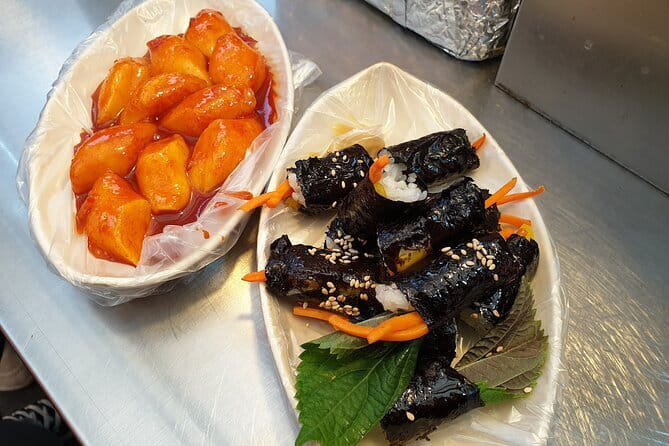
Insadong is a smart opening move because it’s easy to recognize, even if you’re new to the city. The tour kicks off with sampling local dumplings plus a cup of real tea. The tea part matters. A lot of places hand you tea that tastes like it came from a powder, so this is a chance to compare and understand the difference rather than just check a box.
You’ll spend about an hour at this first stop, which is long enough to settle in and get your stomach online. It’s also a good moment to ask questions early, because the guide’s explanations will make the later market choices feel less random.
Practical note: wear comfortable shoes. Insadong lanes are walkable, but you’ll still be on your feet and weaving through crowds.
Kwangjang Market: eating your way through the intimidating part
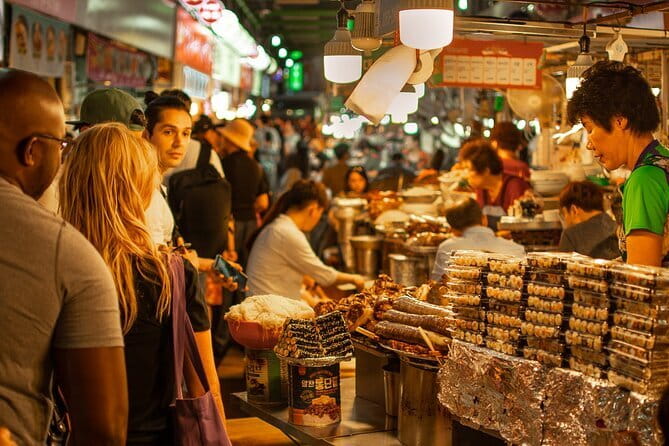
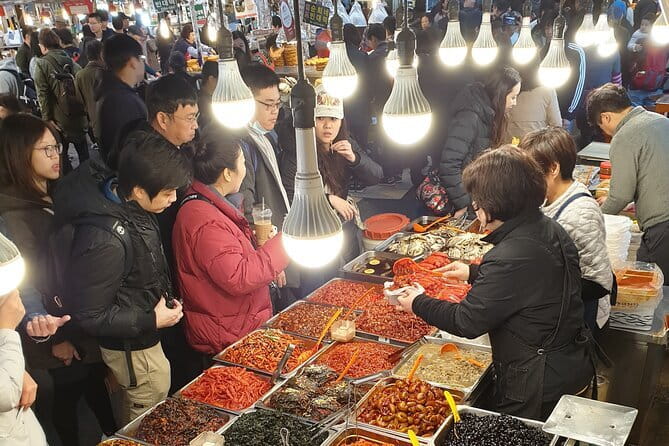
Kwangjang Market is the Seoul food experience people talk about. It’s also the place that can make first-timers freeze, because there are so many stalls and it’s hard to know what’s the best version of what you’re craving.
That’s where having a guide pays off. You get about an hour here, with tastings across a wide range of foods. The idea is not just to eat a lot—it’s to taste different Korean specialties so you start noticing patterns: flavors, textures, and what the city considers a top take on each dish.
This is also where storytelling tends to come alive. In reviews, I’ve seen the guide described as someone who connects dishes to real-life context, and even one example of a rice wine tasting showing up during the market portion. That kind of extra detail helps you remember what you tried, not just that you tried it.
A gentle warning: if you’re sensitive to crowds or loud, busy spaces, this is the hardest stop. Go in expecting energy, not calm.
A handful of other Seoul experiences to line up next
Back alleys and a modernized cultural area you might miss
After the big market energy, the tour shifts to smaller, quieter lanes and “in-between” neighborhoods—places where Seoul feels lived-in. This is where you get that old-and-new blend: historical surroundings on one side, more modernized culture on the other, all linked by street food and everyday people.
The benefit here is pacing. You’re not constantly hopping between major landmarks, and you’re not stuck in only one type of street scene. Instead, you’re walking through pockets of Seoul that show how culture actually moves through daily routines—shops, snacks, and small streets that don’t show up on quick photo routes.
You’ll also get time for questions, since the group stays small. That matters because in busy markets it’s easy to lose track of what you ate. Having the guide at hand turns each snack into a mini lesson you can actually use later.
Insadong shopping lanes with context, not pressure
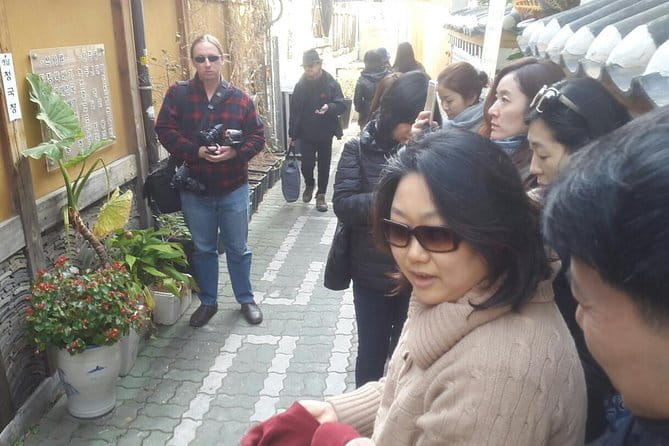
Even after the dumpling-and-tea start, Insadong’s lanes remain part of the experience. This isn’t only about eating. You also get time to stroll through the historical area, where there are lots of places to see and shop.
If you’ve ever entered a shopping district with no plan, you know how that can go: you spend an hour wandering and end up buying random souvenirs you didn’t really want. Here, the food focus helps you orient. You’re moving for a reason, and the neighborhood context makes the shopping feel more meaningful.
One thing to keep in mind: this is still a walking tour. If you want a lot of time for browsing, build in a little extra time after the tour ends to come back at your own pace.
The traditional teahouse finish near Anguk Station
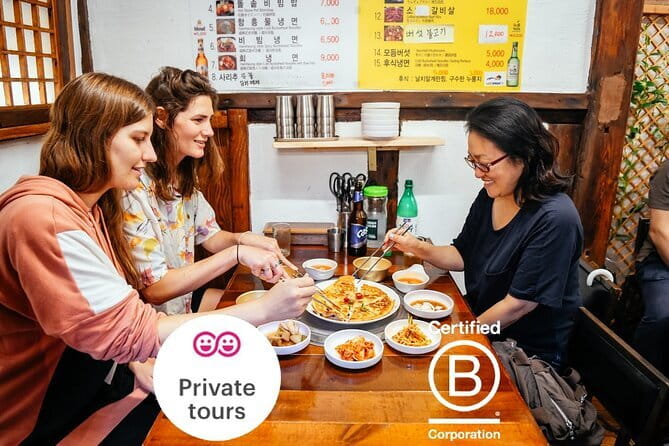
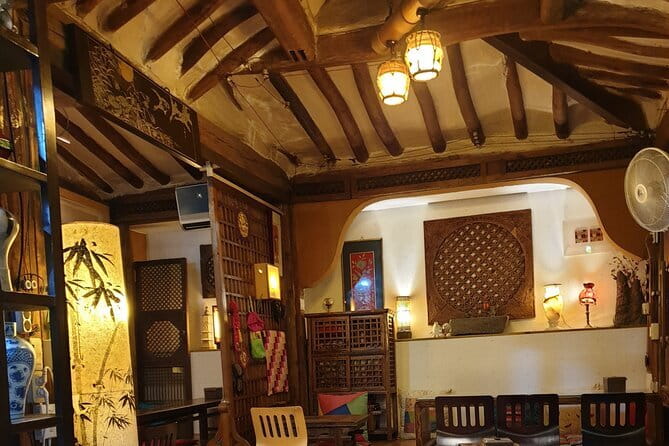
Ending at a traditional hidden teahouse in a traditional area is a clever close. It cools down the senses after the market and gives you a more reflective stop—something like a palate reset. You finish near Anguk Station, which is convenient because you can keep exploring without needing a complicated transfer.
This last segment also fits the theme of the day: food connects to culture, but tea connects to pace. You’re not just consuming; you’re slowing down and letting the flavors settle.
If you like your food tours with a calm landing, this finish is a real plus.
Price and value: why $94 can work in your favor
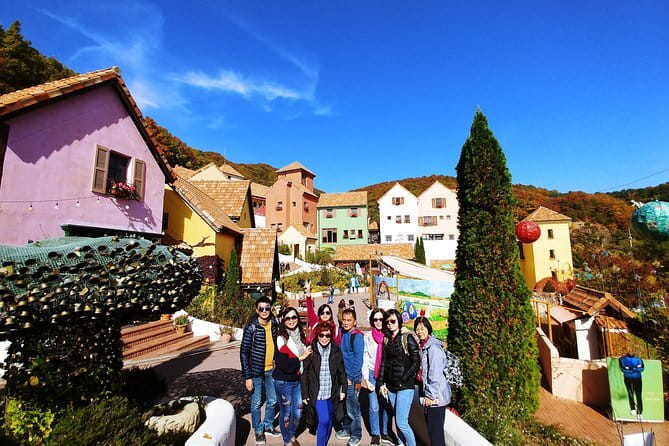
At $94 per person for about 3 hours, this tour sits in a price band that makes you ask one key question: what do I actually get for that money?
Here, you get:
- A guided route through two major Seoul food areas (Insadong and Kwangjang Market).
- Multiple unique tastings across stops.
- The guide’s help navigating what to try when everything looks delicious.
- A small group size that keeps the experience personal.
- A practical food structure so you don’t waste time guessing.
The most important value piece is that all food is included. That changes the math. If you were to do this on your own, you’d likely pay for multiple snacks and drinks across both areas. You’d also pay in time and stress—especially at Kwangjang, where figuring out the best stalls quickly is hard.
Also, the walking is moderate, with about an extra hour of walking time mentioned as part of the experience. For a food tour that’s sampling across neighborhoods, that’s a reasonable trade.
One more practical thought: the tour suggests bringing extra cash if you want to purchase additional items. So plan for optional spending, but you won’t be forced to pay as you go for the included tastings.
Group size, timing, and what it feels like day-of
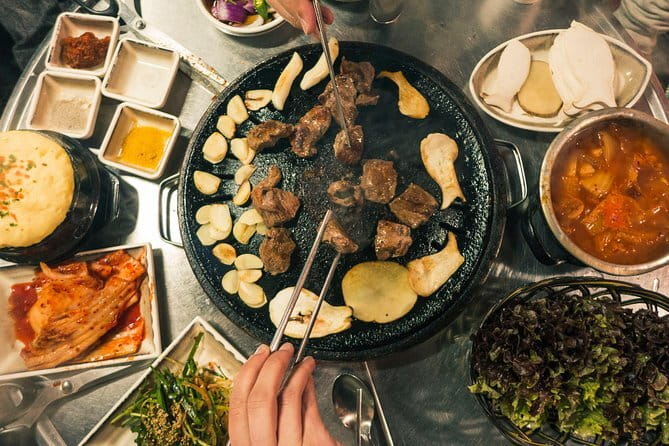
This activity maxes out at 6 travelers, and that’s a big deal in Seoul’s dense food areas. Smaller groups mean less waiting, more space to ask questions, and fewer “lost” moments when a market turns into a maze.
It runs for a little over 3 hours total, starting at 10:30 am. Meeting is at 407 Dongho-ro in Jongno District, and it ends near Anguk Station at Toto’s Nostalgia Museum (169-2 Gwanhun-dong). That end location is helpful because it’s a natural continuation point for more exploring.
The format also includes a mobile ticket. That’s small, but it keeps you from digging for paper confirmations when you’re already juggling directions and snacks.
Who this tour suits best (and who might rethink it)
This tour fits you well if:
- You want a food-focused way to learn Seoul culture fast.
- You like small-group guidance in busy places.
- You enjoy markets, but you’d rather not play a guessing game with every stall.
- You like a mix of classic neighborhoods and quieter lanes.
It may not fit you as well if:
- You dislike crowds and tight spaces (Kwangjang is the main pressure point).
- You want a long sit-down meal instead of multiple tastings.
- You’re hoping for a strict history lecture with museums; this is mainly lived-through food and walking.
If you have specific dietary needs, the tour description doesn’t spell out details. I’d message the operator before booking so you can confirm what’s possible and avoid surprises.
Should you book it?
If your goal is to get a solid local feel of Seoul through food—without wasting time figuring out what to try—this is an easy yes. The combination of Insadong dumplings and real tea, plus Kwangjang Market’s wide variety, is a strong one-two for first-time eaters. Add in the small group size and the traditional teahouse finish near Anguk Station, and you’ve got a day that feels like a guided snack walk with real context.
Book it if you want a smart route, included tastings, and a guide who can help you read the city through what’s on the table. Skip it only if crowded markets stress you out or you’d rather spend your money on a single restaurant experience than multiple tastings across neighborhoods.
FAQ
How long is the tour?
It’s about 3 hours in total.
What’s the price per person?
The price is $94.00 per person.
Is food included in the tour fee?
Yes. All food will be included in the tour fee.
Do I need to pay admission fees at the stops?
Admission tickets are listed as free for the Insadong and Kwangjang Market stops.
Where does the tour start and where does it end?
It starts at 407 Dongho-ro, Jongno District, Seoul, and ends near Anguk Station at 토토의오래된물건 (Toto’s Nostalgia Museum).
What time does the tour begin?
The start time is 10:30 am.
How much walking is involved?
There is about 1 hour of walking time remaining for the tour.
How big is the group?
The tour has a maximum of 6 travelers.
Can I cancel for a full refund?
Yes. Free cancellation is available up to 24 hours before the experience’s start time for a full refund.
Are service animals allowed?
Yes, service animals are allowed.
Do I need extra cash?
The tour notes that you should bring extra cash if you want to purchase additional items beyond what’s included.
More Food in Seoul
- Seoul Street Food Market Tour★ 5.0 · 1,226 reviews
- Seoul: Night Market Food Tour with Local Guide★ 4.9 · 943 reviews
- Seoul: Palace, Temple and Market Guided Foodie Tour at Night★ 4.9 · 750 reviews
- Downtown Seoul Guided Food & Market Tour with 8+ Local Tastings★ 5.0 · 580 reviews
- Seoul: Guided Food & Market Tour with 8+ Tastings★ 4.9 · 342 reviews
More Food & Drink in Seoul
- Seoul Street Food Market Tour★ 5.0 · 1,226 reviews
- Seoul: Night Market Food Tour with Local Guide★ 4.9 · 943 reviews
- Downtown Seoul Guided Food & Market Tour with 8+ Local Tastings★ 5.0 · 580 reviews
- Seoul: Guided Food & Market Tour with 8+ Tastings★ 4.9 · 342 reviews
- Small-Group Night Food Tour in Seoul with Korean BBQ★ 5.0 · 304 reviews
More Tour Reviews in Seoul
- Best DMZ Tour Korea from Seoul (Red Suspension Bridge Optional)★ 5.0 · 41,422 reviews
- DMZ Tour: 3rd Tunnel, Option(Suspension Bridge, Boat) from Seoul★ 5.0 · 21,373 reviews
- DMZ tour south Korea from Seoul (NK experience hall, defector)★ 5.0 · 20,599 reviews
- Seoul: DMZ Tour with Optional Suspension Bridge★ 4.8 · 5,277 reviews
- Seoul: DMZ The 3rd Tunnel and Suspension Bridge Tour★ 5.0 · 4,656 reviews
Just added to Exploring Seoul

Food, compared.
 ★ 5.0Seoul Street Food Market TourFrom $731,226 reviews
 ★ 4.9Night Market Food Tour with Local GuideFrom $73943 reviews
 ★ 4.9Palace, Temple and Market Guided Foodie Tour at NightFrom $60750 reviews
 ★ 5.0Downtown Seoul Guided Food & Market Tour with 8+ Local TastingsFrom $98580 reviews
 ★ 4.9Guided Food & Market Tour with 8+ TastingsFrom $71342 reviews
Small-Group Night Food Tour in Seoul with Korean BBQFrom $110304 reviews
★ 4.9Guided Food & Market Tour with 8+ TastingsFrom $71342 reviews
Small-Group Night Food Tour in Seoul with Korean BBQFrom $110304 reviews
 ★ 5.0Seoul Night Palace & Market Food Tour with VehicleFrom $79275 reviews
 ★ 5.0Seoul Fun Food Tour: 12 different food tastingsFrom $88266 reviews
Browse the lists this tour appears in