
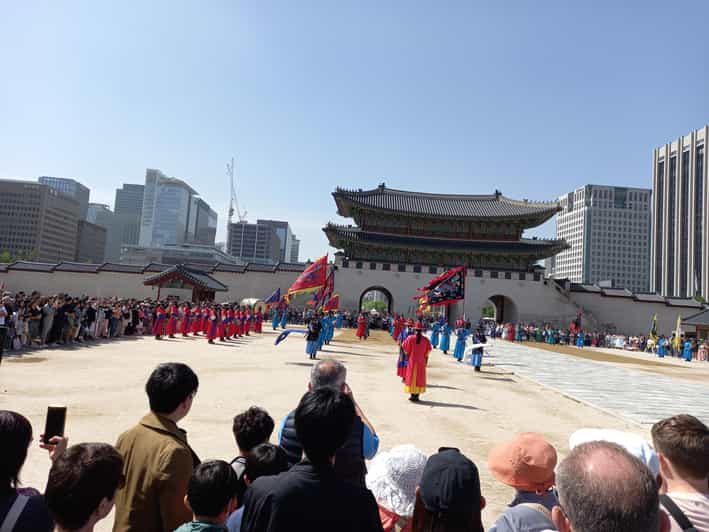
Reviewed · GYEONGBOKGUNG & PALACE TOURS
Seoul: 4-Hour Guided Tour to Palace, Bukchon, Jogyesa Temple
Stepping into Joseon Seoul can be oddly easy. This 4-hour guided walk uses architecture and ideas like Confucianism to help you see what you’re looking at, not just take photos. I really like that the guide keeps the story clear and practical as you move between palace design, everyday-life traditions, and Buddhist heritage.
My favorite part is the way the tour connects big landmarks to daily life. The stop at the National Folk Museum focuses on how common people experienced ceremonies, growing up, marriage, aging, illness and treatment, and even death in Joseon-era Korea.
One thing to plan for: your guide time is included, but key admissions aren’t. You’ll need to budget for palace entry (and N Seoul Tower if you’re including that elsewhere), plus you’ll cover your own transport and food.
In This Review
- Key Points at a Glance
- A Four-Hour Taste of Joseon Values in Central Seoul
- Meeting at Gwanghwamun Square, Then Shifting Into Palace Time
- Gyeongbokgung: Confucian Palace Design You Can Actually Read
- National Folk Museum: The Joseon Life Cycle Told Like a Story
- Bukchon Hanok Village: About 1,000 Hanoks With a Modern Skyline
- Insadong + Jogyesa Temple: Korean Buddhism in the Middle of the City
- Price and Value for a Private 4-Hour Plan
- Who This Tour Is Best For
- Short Reality Check: What the Tour Doesn’t Solve
- Should You Book This Tour?
- FAQ
- How long is the guided tour?
- Is this a private tour?
- What language is the live guide?
- Where does the tour start?
- What’s included in the price?
- What costs are not included?
- Which places are covered during the tour?
- Are admission tickets handled by the tour?
- Can I cancel if my plans change?
Key Points at a Glance
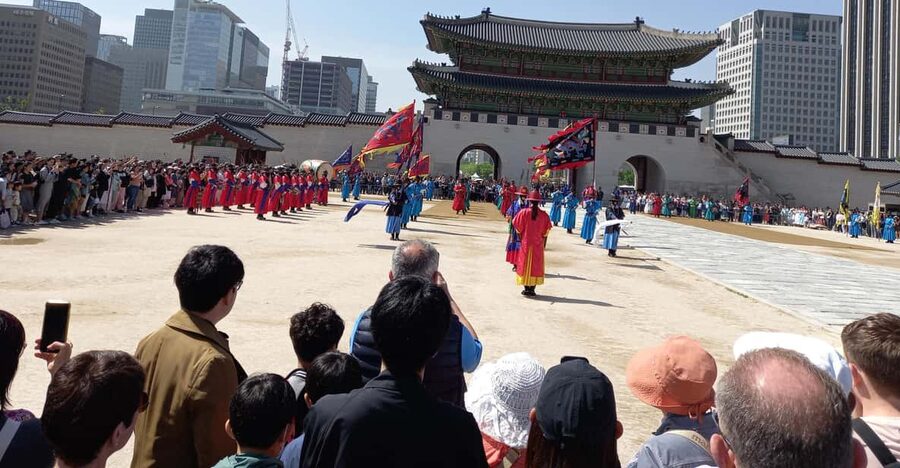
- Confucianism as a lens: palace layout and traditional architecture make more sense when you know the rules behind them
- Gyeongbokgung as the centerpiece: built in 1395, presented as the main monumental palace of the Joseon Dynasty
- Folk Museum focus: you see how Joseon people lived across the life cycle, not just royal events
- Bukchon hanoks + modern Seoul: about 1,000 hanoks with skyscrapers and the N Seoul Tower visible in the background
- Jogyesa Temple context: headquarter of Korean Buddhism, built in 1926 in Insadong near Gyeongbokgung
- Photo-help included: the guide helps you find good angles and keeps things moving at a human pace
Keep walking the palaces of old Seoul
- Seoul: Gyeongbok Palace, Bukchon Village, and Gwangjang Tour★ 4.9 · 2,321 reviews
- Best Seoul City Tour (Gyeongbokgung Palace,Insadong,Namsan Tower)★ 5.0 · 1,647 reviews
- Small-Group Royal Palace and Seoul City Tour (hotel pick-up)★ 5.0 · 1,474 reviews
- Seoul City Sightseeing Tour Including Gyeongbokgung Palace, N Seoul Tower, and Namsangol Hanok Village★ 5.0 · 1,423 reviews
A Four-Hour Taste of Joseon Values in Central Seoul
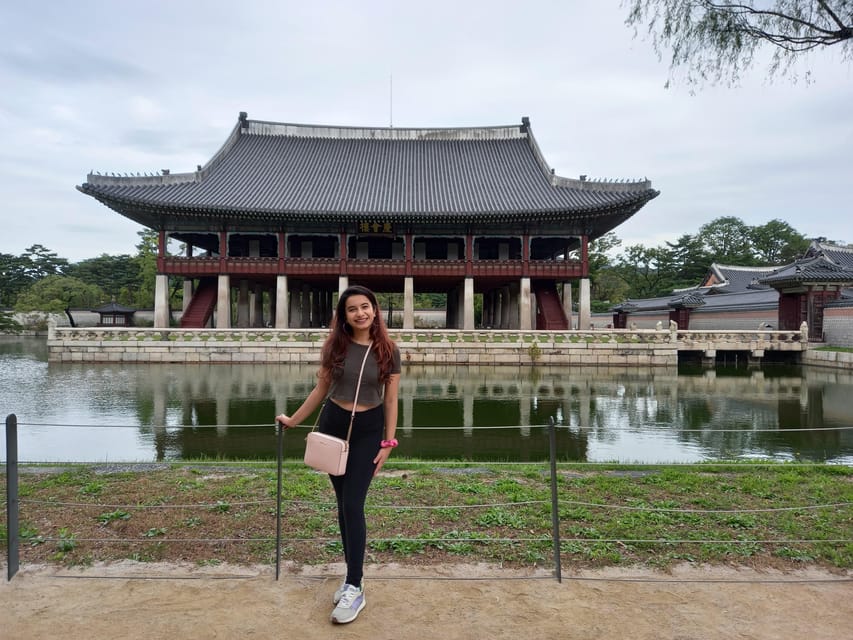
This tour is built around a simple idea: architecture isn’t decoration. It’s a set of values you can read—who had authority, how people organized space, and what mattered in daily life.
You’ll get that context in a way that’s actually usable on foot. Instead of memorizing dates, you’ll learn what to look for at Gyeongbokgung, how ordinary life is shown in the Folk Museum, and how hanoks sit in today’s city view. The result is that the places stop feeling like postcard backgrounds.
Meeting at Gwanghwamun Square, Then Shifting Into Palace Time
Most people start at Gwanghwamun Square, a central Seoul spot that’s easy to orient from. If you prefer, the meeting place and time can be chosen after booking, and you can meet your guide at your hotel as well.
That flexibility matters because it helps you avoid the most annoying part of a short tour: wasted time. In four hours, you want your feet on the ground fast—get your bearings, then let the guide do the storytelling.
Gyeongbokgung: Confucian Palace Design You Can Actually Read
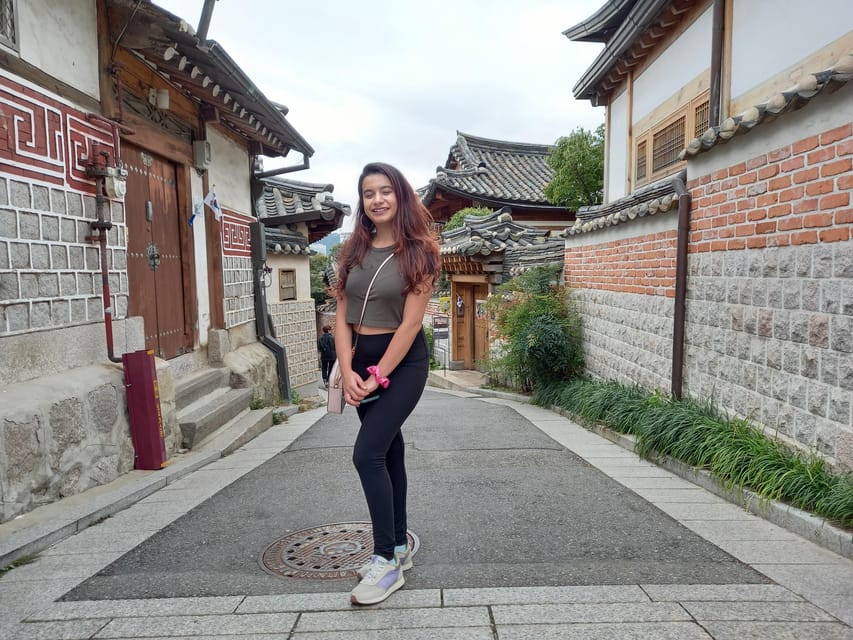
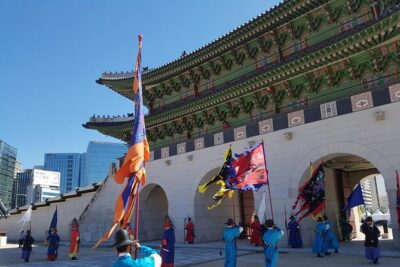
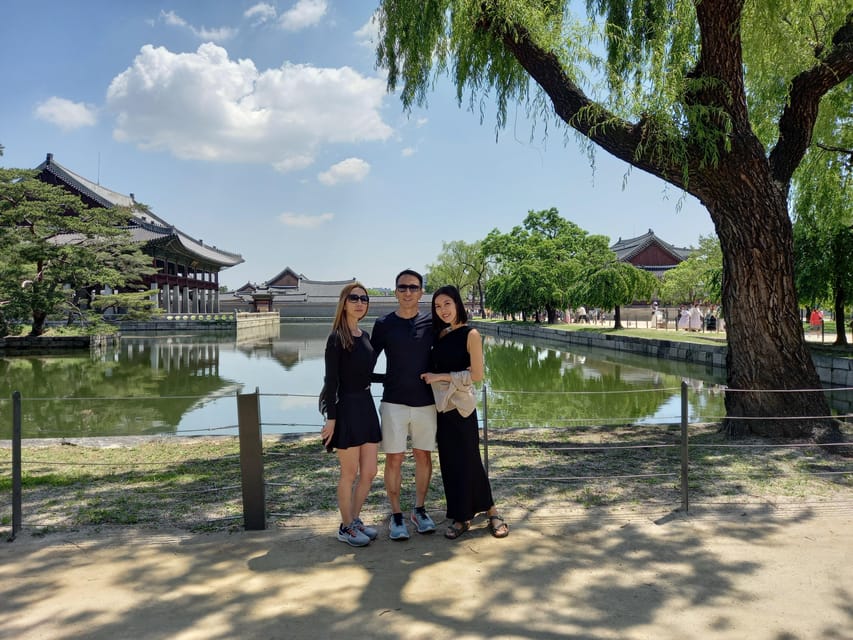
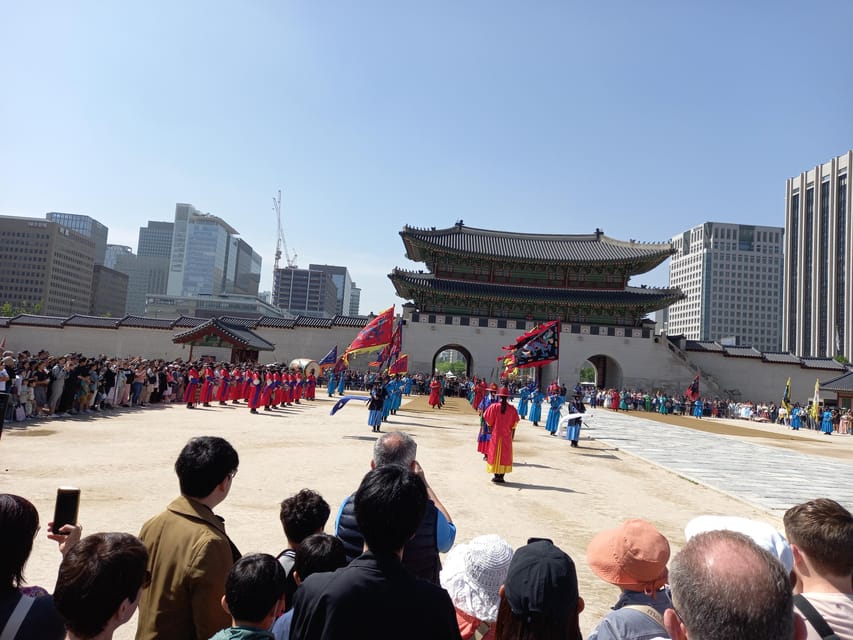
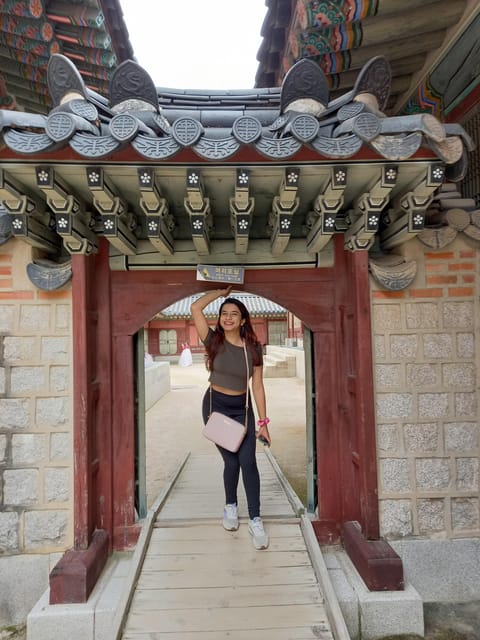
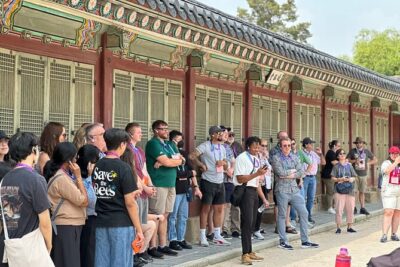
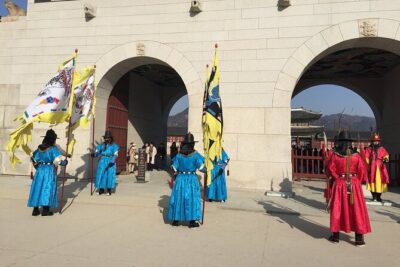
The heart of the experience is Gyeongbokgung Palace. It’s described as the most beautiful and most important traditional palace architecture in Korea, built in 1395 as the main palace of the Joseon Dynasty. It’s also noted as the largest and most magnificent palace, and uniquely built on flat land following authentic Confucian palace structure.
What I like about this portion is the explanation style. The tour frames architecture as the spirit of its era. If you know the cultural “why,” you can appreciate the “what” much more—similar to how European Romanesque and Gothic styles make more sense when you understand medieval Christianity, not just the shapes.
You’re not just walking courtyards. You’re getting an ideological map: in Joseon Korea, Confucianism shaped how power was displayed and how space was arranged. So when you’re standing in front of monumental halls and gates, you have a lens for what you’re seeing.
Practical note: palace time can move slower than you expect if you want photos. Build in a little patience at the busiest photo moments, especially around the most iconic views.
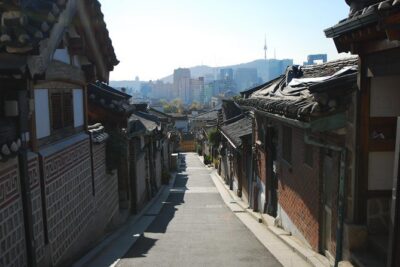
More hanok lanes and rooftops around Bukchon
National Folk Museum: The Joseon Life Cycle Told Like a Story
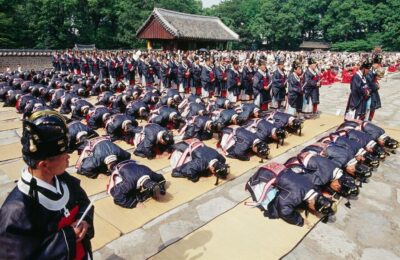
Next comes the National Folk Museum of Korea, where the focus shifts from palace ideals to everyday reality. The museum presentation covers common people’s life and seasonal activities in Joseon Dynasty Korea, including ceremonial and commemorational rituals and events.
This is the stop that often surprises first-time visitors. It’s not only about costumes or artifacts. You’ll see a structured view of life stages—birth, growth, marriage, aging, illness and treatment, and then death—so the culture feels human instead of distant.
The guided time here is shorter, so you’ll want to pay attention to what the guide points out. I’d treat this like your “translation layer” for the rest of the tour: once you understand how ordinary life worked, even hanoks and temples land differently.
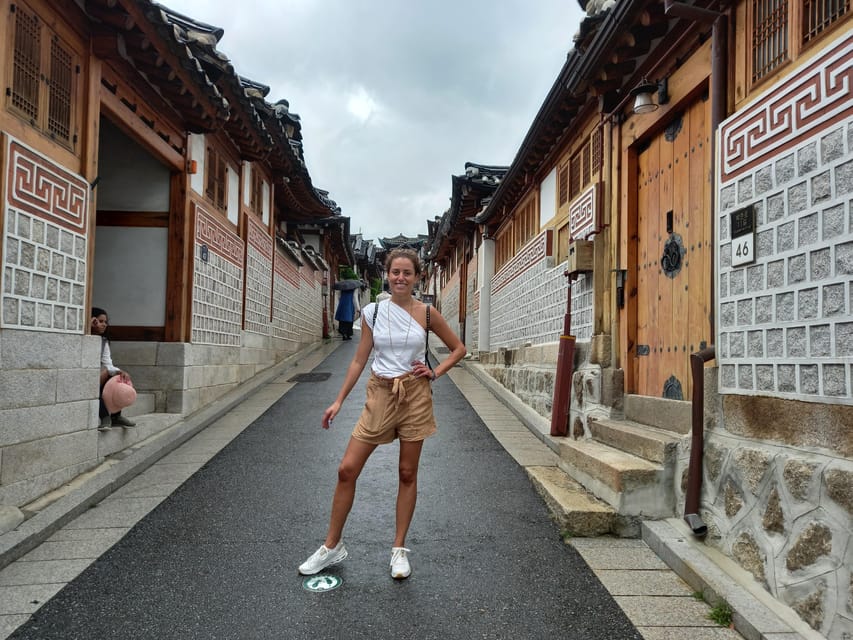
Bukchon Hanok Village: About 1,000 Hanoks With a Modern Skyline
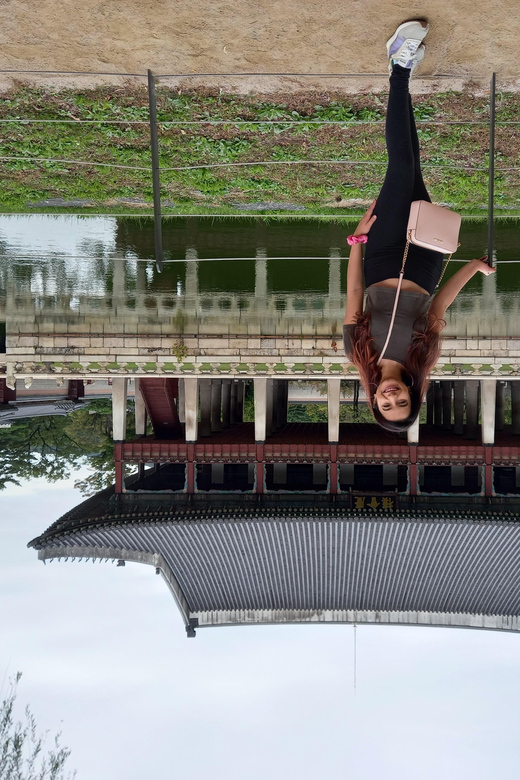
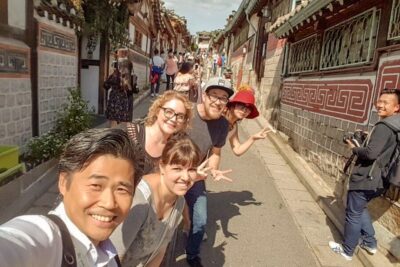
From the museum, you move into Bukchon Hanok Village, a traditional neighborhood of hanoks with a long history. It’s described as the largest cluster, with around 1,000 hanoks, and it’s famous for showing old and new in the same view.
This is one of the most useful places on the route because you can literally watch layers of time overlap. You’ll see traditional rooftops while skyscrapers and the N Seoul Tower sit in the background, which makes Bukchon feel like a living Seoul, not a theme park.
The guided stop is short, so don’t try to see every alley. Instead, use the walk strategically: pause when the best view opens up, and let the guide help you place what you’re seeing in context—what a hanok design suggests about daily life, and why that style persists.
Insadong + Jogyesa Temple: Korean Buddhism in the Middle of the City
Jogyesa Temple is included in this tour theme, and it’s a great choice for a short time in Seoul. It’s described as the headquarter of Korean Buddhism and built in 1926 in Insadong, located adjacent to the Gyeongbokgung area.
What I like about pairing Jogyesa with palace territory is contrast without confusion. Joseon Confucian culture emphasized order and social structure, while Korean Buddhism brings a different kind of meaning to space. Standing near a major temple after learning about palace design helps you notice how belief systems shape visual priorities—halls, rituals, and how people move through the area.
After that, the tour includes Insadong for about 30 minutes. Insadong is presented as part of the walking rhythm of the route, so you can use that time to reset, grab a quick look around, and keep the cultural thread going.
If you’re photographing, remember the guide is also there to help with timing and angles. The tour notes that the guide knows where the best photo spots and angles are, and that can save you from wandering with no plan.
Price and Value for a Private 4-Hour Plan
This tour is listed at $152 per group up to 2 for a 4-hour private experience. The big value piece isn’t that it’s cheap. It’s that the guide fee for four hours is included, and the tour is built around explanation—not just admissions and walking.
You still need to budget for what’s not included:
- admission fees for the palace (and the N Seoul Tower if relevant to your plans)
- transportation while you’re moving
- food and beverage
- insurance
So how do you decide if it’s worth it? I’d say it’s a strong fit when you want context. If you enjoy learning how culture shapes buildings and rituals, a private guide pays off quickly. If you only want casual sightseeing, you might prefer a self-guided route and spend less on the guide.
Also, the tour can be a smart deal for two people because you’re sharing one guide. For solo travelers, it still can be worthwhile if you want the full explanations and photo help.
Who This Tour Is Best For
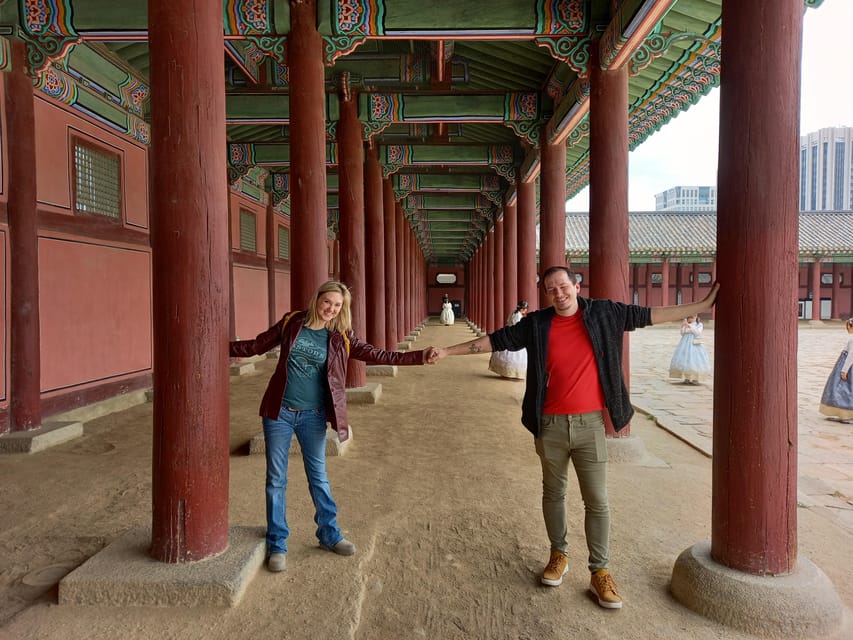
This is ideal if you like culture explained clearly and you’re trying to avoid the common trap: looking at famous sites and still not understanding why they matter.
You’ll probably enjoy it most if you:
- care about how Confucianism shaped Joseon-era architecture
- want a balance of palace, museum, and temple context
- prefer a private experience with room to ask questions
- appreciate practical photo guidance (especially when you only have a few hours)
Short Reality Check: What the Tour Doesn’t Solve
It doesn’t handle everything for you. Admissions, transport, and food are on you. Also, because it’s only four hours, it’s not meant for wandering. You’ll be moving through major stops with a focused agenda.
That’s not a flaw—it’s the whole point. The tour is designed for people who want a concentrated cultural hit and don’t want to waste time figuring out what to look for.
Should You Book This Tour?
I’d book it if you want the “why” behind Seoul’s most famous traditional sites. Gyeongbokgung is the centerpiece, and the guide’s approach—clear, detail-driven, and tied to Confucianism—helps you turn architecture into something you can understand on your feet.
I wouldn’t book it if you’re mainly after casual photos with minimal reading. In that case, you may find it easier and cheaper to go on your own and spend the saved money on extra time elsewhere.
If you do book, bring one mindset: ask questions when the guide offers cultural context. That’s when this tour really starts to feel like it’s working for you.
FAQ
How long is the guided tour?
The tour duration is 4 hours.
Is this a private tour?
Yes. It’s a private group tour.
What language is the live guide?
The live tour guide is available in English.
Where does the tour start?
The starting location is Gwanghwamun Square, but the meeting place and time can be chosen by you after booking, including meeting at your hotel.
What’s included in the price?
The included item is the guide fee for the 4-hour tour with guide information.
What costs are not included?
Admission fees (including palace admission and N Seoul Tower), transportation, food and beverage, and insurance are not included.
Which places are covered during the tour?
The tour covers Gyeongbokgung, the National Folk Museum of Korea, Bukchon Hanok Village, and Insadong. It is also described as a tour that includes Jogyesa Temple.
Are admission tickets handled by the tour?
No. Palace admission fees and any N Seoul Tower admission are listed as not included.
Can I cancel if my plans change?
Yes. Free cancellation is available up to 24 hours in advance for a full refund.
More Temple Hours Near Seoul
- Seoul: Palace, Temple and Market Guided Foodie Tour at Night★ 4.9 · 750 reviews
- Seoul: Mt Seorak + Naksansa Temple or Nami Island Group Tour★ 4.7 · 422 reviews
- Best Things to Do – Half Day Seoul Trip (Seoul Palace & Temple)★ 5.0 · 190 reviews
- Mount Seorak and Naksansa Temple One Day Tour from Seoul★ 4.5 · 167 reviews
- Day Tour of Suwon Hwaseong Fortress Starfield Waujeongsa Temple★ 5.0 · 61 reviews
More Hanok Village Wandering
- Seoul: Gyeongbok Palace, Bukchon Village, and Gwangjang Tour★ 4.9 · 2,321 reviews
- Seoul City Sightseeing Tour Including Gyeongbokgung Palace, N Seoul Tower, and Namsangol Hanok Village★ 5.0 · 1,423 reviews
- Seoul: Gyeongbok Palace, Bukchon Village, and Gwangjang Tour★ 5.0 · 1,044 reviews
- Seoul: Gyeongbok Palace and Bukchon Hanok Walking Tour★ 4.8 · 157 reviews
- Best Walking Tour to Gyeongbok Palace Bukchon Hanok Village★ 5.0 · 138 reviews
Still More Palaces to Walk
- Seoul: Gyeongbok Palace, Bukchon Village, and Gwangjang Tour★ 4.9 · 2,321 reviews
- Best Seoul City Tour (Gyeongbokgung Palace,Insadong,Namsan Tower)★ 5.0 · 1,647 reviews
- Small-Group Royal Palace and Seoul City Tour (hotel pick-up)★ 5.0 · 1,474 reviews
- Seoul City Sightseeing Tour Including Gyeongbokgung Palace, N Seoul Tower, and Namsangol Hanok Village★ 5.0 · 1,423 reviews
- Seoul: Gyeongbok Palace, Bukchon Village, and Gwangjang Tour★ 5.0 · 1,044 reviews
Just added to Exploring Seoul
Gyeongbokgung & Palace Tours, compared.
 ★ 4.9Gyeongbok Palace, Bukchon Village, and Gwangjang TourFrom $322,321 reviews
 ★ 5.0Best Seoul City Tour (Gyeongbokgung Palace,Insadong,Namsan Tower)From $581,647 reviews
 ★ 5.0Small-Group Royal Palace and Seoul City Tour (hotel pick-up)From $561,474 reviews
 ★ 5.0Seoul City Sightseeing Tour Including Gyeongbokgung Palace, N Seoul Tower, and Namsangol Hanok VillageFrom $801,423 reviews
★ 5.0Gyeongbok Palace, Bukchon Village, and Gwangjang TourFrom $321,044 reviews
★ 5.0Seoul City Sightseeing Tour Including Gyeongbokgung Palace, N Seoul Tower, and Namsangol Hanok VillageFrom $801,423 reviews
★ 5.0Gyeongbok Palace, Bukchon Village, and Gwangjang TourFrom $321,044 reviews
 ★ 4.9Seoul Half-Day City Highlight, Palace Tour with HanbokFrom $49764 reviews
 ★ 4.9Palace, Temple and Market Guided Foodie Tour at NightFrom $60750 reviews
 ★ 4.7Seoul Highlights: Gyeongbok Palace, Insadong & N Seoul TowerFrom $26726 reviews
Browse the lists this tour appears in